
未知数也是定数
430 Posts

未知数也是定数
抓不住机会就自己创造机会。
27 Following
71 Followers
620 Liked
Posts
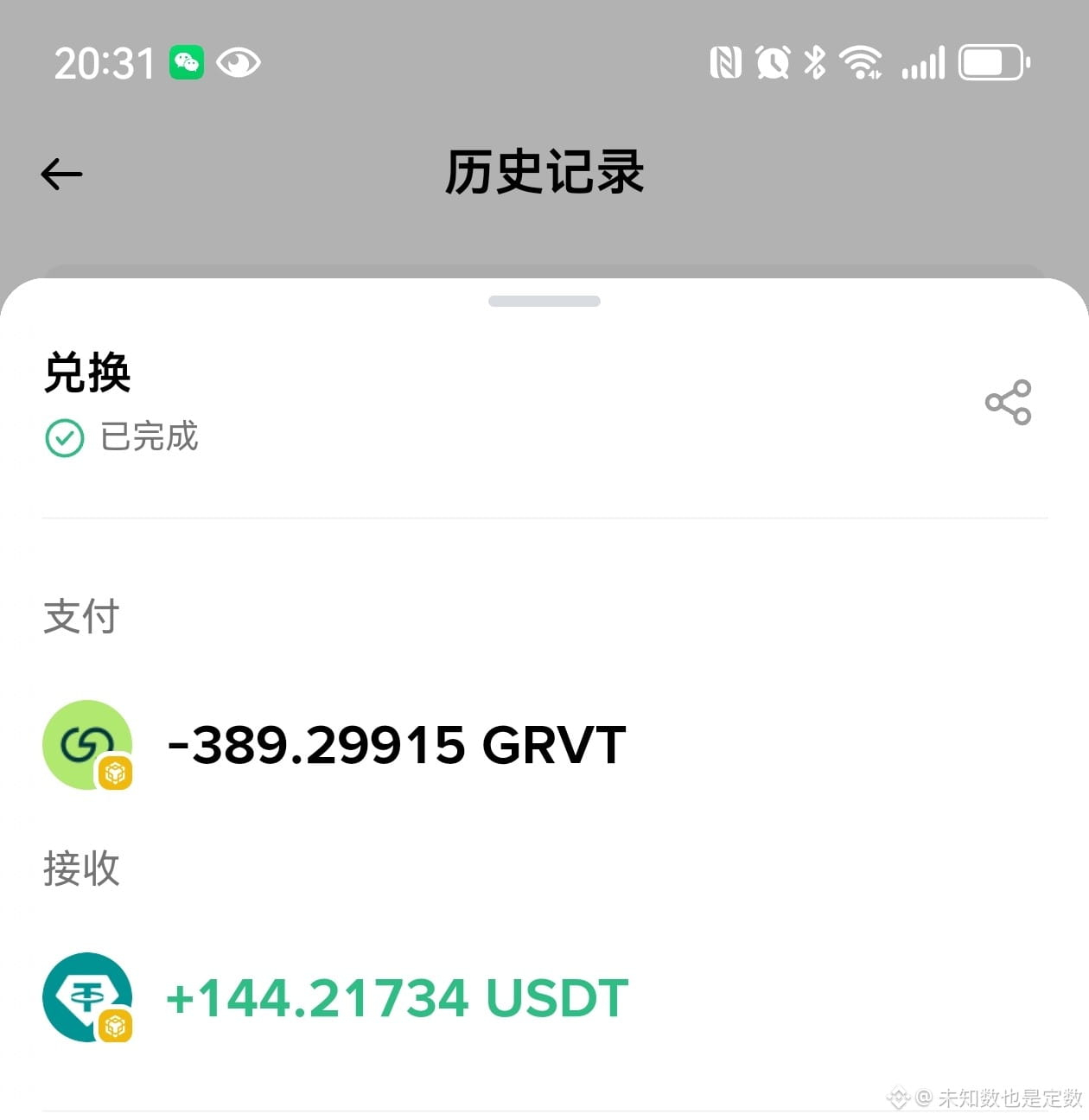
The air drop sold for only 40 U, but I didn’t expect the rewards to come close to 4 air drops, haha $GRVT
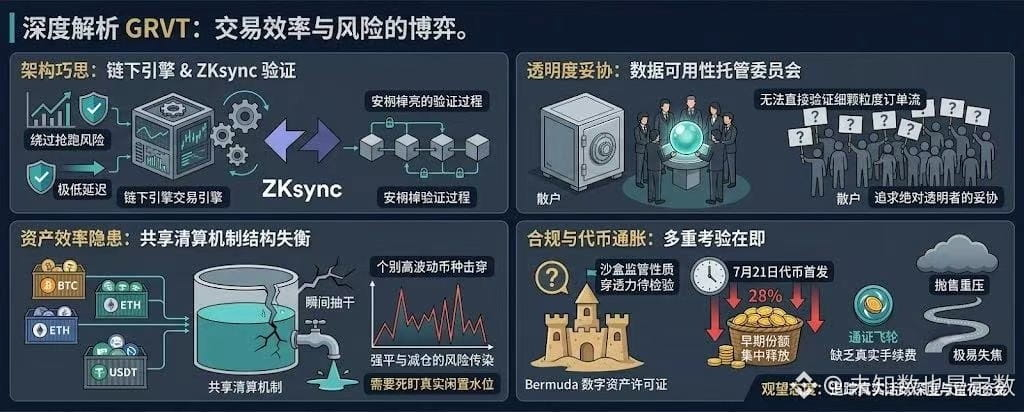
#grvt I’ve spent the past few days deeply dissecting the encrypted settlement structure of @grvt_io . I found that it moves the transaction engine off-chain and anchors verification to ZKsync—an approach with remarkable engineering ingenuity. This design sidesteps common front‑running risks and truly aligns with the high-frequency strategy’s urgent need for ultra-low latency. However, the other side of the coin is that data availability is hosted by a specific committee. This means we retail users can’t directly verify the fine-grained order flow from the public ledger. For pure “native” users who pursue absolute transparency, this compromise clearly carries an element of concession.$BTC
Returning to the asset-efficiency layer, the underlying shared clearing mechanism in its treasury hides structural imbalances. Such consolidated pools tie multi-currency margin to a single ship. When the operator frequently performs cross-asset hedging in the off-chain system, even if most strategy directions are correct, a sudden price breakdown driven by a specific high-volatility asset can instantaneously drain the usable level of the entire public pool. This liquidation-and-deleveraging risk contagion mechanism requires liquidity providers to constantly monitor the true idle liquidity level beneath the surface.$ETH
The digital asset license issued by Bermuda is, in form, compliant, but its regulatory boundaries have a sandbox-like quality; its ability to penetrate and regulate in practice still needs time to be tested. Next week, on July 21, the token will be launched for the first time—an even bigger test of the market’s ability to absorb it. With as much as 28% of early allocations concentrated for release, the resulting selling pressure is no small matter. If the platform lacks sufficient real fee flow cycling through, the token’s own flywheel is all too likely to lose focus.
As for the project #grvt , its attempts to optimize the trading experience are worth acknowledging. But the underlying risk chain and the ongoing battle between token incentives and inflation are still unfolding. My thinking is very clear: in the emotional market at the open, I’ll stay at a distance, and once the initial distribution and sell-pressure are fully cleared, I’ll go on-chain to track its true active depth and retained funds. Even if the business logic is currently a self-contained loop, the market’s eventual pricing often proves harsher than idealized projections. We’ll see where things go from here before making any further decision.
Returning to the asset-efficiency layer, the underlying shared clearing mechanism in its treasury hides structural imbalances. Such consolidated pools tie multi-currency margin to a single ship. When the operator frequently performs cross-asset hedging in the off-chain system, even if most strategy directions are correct, a sudden price breakdown driven by a specific high-volatility asset can instantaneously drain the usable level of the entire public pool. This liquidation-and-deleveraging risk contagion mechanism requires liquidity providers to constantly monitor the true idle liquidity level beneath the surface.$ETH
The digital asset license issued by Bermuda is, in form, compliant, but its regulatory boundaries have a sandbox-like quality; its ability to penetrate and regulate in practice still needs time to be tested. Next week, on July 21, the token will be launched for the first time—an even bigger test of the market’s ability to absorb it. With as much as 28% of early allocations concentrated for release, the resulting selling pressure is no small matter. If the platform lacks sufficient real fee flow cycling through, the token’s own flywheel is all too likely to lose focus.
As for the project #grvt , its attempts to optimize the trading experience are worth acknowledging. But the underlying risk chain and the ongoing battle between token incentives and inflation are still unfolding. My thinking is very clear: in the emotional market at the open, I’ll stay at a distance, and once the initial distribution and sell-pressure are fully cleared, I’ll go on-chain to track its true active depth and retained funds. Even if the business logic is currently a self-contained loop, the market’s eventual pricing often proves harsher than idealized projections. We’ll see where things go from here before making any further decision.
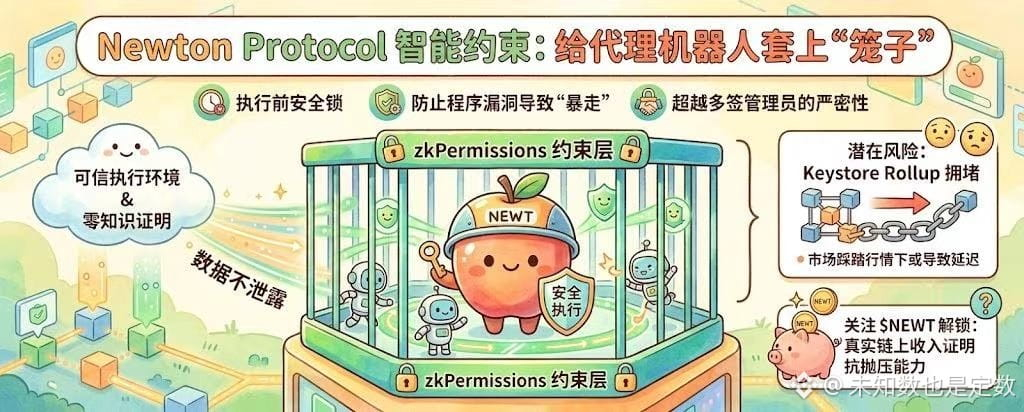
#newt Last night, while I was halfway through my shower and the soap on my body still hadn’t been rinsed off, the smart water valve suddenly and without warning cut off the water. It turned out that the algorithm detected I had been using water continuously for more than fifteen minutes, unilaterally judged that the home pipe had burst, and forcibly locked it down. That suffocating feeling of being unable to do anything even if I kept pressing “cancel” on my phone, and having to go downstairs to manually reset the main valve, instantly reminded me of @NewtonProtocol , which had just gone live on mainnet Beta. When we completely hand over decision-making power to cold code, “automation” without flexibility often leaves people in awkward situations.
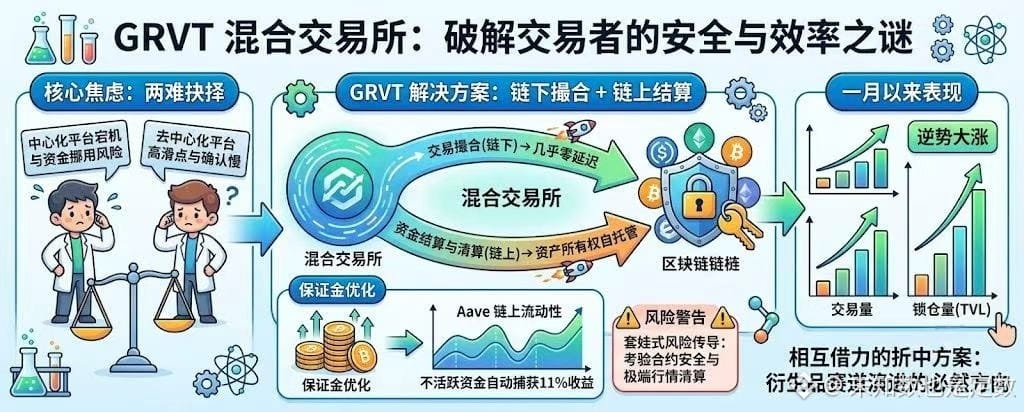
In order to avoid this kind of “runaway” behavior from agent bots on-chain, the project introduced a zkPermissions constraint layer based on Magic Labs technology. After dissecting its logic, I found that it did not focus on complex intent prediction, but instead concentrated on putting a safety lock in place before execution. Combined with a trusted execution environment and zero-knowledge proofs, every move made by the agent is tightly bound within preset rules. During normal periods when the network is running smoothly, this kind of constraint can indeed help users block deviations caused by software bugs, and is stricter than relying solely on multisig administrators. $BTC
But every coin has two sides. At present, its validator nodes still carry a fairly strong permissioned flavor, and the physical hardware base has historically never been absolutely foolproof. My personal judgment is that once the market faces a panic selloff and Gas fees surge, this cumbersome verification process is very likely to suffer block production delays due to congestion in the underlying Keystore Rollup, turning the so-called hard constraint into a useless formality. $ETH
As the later unlocking of $NEWT approaches, the project must prove its ability to withstand selling pressure with real on-chain business revenue. The route of putting a cage on the bot is unquestionably the right one, but before more convincing stress-test data under extreme pressure comes out, I still prefer to keep a tight grip on my wallet and remain cautious. #Newt
In order to avoid this kind of “runaway” behavior from agent bots on-chain, the project introduced a zkPermissions constraint layer based on Magic Labs technology. After dissecting its logic, I found that it did not focus on complex intent prediction, but instead concentrated on putting a safety lock in place before execution. Combined with a trusted execution environment and zero-knowledge proofs, every move made by the agent is tightly bound within preset rules. During normal periods when the network is running smoothly, this kind of constraint can indeed help users block deviations caused by software bugs, and is stricter than relying solely on multisig administrators. $BTC
But every coin has two sides. At present, its validator nodes still carry a fairly strong permissioned flavor, and the physical hardware base has historically never been absolutely foolproof. My personal judgment is that once the market faces a panic selloff and Gas fees surge, this cumbersome verification process is very likely to suffer block production delays due to congestion in the underlying Keystore Rollup, turning the so-called hard constraint into a useless formality. $ETH
As the later unlocking of $NEWT approaches, the project must prove its ability to withstand selling pressure with real on-chain business revenue. The route of putting a cage on the bot is unquestionably the right one, but before more convincing stress-test data under extreme pressure comes out, I still prefer to keep a tight grip on my wallet and remain cautious. #Newt
Together for nine years to build a legend, happy 9th birthday to Binance, the future is always possible! #币安九周年 #BinanceTurns9

#grvt Outside the window, without warning, a sudden downpour breaks out. When I get up to close the window, the wind blows the draft papers on my desk all over the floor. By the time I fumble back in front of my screen, the pressure test simulation on the mocked-up ring gauge is perfectly caught at its critical point. That kind of sudden disorder in everyday life always seems to be out of sync with the perfect closed loop we chase in code. Staring at the @grvt_io runtime data on my monitor, the complexity of cross-layer interactions instantly becomes tangible.
They split settlement, bridging, and the revenue modules into very fine pieces—large institutions audit it and stamp it off. But I feel that when it comes to high-frequency circulation across multiple layers of assets, the multi-confirmation mechanism only serves to extend the confirmation/asset-claiming cycle. And since the front-end requests are highly dependent on specific back-end routes for broadcasting, this kind of hybrid model inevitably compromises when it comes to decentralization’s color in the face of sudden, unknown risks. $BTC
When I run cross-currency account sell-off (dump) testing, I catch a microscopic liquidity fault line. After configuring extreme parameters for the downward push, the system executes forced liquidation very quickly, but the buy depth in the off-chain order book is consumed completely within two seconds. Refreshing the order book shows that the liquidity repair speed can’t keep up with that momentary sell pressure at all—the spread pressure is all routed to the backstop funds, and the consumption curve is so steep it makes your skin crawl. $ETH
When the waters are calm, this design really does maximize capital efficiency—it’s pretty much to the taste of players who like vectorization. But once you hit a black swan, whether those elegant isolation walls are true defenses or simply new obstacles stacked up for liquidity, I think we still need to leave some room for intuition and let the market validate it.
They split settlement, bridging, and the revenue modules into very fine pieces—large institutions audit it and stamp it off. But I feel that when it comes to high-frequency circulation across multiple layers of assets, the multi-confirmation mechanism only serves to extend the confirmation/asset-claiming cycle. And since the front-end requests are highly dependent on specific back-end routes for broadcasting, this kind of hybrid model inevitably compromises when it comes to decentralization’s color in the face of sudden, unknown risks. $BTC
When I run cross-currency account sell-off (dump) testing, I catch a microscopic liquidity fault line. After configuring extreme parameters for the downward push, the system executes forced liquidation very quickly, but the buy depth in the off-chain order book is consumed completely within two seconds. Refreshing the order book shows that the liquidity repair speed can’t keep up with that momentary sell pressure at all—the spread pressure is all routed to the backstop funds, and the consumption curve is so steep it makes your skin crawl. $ETH
When the waters are calm, this design really does maximize capital efficiency—it’s pretty much to the taste of players who like vectorization. But once you hit a black swan, whether those elegant isolation walls are true defenses or simply new obstacles stacked up for liquidity, I think we still need to leave some room for intuition and let the market validate it.

#newt Last weekend, I kept one of my friends going with a couple of quant guys. One of them misread the exchange K-line timestamp, which caused his script to trade at the wrong prices in a frenzy—within minutes, it had already pulled back three percentage points. That made me marvel: “compliance of the process” and “correctness of the data” are two different things. Recently, I’ve been dead-set on finding a stable place for the main position, and I’ve been hard at work on the testnet for @NewtonProtocol , just to figure out whether $NEWT can really withstand the black swans caused by this kind of data/logic mismatch.
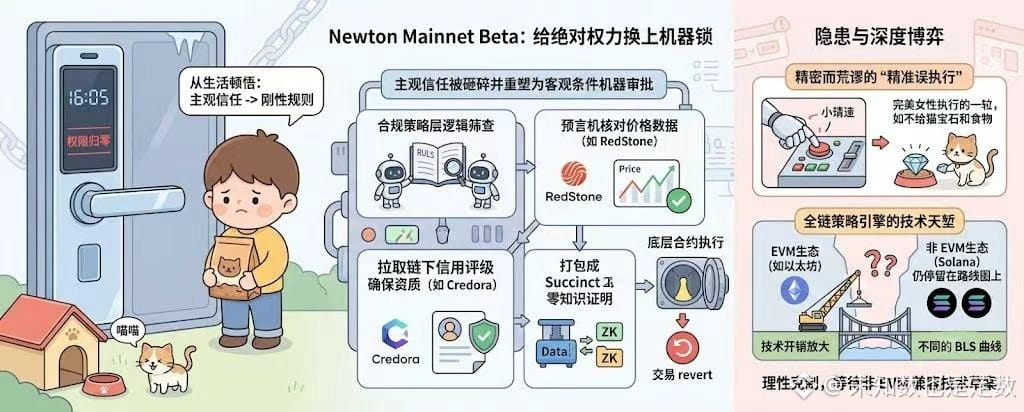
The three-stage design logic—“intent → assessment → consensus”—is remarkably coherent. Independent evaluation across multiple nodes, paired with a zero-knowledge proof to wrap it up, almost eliminates the possibility of abuse at a single point. Combined with support for Redstone and Credora’s data, Newton Mainnet Beta’s execution route is clear and implemented extremely fast. But going back to the pitfall my friend stepped into: Newton allows users to compile WASM modules themselves and submit custom data source mechanisms into the sandbox. While that’s flexible, the sandbox can’t police logical fallacies. If, for example, there’s a delay when fetching prices that leads to timestamp misalignment, then such inaccurate data can still obtain valid signatures because it conforms to process compliance. In this kind of “vacuum zone,” running across multiple chains and environments risks a consensus clash. $BTC
Another thing that makes me a bit uneasy is how deeply the network relies on EigenLayer. Using Restaking validator sets to enable rapid startup is a smart strategy, but it also effectively ties its own risk-control security to a complex layered protocol. With relatively high node concentration, if these big nodes run into sudden contention for compute resources on other popular AVSs, or are unfortunately hit by slashing due to mistakes from other projects, the resulting validator delays and reduced credit capacity will propagate along with it. $ETH
I think a great automated protocol’s long-term stability often depends on its redundancy capabilities. Newton Mainnet Beta’s opening is impressive, but the key going forward is whether, during its Permissionless Operator phase, it can smoothly bring in a large number of independent validators that don’t rely on each other—so the security foundation can truly be solid. Right now, it seems safer for large capital to test the waters with smaller positions in the shallows. Once the base becomes more diversified, then stepping the main position on top is what really gives you a solid footing. #Newt
The three-stage design logic—“intent → assessment → consensus”—is remarkably coherent. Independent evaluation across multiple nodes, paired with a zero-knowledge proof to wrap it up, almost eliminates the possibility of abuse at a single point. Combined with support for Redstone and Credora’s data, Newton Mainnet Beta’s execution route is clear and implemented extremely fast. But going back to the pitfall my friend stepped into: Newton allows users to compile WASM modules themselves and submit custom data source mechanisms into the sandbox. While that’s flexible, the sandbox can’t police logical fallacies. If, for example, there’s a delay when fetching prices that leads to timestamp misalignment, then such inaccurate data can still obtain valid signatures because it conforms to process compliance. In this kind of “vacuum zone,” running across multiple chains and environments risks a consensus clash. $BTC
Another thing that makes me a bit uneasy is how deeply the network relies on EigenLayer. Using Restaking validator sets to enable rapid startup is a smart strategy, but it also effectively ties its own risk-control security to a complex layered protocol. With relatively high node concentration, if these big nodes run into sudden contention for compute resources on other popular AVSs, or are unfortunately hit by slashing due to mistakes from other projects, the resulting validator delays and reduced credit capacity will propagate along with it. $ETH
I think a great automated protocol’s long-term stability often depends on its redundancy capabilities. Newton Mainnet Beta’s opening is impressive, but the key going forward is whether, during its Permissionless Operator phase, it can smoothly bring in a large number of independent validators that don’t rely on each other—so the security foundation can truly be solid. Right now, it seems safer for large capital to test the waters with smaller positions in the shallows. Once the base becomes more diversified, then stepping the main position on top is what really gives you a solid footing. #Newt


#grvt In the past few days, I set aside some idle funds and used them to monitor the live order book of @grvt_io . This strategy of directly tying position margin to underlying yield-generating assets really hits the core pain point of frequent traders. In the past, when I played with on-chain perpetuals, the capital used for positions was basically dead money—if you wanted returns, you had to sacrifice liquidity. But on this platform, while I was placing derivatives orders, the unused funds in the background could still automatically earn investment interest. This two-track parallel approach makes idle funds grow at high efficiency. Putting aside the technical costs, in terms of the operation experience alone, it’s genuinely very attractive.
Their team’s chosen technical route is quite aggressive, fully leaning toward a Validium-like zero-knowledge proof architecture. To achieve extremely high order-matching efficiency and microsecond-level responsiveness, the platform puts the core matching logic and all original position/settlement details into off-chain servers, while the Ethereum mainnet only serves as a record board for state verification. Objectively speaking, the execution speed of this architecture can almost substitute for centralized big-name exchanges. And at the cryptography level, ownership of funds still belongs to the individual—project teams can’t arbitrarily move your coins. $BTC
That said, I feel that extreme speed often comes with hidden technical soft spots. The biggest weak point of the Validium mode is the cliff in data availability. If one day the official core data center suffers some uncontrollable incident and the connection is pulled, even if on-chain cryptography can prove you own the assets, users still can’t compute the effective Merkle proof to submit to the mainnet for a forced withdrawal, simply because the complete off-chain historical details are missing. Although they introduced an institutional backup committee, in essence that’s more like a compromise to form a consortium chain—the “decentralized” quality still isn’t enough. $ETH
It’s undeniable that a mechanism like #grvt , where you can open positions while “lying back and earning,” is incredibly addictive. It’s also a daring step in how hybrid trading platforms explore ways to counter traditional CEXs. But there has never been a perfect remedy in technology. Cryptography can guarantee that accounting and execution are correct, but it can’t guarantee the server’s uptime tomorrow. Right now, I still use only a very small portion of my trading funds to run short-term trades. As for whether this architecture can survive future extreme on-chain black swans, we’ll have to wait and see what the market ultimately answers.
Their team’s chosen technical route is quite aggressive, fully leaning toward a Validium-like zero-knowledge proof architecture. To achieve extremely high order-matching efficiency and microsecond-level responsiveness, the platform puts the core matching logic and all original position/settlement details into off-chain servers, while the Ethereum mainnet only serves as a record board for state verification. Objectively speaking, the execution speed of this architecture can almost substitute for centralized big-name exchanges. And at the cryptography level, ownership of funds still belongs to the individual—project teams can’t arbitrarily move your coins. $BTC
That said, I feel that extreme speed often comes with hidden technical soft spots. The biggest weak point of the Validium mode is the cliff in data availability. If one day the official core data center suffers some uncontrollable incident and the connection is pulled, even if on-chain cryptography can prove you own the assets, users still can’t compute the effective Merkle proof to submit to the mainnet for a forced withdrawal, simply because the complete off-chain historical details are missing. Although they introduced an institutional backup committee, in essence that’s more like a compromise to form a consortium chain—the “decentralized” quality still isn’t enough. $ETH
It’s undeniable that a mechanism like #grvt , where you can open positions while “lying back and earning,” is incredibly addictive. It’s also a daring step in how hybrid trading platforms explore ways to counter traditional CEXs. But there has never been a perfect remedy in technology. Cryptography can guarantee that accounting and execution are correct, but it can’t guarantee the server’s uptime tomorrow. Right now, I still use only a very small portion of my trading funds to run short-term trades. As for whether this architecture can survive future extreme on-chain black swans, we’ll have to wait and see what the market ultimately answers.

#newt Recently, I’ve been watching closely the Mainnet Beta that just went live, with @NewtonProtocol . It forcefully inserts risk filtering and compliance policies into the pre-settlement stage before transaction execution. This “pre-customs” approach for adding oversight to on-chain interactions is quite interesting. But beneath the packaging of a high-tech narrative, the actual on-chain performance and engineering implementation still remain a blaze that calls for rational scrutiny.
From a technical architecture standpoint, its underlying logic is currently rather heavy. In addition to writing smart contracts, developers also have to maintain an entirely different dimension of a rule language for preconditions. In a multi-node parallel evaluation environment that depends on external gateways to fetch data, any oracle delay or network fluctuation is highly likely to turn the expected safety interception into hard, funds-blocking congestion. As for the post-event penalty mechanism, for liquidity that’s stuck outside the door during extreme market conditions, it’s not very helpful. $BTC
That said, dialectically speaking, its intent-driven fault-prevention design promoted at the front end truly hits an industry pain point. Relying solely on zero-knowledge proofs can only ensure that AI agents’ operations are mathematically compliant, but it can’t detect logical errors like a user accidentally entering extra zeros. By translating those cold, on-chain hexadecimal addresses into asset amounts that ordinary people can understand before settlement, and by limiting the list of time-sensitive items, it pushes complexity to the back end. In doing so, it indeed shows ambitious engineering exploration in tackling “intent accuracy.” $ETH
This split—more weight on the backend, less on the front end—makes it look like a contradictory hybrid. Until it sees more large-scale integration of native on-chain applications and truly drives $NEWT transaction efficiency, it feels more like a high-cost defensive experiment. For ordinary retail users, maintaining a safe distance while continuing to observe the subsequent robustness of its decentralized node network is clearly a more prudent game-theoretic choice. #Newt
From a technical architecture standpoint, its underlying logic is currently rather heavy. In addition to writing smart contracts, developers also have to maintain an entirely different dimension of a rule language for preconditions. In a multi-node parallel evaluation environment that depends on external gateways to fetch data, any oracle delay or network fluctuation is highly likely to turn the expected safety interception into hard, funds-blocking congestion. As for the post-event penalty mechanism, for liquidity that’s stuck outside the door during extreme market conditions, it’s not very helpful. $BTC
That said, dialectically speaking, its intent-driven fault-prevention design promoted at the front end truly hits an industry pain point. Relying solely on zero-knowledge proofs can only ensure that AI agents’ operations are mathematically compliant, but it can’t detect logical errors like a user accidentally entering extra zeros. By translating those cold, on-chain hexadecimal addresses into asset amounts that ordinary people can understand before settlement, and by limiting the list of time-sensitive items, it pushes complexity to the back end. In doing so, it indeed shows ambitious engineering exploration in tackling “intent accuracy.” $ETH
This split—more weight on the backend, less on the front end—makes it look like a contradictory hybrid. Until it sees more large-scale integration of native on-chain applications and truly drives $NEWT transaction efficiency, it feels more like a high-cost defensive experiment. For ordinary retail users, maintaining a safe distance while continuing to observe the subsequent robustness of its decentralized node network is clearly a more prudent game-theoretic choice. #Newt
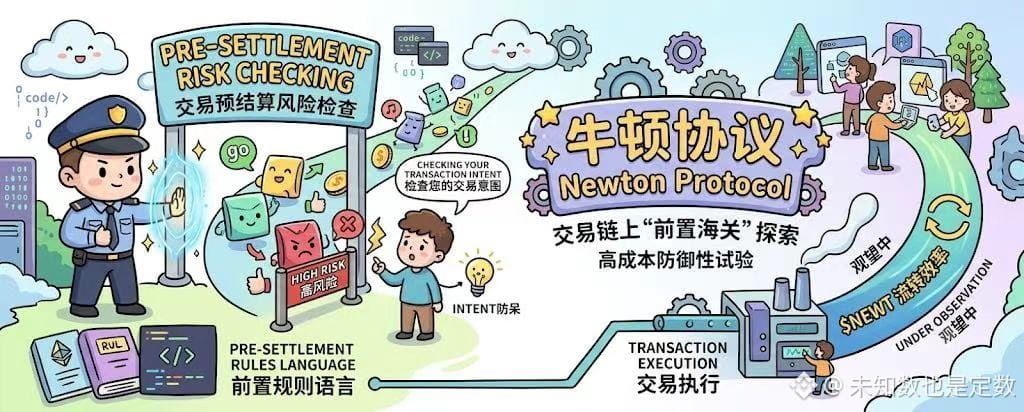

#newt Recently I’ve been seeing a lot of discussion about @NewtonProtocol . The cooperation playbook that circulated after the mainnet test version went live has been pretty lively. As a researcher who can’t help but obsess over on-chain data, I went and pulled the real data from Newton Mainnet Beta. The on-chain activity level and actual Gas fee consumption are a bit puzzling—there’s no clear sign of interaction growth for any well-known DeFi that the promos claim is active on this chain.
To get to the bottom of the underlying logic, the day before yesterday I used a test wallet to run through its pre-authorization system. Mechanically, it pushes the execution verdict forward to before settlement via a front-end node. When users submit transactions, the local side has to complete double signatures and then send them to the backend to check against a blacklist item by item. I think this kind of fussy process strengthens the security boundary, but it directly caused my one ordinary transfer to get stuck for nearly two minutes. Honestly, in our day-to-day experience on Ethereum $ETH during network congestion, or when routing a transfer over the Bitcoin $BTC network, it’s rare to feel this kind of suffocating “security checkpoint” where you’re forcibly kept out. In extreme market conditions, this delay can easily put people at risk of losses.
This approach of putting compliance filtering entirely into a transaction pre-layer is an attempt—especially for institutional users who need to defend against black-and-gray production. It also reminds me of the current Bitcoin layer-2 networks and the various compliance protocols on Ethereum: everyone is making painful trade-offs between liquidity and decentralization. But for users like us—retail participants who are used to instant liquidity on-chain—overly complex verification can easily lead to funds being locked up without a smooth appeals pathway if there’s a mistaken address label.
At the end of the day, no matter how airtight the backend tool design is, without asset interactions and application retention, it currently feels more like an expensive self-congratulatory mechanism. Until more applications are officially introduced and truly move $NEWT throughput, I think it’s safer for everyone to keep a distance, stay cautious, and observe how the network performs next. #Newt
To get to the bottom of the underlying logic, the day before yesterday I used a test wallet to run through its pre-authorization system. Mechanically, it pushes the execution verdict forward to before settlement via a front-end node. When users submit transactions, the local side has to complete double signatures and then send them to the backend to check against a blacklist item by item. I think this kind of fussy process strengthens the security boundary, but it directly caused my one ordinary transfer to get stuck for nearly two minutes. Honestly, in our day-to-day experience on Ethereum $ETH during network congestion, or when routing a transfer over the Bitcoin $BTC network, it’s rare to feel this kind of suffocating “security checkpoint” where you’re forcibly kept out. In extreme market conditions, this delay can easily put people at risk of losses.
This approach of putting compliance filtering entirely into a transaction pre-layer is an attempt—especially for institutional users who need to defend against black-and-gray production. It also reminds me of the current Bitcoin layer-2 networks and the various compliance protocols on Ethereum: everyone is making painful trade-offs between liquidity and decentralization. But for users like us—retail participants who are used to instant liquidity on-chain—overly complex verification can easily lead to funds being locked up without a smooth appeals pathway if there’s a mistaken address label.
At the end of the day, no matter how airtight the backend tool design is, without asset interactions and application retention, it currently feels more like an expensive self-congratulatory mechanism. Until more applications are officially introduced and truly move $NEWT throughput, I think it’s safer for everyone to keep a distance, stay cautious, and observe how the network performs next. #Newt
Today, the @grvt_io community is in an uproar over a newly launched Airdrop claiming page. When I reviewed the interaction data from this week, I could already feel that the official side would be making moves around token releases. Sure enough, the newly released multiplier plan has caused massive disagreement in the market. This time, #grvt is rewarding early participants with 28% of the total supply—it's a big move, but the controversy is all about the claiming method.
On the table is a classic liquidity-premium multiple-choice question. You can either take all the chips directly on the day the tokens are generated. But if you’re willing to give up liquidity—hard-lock the tokens for four months or even eight months—as compensation, your account’s token amount can be increased up to fourfold.
I think this design extremely tests traders’ underlying understanding of capital utilization efficiency. Objectively speaking, it does extend retail holders’ monetization cycle in an indirect way. A few months in the crypto space are enough to complete a full cycle of a local bull and bear. If, in the second half of the year, $BTC strongly breaks above the previous high, or $ETH suddenly explodes again due to macro capital inflows, then locking capital that could have circulated here means the loss of liquidity translates into extremely high implicit opportunity cost.
But from another angle, we can infer that for players who already intend to treat it as a core derivatives tool and will long-term stake it to obtain fee discounts, exchanging time for a fourfold multiplier is undoubtedly worthwhile. Faced with this kind of extreme game theory, my own operating principle is not to blindly follow. If you hold a large number of matrix accounts and only want to cash out quickly, not locking your position is the safest option. If you’re preparing for deeper participation and subsequent hedging, then this multiplier is worth switching for. July 27 is the final deadline—whether to take cash or bet on the future, everyone should really think through their true risk tolerance before deciding.
On the table is a classic liquidity-premium multiple-choice question. You can either take all the chips directly on the day the tokens are generated. But if you’re willing to give up liquidity—hard-lock the tokens for four months or even eight months—as compensation, your account’s token amount can be increased up to fourfold.
I think this design extremely tests traders’ underlying understanding of capital utilization efficiency. Objectively speaking, it does extend retail holders’ monetization cycle in an indirect way. A few months in the crypto space are enough to complete a full cycle of a local bull and bear. If, in the second half of the year, $BTC strongly breaks above the previous high, or $ETH suddenly explodes again due to macro capital inflows, then locking capital that could have circulated here means the loss of liquidity translates into extremely high implicit opportunity cost.
But from another angle, we can infer that for players who already intend to treat it as a core derivatives tool and will long-term stake it to obtain fee discounts, exchanging time for a fourfold multiplier is undoubtedly worthwhile. Faced with this kind of extreme game theory, my own operating principle is not to blindly follow. If you hold a large number of matrix accounts and only want to cash out quickly, not locking your position is the safest option. If you’re preparing for deeper participation and subsequent hedging, then this multiplier is worth switching for. July 27 is the final deadline—whether to take cash or bet on the future, everyone should really think through their true risk tolerance before deciding.

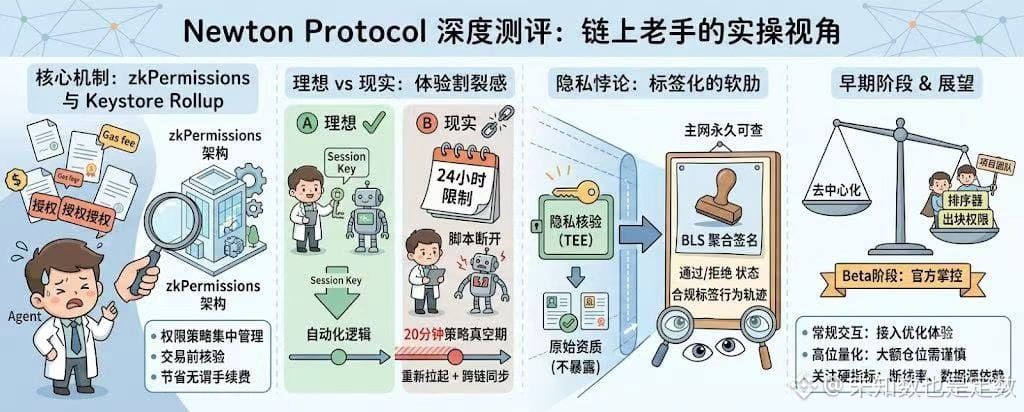
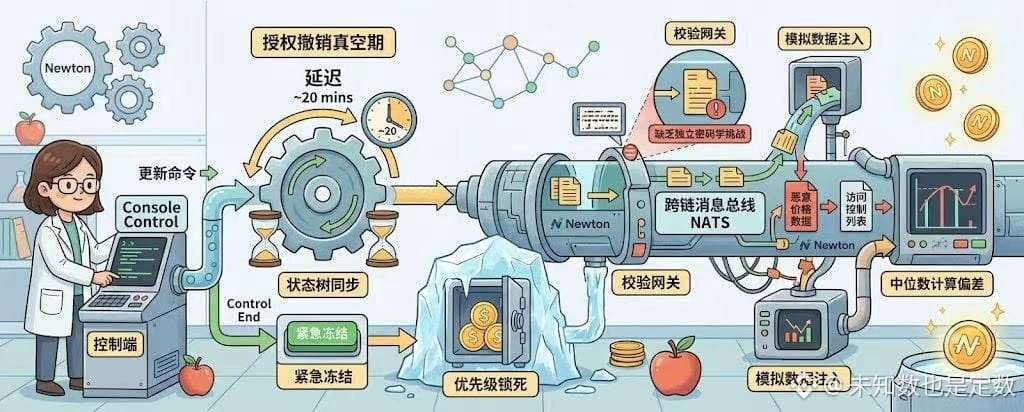
#newt Last weekend I ran cross-chain arbitrage, and the on-chain AI components that went off the rails threw me completely off rhythm. I watched it ingest the wrong data and go on a rampage opening positions. After manually liquidating, I couldn’t even get the underlying logs. This made me re-examine @NewtonProtocol — it’s actually doing subtraction. It directly cuts off the possibility of the model doing nonsense by using a validation network.
When you break down the Newton Mainnet Beta, you can see that it intercepts intent very heavily. The trading red line is fixed in the middleware, and any out-of-bounds calls are simply discarded during the signature aggregation stage. This is basically putting a spiked collar on the agent; together with the staking penalty from $NEWT , no matter how the large model generates hallucinations, it can’t obtain the proof of credential transactions—so it absolutely can’t get onto the chain.
Hard interception really does lock risk down, but when I looked at on-chain data, I noticed a lag in state synchronization. To refine control, it splits permission management into an isolated environment. However, once you update authorization parameters across main chains, state root bridging and block confirmations create a clear vacuum period.
It’s like the earlier joke about $ETH being congested—there’s no easy way to bypass the physical limits of communication. My inference is that in extreme one-sided market conditions, if a strategy urgently needs to loosen permissions, a delay of just a few minutes is enough to freeze the model. And besides, the ordering nodes responsible for packaging permissions aren’t distributed enough right now; if the whole network gets congested, whether it will deadlock and fail to execute life-saving instructions is genuinely worrying.
Many people fantasize about the future Bitcoin $BTC network massively introducing programmable agents, but if even current smart contracts can’t solve execution time lag, you can’t really talk about security boundaries. Adding physical locks to decentralized finance? I think the direction is totally fine. But when faced with the awkward gap between update instructions and state finalization, in the short term it likely can’t handle high-frequency micro-operations orders. Whether this whole system can withstand real traffic, we’ll have to see how it performs going forward. #Newt
When you break down the Newton Mainnet Beta, you can see that it intercepts intent very heavily. The trading red line is fixed in the middleware, and any out-of-bounds calls are simply discarded during the signature aggregation stage. This is basically putting a spiked collar on the agent; together with the staking penalty from $NEWT , no matter how the large model generates hallucinations, it can’t obtain the proof of credential transactions—so it absolutely can’t get onto the chain.
Hard interception really does lock risk down, but when I looked at on-chain data, I noticed a lag in state synchronization. To refine control, it splits permission management into an isolated environment. However, once you update authorization parameters across main chains, state root bridging and block confirmations create a clear vacuum period.
It’s like the earlier joke about $ETH being congested—there’s no easy way to bypass the physical limits of communication. My inference is that in extreme one-sided market conditions, if a strategy urgently needs to loosen permissions, a delay of just a few minutes is enough to freeze the model. And besides, the ordering nodes responsible for packaging permissions aren’t distributed enough right now; if the whole network gets congested, whether it will deadlock and fail to execute life-saving instructions is genuinely worrying.
Many people fantasize about the future Bitcoin $BTC network massively introducing programmable agents, but if even current smart contracts can’t solve execution time lag, you can’t really talk about security boundaries. Adding physical locks to decentralized finance? I think the direction is totally fine. But when faced with the awkward gap between update instructions and state finalization, in the short term it likely can’t handle high-frequency micro-operations orders. Whether this whole system can withstand real traffic, we’ll have to see how it performs going forward. #Newt
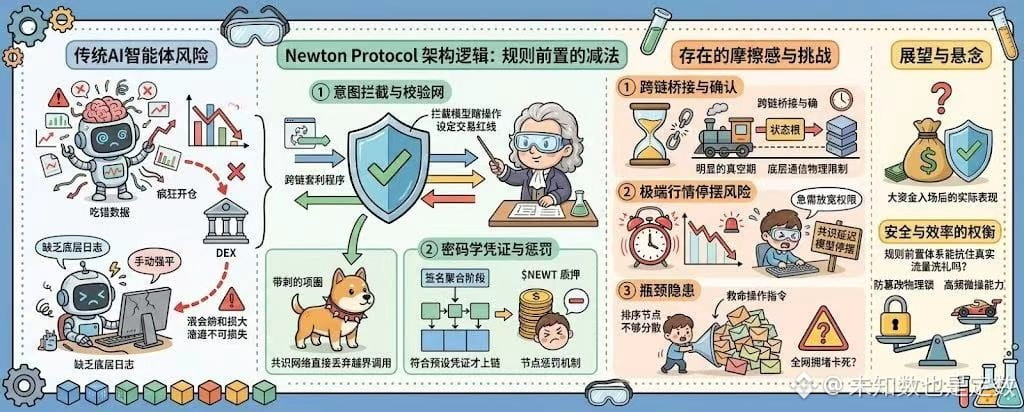
#grvt has been grinding through the industry for a long time. Whenever the market warms up again, a trust crisis seems to follow you like a shadow. Rumors that centralized megaplatforms suddenly go down or misuse assets always keep people on edge. But if you switch to decentralized on-chain platforms instead, the high slippage and sluggish transaction confirmation speeds feel like a chronic torture when volatility spikes. This dilemma between security and efficiency is a kind of pain traders can hardly avoid.
Recently, I spent time researching the hybrid exchange mechanism of the upcoming @grvt_io . I found that it tries to untangle this knot with a new path. It handles the order-matching ledger off-chain, delivering a near-zero-delay, smooth experience, while keeping the most critical parts—fund settlement and clearing—on-chain. In other words, users’ asset ownership always stays in their self-custody wallets, fundamentally eliminating the possibility of a platform acting maliciously or running away with funds.
What’s even more intriguing is its underlying architecture for margin management. In traditional derivatives trading, unused margin often becomes a sunk cost—you just watch various staking yields in the Ethereum $ETH ecosystem. By doubling up, the funds are still locked in positions for integration with underlying on-chain liquidity like Aave and similar protocols. Idle funds can then automatically capture up to 11% returns. But behind these high yields is a test of the protocol’s smart contract security and its ability to withstand liquidation pressure under extreme market conditions. After all, when derivatives and lending protocols are combined like nested “Russian dolls,” the risk-propagation chain becomes more complex.
I reviewed its data over the past month: trading volume and the amount locked both surged against the trend. That suggests this model—pursuing ultra-fast execution, strictly guarding fund sovereignty, and also squeezing maximum capital utilization—really does hit the core anxieties of today’s existing users. Although this hybrid approach still needs time to be validated when facing extreme tail risks, in my view, compared with purely on-chain or purely off-chain models, this compromise that borrows strength from both sides is very likely the inevitable direction for the next phase of evolution in the derivatives track.
Recently, I spent time researching the hybrid exchange mechanism of the upcoming @grvt_io . I found that it tries to untangle this knot with a new path. It handles the order-matching ledger off-chain, delivering a near-zero-delay, smooth experience, while keeping the most critical parts—fund settlement and clearing—on-chain. In other words, users’ asset ownership always stays in their self-custody wallets, fundamentally eliminating the possibility of a platform acting maliciously or running away with funds.
What’s even more intriguing is its underlying architecture for margin management. In traditional derivatives trading, unused margin often becomes a sunk cost—you just watch various staking yields in the Ethereum $ETH ecosystem. By doubling up, the funds are still locked in positions for integration with underlying on-chain liquidity like Aave and similar protocols. Idle funds can then automatically capture up to 11% returns. But behind these high yields is a test of the protocol’s smart contract security and its ability to withstand liquidation pressure under extreme market conditions. After all, when derivatives and lending protocols are combined like nested “Russian dolls,” the risk-propagation chain becomes more complex.
I reviewed its data over the past month: trading volume and the amount locked both surged against the trend. That suggests this model—pursuing ultra-fast execution, strictly guarding fund sovereignty, and also squeezing maximum capital utilization—really does hit the core anxieties of today’s existing users. Although this hybrid approach still needs time to be validated when facing extreme tail risks, in my view, compared with purely on-chain or purely off-chain models, this compromise that borrows strength from both sides is very likely the inevitable direction for the next phase of evolution in the derivatives track.
#newt Last week, when I deployed an automated hedging script on the Newton Mainnet Beta for real-world testing, I happened to run into a period when the gateway tightened the queue stage in phases. My personal liquidation request was inexplicably suspended by the system for nearly a quarter of an hour. This brought back memories of the time I faced extreme market conditions on Ethereum $ETH —back then, at least I could fight back by desperately bidding up the Gas fees to compete directly for speed with the on-chain “scientists.” But the latest underlying development package source code for this network shows that the system doesn’t decide the packing order purely based on how much fuel (gas) users pay. Instead, it prioritizes traffic from project teams that purchased higher-tier slot capacity in the background.
This approach of locking core B-side team assets into the network is indeed an innovation in mechanisms to cope with sell-pressure in terms of a business closed loop. However, for retail users who rely on these lightweight protocols, it feels more like an invisible, lopsided contract. For example, when $BTC suddenly saw a massive selloff and a liquidation stampede hit the entire network, if the interactive platform you’re using didn’t have enough token collateral built up, your personal strategy could be quietly placed into a low-priority queue without you even realizing it—leaving you to endure slippage caused by delays, even up to catastrophic liquidation losses.
At the same time, by reviewing the publicly disclosed financial statements from the past three quarters, you can find that the “prosperity” metrics everyone is currently chasing have limited real value. In the current phase, all frictional costs of these automated interactions are, in practice, fully covered internally by a specific development fund at the base layer. This strategy is understandable during the cold-start phase to maintain reported activity, but it has also meant that to this day, it has not produced any subscription payments in a production environment that were truly made independently by external institutions.
In my view, we shouldn’t dismiss @NewtonProtocol ’s technical strength just because it relied on early funding backstopping. Its approach of force-locking value via mechanisms and extending the token lock period to several years does demonstrate the team’s skill in managing liquidity. But for ordinary retail investors, until $NEWT genuinely has enterprise-level business cash flows that can independently carry profits and losses, you must always guard against the risks brought by hidden algorithms. Giving its market performance a seven-point expectation, while leaving three points of reverence, is the rational choice for long-term participation. #Newt
This approach of locking core B-side team assets into the network is indeed an innovation in mechanisms to cope with sell-pressure in terms of a business closed loop. However, for retail users who rely on these lightweight protocols, it feels more like an invisible, lopsided contract. For example, when $BTC suddenly saw a massive selloff and a liquidation stampede hit the entire network, if the interactive platform you’re using didn’t have enough token collateral built up, your personal strategy could be quietly placed into a low-priority queue without you even realizing it—leaving you to endure slippage caused by delays, even up to catastrophic liquidation losses.
At the same time, by reviewing the publicly disclosed financial statements from the past three quarters, you can find that the “prosperity” metrics everyone is currently chasing have limited real value. In the current phase, all frictional costs of these automated interactions are, in practice, fully covered internally by a specific development fund at the base layer. This strategy is understandable during the cold-start phase to maintain reported activity, but it has also meant that to this day, it has not produced any subscription payments in a production environment that were truly made independently by external institutions.
In my view, we shouldn’t dismiss @NewtonProtocol ’s technical strength just because it relied on early funding backstopping. Its approach of force-locking value via mechanisms and extending the token lock period to several years does demonstrate the team’s skill in managing liquidity. But for ordinary retail investors, until $NEWT genuinely has enterprise-level business cash flows that can independently carry profits and losses, you must always guard against the risks brought by hidden algorithms. Giving its market performance a seven-point expectation, while leaving three points of reverence, is the rational choice for long-term participation. #Newt


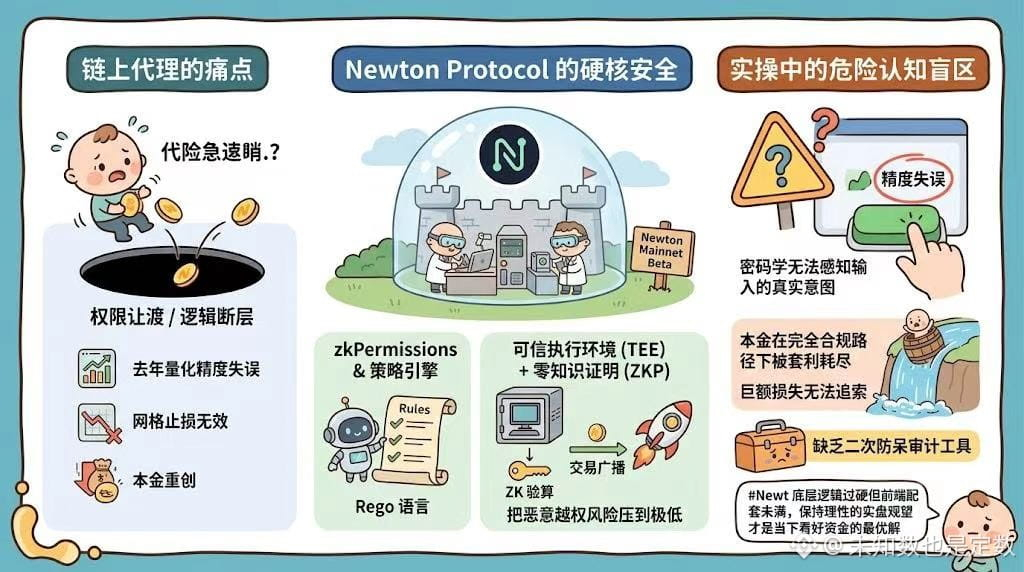
#newt Last year, when I was configuring quant strategies, a precision error caused the grid stop-loss to become ineffective, and the account was instantly dealt a severe blow. That was a wake-up call for me: as long as on-chain proxies involve permission delegation, even a tiny logic gap can be devastating. When @NewtonProtocol launched the Newton Mainnet Beta and promoted it with claims about cryptography-driven risk control, I chose to skip the marketing rhetoric and go straight for the hard logic—its credible execution environment and the integration of zero-knowledge proofs.
Objectively speaking, this zkPermissions suite hits the industry's pain points. Conventional API custody turns assets blind into a black box, while this protocol uses a strategy engine written in the Rego language to force risk-control verification to run in offline hardware-grade isolation. Before any transaction broadcast, rule matching must happen in a sealed environment; on-chain only performs the zero-knowledge verification. At the cryptographic level, this drives malicious over-privilege risk to extremely low levels.
But after running practical simulations, I noticed a dangerous cognitive blind spot. Everyone assumes that a proxy verified by ZK is absolutely safe, yet they overlook the fact that cryptography fundamentally cannot determine whether the instructions in the input match your true intent. For example, if you make a mistake in the token precision when configuring automated position sizing—intending only to test with a small amount—the underlying smart contract might still adjust using the maximum precision, moving the $ETH or $BTC assets you hold in a large position. The system will still give a green light and execute relentlessly along a fully compliant path, until your principal is instantly drained by arbitrage.
In this ruthless context, massive losses caused purely by input mistakes are not recoverable. In the current $NEWT closed-loop, I still haven’t seen a visualization configuration tool that can perform a second layer of anti-error auditing. This technology provides a solid framework for the proxy trust mechanism, but before the security threshold is raised enough, complex parameters remain a risk for ordinary people. As for the subsequent evolution of #Newt , my judgment is that the underlying logic is robust, but the front-end support isn’t complete yet—maintaining a rational, hands-on wait-and-see approach is the optimal solution for protecting and favoring one’s funds right now.
Objectively speaking, this zkPermissions suite hits the industry's pain points. Conventional API custody turns assets blind into a black box, while this protocol uses a strategy engine written in the Rego language to force risk-control verification to run in offline hardware-grade isolation. Before any transaction broadcast, rule matching must happen in a sealed environment; on-chain only performs the zero-knowledge verification. At the cryptographic level, this drives malicious over-privilege risk to extremely low levels.
But after running practical simulations, I noticed a dangerous cognitive blind spot. Everyone assumes that a proxy verified by ZK is absolutely safe, yet they overlook the fact that cryptography fundamentally cannot determine whether the instructions in the input match your true intent. For example, if you make a mistake in the token precision when configuring automated position sizing—intending only to test with a small amount—the underlying smart contract might still adjust using the maximum precision, moving the $ETH or $BTC assets you hold in a large position. The system will still give a green light and execute relentlessly along a fully compliant path, until your principal is instantly drained by arbitrage.
In this ruthless context, massive losses caused purely by input mistakes are not recoverable. In the current $NEWT closed-loop, I still haven’t seen a visualization configuration tool that can perform a second layer of anti-error auditing. This technology provides a solid framework for the proxy trust mechanism, but before the security threshold is raised enough, complex parameters remain a risk for ordinary people. As for the subsequent evolution of #Newt , my judgment is that the underlying logic is robust, but the front-end support isn’t complete yet—maintaining a rational, hands-on wait-and-see approach is the optimal solution for protecting and favoring one’s funds right now.
Log in to explore more content