

 LIVE
橙子Joyce
 Square Verified+
币安广场的每天直播北京时间晚上20:00-23:00|十年以上美股市场投研策略|十年以上投资BTC.ETH.BNB.SOL|贵金属投资策略黄金.白银.铜|中长期价值投资者|WEB3项目投研|推特X:@Joyce88AI|✨星河社区联合创始人✨

BNB Holder
Frequent Trader
8.9 Years
1.5K+ Following
41.5K+ Followers
48.4K+ Liked
Posts
All
Quotes
Videos
Live
PINNED
·
--
🎙️ #Build Binance Square and the BNB ecosystem together—connect the future, empower through diversity, and build the Internet of Everything! Global stock markets have recently seen continued sharp volatility and declines, with fear indexes soaring

 LIVE
137 listens · 1 in Live Trading
BNB
Holding
-8.94
1
PINNED

AMZNUS-1.50%
NVDAUS-4.09%
SPCXUS-5.45%

灼见Cryptosighted
·
--
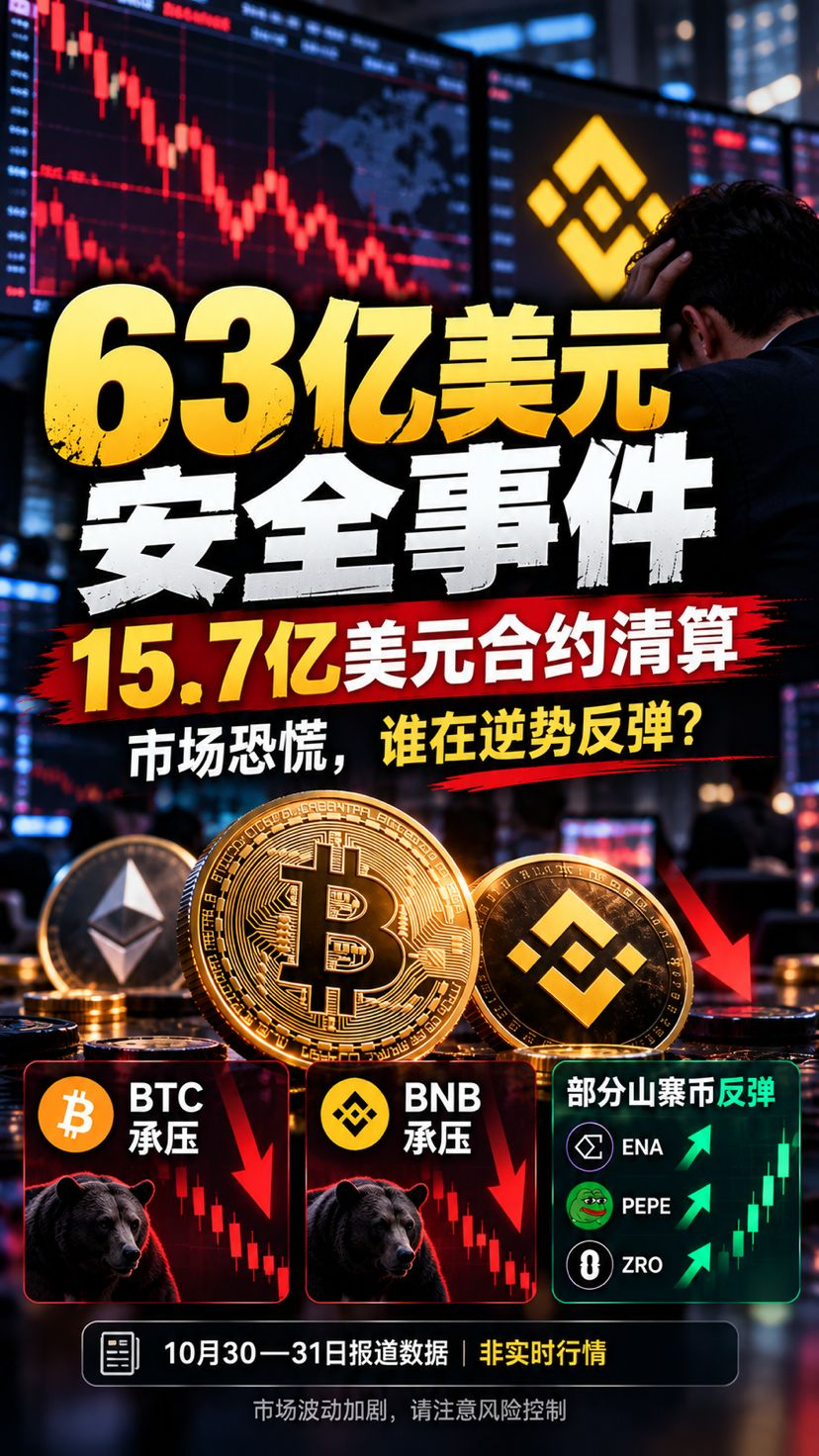
🚨 $6.3 billion stolen, $1.57 billion in contract liquidations! But what’s most worth watching today may not be how much BTC fell.
The crypto market has really been unsettled these past two days.
Let’s start with a few data points:
▪️ Binance security incident: involving about $6.3 billion in assets
▪️ Frozen or identified so far: about $3 billion
▪️ Crypto contract liquidations: about $1.57 billion
▪️ BTC: once fell to around $76,368
▪️ ETH: once fell to around $2,178
▪️ BNB: once fell to around $710
These figures come from public reports between October 30 and 31, not real-time market quotes.
What’s most painful is that when the drop was at its worst, not every coin in the market was falling.
According to CoinDesk, some tokens rebounded on October 30:
ENA: +8.4%
PEPE: +7.3%
ZRO: +12%
What does this mean?
Market panic does not mean all capital stops trading.
But don’t get this wrong either: a rebound in a few coins does not mean the whole market has stabilized.
Look at two more important data points:
Open interest in contracts fell by about 3%, and the Fear and Greed Index dropped to 36.
On one side, leveraged positions are being reduced; on the other, sentiment is shifting toward fear.
What I think we need to watch most closely right now is not which coin suddenly pumps 10%, but:
① Whether BTC can reclaim the $78,000–$80,000 area.
② Whether BNB can regain buying support after the incident.
③ Whether the recovery progress of the trading platform and the asset recovery situation can truly stabilize market confidence.
I actually think this round of trading has a very real issue:
The market doesn’t lack coins that can surge; it lacks capital willing to keep buying.
A 10% rise in one day is easy to grab attention, but if it falls back the next day, those chasing the move may just be providing exit liquidity for others.
After this crash, which do you think will move first: BTC, BNB, or those smaller coins that rose against the trend?
#BTC #ETH #BNB
·
--
🎙️ Build Binance Square; everyone, follow mainstream valuable coins: BTC, ETH, BNB, SOL 🚀🚀🚀

End
02 h 17 m 05 s
1.8k
4

Dafoor
·
--
🧧🎁 Comment to claim GIFT BOX🧧🎁
🎁🎁🎁🎁🎁🎁🎁🎁🎁🎁🎁🎁🎁🎁
🎁🎁🎁🎁🎁🎁🎁🎁🎁🎁🎁🎁🎁🎁


奶龙Bit
·
--
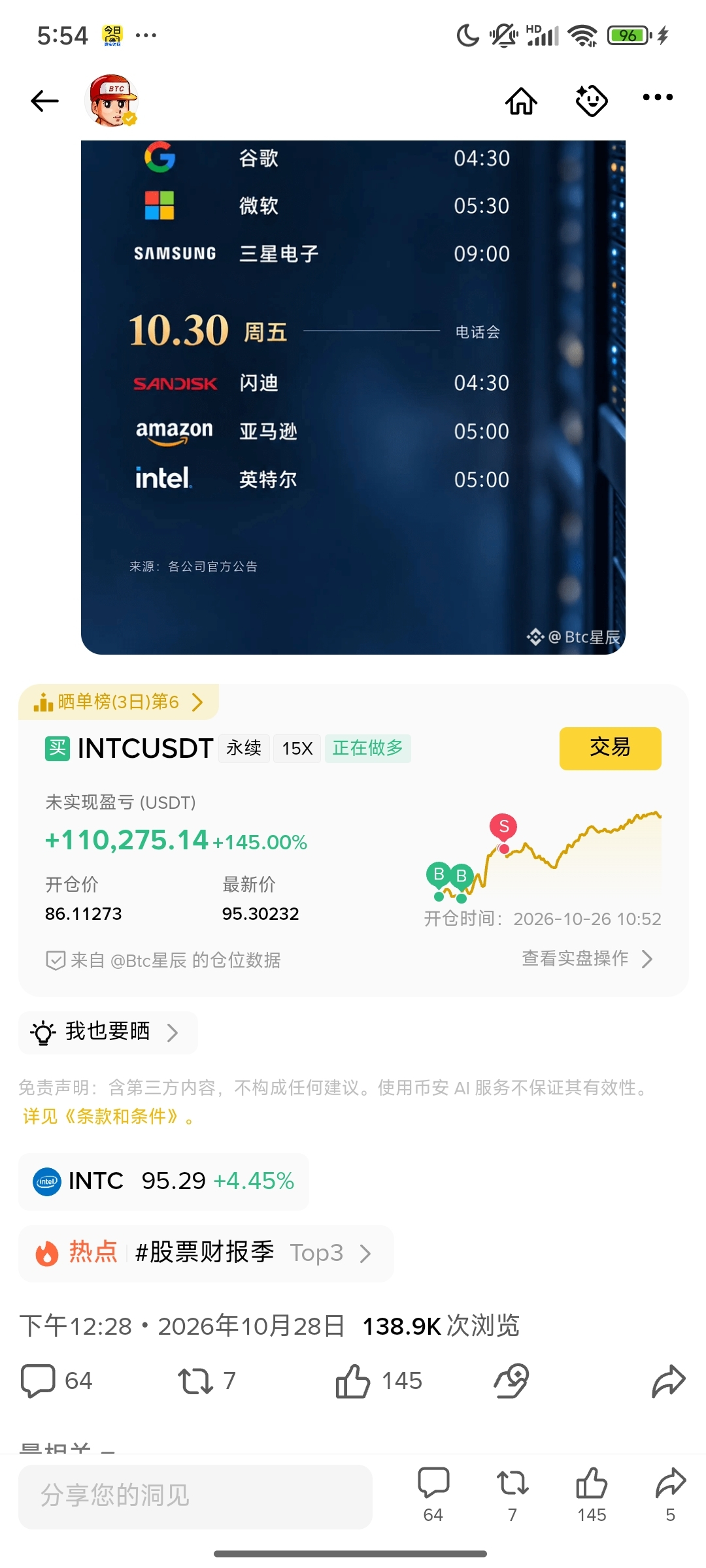
Since even crypto’s top star, Xingchen BTC, is checking out this 📕, it must be worth something. After all, we should follow the lead of the top players when trading—if we jump in recklessly on our own, we’re bound to lose. And wow, Xingchen is insanely good: one trade is worth an ordinary person’s lifetime earnings. Making a million in a single trade is absolutely terrifying 🐯🐯🐯🐯$INTC


技委书记
·
--
🌹Stay strong, Binance!🌹
In the face of a massive attack by North Korean hackers, Binance didn’t pass the buck. Instead, it quickly froze the assets, promised to fully cover the losses, and protected users’ funds. That sense of responsibility deserves support. North Korea’s state-sponsored theft of other people’s money is what truly deserves condemnation.
$BNB
$BNB


兰汐kyL
·
--
BullishPut simply, this sell-off wasn’t caused by a single news item that smashed the market—it was the result of several pressures hitting at once. $BTC fell from $79,997.30 to $76,979.26, down 3.77% in 24 hours, wiping out $3,018.04 in value; it touched a low of $76,500.11 intraday. 🚨
First, macro sentiment suddenly turned colder. Concerns about high interest rates, inflation, and risk assets haven’t gone away. When tech stocks weaken, high-volatility assets like crypto are often among the first to see investors cut their positions. Yesterday’s rebound sentiment hadn’t even found its footing before reality kicked it back down today. 🚨
Second, leveraged longs were flushed out in a wave of liquidations. As prices fell, stop-losses and liquidations on long contracts were triggered one after another; the more prices fell, the more positions were liquidated, which pushed prices down further—a classic liquidation cascade. Many people thought it was just a pullback, but once liquidity thinned, slippage started setting in across the order book. 🚨
Third, the market itself was already on shaky ground. On October 29, the narrative was that $BTC had climbed back above $81,800. Today it has fallen below $77,000, showing that there isn’t enough buying support from traders chasing the rally. At this stage, the biggest worry isn’t the fall itself—it’s that no one steps in to buy as prices drop. 🚨
In short, this wasn’t a “sudden crash.” The market was settling the accumulated leverage, fragile sentiment, and macroeconomic pressure all at once. Public news coverage points to weakening risk appetite and leveraged liquidations as the main narratives, but so far there’s no single event that fully explains the entire decline. This is market analysis only and does not constitute investment advice. 🚨#美国中期选举倒计时,美股博弈窗口已开启?


寿山福禄Luffy
·
--
Beauty lies in the bones, not the skin; skin-deep beauty lasts a moment, while true beauty lasts a lifetime.


静心1688
·
--
🧧Follow, like, claim 🎁🎁🎁
#瑞士首只现货比特币ETF预计11月上市
#瑞士首只现货比特币ETF预计11月上市


正乾--四条2
·
--
DeepSeekbug: More Than Tokens—Let’s Talk About Value
The Web3 wave never stops. New narratives, technologies, and projects keep appearing one after another. Hype builds quickly, and grand stories are easy to tell. But once the noise dies down, two things matter most: whether we can solve real problems, and whether there are like-minded people willing to stay and build together. What moved me about #DeepSeekbug was a simple yet deeply resonant question: As AI gets better and better at helping us tackle all kinds of problems, who will record the growth that belongs to us as people? Code has version logs, trading has review records, and startups reflect on their successes and failures. Everyone’s life, too, deserves its own record of growth. AI empowers us to reflect and improve; blockchain gives those records a trustworthy, traceable home. Every inspiring vision must make the journey from idea to reality. We don’t peddle myths, make empty promises, or pass off future aspirations as present-day achievements. We move forward steadily, stand the test of time, and grow at our own pace. It’s a long road, and we’ll walk it together, guided by shared conviction. If you’re also interested in AI, Web3, personal growth, and building a community together, you’re welcome to join the conversation. Fix the Bug. Evolve Yourself. Record Your Journey. Fix the bug, evolve yourself, and record your life.


Sherry长得帅不如跑的快1688
·
--
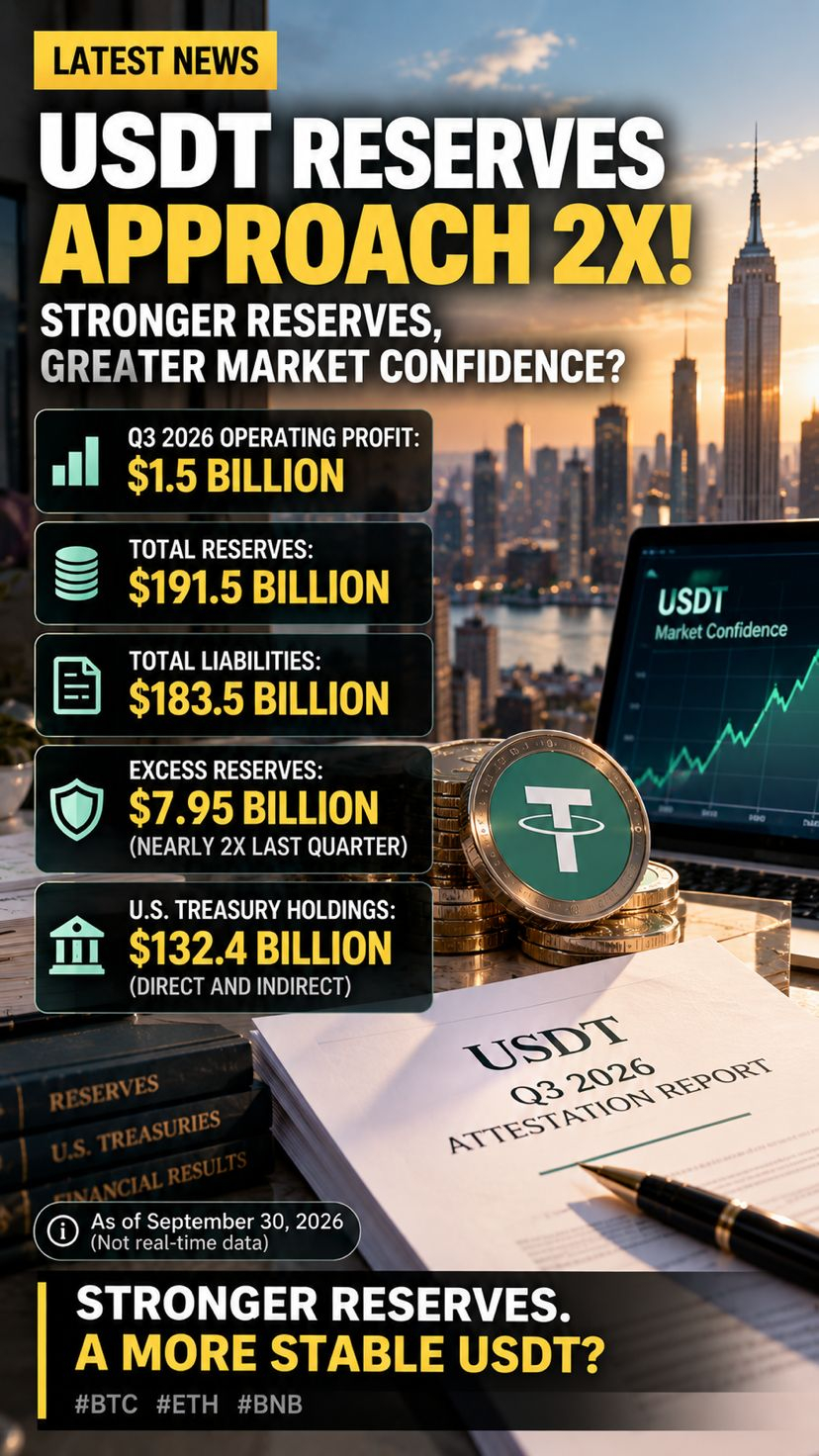
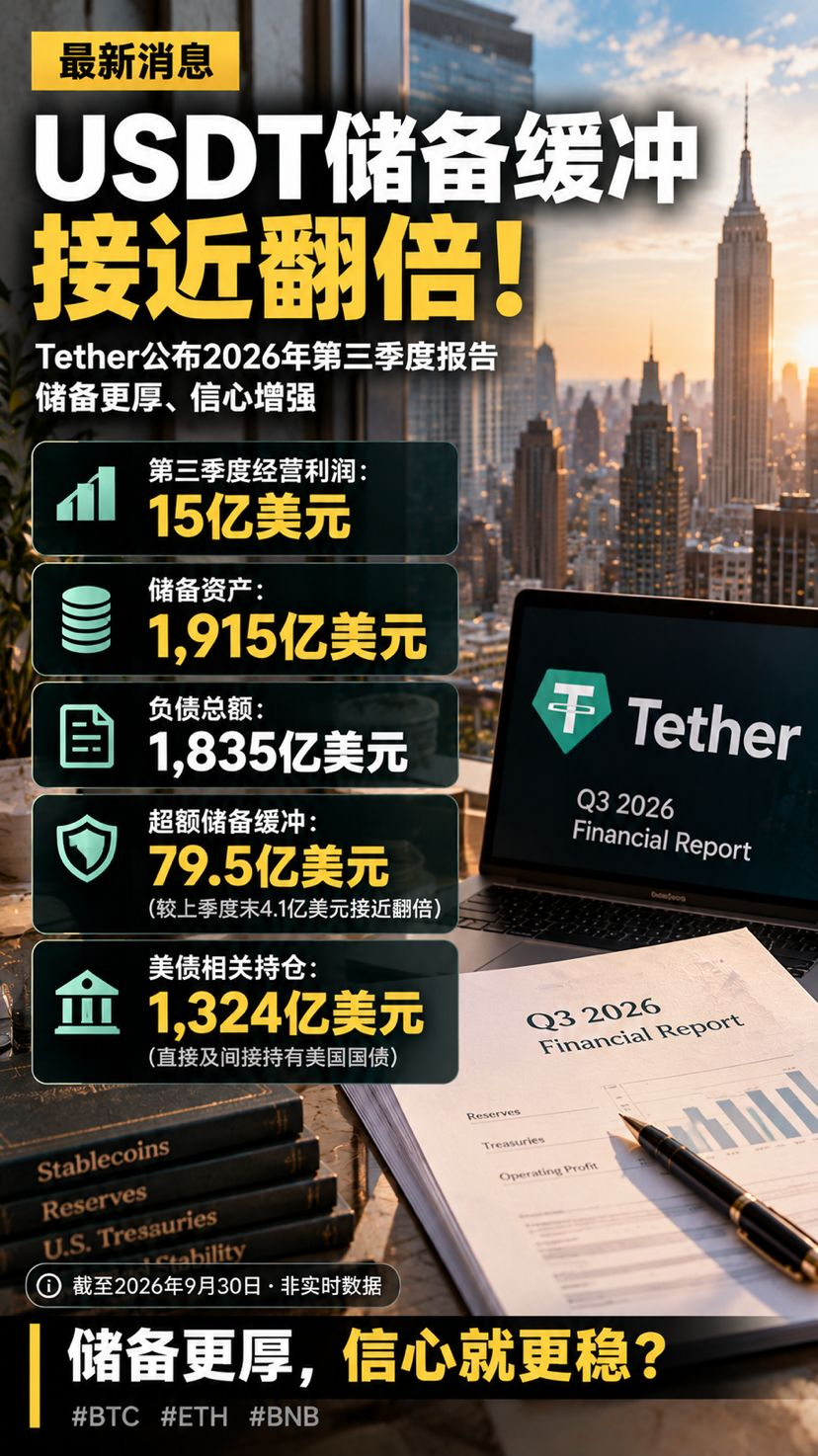
🚨 USDT'S RESERVE BUFFER NEARLY DOUBLES! $1.5 BILLION IN QUARTERLY PROFIT — IS TETHER BECOMING A TREASURY GIANT?
Crypto markets are volatile, but Tether just released financial figures worth watching!
Its Q3 report, published October 30, shows:
💰 Operating profit: $1.5 billion
🏦 Reserve assets: $191.5 billion
🛡️ Excess reserves: $7.95 billion, nearly double the previous quarter's $4.1 billion
🇺🇸 Direct and indirect U.S. Treasury holdings: $132.4 billion
IMPORTANT: These are September 30 reserve figures, not today's live balances or a full-year audit.
Four key signals 👇
🔥 ① A larger reserve buffer may strengthen USDT's ability to withstand redemption pressure
💵 ② Treasuries and reverse repos drive much of Tether's earnings, deepening the connection between stablecoins and traditional finance
⚖️ ③ Large reserves don't eliminate risk. Liquidity, valuations and transparency still matter
₿ ④ BTC, ETH and BNB trading liquidity is closely linked to stablecoins, but reserve growth does not guarantee higher crypto prices
THE BIG QUESTION:
STRONGER RESERVES OR HIDDEN RISKS?
CORE VARIABLES:
REDEMPTIONS × LIQUIDITY × TRANSPARENCY
What I'm watching:
👀 USDT's dollar peg and large redemptions
👀 Reserve composition and future attestations
👀 U.S. Treasury yields
👀 Weekend BTC, ETH and BNB liquidity
👀 Fully reported U.S. spot ETF flows
The real strength of a stablecoin isn't just how much it earns.
It's whether it can keep honoring redemptions when markets are under stress!
👇 Which side are you on?
🟢 CONFIDENCE: A larger buffer strengthens market trust
🔴 CAUTION: Transparency and liquidity still need testing
#BTC #ETH #BNB

·
--
🎙️ Build Binance Square, Hold BNB | Saturday: Has It Hit Bottom? Let's Talk~

End
04 h 38 m 23 s
13.9k
31
·
--
🎙️ #Building Binance Square and the BNB ecosystem together, connecting the future, empowering diversity, and building an interconnected world! Investment strategy analysis and live trading for U.S. stocks on Binance

End
03 h 20 m 51 s
2.6k
BNB
Holding
-9.14
7



Log in to explore more content