

goat111
333 Posts

goat111
Report
Block User
BNB|BTC信仰者,屯币党。⭐平时专注于撸毛赛道,偶尔会发一些动教程和通知。crypto&项目分享|DYOR,不构成投资建议
Open Trade

BNB Holder
Frequent Trader
11.9 Months
55 Following
2.2K+ Followers
845 Liked
Posts
Portfolio
All
Quotes
·
--
#币安神算子
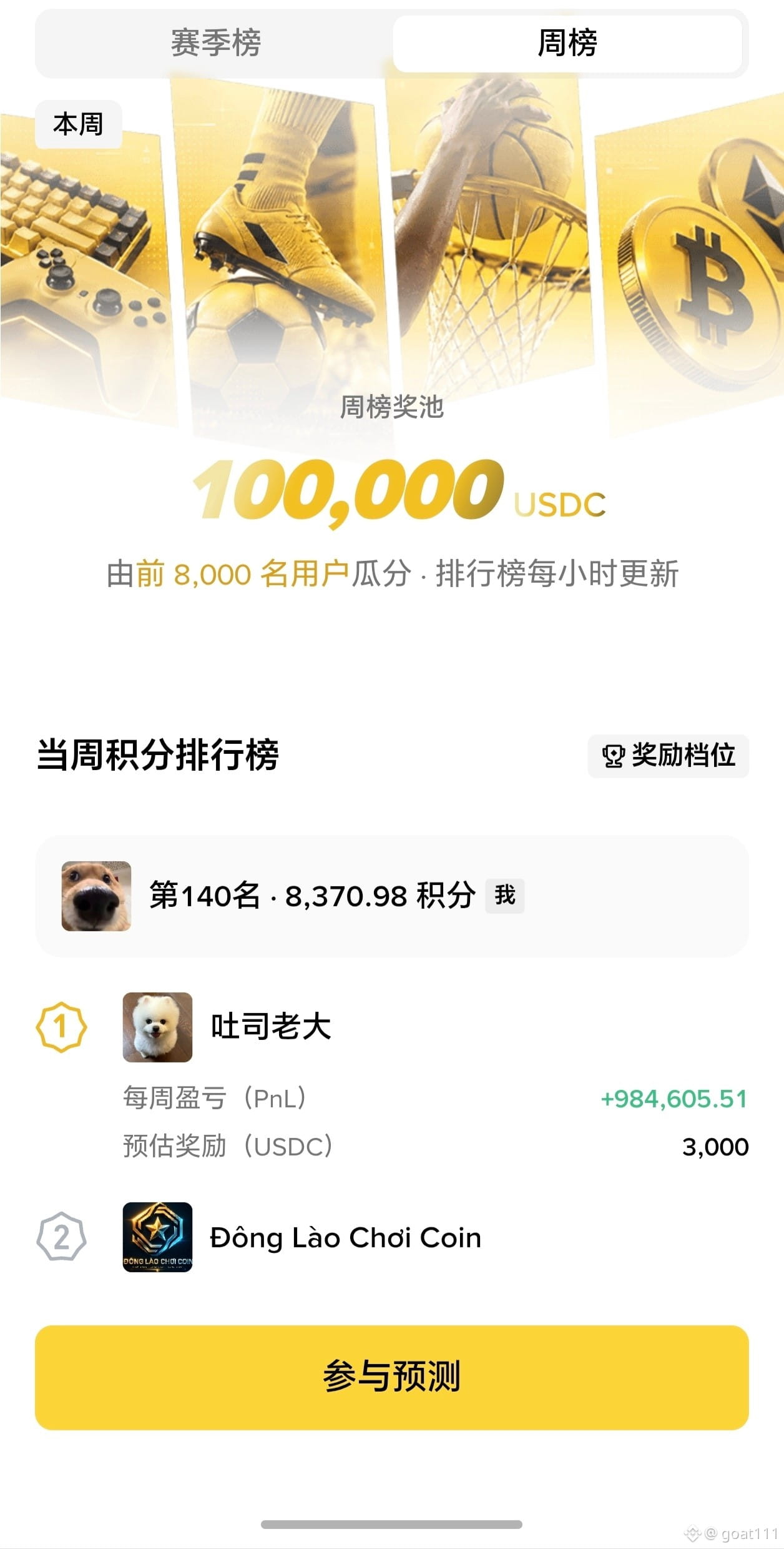
A lot of people are saying the top few on the leaderboard got liquidated today, but actually they just wagered their points.
The weekly leaderboard profits should be pretty clear.
Then Binance removed the BTC five-minute up/down market, and with the first-place player making a million in profit, does that mean they’ve basically locked in the overall leaderboard?
2
584
·
--
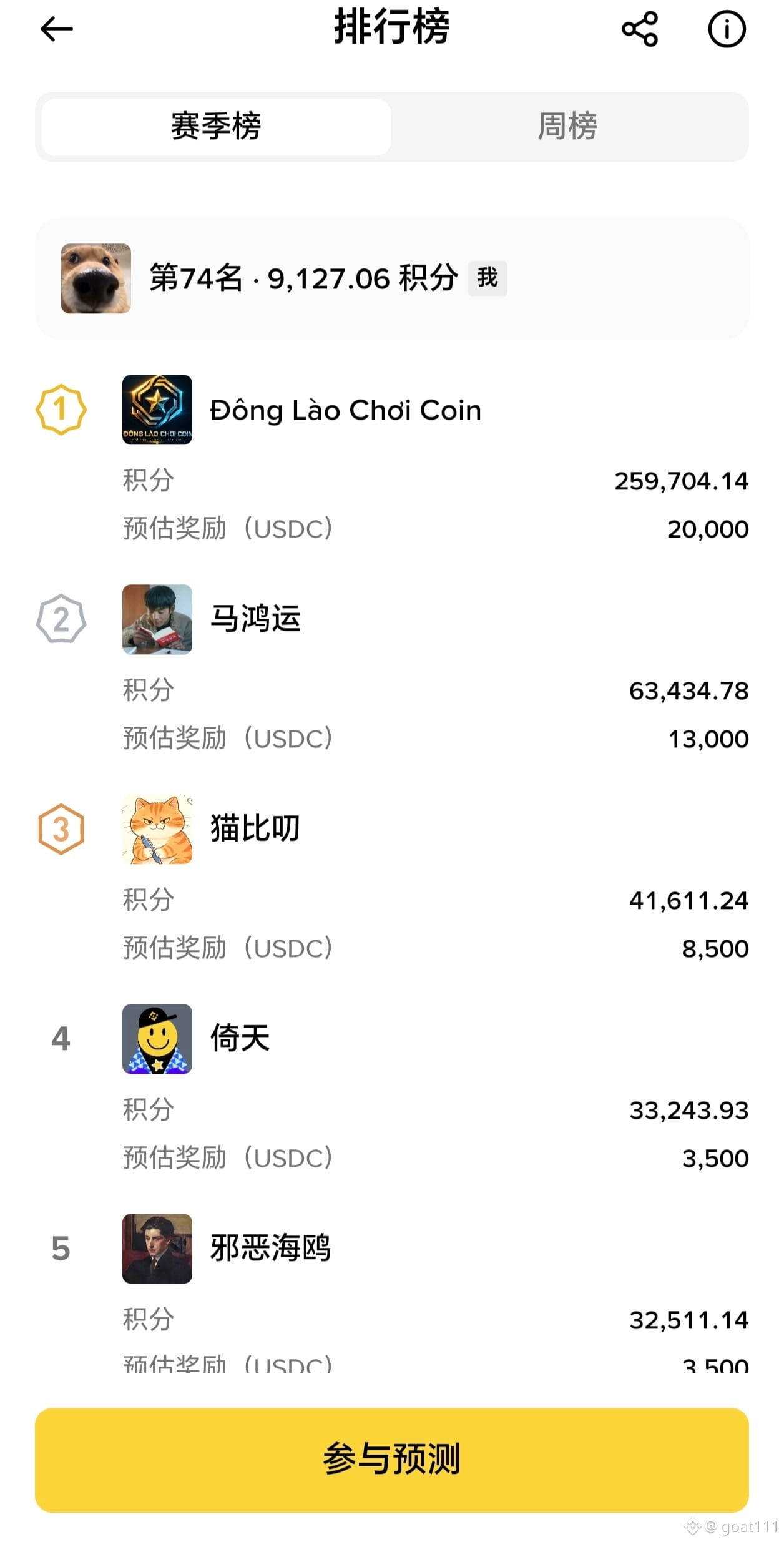
If anyone ever again claims to be the prediction king, show them this leaderboard.
But first place is just ridiculous—they went all in and scored 200,000 points on day one.
And here I am, giving it my all and only getting 9,000 points. #币安神算子
If anyone ever again claims to be the prediction king, show them this leaderboard.
But first place is just ridiculous—they went all in and scored 200,000 points on day one.
And here I am, giving it my all and only getting 9,000 points. #币安神算子
But first place is just ridiculous—they went all in and scored 200,000 points on day one.
And here I am, giving it my all and only getting 9,000 points. #币安神算子
43
12
22.4k
·
--
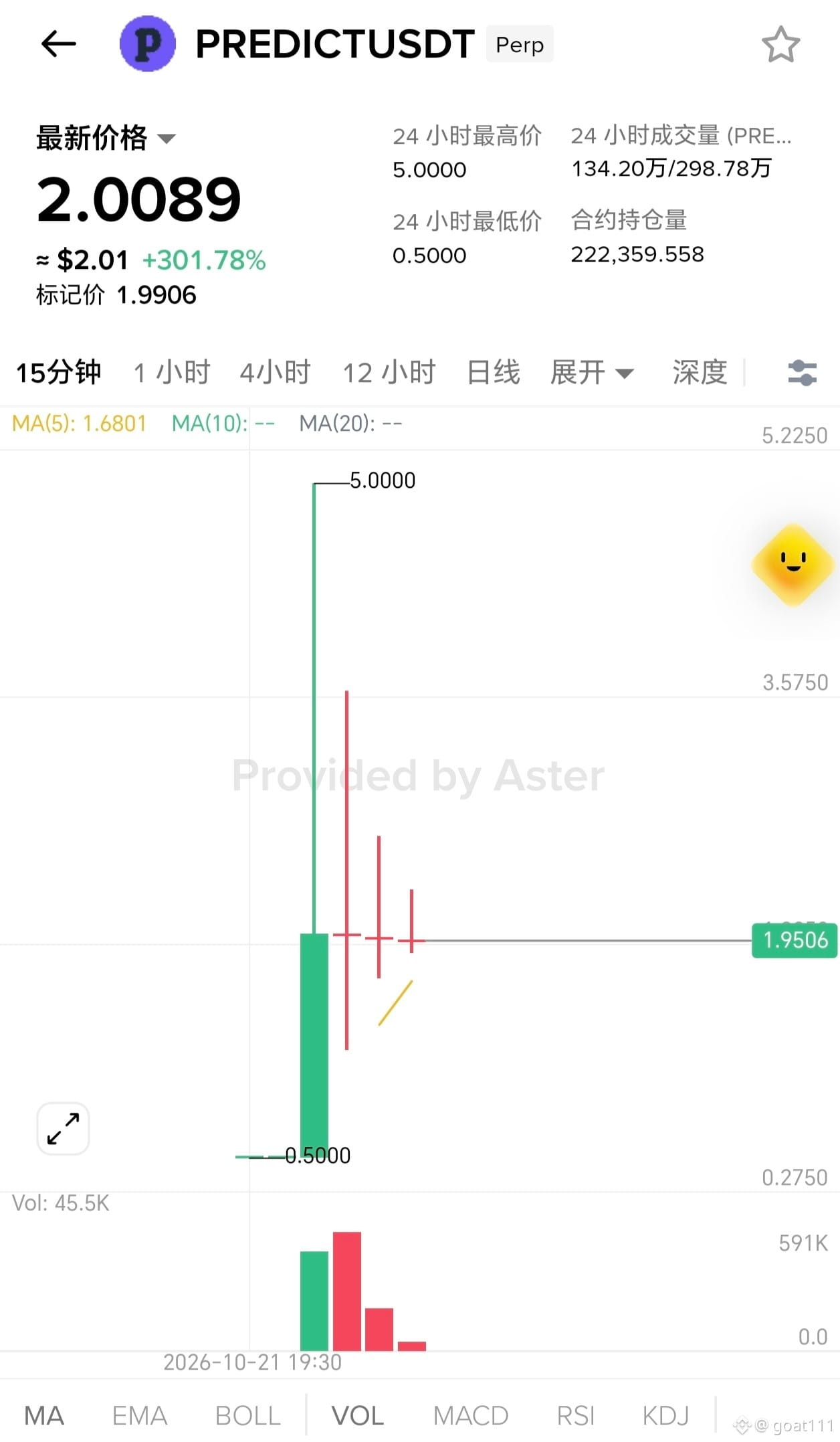
In an overlooked corner, Predict got listed on Aster's pre-market contracts.
It peaked at a $5B FDV; it's currently at a $2B FDV.
Anyone who farmed it should be making a fortune.
In an overlooked corner, Predict got listed on Aster's pre-market contracts.
It peaked at a $5B FDV; it's currently at a $2B FDV.
Anyone who farmed it should be making a fortune.
It peaked at a $5B FDV; it's currently at a $2B FDV.
Anyone who farmed it should be making a fortune.
1
464
·
--
What I find most compelling about Nillion is its ability to keep on-chain trading strategies private until they are executed. Its core product, Covenants, can encrypt and seal trading instructions, only unlocking them for execution once predefined conditions are met. This helps reduce the risk of trading intentions being exposed prematurely.
I’m especially excited about its potential applications in conditional orders, sealed-bid auctions, and automated payments, giving users more control over how they carry out on-chain operations.
With DUSK launching on Ethereum mainnet, Nillion’s seven-era roadmap has reached a key milestone. Looking ahead, I’m most excited about broader EVM-chain support, cross-chain settlement, more flexible trigger conditions, and stronger privacy protections.
I hope these capabilities will gradually translate into products that are easy for everyday users to use, bringing more practical use cases to the crypto market.
Keep following the development progress of $NIL and @nillionnetwork
DYOR. This is not investment advice.
#nil $NIL @nillionnetwork
What I find most compelling about Nillion is its ability to keep on-chain trading strategies private until they are executed. Its core product, Covenants, can encrypt and seal trading instructions, only unlocking them for execution once predefined conditions are met. This helps reduce the risk of trading intentions being exposed prematurely.
I’m especially excited about its potential applications in conditional orders, sealed-bid auctions, and automated payments, giving users more control over how they carry out on-chain operations.
With DUSK launching on Ethereum mainnet, Nillion’s seven-era roadmap has reached a key milestone. Looking ahead, I’m most excited about broader EVM-chain support, cross-chain settlement, more flexible trigger conditions, and stronger privacy protections.
I hope these capabilities will gradually translate into products that are easy for everyday users to use, bringing more practical use cases to the crypto market.
Keep following the development progress of $NIL and @Nillion
DYOR. This is not investment advice.
#nil $NIL @Nillion
1
295
·
--
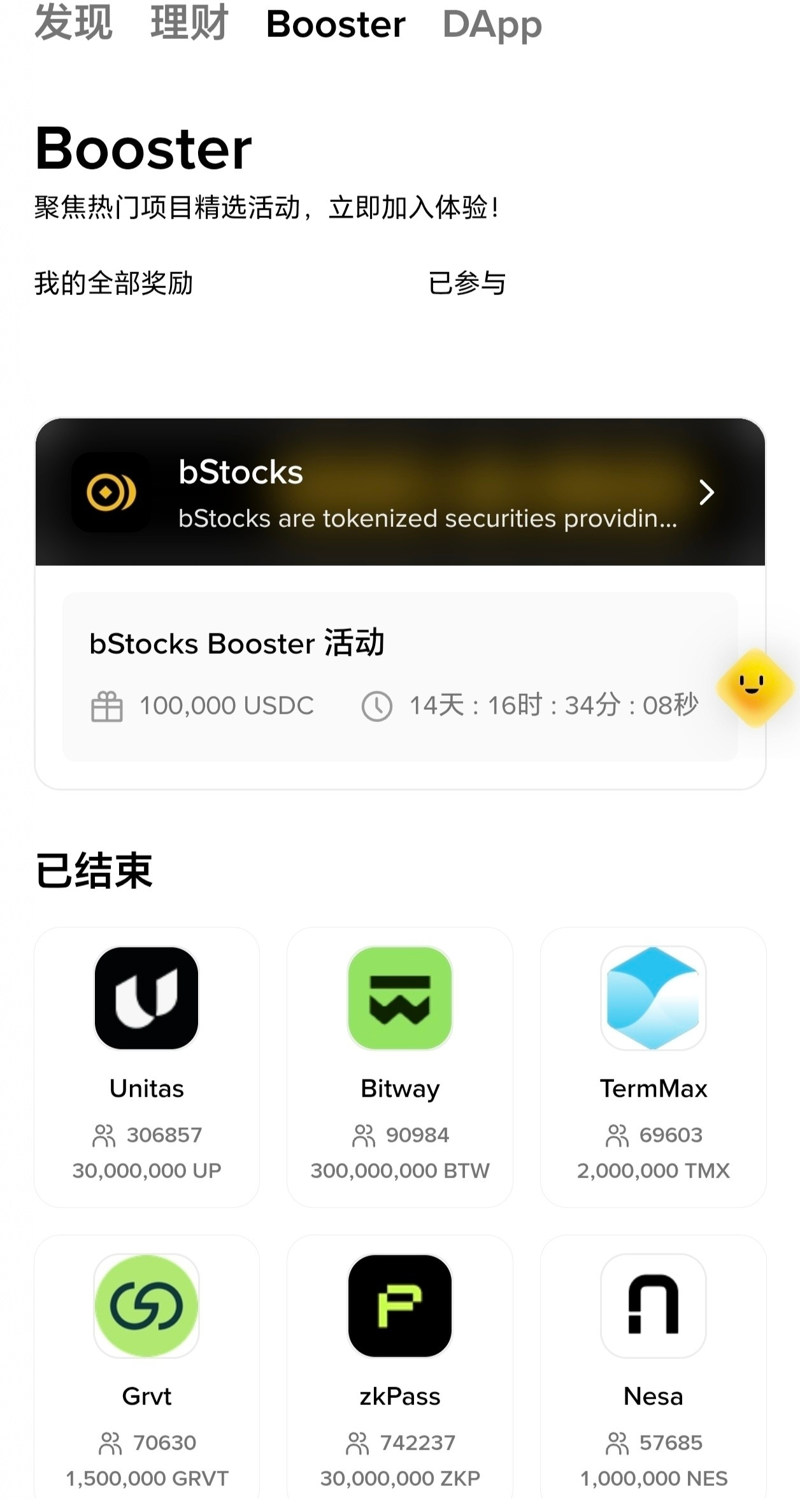
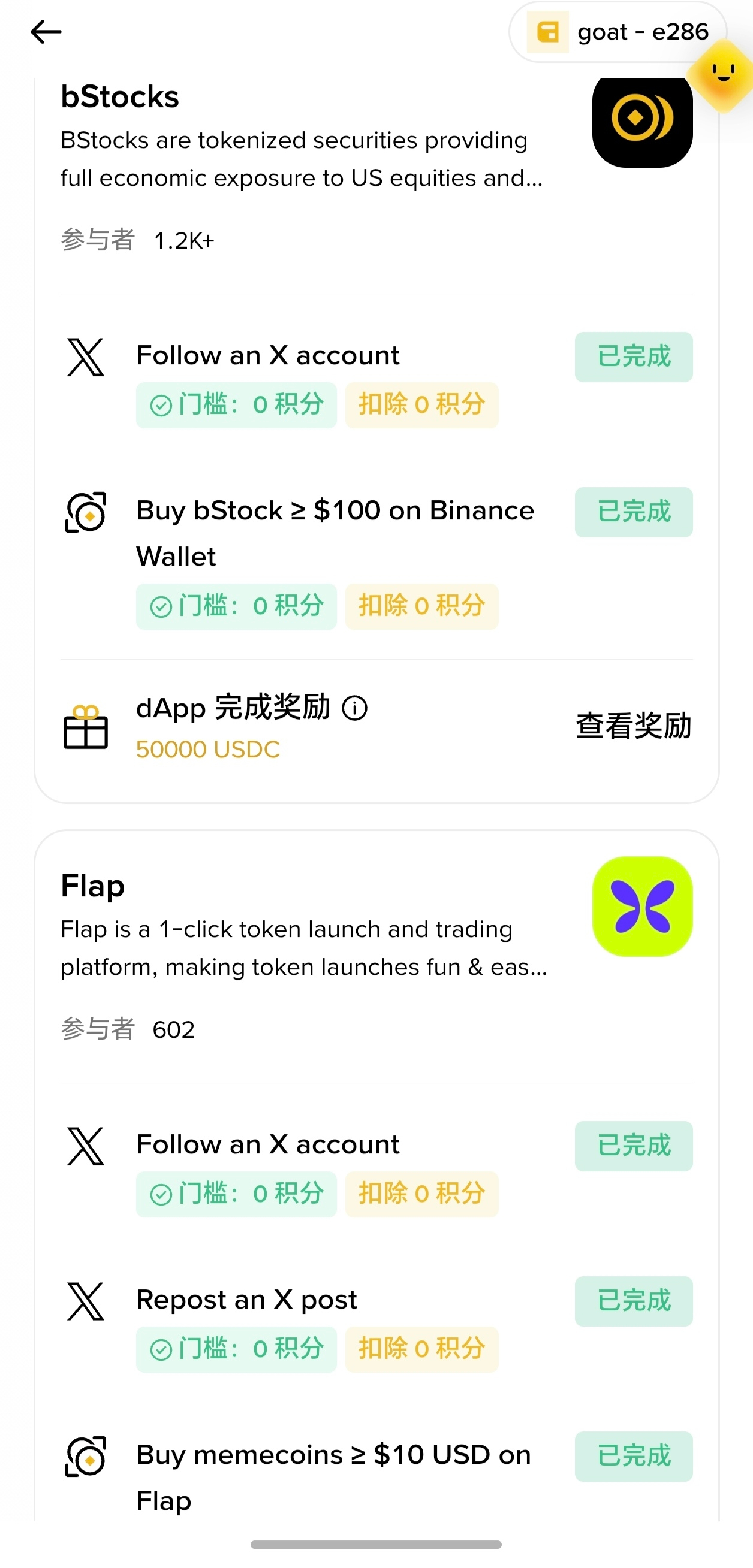
New Booster launch
⭐ Participate by redeeming 2 points. 10U in total rewards, with 10,000 spots available.
Complete the tasks as soon as possible.
Task 1
1. Follow the official Bstock account.
2. Trade 100U worth of Bstock stock tokens. We recommend buying 101U worth of Apple or QQQ.
Task 2
1. Follow the official Flap account.
2. Repost the relevant article.
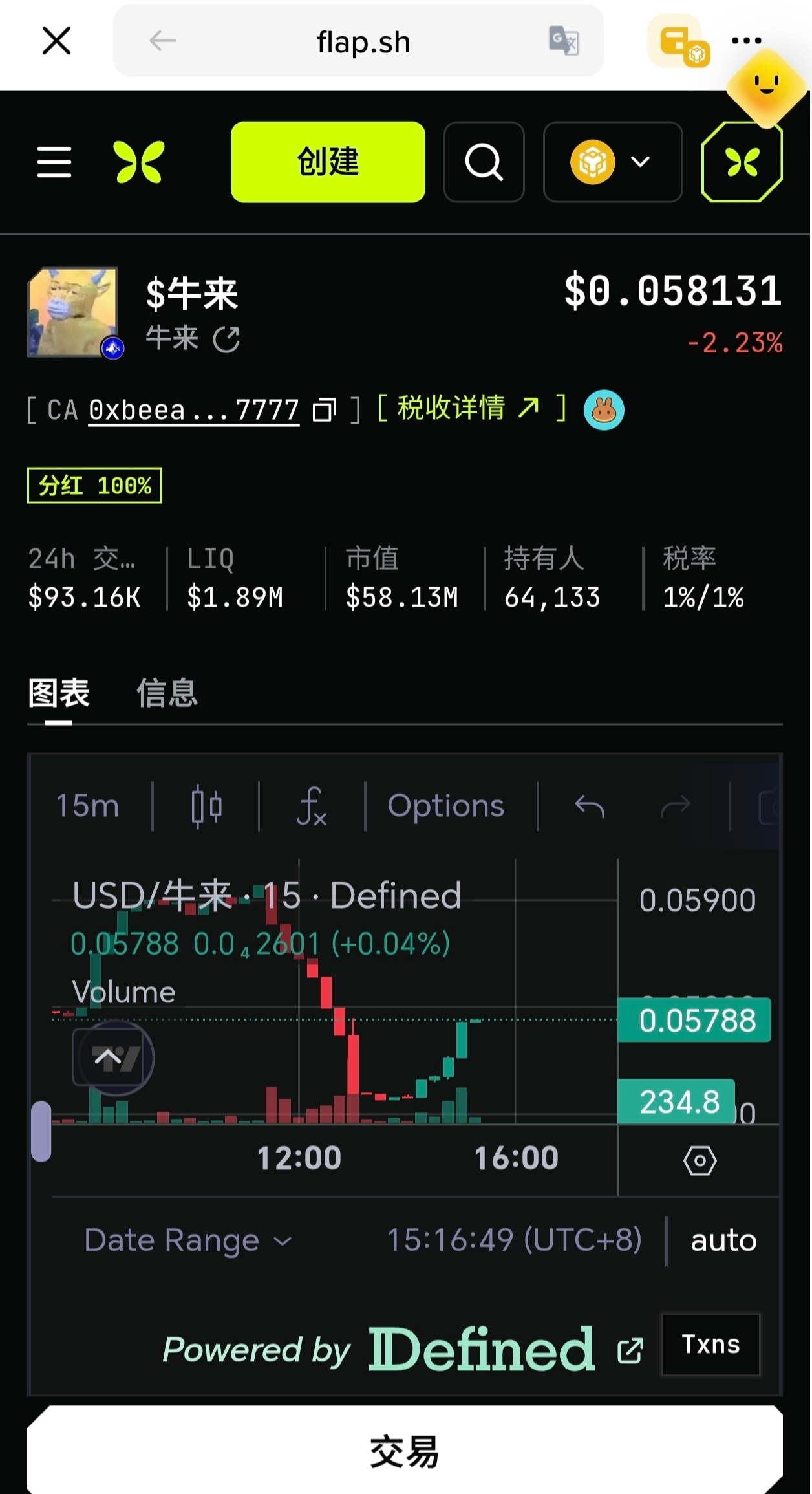
3. Buy or sell 10U worth of stock memes. We recommend buying 11U worth of Niu Lai.
⚠️ Make sure you have 11U worth of BNB ready. Filter by market cap, and be careful not to buy a fake copy. If needed, compare the CA.
1
420
·
--
Turns out there are still so many foreigners farming Alpha?
Binance has definitely been running fewer and fewer campaigns lately, though—whether it’s spot trading competitions, Alpha, Booster, or even those little write-ups (creator tasks). There hasn’t been anything since September.
I wonder if the market has just been too quiet, or if Binance is starting to shift its focus from crypto to stocks.
Hope we get another bull run for retail traders someday.
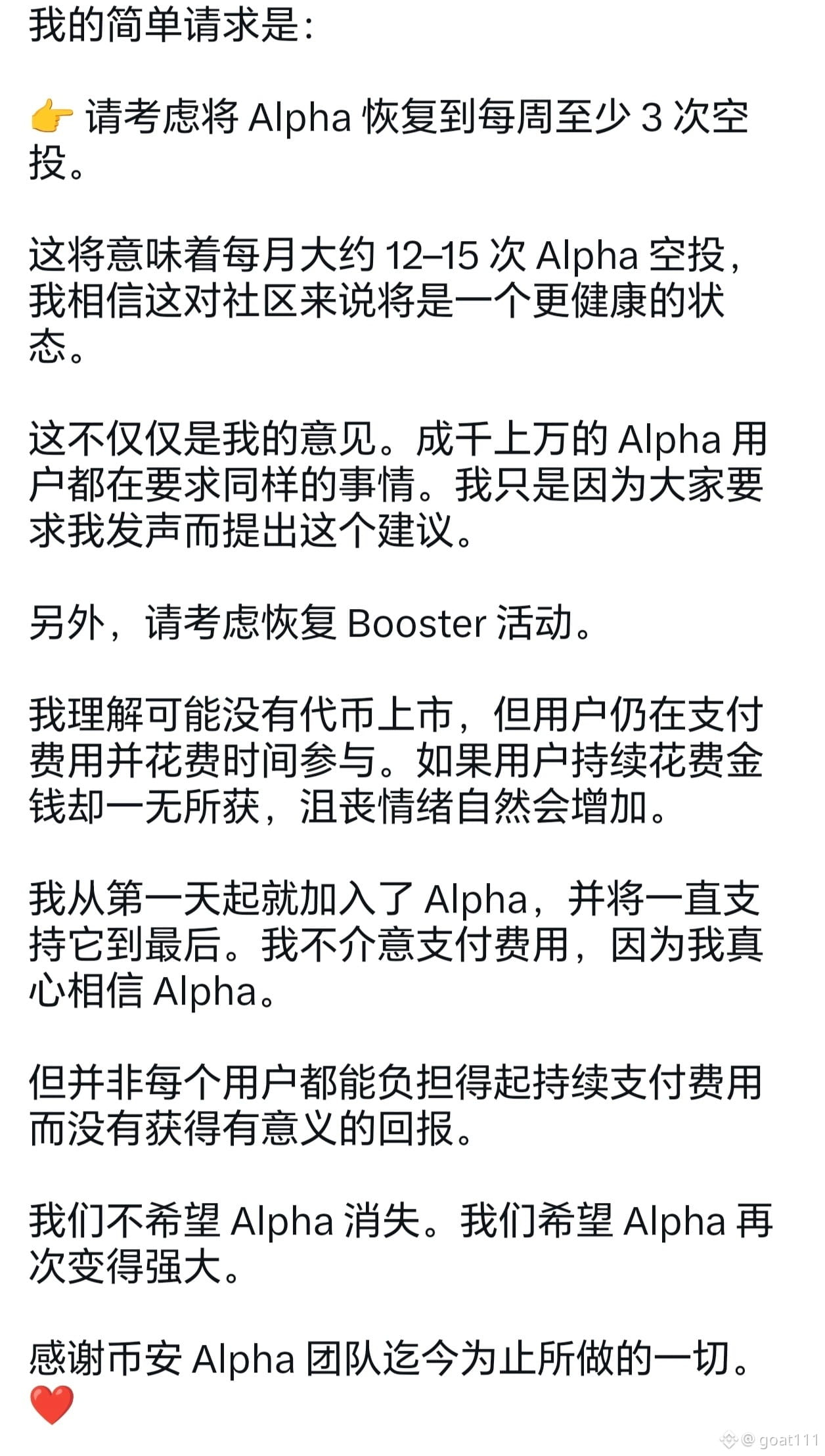
The screenshot below 👇🏻 shows a request from a foreign KOL on a social platform.
44
9
225
18.9k
·
--
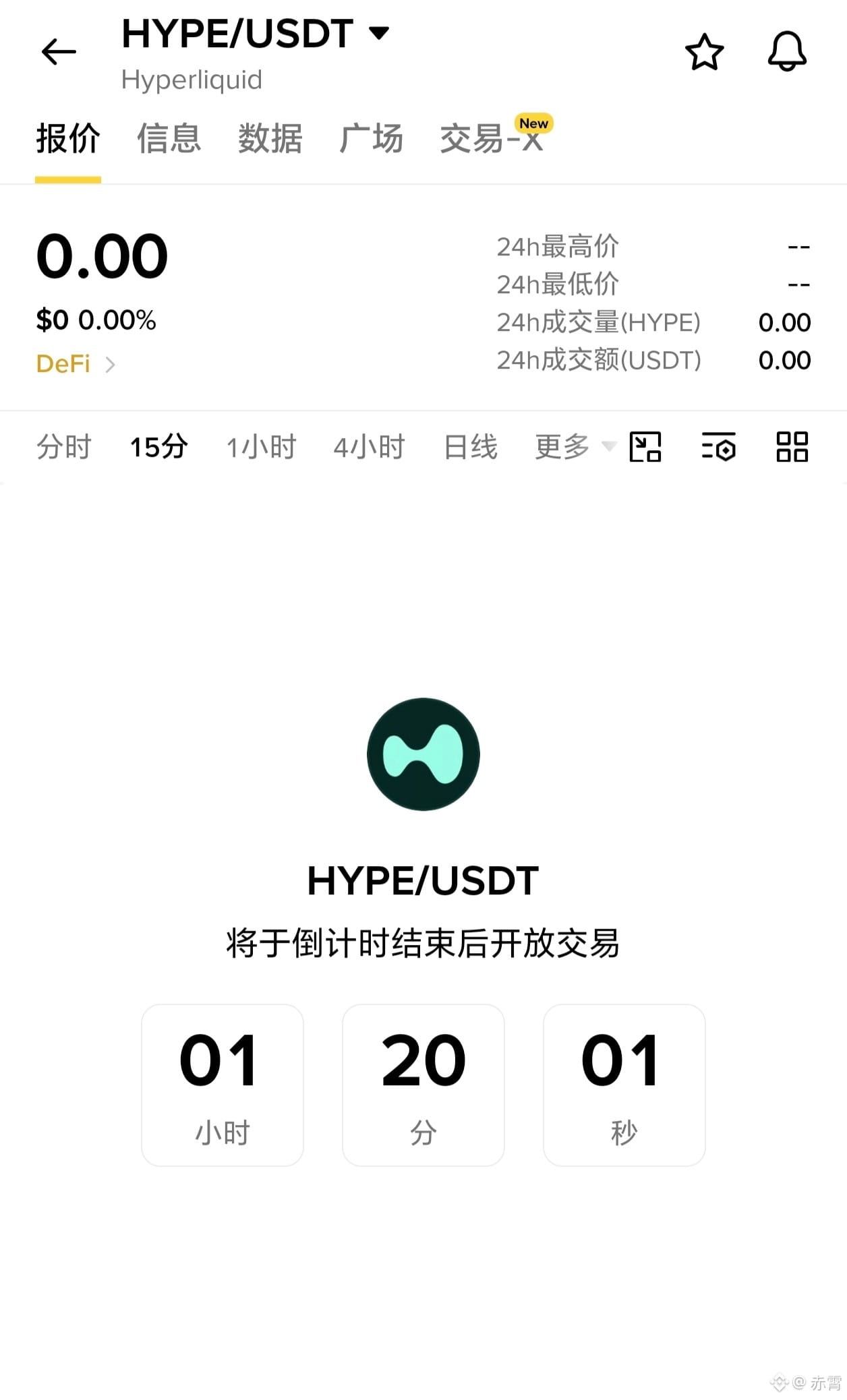
Has HYPE$HYPE already been listed on Binance spot?
Has HYPE$HYPE already been listed on Binance spot?
1
218
·
--
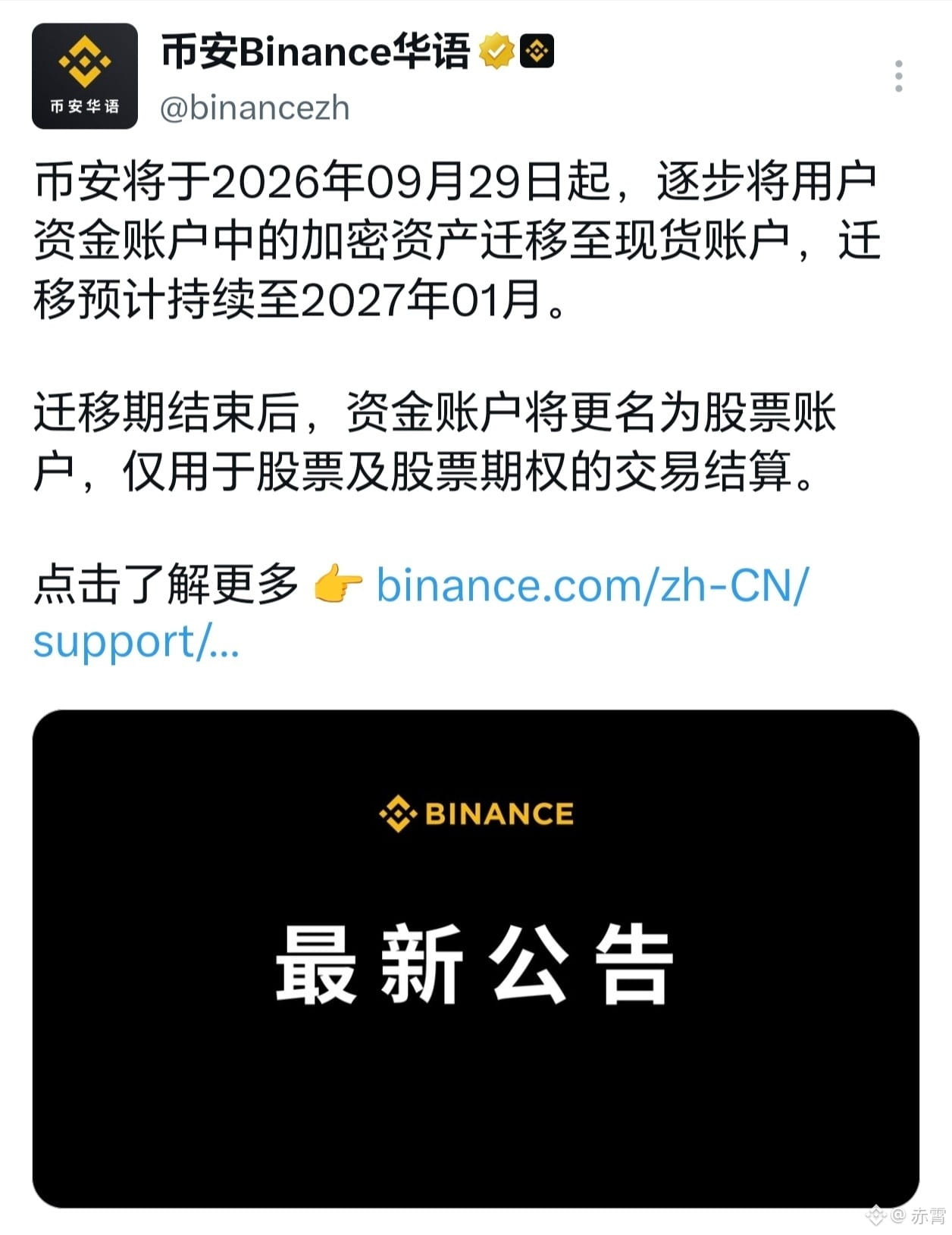
Does this mean that in the future it will officially become a securities broker plus a crypto trading exchange?
Does this mean that in the future it will officially become a securities broker plus a crypto trading exchange?
1
1.4k
·
--
Partly True
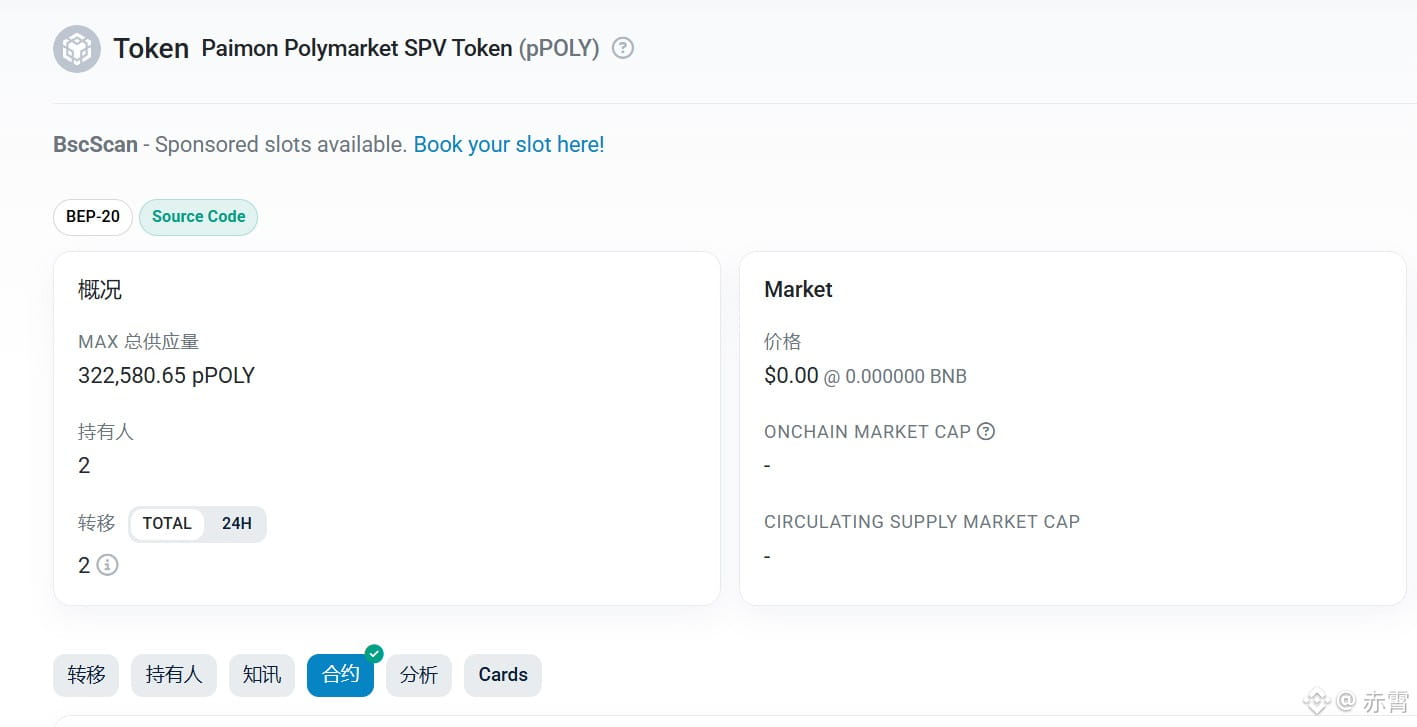
Binance’s first on-chain stock IPO was actually Polymarket—does this mean Polymarket isn’t issuing tokens anymore?
The opening time is set for 9/24, at 5:00 PM.
Here are a few things to note:
1: It’s conducted on PancakeSwap, probably similar to the ALPHA token new listing.
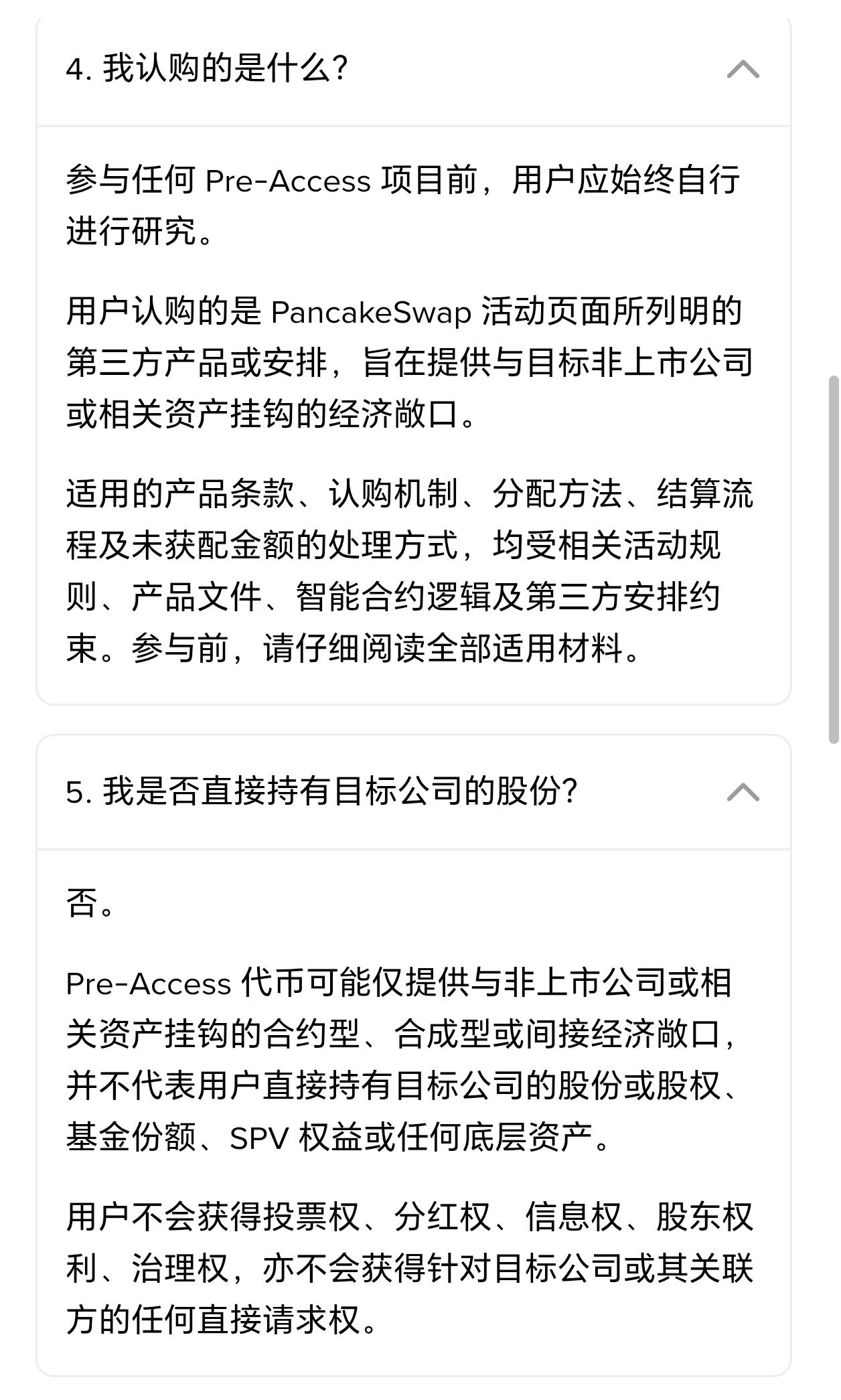
2: What you get is only the tokens, with no shareholder rights.
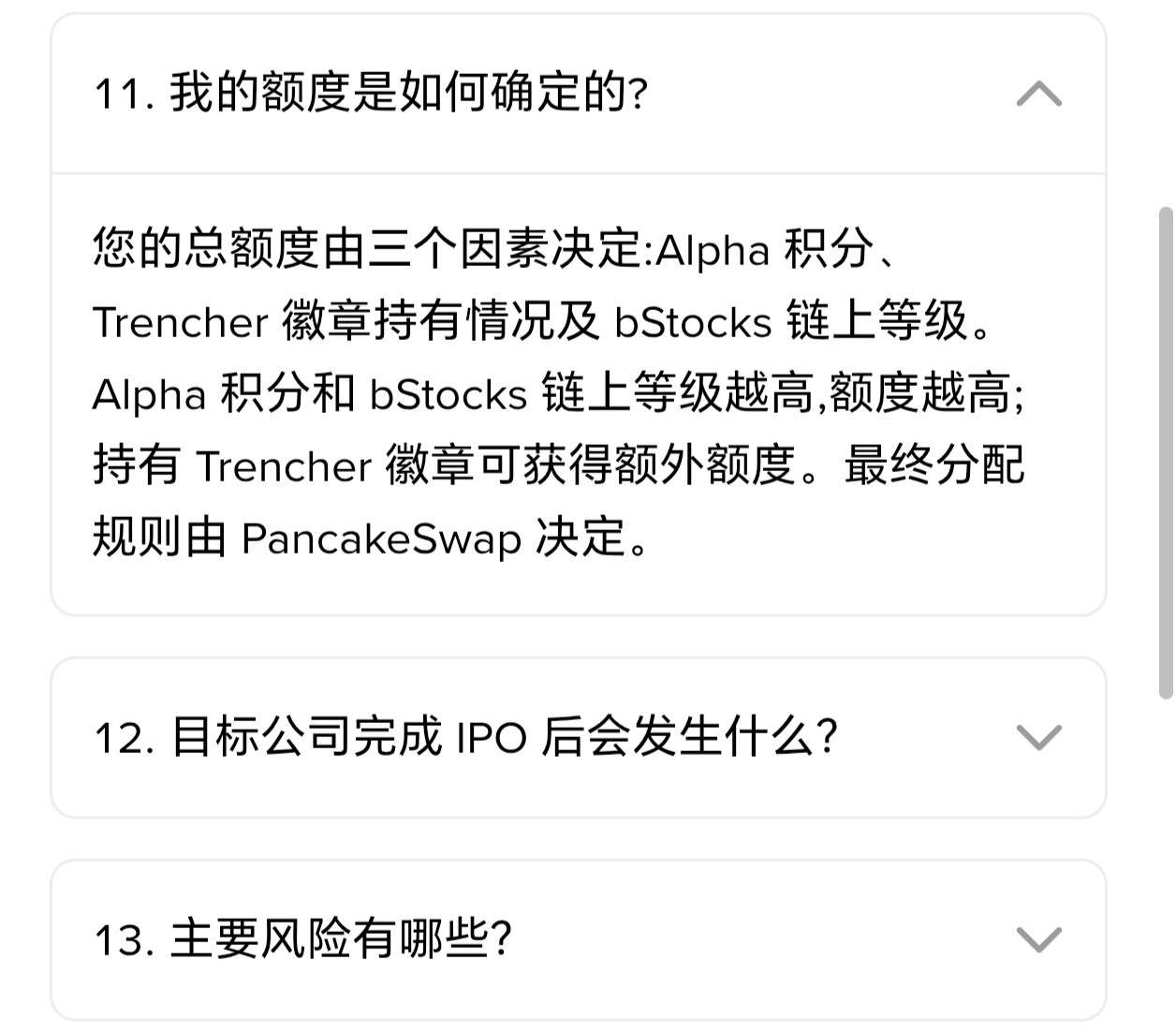
3: The allocation amount depends on your Alpha points, Trencer badge level, and your bStocks on-chain level.
2
2.2k
·
--
Verified
21 Global Banks Pledge to Form a Joint Stablecoin Company
According to CoinDesk, 21 major global banks, including Bank of America, Citi, Goldman Sachs, Deutsche Bank, and UBS, have pledged to establish a joint stablecoin company.
The company plans to launch a dollar-denominated stablecoin, aiming to go live in the first half of 2027. The full list of participating institutions and the stablecoin operating network have not yet been disclosed.
This is already the second major alliance in the stablecoin space this year—the previous one was OUSD.
So after all this time of development, will the crypto industry finally see real-world applications take off?
1
225
·
--
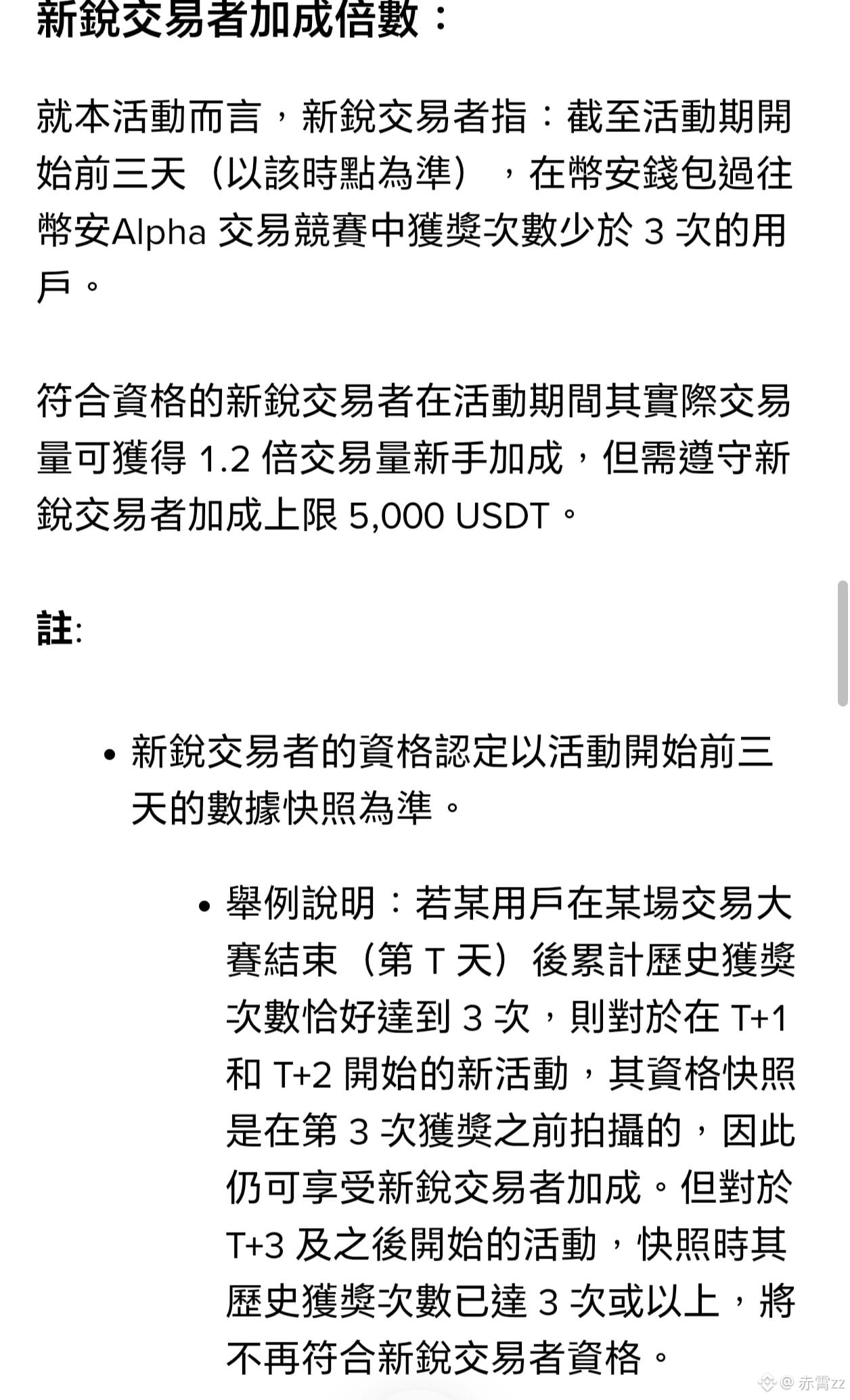
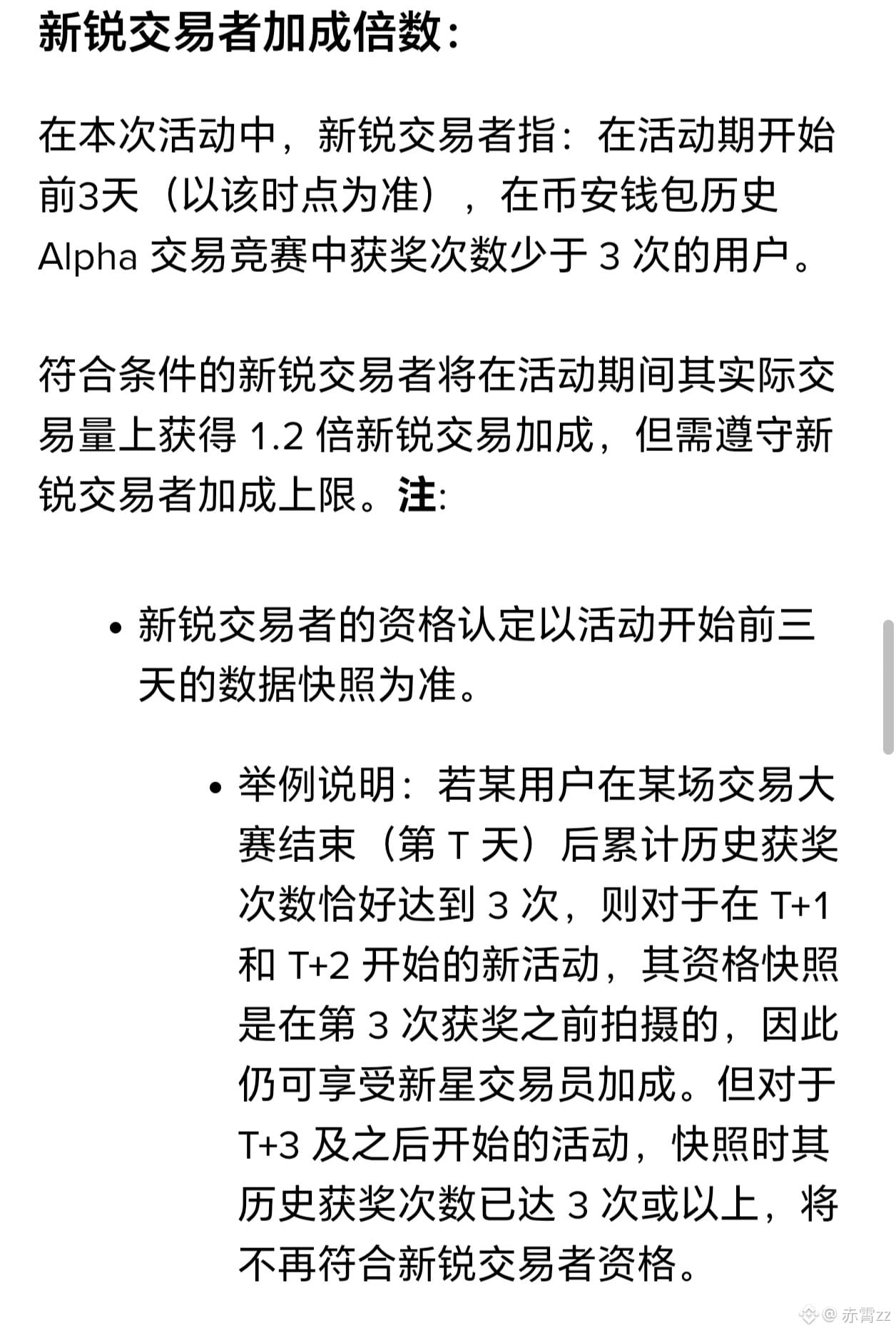
alpha trading competition
Why are the announcements different between traditional and simplified Chinese?🤔
$IN $AIA
alpha trading competition
Why are the announcements different between traditional and simplified Chinese?🤔
$IN $AIA
Why are the announcements different between traditional and simplified Chinese?🤔
$IN $AIA
1
695
·
--
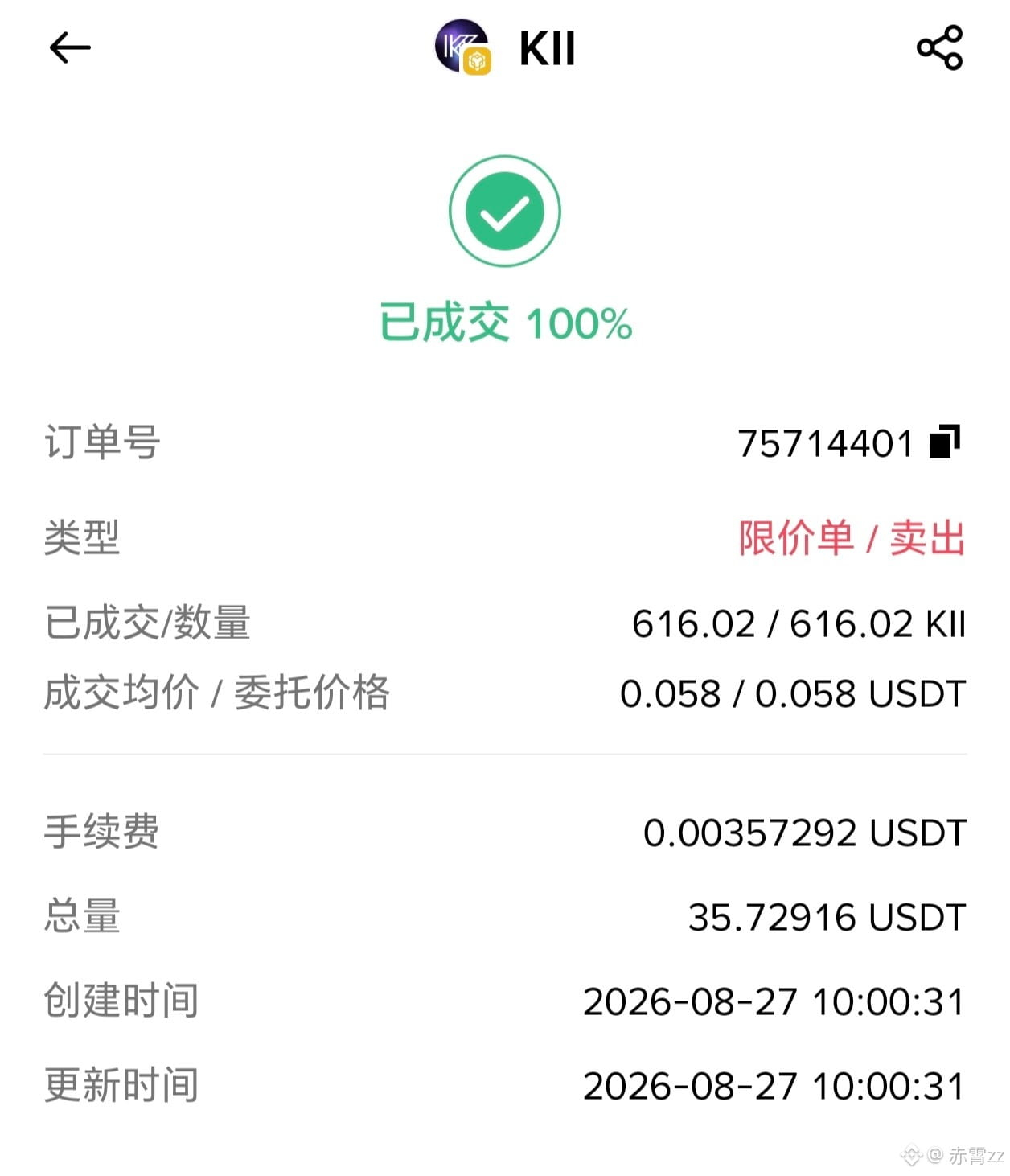
Smooth landing—still, Anzi’s broad-minded strategy took the lead, covering the brothers from the trading contest
$KII
Smooth landing—still, Anzi’s broad-minded strategy took the lead, covering the brothers from the trading contest
$KII
$KII
1
464
·
--
I wrote Dusk for two straight weeks, and only while organizing my files did I realize my own assumptions had changed twice.
At first, I treated it as a privacy-focused public chain. Then it got pushed to another extreme by partnerships and licensing information, and I almost thought, “the whole regulated-finance stack is already fully assembled.”
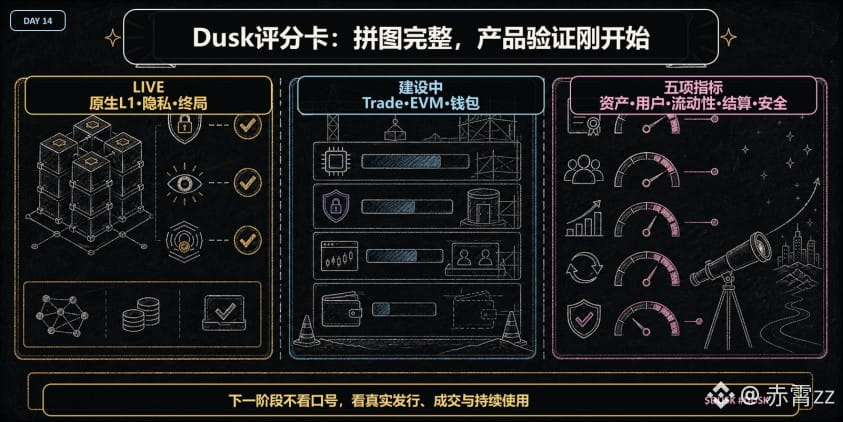
When you lay out the status of each layer, the conclusion isn’t as satisfying—but it’s closer to reality. DuskDS native L1 is already Live, handling finality, data availability, and public and private accounts; DuskEVM carries Solidity developers; Hedger provides confidential-logic capabilities; Citadel manages identity and selective disclosure; NPEX and 21X offer different market and regulatory interfaces; and Dusk Trade wraps access, trading, and settlement into a single entry point.
What’s interesting is that having a layer in the tech stack and having a product layer “mature” aren’t the same thing. Even during the website’s review, Dusk Trade is still labeled as Building, while DuskEVM and Hedger are marked as Testnet; Dusk Connect and the new wallet are listed as Developer Preview. The native base running doesn’t mean the trading experience, cross-chain exits, and liquidity are all fully completed.
The website also has several sets of numbers that are easy to use as big headline figures: €300M+ confirmed institutional issuance, 50K+ reached users, 210M+ staked, and about 10 seconds to finality.
They’re all positive signals, but the wording differs—confirmed issuance isn’t real-time TVL, reach isn’t active traders, staking isn’t proof of RWA demand, and finality speed isn’t the full settlement time. Adding the four numbers together to tell a story can actually obscure the parts that truly need to be verified.
So now I’m only watching five things: real issued assets, qualified users, trading depth, end-to-end settlement, and stable operation after any security incidents.
Dusk has proven it isn’t just a concept. The next thing to prove is that people will keep using it.
When you grade an infrastructure project, do you care more about technical completeness—or about the real business that has already happened?
#dusk $DUSK @Dusk_Foundation
I wrote Dusk for two straight weeks, and only while organizing my files did I realize my own assumptions had changed twice.
At first, I treated it as a privacy-focused public chain. Then it got pushed to another extreme by partnerships and licensing information, and I almost thought, “the whole regulated-finance stack is already fully assembled.”
When you lay out the status of each layer, the conclusion isn’t as satisfying—but it’s closer to reality. DuskDS native L1 is already Live, handling finality, data availability, and public and private accounts; DuskEVM carries Solidity developers; Hedger provides confidential-logic capabilities; Citadel manages identity and selective disclosure; NPEX and 21X offer different market and regulatory interfaces; and Dusk Trade wraps access, trading, and settlement into a single entry point.
What’s interesting is that having a layer in the tech stack and having a product layer “mature” aren’t the same thing. Even during the website’s review, Dusk Trade is still labeled as Building, while DuskEVM and Hedger are marked as Testnet; Dusk Connect and the new wallet are listed as Developer Preview. The native base running doesn’t mean the trading experience, cross-chain exits, and liquidity are all fully completed.
The website also has several sets of numbers that are easy to use as big headline figures: €300M+ confirmed institutional issuance, 50K+ reached users, 210M+ staked, and about 10 seconds to finality.
They’re all positive signals, but the wording differs—confirmed issuance isn’t real-time TVL, reach isn’t active traders, staking isn’t proof of RWA demand, and finality speed isn’t the full settlement time. Adding the four numbers together to tell a story can actually obscure the parts that truly need to be verified.
So now I’m only watching five things: real issued assets, qualified users, trading depth, end-to-end settlement, and stable operation after any security incidents.
Dusk has proven it isn’t just a concept. The next thing to prove is that people will keep using it.
When you grade an infrastructure project, do you care more about technical completeness—or about the real business that has already happened?
#dusk $DUSK @Dusk
1
98
·
--
Rewatched the Dusk bridge incident recap at 1 a.m. and then kept watching the AEGIS analysis straight through. Just as I was about to close the page, I suddenly felt a bit afraid: a few days ago, I almost accepted one of those super-easy either-or conclusions—“It’s not an L1 vulnerability, so it’s fine” or “The bridge had an incident, so the entire chain isn’t safe.”
The reality is much more complicated than slogans. On January 16, 2026, the attacker obtained permission from the signed wallet used for the Dusk-to-EVM bridge service.
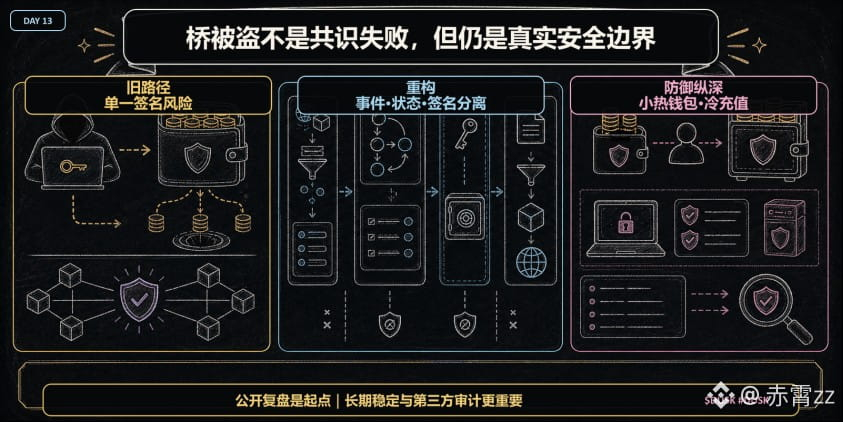
The official recap clearly states that this was neither a consensus failure nor the underlying Dusk protocol being compromised. Instead, the signature path of the bridge was breached. The old design compressed the signed wallet, event handling, and network connectivity into a single operational flow. Once the key was compromised, the scope the attacker could reach became far too broad.
What’s interesting is that the fix wasn’t simply “swap to a new key.” The new design separates event reception, task persistence, fund release, and a dedicated signer. Transactions are managed with a state machine using statuses like seen, submitted, completed, failed, and stuck. The hot wallet holds only the near-term required balance; if funds run short, it pauses, and the cold wallet is manually topped up.
A quick analogy: it’s like turning a cash-filled armored money truck into something with multiple vaults, quotas, and step-by-step release.
And AEGIS is a different matter: internal audit drove 39 remediation items in total, with 7 categorized as critical, involving root causes such as VM isolation, deserialization vulnerabilities, coupling Phoenix fees with refunds, and BLS forgery, among others. The official says that no evidence has been found yet that these critical issues were exploited earlier. The bridge incident and AEGIS can’t be conflated as the same vulnerability, and you also can’t claim the risk is zero just because fixes were made.
So my current judgment is: it wasn’t a consensus vulnerability, but that doesn’t mean it wasn’t a user safety issue. The public recap is worth affirming, but it can’t replace long-term reliability and third-party verification.
When you assess a chain, do you include the bridge and operations in the protocol’s security score?
#dusk $DUSK @Dusk_Foundation
Rewatched the Dusk bridge incident recap at 1 a.m. and then kept watching the AEGIS analysis straight through. Just as I was about to close the page, I suddenly felt a bit afraid: a few days ago, I almost accepted one of those super-easy either-or conclusions—“It’s not an L1 vulnerability, so it’s fine” or “The bridge had an incident, so the entire chain isn’t safe.”
The reality is much more complicated than slogans. On January 16, 2026, the attacker obtained permission from the signed wallet used for the Dusk-to-EVM bridge service.
The official recap clearly states that this was neither a consensus failure nor the underlying Dusk protocol being compromised. Instead, the signature path of the bridge was breached. The old design compressed the signed wallet, event handling, and network connectivity into a single operational flow. Once the key was compromised, the scope the attacker could reach became far too broad.
What’s interesting is that the fix wasn’t simply “swap to a new key.” The new design separates event reception, task persistence, fund release, and a dedicated signer. Transactions are managed with a state machine using statuses like seen, submitted, completed, failed, and stuck. The hot wallet holds only the near-term required balance; if funds run short, it pauses, and the cold wallet is manually topped up.
A quick analogy: it’s like turning a cash-filled armored money truck into something with multiple vaults, quotas, and step-by-step release.
And AEGIS is a different matter: internal audit drove 39 remediation items in total, with 7 categorized as critical, involving root causes such as VM isolation, deserialization vulnerabilities, coupling Phoenix fees with refunds, and BLS forgery, among others. The official says that no evidence has been found yet that these critical issues were exploited earlier. The bridge incident and AEGIS can’t be conflated as the same vulnerability, and you also can’t claim the risk is zero just because fixes were made.
So my current judgment is: it wasn’t a consensus vulnerability, but that doesn’t mean it wasn’t a user safety issue. The public recap is worth affirming, but it can’t replace long-term reliability and third-party verification.
When you assess a chain, do you include the bridge and operations in the protocol’s security score?
#dusk $DUSK @Dusk
1
172
·
--
Last night I tested connecting my wallet—authorization pop-ups kept appearing a few times. Then it suddenly clicked: whenever I used to watch Dusk, I always treated the wallet as “just the final interface you need.” In reality, it might be one of the layers of the whole market infrastructure that’s easiest to deter ordinary users.
When people talk about Dusk technology, they usually focus on DuskDS, Phoenix, or DuskEVM. Very few seriously discuss Dusk Connect. Old Web Wallets were mostly standalone web pages, making it hard for dApps to reliably discover the wallet and request signatures in a standardized way.
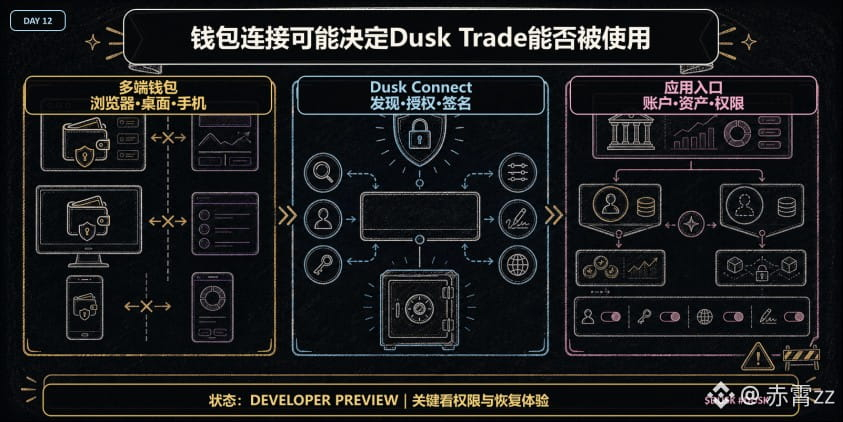
In April 2026, the official release of Dusk Connect borrows the wallet-discovery ideas behind EIP-6963. It uses a unified Provider interface to handle account access, signatures, transactions, and network switching. The new Dusk Wallet is also planned to cover browsers, desktop, and mobile, supporting transfers, staking, reward claiming, and dApp permissions.
What’s interesting is that “the connection protocol” and “wallet security” are two separate layers. Dusk Connect is responsible for letting the app find the wallet and send requests, but it doesn’t store users’ private keys. It’s the new wallet that will handle local key storage.
The official documentation notes that extension-side implementations use PBKDF2 and AES-GCM, while native-side implementations use Stronghold and Argon2. It also includes features like automatic locking, unlock-failure backoff, and authorization based on the source.
This can easily be conflated by marketing into a single line like “Dusk wallet experience has improved.” In fact, a unified interface just makes the door easier to open—it doesn’t mean every authorization is secure.
Phishing sites could still trick users into signing. If the permission wording is unclear, it could also lead users to hand over access they shouldn’t. And currently, the two codebases are still both in Developer Preview.
These days, I’m actually more concerned about the most ordinary authorization pop-up: can users understand which account they’re connecting, what’s being made public, and what they’re signing.
When you use your wallet, do you really read permissions, or do you basically just confirm everything step by step?
#dusk $DUSK @Dusk_Foundation
Last night I tested connecting my wallet—authorization pop-ups kept appearing a few times. Then it suddenly clicked: whenever I used to watch Dusk, I always treated the wallet as “just the final interface you need.” In reality, it might be one of the layers of the whole market infrastructure that’s easiest to deter ordinary users.
When people talk about Dusk technology, they usually focus on DuskDS, Phoenix, or DuskEVM. Very few seriously discuss Dusk Connect. Old Web Wallets were mostly standalone web pages, making it hard for dApps to reliably discover the wallet and request signatures in a standardized way.
In April 2026, the official release of Dusk Connect borrows the wallet-discovery ideas behind EIP-6963. It uses a unified Provider interface to handle account access, signatures, transactions, and network switching. The new Dusk Wallet is also planned to cover browsers, desktop, and mobile, supporting transfers, staking, reward claiming, and dApp permissions.
What’s interesting is that “the connection protocol” and “wallet security” are two separate layers. Dusk Connect is responsible for letting the app find the wallet and send requests, but it doesn’t store users’ private keys. It’s the new wallet that will handle local key storage.
The official documentation notes that extension-side implementations use PBKDF2 and AES-GCM, while native-side implementations use Stronghold and Argon2. It also includes features like automatic locking, unlock-failure backoff, and authorization based on the source.
This can easily be conflated by marketing into a single line like “Dusk wallet experience has improved.” In fact, a unified interface just makes the door easier to open—it doesn’t mean every authorization is secure.
Phishing sites could still trick users into signing. If the permission wording is unclear, it could also lead users to hand over access they shouldn’t. And currently, the two codebases are still both in Developer Preview.
These days, I’m actually more concerned about the most ordinary authorization pop-up: can users understand which account they’re connecting, what’s being made public, and what they’re signing.
When you use your wallet, do you really read permissions, or do you basically just confirm everything step by step?
#dusk $DUSK @Dusk
1
110
·
--
In the evening, I opened separate windows for NPEX and 21X documents, compared the license names, and stared for a long time before I realized: I had also made one of the most common mistakes in crypto circles before—assuming that the more partner logos there are, the more the regulatory capabilities can be stacked onto the same project.
When discussing Dusk’s compliance advantages, many articles recite NPEX, 21X, MTF, and DLT-TSS all at once, as if these licenses are all built into the Dusk protocol. But when you break it down, NPEX and 21X cover different pieces.
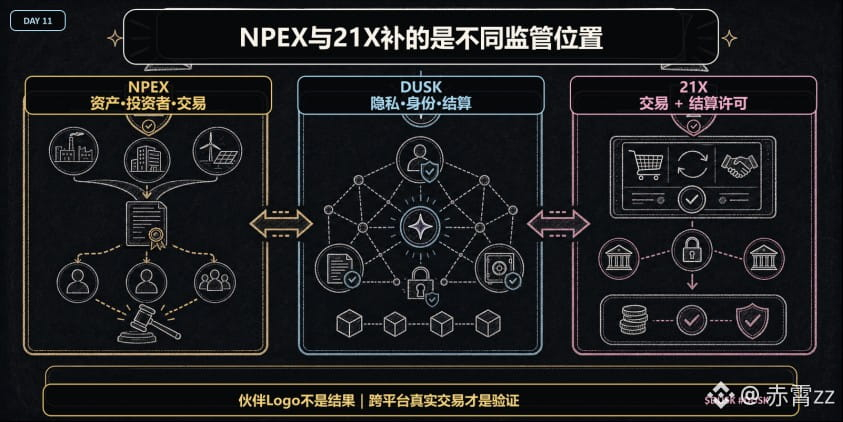
NPEX is a Netherlands-regulated market cooperation partner. Official materials mention its MTF, Broker, and ECSP capabilities: activities for the secondary market, asset sourcing and order execution, and EU crowdfunding services all fall under this line.
21X, on the other hand, obtained the DLT-TSS license under the EU DLT Pilot Regime. This allows—within a specific framework—combining trading and settlement, using public, permissionless blockchains. Dusk is currently a trading participant of 21X; deeper DuskEVM integration is still planned.
What’s interesting is that these two partnerships aren’t duplicative stamps of approval. NPEX is more like an entry point for assets, issuers, and investors; 21X is more like the regulatory channel for digital securities trading and settlement; Dusk sits in the middle providing privacy, identity, and settlement technology. Put together, the logic is pretty coherent—but “put together” doesn’t mean legal responsibilities automatically merge.
This is also where many explainers tend to overshoot: a licensed partner doesn’t mean Dusk itself automatically inherits every license; connecting to a licensed venue doesn’t mean KYC, custody, and responsibility boundaries from another institution are naturally recognized as compatible. Announcements can prove the partnership relationship, but they can’t replace end-to-end operational data.
When I look at projects like this now, I start by asking: who owns the licenses, what assets are covered, and who is responsible to users.
Do you care more about the number of licenses held by project partners, or about which legal entity the very first real transaction ultimately lands under?
#dusk $DUSK @Dusk_Foundation
In the evening, I opened separate windows for NPEX and 21X documents, compared the license names, and stared for a long time before I realized: I had also made one of the most common mistakes in crypto circles before—assuming that the more partner logos there are, the more the regulatory capabilities can be stacked onto the same project.
When discussing Dusk’s compliance advantages, many articles recite NPEX, 21X, MTF, and DLT-TSS all at once, as if these licenses are all built into the Dusk protocol. But when you break it down, NPEX and 21X cover different pieces.
NPEX is a Netherlands-regulated market cooperation partner. Official materials mention its MTF, Broker, and ECSP capabilities: activities for the secondary market, asset sourcing and order execution, and EU crowdfunding services all fall under this line.
21X, on the other hand, obtained the DLT-TSS license under the EU DLT Pilot Regime. This allows—within a specific framework—combining trading and settlement, using public, permissionless blockchains. Dusk is currently a trading participant of 21X; deeper DuskEVM integration is still planned.
What’s interesting is that these two partnerships aren’t duplicative stamps of approval. NPEX is more like an entry point for assets, issuers, and investors; 21X is more like the regulatory channel for digital securities trading and settlement; Dusk sits in the middle providing privacy, identity, and settlement technology. Put together, the logic is pretty coherent—but “put together” doesn’t mean legal responsibilities automatically merge.
This is also where many explainers tend to overshoot: a licensed partner doesn’t mean Dusk itself automatically inherits every license; connecting to a licensed venue doesn’t mean KYC, custody, and responsibility boundaries from another institution are naturally recognized as compatible. Announcements can prove the partnership relationship, but they can’t replace end-to-end operational data.
When I look at projects like this now, I start by asking: who owns the licenses, what assets are covered, and who is responsible to users.
Do you care more about the number of licenses held by project partners, or about which legal entity the very first real transaction ultimately lands under?
#dusk $DUSK @Dusk
1
108
·
--
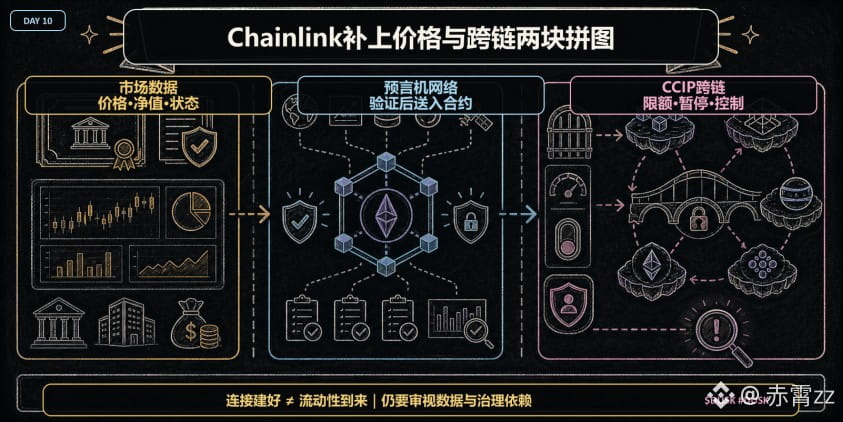
I let the coffee cool twice and didn’t even get to drink it—going back and forth between Dusk and Chainlink’s two announcements, I suddenly realized: I’d basically treated “cross-chain capability” and “liquidity” as the same thing.
When talking about Dusk’s RWA, a lot of articles jump straight from CCIP to “assets seamlessly connected across chains, liquidity takes off.” But this official collaboration actually splits into two tracks.
The first is interoperability: Dusk and NPEX use CCIP and the CCT standard, giving regulated assets on the Dusk EVM a cross-chain pathway, while token issuers retain control over the token contract. It also allows rate limiting and upgrade mechanisms to be set. The second is data: DataLink sends NPEX’s official exchange data on-chain, and Data Streams provides lower-latency price updates—used for pricing, compliance, and settlement.
What’s interesting is that these two tracks only solve the “routes” and the “signals.” CCIP is like a highway between cities, and DataLink is like roadside signboards along the way. Fixing the highway doesn’t mean cars will naturally come, and it doesn’t mean the destination already has buyers. Being cross-chain is about technical accessibility; whether there’s depth, price spreads, and real trading counterparts—that’s market liquidity, and it’s totally not the same thing.
I also looked closely at the wording. Official materials heavily use progress-style expressions like adopting, integrating, and will.
It can demonstrate the collaboration direction and design, but it doesn’t mean there are already verifiable cross-chain RWA deal volumes. Data source anomalies, update delays, pause switches, and contract upgrade authority will all become new governance boundaries.
Earlier, I almost got swept up by the claim “integrating Chainlink = liquidity is complete.” Now I’d rather separate it: whether the integration is live, whether the data is reliable, and whether anyone is actually trading the assets.
When you assess cross-chain partnerships, do you care more about the supported integration list—or the real cross-chain volume and trading depth? Let’s discuss in the comments.
#dusk $DUSK @Dusk_Foundation
I let the coffee cool twice and didn’t even get to drink it—going back and forth between Dusk and Chainlink’s two announcements, I suddenly realized: I’d basically treated “cross-chain capability” and “liquidity” as the same thing.
When talking about Dusk’s RWA, a lot of articles jump straight from CCIP to “assets seamlessly connected across chains, liquidity takes off.” But this official collaboration actually splits into two tracks.
The first is interoperability: Dusk and NPEX use CCIP and the CCT standard, giving regulated assets on the Dusk EVM a cross-chain pathway, while token issuers retain control over the token contract. It also allows rate limiting and upgrade mechanisms to be set. The second is data: DataLink sends NPEX’s official exchange data on-chain, and Data Streams provides lower-latency price updates—used for pricing, compliance, and settlement.
What’s interesting is that these two tracks only solve the “routes” and the “signals.” CCIP is like a highway between cities, and DataLink is like roadside signboards along the way. Fixing the highway doesn’t mean cars will naturally come, and it doesn’t mean the destination already has buyers. Being cross-chain is about technical accessibility; whether there’s depth, price spreads, and real trading counterparts—that’s market liquidity, and it’s totally not the same thing.
I also looked closely at the wording. Official materials heavily use progress-style expressions like adopting, integrating, and will.
It can demonstrate the collaboration direction and design, but it doesn’t mean there are already verifiable cross-chain RWA deal volumes. Data source anomalies, update delays, pause switches, and contract upgrade authority will all become new governance boundaries.
Earlier, I almost got swept up by the claim “integrating Chainlink = liquidity is complete.” Now I’d rather separate it: whether the integration is live, whether the data is reliable, and whether anyone is actually trading the assets.
When you assess cross-chain partnerships, do you care more about the supported integration list—or the real cross-chain volume and trading depth? Let’s discuss in the comments.
#dusk $DUSK @Dusk
3
242
·
--
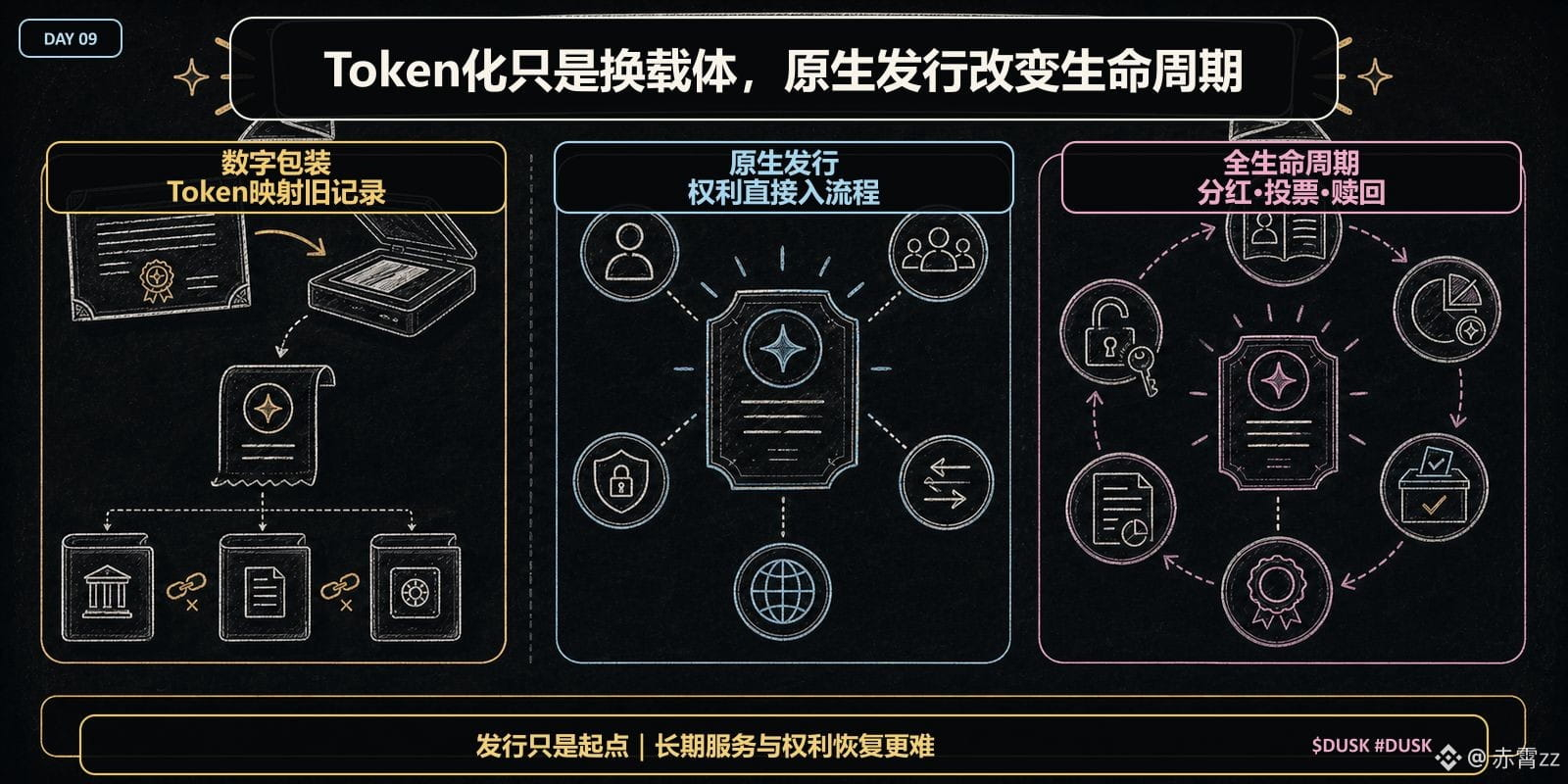
This weekend I put several RWA projects’ issuance pages side by side. The moment I saw the term “Tokenized Securities,” I suddenly felt a bit alert: I guess I used to assume that once stocks or bonds were turned into tokens, they were basically done—tokenization on the securities ledger.
When people discuss asset tokenization, a lot of articles focus on that one moment of issuance—how many tokens a given off-chain asset corresponds to, which blockchain the contract gets deployed on, and whether you can look up the price. But if the shareholder register, investor eligibility, dividends, voting, transfer restrictions, and redemptions are still scattered across different systems, then the on-chain tokens may only be a more convenient digital receipt for forwarding. The accounting moves over, but the asset’s lifecycle doesn’t truly move over.
What Dusk wants to push goes further than that: “native issuance.” From creation onward, the asset is placed into the same end-to-end digital workflow. Who can hold it, when it can be transferred, how to complete DvP settlement, and how corporate actions get executed—all of that is coordinated around a single on-chain asset. The difference is a bit like taking a paper train ticket and turning it into a QR code versus rebuilding the entire system for ticketing, validation, exchanges, and refunds. The former just changes the carrier; the latter changes the process.
Interestingly, native issuance sounds more complete—and it also brings the hard problems along with it. Smart contracts can restrict transfers, but they can’t themselves decide whether the on-chain record is legally the final shareholder register. How rights are restored after a wallet is lost, what responsibilities the custodian takes on, and whether different jurisdictions recognize the same record—none of that can be solved by writing a few lines of code. The DLT-TSS route NPEX and Dusk are driving toward isn’t really about adding one more abbreviation for licenses; the real question is whether legal responsibilities and on-chain settlement can be connected together.
This is the main pitfall I find easiest to fall into when looking at RWA right now: the issuance amount is very eye-catching, but the follow-on services are often never questioned. I’d rather focus on dividends, voting, redemption, and the restoration of rights after a key is lost—whether the system truly runs through the full lifecycle. When you evaluate an RWA project, do you start by looking at issuance size, or do you look at how many stages in the asset’s life are actually put on-chain end to end?
#dusk $DUSK @Dusk_Foundation
This weekend I put several RWA projects’ issuance pages side by side. The moment I saw the term “Tokenized Securities,” I suddenly felt a bit alert: I guess I used to assume that once stocks or bonds were turned into tokens, they were basically done—tokenization on the securities ledger.
When people discuss asset tokenization, a lot of articles focus on that one moment of issuance—how many tokens a given off-chain asset corresponds to, which blockchain the contract gets deployed on, and whether you can look up the price. But if the shareholder register, investor eligibility, dividends, voting, transfer restrictions, and redemptions are still scattered across different systems, then the on-chain tokens may only be a more convenient digital receipt for forwarding. The accounting moves over, but the asset’s lifecycle doesn’t truly move over.
What Dusk wants to push goes further than that: “native issuance.” From creation onward, the asset is placed into the same end-to-end digital workflow. Who can hold it, when it can be transferred, how to complete DvP settlement, and how corporate actions get executed—all of that is coordinated around a single on-chain asset. The difference is a bit like taking a paper train ticket and turning it into a QR code versus rebuilding the entire system for ticketing, validation, exchanges, and refunds. The former just changes the carrier; the latter changes the process.
Interestingly, native issuance sounds more complete—and it also brings the hard problems along with it. Smart contracts can restrict transfers, but they can’t themselves decide whether the on-chain record is legally the final shareholder register. How rights are restored after a wallet is lost, what responsibilities the custodian takes on, and whether different jurisdictions recognize the same record—none of that can be solved by writing a few lines of code. The DLT-TSS route NPEX and Dusk are driving toward isn’t really about adding one more abbreviation for licenses; the real question is whether legal responsibilities and on-chain settlement can be connected together.
This is the main pitfall I find easiest to fall into when looking at RWA right now: the issuance amount is very eye-catching, but the follow-on services are often never questioned. I’d rather focus on dividends, voting, redemption, and the restoration of rights after a key is lost—whether the system truly runs through the full lifecycle. When you evaluate an RWA project, do you start by looking at issuance size, or do you look at how many stages in the asset’s life are actually put on-chain end to end?
#dusk $DUSK @Dusk
1
158
·
--
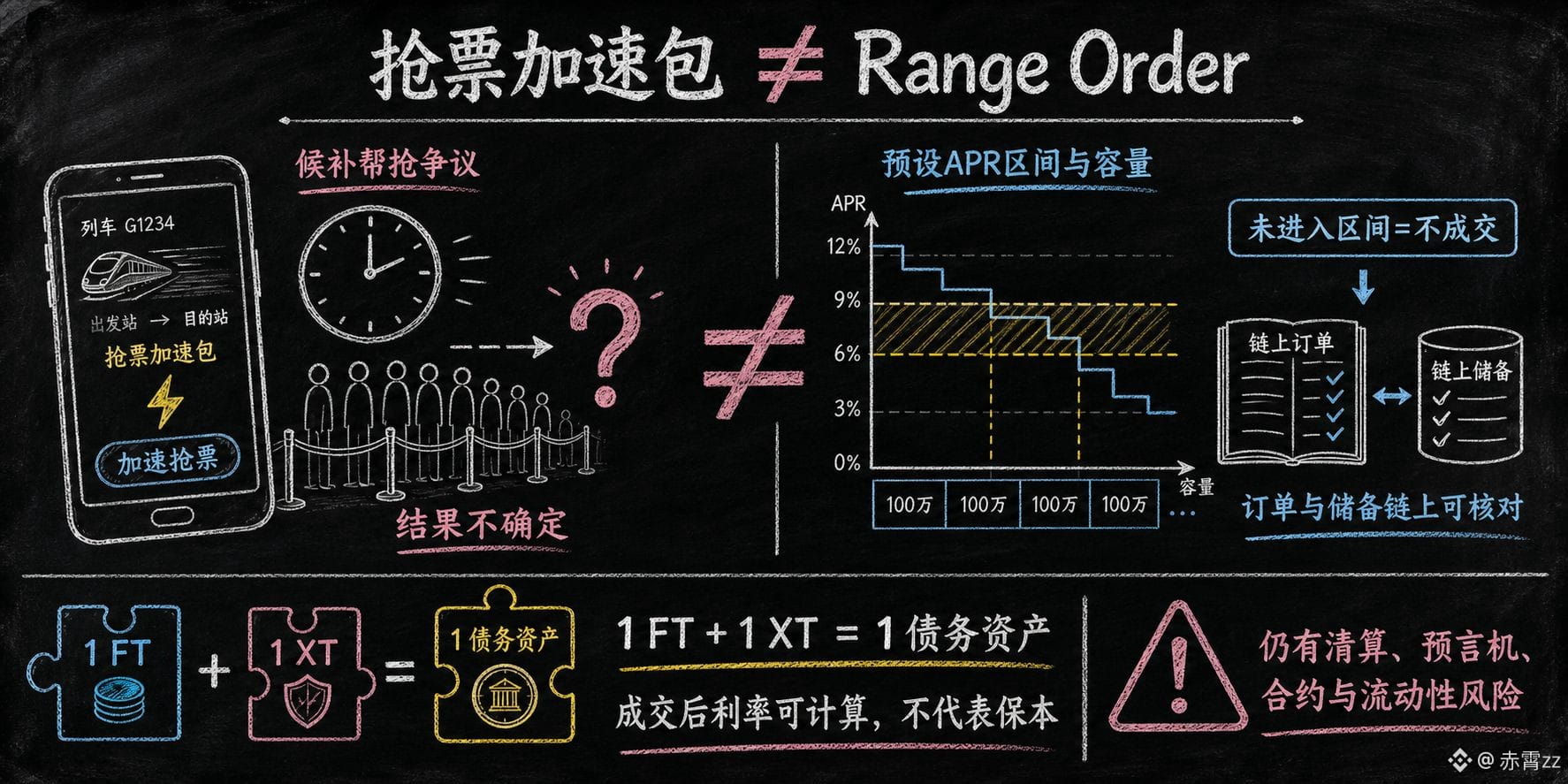
Recently, seven third-party train ticket platforms were summoned for being caught promoting “waitlist and ticket reselling-assisted抢抢 (queue-snagging)” and paid seat selection. In the industry, a far-fetched claim has popped up: TermMax’s Range Order—doesn’t that just mean an on-chain “ticket-purchasing acceleration package”?
After reading the TermMax documentation, I can only say: this analogy is way off. It only sees “waiting,” but not who actually sets the rules. “Accelerating” ticket purchase can easily lead people to believe that paying money will change the ticket issuance order. But a Range Order does not sell priority and does not promise that a deal will happen. Market makers or a Curator preset an APR range, capacity, and curve; after users see the quote, they choose whether to place orders.
If you think an 8%–10% APR is reasonable, you only post orders within that corresponding range. If market interest rates never enter that range, then the order won’t be filled. The logic can be simplified as APR = f(q, t): q is the number of units成交, and t is the remaining time to expiry. Multi-range orders can also split capital into layers—for example, 80% in a steadier range and 20% waiting for a higher rate—like breaking a limit order into several tiers, though the proportions are just a mechanism example.
Fixed-rate orders also aren’t platform “guesswork” written up out of thin air. FT represents the right to redeem debt-asset claims upon maturity; XT is the complementary part, satisfying 1 FT + 1 XT = 1 unit of the debt-asset. GT records the collateral and the debt. If the FT price is p and there are d days left until maturity, then ignoring fees, the simple annualized approximation is APR ≈ (1÷p − 1) × 365 ÷ d. Discount level, time to maturity, and the curve jointly determine the interest rate. Orders and reserve status can be verified on-chain.
That said, don’t translate “code execution” into “principal safety.” A drop in collateral can trigger liquidation, and oracle, contract, and exit-liquidity risks won’t vanish just because everything is on-chain. FT is not a bank deposit, and it’s certainly not an unconditional “buy-back at par” guarantee.
So the difference isn’t something you can boil down to a slogan like “rule of man versus code.” The ticket-acceleration package sells “maybe faster”; TermMax provides the公开, verifiable rules for “what price someone is willing to fill” and “how the interest rate is calculated after a fill.”
The former can’t increase ticket supply, and the latter can’t eliminate risk. A Range Order gives pricing power to users—and also leaves the cost of non-execution to users.
#termmax @termmax
Recently, seven third-party train ticket platforms were summoned for being caught promoting “waitlist and ticket reselling-assisted抢抢 (queue-snagging)” and paid seat selection. In the industry, a far-fetched claim has popped up: TermMax’s Range Order—doesn’t that just mean an on-chain “ticket-purchasing acceleration package”?
After reading the TermMax documentation, I can only say: this analogy is way off. It only sees “waiting,” but not who actually sets the rules. “Accelerating” ticket purchase can easily lead people to believe that paying money will change the ticket issuance order. But a Range Order does not sell priority and does not promise that a deal will happen. Market makers or a Curator preset an APR range, capacity, and curve; after users see the quote, they choose whether to place orders.
If you think an 8%–10% APR is reasonable, you only post orders within that corresponding range. If market interest rates never enter that range, then the order won’t be filled. The logic can be simplified as APR = f(q, t): q is the number of units成交, and t is the remaining time to expiry. Multi-range orders can also split capital into layers—for example, 80% in a steadier range and 20% waiting for a higher rate—like breaking a limit order into several tiers, though the proportions are just a mechanism example.
Fixed-rate orders also aren’t platform “guesswork” written up out of thin air. FT represents the right to redeem debt-asset claims upon maturity; XT is the complementary part, satisfying 1 FT + 1 XT = 1 unit of the debt-asset. GT records the collateral and the debt. If the FT price is p and there are d days left until maturity, then ignoring fees, the simple annualized approximation is APR ≈ (1÷p − 1) × 365 ÷ d. Discount level, time to maturity, and the curve jointly determine the interest rate. Orders and reserve status can be verified on-chain.
That said, don’t translate “code execution” into “principal safety.” A drop in collateral can trigger liquidation, and oracle, contract, and exit-liquidity risks won’t vanish just because everything is on-chain. FT is not a bank deposit, and it’s certainly not an unconditional “buy-back at par” guarantee.
So the difference isn’t something you can boil down to a slogan like “rule of man versus code.” The ticket-acceleration package sells “maybe faster”; TermMax provides the公开, verifiable rules for “what price someone is willing to fill” and “how the interest rate is calculated after a fill.”
The former can’t increase ticket supply, and the latter can’t eliminate risk. A Range Order gives pricing power to users—and also leaves the cost of non-execution to users.
#termmax @TermMax
1
124
·
--
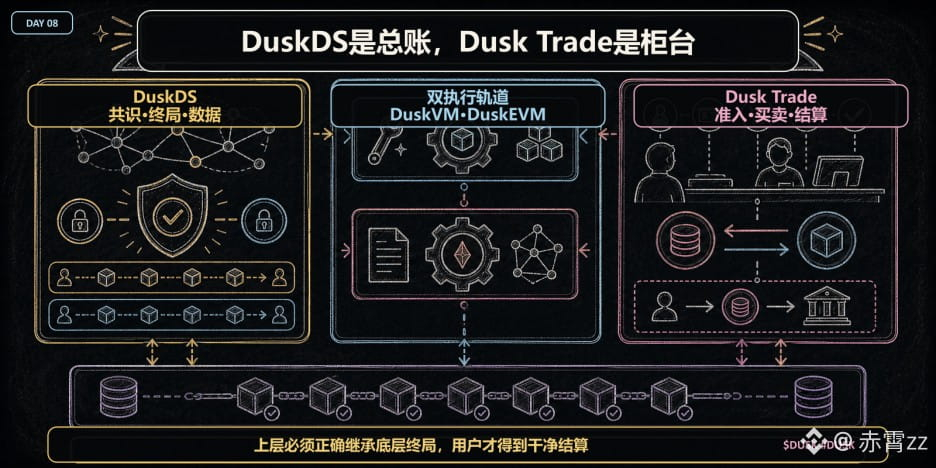
I was initially looking at Dusk Trade, DuskEVM, and DuskDS all mixed together, and it just felt like there were too many terms. After splitting them up again, the logic became much clearer.
DuskDS is responsible for consensus, deterministic finality, data availability, and the Moonlight and Phoenix trading models. DuskVM lets Rust/WASM contracts run directly on a native L1. DuskEVM provides the Solidity application environment. Dusk Trade then wraps permissioning, trading, and settlement into a product users can interact with.
It’s like a securities exchange: DuskDS is the general ledger and settlement hub; DuskVM and DuskEVM are two tracks for business development; and Dusk Trade is the trading counter that faces investors.
The counter can be redesigned, but the underlying ledger must remain stable.
This layered approach is what helped me understand why Dusk keeps emphasizing deterministic settlement.
Regulated assets can’t accept something like “it probably won’t revert.” The market needs a clearly defined final state.
My question has also shifted accordingly: will a multi-layer architecture move risk from single-chain performance to cross-layer message handling, bridges, and operational complexity? Fast finality at the base layer is an advantage, but users only truly get cleaner settlement if the upper layers inherit it correctly.
#dusk $DUSK @Dusk_Foundation
I was initially looking at Dusk Trade, DuskEVM, and DuskDS all mixed together, and it just felt like there were too many terms. After splitting them up again, the logic became much clearer.
DuskDS is responsible for consensus, deterministic finality, data availability, and the Moonlight and Phoenix trading models. DuskVM lets Rust/WASM contracts run directly on a native L1. DuskEVM provides the Solidity application environment. Dusk Trade then wraps permissioning, trading, and settlement into a product users can interact with.
It’s like a securities exchange: DuskDS is the general ledger and settlement hub; DuskVM and DuskEVM are two tracks for business development; and Dusk Trade is the trading counter that faces investors.
The counter can be redesigned, but the underlying ledger must remain stable.
This layered approach is what helped me understand why Dusk keeps emphasizing deterministic settlement.
Regulated assets can’t accept something like “it probably won’t revert.” The market needs a clearly defined final state.
My question has also shifted accordingly: will a multi-layer architecture move risk from single-chain performance to cross-layer message handling, bridges, and operational complexity? Fast finality at the base layer is an advantage, but users only truly get cleaner settlement if the upper layers inherit it correctly.
#dusk $DUSK @Dusk
1
2
93
Log in to explore more content
Join global crypto users on Binance Square
⚡️ Get latest and useful information about crypto.
💬 Trusted by the world’s largest crypto exchange.
👍 Discover real insights from verified creators.
Email / Phone number
Trending Topics
BitcoinSlipsBelow$80KAgain
67 views
12 Discussing
#BitcoinSlipsBelow$80KAgain
Bitcoin's price fell below the $80,000 level again
📉 Sharp Decline: Selling pressure increased across cryptocurrency markets.₿ Bitcoin (BTC): Failed to hold the $80,000 mark, an important psychological support level.🔻 Pullback: Prices slid into the red as bears applied pressure.💸 Investor Unease: Short-term profit-taking and panic selling are being observed in the market.
$BTC $BR $ZEC
Sat_Stacker
·0 Likes
·101 views
ThailandLaunchesWORPTStablecoinToQRPaymentApp
0 views
2 Discussing
StrategySkipsBitcoinPurchasesSpends$205MOnSTRCBuybacks
2,659 views
64 Discussing