
Bw冰糖橙-星球实验室
5.7k Posts

Bw冰糖橙-星球实验室
Report
Block User
星球实验室
行业顶级交易员,kol,资本聚集地
专业-精准-靠谱@BinanceFeed 内容创作者详细内容同步 公众号:冰糖研习社 全网同名!
Occasional Trader
4.1 Years
34 Following
4.7K+ Followers
25.1K+ Liked
Posts
All
Quotes
Videos
PINNED
·
--
The Ace kol Bw - The chat room for Rock Candy Orange is open. If you want to join the fun, come in quickly! The strength of Rock Candy is beyond doubt, currently on a winning streak, so it's all about stability. Welcome!
More wealth codes (open VPN and copy to browser to access): [冰糖研习社](https://www.binance.com/zh-CN/service-group-landing?channelToken=XfSbDwBOm-J3qPU9pAwGKQ&type=1)
The Ace kol Bw - The chat room for Rock Candy Orange is open. If you want to join the fun, come in quickly! The strength of Rock Candy is beyond doubt, currently on a winning streak, so it's all about stability. Welcome!
More wealth codes (open VPN and copy to browser to access): 冰糖研习社
More wealth codes (open VPN and copy to browser to access): 冰糖研习社
1
1
4
402
PINNED
·
--

Article
How do you place orders in such a market? (Pure practical information sharing)Do a single oral decision
When entering the currency circle, prepare first; it is better to enter less than to advance rashly.
If it trades sideways at a low level, it will reach a new low; it is a good time to buy heavily.
Sell high and dive in; try not to trade sideways.
Always trading sideways means to use sideways to replace the decline. You must hold your currency firmly, as it may rise at any time.
When prices are rising rapidly, you must always be prepared to sell, as prices may plummet at any time.
When it slowly declines, it’s time to cover your position bit by bit.
Consolidate high and low, wait a moment.
When the price is trading sideways at a high level, it surges higher again. Seize the opportunity and sell quickly; when it is trading sideways at a low level and reaches a new low, it is a good time to buy the whole position.
How do you place orders in such a market? (Pure practical information sharing)
Do a single oral decision
When entering the currency circle, prepare first; it is better to enter less than to advance rashly.
If it trades sideways at a low level, it will reach a new low; it is a good time to buy heavily.
Sell high and dive in; try not to trade sideways.
Always trading sideways means to use sideways to replace the decline. You must hold your currency firmly, as it may rise at any time.
When prices are rising rapidly, you must always be prepared to sell, as prices may plummet at any time.
When it slowly declines, it’s time to cover your position bit by bit.
Consolidate high and low, wait a moment.
When the price is trading sideways at a high level, it surges higher again. Seize the opportunity and sell quickly; when it is trading sideways at a low level and reaches a new low, it is a good time to buy the whole position.
6
5
40
344
·
--
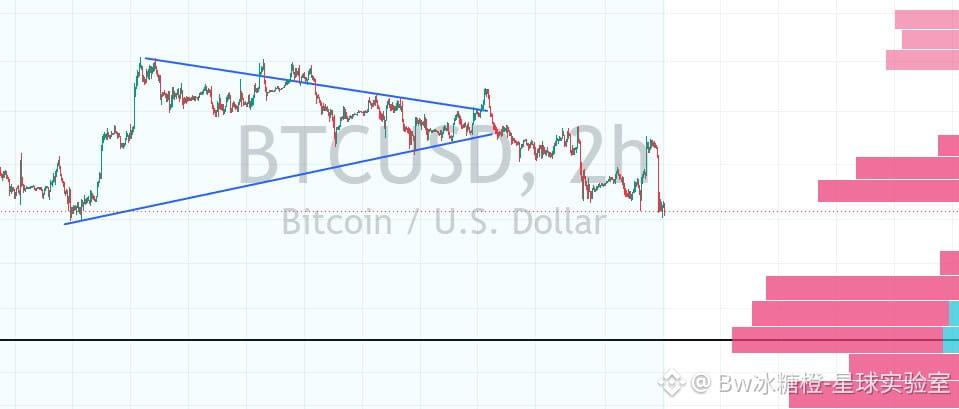
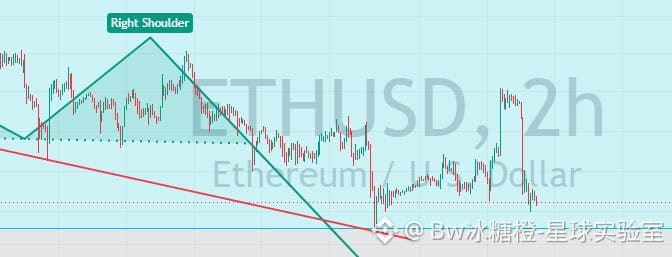
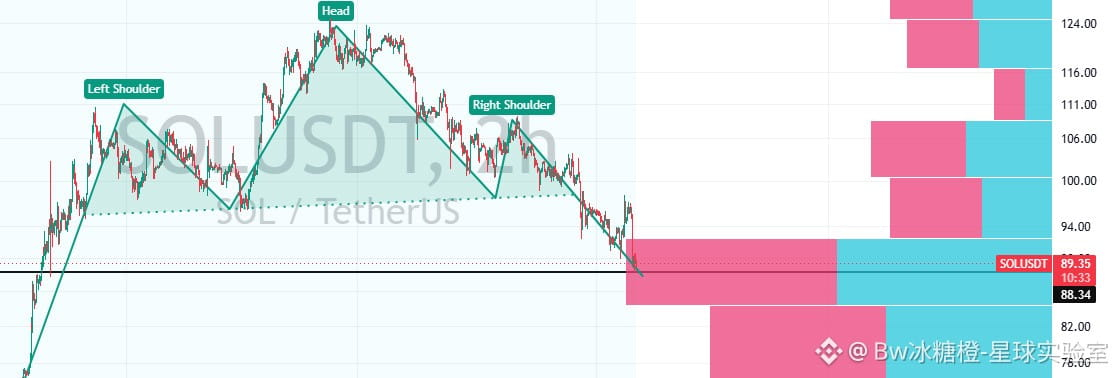
Looking at those densely packed rows of green buy orders below the order book, does it make you think there’s “mysterious money supporting the price” again, and make you itch to jump in and buy the dip?
Hold on! Take a look at the large-order data—it’s clearly a trap laid by the market manipulators.
$BTC The order-book imbalance has plunged to a brutal 30:70. Sell orders are more than twice the buy orders. The scariest part is the huge buy order worth $13 million sitting at 75K, while the sell wall at 75590 above is ridiculously thick. The big players are placing a massive order below purely to keep you hanging on. Once you follow them in, they can cancel it at any time and hit back with a huge red candle that crashes right through support.
Now look at $ETH . It’s down more than 8%, the worst performer of the lot. The order-book imbalance is 33:67, with sell orders once again grinding buy orders into the ground. Looking higher, a massive sell wall worth $15 million is capping the price at 2481. With resistance this strong, trying to buy the dip now is just volunteering to be a punching bag.
Finally, look at $SOL . After falling below the 90 mark, its order-book imbalance has flipped to an unusually bullish 64:36, with buyers in the lead. There are buy orders worth around a million sitting at 88 to support the price. This is really just short-term price support after an especially brutal drop. Everyone above is trapped in losing positions, so don’t assume it’s about to reverse—it’s just exhausted from falling and taking a breather.
In short, order-book listings are just smoke and mirrors that can be pulled at any time. Believe them and you’ll be left holding the bag. When the broader trend is down, these fake support orders are especially good at trapping retail traders. What do you think: are those tens of millions in buy orders at 75000 for Bitcoin genuine support, or a fishing expedition by the market manipulators? If you’re holding a position now, what are you planning to do?
1
723
·
--
Verified
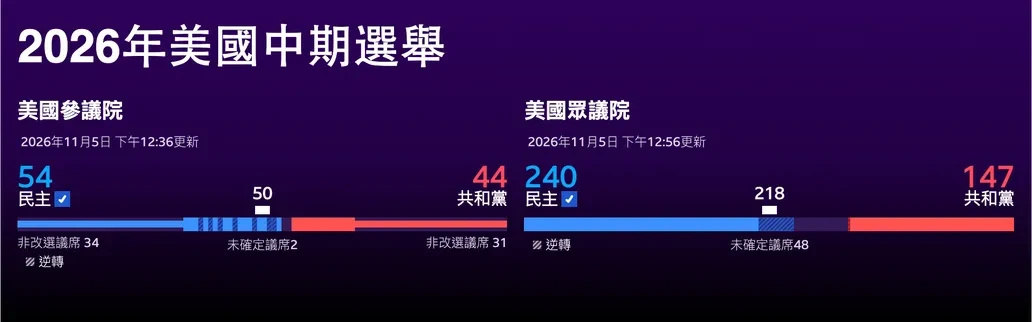
【Trump down, stocks up】
Trump’s midterm election defeat sent markets higher instead.
U.S. stocks rebounded, Chinese stocks rose, gold strengthened, and oil prices plunged.
The market has finally started to reprice things.
The Democrats’ victory in both chambers of Congress means Trump will face more constraints on tariffs, fiscal policy, and foreign policy.
Especially the war with Iran.
Previously, high oil prices drove up inflation and dampened expectations of interest-rate cuts.
Now, with Republicans losing, markets are betting that the U.S. may move faster to de-escalate the conflict.
Oil prices have pulled back, inflationary pressure has eased, and U.S. stocks naturally have reason to rebound.
But the most interesting thing is gold.
Risk appetite has recovered, yet gold has risen too.
That suggests the market is betting on policy easing while still worrying about the dollar, fiscal risks, and geopolitical tensions.
This rally may not mean the risks have disappeared. Rather, the market is beginning to reprice a Trump administration facing greater constraints.#美国中期选举:市场有哪些期待?
1
2
7.3k
·
--
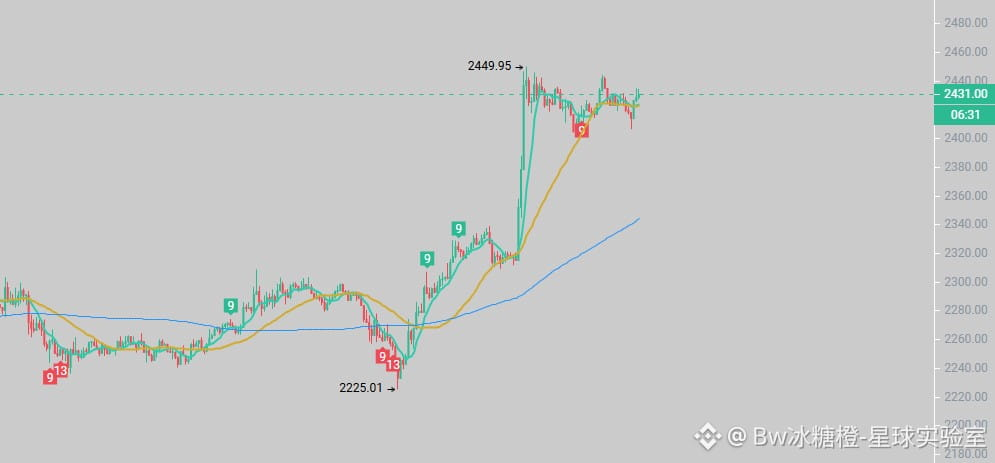
$ETH The 1H chart shows that the price began a strong rebound from the low of 2225.01, rising steadily to reach a swing high of 2449.95. The current price is 2430.85. Short-term moving averages are aligned bullishly and trending upward, providing support. The price has remained above the moving averages, bullish momentum has been fully unleashed, and the upward structure remains intact. The support zone has attracted strong buying interest on pullbacks, keeping the overall outlook strong. After consolidating, the price may still have the momentum to set a new high. Indicators on the 1-hour timeframe remain in a strong zone, with a clear bullish trend. The probability of further gains following a confirmed pullback is relatively high.
$ETH The 1H chart shows that the price began a strong rebound from the low of 2225.01, rising steadily to reach a swing high of 2449.95. The current price is 2430.85. Short-term moving averages are aligned bullishly and trending upward, providing support. The price has remained above the moving averages, bullish momentum has been fully unleashed, and the upward structure remains intact. The support zone has attracted strong buying interest on pullbacks, keeping the overall outlook strong. After consolidating, the price may still have the momentum to set a new high. Indicators on the 1-hour timeframe remain in a strong zone, with a clear bullish trend. The probability of further gains following a confirmed pullback is relatively high.
474
·
--
I missed last night’s big bullish candle.
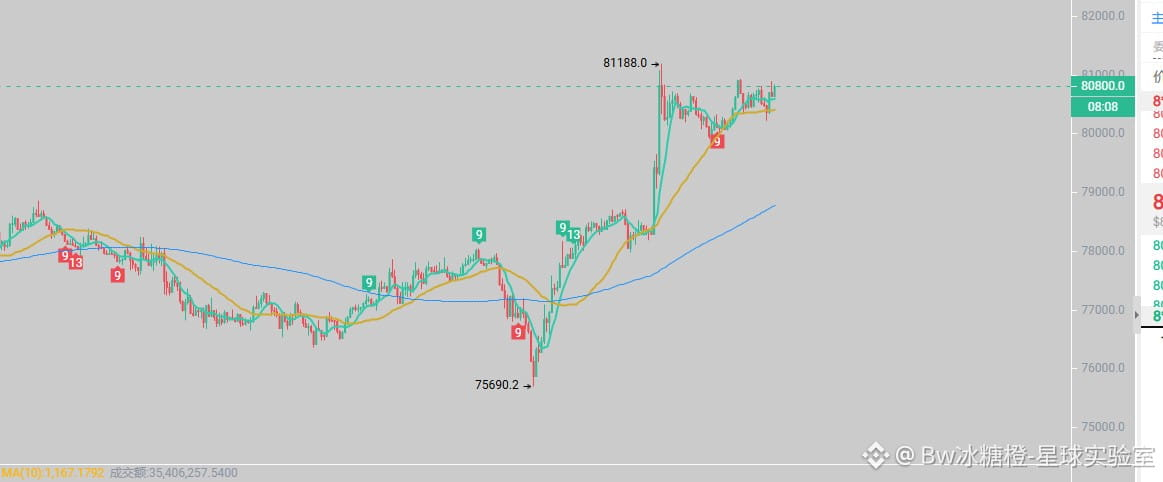
I was saying in the evening that I’d stay out and wait for direction, but as soon as the U.S. market opened, $BTC shot straight up from just over 78,000 to 81,200. I’d be lying if I said I didn’t regret it. My plan was to wait for it to get above 78,725 before taking another look. It did break above that level—it just happened so fast I didn’t react in time.
It’s at 80,776 now. I’m watching two things: the daily MACD histogram has finally turned positive; meanwhile, the long-to-short ratio has actually fallen from 1.75 to 1.54. Prices have risen, but people still aren’t very confident about going long. In situations like this, the market usually doesn’t crash right away.
But I’m not chasing it. If it pulls back to around 80,000 and holds, I’ll consider entering with a small position.
434
·
--
Bearish
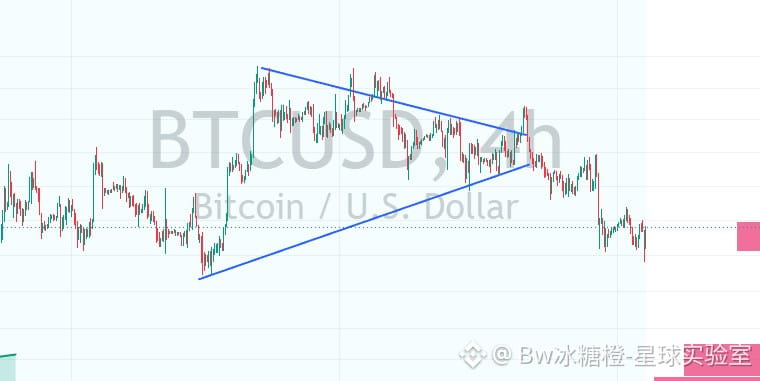
$BTC this bounce to 77400 has no volume to back it up. The 24-hour range is only 3%, and it fizzled after reaching a high of 78066. RSI at 45.7 can't even get above the midpoint, MA25 is weighing on it from above at 77252, and the Bollinger middle band at 77377 is another hurdle. I'll say it plainly: a low-volume bounce is a bull trap. If it can't hold the 77600-78000 zone, it could get slammed back to the 76500 floor at any moment. The funding rate of 0.01% looks neutral, but the bulls have no conviction. Don't chase it.
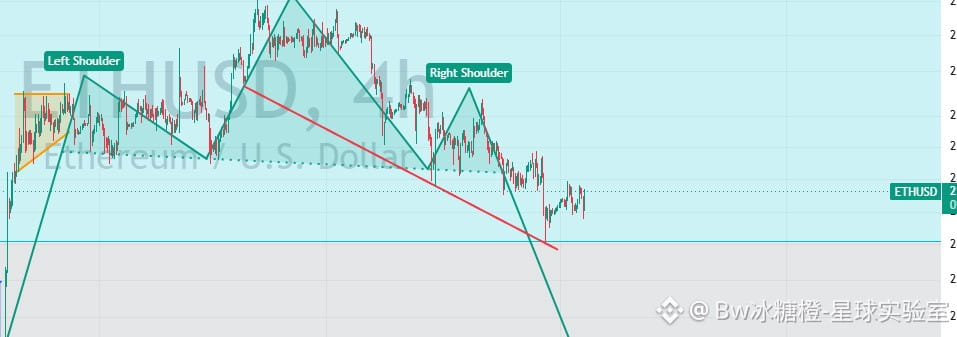
$ETH is even weaker. Its 1.23% gain is entirely thanks to BTC; its own RSI is only 41.1, and it's barely clinging to the Bollinger middle band at 2280.96. The 2308 level above is a hard ceiling, and its funding rate of 0.0089% is even more lackluster than BTC's. This kind of follower will show its true colors as soon as the rally stalls. The Bollinger lower band at 2250 isn't support—it's a slide. A break below it and it's straight down to 2226.
$ETH is even weaker. Its 1.23% gain is entirely thanks to BTC; its own RSI is only 41.1, and it's barely clinging to the Bollinger middle band at 2280.96. The 2308 level above is a hard ceiling, and its funding rate of 0.0089% is even more lackluster than BTC's. This kind of follower will show its true colors as soon as the rally stalls. The Bollinger lower band at 2250 isn't support—it's a slide. A break below it and it's straight down to 2226.
263
·
--
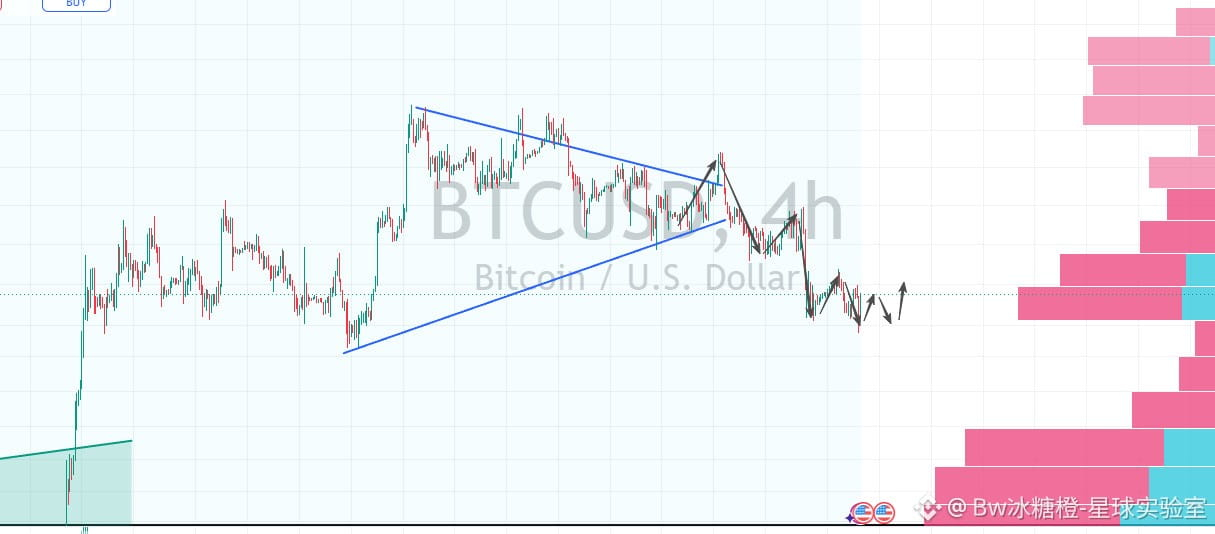
$BTC That sudden push up on the 15-minute chart just now was a bit unexpected. After dropping to around 75,000 at midday, the price quickly bounced back. It closed above the previous swing high, forming an upward CHoCH. The downward BOS from the morning’s selloff stalled here.
The short-term structure shifted from bearish to bullish. The 15-minute chart formed a bullish engulfing candle, with both the lows and highs moving higher. The subsequent 5-minute chart also formed an upward BOS.
Buy orders pushed the price all the way back to around 77,000, disrupting the bears’ momentum. On the higher time frame, the midday low landed right at the support level of the daily candle at 76,000. This low had been tested four times before without breaking.
The 4-hour chart still has a bearish moving-average alignment, but the bears have run out of steam at this level. Buyers on the higher time frame are showing strong initiative here.
I’m leaning bullish now. The lower edge of the daily range has caught this morning’s selloff, and the lower time frame has also formed a reversal structure. I expect the market to stabilize around the current level first, then move higher in a rebound.
769
·
--
After finally climbing overnight, it all got wiped out as soon as news of the midterm elections came in. Didn’t everyone know the midterms were a guaranteed loss?
1.
$BTC
I can’t think of any other reason—it must have been a hack;
2.
$ETH
Was it because Vitalik was attending a conference in India and wearing an unusual outfit?
3.
$SOL
It’s starting to look for application-focused projects. Now we wait for the foundation to make an announcement;
4. Report: The Binance hack began with a fake recruitment drive, using methods highly similar to the 2022 Axie hack;
At the end of the day, it was still an employee—why were they applying for jobs elsewhere?
5. Trump: If Democrats take control of Congress, he may use his presidential veto power to push back;
Always going straight to the veto;
6. Republicans are concerned about the early results of the midterm elections, believing Democrats could win by a landslide;
The market has already given its answer: U.S. stocks are plunging on the Republican side;
7. On-chain analytics platform Bubblemaps refutes allegations by a former employee, saying the contract was fabricated by AI;
8. VanEck’s head of research: Bitcoin would need to average $100,000 for miners to break even;
9. 1inch lawyer: Regardless of the midterm election results, U.S. crypto regulation will be driven primarily by federal agencies;
10. The CFTC has approved single-stock perpetual contracts. So far, only Kalshi, Coinbase, Kraken, and http://Crypto.com have submitted applications;

1
1.1k
·
--
In this environment, whether it’s U.S. stocks or crypto,
wouldn’t it be better to focus on spot trading?
Over the medium to long term, history shows that U.S. stocks are very likely to rise in the year after midterm elections, and crypto is also transitioning from a bear market to a bull market.
But in the short term, there are plenty of disruptive factors: hacks, midterm elections, U.S.-Iran tensions, oil prices…
Everyone knows that fortune favors the bold. That’s true.
But what about the second half of the saying?
Fortune is found in risk, but it can also be lost in risk!
You win one time out of ten, but lose nine times out of ten.

2
818
·
--
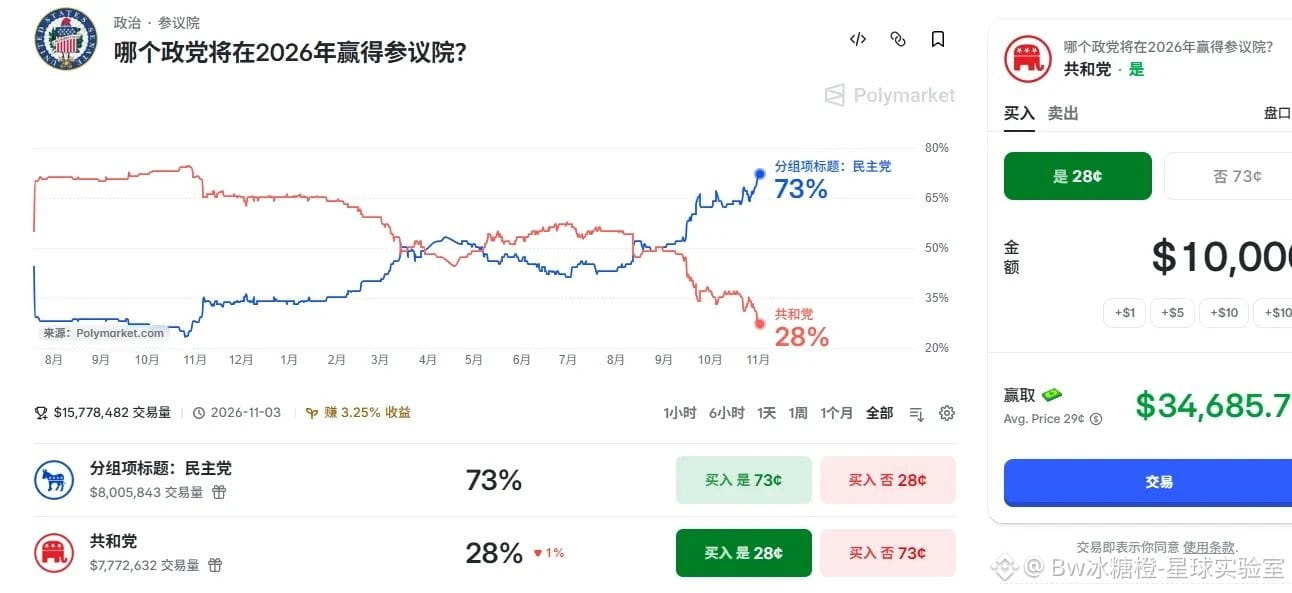
The real impact of the midterm elections on crypto has never been about “who won.” It’s about how liquidity gets repriced once the prospect of fiscal expansion shrinks.
Democrats are widely expected to retake the House, while the Senate race is too close to call across seven battleground states. But whatever the outcome, a divided Congress will make a new round of fiscal stimulus harder to pass. In the medium term, BTC thrives on “fiat distrust + liquidity.” If fiscal stimulus stalls, that means less marginal support.
The real unresolved question is the CLARITY Act. A procedural vote in the Senate in September failed outright, 49–50, without even reaching the 60-vote threshold. Here’s what matters: if Republicans hold on to at least one chamber, there may still be a narrow opening to move the legislation forward. But if Democrats sweep, consumer protection and anti-money-laundering scrutiny will regain the upper hand, and the regulatory discount on DeFi and altcoins will be priced in first.
The divergence between assets is more worth watching than the election itself. BTC has the deepest liquidity, so it’s the first asset sold when institutions cut risk budgets—but after a panic, it’s also the first one investors turn to when they put money back to work. ETH has a more specific problem: spot ETFs saw net outflows of about $825 million in October, and its funding structure is already weak. If a Democratic sweep raises expectations of tighter regulation, ETH’s upside will be further constrained. Rather than bet on ETH’s direction, it may be better to wait until the legislative language becomes clearer before taking a position.
#美国中期选举倒计时,美股博弈窗口已开启?
5.9k
·
--
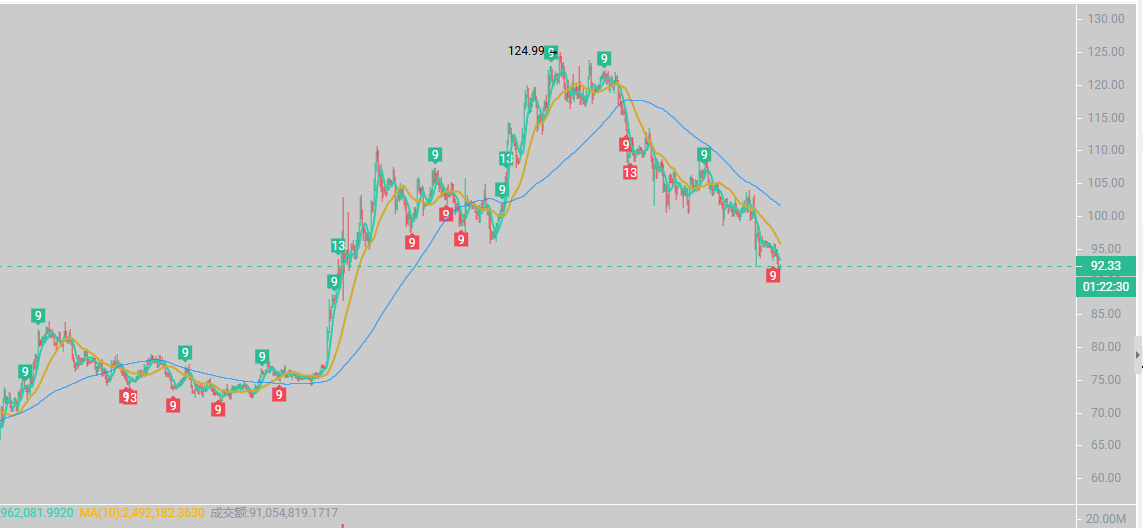
$SOL Rebound toward 93.5–94.5 and face resistance; consider going short. Stop-loss at 95.2, with initial targets at 92–91.
SOL has recently been notably weaker than BTC and ETH. In addition to generally weak risk appetite across the market, there have also been recent reports of SOL transfers linked to the Binance hack and large holders moving SOL to exchanges, raising concerns about potential selling pressure.
It should be noted that on-chain transfers do not necessarily mean the assets have already been sold, so the actual scale of selling pressure cannot yet be confirmed. However, the chart shows SOL has continued to retreat from around 103.83, with both highs and lows moving lower. It has fallen as low as 90.79, indicating a clear short-term downtrend.
So there is no need to rush into buying the dip at current levels; the main focus is on how price behaves after a rebound. Watch 93.5–94.5 above. If the rebound lacks strength and selling pressure reappears in this zone, consider going short in the direction of the trend;
Below, the initial levels to watch are 92–91. If price breaks below 90.79 decisively, watch for further downside. If price regains and holds above 95.2, that would suggest the short-term weakness is easing, and the bearish outlook should be reassessed.
Current view: bearish on a rebound; don’t chase shorts at the lows. Watch whether on-chain funds are actually sold, and whether SOL can catch up with the rebound in BTC and ETH.
191
·
--
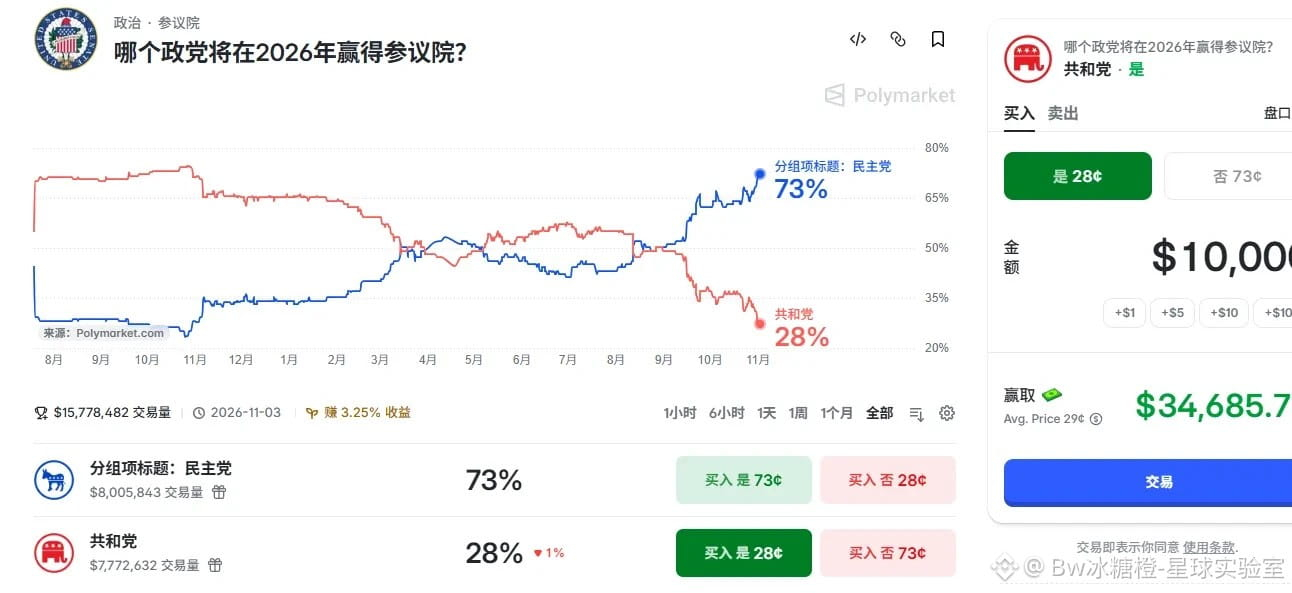
Everyone’s talking about the midterm elections! Bingtang is taking a look at them too—the vote is on November 3.
Trading volume has shrunk this much because the market is waiting for this moment!
Here’s my conclusion up front: the Republicans will win, and it won’t be a narrow victory.
👇
1. I see the Republicans taking 53 seats in the Senate, with the Democrats holding onto 47 at most. The reasoning is simple: look at the map of seats up for election. The Democrats have too many states to defend and can’t afford to lose even one. Lose one, and the whole thing flips.
2. I’m giving the Republicans around 230 seats in the House, so they’ll stay in control. Don’t listen to all that talk about a “close race”—that’s what people say to those who don’t know the full story.
3. Why am I willing to make this call? Look at the issues.
Voters have just three things on their minds right now: prices, interest rates, and jobs.
The Republicans’ message on all three is more direct. The Democrats have argued among themselves for ages without putting forward an economic plan people can remember.
4. Some people push back with “the party in power always loses seats in midterm elections.” I accept that rule, but it only applies when there are no other factors at play. This time, the other side is the factor—they’ve got no cards to play.
5. What happens to the market?
If the Republicans sweep, tax cuts and deregulation will be priced in early. U.S. stocks will rise first, and crypto will follow.
$BTC I’m directly looking for this wave to return to above 85,000. It’s not a dream—it’s an expectations gap. But the moment the results are in, the good news will be fully priced in, so don’t buy at the top. The real way to make money isn’t to guess the direction correctly; it’s to stay in the game until the results come out. Once the votes are cast, the market will go back to where it belongs. The election is a catalyst.
255
·
--
US stocks have plunged anyway, while crypto has been slowly bleeding all the way down. Compared with the crash a few days ago, it looks like everyone’s lost even more. Real comforting.
1.
$BTC
The slow bleed just goes on and on. This is basically a practical lesson in [unclear], and there’s nothing you can do about it—it’s already the most stubborn thing out there;
2.
$ETH
What can I say? Nobody’s bullish, and yet you’re the biggest disappointment of all;
3.
$SOL
Are we going to see SOL below 90 again?
4. Kalshi and Polymarket both predict that Democrats could sweep the 2026 midterm elections;
Well, Trump’s finished then;
5. Oracle reportedly plans to issue $10 billion in stock at an 11% discount;
US stocks are all OTC;
6. Binance launches a boosted-yield campaign for stablecoin investments, with additional tiered returns of up to 8.5%;
They’re trying to attract deposits. I’ve seen this one before;
7. The tech-stock crash is dragging down the valuation of Anthropic’s “largest IPO in history”; expectations have fallen from $2 trillion to the $1.5 trillion range;
8. Apple plunged in after-hours trading after reporting earnings;
The of Stake vote passed, and NEAR’s maximum annual issuance rate will be cut to 1.6%;
It doesn’t matter anymore; we’re in a downtrend;
10. Tom Lee: The AI-stock selloff may have bottomed. The crypto market’s reaction to the Binance incident suggests that most of the selling pressure may be over;
He’s been saying it’s bottomed for over half a month now;

1.3k
·
--
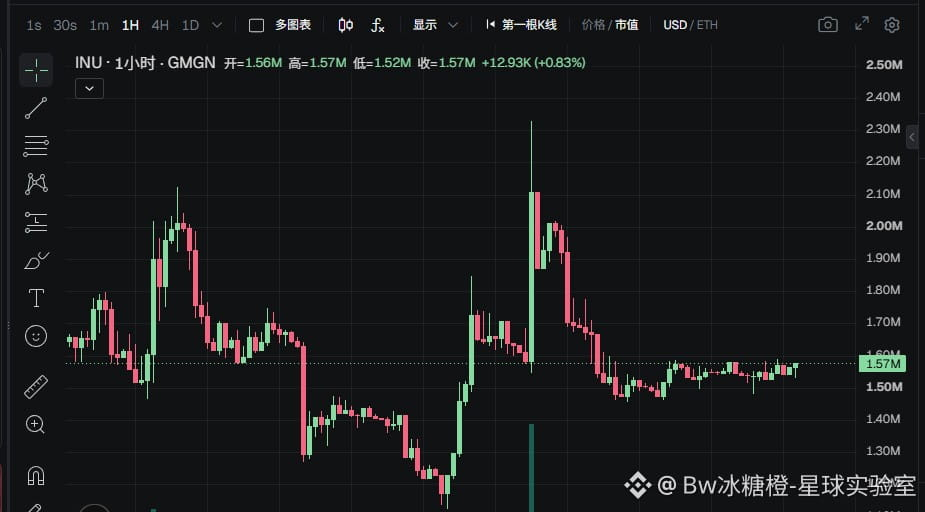
A Steve Jobs-themed Shiba Inu. The liquidity pool is paired with Apple stock, and holding the token earns dividends. Its market cap has now pulled back to around 1.5M, so it may be worth getting in early. The Minions have bought in several times and are bullish. Plus, Apple reports earnings tonight, which could spark a rally.
0x63ee32ac3077d1fbd8a77ebba2a6ed4b8e9c1e18
0x63ee32ac3077d1fbd8a77ebba2a6ed4b8e9c1e18
144
·
--
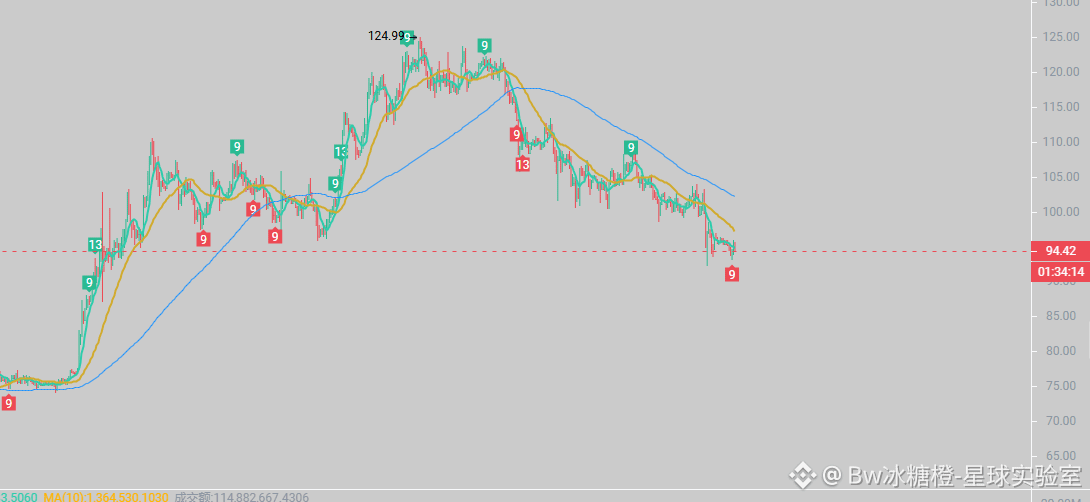
$SOL has fallen below $95 again and is currently trading at $94.80. $ETH Notably, although it has once again fallen below $95, this time it has not repeated the sharp 8.1% plunge seen on October 30. The decline has clearly slowed. This suggests that short-term selling pressure has not accelerated further for now. The market appears to be repeatedly searching for a bottom after the sharp drop, rather than seeing another wave of panic selling.
However, $95 has become a key dividing line. In the short term, the main thing to watch is whether the price can reclaim and hold above it. If it fails to recover soon, weak, choppy trading may continue. For SOL to truly stabilize, sustained buying will need to come in.
However, $95 has become a key dividing line. In the short term, the main thing to watch is whether the price can reclaim and hold above it. If it fails to recover soon, weak, choppy trading may continue. For SOL to truly stabilize, sustained buying will need to come in.
256
·
--
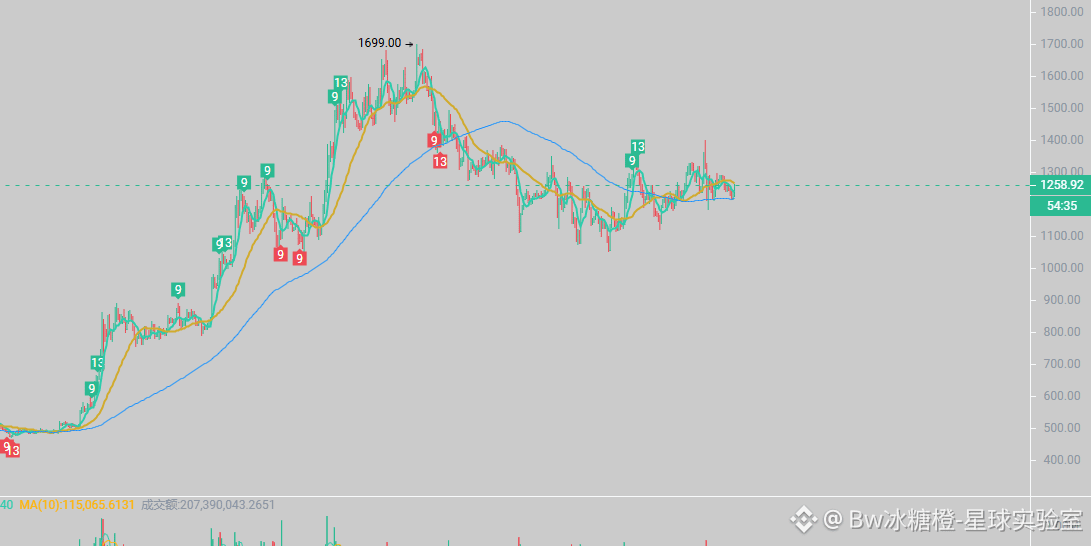
$ZEC The mainstream price range is around $1,230–$1,250. Why has ZEC been so volatile lately?
NU7 upgrade approaching: Activation is expected around November 5. The block interval will be shortened from 75 seconds to 25 seconds, tripling transaction confirmation speed.
ETF flows fluctuate: Grayscale ZCSH saw net inflows for several consecutive days in late October, but on October 30 it recorded net outflows again, making fund flows unstable.
Governance dispute unresolved: Internal debate over the allocation of 8% of block rewards is ongoing, and disagreements within the team are a potential source of disruption. High derivatives leverage: Open interest in ZEC derivatives once exceeded $3 billion. Short liquidations and long squeezes can both amplify volatility.
Here are the key levels to watch next Resistance above: $1,280–$1,300; a convincing short-term recovery would require a high-volume move back above this range. Support below: $1,210–$1,220;
If this level breaks, the price could retest around $1,180. Key catalysts: Whether the NU7 upgrade activates successfully on November 5, and whether spot ETF flows can remain positive.
In a nutshell: ZEC is leaning toward a short-term pullback today. The NU7 upgrade and ETF narrative are still in play, but with volatile fund flows and unresolved governance disputes, volatility risks are clearly higher than for BTC and ETH. Caution is warranted when chasing prices higher.
233
·
--
Bearish
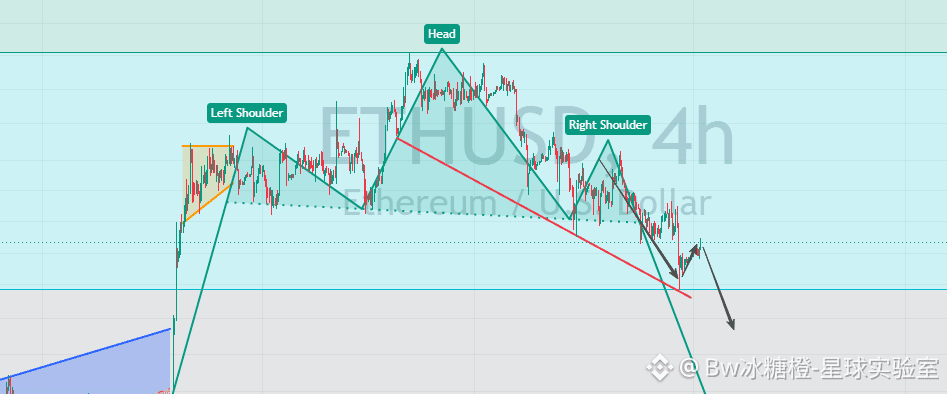
$ETH This sudden move up—my view is straightforward: short 📉. It’s not that I’m shorting just because the price went up; it’s that this rally has the wrong character. The key level already broke. The 2,385 support is gone, and the daily chart has turned bearish. This move up is essentially a bounce after the breakdown, just a retest—not a reclaim.
The biggest risk with a bounce is that it lacks volume. This move is sharp, but there’s no sign of fresh money coming in underneath. It looks more like short covering: shorts close their positions and push the price up, then once they’re done, it’s back to business as usual. For a real reversal, we’d need a high-volume breakout that gradually absorbs the supply from buyers trapped above. We’re not seeing that now.
Now look at the positioning: whales have sold more than 160,000 ETH over this stretch, while exchange balances have increased by more than 100,000. All that supply is sitting on the order books, waiting to be sold. Every time the price ticks up, someone unloads. ETFs also saw net outflows in October; institutions haven’t returned.
With two layers of selling pressure overhead, one bounce won’t be enough to turn things around. So my approach is simple: the 2,300–2,380 area is resistance. A rally into that zone is an opportunity to short—that’s the bounce I’m shorting.
First, I’m watching 2,200 to the downside. That’s the previous demand zone; if it breaks, then I’m looking at 2,000.
I’ll also be clear about what would prove me wrong: if it breaks above 2,385 on strong volume and holds there, then I’m wrong, and I’ll exit. Until then, any rise is just a bounce.
#币安已处理46.5亿美元提款 #币安将恢复第一阶段提现
1.3k
·
--
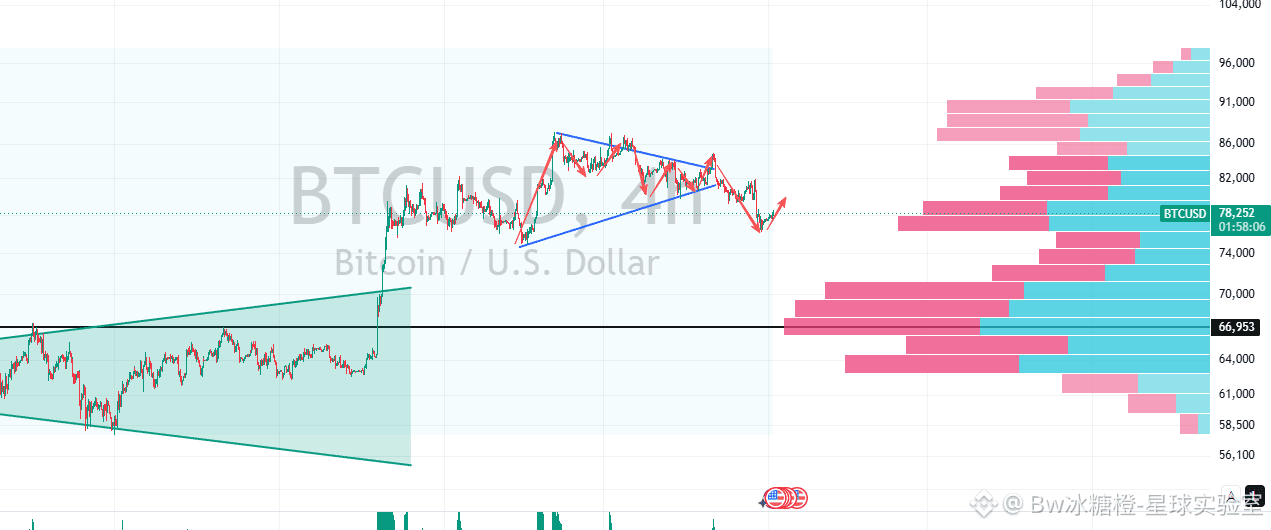
$BTC Prices gradually climbed back toward 78,000 this morning. Open interest in futures contracts fell by nearly 2% over 24 hours. The funding rate stayed within its normal range and didn’t jump along with the price. Prices have been rising over the past few hours, while total open interest has actually declined.
Seeing that open interest hadn’t picked up, I felt relieved. There were no large orders rushing to chase the rally. Most of this upswing was driven by short covering. With no signs of blind buying at higher prices, leverage in the market doesn’t seem particularly heavy.
Looking at the bigger picture, the recent pullback landed right on the 78,000 daily-chart support zone. After that bearish candle dipped lower, the price recovered fairly quickly. The red bars on the 4-hour MACD are continuing to grow, and the indicator is trending upward.
The daily EMA100 is providing support further down. There are substantial buy orders protecting the lower levels, and the lows on the 15-minute chart are also moving higher. Overall, I’m leaning bullish on the outlook. The support offered by this key level on the higher time frame is still holding.
Now that the price has found support at this level, it will most likely continue upward and test the previous high near 79,000.
540
·
--
Withdrawals opened yesterday, and the drop started yesterday. Didn’t you say opening withdrawals would send prices soaring? Didn’t you say this was a dip? Didn’t you say a raging bull market was here?
1.
$BTC
Just wait and see for now. After all, it looks like the drop was triggered by a black swan event. Whether the market can hold up remains to be seen;
2.
$ETH
The real drop hasn’t even started yet. The hackers haven’t made their move, have they?
3.
$SOL
When will the foundation finally wake up?
4. The U.S. Secret Service: The investigation into the cryptocurrency theft targeting Binance is still ongoing;
5. Contrary partner Kyle Harrison: Venture capital is becoming McDonaldized;
6. Bank of Korea: Investigating financial institutions’ entry into the virtual asset market;
Are they starting to kill the goose that lays the golden eggs?
7. Jim Cramer: The sell-off may not be over after the Nasdaq’s sharp drop in October; the midterm elections, Iran’s decision, and nonfarm payrolls are three major wild cards this Wednesday;
There’s certainly a lot going on this week;
8. The Fear and Greed Index rose to 37 today, putting the market in “Fear” territory;
9. Binance saw net outflows of $5.8 billion in the 24 hours after it resumed withdrawals;
10. Elon Musk responds to Grok Bot credits being used up too quickly, saying the service is too costly;
My Grok Bot credits ran out for no apparent reason;
11. Guidance for U.S. Treasury issuance may see its biggest adjustment in nearly three years;
12. U.S. stock index futures edged higher, while crude oil weakened in early trading;
13. Apple’s share price and the Nasdaq 100 became negatively correlated for the first time, with the market viewing Apple as a safe haven from AI capital spending;
Let’s see how this week’s earnings reports turn out;

483
Log in to explore more content
Join global crypto users on Binance Square
⚡️ Get latest and useful information about crypto.
💬 Trusted by the world’s largest crypto exchange.
👍 Discover real insights from verified creators.
Email / Phone number
Trending Topics
BinanceReopensWithdrawalsForMoreAssets
1.1M views
5,858 Discussing
Recovery Update #9: Withdrawals for More Assets to Reopen (2026-11-06)
Binance Announcement
·183 Likes
·728.3k views
$2TWipedOutHedgeFundsFaceLiquidation
769 views
30 Discussing
AnthropicIPOValuationDoubts
16,151 views
420 Discussing