
E2S - Крипто за 60 сек
23 Posts
E2S - Крипто за 60 сек
Report
Block User
Главная новость крипты за 60 секунд. Без обещаний прибыли, только факты и риски. Каждый день.
1 Following
35 Followers
43 Liked
Posts
All
Videos
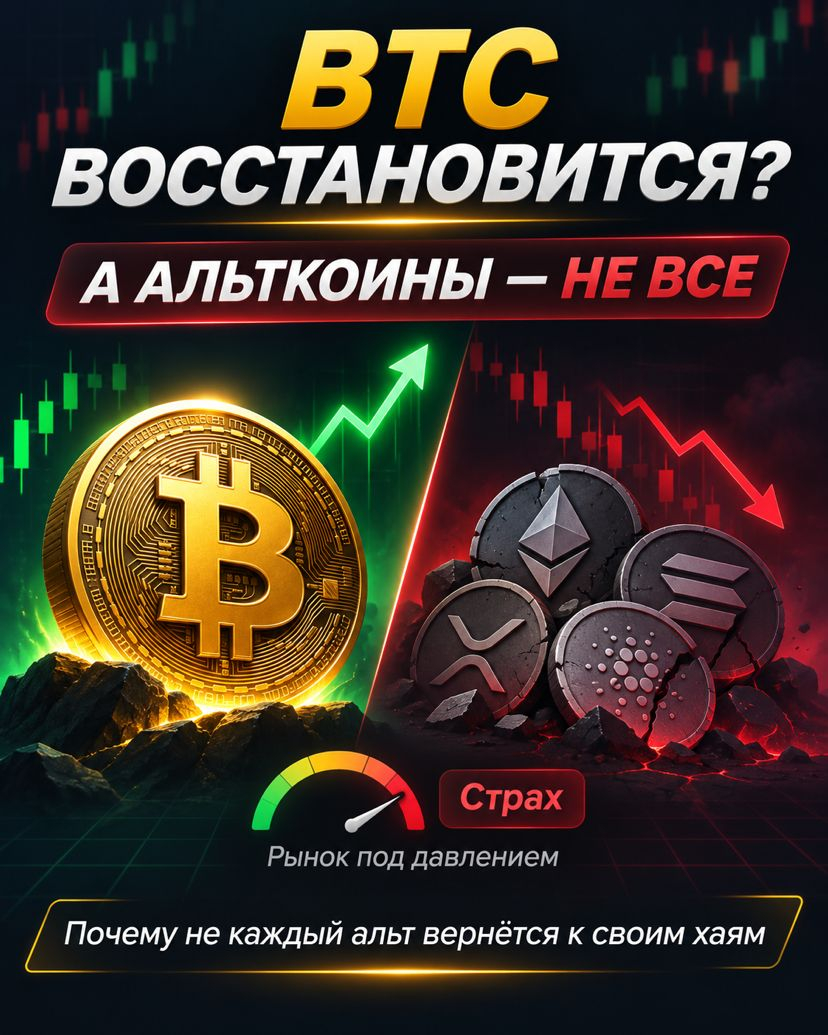
Your altcoins may never return to their previous highs.
And it’s not just because Bitcoin is falling.
Imagine: BTC recovers by 100%, but your altcoin is still down 85%.
Why?
1. New tokens dilute the supply.
2. Investors move into more liquid assets.
3. Projects lose users and competitiveness.
4. Previous highs don’t guarantee new demand.
A 90% drop requires a 900% gain for a full recovery.
What are you choosing now: BTC or altcoins with the potential for 10x growth?
#BTC #Altcoins
96
📉 History of BTC bear markets:
2018: −83%, bottom after 364 days.
2022: −77%, bottom after 378 days.
2026: −53%, 411 days have already passed!
Three scenarios from the ATH of ~$126,000:
🟢 $54–58K — drawdown to −57%.
🟠 $37–50K — drawdown to −71%.
🔴 $21–29K — drawdown to −83%.
Conclusion: in terms of duration, Bitcoin has already exceeded the length of the two previous declines, but in terms of depth, it is still far from them.
$BTC
2
4
17.8k
Projects with three characteristics: small market capitalization, real demand for the product, and a mechanism through which the project’s growth can increase the token’s value.
$MORPHO — Paris, 2021, a layer built on Aave and Compound. Today, ~$9.7 billion in the protocol.
$RENDER — from the OTOY studio: token launched in 2017, on Solana since 2023. Now a GPU for AI.
$TAO — fair launch in 2021, 21 million cap, issuance cut in half in Dec. 2025.
$PENDLE — 2021, yield trading. ~$939 million in the protocol.
$AERO — merger of Aerodrome and Velodrome, operates across 7 networks.
High risk.
Not investment advice
2.1k
Bitcoin below $60,000: causes and levels (20.11, Binance)
$BTC $59,200: daily low $58,769, down 6% in 24 hours, down 14% in a week, down 53% from the record high of $126,080. First time below $60K since early July.
Reported causes: outflows from spot ETFs of ~$582 million (IBIT –$541 million), sell-off in AI stocks and rate concerns, cascade of liquidations >$700 million (~86% long positions).
Chart: RSI below 30 on the 1-hour and 4-hour charts, price below EMA 34/89/200. Levels: $58.7K, $60K, $62–64K. Binance Square Fear Index: 8.
Not financial advice.
2
2
20.1k
Article
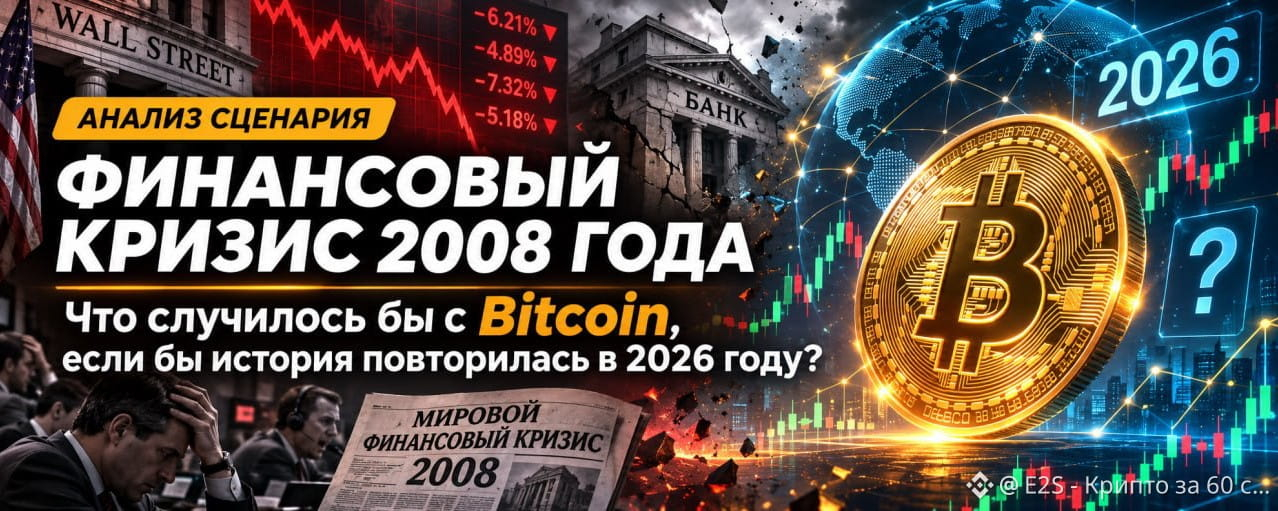
The 2008 Financial Crisis: What Would Have Happened to Bitcoin If History Repeated Itself in 2026?Reading time ≈ 4 min
In 2008, the global financial system was on the brink of collapse. Banks were going bankrupt, stock markets were crashing, and millions of people were losing their jobs.
But Bitcoin wasn't being traded yet.
What if a similar crisis happened today?
Let's break it down using real numbers.
1. How severe was the 2008 crisis?
The 2008 Financial Crisis: What Would Have Happened to Bitcoin If History Repeated Itself in 2026?
Reading time ≈ 4 min
In 2008, the global financial system was on the brink of collapse. Banks were going bankrupt, stock markets were crashing, and millions of people were losing their jobs.
But Bitcoin wasn't being traded yet.
What if a similar crisis happened today?
Let's break it down using real numbers.
1. How severe was the 2008 crisis?
219
Top 5 coins the Binance market is talking about: 20.11.2026)
$MMT : +126% in 7 days, trading volume 24 times higher than average
$MEGA : +27% for the week, on Binance with the Seed Tag label
$HYPE : protocol revenue for Q3 around $191 million (+22%)
$ZEC: share of shielded transactions increased to 29%
$NEAR: annual issuance maximum reduced to 1.6%
Which coin are you watching? 🤔
1
3.6k
$100 today and a 4-year peak (spot)
Where the price stands relative to its all-time high:
$BTC $62,702: 50% below its $126,198 peak (6.10.2025). Return to peak: $100 → $201.
$ETH 1756: 65% below its 4954 peak (24.08.2025). Return: $100 → $282.
$SOL $72.92: 75% below its $294 peak (19.01.2025). Return: $100 → $404.
Bitcoin, Ether, and Solana are among the market’s largest and most liquid cryptocurrencies, so they are considered more mature. But their volatility remains high: drawdowns of tens of percent are commonplace.
This is not investment advice.
Do you believe new highs are coming? Vote 👇
1
1
9.1k
Binance’s hot trio: $SENT , $LUNC , $PEPE — an emotion-free analysis
SENT: rally driven by a short squeeze. Futures funding: –0.11% over 4 hours; open interest up 50% over 48 hours; regular accounts have more shorts than longs. Risk: high. 34% of tokens (team and investors) will begin unlocking around January 2027.
LUNC: bounce from the November 14 low, fueled by leverage. Binance has yet to burn any coins in November, the first time in 44 months. Risk: elevated.
PEPE: bounce within a downtrend, with below-average volume. Risk: medium.
1
8.4k
·
--
Bearish
🔴 $BTC — looking to short, but in no hurry
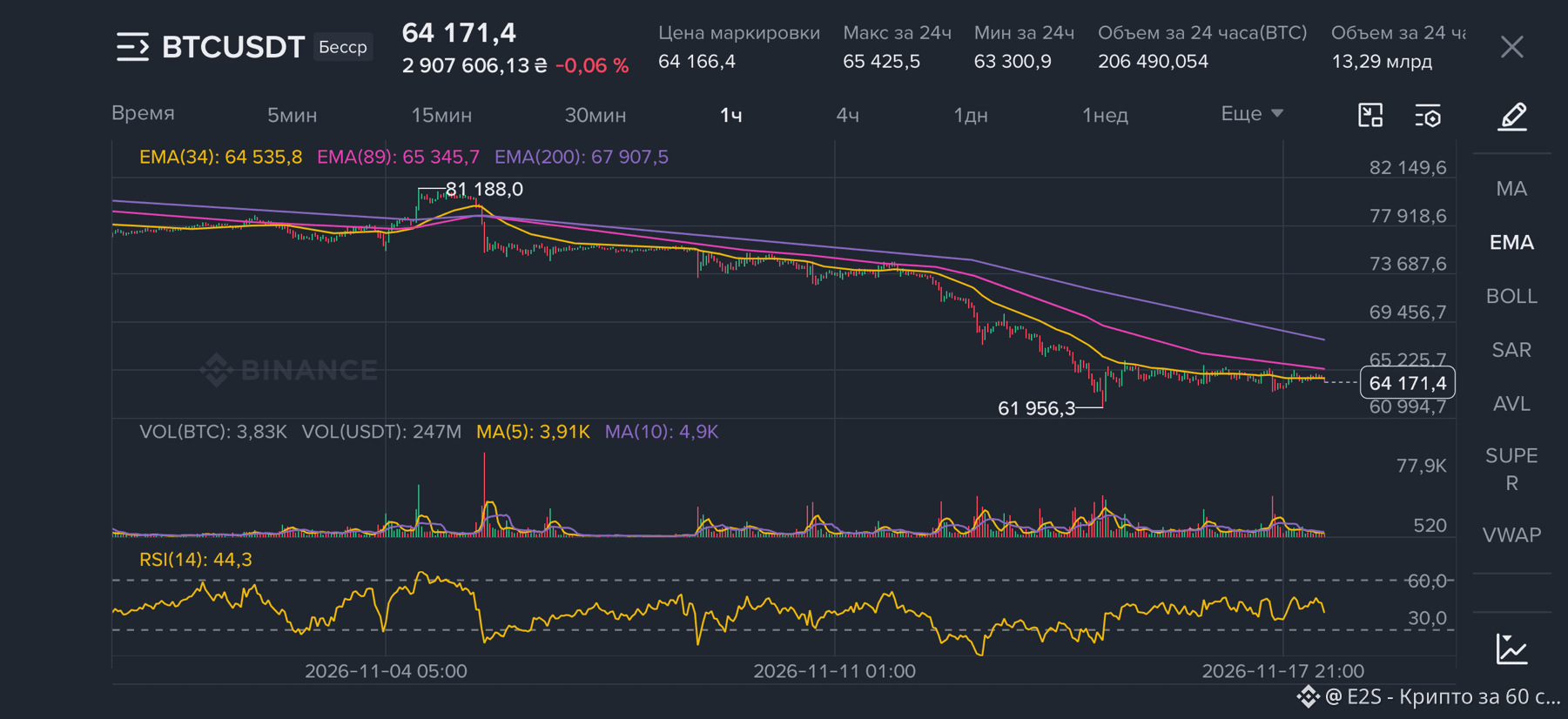
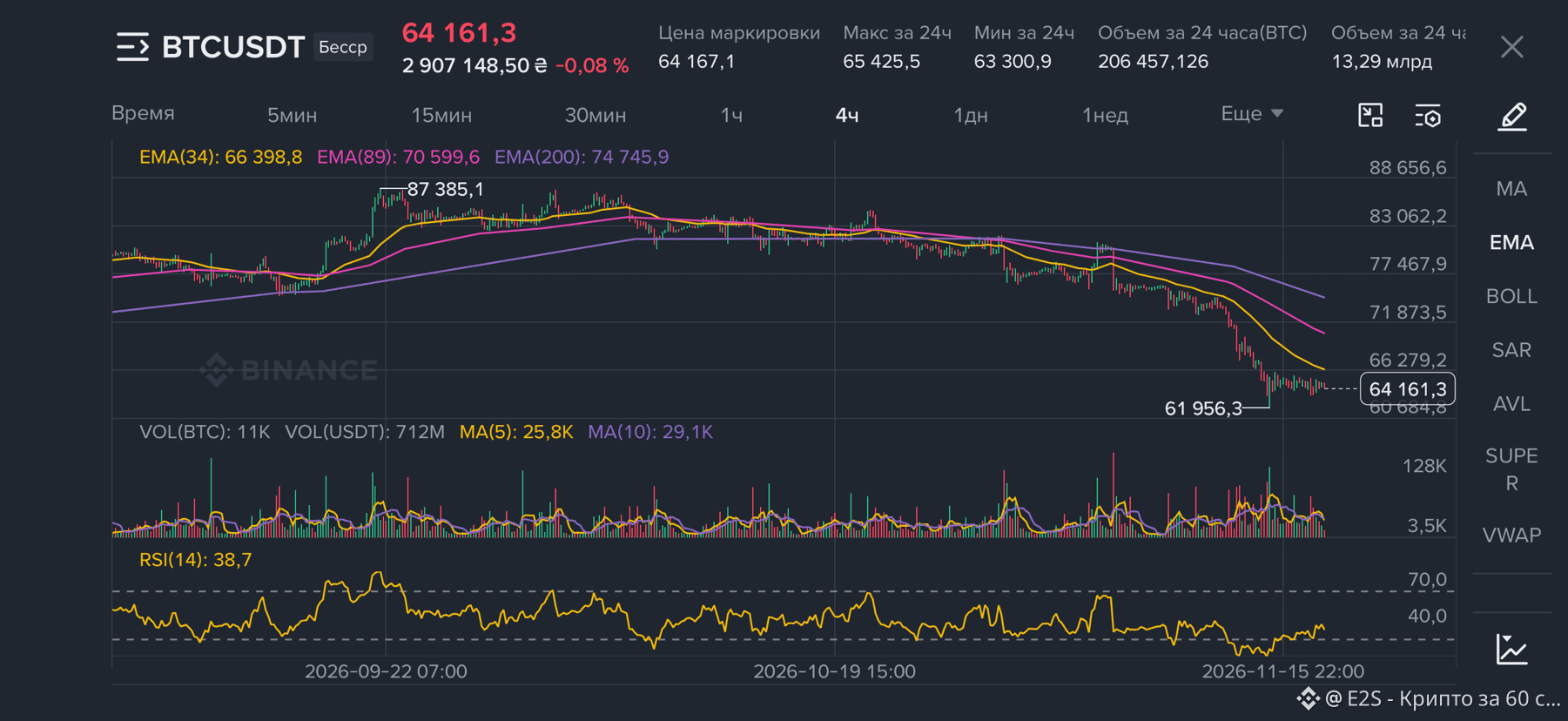
Opened the chart, and the picture isn’t encouraging for the bulls so far. We plunged from 87 385 to 61 956, and now we’ve been stuck in a narrow range of 63 300–65 400 for several days. Many are waiting for a reversal, but I just see a pause.
What concerns me:
— on the 4h chart, price is below all three EMAs (34 / 89 / 200 = 66 400 / 70 600 / 74 746), and they’re pointing down;
— on the 1h chart, EMA34 (64 536) is acting as a ceiling, pushing price down time after time;
— 4h RSI is only 38,7: it’s not oversold yet, so there’s room to fall;
— volume is fading in this sideways range: buyers aren’t coming in, but simply nobody is selling.
My plan: I’m waiting for a bounce to 65 250–65 400. That’s where the 1h EMA89 and the daily high are—a strong zone. I’ll look to short from there.
🎯 TP1: 64 300 (−1,6%)
🎯 TP2: 63 350 (−3,0%)
🎯 TP3: 62 000 (−5,1%)
🛑 SL: 66 450 (+1,7%)
I’ll take profits in stages: half at the first target, the rest as it plays out; after TP1, move the stop to breakeven. If we don’t reach the zone, I won’t chase it—the trade simply won’t happen.
What would change my mind: if BTC holds above 66 400 on the 4h chart. Then I’ll cancel the short and look toward 67 900 instead.
⚠️ This is my personal view of the market, not financial advice.
$BTC
{spot}(BTCUSDT)
🔴 $BTC — looking to short, but in no hurry
Opened the chart, and the picture isn’t encouraging for the bulls so far. We plunged from 87 385 to 61 956, and now we’ve been stuck in a narrow range of 63 300–65 400 for several days. Many are waiting for a reversal, but I just see a pause.
What concerns me:
— on the 4h chart, price is below all three EMAs (34 / 89 / 200 = 66 400 / 70 600 / 74 746), and they’re pointing down;
— on the 1h chart, EMA34 (64 536) is acting as a ceiling, pushing price down time after time;
— 4h RSI is only 38,7: it’s not oversold yet, so there’s room to fall;
— volume is fading in this sideways range: buyers aren’t coming in, but simply nobody is selling.
My plan: I’m waiting for a bounce to 65 250–65 400. That’s where the 1h EMA89 and the daily high are—a strong zone. I’ll look to short from there.
🎯 TP1: 64 300 (−1,6%)
🎯 TP2: 63 350 (−3,0%)
🎯 TP3: 62 000 (−5,1%)
🛑 SL: 66 450 (+1,7%)
I’ll take profits in stages: half at the first target, the rest as it plays out; after TP1, move the stop to breakeven. If we don’t reach the zone, I won’t chase it—the trade simply won’t happen.
What would change my mind: if BTC holds above 66 400 on the 4h chart. Then I’ll cancel the short and look toward 67 900 instead.
⚠️ This is my personal view of the market, not financial advice.
$BTC
702
Article
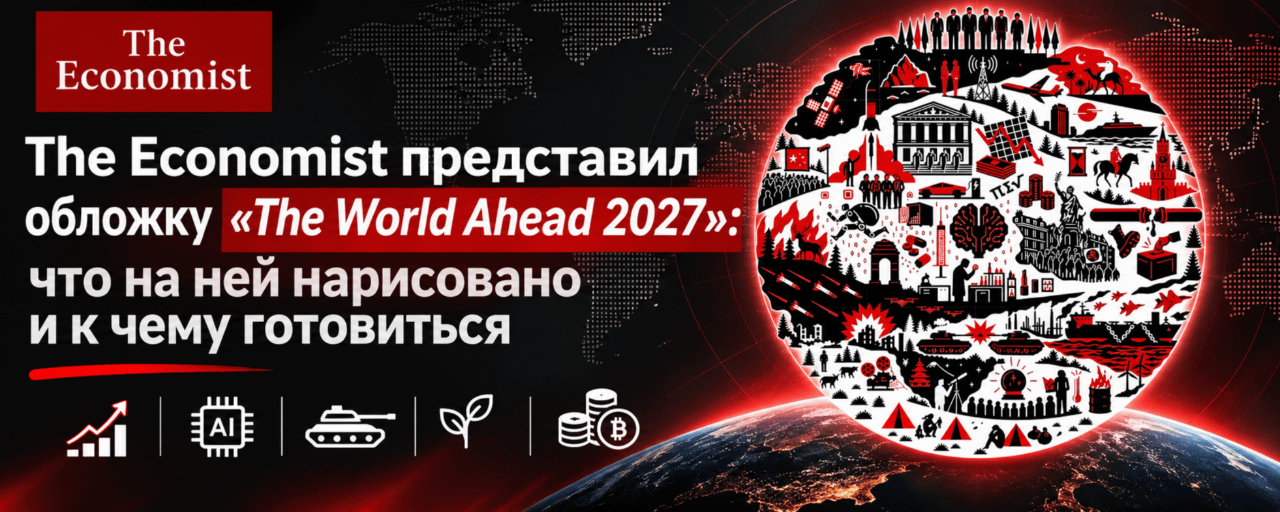
The Economist unveils “The World Ahead 2027” cover: what’s depicted and what to expectReading time: ~3 min
On November 17, 2026, The Economist unveiled its annual edition, “The World Ahead 2027.” The publication’s press release confirms its release, and the illustration circulating online matches the issue’s themes (analysis below). The print version will appear in the November 21 issue, and it will be available as a standalone edition from November 26. We take a look at what’s depicted on the cover and what the issue’s main themes mean for markets, including crypto.
The Economist unveils “The World Ahead 2027” cover: what’s depicted and what to expect
Reading time: ~3 min
On November 17, 2026, The Economist unveiled its annual edition, “The World Ahead 2027.” The publication’s press release confirms its release, and the illustration circulating online matches the issue’s themes (analysis below). The print version will appear in the November 21 issue, and it will be available as a standalone edition from November 26. We take a look at what’s depicted on the cover and what the issue’s main themes mean for markets, including crypto.
On November 17, 2026, The Economist unveiled its annual edition, “The World Ahead 2027.” The publication’s press release confirms its release, and the illustration circulating online matches the issue’s themes (analysis below). The print version will appear in the November 21 issue, and it will be available as a standalone edition from November 26. We take a look at what’s depicted on the cover and what the issue’s main themes mean for markets, including crypto.
83
Why does $BTC sometimes fall even on good news?
The crypto market paradox: good news doesn’t always mean prices will rise.
Sometimes the market anticipates an event, and optimism is already priced in. When the news comes out, some participants take profits, and demand may not be strong enough to support the price.
This is one possible mechanism, but not the only one.
This is not investment advice.
Have you noticed Bitcoin falling after good news? Vote in the poll 👇
#Bitcoin #BTC #криптовалюта
2.7k
Article
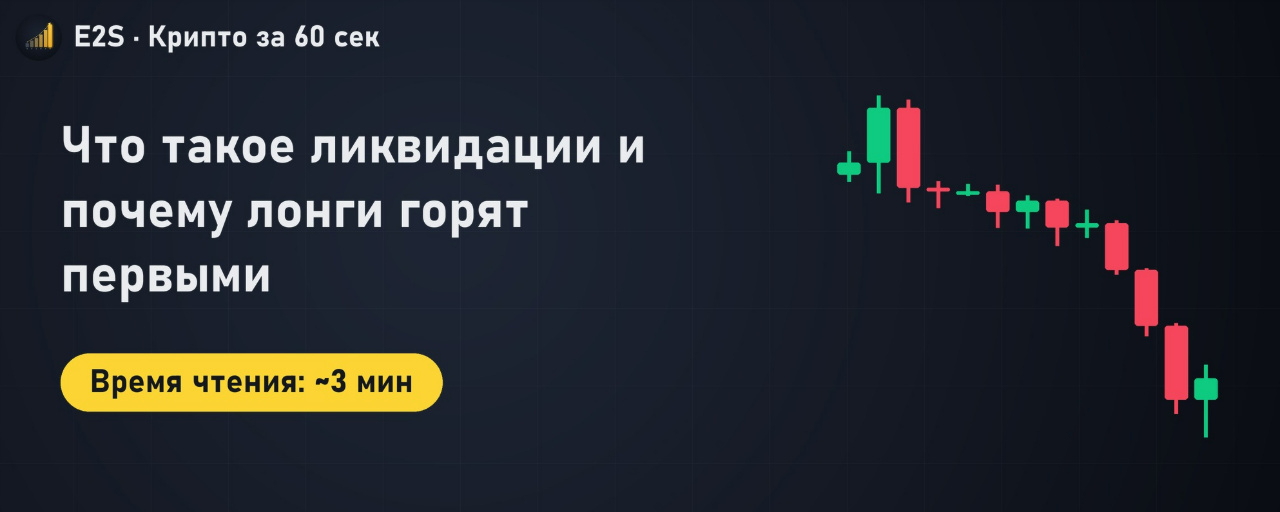
What Are Liquidations, and Why Do Longs Get Burned First?When the news says “billions worth of positions were liquidated,” it means leveraged trades were forcibly closed. Let’s look at how it works using a real week as an example.
What is liquidation? When you trade with leverage, you borrow money from the exchange. With 10x leverage, you can open a $10,000 position using $1,000 of your own money. If the price moves against you by around 10%, your collateral runs out, and the exchange closes the position to prevent your balance from going negative. That’s liquidation. The exact price depends on the exchange, fees, and maintenance margin, so the figures below are estimates.
What Are Liquidations, and Why Do Longs Get Burned First?
When the news says “billions worth of positions were liquidated,” it means leveraged trades were forcibly closed. Let’s look at how it works using a real week as an example.
What is liquidation? When you trade with leverage, you borrow money from the exchange. With 10x leverage, you can open a $10,000 position using $1,000 of your own money. If the price moves against you by around 10%, your collateral runs out, and the exchange closes the position to prevent your balance from going negative. That’s liquidation. The exact price depends on the exchange, fees, and maintenance margin, so the figures below are estimates.
What is liquidation? When you trade with leverage, you borrow money from the exchange. With 10x leverage, you can open a $10,000 position using $1,000 of your own money. If the price moves against you by around 10%, your collateral runs out, and the exchange closes the position to prevent your balance from going negative. That’s liquidation. The exact price depends on the exchange, fees, and maintenance margin, so the figures below are estimates.
1
335
Bitcoin fell to $62,100 and bounced back to $65,400 (+2.8% in 24 hours). What happened 👇
Since November 4 — down about $19K, the lowest level since early July.
Reasons:
• inflation at +0.4% vs. +0.3% expected — the market is anticipating a Fed rate hike
• outflows from spot BTC ETFs: –$1.9 billion over 7 sessions
• leveraged liquidations, mostly longs
Levels: $62K — support; below that, $60K and $57.7K; to the upside — $66–68K. Fear index — 10.
This is not investment advice.
What are you doing: buying more or waiting?
$BTC C $ETH H #bitcoin oin #криптоновости
1
4.6k

Article
The Economist 2026: Time to tighten the belt or look for opportunities?The traditional 'puzzle' from The Economist for 2026 has been released, and its message for financial markets looks quite alarming. If you look closely at the details, the cover literally screams of a possible global correction.
What do we see on the charts of the future?
The falling dollar: The red dollar symbols ($), flying downward at the bottom of the collage, are a direct hint at devaluation, the US debt crisis, or a sharp shift in monetary policy. For the crypto market, this is a double-edged sword: a fiat decline could push BTC higher, but a systemic crisis usually triggers a mass exodus to cash.
The Economist 2026: Time to tighten the belt or look for opportunities?
The traditional 'puzzle' from The Economist for 2026 has been released, and its message for financial markets looks quite alarming. If you look closely at the details, the cover literally screams of a possible global correction.
What do we see on the charts of the future?
The falling dollar: The red dollar symbols ($), flying downward at the bottom of the collage, are a direct hint at devaluation, the US debt crisis, or a sharp shift in monetary policy. For the crypto market, this is a double-edged sword: a fiat decline could push BTC higher, but a systemic crisis usually triggers a mass exodus to cash.
1.4k
·
--
Bullish
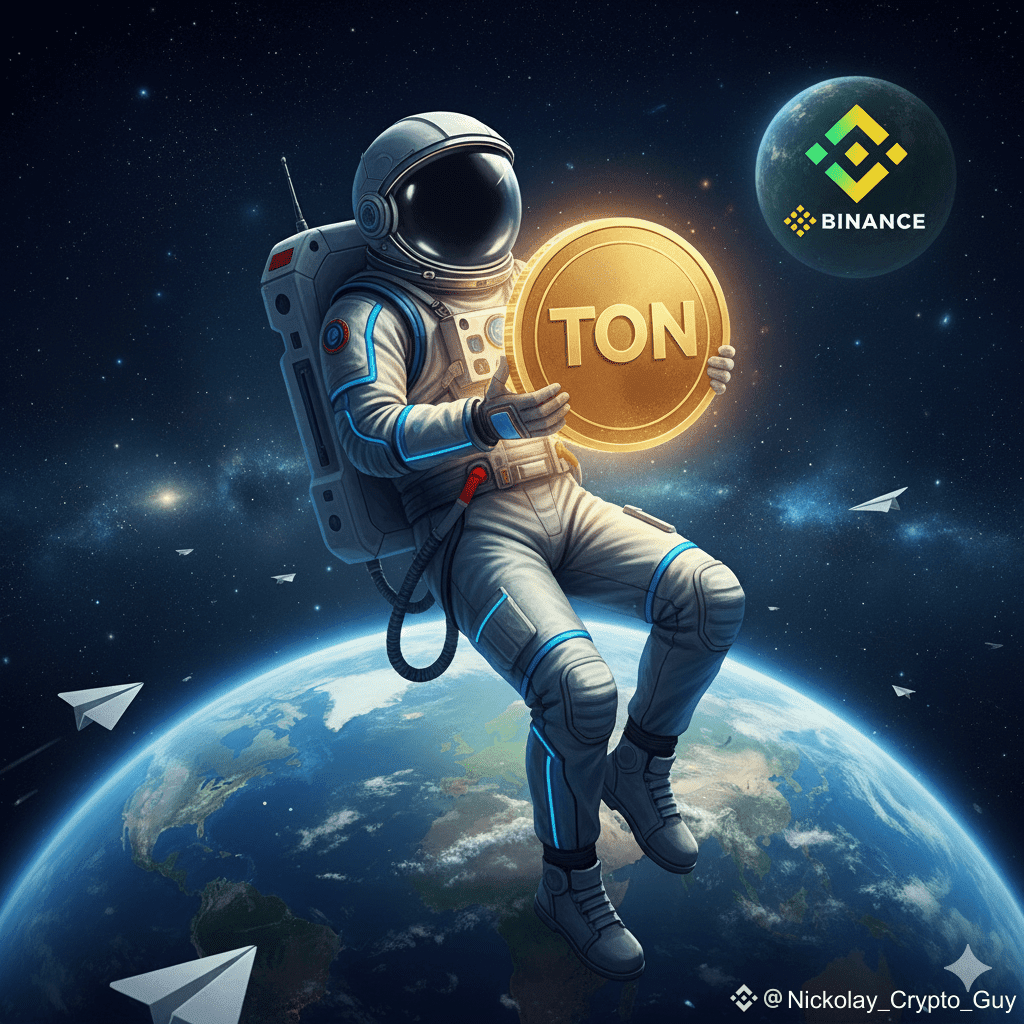
Why I, an ordinary guy, believe in $TON (The Open Network)
Hello! My name is Nikolai, and I am not a trading guru, not a stock market mogul, but just an ordinary guy who once bought his first crypto. However, now I see potential in the TON project.
Durov Factor - This is a level of trust that you cannot buy.
Let's be honest. In the crypto world, there are many "scams" and anonymous projects. But behind TON stands a figure known to billions - Pavel Durov, the creator of "VKontakte" and Telegram.
Durov is a symbol of independence and innovation. After he created Telegram, which became one of the most secure messengers in the world, he gained a colossal level of trust and loyalty among millions of users. This is the foundation on which the ecosystem stands.
And now the most important thing – mass integration into Telegram. In a world where more than 1 billion people use Telegram, TON gains access to an audience that other blockchains can only dream of. Imagine how easy it will be to use crypto when it is integrated into the messenger you use every day!
This is my personal opinion, and it is not financial advice.
{spot}(TONUSDT)
Why I, an ordinary guy, believe in $TON (The Open Network)
Hello! My name is Nikolai, and I am not a trading guru, not a stock market mogul, but just an ordinary guy who once bought his first crypto. However, now I see potential in the TON project.
Durov Factor - This is a level of trust that you cannot buy.
Let's be honest. In the crypto world, there are many "scams" and anonymous projects. But behind TON stands a figure known to billions - Pavel Durov, the creator of "VKontakte" and Telegram.
Durov is a symbol of independence and innovation. After he created Telegram, which became one of the most secure messengers in the world, he gained a colossal level of trust and loyalty among millions of users. This is the foundation on which the ecosystem stands.
And now the most important thing – mass integration into Telegram. In a world where more than 1 billion people use Telegram, TON gains access to an audience that other blockchains can only dream of. Imagine how easy it will be to use crypto when it is integrated into the messenger you use every day!
This is my personal opinion, and it is not financial advice.
17
5
19
7.9k
·
--
Bullish
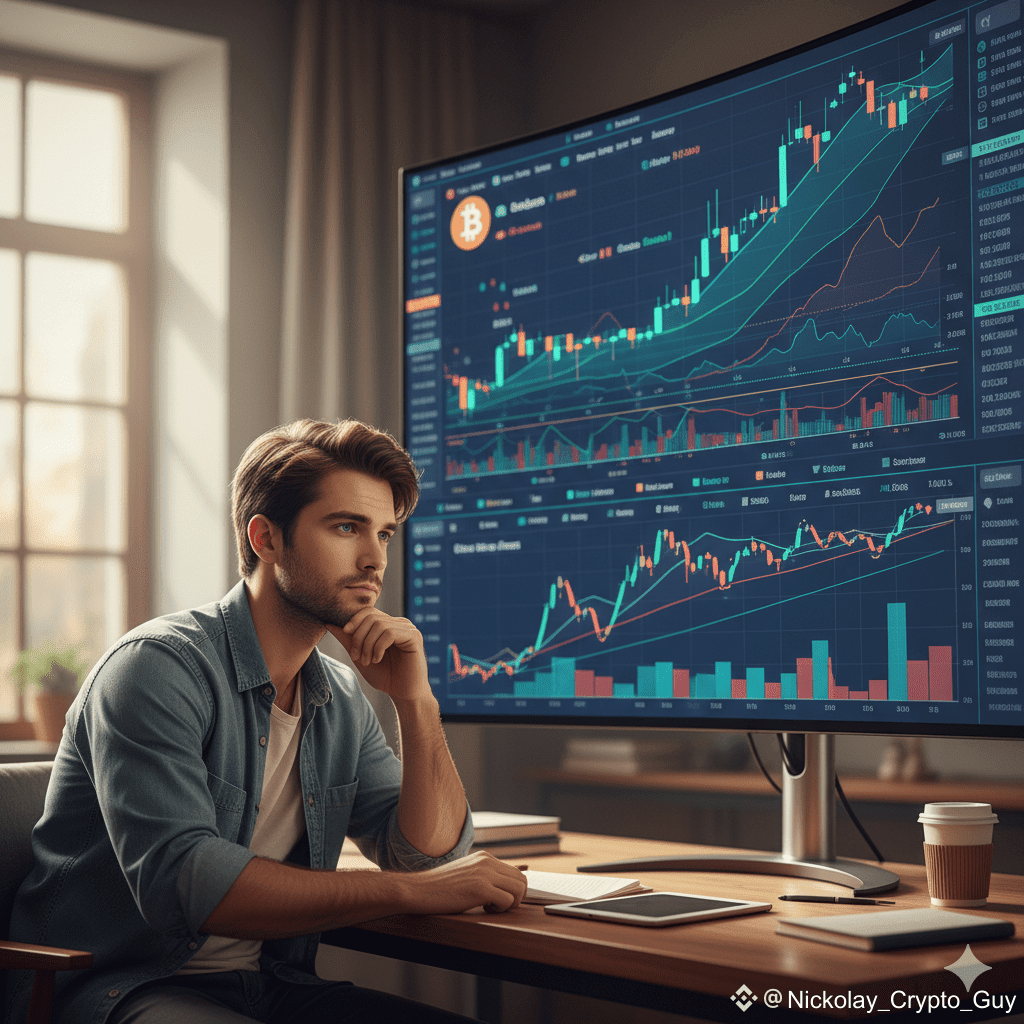
🎉 My first post in #Binance
It's been 2 years since I reached out to my friend to introduce me to the world of investing and cryptocurrencies.
And no, I'm not bankrupt 😅
There were moments when I couldn't believe my eyes and didn't understand how money could come out of thin air, just because I bought a certain coin at the right time. Similarly, there were moments of decline.
During this time, I've learned a few things:
1. ✅ Only Spot Trading
(Yes, you might not make x100, but x3 - x5 is not bad either)
2. ✅ Don't buy new coins that you're not sure about
3. ✅ Don't spread your budget on unknown coins (The foundation should be reliable)
4. ✅ Keep a reserve for purchasing (The market can drop, be ready to buy during that time)
I plan to share various observations, so I want to ask you to subscribe to me.
I might be able to be useful to you.
And of course, the base: $TON is better to take )
I'll write a comprehensive article about it later
#TON
7
793
Log in to explore more content
Join global crypto users on Binance Square
⚡️ Get latest and useful information about crypto.
💬 Trusted by the world’s largest crypto exchange.
👍 Discover real insights from verified creators.
Email / Phone number
Trending Topics
NvidiaLoses$2.7TrillionInMonthAndAHalf
2,852 views
65 Discussing
Nvidia’s $2.7 Trillion Wipeout: When Narrative Overrides Numbers 📉
Crypto With Faisal
·4 Likes
·2.3k views
CanBTCReboundAfterFallingBelow60K?
582,639 views
2,545 Discussing
GlobalStocksFaceLongestLosingStreakSince2023
201,971 views
1,765 Discussing