

陈大炮_
1.3k Posts

陈大炮_
 Square Verified+
Report
Block User
公众号:AAAA9 币安八折手续费自动返邀请码:AAAA9
77 Following
35.3K+ Followers
18.1K+ Liked
Posts
All
Quotes
Videos
Live
PINNED
·
--
You are invited to join my group
Dapao’s chat room: https://app.binance.com/uni-qr/LKa1ZyCK
You are invited to join my group
Dapao’s chat room: https://app.binance.com/uni-qr/LKa1ZyCK
Dapao’s chat room: https://app.binance.com/uni-qr/LKa1ZyCK


3
226
PINNED
·
--
Binance rebate relationship re-binding — explanations of three methods📢 Method 1: Self-service re-binding flow
🔗 Link: [点击](https://www.bsmkweb.cc/activity/referral/bind-ref)
Applicable users: New users who registered recently and have not made any top-ups/coin purchases/trading activity
Users must simultaneously meet the following conditions:
1. KYC information has not been used for other accounts within the past 180 days
2. There is currently no referral relationship (no upstream referrer)
3. Account is the primary account (Parent Account)
4. Registration time is no more than 30 days
5. This account has no top-up, coin purchase, or trading activity (no top-up/no first deposit)
6. Not marked as a trader who violated rules
🔗 How to proceed: Users should enter through the link above, and manually fill in the inviter’s/big brother’s invitation code as required to complete the re-binding.
Binance rebate relationship re-binding — explanations of three methods
📢 Method 1: Self-service re-binding flow
🔗 Link: 点击
Applicable users: New users who registered recently and have not made any top-ups/coin purchases/trading activity
Users must simultaneously meet the following conditions:
1. KYC information has not been used for other accounts within the past 180 days
2. There is currently no referral relationship (no upstream referrer)
3. Account is the primary account (Parent Account)
4. Registration time is no more than 30 days
5. This account has no top-up, coin purchase, or trading activity (no top-up/no first deposit)
6. Not marked as a trader who violated rules
🔗 How to proceed: Users should enter through the link above, and manually fill in the inviter’s/big brother’s invitation code as required to complete the re-binding.
🔗 Link: 点击
Applicable users: New users who registered recently and have not made any top-ups/coin purchases/trading activity
Users must simultaneously meet the following conditions:
1. KYC information has not been used for other accounts within the past 180 days
2. There is currently no referral relationship (no upstream referrer)
3. Account is the primary account (Parent Account)
4. Registration time is no more than 30 days
5. This account has no top-up, coin purchase, or trading activity (no top-up/no first deposit)
6. Not marked as a trader who violated rules
🔗 How to proceed: Users should enter through the link above, and manually fill in the inviter’s/big brother’s invitation code as required to complete the re-binding.
4
282
·
--
US stocks opened higher, and the market is重新交易 liquidity expectations.
On October 2, the Dow rose 0.62%, the S&P 500 gained 0.9%, and the Nasdaq climbed 1.2%.
The key reason is that after the cooling in nonfarm payrolls, the market has reduced concerns about the Federal Reserve continuing to raise interest rates.
US stocks opened higher, and the market is重新交易 liquidity expectations.
On October 2, the Dow rose 0.62%, the S&P 500 gained 0.9%, and the Nasdaq climbed 1.2%.
The key reason is that after the cooling in nonfarm payrolls, the market has reduced concerns about the Federal Reserve continuing to raise interest rates.
On October 2, the Dow rose 0.62%, the S&P 500 gained 0.9%, and the Nasdaq climbed 1.2%.
The key reason is that after the cooling in nonfarm payrolls, the market has reduced concerns about the Federal Reserve continuing to raise interest rates.

310
·
--
$ETH If Ethereum can break through with a bullish big candle at 2774, then the 2850-2880 range above can be used to go short
$ETH If Ethereum can break through with a bullish big candle at 2774, then the 2850-2880 range above can be used to go short

1
524
·
--
$BTC sweep up to clear stop-loss for shorts, do not chase the price higher.
$BTC sweep up to clear stop-loss for shorts, do not chase the price higher.

2
403
·
--
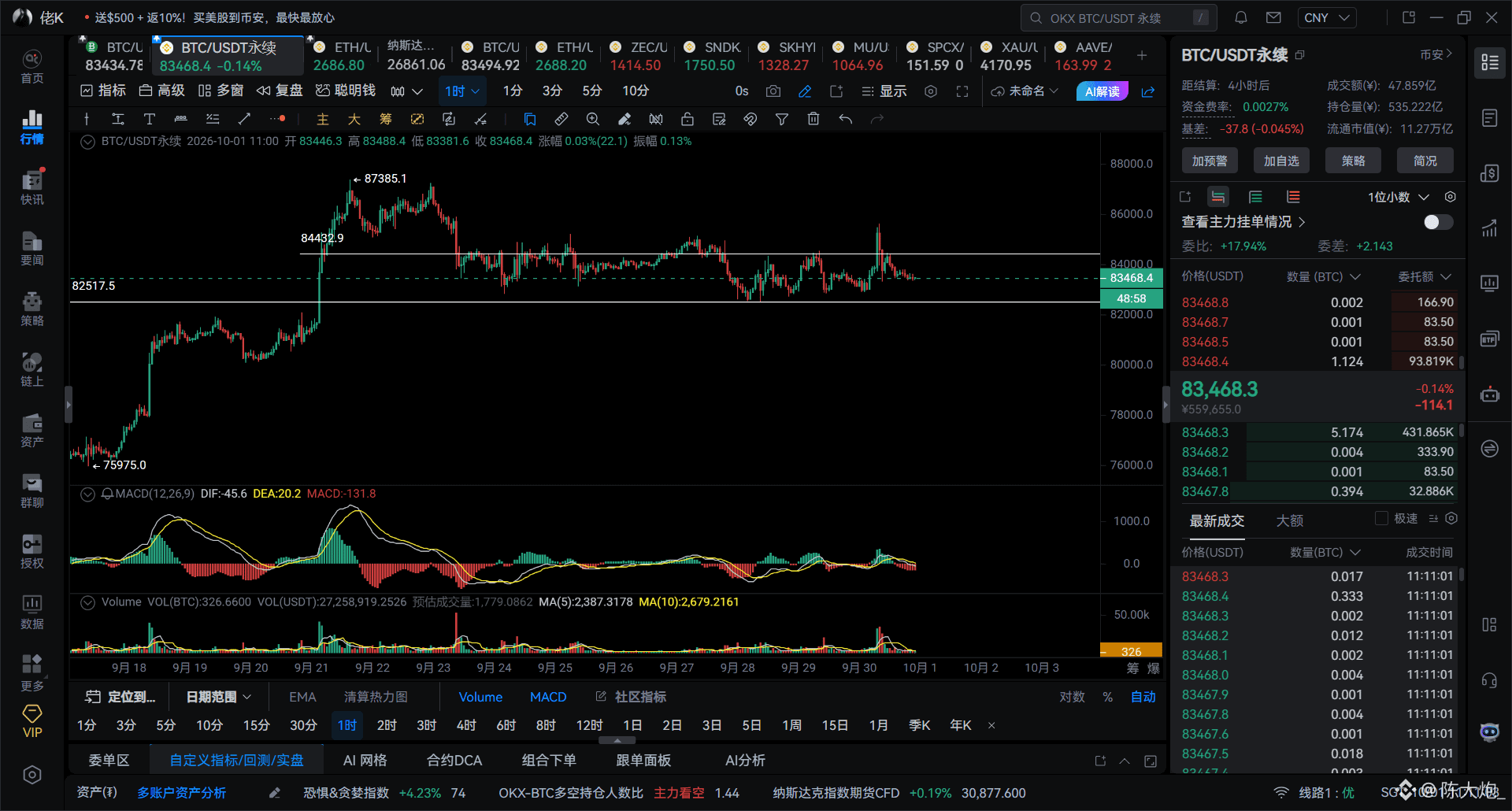
$BTC 82500-84500 interval is about to numb me out...
{future}(BTCUSDT)
$BTC 82500-84500 interval is about to numb me out...
2
404
·
--
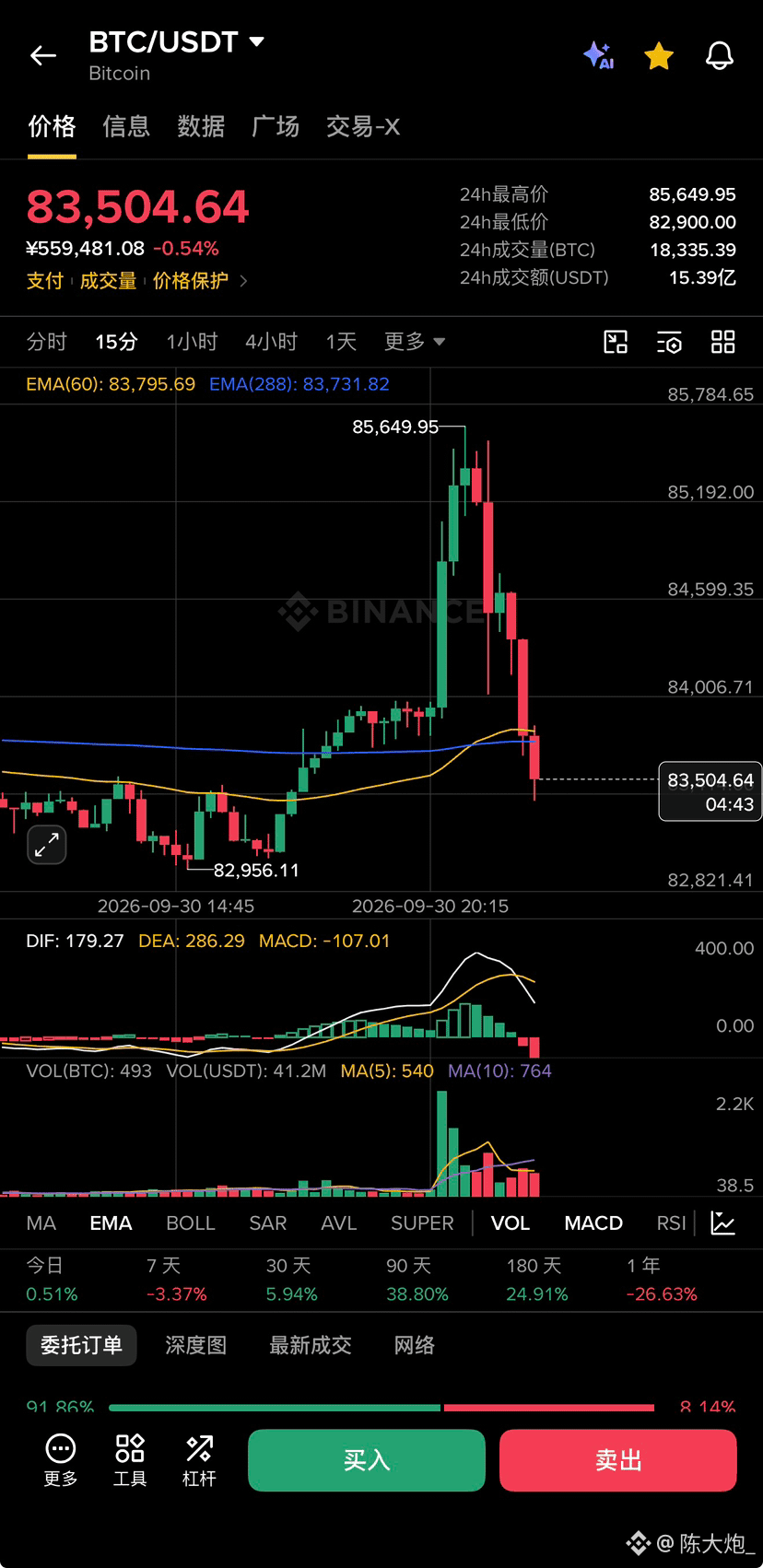
Market liquidity is poor—caught a king streak with a single row😵
Market liquidity is poor—caught a king streak with a single row😵



2
375
·
--
2
2
645
·
--
Bearish
Verified
#股票财报季
Most market participants are bullish: AI server makers are competing for HBM, storage chips are in shortage with prices rising, and everyone assumes Q4 results themselves will not be bad—likely meeting expectations and perhaps slightly beating them. The challenge isn’t “how much profit this quarter will generate,” but rather the guidance for next quarter.
It’s easy for a stream of good news to lead to a further plunge after going all-in. How did sales actually turn out this quarter? How much did ordinary DRAM and NAND flash sell for? How much AI-specific memory HBM was sold, and what is the progress on the new-generation HBM4—this is the main focus, because this is the chip that AI depends on the most.$MU
{future}(MUUSDT)
#股票财报季
Most market participants are bullish: AI server makers are competing for HBM, storage chips are in shortage with prices rising, and everyone assumes Q4 results themselves will not be bad—likely meeting expectations and perhaps slightly beating them. The challenge isn’t “how much profit this quarter will generate,” but rather the guidance for next quarter.
It’s easy for a stream of good news to lead to a further plunge after going all-in. How did sales actually turn out this quarter? How much did ordinary DRAM and NAND flash sell for? How much AI-specific memory HBM was sold, and what is the progress on the new-generation HBM4—this is the main focus, because this is the chip that AI depends on the most.$MU
Most market participants are bullish: AI server makers are competing for HBM, storage chips are in shortage with prices rising, and everyone assumes Q4 results themselves will not be bad—likely meeting expectations and perhaps slightly beating them. The challenge isn’t “how much profit this quarter will generate,” but rather the guidance for next quarter.
It’s easy for a stream of good news to lead to a further plunge after going all-in. How did sales actually turn out this quarter? How much did ordinary DRAM and NAND flash sell for? How much AI-specific memory HBM was sold, and what is the progress on the new-generation HBM4—this is the main focus, because this is the chip that AI depends on the most.$MU
1
1
1.1k
·
--
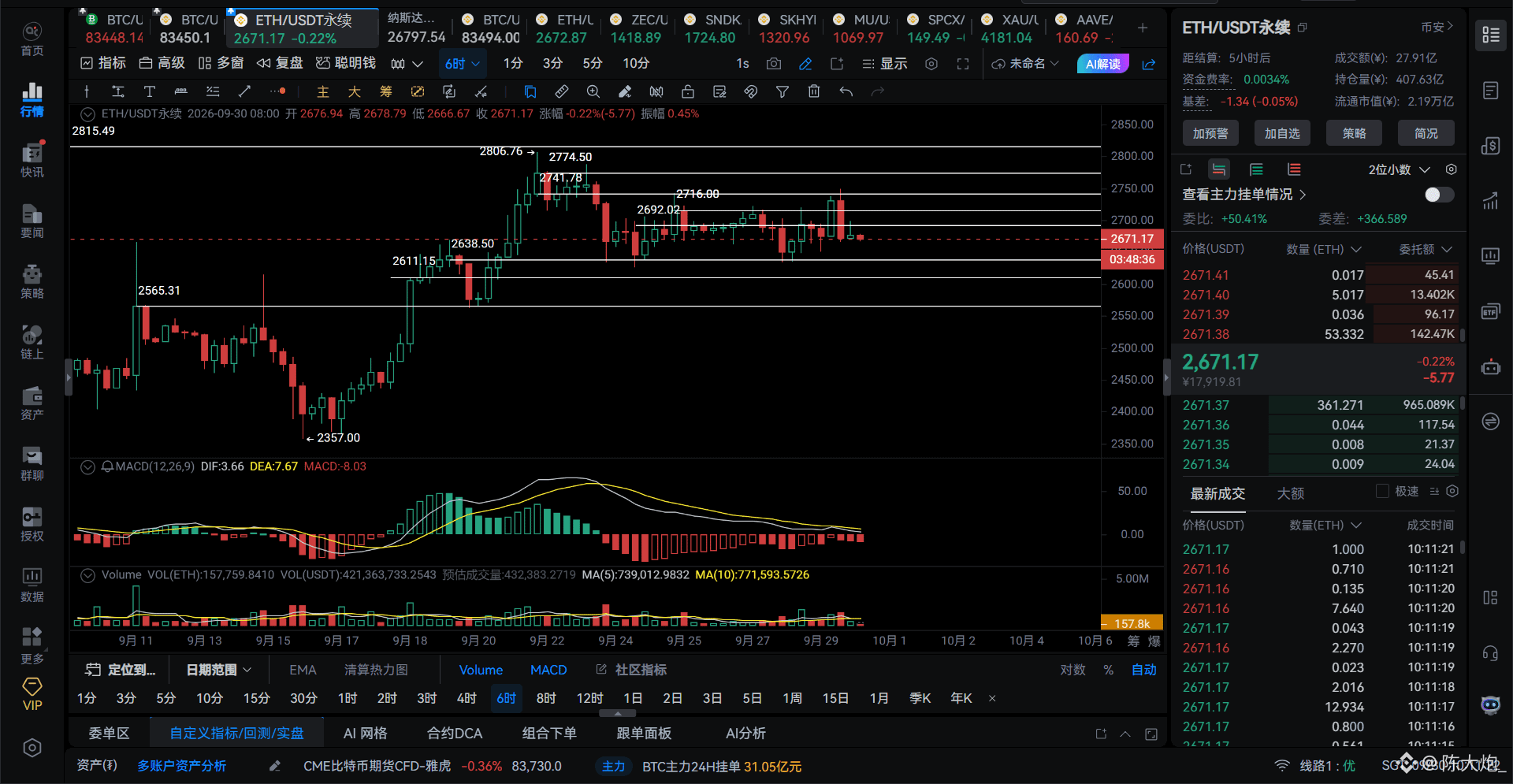
Ethereum follows the overall market lower, but there is limited room for further downside. As long as the structure level is not broken, it will remain in a ranging/sideways zone.
On the 2-day chart, the opening line closes with a dead cross; on the daily/12-hour level there is a divergence at the high for short entries; an 8-hour session shows an “invisible” decline.
The internal mid-timeframe level still needs to adjust gradually.
Watch for a drop on the 30-minute chart, then the 15-minute chart will slowly grind the lows.
Ethereum’s key structure level below is at 2611. Only a close with the body below it will trigger a market turn.
Strong support is in the 2576–2550 range; you can attempt short-term long positions there.
Overhead resistance: 2692, 2716, 2742, 2774.
Downside support: 2638, 2611, 2578, 2552.
$ETH
{future}(ETHUSDT)
Ethereum follows the overall market lower, but there is limited room for further downside. As long as the structure level is not broken, it will remain in a ranging/sideways zone.
On the 2-day chart, the opening line closes with a dead cross; on the daily/12-hour level there is a divergence at the high for short entries; an 8-hour session shows an “invisible” decline.
The internal mid-timeframe level still needs to adjust gradually.
Watch for a drop on the 30-minute chart, then the 15-minute chart will slowly grind the lows.
Ethereum’s key structure level below is at 2611. Only a close with the body below it will trigger a market turn.
Strong support is in the 2576–2550 range; you can attempt short-term long positions there.
Overhead resistance: 2692, 2716, 2742, 2774.
Downside support: 2638, 2611, 2578, 2552.
$ETH
On the 2-day chart, the opening line closes with a dead cross; on the daily/12-hour level there is a divergence at the high for short entries; an 8-hour session shows an “invisible” decline.
The internal mid-timeframe level still needs to adjust gradually.
Watch for a drop on the 30-minute chart, then the 15-minute chart will slowly grind the lows.
Ethereum’s key structure level below is at 2611. Only a close with the body below it will trigger a market turn.
Strong support is in the 2576–2550 range; you can attempt short-term long positions there.
Overhead resistance: 2692, 2716, 2742, 2774.
Downside support: 2638, 2611, 2578, 2552.
$ETH
631
·
--
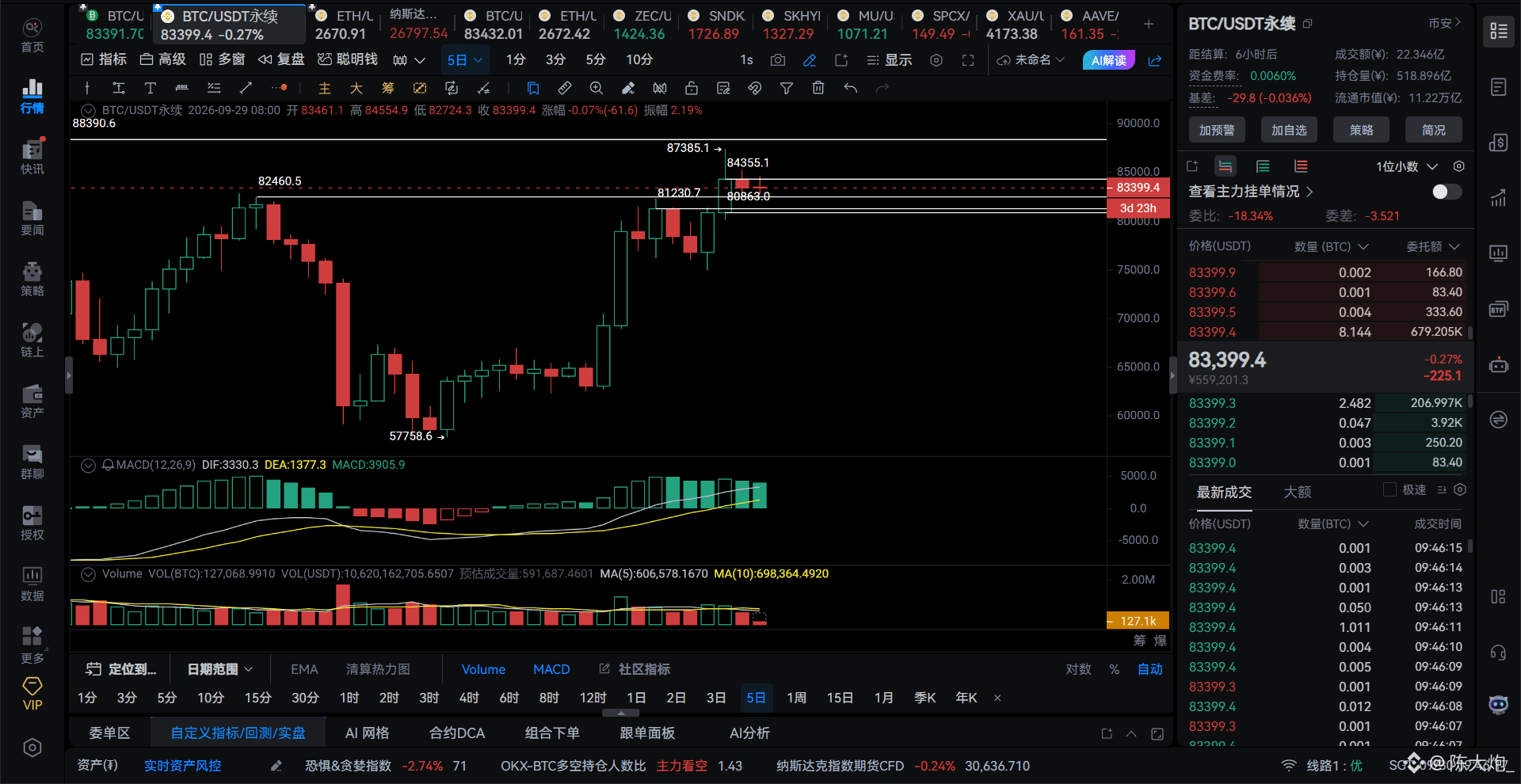
Bitcoin is moving within a box (range-bound) trading channel with relatively poor liquidity. The chart has adjusted on a 6-hour timeframe.
On the upside, focus on the 87600–88390 range where there are about 1 billion worth of short orders waiting to be stop-lossed.
On the downside, long funds in the 80800–82500 range have about 2.3 billion waiting to be stop-lossed.
The key box-structure level is 82500. For intraday short-term setups, focus on 81720–81230.
If price breaks below 80863 decisively, watch for downside liquidation risk, around 78500.
Upside resistance: 83710, 84355, 84850, 85300
Downside support: 82500, 81720, 80860, 80200
$BTC
{future}(BTCUSDT)
Bitcoin is moving within a box (range-bound) trading channel with relatively poor liquidity. The chart has adjusted on a 6-hour timeframe.
On the upside, focus on the 87600–88390 range where there are about 1 billion worth of short orders waiting to be stop-lossed.
On the downside, long funds in the 80800–82500 range have about 2.3 billion waiting to be stop-lossed.
The key box-structure level is 82500. For intraday short-term setups, focus on 81720–81230.
If price breaks below 80863 decisively, watch for downside liquidation risk, around 78500.
Upside resistance: 83710, 84355, 84850, 85300
Downside support: 82500, 81720, 80860, 80200
$BTC
On the upside, focus on the 87600–88390 range where there are about 1 billion worth of short orders waiting to be stop-lossed.
On the downside, long funds in the 80800–82500 range have about 2.3 billion waiting to be stop-lossed.
The key box-structure level is 82500. For intraday short-term setups, focus on 81720–81230.
If price breaks below 80863 decisively, watch for downside liquidation risk, around 78500.
Upside resistance: 83710, 84355, 84850, 85300
Downside support: 82500, 81720, 80860, 80200
$BTC
351
·
--
🎙️ The afterglow or the lie that gets you to board
End
02 h 05 m 10 s
179
0
0
·
--
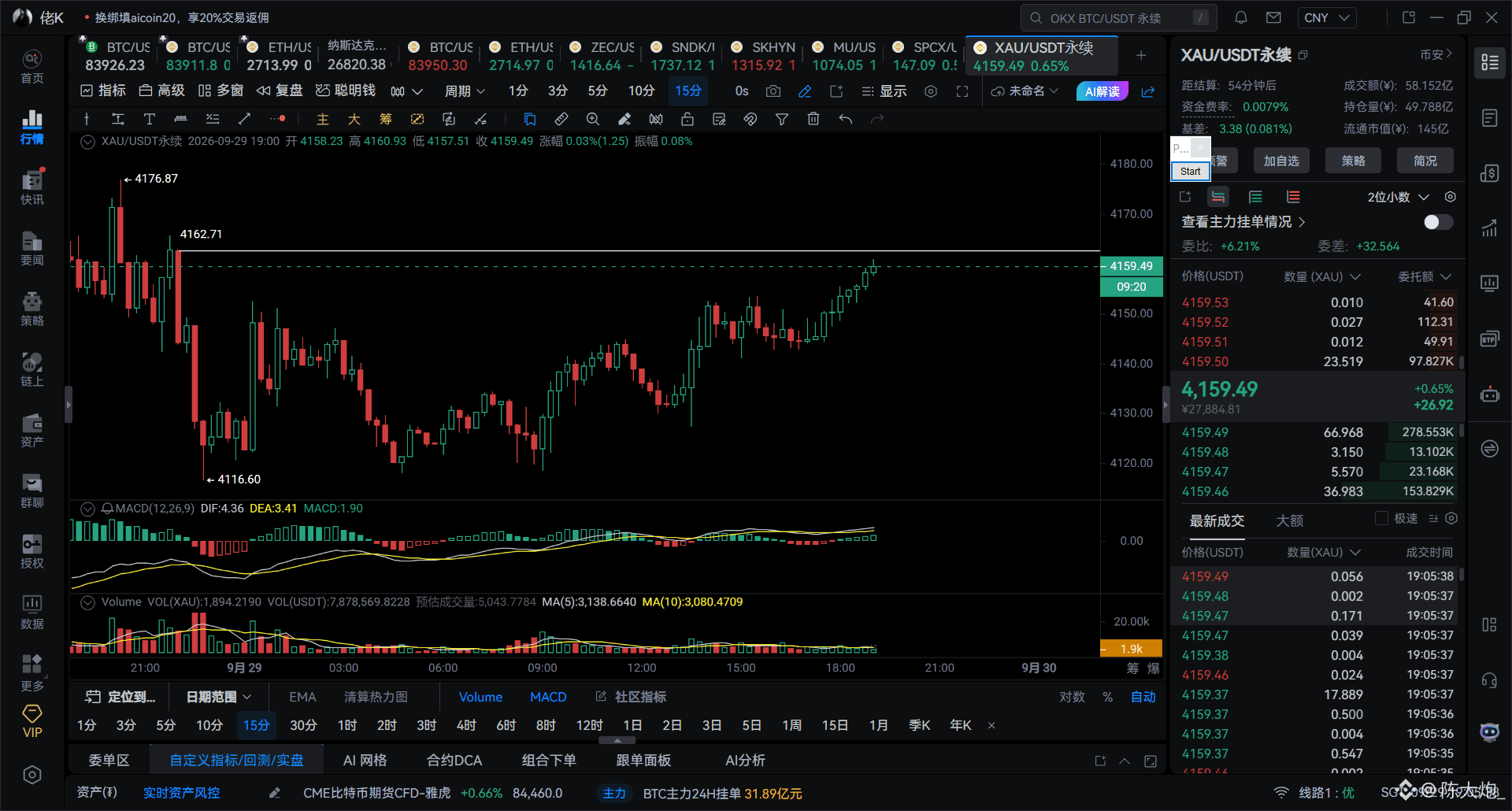
$XAU Gold at this position can reduce holdings and take profit
{future}(XAUUSDT)
$XAU Gold at this position can reduce holdings and take profit
陈大炮_
·
--
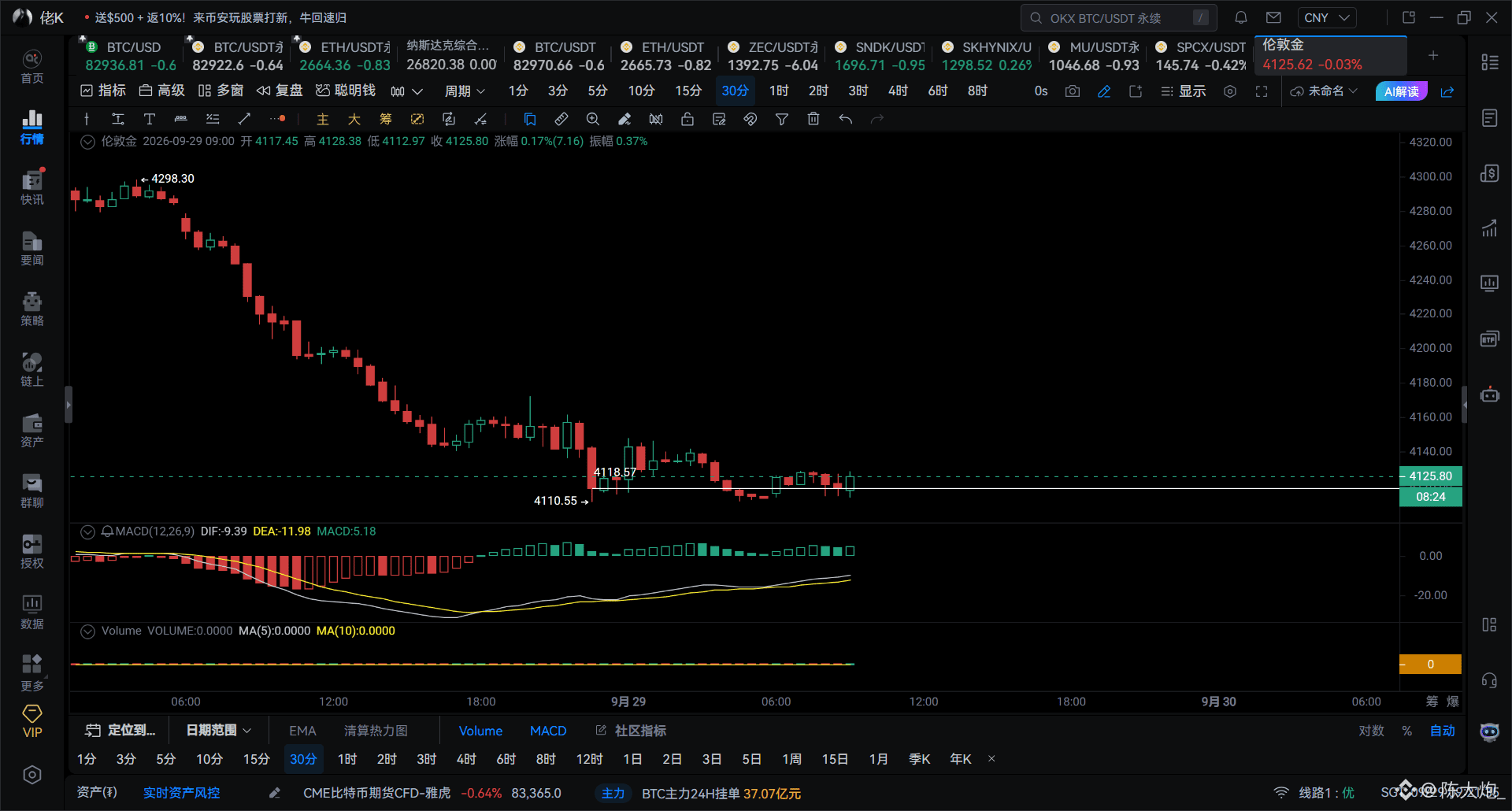
Bullish$XAU Gold: This position can be a quick long—go in and exit quickly. Stop loss 4110
Take profit 4138 4167
Take profit 4138 4167
154
·
--
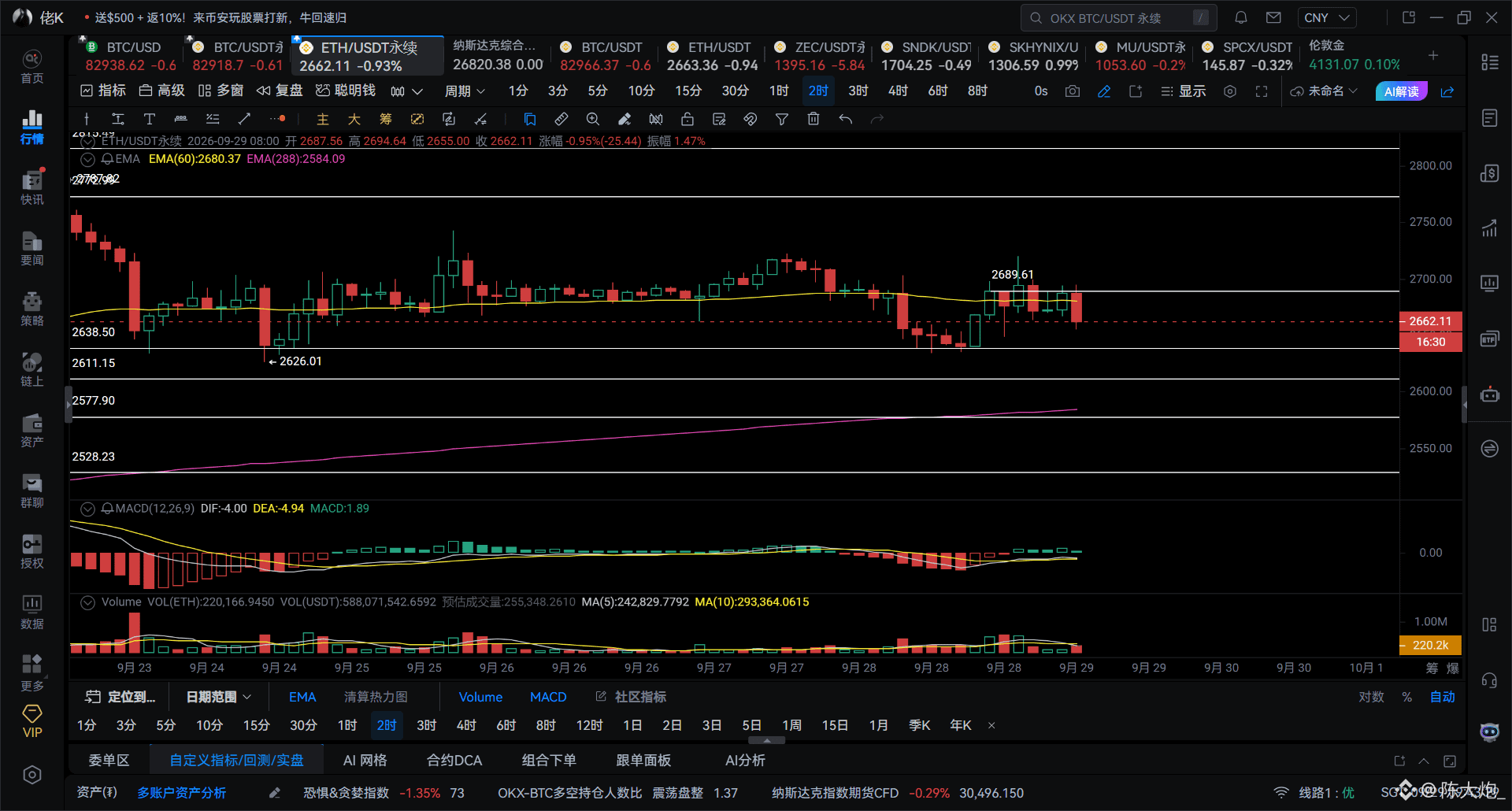
Don’t bet on a one-way move from Ethereum at this point; keep trading the choppy range where it keeps whipping back and forth.
Watch whether tomorrow’s close on the 2-day line forms a bearish cross (dead cross) and whether there is a daily-level divergence + a high-altitude dead-cross pattern.
The current market is adjusting for 6 hours; pay attention to the highs at the 8/12-hour level (note: adjust the lines but don’t adjust the price—use a sideways movement to stand in for a decline).
Resistance above: 2689 2720 2754 2774
Support below: 2638 2611 2577 2543
$ETH
{future}(ETHUSDT)
Don’t bet on a one-way move from Ethereum at this point; keep trading the choppy range where it keeps whipping back and forth.
Watch whether tomorrow’s close on the 2-day line forms a bearish cross (dead cross) and whether there is a daily-level divergence + a high-altitude dead-cross pattern.
The current market is adjusting for 6 hours; pay attention to the highs at the 8/12-hour level (note: adjust the lines but don’t adjust the price—use a sideways movement to stand in for a decline).
Resistance above: 2689 2720 2754 2774
Support below: 2638 2611 2577 2543
$ETH
Watch whether tomorrow’s close on the 2-day line forms a bearish cross (dead cross) and whether there is a daily-level divergence + a high-altitude dead-cross pattern.
The current market is adjusting for 6 hours; pay attention to the highs at the 8/12-hour level (note: adjust the lines but don’t adjust the price—use a sideways movement to stand in for a decline).
Resistance above: 2689 2720 2754 2774
Support below: 2638 2611 2577 2543
$ETH
299
·
--
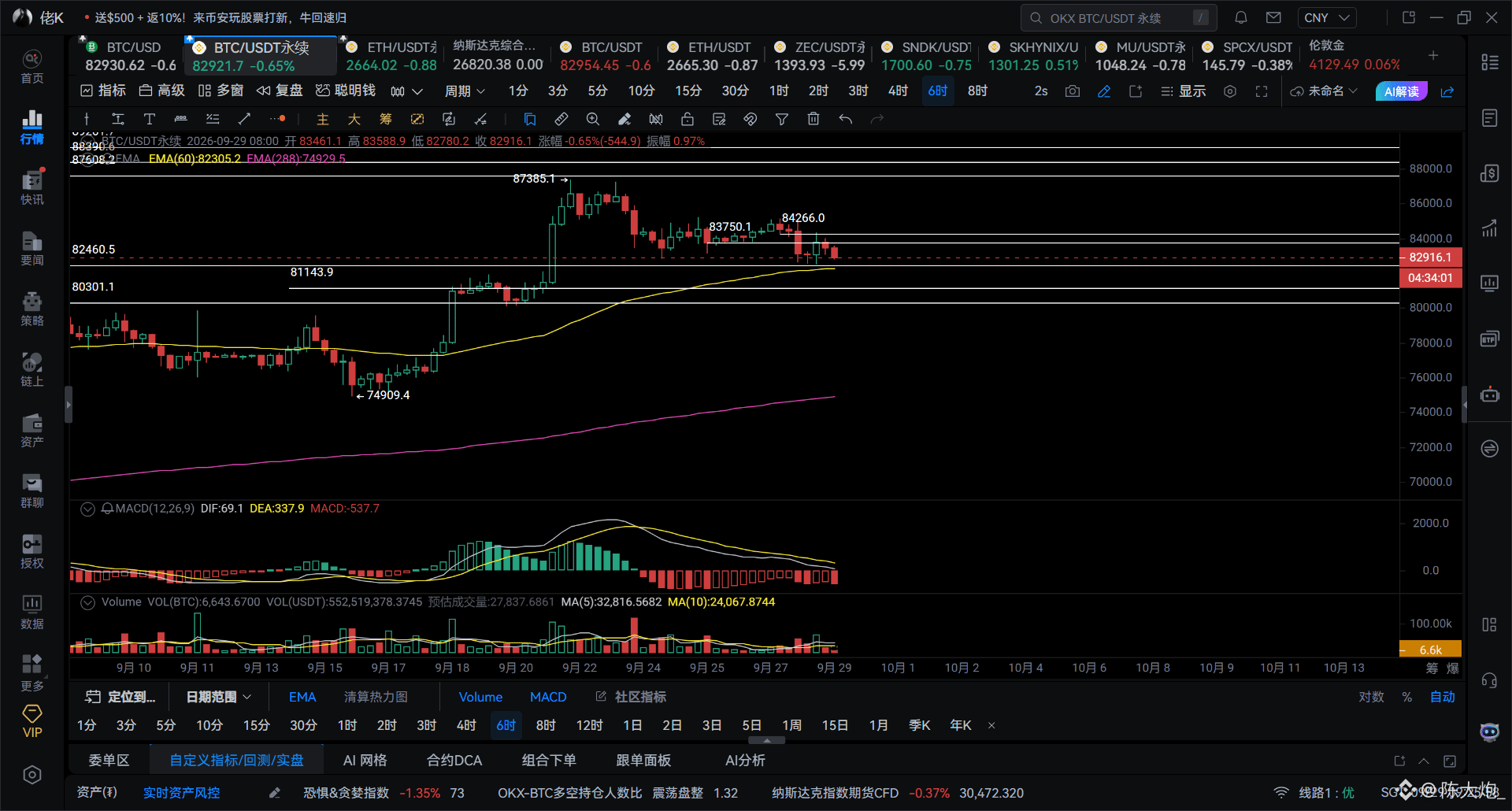
The overall trend of the large cake is relatively weak. Yesterday, after it bounced from the strong support at 82,500 following a pullback, it rebounded by 1,800 points, but then fell back.
The 2-day MACD has been weakening on shrinking volume; on the daily chart there is a bearish cross, and the 12-hour/8-hour bearish crosses are occurring in the upper range.
At present, the market is adjusting on the 6-hour level; the price action is relatively weak and has not yet broken out of the range structure. There is also an “invisible” signal on the 4H timeframe.
The 45-minute/1-hour level shows a below-water rebound. Within the day, it may test the 82,500 support again and enter based on the technical pattern.
Support levels: 82,460 81,145 80,300
Resistance levels: 83,750 84,266 84,850
$BTC
{future}(BTCUSDT)
The overall trend of the large cake is relatively weak. Yesterday, after it bounced from the strong support at 82,500 following a pullback, it rebounded by 1,800 points, but then fell back.
The 2-day MACD has been weakening on shrinking volume; on the daily chart there is a bearish cross, and the 12-hour/8-hour bearish crosses are occurring in the upper range.
At present, the market is adjusting on the 6-hour level; the price action is relatively weak and has not yet broken out of the range structure. There is also an “invisible” signal on the 4H timeframe.
The 45-minute/1-hour level shows a below-water rebound. Within the day, it may test the 82,500 support again and enter based on the technical pattern.
Support levels: 82,460 81,145 80,300
Resistance levels: 83,750 84,266 84,850
$BTC
The 2-day MACD has been weakening on shrinking volume; on the daily chart there is a bearish cross, and the 12-hour/8-hour bearish crosses are occurring in the upper range.
At present, the market is adjusting on the 6-hour level; the price action is relatively weak and has not yet broken out of the range structure. There is also an “invisible” signal on the 4H timeframe.
The 45-minute/1-hour level shows a below-water rebound. Within the day, it may test the 82,500 support again and enter based on the technical pattern.
Support levels: 82,460 81,145 80,300
Resistance levels: 83,750 84,266 84,850
$BTC
327
·
--
Bullish
$XAU Gold: This position can be a quick long—go in and exit quickly. Stop loss 4110
Take profit 4138 4167
{future}(XAUUSDT)
$XAU Gold: This position can be a quick long—go in and exit quickly. Stop loss 4110
Take profit 4138 4167
Take profit 4138 4167
1
1
410
·
--
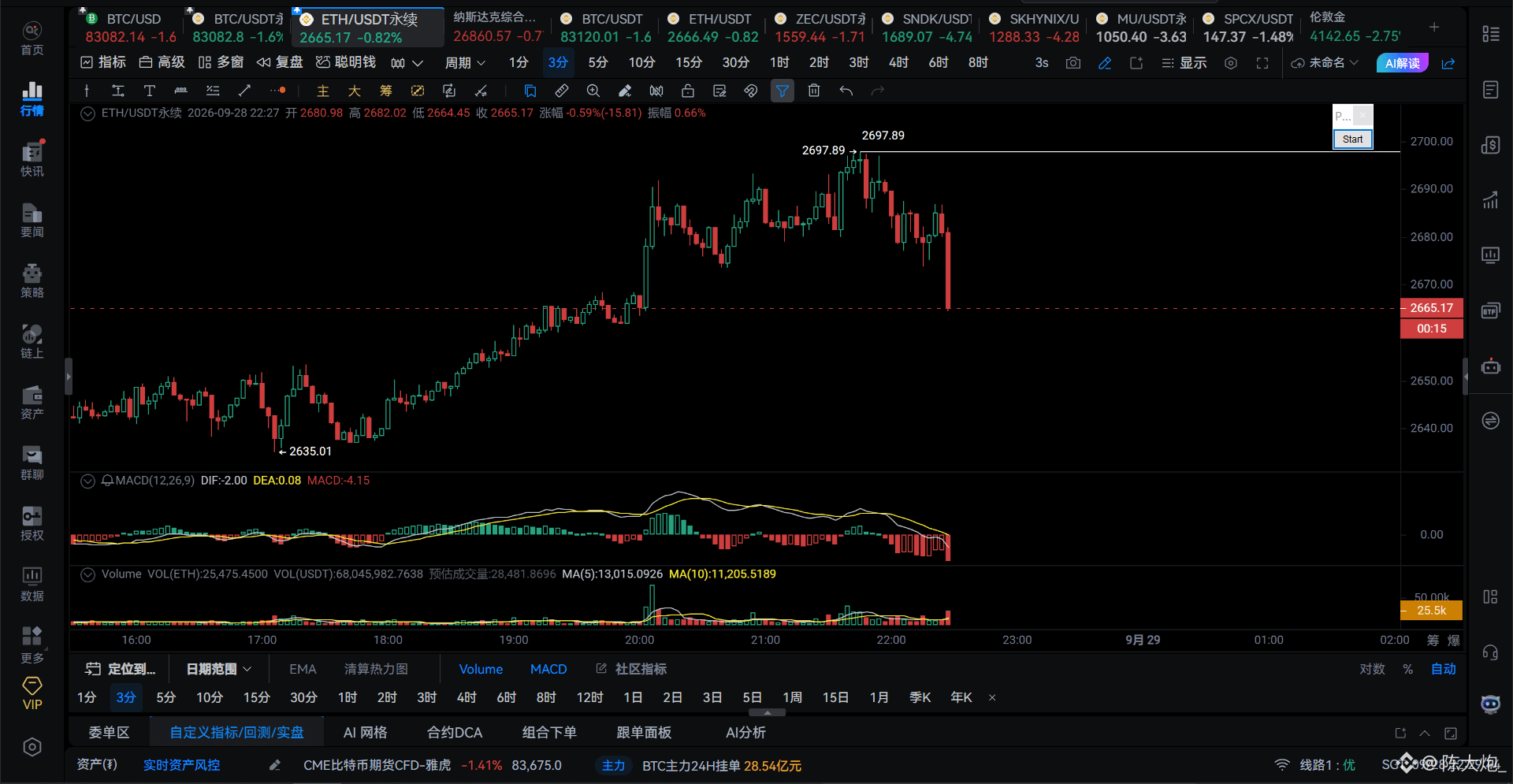
ETH2692 pressure level The chart shows 2697
ETH2692 pressure level The chart shows 2697
陈大炮_
·
--
9.28 ETH Market Analysis
Compared to Bitcoin, Ethereum’s decline has been larger and the market has been more volatile. The market needs to track both the 6/12-hour movements and the daily timeframe. For Ethereum to reverse and start a sustained upward trend, it must hold above 2774. In the short term, this is difficult to achieve, so there’s no need to rush into bottom-fishing for a long position.
Ethereum’s structural support is at 2620. As long as the price action does not break below this level, the market will maintain a range-bound consolidation. Once there is a valid breakdown below it, a new round of downward movement will begin.
Intraday resistance: 2692 2724 2754 2774
Support below: 2656 2620 2593 2530
$ETH
Compared to Bitcoin, Ethereum’s decline has been larger and the market has been more volatile. The market needs to track both the 6/12-hour movements and the daily timeframe. For Ethereum to reverse and start a sustained upward trend, it must hold above 2774. In the short term, this is difficult to achieve, so there’s no need to rush into bottom-fishing for a long position.
Ethereum’s structural support is at 2620. As long as the price action does not break below this level, the market will maintain a range-bound consolidation. Once there is a valid breakdown below it, a new round of downward movement will begin.
Intraday resistance: 2692 2724 2754 2774
Support below: 2656 2620 2593 2530
$ETH
1
261
·
--
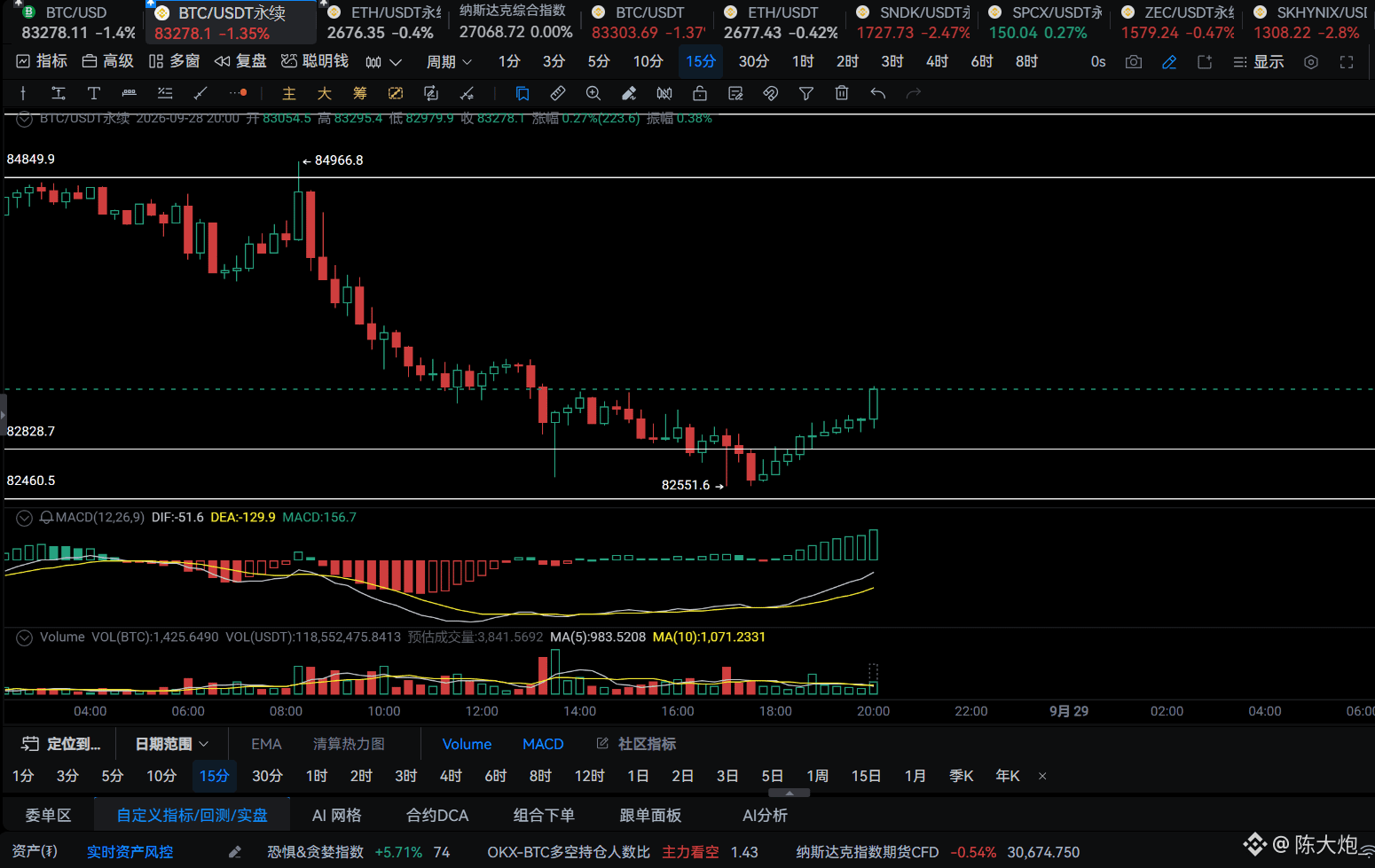
Sell down near the 83,700 rebound. Remaining: move to protect 84600$BTC
{future}(BTCUSDT)
Sell down near the 83,700 rebound. Remaining: move to protect 84600$BTC
陈大炮_
·
--
Bitcoin 82500-82100 here can hold up. Watch for a rebound of 1000-1500 points $BTC
288
Log in to explore more content
Join global crypto users on Binance Square
⚡️ Get latest and useful information about crypto.
💬 Trusted by the world’s largest crypto exchange.
👍 Discover real insights from verified creators.
Email / Phone number
Trending Topics
ZcashETFPostsFirstWeeklyOutflow$93.6M
8,591 views
40 Discussing
ZCASH ETF UPDATE
Zcash’s ETF has recorded its first weekly net outflow since launching in August.
Investors withdrew $93.6M as $ZEC fell toward $1,300. Grayscale’s ZCSH had attracted $98.2M two weeks earlier, but no daily net inflows have been recorded since September 22, according to SoSoValue.
ZEC was around $1,308 on October 3, down about 17.5% for the week and roughly 23% from its recent $1,690 peak.
$ZEC
Vicky-143
·0 Likes
·933 views
GreekPoliceBustCryptoScamRingArrest17
11,841 views
209 Discussing
BitcoinRejectedAt$87K
73,881 views
107 Discussing