
浩杰Btc
379 Posts

浩杰Btc
Report
Block User
公众号;浩杰Btc 日内只做合约波段,狙击主流关键转折,拒绝模棱两可,只给精准答案
1 Following
1.2K+ Followers
465 Liked
Posts
PINNED
·
--
Binance chat friend adding feature is here
On Binance official platform, face-to-face communication is safer and more convenient
It’s actually easy to join Binance chat
1. First, save the QR code below
2. Open the Binance homepage and search for chats
3. Tap the + at the top-right corner
4. Click Scan QR code, and upload the QR code you just saved
You can then add me as a friend!
Binance chat friend adding feature is here
On Binance official platform, face-to-face communication is safer and more convenient
It’s actually easy to join Binance chat
1. First, save the QR code below
2. Open the Binance homepage and search for chats
3. Tap the + at the top-right corner
4. Click Scan QR code, and upload the QR code you just saved
You can then add me as a friend!
On Binance official platform, face-to-face communication is safer and more convenient
It’s actually easy to join Binance chat
1. First, save the QR code below
2. Open the Binance homepage and search for chats
3. Tap the + at the top-right corner
4. Click Scan QR code, and upload the QR code you just saved
You can then add me as a friend!

2
22
·
--
Candlesticks lie, but the money doesn’t: 3 signals the market makers don’t want you to learn
When I first entered the crypto world, I stared at the candlestick chart every day trying to guess whether it would go up or down. In the end, the main forces kept harvesting me over and over, and my account got smaller and smaller. Later, I started studying chart pattern traps, and that’s when I realized that experts and retail traders are looking at entirely different “pictures.”
The following 3 patterns are the core logic I’ve used and verified in my own trading. With them, I once escaped the top of a big BTC position 12 hours early and avoided a 15% crash.
1. Fake breakout: the most vicious “fishing line”
Most people see the price break above the previous high and rush in—only to get dumped the very next second. This is a classic move that market makers love.
How to judge:
A real breakout must come with volume reaching at least 2x the 3-day moving average volume;
At least two 4-hour candlesticks should close firmly above the resistance level.
In January 2024, when ETH surged to around 2100, it was a low-volume breakout. A bunch of people chased it in out of FOMO, and the same day it dropped 15%—the ones who chased got chopped.
2. Hidden accumulation: market-maker moves you can’t see
Many times, the price doesn’t move, but the main forces are already laying the groundwork. Focus on two signals:
Long lower wick + a volume-shrinking reversal candle—after getting smashed down, price quickly pulls back;
During a sideways consolidation, a sudden high-volume bullish candle often signals that it’s about to start moving.
Practical tips:
On the daily chart, look for a “three-needle” bottom pattern: the support level is tested 3 times without breaking;
Then combine it with on-chain data to see whether whales are quietly adding to positions at the bottom.
3. Death reversal: the escape signal at the top
What’s most terrifying isn’t the drop—it’s that before the drop happens, you notice nothing.
Remember two patterns:
Hanging man (吊颈线): a long upper shadow with the close near the lows—shows the bulls lack strength;
Evening star (黄昏之星): a big bullish candle + a doji/cross-shaped candle + a big bearish candle—the most classic structure for trend reversal.
In November 2023, when BTC surged to 38,000, it formed a “double top + evening star.” After that, within 7 days it smashed down to 35,000, and the long futures side was wiped out in one go.
To put it simply: most people aren’t incapable—they just haven’t been told the logic behind it.
I can monitor dark pools and track large orders, allowing me to judge direction about 8 hours in advance.
But that’s only the basics. The real “wealth code” is hidden in the structures you still can’t read.
No bragging, no empty promises—just sharing real trading experience that helps you survive in this space. If you’re still repeatedly losing and starting over, let’s talk—I’ll show you how to make trading simple.
#Apple releases its first foldable-screen phone
Candlesticks lie, but the money doesn’t: 3 signals the market makers don’t want you to learn
When I first entered the crypto world, I stared at the candlestick chart every day trying to guess whether it would go up or down. In the end, the main forces kept harvesting me over and over, and my account got smaller and smaller. Later, I started studying chart pattern traps, and that’s when I realized that experts and retail traders are looking at entirely different “pictures.”
The following 3 patterns are the core logic I’ve used and verified in my own trading. With them, I once escaped the top of a big BTC position 12 hours early and avoided a 15% crash.
1. Fake breakout: the most vicious “fishing line”
Most people see the price break above the previous high and rush in—only to get dumped the very next second. This is a classic move that market makers love.
How to judge:
A real breakout must come with volume reaching at least 2x the 3-day moving average volume;
At least two 4-hour candlesticks should close firmly above the resistance level.
In January 2024, when ETH surged to around 2100, it was a low-volume breakout. A bunch of people chased it in out of FOMO, and the same day it dropped 15%—the ones who chased got chopped.
2. Hidden accumulation: market-maker moves you can’t see
Many times, the price doesn’t move, but the main forces are already laying the groundwork. Focus on two signals:
Long lower wick + a volume-shrinking reversal candle—after getting smashed down, price quickly pulls back;
During a sideways consolidation, a sudden high-volume bullish candle often signals that it’s about to start moving.
Practical tips:
On the daily chart, look for a “three-needle” bottom pattern: the support level is tested 3 times without breaking;
Then combine it with on-chain data to see whether whales are quietly adding to positions at the bottom.
3. Death reversal: the escape signal at the top
What’s most terrifying isn’t the drop—it’s that before the drop happens, you notice nothing.
Remember two patterns:
Hanging man (吊颈线): a long upper shadow with the close near the lows—shows the bulls lack strength;
Evening star (黄昏之星): a big bullish candle + a doji/cross-shaped candle + a big bearish candle—the most classic structure for trend reversal.
In November 2023, when BTC surged to 38,000, it formed a “double top + evening star.” After that, within 7 days it smashed down to 35,000, and the long futures side was wiped out in one go.
To put it simply: most people aren’t incapable—they just haven’t been told the logic behind it.
I can monitor dark pools and track large orders, allowing me to judge direction about 8 hours in advance.
But that’s only the basics. The real “wealth code” is hidden in the structures you still can’t read.
No bragging, no empty promises—just sharing real trading experience that helps you survive in this space. If you’re still repeatedly losing and starting over, let’s talk—I’ll show you how to make trading simple.
#Apple releases its first foldable-screen phone
When I first entered the crypto world, I stared at the candlestick chart every day trying to guess whether it would go up or down. In the end, the main forces kept harvesting me over and over, and my account got smaller and smaller. Later, I started studying chart pattern traps, and that’s when I realized that experts and retail traders are looking at entirely different “pictures.”
The following 3 patterns are the core logic I’ve used and verified in my own trading. With them, I once escaped the top of a big BTC position 12 hours early and avoided a 15% crash.
1. Fake breakout: the most vicious “fishing line”
Most people see the price break above the previous high and rush in—only to get dumped the very next second. This is a classic move that market makers love.
How to judge:
A real breakout must come with volume reaching at least 2x the 3-day moving average volume;
At least two 4-hour candlesticks should close firmly above the resistance level.
In January 2024, when ETH surged to around 2100, it was a low-volume breakout. A bunch of people chased it in out of FOMO, and the same day it dropped 15%—the ones who chased got chopped.
2. Hidden accumulation: market-maker moves you can’t see
Many times, the price doesn’t move, but the main forces are already laying the groundwork. Focus on two signals:
Long lower wick + a volume-shrinking reversal candle—after getting smashed down, price quickly pulls back;
During a sideways consolidation, a sudden high-volume bullish candle often signals that it’s about to start moving.
Practical tips:
On the daily chart, look for a “three-needle” bottom pattern: the support level is tested 3 times without breaking;
Then combine it with on-chain data to see whether whales are quietly adding to positions at the bottom.
3. Death reversal: the escape signal at the top
What’s most terrifying isn’t the drop—it’s that before the drop happens, you notice nothing.
Remember two patterns:
Hanging man (吊颈线): a long upper shadow with the close near the lows—shows the bulls lack strength;
Evening star (黄昏之星): a big bullish candle + a doji/cross-shaped candle + a big bearish candle—the most classic structure for trend reversal.
In November 2023, when BTC surged to 38,000, it formed a “double top + evening star.” After that, within 7 days it smashed down to 35,000, and the long futures side was wiped out in one go.
To put it simply: most people aren’t incapable—they just haven’t been told the logic behind it.
I can monitor dark pools and track large orders, allowing me to judge direction about 8 hours in advance.
But that’s only the basics. The real “wealth code” is hidden in the structures you still can’t read.
No bragging, no empty promises—just sharing real trading experience that helps you survive in this space. If you’re still repeatedly losing and starting over, let’s talk—I’ll show you how to make trading simple.
#Apple releases its first foldable-screen phone
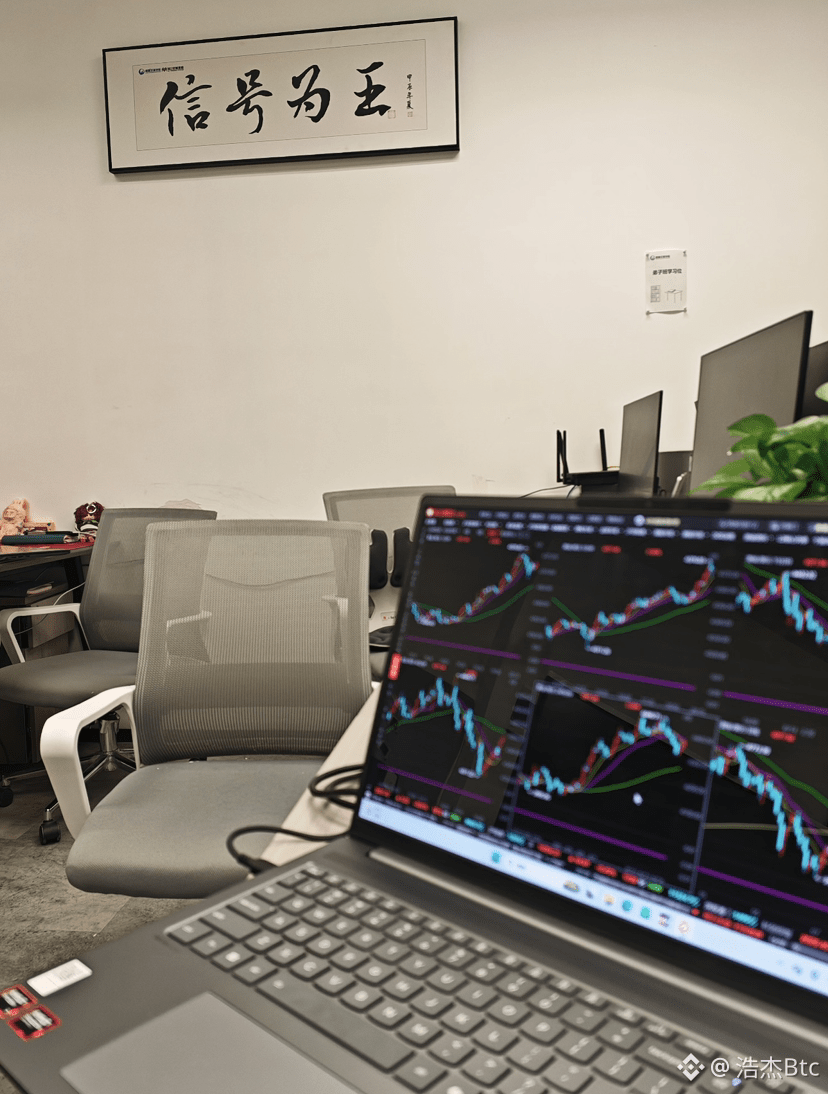
114
·
--
A 100x leverage isn’t inherently gambling—the real lifeline is managing position size at 3%.
When people hear “100x,” they often frown and think this isn’t trading, it’s just handing money away. But to be honest, the reason I was able to crawl out of the deep pit was “using high leverage with light positions.” Back then my account wasn’t even over 3000U. I got liquidated five times in a row—mentally I was almost breaking. Everyone around me told me to stay away from perpetuals. I didn’t. Instead, I started reviewing each liquidation: the causes were always the same—leverage doesn’t ruin you; the real problems are losing the plot (bad direction), trading too frequently, and going all-in with heavy size.
So I did the opposite. I only commit to one direction per day. My position size stays small. Use leverage when it’s appropriate. If I’m wrong, I cut immediately. If I’m right, I don’t get greedy or linger—I lock in profit and leave right away. That kind of experience is thrilling. But as long as you can restrain your impulses, profits really can pour in like a dam opening. Over a few months, the small money slowly rolled into something larger. I still had liquidations in the middle, but because my position size was light, each loss was limited, and I wasn’t panicking.
Now I only place a small number of trades each day. It’s not luck—it’s rhythm and execution. I want to advise the brothers who are still “betting for a comeback” with heavy positions: it’s not that you can’t turn things around—it’s that you’re taking the wrong route. Liquidations aren’t the main issue; the key is knowing how to get back. It’s hard to make it work fighting alone, and grinding on in silence rarely brings the right opportunity.
#苹果发布首款折叠屏手机
#ZCSH资产规模突破5亿美元
#EU expands the framework for Central Liaison Points to crypto service providers
A 100x leverage isn’t inherently gambling—the real lifeline is managing position size at 3%.
When people hear “100x,” they often frown and think this isn’t trading, it’s just handing money away. But to be honest, the reason I was able to crawl out of the deep pit was “using high leverage with light positions.” Back then my account wasn’t even over 3000U. I got liquidated five times in a row—mentally I was almost breaking. Everyone around me told me to stay away from perpetuals. I didn’t. Instead, I started reviewing each liquidation: the causes were always the same—leverage doesn’t ruin you; the real problems are losing the plot (bad direction), trading too frequently, and going all-in with heavy size.
So I did the opposite. I only commit to one direction per day. My position size stays small. Use leverage when it’s appropriate. If I’m wrong, I cut immediately. If I’m right, I don’t get greedy or linger—I lock in profit and leave right away. That kind of experience is thrilling. But as long as you can restrain your impulses, profits really can pour in like a dam opening. Over a few months, the small money slowly rolled into something larger. I still had liquidations in the middle, but because my position size was light, each loss was limited, and I wasn’t panicking.
Now I only place a small number of trades each day. It’s not luck—it’s rhythm and execution. I want to advise the brothers who are still “betting for a comeback” with heavy positions: it’s not that you can’t turn things around—it’s that you’re taking the wrong route. Liquidations aren’t the main issue; the key is knowing how to get back. It’s hard to make it work fighting alone, and grinding on in silence rarely brings the right opportunity.
#苹果发布首款折叠屏手机
#ZCSH资产规模突破5亿美元
#EU expands the framework for Central Liaison Points to crypto service providers
When people hear “100x,” they often frown and think this isn’t trading, it’s just handing money away. But to be honest, the reason I was able to crawl out of the deep pit was “using high leverage with light positions.” Back then my account wasn’t even over 3000U. I got liquidated five times in a row—mentally I was almost breaking. Everyone around me told me to stay away from perpetuals. I didn’t. Instead, I started reviewing each liquidation: the causes were always the same—leverage doesn’t ruin you; the real problems are losing the plot (bad direction), trading too frequently, and going all-in with heavy size.
So I did the opposite. I only commit to one direction per day. My position size stays small. Use leverage when it’s appropriate. If I’m wrong, I cut immediately. If I’m right, I don’t get greedy or linger—I lock in profit and leave right away. That kind of experience is thrilling. But as long as you can restrain your impulses, profits really can pour in like a dam opening. Over a few months, the small money slowly rolled into something larger. I still had liquidations in the middle, but because my position size was light, each loss was limited, and I wasn’t panicking.
Now I only place a small number of trades each day. It’s not luck—it’s rhythm and execution. I want to advise the brothers who are still “betting for a comeback” with heavy positions: it’s not that you can’t turn things around—it’s that you’re taking the wrong route. Liquidations aren’t the main issue; the key is knowing how to get back. It’s hard to make it work fighting alone, and grinding on in silence rarely brings the right opportunity.
#苹果发布首款折叠屏手机
#ZCSH资产规模突破5亿美元
#EU expands the framework for Central Liaison Points to crypto service providers

192
·
--
Get the 800,000 back that I lost by starting over—not luck, but by coming back again from the beginning.
Many people ask: how can the 800,000 I lost be turned back around? Looking back on that period, I genuinely felt for a long time that there was no hope. My account kept shrinking day after day, my mood grew more and more depressed, and even the thought of giving up completely crossed my mind.
But in the end, I still didn’t quit—because the market won’t stay bleak forever. As long as you can endure, opportunities will come again. So I took the last 4,000 U I had left, treated it as my final chance, and went all in again.
This time, I didn’t enter and exit randomly anymore, and I didn’t add positions just because. Instead, I found a method that fit me: rolling over positions and exercising precise control. For every trade, I stayed calm and neither rushed nor greedily chased. I only did what I could understand, followed the market’s rhythm, made fewer trades against the trend, and more trades in line with it.
In the first week, I slowly grew from 3,500 U to 5,200 U. In the second week, it climbed to 8,600 U. By the sixth week, the account had already broken through “4WU+”. At that moment, I knew the chance to turn things around had finally arrived.
This isn’t luck. It’s about putting care into what you do—focusing your energy on the right trades, controlling your position size, and moving with the market’s pace to grow little by little. What I lost wasn’t just money, but also confidence and patience. Yet as long as you’re willing to change, adjust your mindset, and find the right method, a comeback really isn’t that hard.
#ZCSH资产规模突破5亿美元
#ZCSH资产规模突破5亿美元
#U.S. Treasury Department proposes to buy back up to $6 billion in Treasury bonds
Get the 800,000 back that I lost by starting over—not luck, but by coming back again from the beginning.
Many people ask: how can the 800,000 I lost be turned back around? Looking back on that period, I genuinely felt for a long time that there was no hope. My account kept shrinking day after day, my mood grew more and more depressed, and even the thought of giving up completely crossed my mind.
But in the end, I still didn’t quit—because the market won’t stay bleak forever. As long as you can endure, opportunities will come again. So I took the last 4,000 U I had left, treated it as my final chance, and went all in again.
This time, I didn’t enter and exit randomly anymore, and I didn’t add positions just because. Instead, I found a method that fit me: rolling over positions and exercising precise control. For every trade, I stayed calm and neither rushed nor greedily chased. I only did what I could understand, followed the market’s rhythm, made fewer trades against the trend, and more trades in line with it.
In the first week, I slowly grew from 3,500 U to 5,200 U. In the second week, it climbed to 8,600 U. By the sixth week, the account had already broken through “4WU+”. At that moment, I knew the chance to turn things around had finally arrived.
This isn’t luck. It’s about putting care into what you do—focusing your energy on the right trades, controlling your position size, and moving with the market’s pace to grow little by little. What I lost wasn’t just money, but also confidence and patience. Yet as long as you’re willing to change, adjust your mindset, and find the right method, a comeback really isn’t that hard.
#ZCSH资产规模突破5亿美元
#ZCSH资产规模突破5亿美元
#U.S. Treasury Department proposes to buy back up to $6 billion in Treasury bonds
Many people ask: how can the 800,000 I lost be turned back around? Looking back on that period, I genuinely felt for a long time that there was no hope. My account kept shrinking day after day, my mood grew more and more depressed, and even the thought of giving up completely crossed my mind.
But in the end, I still didn’t quit—because the market won’t stay bleak forever. As long as you can endure, opportunities will come again. So I took the last 4,000 U I had left, treated it as my final chance, and went all in again.
This time, I didn’t enter and exit randomly anymore, and I didn’t add positions just because. Instead, I found a method that fit me: rolling over positions and exercising precise control. For every trade, I stayed calm and neither rushed nor greedily chased. I only did what I could understand, followed the market’s rhythm, made fewer trades against the trend, and more trades in line with it.
In the first week, I slowly grew from 3,500 U to 5,200 U. In the second week, it climbed to 8,600 U. By the sixth week, the account had already broken through “4WU+”. At that moment, I knew the chance to turn things around had finally arrived.
This isn’t luck. It’s about putting care into what you do—focusing your energy on the right trades, controlling your position size, and moving with the market’s pace to grow little by little. What I lost wasn’t just money, but also confidence and patience. Yet as long as you’re willing to change, adjust your mindset, and find the right method, a comeback really isn’t that hard.
#ZCSH资产规模突破5亿美元
#ZCSH资产规模突破5亿美元
#U.S. Treasury Department proposes to buy back up to $6 billion in Treasury bonds

2
600
·
--
After losing 200,000, I picked myself back up with the remaining 2,000 USDT.
To be honest, the moment I cleared out everything, I was completely stunned. Staring at the account that had hit zero, my first instinct was to delete the app and never touch it again for the rest of my life. But that unwillingness to give up dragged me back—pushing me to admit this: losing money isn’t the market’s fault. It’s my own fault—I had no rules, no discipline, and I was basically gambling purely on impulse.
After I calmed down, I did one thing: I went back and reviewed every past losing trade, one by one, to break down what happened. Chasing price up, holding positions when I should have cut, entering based on emotions… each one was clearly written in my notes. That was the first time I truly saw myself—trading is never just a technical problem; it’s a systems problem.
After that, I set three bottom lines for myself:
1. I only trade mainstream coins like BTC and ETH. Even if some “meme coin” pumps into the sky, I don’t look;
2. Before entering, there must be a resonance signal—everything must line up: the pattern is right, the emotion is aligned, and the volume confirms. If any one piece is missing, I don’t do it;
3. Each round’s rolling profits are clearly defined. Take small gains and leave—never hold on just to get greedy.
That’s how I ground through round after round. The first round brought a small profit. The second round added a bit more. The third round stayed stable again… slow, but every step was solid. By the end of the 8th round, I withdrew a large sum on the spot—and that’s when I truly felt it: I’m alive.
Looking back now, being able to turn it around was all because this rhythm carried me.
I know many people will ask: How do you choose coins? How do you spot the breakout moment? These things can’t be explained in a single sentence. But if you’ve also lost so much that you’re nearly in despair and you’ve got almost no chips left, I can say this responsibly: don’t keep betting your hope on feelings. Rhythm is your only trump card.
Not a myth—but it really can save your life.
#美加关税战升级
#沙特南部能源设施遇袭停运
# JPY breaks 155, approaching the yearly high
After losing 200,000, I picked myself back up with the remaining 2,000 USDT.
To be honest, the moment I cleared out everything, I was completely stunned. Staring at the account that had hit zero, my first instinct was to delete the app and never touch it again for the rest of my life. But that unwillingness to give up dragged me back—pushing me to admit this: losing money isn’t the market’s fault. It’s my own fault—I had no rules, no discipline, and I was basically gambling purely on impulse.
After I calmed down, I did one thing: I went back and reviewed every past losing trade, one by one, to break down what happened. Chasing price up, holding positions when I should have cut, entering based on emotions… each one was clearly written in my notes. That was the first time I truly saw myself—trading is never just a technical problem; it’s a systems problem.
After that, I set three bottom lines for myself:
1. I only trade mainstream coins like BTC and ETH. Even if some “meme coin” pumps into the sky, I don’t look;
2. Before entering, there must be a resonance signal—everything must line up: the pattern is right, the emotion is aligned, and the volume confirms. If any one piece is missing, I don’t do it;
3. Each round’s rolling profits are clearly defined. Take small gains and leave—never hold on just to get greedy.
That’s how I ground through round after round. The first round brought a small profit. The second round added a bit more. The third round stayed stable again… slow, but every step was solid. By the end of the 8th round, I withdrew a large sum on the spot—and that’s when I truly felt it: I’m alive.
Looking back now, being able to turn it around was all because this rhythm carried me.
I know many people will ask: How do you choose coins? How do you spot the breakout moment? These things can’t be explained in a single sentence. But if you’ve also lost so much that you’re nearly in despair and you’ve got almost no chips left, I can say this responsibly: don’t keep betting your hope on feelings. Rhythm is your only trump card.
Not a myth—but it really can save your life.
#美加关税战升级
#沙特南部能源设施遇袭停运
# JPY breaks 155, approaching the yearly high
To be honest, the moment I cleared out everything, I was completely stunned. Staring at the account that had hit zero, my first instinct was to delete the app and never touch it again for the rest of my life. But that unwillingness to give up dragged me back—pushing me to admit this: losing money isn’t the market’s fault. It’s my own fault—I had no rules, no discipline, and I was basically gambling purely on impulse.
After I calmed down, I did one thing: I went back and reviewed every past losing trade, one by one, to break down what happened. Chasing price up, holding positions when I should have cut, entering based on emotions… each one was clearly written in my notes. That was the first time I truly saw myself—trading is never just a technical problem; it’s a systems problem.
After that, I set three bottom lines for myself:
1. I only trade mainstream coins like BTC and ETH. Even if some “meme coin” pumps into the sky, I don’t look;
2. Before entering, there must be a resonance signal—everything must line up: the pattern is right, the emotion is aligned, and the volume confirms. If any one piece is missing, I don’t do it;
3. Each round’s rolling profits are clearly defined. Take small gains and leave—never hold on just to get greedy.
That’s how I ground through round after round. The first round brought a small profit. The second round added a bit more. The third round stayed stable again… slow, but every step was solid. By the end of the 8th round, I withdrew a large sum on the spot—and that’s when I truly felt it: I’m alive.
Looking back now, being able to turn it around was all because this rhythm carried me.
I know many people will ask: How do you choose coins? How do you spot the breakout moment? These things can’t be explained in a single sentence. But if you’ve also lost so much that you’re nearly in despair and you’ve got almost no chips left, I can say this responsibly: don’t keep betting your hope on feelings. Rhythm is your only trump card.
Not a myth—but it really can save your life.
#美加关税战升级
#沙特南部能源设施遇袭停运
# JPY breaks 155, approaching the yearly high

1.4k
·
--
10U Startup Operation Path (Pure Strategy)
1. Startup Phase: Three Key Battles
· First Trade: Use 5U as margin, open 100x leverage, buy ETH. 5U × 100x is approximately 0.2 ETH. Set a stop loss: if the move goes against you by 20 points, you get liquidated and accept the loss. If your direction is correct, don’t take profit immediately—wait until profits have doubled or more before exiting (account reaches over 15U). If you get liquidated, you’ll have 5U left, and you try again.
· If you smoothly capture a rise of 50 points or more, the account should reach around 20U.
· Second Trade: Use 10U as margin, repeat the same process; if successful, reach 40U. Third Trade: Use 20U as margin, give it one more try; if successful, reach 80U.
· Do the first three trades correctly in a row: 10U becomes 80U. This step can be fast or slow—potentially within a few days.
2. Split-Position Slow Execution Phase (80U~200U)
· After reaching 80U, don’t go all-in anymore. Split into 10 parts; for each trade, use only 10U to open a position. This way, you can be wrong 8 times and keep your mindset steadier. Take it slow—don’t rush to double. In about a month, you can basically reach 200U.
3. Steady Expansion Phase (200U~1000~2000U)
· After reaching 200U, split into 10 positions, 20U each. In about a month, aim for 1000~2000U.
· After reaching 1000U, split into 20 positions, 50U each. Before 1000U, it’s recommended to use isolated positions and strictly cap your stop-loss levels; after 1000U, you can switch to full-position mode, but be sure to manage position sizing.
4. Core Discipline (Most Important)
· From 10U to 1000U, in theory it only takes 2~3 months, but most people fail due to “mysterious confidence” and going all-in.
· If your direction is wrong, recognize the loss immediately—never hold on to the position.
· Diversify positions: move only a small portion of the funds each time, giving yourself multiple opportunities to make mistakes and adjust.
· If you rush, you’ll get liquidated. Slow is fast—make time your friend.
#美伊互袭油轮冲突升级
#IMF称萨尔瓦多购币未用公共资金
# Russia-Ukraine firefight: Kushneravitov heads to Kyiv
10U Startup Operation Path (Pure Strategy)
1. Startup Phase: Three Key Battles
· First Trade: Use 5U as margin, open 100x leverage, buy ETH. 5U × 100x is approximately 0.2 ETH. Set a stop loss: if the move goes against you by 20 points, you get liquidated and accept the loss. If your direction is correct, don’t take profit immediately—wait until profits have doubled or more before exiting (account reaches over 15U). If you get liquidated, you’ll have 5U left, and you try again.
· If you smoothly capture a rise of 50 points or more, the account should reach around 20U.
· Second Trade: Use 10U as margin, repeat the same process; if successful, reach 40U. Third Trade: Use 20U as margin, give it one more try; if successful, reach 80U.
· Do the first three trades correctly in a row: 10U becomes 80U. This step can be fast or slow—potentially within a few days.
2. Split-Position Slow Execution Phase (80U~200U)
· After reaching 80U, don’t go all-in anymore. Split into 10 parts; for each trade, use only 10U to open a position. This way, you can be wrong 8 times and keep your mindset steadier. Take it slow—don’t rush to double. In about a month, you can basically reach 200U.
3. Steady Expansion Phase (200U~1000~2000U)
· After reaching 200U, split into 10 positions, 20U each. In about a month, aim for 1000~2000U.
· After reaching 1000U, split into 20 positions, 50U each. Before 1000U, it’s recommended to use isolated positions and strictly cap your stop-loss levels; after 1000U, you can switch to full-position mode, but be sure to manage position sizing.
4. Core Discipline (Most Important)
· From 10U to 1000U, in theory it only takes 2~3 months, but most people fail due to “mysterious confidence” and going all-in.
· If your direction is wrong, recognize the loss immediately—never hold on to the position.
· Diversify positions: move only a small portion of the funds each time, giving yourself multiple opportunities to make mistakes and adjust.
· If you rush, you’ll get liquidated. Slow is fast—make time your friend.
#美伊互袭油轮冲突升级
#IMF称萨尔瓦多购币未用公共资金
# Russia-Ukraine firefight: Kushneravitov heads to Kyiv
1. Startup Phase: Three Key Battles
· First Trade: Use 5U as margin, open 100x leverage, buy ETH. 5U × 100x is approximately 0.2 ETH. Set a stop loss: if the move goes against you by 20 points, you get liquidated and accept the loss. If your direction is correct, don’t take profit immediately—wait until profits have doubled or more before exiting (account reaches over 15U). If you get liquidated, you’ll have 5U left, and you try again.
· If you smoothly capture a rise of 50 points or more, the account should reach around 20U.
· Second Trade: Use 10U as margin, repeat the same process; if successful, reach 40U. Third Trade: Use 20U as margin, give it one more try; if successful, reach 80U.
· Do the first three trades correctly in a row: 10U becomes 80U. This step can be fast or slow—potentially within a few days.
2. Split-Position Slow Execution Phase (80U~200U)
· After reaching 80U, don’t go all-in anymore. Split into 10 parts; for each trade, use only 10U to open a position. This way, you can be wrong 8 times and keep your mindset steadier. Take it slow—don’t rush to double. In about a month, you can basically reach 200U.
3. Steady Expansion Phase (200U~1000~2000U)
· After reaching 200U, split into 10 positions, 20U each. In about a month, aim for 1000~2000U.
· After reaching 1000U, split into 20 positions, 50U each. Before 1000U, it’s recommended to use isolated positions and strictly cap your stop-loss levels; after 1000U, you can switch to full-position mode, but be sure to manage position sizing.
4. Core Discipline (Most Important)
· From 10U to 1000U, in theory it only takes 2~3 months, but most people fail due to “mysterious confidence” and going all-in.
· If your direction is wrong, recognize the loss immediately—never hold on to the position.
· Diversify positions: move only a small portion of the funds each time, giving yourself multiple opportunities to make mistakes and adjust.
· If you rush, you’ll get liquidated. Slow is fast—make time your friend.
#美伊互袭油轮冲突升级
#IMF称萨尔瓦多购币未用公共资金
# Russia-Ukraine firefight: Kushneravitov heads to Kyiv
1
1
230
·
--
An account under 1000U is most likely to fall into two dead ends: one is spending all day scrolling posts about hundredfold coins, and the other is dreaming of getting rich overnight. Unfortunately, these two paths are often also the fastest way to wipe out your small stash.
When you only have a few hundred U in your pocket and you see others posting doubled returns, it’s hard not to get restless. But you need to see clearly that what they show is always the big winning trade; you never get to see the losing ones that hurt like hell. Too many people take 500U and want to turn it into 5000, or 1000U into 100,000. Today they chase this hot topic, tomorrow they jump to that new coin, following every rumor. In the end, before the market even starts moving, they’ve already worn themselves down from repeated losses.
Small capital naturally has a low cost of trial and error, which is an advantage, but precisely because of that, you need to spend it carefully. Never go all in, never bet everything on one shot, and never use your living expenses to gamble on direction. Split your money into several parts: if this trade loses, you still have another chance. If you put everything in at once and get the direction wrong even once, you won’t even have the qualification to recover.
And don’t always think the “next coin” is the turning point of your fate. Many people haven’t even read the project’s white paper, and just because someone in a group shouted about it, they rush in. By the time they get there, they realize they’re standing right on the top of the hill, becoming someone else’s exit liquidity.
At this stage, technical analysis is secondary. What you should really practice is discipline — control your position size, cut losses decisively, and rein in your impulsive hands. Don’t stare at doubling every day; first think about how to keep your account alive until next month. As long as you’re still at the table, opportunities will always exist; once your principal is zero, even if there’s a huge bull market tomorrow, it has nothing to do with you.
#俄乌同时宣布停火3天
#BTC触及80000美元
#Lululemon falls 20% on weak guidance
An account under 1000U is most likely to fall into two dead ends: one is spending all day scrolling posts about hundredfold coins, and the other is dreaming of getting rich overnight. Unfortunately, these two paths are often also the fastest way to wipe out your small stash.
When you only have a few hundred U in your pocket and you see others posting doubled returns, it’s hard not to get restless. But you need to see clearly that what they show is always the big winning trade; you never get to see the losing ones that hurt like hell. Too many people take 500U and want to turn it into 5000, or 1000U into 100,000. Today they chase this hot topic, tomorrow they jump to that new coin, following every rumor. In the end, before the market even starts moving, they’ve already worn themselves down from repeated losses.
Small capital naturally has a low cost of trial and error, which is an advantage, but precisely because of that, you need to spend it carefully. Never go all in, never bet everything on one shot, and never use your living expenses to gamble on direction. Split your money into several parts: if this trade loses, you still have another chance. If you put everything in at once and get the direction wrong even once, you won’t even have the qualification to recover.
And don’t always think the “next coin” is the turning point of your fate. Many people haven’t even read the project’s white paper, and just because someone in a group shouted about it, they rush in. By the time they get there, they realize they’re standing right on the top of the hill, becoming someone else’s exit liquidity.
At this stage, technical analysis is secondary. What you should really practice is discipline — control your position size, cut losses decisively, and rein in your impulsive hands. Don’t stare at doubling every day; first think about how to keep your account alive until next month. As long as you’re still at the table, opportunities will always exist; once your principal is zero, even if there’s a huge bull market tomorrow, it has nothing to do with you.
#俄乌同时宣布停火3天
#BTC触及80000美元
#Lululemon falls 20% on weak guidance
When you only have a few hundred U in your pocket and you see others posting doubled returns, it’s hard not to get restless. But you need to see clearly that what they show is always the big winning trade; you never get to see the losing ones that hurt like hell. Too many people take 500U and want to turn it into 5000, or 1000U into 100,000. Today they chase this hot topic, tomorrow they jump to that new coin, following every rumor. In the end, before the market even starts moving, they’ve already worn themselves down from repeated losses.
Small capital naturally has a low cost of trial and error, which is an advantage, but precisely because of that, you need to spend it carefully. Never go all in, never bet everything on one shot, and never use your living expenses to gamble on direction. Split your money into several parts: if this trade loses, you still have another chance. If you put everything in at once and get the direction wrong even once, you won’t even have the qualification to recover.
And don’t always think the “next coin” is the turning point of your fate. Many people haven’t even read the project’s white paper, and just because someone in a group shouted about it, they rush in. By the time they get there, they realize they’re standing right on the top of the hill, becoming someone else’s exit liquidity.
At this stage, technical analysis is secondary. What you should really practice is discipline — control your position size, cut losses decisively, and rein in your impulsive hands. Don’t stare at doubling every day; first think about how to keep your account alive until next month. As long as you’re still at the table, opportunities will always exist; once your principal is zero, even if there’s a huge bull market tomorrow, it has nothing to do with you.
#俄乌同时宣布停火3天
#BTC触及80000美元
#Lululemon falls 20% on weak guidance
119
·
--
There used to be a guy I knew who made money in a bull market and lost money in a bull market too. In the end, one bear market directly caused him to spit back out all of his more than 3 million in savings. He deleted all his Moments, didn’t dare face his family, and his friends all kept their distance. During that time he was like a shell of himself. Honestly, not everyone could have taken that.
Later I told him a crude but true saying: “No matter how much you lose, it’s not the end. The real end is when you keep holding the losing trade all the way to the bottom.” He said it was at that moment that his brain suddenly cleared up.
At the time, there was only 3500U left in his account — really the very last bit of his savings. But this time he didn’t think about gambling for a comeback. Instead, he honestly traded according to the rhythm. He used a rolling position strategy — no chasing explosive pumps, no adding size recklessly, no expecting one trade to change his fate. Every trade was cut in a proper, disciplined way.
He split 3500U into two halves: one half for stability, one half to look for opportunities, only trading moves he completely understood. He would take a little profit on each trade and leave, and if he was wrong, he cut it without hesitation, never holding overnight. In the first week he got to 5200, in the second week to 8600, and by the sixth week the account had already broken through 40,000U.
That day he told me that for the first time he wasn’t excited because he made money, but because he felt like he had finally climbed out of that deep well and seen the light. This wave of gains had nothing to do with luck. It was because he truly quit all his old bad habits — not going heavy, not getting emotional, not being impatient. Every trade was in his own rhythm; when he was wrong, he admitted it, and emotions no longer interfered with execution.
Can small capital still make a comeback? Yes, but only if you truly transform yourself. Turning things around isn’t about shouting it from the rooftops; it’s about treating trading with the seriousness of a livelihood. Once your rhythm is steady, profits will naturally start rolling in. The market never lacks opportunities — what’s lacking is whether you still have the spirit to stand back up.
#俄乌同时宣布停火3天
#BTC触及80000美元
#ZEC续刷历史新高
There used to be a guy I knew who made money in a bull market and lost money in a bull market too. In the end, one bear market directly caused him to spit back out all of his more than 3 million in savings. He deleted all his Moments, didn’t dare face his family, and his friends all kept their distance. During that time he was like a shell of himself. Honestly, not everyone could have taken that.
Later I told him a crude but true saying: “No matter how much you lose, it’s not the end. The real end is when you keep holding the losing trade all the way to the bottom.” He said it was at that moment that his brain suddenly cleared up.
At the time, there was only 3500U left in his account — really the very last bit of his savings. But this time he didn’t think about gambling for a comeback. Instead, he honestly traded according to the rhythm. He used a rolling position strategy — no chasing explosive pumps, no adding size recklessly, no expecting one trade to change his fate. Every trade was cut in a proper, disciplined way.
He split 3500U into two halves: one half for stability, one half to look for opportunities, only trading moves he completely understood. He would take a little profit on each trade and leave, and if he was wrong, he cut it without hesitation, never holding overnight. In the first week he got to 5200, in the second week to 8600, and by the sixth week the account had already broken through 40,000U.
That day he told me that for the first time he wasn’t excited because he made money, but because he felt like he had finally climbed out of that deep well and seen the light. This wave of gains had nothing to do with luck. It was because he truly quit all his old bad habits — not going heavy, not getting emotional, not being impatient. Every trade was in his own rhythm; when he was wrong, he admitted it, and emotions no longer interfered with execution.
Can small capital still make a comeback? Yes, but only if you truly transform yourself. Turning things around isn’t about shouting it from the rooftops; it’s about treating trading with the seriousness of a livelihood. Once your rhythm is steady, profits will naturally start rolling in. The market never lacks opportunities — what’s lacking is whether you still have the spirit to stand back up.
#俄乌同时宣布停火3天
#BTC触及80000美元
#ZEC续刷历史新高
Later I told him a crude but true saying: “No matter how much you lose, it’s not the end. The real end is when you keep holding the losing trade all the way to the bottom.” He said it was at that moment that his brain suddenly cleared up.
At the time, there was only 3500U left in his account — really the very last bit of his savings. But this time he didn’t think about gambling for a comeback. Instead, he honestly traded according to the rhythm. He used a rolling position strategy — no chasing explosive pumps, no adding size recklessly, no expecting one trade to change his fate. Every trade was cut in a proper, disciplined way.
He split 3500U into two halves: one half for stability, one half to look for opportunities, only trading moves he completely understood. He would take a little profit on each trade and leave, and if he was wrong, he cut it without hesitation, never holding overnight. In the first week he got to 5200, in the second week to 8600, and by the sixth week the account had already broken through 40,000U.
That day he told me that for the first time he wasn’t excited because he made money, but because he felt like he had finally climbed out of that deep well and seen the light. This wave of gains had nothing to do with luck. It was because he truly quit all his old bad habits — not going heavy, not getting emotional, not being impatient. Every trade was in his own rhythm; when he was wrong, he admitted it, and emotions no longer interfered with execution.
Can small capital still make a comeback? Yes, but only if you truly transform yourself. Turning things around isn’t about shouting it from the rooftops; it’s about treating trading with the seriousness of a livelihood. Once your rhythm is steady, profits will naturally start rolling in. The market never lacks opportunities — what’s lacking is whether you still have the spirit to stand back up.
#俄乌同时宣布停火3天
#BTC触及80000美元
#ZEC续刷历史新高

392
·
--
With only a few hundred U in the account, this stage is the easiest time to fall into two traps: obsessing over finding a hundred-fold coin, and dreaming of making a fortune overnight. Yet those two thoughts are exactly the fastest way for a small account to die.
Seeing others post doubled profits, it’s hard not to feel tempted. But you have to understand that what others share are always the winning trades; the nights when they lost so badly they couldn’t sleep, you never see a screenshot of those. Many people take 500 U and want to turn it into 5000, or 1000 U and aim for 100,000. Today they chase one hot topic, tomorrow they switch to another new coin, following every rumor. In the end, before the market even arrives, their principal is already gone from all the back-and-forth self-inflicted churn.
In fact, the biggest advantage of small capital is precisely that you still have room to lose. Because the account is small, you should treat every bullet as precious. Don’t go all-in, don’t gamble your living expenses, and don’t use full margin to bet on one direction. Split it into several parts: lose once, and you still have the next shot; but if you go all-in once and get wiped out, it will be hard to climb back up. And don’t always think that “the next coin” can change your fate. Many people don’t even figure out what a project does, and because someone in the group shouted “go,” they rush in only to realize they’ve become the exit liquidity.
At this stage, what’s most worth practicing is not the skill of finding hundred-fold coins, but the three least glamorous things: position sizing, setting stop-losses, and keeping your hands off. Boring? Yes. But it’s ten thousand times more useful than spending every day studying which coin can rise a hundred times.
Stop staring at doubling returns all the time. First think about how not to blow up. As long as you’re still at the table, there will always be opportunities; once your principal goes to zero, even if there’s a huge bull market tomorrow, it has nothing to do with you.
#俄乌同时宣布停火3天
#ZEC续刷历史新高
#BTC touched 80000 dollars
With only a few hundred U in the account, this stage is the easiest time to fall into two traps: obsessing over finding a hundred-fold coin, and dreaming of making a fortune overnight. Yet those two thoughts are exactly the fastest way for a small account to die.
Seeing others post doubled profits, it’s hard not to feel tempted. But you have to understand that what others share are always the winning trades; the nights when they lost so badly they couldn’t sleep, you never see a screenshot of those. Many people take 500 U and want to turn it into 5000, or 1000 U and aim for 100,000. Today they chase one hot topic, tomorrow they switch to another new coin, following every rumor. In the end, before the market even arrives, their principal is already gone from all the back-and-forth self-inflicted churn.
In fact, the biggest advantage of small capital is precisely that you still have room to lose. Because the account is small, you should treat every bullet as precious. Don’t go all-in, don’t gamble your living expenses, and don’t use full margin to bet on one direction. Split it into several parts: lose once, and you still have the next shot; but if you go all-in once and get wiped out, it will be hard to climb back up. And don’t always think that “the next coin” can change your fate. Many people don’t even figure out what a project does, and because someone in the group shouted “go,” they rush in only to realize they’ve become the exit liquidity.
At this stage, what’s most worth practicing is not the skill of finding hundred-fold coins, but the three least glamorous things: position sizing, setting stop-losses, and keeping your hands off. Boring? Yes. But it’s ten thousand times more useful than spending every day studying which coin can rise a hundred times.
Stop staring at doubling returns all the time. First think about how not to blow up. As long as you’re still at the table, there will always be opportunities; once your principal goes to zero, even if there’s a huge bull market tomorrow, it has nothing to do with you.
#俄乌同时宣布停火3天
#ZEC续刷历史新高
#BTC touched 80000 dollars
Seeing others post doubled profits, it’s hard not to feel tempted. But you have to understand that what others share are always the winning trades; the nights when they lost so badly they couldn’t sleep, you never see a screenshot of those. Many people take 500 U and want to turn it into 5000, or 1000 U and aim for 100,000. Today they chase one hot topic, tomorrow they switch to another new coin, following every rumor. In the end, before the market even arrives, their principal is already gone from all the back-and-forth self-inflicted churn.
In fact, the biggest advantage of small capital is precisely that you still have room to lose. Because the account is small, you should treat every bullet as precious. Don’t go all-in, don’t gamble your living expenses, and don’t use full margin to bet on one direction. Split it into several parts: lose once, and you still have the next shot; but if you go all-in once and get wiped out, it will be hard to climb back up. And don’t always think that “the next coin” can change your fate. Many people don’t even figure out what a project does, and because someone in the group shouted “go,” they rush in only to realize they’ve become the exit liquidity.
At this stage, what’s most worth practicing is not the skill of finding hundred-fold coins, but the three least glamorous things: position sizing, setting stop-losses, and keeping your hands off. Boring? Yes. But it’s ten thousand times more useful than spending every day studying which coin can rise a hundred times.
Stop staring at doubling returns all the time. First think about how not to blow up. As long as you’re still at the table, there will always be opportunities; once your principal goes to zero, even if there’s a huge bull market tomorrow, it has nothing to do with you.
#俄乌同时宣布停火3天
#ZEC续刷历史新高
#BTC touched 80000 dollars

1
2
643
·
--
With less than 2000U of principal, don’t rush to think about "doubling"—first figure out how to "survive".
I know a friend who started with 1500U and turned it into 45,000U in four months, without a single liquidation and with drawdowns kept tightly under control. You think he had some secret trick? Actually, it was just three dumb rules—so simple that anyone could learn them, but few people can stick with them.
First, the money must be split into three parts; putting it all in at once is basically self-destruction.
He divided the 1500U into three piles: one for short-term trades, at most one trade per day; one for swing trades, used only once every ten days or half a month; and the last one as "survival money." If the first two piles were wiped out, this one would still let him get back in the game. Even if the sky fell, he would not touch that third pile.
Second, never fire without seeing the target—only take the safest meat.
He absolutely never touched sideways, choppy markets, and if the direction was unclear, he simply stayed out of the market. He only entered when the trend was crystal clear and the signal was strong enough. Opportunities don’t come every day, but the account’s life has to be protected every day.
Third, write the rules on the wall and lock your emotions in the drawer.
A stop-loss should be as natural as drinking water, and when take-profit reaches the target, take half off first. When the account has substantial unrealized gains, immediately transfer out part of the profit and lock in the gains; when losing, never add to the position—so many people never recover because they fall into this trap. Don’t bet on reversals, don’t stubbornly hold on, and don’t tell yourself, "Just wait a little longer and it’ll come back."
What happened later? Now his account has already broken 100,000U, and he no longer needs to stay up late watching the market. He spends ten minutes a day checking price levels and is done for the day.
If you want to turn things around, first remember this hard truth: only when your principal is intact does doubling have any meaning. Split positions, wait for the right time, and control your hands—these methods may sound old-fashioned, but they can save you from stepping into three years of pitfalls. The fastest shortcut in the crypto world is often to force yourself to slow down first.
#BTC触及80000美元
#ZEC续刷历史新高
#Lululemon因指引疲软跌20%
With less than 2000U of principal, don’t rush to think about "doubling"—first figure out how to "survive".
I know a friend who started with 1500U and turned it into 45,000U in four months, without a single liquidation and with drawdowns kept tightly under control. You think he had some secret trick? Actually, it was just three dumb rules—so simple that anyone could learn them, but few people can stick with them.
First, the money must be split into three parts; putting it all in at once is basically self-destruction.
He divided the 1500U into three piles: one for short-term trades, at most one trade per day; one for swing trades, used only once every ten days or half a month; and the last one as "survival money." If the first two piles were wiped out, this one would still let him get back in the game. Even if the sky fell, he would not touch that third pile.
Second, never fire without seeing the target—only take the safest meat.
He absolutely never touched sideways, choppy markets, and if the direction was unclear, he simply stayed out of the market. He only entered when the trend was crystal clear and the signal was strong enough. Opportunities don’t come every day, but the account’s life has to be protected every day.
Third, write the rules on the wall and lock your emotions in the drawer.
A stop-loss should be as natural as drinking water, and when take-profit reaches the target, take half off first. When the account has substantial unrealized gains, immediately transfer out part of the profit and lock in the gains; when losing, never add to the position—so many people never recover because they fall into this trap. Don’t bet on reversals, don’t stubbornly hold on, and don’t tell yourself, "Just wait a little longer and it’ll come back."
What happened later? Now his account has already broken 100,000U, and he no longer needs to stay up late watching the market. He spends ten minutes a day checking price levels and is done for the day.
If you want to turn things around, first remember this hard truth: only when your principal is intact does doubling have any meaning. Split positions, wait for the right time, and control your hands—these methods may sound old-fashioned, but they can save you from stepping into three years of pitfalls. The fastest shortcut in the crypto world is often to force yourself to slow down first.
#BTC触及80000美元
#ZEC续刷历史新高
#Lululemon因指引疲软跌20%
I know a friend who started with 1500U and turned it into 45,000U in four months, without a single liquidation and with drawdowns kept tightly under control. You think he had some secret trick? Actually, it was just three dumb rules—so simple that anyone could learn them, but few people can stick with them.
First, the money must be split into three parts; putting it all in at once is basically self-destruction.
He divided the 1500U into three piles: one for short-term trades, at most one trade per day; one for swing trades, used only once every ten days or half a month; and the last one as "survival money." If the first two piles were wiped out, this one would still let him get back in the game. Even if the sky fell, he would not touch that third pile.
Second, never fire without seeing the target—only take the safest meat.
He absolutely never touched sideways, choppy markets, and if the direction was unclear, he simply stayed out of the market. He only entered when the trend was crystal clear and the signal was strong enough. Opportunities don’t come every day, but the account’s life has to be protected every day.
Third, write the rules on the wall and lock your emotions in the drawer.
A stop-loss should be as natural as drinking water, and when take-profit reaches the target, take half off first. When the account has substantial unrealized gains, immediately transfer out part of the profit and lock in the gains; when losing, never add to the position—so many people never recover because they fall into this trap. Don’t bet on reversals, don’t stubbornly hold on, and don’t tell yourself, "Just wait a little longer and it’ll come back."
What happened later? Now his account has already broken 100,000U, and he no longer needs to stay up late watching the market. He spends ten minutes a day checking price levels and is done for the day.
If you want to turn things around, first remember this hard truth: only when your principal is intact does doubling have any meaning. Split positions, wait for the right time, and control your hands—these methods may sound old-fashioned, but they can save you from stepping into three years of pitfalls. The fastest shortcut in the crypto world is often to force yourself to slow down first.
#BTC触及80000美元
#ZEC续刷历史新高
#Lululemon因指引疲软跌20%

1
3
2.2k
·
--
Many people hear the word “contract” and immediately get nervous, feeling like they’re riding a bike along a cliff edge. In fact, once you strip away the packaging, it all comes down to one thing: the less “margin” you put in, the easier it is for even a small market swing to knock you over.
Take the simplest example — wanting to trade a $1,000 position:
· You put in $100 and use 10x leverage;
· You put in $50 and use 20x leverage.
If the price moves in your favor, the profit is roughly similar; but once the market moves 1% against you, the first loses 10% of principal, while the second loses 20% right away. In plain terms, leverage compresses your “safety distance” when taking a hit.
Going a bit deeper: a 10x position would generally need to move about 10% against you before the system forces liquidation; what about 20x? Around 5% against you, and your account can’t hold on anymore. A lot of people lose money not because they misread the direction, but because the leverage is too high and the position is too large — before the market even really starts moving, they’ve already been shaken out by the back-and-forth volatility.
So does that mean you should always stick to low leverage? Not necessarily.
If your capital is limited and you want to allocate across several coins at the same time, higher leverage can indeed help you “use it sparingly” — controlling more positions with less money and improving capital efficiency. But there’s one hard rule here: small positions, short-term trades, and stop-losses set in stone. Never use high leverage to gamble with a heavy position, and never keep adding money when you’re already in floating loss — that’s digging your own grave.
If you want to survive in this market for the long run, low leverage and steady compounding is the safest path. If your capital is small, your judgment is accurate, and you can act quickly, then moderately increasing leverage to improve efficiency is also fine.
There is no single “best” leverage ratio in contracts — only the one that best fits your pace. Don’t follow the crowd, don’t get carried away, and first figure out how much volatility you can actually withstand, then trade according to that standard.
#ZEC续刷历史新高
#Lululemon因指引疲软跌20%
#USAugustNewJobs162kNearlyTripleExpectations
Many people hear the word “contract” and immediately get nervous, feeling like they’re riding a bike along a cliff edge. In fact, once you strip away the packaging, it all comes down to one thing: the less “margin” you put in, the easier it is for even a small market swing to knock you over.
Take the simplest example — wanting to trade a $1,000 position:
· You put in $100 and use 10x leverage;
· You put in $50 and use 20x leverage.
If the price moves in your favor, the profit is roughly similar; but once the market moves 1% against you, the first loses 10% of principal, while the second loses 20% right away. In plain terms, leverage compresses your “safety distance” when taking a hit.
Going a bit deeper: a 10x position would generally need to move about 10% against you before the system forces liquidation; what about 20x? Around 5% against you, and your account can’t hold on anymore. A lot of people lose money not because they misread the direction, but because the leverage is too high and the position is too large — before the market even really starts moving, they’ve already been shaken out by the back-and-forth volatility.
So does that mean you should always stick to low leverage? Not necessarily.
If your capital is limited and you want to allocate across several coins at the same time, higher leverage can indeed help you “use it sparingly” — controlling more positions with less money and improving capital efficiency. But there’s one hard rule here: small positions, short-term trades, and stop-losses set in stone. Never use high leverage to gamble with a heavy position, and never keep adding money when you’re already in floating loss — that’s digging your own grave.
If you want to survive in this market for the long run, low leverage and steady compounding is the safest path. If your capital is small, your judgment is accurate, and you can act quickly, then moderately increasing leverage to improve efficiency is also fine.
There is no single “best” leverage ratio in contracts — only the one that best fits your pace. Don’t follow the crowd, don’t get carried away, and first figure out how much volatility you can actually withstand, then trade according to that standard.
#ZEC续刷历史新高
#Lululemon因指引疲软跌20%
#USAugustNewJobs162kNearlyTripleExpectations
Take the simplest example — wanting to trade a $1,000 position:
· You put in $100 and use 10x leverage;
· You put in $50 and use 20x leverage.
If the price moves in your favor, the profit is roughly similar; but once the market moves 1% against you, the first loses 10% of principal, while the second loses 20% right away. In plain terms, leverage compresses your “safety distance” when taking a hit.
Going a bit deeper: a 10x position would generally need to move about 10% against you before the system forces liquidation; what about 20x? Around 5% against you, and your account can’t hold on anymore. A lot of people lose money not because they misread the direction, but because the leverage is too high and the position is too large — before the market even really starts moving, they’ve already been shaken out by the back-and-forth volatility.
So does that mean you should always stick to low leverage? Not necessarily.
If your capital is limited and you want to allocate across several coins at the same time, higher leverage can indeed help you “use it sparingly” — controlling more positions with less money and improving capital efficiency. But there’s one hard rule here: small positions, short-term trades, and stop-losses set in stone. Never use high leverage to gamble with a heavy position, and never keep adding money when you’re already in floating loss — that’s digging your own grave.
If you want to survive in this market for the long run, low leverage and steady compounding is the safest path. If your capital is small, your judgment is accurate, and you can act quickly, then moderately increasing leverage to improve efficiency is also fine.
There is no single “best” leverage ratio in contracts — only the one that best fits your pace. Don’t follow the crowd, don’t get carried away, and first figure out how much volatility you can actually withstand, then trade according to that standard.
#ZEC续刷历史新高
#Lululemon因指引疲软跌20%
#USAugustNewJobs162kNearlyTripleExpectations

5
3.3k
·
--
No matter how much you earn, if you can’t withdraw it, it’s all for nothing.
Over the past few years, I’ve seen plenty of awful cases of “accounts frozen and bank cards blocked.” I have a friend who made 10x on this wave, was thrilled, and then his card suddenly got frozen. Customer service just said, “cooperate with the investigation,” and months passed with not a single cent moved. He wasn’t doing anything illegal, and he wasn’t laundering money either—he just took the wrong approach to withdrawing funds.
These are the pitfalls most people can’t avoid:
OTC trades run into dirty money and get dragged in for no reason; large sums hit the card and are transferred out immediately, so the system flags it as cashing out; using salary cards or mortgage cards to trade crypto means one freeze can disrupt normal life.
To avoid these traps, remember these five points:
1. Only withdraw on large, reputable platforms; don’t touch small, shady ones;
2. Try not to withdraw with USDT, since risk controls watch it the closest. Convert to BTC or ETH first, then withdraw;
3. Use a dedicated card for dedicated purposes. Open an account with a small local bank and use it only for deposits and withdrawals; don’t mix it with your main card;
4. Don’t rush to transfer money once it arrives; let it sit, and wait at least a while before moving it;
5. Choose weekday daytime for operations; don’t make large transfers in the middle of the night.
If you do get frozen, don’t panic. Follow these steps:
Wait and see first—it might be a temporary freeze and unlock itself after a couple of days;
If it’s still not resolved, go to the bank and ask clearly which level of department issued the freeze order;
Prepare on-chain records, transfer screenshots, and chat logs to prove your innocence;
Cooperate proactively and make it clear that you’re just a normal trader, not someone with an unknown source of funds.
Many people’s cards get frozen not because they did something illegal, but because they didn’t prepare the evidence properly and panicked.
Remember: only money that safely reaches your own pocket truly counts as money you’ve earned.
#ZEC续刷历史新高
#Lululemon因指引疲软跌20%
#BitcoinETF records largest single-day inflow since January
No matter how much you earn, if you can’t withdraw it, it’s all for nothing.
Over the past few years, I’ve seen plenty of awful cases of “accounts frozen and bank cards blocked.” I have a friend who made 10x on this wave, was thrilled, and then his card suddenly got frozen. Customer service just said, “cooperate with the investigation,” and months passed with not a single cent moved. He wasn’t doing anything illegal, and he wasn’t laundering money either—he just took the wrong approach to withdrawing funds.
These are the pitfalls most people can’t avoid:
OTC trades run into dirty money and get dragged in for no reason; large sums hit the card and are transferred out immediately, so the system flags it as cashing out; using salary cards or mortgage cards to trade crypto means one freeze can disrupt normal life.
To avoid these traps, remember these five points:
1. Only withdraw on large, reputable platforms; don’t touch small, shady ones;
2. Try not to withdraw with USDT, since risk controls watch it the closest. Convert to BTC or ETH first, then withdraw;
3. Use a dedicated card for dedicated purposes. Open an account with a small local bank and use it only for deposits and withdrawals; don’t mix it with your main card;
4. Don’t rush to transfer money once it arrives; let it sit, and wait at least a while before moving it;
5. Choose weekday daytime for operations; don’t make large transfers in the middle of the night.
If you do get frozen, don’t panic. Follow these steps:
Wait and see first—it might be a temporary freeze and unlock itself after a couple of days;
If it’s still not resolved, go to the bank and ask clearly which level of department issued the freeze order;
Prepare on-chain records, transfer screenshots, and chat logs to prove your innocence;
Cooperate proactively and make it clear that you’re just a normal trader, not someone with an unknown source of funds.
Many people’s cards get frozen not because they did something illegal, but because they didn’t prepare the evidence properly and panicked.
Remember: only money that safely reaches your own pocket truly counts as money you’ve earned.
#ZEC续刷历史新高
#Lululemon因指引疲软跌20%
#BitcoinETF records largest single-day inflow since January
Over the past few years, I’ve seen plenty of awful cases of “accounts frozen and bank cards blocked.” I have a friend who made 10x on this wave, was thrilled, and then his card suddenly got frozen. Customer service just said, “cooperate with the investigation,” and months passed with not a single cent moved. He wasn’t doing anything illegal, and he wasn’t laundering money either—he just took the wrong approach to withdrawing funds.
These are the pitfalls most people can’t avoid:
OTC trades run into dirty money and get dragged in for no reason; large sums hit the card and are transferred out immediately, so the system flags it as cashing out; using salary cards or mortgage cards to trade crypto means one freeze can disrupt normal life.
To avoid these traps, remember these five points:
1. Only withdraw on large, reputable platforms; don’t touch small, shady ones;
2. Try not to withdraw with USDT, since risk controls watch it the closest. Convert to BTC or ETH first, then withdraw;
3. Use a dedicated card for dedicated purposes. Open an account with a small local bank and use it only for deposits and withdrawals; don’t mix it with your main card;
4. Don’t rush to transfer money once it arrives; let it sit, and wait at least a while before moving it;
5. Choose weekday daytime for operations; don’t make large transfers in the middle of the night.
If you do get frozen, don’t panic. Follow these steps:
Wait and see first—it might be a temporary freeze and unlock itself after a couple of days;
If it’s still not resolved, go to the bank and ask clearly which level of department issued the freeze order;
Prepare on-chain records, transfer screenshots, and chat logs to prove your innocence;
Cooperate proactively and make it clear that you’re just a normal trader, not someone with an unknown source of funds.
Many people’s cards get frozen not because they did something illegal, but because they didn’t prepare the evidence properly and panicked.
Remember: only money that safely reaches your own pocket truly counts as money you’ve earned.
#ZEC续刷历史新高
#Lululemon因指引疲软跌20%
#BitcoinETF records largest single-day inflow since January

183
·
--
Last year, a friend came to me with only 20,000 U left in his account. He looked completely drained, like the market had slapped him back and forth a hundred times. He said that over the year he had stepped into every trap imaginable—chasing pumps and dumping on dips, going all-in with his whole account, copy-trading signals, and repeatedly flipping leveraged contracts. The harder he tried, the more he lost. In the end, he asked me: is there still any hope?
I told him: don’t think about making money first. Think about how not to lose.
What he did later was actually very simple. It wasn’t some magical strategy—it was cutting off the whole habit of being itchy, impulsive, and wanting to take a gamble. In the first three weeks, his account slowly climbed from 20,000 to 40,000. It wasn’t because of some violent market surge; it was purely because he only stepped in when he had conviction, and stood still when he didn’t. The biggest problem for many traders is not that they can’t read the market, but that they panic if they don’t press a button for a day. But the people who truly survive spend most of their time watching, not acting.
I even had him stare at the screen for several days without placing a single order, just holding back. Then, when the signal was truly clear and the risk-reward was favorable, he went in heavily. Two months later, the account reached 90,000. After that, he gradually found his own rhythm, caught several strong trends in a row, and pushed it all the way up to 210,000.
The biggest change wasn’t the money—it was the person. Before, he was anxious every day watching candlesticks, dreaming about winning it back; now he’s much more relaxed, because he finally understood one thing: in trading, the competition is not about who strikes harder, but who can wait better. Big money is not made by charging in; it’s made by waiting for it—waiting for the window that belongs to you, then pulling the trigger decisively.
Many people lose money not because they lack skill, but because they’re too impatient. The market is never short of opportunities; what’s scarce is the patience you’re willing to give those opportunities. Crypto is not a casino. Those who make steady profits rely on rhythm and discipline, not luck.
If you’re still losing repeatedly and starting from zero again and again, don’t rush to find the next "sure-win trade." First make trading simpler. Do less, watch more, wait for the wind. If you’re willing to sit down and talk, I can slowly walk you through how to go down this path. No hype, no exaggeration—just the real stuff.
#ZEC续刷历史新高
#Lululemon因指引疲软跌20%
#BitcoinETF sees largest single-day inflow since January
Last year, a friend came to me with only 20,000 U left in his account. He looked completely drained, like the market had slapped him back and forth a hundred times. He said that over the year he had stepped into every trap imaginable—chasing pumps and dumping on dips, going all-in with his whole account, copy-trading signals, and repeatedly flipping leveraged contracts. The harder he tried, the more he lost. In the end, he asked me: is there still any hope?
I told him: don’t think about making money first. Think about how not to lose.
What he did later was actually very simple. It wasn’t some magical strategy—it was cutting off the whole habit of being itchy, impulsive, and wanting to take a gamble. In the first three weeks, his account slowly climbed from 20,000 to 40,000. It wasn’t because of some violent market surge; it was purely because he only stepped in when he had conviction, and stood still when he didn’t. The biggest problem for many traders is not that they can’t read the market, but that they panic if they don’t press a button for a day. But the people who truly survive spend most of their time watching, not acting.
I even had him stare at the screen for several days without placing a single order, just holding back. Then, when the signal was truly clear and the risk-reward was favorable, he went in heavily. Two months later, the account reached 90,000. After that, he gradually found his own rhythm, caught several strong trends in a row, and pushed it all the way up to 210,000.
The biggest change wasn’t the money—it was the person. Before, he was anxious every day watching candlesticks, dreaming about winning it back; now he’s much more relaxed, because he finally understood one thing: in trading, the competition is not about who strikes harder, but who can wait better. Big money is not made by charging in; it’s made by waiting for it—waiting for the window that belongs to you, then pulling the trigger decisively.
Many people lose money not because they lack skill, but because they’re too impatient. The market is never short of opportunities; what’s scarce is the patience you’re willing to give those opportunities. Crypto is not a casino. Those who make steady profits rely on rhythm and discipline, not luck.
If you’re still losing repeatedly and starting from zero again and again, don’t rush to find the next "sure-win trade." First make trading simpler. Do less, watch more, wait for the wind. If you’re willing to sit down and talk, I can slowly walk you through how to go down this path. No hype, no exaggeration—just the real stuff.
#ZEC续刷历史新高
#Lululemon因指引疲软跌20%
#BitcoinETF sees largest single-day inflow since January
I told him: don’t think about making money first. Think about how not to lose.
What he did later was actually very simple. It wasn’t some magical strategy—it was cutting off the whole habit of being itchy, impulsive, and wanting to take a gamble. In the first three weeks, his account slowly climbed from 20,000 to 40,000. It wasn’t because of some violent market surge; it was purely because he only stepped in when he had conviction, and stood still when he didn’t. The biggest problem for many traders is not that they can’t read the market, but that they panic if they don’t press a button for a day. But the people who truly survive spend most of their time watching, not acting.
I even had him stare at the screen for several days without placing a single order, just holding back. Then, when the signal was truly clear and the risk-reward was favorable, he went in heavily. Two months later, the account reached 90,000. After that, he gradually found his own rhythm, caught several strong trends in a row, and pushed it all the way up to 210,000.
The biggest change wasn’t the money—it was the person. Before, he was anxious every day watching candlesticks, dreaming about winning it back; now he’s much more relaxed, because he finally understood one thing: in trading, the competition is not about who strikes harder, but who can wait better. Big money is not made by charging in; it’s made by waiting for it—waiting for the window that belongs to you, then pulling the trigger decisively.
Many people lose money not because they lack skill, but because they’re too impatient. The market is never short of opportunities; what’s scarce is the patience you’re willing to give those opportunities. Crypto is not a casino. Those who make steady profits rely on rhythm and discipline, not luck.
If you’re still losing repeatedly and starting from zero again and again, don’t rush to find the next "sure-win trade." First make trading simpler. Do less, watch more, wait for the wind. If you’re willing to sit down and talk, I can slowly walk you through how to go down this path. No hype, no exaggeration—just the real stuff.
#ZEC续刷历史新高
#Lululemon因指引疲软跌20%
#BitcoinETF sees largest single-day inflow since January

3
1.2k
·
--
How can a small amount of money grow into a large one? The core is just one sentence: first calculate the loss, then calculate the profit.
Many people lose money not because they can’t understand the market, but because they didn’t make a plan before entering. When it rises, they get greedy and don’t sell; when it falls, they get lucky-thinking and don’t cut—until, in the end, they lose everything in one trade and give back all the profits from earlier.
1. Derivatives short-term: cut losses fast, and build slowly
Don’t use too much leverage—recommend keeping it within 5x. Set a target profit of 6%-8% per trade, and place a stop-loss at around 3%. Don’t think the profits are too small. The key for small capital is stable compounding—slowly roll the “snowball” forward.
2. Medium-term spot trading: follow the trend, and realize gains in batches
Spot trading doesn’t require constantly watching the chart. Confirm the big direction before entering, and give the market room to move. When profit reaches around 30%, reduce the position and take some profits off the table. Keep holding the remaining position. If it breaks below a key support level, exit—don’t guess the bottom, don’t “hold and hope,” and don’t rely on luck.
3. Position management: more important than technical analysis
Many people go all-in once they feel confident, and then when the market pulls back slightly, their mindset collapses. With a light position, a pullback is just a small fluctuation; with a heavy position, even a 2% drop can keep you from sleeping. Never think about turning it around in one trade—first make sure you can always stay in the game.
Remember: stop-loss protects the principal, take-profit is discipline for locking in gains. Market opportunities are there every day, but your principal only has one life. Only those who can survive have the right to wait for the market move that belongs to them.
#Adobe宣布换帅股价盘前跌3%
#比特币以太坊触及数月高点
#US Initial Jobless Claims Rise to 206,000
How can a small amount of money grow into a large one? The core is just one sentence: first calculate the loss, then calculate the profit.
Many people lose money not because they can’t understand the market, but because they didn’t make a plan before entering. When it rises, they get greedy and don’t sell; when it falls, they get lucky-thinking and don’t cut—until, in the end, they lose everything in one trade and give back all the profits from earlier.
1. Derivatives short-term: cut losses fast, and build slowly
Don’t use too much leverage—recommend keeping it within 5x. Set a target profit of 6%-8% per trade, and place a stop-loss at around 3%. Don’t think the profits are too small. The key for small capital is stable compounding—slowly roll the “snowball” forward.
2. Medium-term spot trading: follow the trend, and realize gains in batches
Spot trading doesn’t require constantly watching the chart. Confirm the big direction before entering, and give the market room to move. When profit reaches around 30%, reduce the position and take some profits off the table. Keep holding the remaining position. If it breaks below a key support level, exit—don’t guess the bottom, don’t “hold and hope,” and don’t rely on luck.
3. Position management: more important than technical analysis
Many people go all-in once they feel confident, and then when the market pulls back slightly, their mindset collapses. With a light position, a pullback is just a small fluctuation; with a heavy position, even a 2% drop can keep you from sleeping. Never think about turning it around in one trade—first make sure you can always stay in the game.
Remember: stop-loss protects the principal, take-profit is discipline for locking in gains. Market opportunities are there every day, but your principal only has one life. Only those who can survive have the right to wait for the market move that belongs to them.
#Adobe宣布换帅股价盘前跌3%
#比特币以太坊触及数月高点
#US Initial Jobless Claims Rise to 206,000
Many people lose money not because they can’t understand the market, but because they didn’t make a plan before entering. When it rises, they get greedy and don’t sell; when it falls, they get lucky-thinking and don’t cut—until, in the end, they lose everything in one trade and give back all the profits from earlier.
1. Derivatives short-term: cut losses fast, and build slowly
Don’t use too much leverage—recommend keeping it within 5x. Set a target profit of 6%-8% per trade, and place a stop-loss at around 3%. Don’t think the profits are too small. The key for small capital is stable compounding—slowly roll the “snowball” forward.
2. Medium-term spot trading: follow the trend, and realize gains in batches
Spot trading doesn’t require constantly watching the chart. Confirm the big direction before entering, and give the market room to move. When profit reaches around 30%, reduce the position and take some profits off the table. Keep holding the remaining position. If it breaks below a key support level, exit—don’t guess the bottom, don’t “hold and hope,” and don’t rely on luck.
3. Position management: more important than technical analysis
Many people go all-in once they feel confident, and then when the market pulls back slightly, their mindset collapses. With a light position, a pullback is just a small fluctuation; with a heavy position, even a 2% drop can keep you from sleeping. Never think about turning it around in one trade—first make sure you can always stay in the game.
Remember: stop-loss protects the principal, take-profit is discipline for locking in gains. Market opportunities are there every day, but your principal only has one life. Only those who can survive have the right to wait for the market move that belongs to them.
#Adobe宣布换帅股价盘前跌3%
#比特币以太坊触及数月高点
#US Initial Jobless Claims Rise to 206,000

34
·
--
To survive in the crypto market, engrave these three rules into your bones first.
Split your positions, set stop-loss and take-profit, and only trade the market you truly understand—if you can’t do these three, don’t talk about making money. First, protect your life.
Let me share a real case: Earlier this year, I brought a friend along. Starting with 1,200 USDT, he grew it to 25,000 USDT in two months, and now he’s steadily up to 38,000 USDT. Throughout the whole time, there were zero liquidations. I was also built up from 8,000 USDT step by step. The reason I’m still here today is all because of these iron rules:
First, split your capital into three parts—never go all-in.
One part is for short-term trades, with only one position opened per day; once you profit, you exit. Another part is for swing trading—wait for the trend to be clear before making a heavier move. The last part is locked away as a “life-saving” bottom-position. When you split your funds, you won’t be knocked out by a single mistake.
Second, only trade the market you genuinely understand.
80% of the time in crypto, people are just drifting around. Entering the market every day is basically handing out gifts to the market. If you can’t make sense of it, be patient and wait. Trade only when the trend is clear. When your account’s unrealized profit reaches a certain level, take a portion off the table and lock in gains—don’t let profits exist only on your screen. Real pros never randomly mash buttons without confidence. Once they act, there is always logic, an entry price, and an exit plan.
Third, control your hands with strict rules.
When a single trade’s loss hits your set percentage, cut it immediately—no hesitation. When your profit reaches your target, reduce your position right away to lock in gains. Never add to a losing position to “ride it out.” Trading should be as cold as a robot: less luck, less fantasy, less “wait a little longer.”
Low capital isn’t the real problem. The real problem is that you always want to flip your situation in one move. Going from 1,200 USDT to 38,000 USDT was achieved by welding risk shut and grinding profits out inch by inch.
Get-rich-fast is about luck; steady gains come from rules. Once the rules are set, time will stand on your side.
#美国初请失业金人数升至20.6万
#希音港股上市后跌17.5%
#The House of Representatives urged the Senate to advance the CLARITY Act
To survive in the crypto market, engrave these three rules into your bones first.
Split your positions, set stop-loss and take-profit, and only trade the market you truly understand—if you can’t do these three, don’t talk about making money. First, protect your life.
Let me share a real case: Earlier this year, I brought a friend along. Starting with 1,200 USDT, he grew it to 25,000 USDT in two months, and now he’s steadily up to 38,000 USDT. Throughout the whole time, there were zero liquidations. I was also built up from 8,000 USDT step by step. The reason I’m still here today is all because of these iron rules:
First, split your capital into three parts—never go all-in.
One part is for short-term trades, with only one position opened per day; once you profit, you exit. Another part is for swing trading—wait for the trend to be clear before making a heavier move. The last part is locked away as a “life-saving” bottom-position. When you split your funds, you won’t be knocked out by a single mistake.
Second, only trade the market you genuinely understand.
80% of the time in crypto, people are just drifting around. Entering the market every day is basically handing out gifts to the market. If you can’t make sense of it, be patient and wait. Trade only when the trend is clear. When your account’s unrealized profit reaches a certain level, take a portion off the table and lock in gains—don’t let profits exist only on your screen. Real pros never randomly mash buttons without confidence. Once they act, there is always logic, an entry price, and an exit plan.
Third, control your hands with strict rules.
When a single trade’s loss hits your set percentage, cut it immediately—no hesitation. When your profit reaches your target, reduce your position right away to lock in gains. Never add to a losing position to “ride it out.” Trading should be as cold as a robot: less luck, less fantasy, less “wait a little longer.”
Low capital isn’t the real problem. The real problem is that you always want to flip your situation in one move. Going from 1,200 USDT to 38,000 USDT was achieved by welding risk shut and grinding profits out inch by inch.
Get-rich-fast is about luck; steady gains come from rules. Once the rules are set, time will stand on your side.
#美国初请失业金人数升至20.6万
#希音港股上市后跌17.5%
#The House of Representatives urged the Senate to advance the CLARITY Act
Split your positions, set stop-loss and take-profit, and only trade the market you truly understand—if you can’t do these three, don’t talk about making money. First, protect your life.
Let me share a real case: Earlier this year, I brought a friend along. Starting with 1,200 USDT, he grew it to 25,000 USDT in two months, and now he’s steadily up to 38,000 USDT. Throughout the whole time, there were zero liquidations. I was also built up from 8,000 USDT step by step. The reason I’m still here today is all because of these iron rules:
First, split your capital into three parts—never go all-in.
One part is for short-term trades, with only one position opened per day; once you profit, you exit. Another part is for swing trading—wait for the trend to be clear before making a heavier move. The last part is locked away as a “life-saving” bottom-position. When you split your funds, you won’t be knocked out by a single mistake.
Second, only trade the market you genuinely understand.
80% of the time in crypto, people are just drifting around. Entering the market every day is basically handing out gifts to the market. If you can’t make sense of it, be patient and wait. Trade only when the trend is clear. When your account’s unrealized profit reaches a certain level, take a portion off the table and lock in gains—don’t let profits exist only on your screen. Real pros never randomly mash buttons without confidence. Once they act, there is always logic, an entry price, and an exit plan.
Third, control your hands with strict rules.
When a single trade’s loss hits your set percentage, cut it immediately—no hesitation. When your profit reaches your target, reduce your position right away to lock in gains. Never add to a losing position to “ride it out.” Trading should be as cold as a robot: less luck, less fantasy, less “wait a little longer.”
Low capital isn’t the real problem. The real problem is that you always want to flip your situation in one move. Going from 1,200 USDT to 38,000 USDT was achieved by welding risk shut and grinding profits out inch by inch.
Get-rich-fast is about luck; steady gains come from rules. Once the rules are set, time will stand on your side.
#美国初请失业金人数升至20.6万
#希音港股上市后跌17.5%
#The House of Representatives urged the Senate to advance the CLARITY Act
1
2.1k
·
--
From three consecutive liquidation orders to earning a few thousand per day U—I used these three iron rules to pull myself back from the brink
In the worst period, at 2:30 a.m., I sat in front of my computer, staring at the candlestick chart one after another. My fingers were cold. I watched, helplessly, as the money in my account was wiped out transaction by transaction.
It’s not that I wasn’t trying— the harder I tried, the worse it got. Chasing when it goes up, cutting when it drops, stubbornly holding when I’m losing, and going all-in from the start—these traps, I stepped into them one by one, none of them spared me. In the end, my account was left with just a few scraps. I felt completely drained, with no energy left even to be angry.
Later, I forced myself to set three rules. Ever since then, I’ve never liquidated again.
First rule: Admit it fast, and keep your position steady
If I’m down 3%, I cut immediately—no hesitation, no fantasy, and no “negotiating with the position.” I’ve tried holding through losses too many times; every time, I end up turning a small injury into an amputation. After the cut, when I look back, my mind is suddenly clear. Position sizing must be controlled: with 2000 U capital, I can only use 400 U at most to take a shot. If there’s no clear signal, shut the software—swinging wildly is worse than just standing calmly.
Second rule: What matters is what you put in your pocket
When floating profit reaches 7%, close half first—then put that half away. The remaining half stays on a trailing stop; it can run as high as it wants. Even if it retraces and gets stopped out afterward, there’s no regret. Money left in the account is always “spare” cash I can afford to lose—not the main capital I need to bet my comeback on.
Third rule: Walk with two legs—one for testing
The main account only runs the patterns I’m most familiar with and most confident about, executed mechanically, no compromises. The other small account is specifically for trying new tactics and new ideas. If you lose, you lose—no impact on your foundation. The cost of experimentation is locked in early, so you stay grounded.
Before, if I made 50 U, I’d be happy for half a day. If I lost a trade, I’d smash the keyboard and throw the mouse. Now, no matter how crazy the K-line behaves, it doesn’t affect me. The rules are there, and my heart is steady.
Rules aren’t shackles—they’re the confidence you build by surviving the market.
If you’re also repeatedly getting liquidated and starting over, don’t carry it alone. Come talk to me—I’ll break down trading into the simplest terms.
#美国初请失业金人数升至20.6万
#美国10年期国债收益率创2023年11月新高
#OpenAI发布GPT-6Astra
From three consecutive liquidation orders to earning a few thousand per day U—I used these three iron rules to pull myself back from the brink
In the worst period, at 2:30 a.m., I sat in front of my computer, staring at the candlestick chart one after another. My fingers were cold. I watched, helplessly, as the money in my account was wiped out transaction by transaction.
It’s not that I wasn’t trying— the harder I tried, the worse it got. Chasing when it goes up, cutting when it drops, stubbornly holding when I’m losing, and going all-in from the start—these traps, I stepped into them one by one, none of them spared me. In the end, my account was left with just a few scraps. I felt completely drained, with no energy left even to be angry.
Later, I forced myself to set three rules. Ever since then, I’ve never liquidated again.
First rule: Admit it fast, and keep your position steady
If I’m down 3%, I cut immediately—no hesitation, no fantasy, and no “negotiating with the position.” I’ve tried holding through losses too many times; every time, I end up turning a small injury into an amputation. After the cut, when I look back, my mind is suddenly clear. Position sizing must be controlled: with 2000 U capital, I can only use 400 U at most to take a shot. If there’s no clear signal, shut the software—swinging wildly is worse than just standing calmly.
Second rule: What matters is what you put in your pocket
When floating profit reaches 7%, close half first—then put that half away. The remaining half stays on a trailing stop; it can run as high as it wants. Even if it retraces and gets stopped out afterward, there’s no regret. Money left in the account is always “spare” cash I can afford to lose—not the main capital I need to bet my comeback on.
Third rule: Walk with two legs—one for testing
The main account only runs the patterns I’m most familiar with and most confident about, executed mechanically, no compromises. The other small account is specifically for trying new tactics and new ideas. If you lose, you lose—no impact on your foundation. The cost of experimentation is locked in early, so you stay grounded.
Before, if I made 50 U, I’d be happy for half a day. If I lost a trade, I’d smash the keyboard and throw the mouse. Now, no matter how crazy the K-line behaves, it doesn’t affect me. The rules are there, and my heart is steady.
Rules aren’t shackles—they’re the confidence you build by surviving the market.
If you’re also repeatedly getting liquidated and starting over, don’t carry it alone. Come talk to me—I’ll break down trading into the simplest terms.
#美国初请失业金人数升至20.6万
#美国10年期国债收益率创2023年11月新高
#OpenAI发布GPT-6Astra
In the worst period, at 2:30 a.m., I sat in front of my computer, staring at the candlestick chart one after another. My fingers were cold. I watched, helplessly, as the money in my account was wiped out transaction by transaction.
It’s not that I wasn’t trying— the harder I tried, the worse it got. Chasing when it goes up, cutting when it drops, stubbornly holding when I’m losing, and going all-in from the start—these traps, I stepped into them one by one, none of them spared me. In the end, my account was left with just a few scraps. I felt completely drained, with no energy left even to be angry.
Later, I forced myself to set three rules. Ever since then, I’ve never liquidated again.
First rule: Admit it fast, and keep your position steady
If I’m down 3%, I cut immediately—no hesitation, no fantasy, and no “negotiating with the position.” I’ve tried holding through losses too many times; every time, I end up turning a small injury into an amputation. After the cut, when I look back, my mind is suddenly clear. Position sizing must be controlled: with 2000 U capital, I can only use 400 U at most to take a shot. If there’s no clear signal, shut the software—swinging wildly is worse than just standing calmly.
Second rule: What matters is what you put in your pocket
When floating profit reaches 7%, close half first—then put that half away. The remaining half stays on a trailing stop; it can run as high as it wants. Even if it retraces and gets stopped out afterward, there’s no regret. Money left in the account is always “spare” cash I can afford to lose—not the main capital I need to bet my comeback on.
Third rule: Walk with two legs—one for testing
The main account only runs the patterns I’m most familiar with and most confident about, executed mechanically, no compromises. The other small account is specifically for trying new tactics and new ideas. If you lose, you lose—no impact on your foundation. The cost of experimentation is locked in early, so you stay grounded.
Before, if I made 50 U, I’d be happy for half a day. If I lost a trade, I’d smash the keyboard and throw the mouse. Now, no matter how crazy the K-line behaves, it doesn’t affect me. The rules are there, and my heart is steady.
Rules aren’t shackles—they’re the confidence you build by surviving the market.
If you’re also repeatedly getting liquidated and starting over, don’t carry it alone. Come talk to me—I’ll break down trading into the simplest terms.
#美国初请失业金人数升至20.6万
#美国10年期国债收益率创2023年11月新高
#OpenAI发布GPT-6Astra

1
1
742
·
--
After more than ten years of scrambling in the crypto world, when I look back, I’m no longer the clueless kid who cobbled together 60,000 yuan and had zero confidence. Today, my account has surpassed ten million. It’s not some “get rich quick” fairy tale, and there’s no lottery-style luck from the heavens—just good old fashioned trial and error with real money, stepping into one trap after another, then crawling back out of each one, refining everything through repetition.
Over the years, I’ve tried just about every style: long-term, short-term, ultra-short-term, intraday swing trades—nearly all of them. I won’t claim I’m technically top-tier, but when it comes to “how to lose money,” I’ve felt it more deeply than most people. What makes me most regretful is watching too many people go from tens of thousands to tens of millions—only to be completely wiped out in a single bear market. You think they were lacking in skill? Quite the opposite. Their technical ability was pretty solid; they just lost because they “held on.” Holding became a habit. They ran out of luck, ran out of bullets, and one wave of drawdown could knock the entire account out by the roots.
You can recover after losing a hundred times—but if you can’t ride out just one loss, it’s not a small loss; it goes straight to zero. Even more heartbreaking is how losing money makes people lose their heads. Once they’re hot-headed, they rush to get back their money. Positions get bigger and heavier, the rhythm gets totally messed up, and in the end there’s nothing left. The market never listens to your complaints, and it definitely won’t follow your script. If you make the wrong call, you have to admit it—don’t stubbornly hold on. A small loss that isn’t cut will inevitably become a major problem. That’s exactly how countless accounts disappear.
In the end, trading comes down to just three things: being able to endure, recognizing quickly, and sticking to rules. Many people aren’t incapable of placing trades—they just can’t afford to lose, won’t admit their mistakes, and still want to grab everything back in one go. Don’t let “faith” anesthetize you—that isn’t faith; it’s self-deception.
Now that my assets have passed ten million, I’m simply repeating a few simple rules today: if I get it wrong, I exit decisively; every trade must come with a stop loss; I only make decisions when I’m calm; and the moment emotions run hot, I shut down the computer immediately. As long as you’re willing to lock your emotions in a cage and engrave discipline into your bones, don’t tell me about 60,000— even with only 10,000 yuan in capital, you still have the chance.
#美国10年期美债收益率触及2023年11月来最高
#原油三日上涨后企稳
#Iranian drone-missile attack on the Kuwait base
After more than ten years of scrambling in the crypto world, when I look back, I’m no longer the clueless kid who cobbled together 60,000 yuan and had zero confidence. Today, my account has surpassed ten million. It’s not some “get rich quick” fairy tale, and there’s no lottery-style luck from the heavens—just good old fashioned trial and error with real money, stepping into one trap after another, then crawling back out of each one, refining everything through repetition.
Over the years, I’ve tried just about every style: long-term, short-term, ultra-short-term, intraday swing trades—nearly all of them. I won’t claim I’m technically top-tier, but when it comes to “how to lose money,” I’ve felt it more deeply than most people. What makes me most regretful is watching too many people go from tens of thousands to tens of millions—only to be completely wiped out in a single bear market. You think they were lacking in skill? Quite the opposite. Their technical ability was pretty solid; they just lost because they “held on.” Holding became a habit. They ran out of luck, ran out of bullets, and one wave of drawdown could knock the entire account out by the roots.
You can recover after losing a hundred times—but if you can’t ride out just one loss, it’s not a small loss; it goes straight to zero. Even more heartbreaking is how losing money makes people lose their heads. Once they’re hot-headed, they rush to get back their money. Positions get bigger and heavier, the rhythm gets totally messed up, and in the end there’s nothing left. The market never listens to your complaints, and it definitely won’t follow your script. If you make the wrong call, you have to admit it—don’t stubbornly hold on. A small loss that isn’t cut will inevitably become a major problem. That’s exactly how countless accounts disappear.
In the end, trading comes down to just three things: being able to endure, recognizing quickly, and sticking to rules. Many people aren’t incapable of placing trades—they just can’t afford to lose, won’t admit their mistakes, and still want to grab everything back in one go. Don’t let “faith” anesthetize you—that isn’t faith; it’s self-deception.
Now that my assets have passed ten million, I’m simply repeating a few simple rules today: if I get it wrong, I exit decisively; every trade must come with a stop loss; I only make decisions when I’m calm; and the moment emotions run hot, I shut down the computer immediately. As long as you’re willing to lock your emotions in a cage and engrave discipline into your bones, don’t tell me about 60,000— even with only 10,000 yuan in capital, you still have the chance.
#美国10年期美债收益率触及2023年11月来最高
#原油三日上涨后企稳
#Iranian drone-missile attack on the Kuwait base
Over the years, I’ve tried just about every style: long-term, short-term, ultra-short-term, intraday swing trades—nearly all of them. I won’t claim I’m technically top-tier, but when it comes to “how to lose money,” I’ve felt it more deeply than most people. What makes me most regretful is watching too many people go from tens of thousands to tens of millions—only to be completely wiped out in a single bear market. You think they were lacking in skill? Quite the opposite. Their technical ability was pretty solid; they just lost because they “held on.” Holding became a habit. They ran out of luck, ran out of bullets, and one wave of drawdown could knock the entire account out by the roots.
You can recover after losing a hundred times—but if you can’t ride out just one loss, it’s not a small loss; it goes straight to zero. Even more heartbreaking is how losing money makes people lose their heads. Once they’re hot-headed, they rush to get back their money. Positions get bigger and heavier, the rhythm gets totally messed up, and in the end there’s nothing left. The market never listens to your complaints, and it definitely won’t follow your script. If you make the wrong call, you have to admit it—don’t stubbornly hold on. A small loss that isn’t cut will inevitably become a major problem. That’s exactly how countless accounts disappear.
In the end, trading comes down to just three things: being able to endure, recognizing quickly, and sticking to rules. Many people aren’t incapable of placing trades—they just can’t afford to lose, won’t admit their mistakes, and still want to grab everything back in one go. Don’t let “faith” anesthetize you—that isn’t faith; it’s self-deception.
Now that my assets have passed ten million, I’m simply repeating a few simple rules today: if I get it wrong, I exit decisively; every trade must come with a stop loss; I only make decisions when I’m calm; and the moment emotions run hot, I shut down the computer immediately. As long as you’re willing to lock your emotions in a cage and engrave discipline into your bones, don’t tell me about 60,000— even with only 10,000 yuan in capital, you still have the chance.
#美国10年期美债收益率触及2023年11月来最高
#原油三日上涨后企稳
#Iranian drone-missile attack on the Kuwait base

2
1
841
·
--
With a small amount of capital, you really don’t need to fight desperately. I once used 2000U to reach 50,000U—what helped wasn’t gambling, but splitting.
2000U isn’t much, but it’s not little either. However, most people lose because of the mindset of “turn it around in one shot”—chasing the hottest coin, staying up the latest nights, and pushing leverage to the max. In the end, the market doesn’t lift you up; first it disposes of you.
I used to do the same. I only understood after losing so much it hurt: the first prerequisite for a turnaround is that you always have ammo in hand. The crypto market has never been short of opportunities—the real issue is whether you’re still there when opportunities come.
So with those 2000U, I split it into three parts:
· One portion for pure short-term trades—no more than two trades per day, take 2–3% profit and leave, absolutely no attachment;
· One portion waits for the trend—enter only when the daily chart holds steady and breaks the previous high on increased volume. Take out half the profit when it reaches 30%, and leave the rest with a trailing stop;
· The last portion: I don’t move at all—that’s the lifesaving trump card. Never bet it.
Many retail traders like to go all-in, thinking it’s the most satisfying way. But truly “rolling over” (growing the account) relies on splitting and pacing. Now I only look at trends. I don’t touch sideways markets, I don’t follow news, and if I can’t understand it, I refuse to do it. Most people lose money—not because they don’t know what not to do, but because they know it and still insist on taking the gamble.
Controlling yourself matters more than anything: cut losses immediately when down 3%; when you’re up 10%, move the stop-loss up to the break-even line right away. After 11 p.m., close the software and don’t watch the chart—once people get emotional, their brains stop functioning.
With just these three rules, I gradually rolled 2000U up to 88,000U. With small capital, you really can’t gamble. The truly great ones aren’t the ones who make money the fastest, but the ones who last the longest and always have the next round of ammo.
No bragging, no painting a pretty picture—just real things that let you survive in this circle. If you’re still repeatedly losing and restarting, you might as well change your approach and make trading simple—it’s enough.
#美国10年期美债收益率触及2023年11月来最高
#伊朗导弹无人机袭击科威特基地
# After the three-day rise in crude oil, it stabilizes
With a small amount of capital, you really don’t need to fight desperately. I once used 2000U to reach 50,000U—what helped wasn’t gambling, but splitting.
2000U isn’t much, but it’s not little either. However, most people lose because of the mindset of “turn it around in one shot”—chasing the hottest coin, staying up the latest nights, and pushing leverage to the max. In the end, the market doesn’t lift you up; first it disposes of you.
I used to do the same. I only understood after losing so much it hurt: the first prerequisite for a turnaround is that you always have ammo in hand. The crypto market has never been short of opportunities—the real issue is whether you’re still there when opportunities come.
So with those 2000U, I split it into three parts:
· One portion for pure short-term trades—no more than two trades per day, take 2–3% profit and leave, absolutely no attachment;
· One portion waits for the trend—enter only when the daily chart holds steady and breaks the previous high on increased volume. Take out half the profit when it reaches 30%, and leave the rest with a trailing stop;
· The last portion: I don’t move at all—that’s the lifesaving trump card. Never bet it.
Many retail traders like to go all-in, thinking it’s the most satisfying way. But truly “rolling over” (growing the account) relies on splitting and pacing. Now I only look at trends. I don’t touch sideways markets, I don’t follow news, and if I can’t understand it, I refuse to do it. Most people lose money—not because they don’t know what not to do, but because they know it and still insist on taking the gamble.
Controlling yourself matters more than anything: cut losses immediately when down 3%; when you’re up 10%, move the stop-loss up to the break-even line right away. After 11 p.m., close the software and don’t watch the chart—once people get emotional, their brains stop functioning.
With just these three rules, I gradually rolled 2000U up to 88,000U. With small capital, you really can’t gamble. The truly great ones aren’t the ones who make money the fastest, but the ones who last the longest and always have the next round of ammo.
No bragging, no painting a pretty picture—just real things that let you survive in this circle. If you’re still repeatedly losing and restarting, you might as well change your approach and make trading simple—it’s enough.
#美国10年期美债收益率触及2023年11月来最高
#伊朗导弹无人机袭击科威特基地
# After the three-day rise in crude oil, it stabilizes
2000U isn’t much, but it’s not little either. However, most people lose because of the mindset of “turn it around in one shot”—chasing the hottest coin, staying up the latest nights, and pushing leverage to the max. In the end, the market doesn’t lift you up; first it disposes of you.
I used to do the same. I only understood after losing so much it hurt: the first prerequisite for a turnaround is that you always have ammo in hand. The crypto market has never been short of opportunities—the real issue is whether you’re still there when opportunities come.
So with those 2000U, I split it into three parts:
· One portion for pure short-term trades—no more than two trades per day, take 2–3% profit and leave, absolutely no attachment;
· One portion waits for the trend—enter only when the daily chart holds steady and breaks the previous high on increased volume. Take out half the profit when it reaches 30%, and leave the rest with a trailing stop;
· The last portion: I don’t move at all—that’s the lifesaving trump card. Never bet it.
Many retail traders like to go all-in, thinking it’s the most satisfying way. But truly “rolling over” (growing the account) relies on splitting and pacing. Now I only look at trends. I don’t touch sideways markets, I don’t follow news, and if I can’t understand it, I refuse to do it. Most people lose money—not because they don’t know what not to do, but because they know it and still insist on taking the gamble.
Controlling yourself matters more than anything: cut losses immediately when down 3%; when you’re up 10%, move the stop-loss up to the break-even line right away. After 11 p.m., close the software and don’t watch the chart—once people get emotional, their brains stop functioning.
With just these three rules, I gradually rolled 2000U up to 88,000U. With small capital, you really can’t gamble. The truly great ones aren’t the ones who make money the fastest, but the ones who last the longest and always have the next round of ammo.
No bragging, no painting a pretty picture—just real things that let you survive in this circle. If you’re still repeatedly losing and restarting, you might as well change your approach and make trading simple—it’s enough.
#美国10年期美债收益率触及2023年11月来最高
#伊朗导弹无人机袭击科威特基地
# After the three-day rise in crude oil, it stabilizes
1
1
140
·
--
Why do they say you shouldn’t keep obsessing over getting rich when your account balance is below 5000U?
Because at this time, your deadliest opponent is actually your own inner demons.
With only a few thousand U, and your mind full of thoughts about 10x leverage and a single reversal to turn things around—under this mindset, you’re not investing. You’re basically handing money to the market.
And the outcome is often ironically consistent: the more you want to win, the faster you lose; the more you fear missing out, the easier it is to make mistakes.
Over the years of observing, people who get liquidated with 500U and those with 5000U tend to move in strikingly similar ways: going all-in with heavy positions, stubbornly holding losses, taking small profits and running, but when losing, holding on tightly. In the end, the account goes to zero. They curse the “dog庄” out loud, but deep down they know where the real problem lies.
The market is never wrong. What’s wrong is the uncontrolled heart.
So how should you play when it’s below 5000U?
First, don’t think about making money—think about how to survive. When an opportunity comes and you have the nerve to charge, go for it. When there isn’t one, wait patiently. Don’t assume that having no position means wasting time. Many times, not trading is smarter than making random moves.
Second, forget the words “break even.” The market won’t show mercy just because you lost money. If you’re wrong, own it—cut it when you need to. Decisively admitting mistakes is your last line of defense. Stubbornly holding will only make the wound deeper and deeper.
What’s the real advantage of small capital? It’s flexibility.
A small boat turns more easily—if the direction is wrong, pull your sails and run. If the direction is right, then slowly add more. Don’t look down on that little 5% or 10% profit. The people who grow from 5000U to 50000U mostly aren’t relying on one big all-in bet, but accumulating gains one trade at a time.
Remember: when it’s below 5000U, don’t study how to make big money—study how not to get kicked off the table. As long as you’re still sitting at the table, good opportunities will come.
This content is worth reading again and again. If you’re still stuck in a vicious cycle of consecutive losses, find someone who understands things to help you straighten out your trading logic instead of charging in blindly. Make your trades simpler, and you’ll have a chance to win.
#SK海力士研究在日本合建存储芯片厂
#WTI原油突破85美元
#BrentCrudeOil rises above 90 dollars
Why do they say you shouldn’t keep obsessing over getting rich when your account balance is below 5000U?
Because at this time, your deadliest opponent is actually your own inner demons.
With only a few thousand U, and your mind full of thoughts about 10x leverage and a single reversal to turn things around—under this mindset, you’re not investing. You’re basically handing money to the market.
And the outcome is often ironically consistent: the more you want to win, the faster you lose; the more you fear missing out, the easier it is to make mistakes.
Over the years of observing, people who get liquidated with 500U and those with 5000U tend to move in strikingly similar ways: going all-in with heavy positions, stubbornly holding losses, taking small profits and running, but when losing, holding on tightly. In the end, the account goes to zero. They curse the “dog庄” out loud, but deep down they know where the real problem lies.
The market is never wrong. What’s wrong is the uncontrolled heart.
So how should you play when it’s below 5000U?
First, don’t think about making money—think about how to survive. When an opportunity comes and you have the nerve to charge, go for it. When there isn’t one, wait patiently. Don’t assume that having no position means wasting time. Many times, not trading is smarter than making random moves.
Second, forget the words “break even.” The market won’t show mercy just because you lost money. If you’re wrong, own it—cut it when you need to. Decisively admitting mistakes is your last line of defense. Stubbornly holding will only make the wound deeper and deeper.
What’s the real advantage of small capital? It’s flexibility.
A small boat turns more easily—if the direction is wrong, pull your sails and run. If the direction is right, then slowly add more. Don’t look down on that little 5% or 10% profit. The people who grow from 5000U to 50000U mostly aren’t relying on one big all-in bet, but accumulating gains one trade at a time.
Remember: when it’s below 5000U, don’t study how to make big money—study how not to get kicked off the table. As long as you’re still sitting at the table, good opportunities will come.
This content is worth reading again and again. If you’re still stuck in a vicious cycle of consecutive losses, find someone who understands things to help you straighten out your trading logic instead of charging in blindly. Make your trades simpler, and you’ll have a chance to win.
#SK海力士研究在日本合建存储芯片厂
#WTI原油突破85美元
#BrentCrudeOil rises above 90 dollars
Because at this time, your deadliest opponent is actually your own inner demons.
With only a few thousand U, and your mind full of thoughts about 10x leverage and a single reversal to turn things around—under this mindset, you’re not investing. You’re basically handing money to the market.
And the outcome is often ironically consistent: the more you want to win, the faster you lose; the more you fear missing out, the easier it is to make mistakes.
Over the years of observing, people who get liquidated with 500U and those with 5000U tend to move in strikingly similar ways: going all-in with heavy positions, stubbornly holding losses, taking small profits and running, but when losing, holding on tightly. In the end, the account goes to zero. They curse the “dog庄” out loud, but deep down they know where the real problem lies.
The market is never wrong. What’s wrong is the uncontrolled heart.
So how should you play when it’s below 5000U?
First, don’t think about making money—think about how to survive. When an opportunity comes and you have the nerve to charge, go for it. When there isn’t one, wait patiently. Don’t assume that having no position means wasting time. Many times, not trading is smarter than making random moves.
Second, forget the words “break even.” The market won’t show mercy just because you lost money. If you’re wrong, own it—cut it when you need to. Decisively admitting mistakes is your last line of defense. Stubbornly holding will only make the wound deeper and deeper.
What’s the real advantage of small capital? It’s flexibility.
A small boat turns more easily—if the direction is wrong, pull your sails and run. If the direction is right, then slowly add more. Don’t look down on that little 5% or 10% profit. The people who grow from 5000U to 50000U mostly aren’t relying on one big all-in bet, but accumulating gains one trade at a time.
Remember: when it’s below 5000U, don’t study how to make big money—study how not to get kicked off the table. As long as you’re still sitting at the table, good opportunities will come.
This content is worth reading again and again. If you’re still stuck in a vicious cycle of consecutive losses, find someone who understands things to help you straighten out your trading logic instead of charging in blindly. Make your trades simpler, and you’ll have a chance to win.
#SK海力士研究在日本合建存储芯片厂
#WTI原油突破85美元
#BrentCrudeOil rises above 90 dollars

1
1.5k
·
--
What’s the fastest way to make money in the crypto market?
Not just stubbornly holding spot, not the “set-and-forget” DCA cult, and not gambling on a hundred-bagger overnight—it's rolling positions.
Turn $1,000 into $10,000, $10,000 into $100,000. When the market is in your favor, a tenfold return in a week isn’t unheard of.
But I’ve seen too many cases: the account jumps a few times, the brain gets hot, and then one big all-in—straight to zero.
So rolling positions is, in essence, dancing on the tip of a knife.
The game is actually pretty straightforward: small money to probe, leverage to amplify, and when you profit, use those gains as ammunition to push the trade forward.
For example, if your principal is 1000U, each time you only use 100U to test the waters.
If the first trade profits, you recover the cost and then keep pushing with the remaining profit;
profit again—roll again.
When you get the direction right, your equity curve can get so steep it’s frightening.
But where do most people ultimately crash?
When they’re winning, they want to win even more; when they’re losing, they refuse to admit it.
When it rises, they’re afraid of missing out on selling at the top; when it falls, they stubbornly hold on.
In the very last trade, they吐 out all the victory fruits from before—completely.
Over the years, the biggest enemy of rolling positions has never been the candlestick chart—it’s greed.
People who roll positions have to engrave two rules deep into their bones:
First, if you’re wrong, cut immediately—no hesitation;
Second, if you earn more than expected, withdraw part of it first.
No matter how good the numbers on the screen look, they’re only floating profit.
What counts is what actually ends up in your wallet.
One more thing: rolling positions only works when the trend is clear and the price swings are large enough.
If you roll back and forth in a ranging market, you’re basically paying fees to the exchange.
When the opportunity comes, go all in. When there isn’t one, be patient and wait.
That’s the real logic of why rolling positions can survive.
Otherwise, you think you’re rolling profits—when in fact, the market is rolling you.
No bragging, no hype—just talking about the survival rules that actually work in this circle.
If you’re still getting liquidated repeatedly and starting over again and again, maybe it’s worth stopping and talking—
#布伦特原油涨破90美元
#三星SK海力士领跌韩股KOSPI跌3.6%
#Gold early market touched 4444 USD
What’s the fastest way to make money in the crypto market?
Not just stubbornly holding spot, not the “set-and-forget” DCA cult, and not gambling on a hundred-bagger overnight—it's rolling positions.
Turn $1,000 into $10,000, $10,000 into $100,000. When the market is in your favor, a tenfold return in a week isn’t unheard of.
But I’ve seen too many cases: the account jumps a few times, the brain gets hot, and then one big all-in—straight to zero.
So rolling positions is, in essence, dancing on the tip of a knife.
The game is actually pretty straightforward: small money to probe, leverage to amplify, and when you profit, use those gains as ammunition to push the trade forward.
For example, if your principal is 1000U, each time you only use 100U to test the waters.
If the first trade profits, you recover the cost and then keep pushing with the remaining profit;
profit again—roll again.
When you get the direction right, your equity curve can get so steep it’s frightening.
But where do most people ultimately crash?
When they’re winning, they want to win even more; when they’re losing, they refuse to admit it.
When it rises, they’re afraid of missing out on selling at the top; when it falls, they stubbornly hold on.
In the very last trade, they吐 out all the victory fruits from before—completely.
Over the years, the biggest enemy of rolling positions has never been the candlestick chart—it’s greed.
People who roll positions have to engrave two rules deep into their bones:
First, if you’re wrong, cut immediately—no hesitation;
Second, if you earn more than expected, withdraw part of it first.
No matter how good the numbers on the screen look, they’re only floating profit.
What counts is what actually ends up in your wallet.
One more thing: rolling positions only works when the trend is clear and the price swings are large enough.
If you roll back and forth in a ranging market, you’re basically paying fees to the exchange.
When the opportunity comes, go all in. When there isn’t one, be patient and wait.
That’s the real logic of why rolling positions can survive.
Otherwise, you think you’re rolling profits—when in fact, the market is rolling you.
No bragging, no hype—just talking about the survival rules that actually work in this circle.
If you’re still getting liquidated repeatedly and starting over again and again, maybe it’s worth stopping and talking—
#布伦特原油涨破90美元
#三星SK海力士领跌韩股KOSPI跌3.6%
#Gold early market touched 4444 USD
Not just stubbornly holding spot, not the “set-and-forget” DCA cult, and not gambling on a hundred-bagger overnight—it's rolling positions.
Turn $1,000 into $10,000, $10,000 into $100,000. When the market is in your favor, a tenfold return in a week isn’t unheard of.
But I’ve seen too many cases: the account jumps a few times, the brain gets hot, and then one big all-in—straight to zero.
So rolling positions is, in essence, dancing on the tip of a knife.
The game is actually pretty straightforward: small money to probe, leverage to amplify, and when you profit, use those gains as ammunition to push the trade forward.
For example, if your principal is 1000U, each time you only use 100U to test the waters.
If the first trade profits, you recover the cost and then keep pushing with the remaining profit;
profit again—roll again.
When you get the direction right, your equity curve can get so steep it’s frightening.
But where do most people ultimately crash?
When they’re winning, they want to win even more; when they’re losing, they refuse to admit it.
When it rises, they’re afraid of missing out on selling at the top; when it falls, they stubbornly hold on.
In the very last trade, they吐 out all the victory fruits from before—completely.
Over the years, the biggest enemy of rolling positions has never been the candlestick chart—it’s greed.
People who roll positions have to engrave two rules deep into their bones:
First, if you’re wrong, cut immediately—no hesitation;
Second, if you earn more than expected, withdraw part of it first.
No matter how good the numbers on the screen look, they’re only floating profit.
What counts is what actually ends up in your wallet.
One more thing: rolling positions only works when the trend is clear and the price swings are large enough.
If you roll back and forth in a ranging market, you’re basically paying fees to the exchange.
When the opportunity comes, go all in. When there isn’t one, be patient and wait.
That’s the real logic of why rolling positions can survive.
Otherwise, you think you’re rolling profits—when in fact, the market is rolling you.
No bragging, no hype—just talking about the survival rules that actually work in this circle.
If you’re still getting liquidated repeatedly and starting over again and again, maybe it’s worth stopping and talking—
#布伦特原油涨破90美元
#三星SK海力士领跌韩股KOSPI跌3.6%
#Gold early market touched 4444 USD

2
1.5k
Log in to explore more content
Join global crypto users on Binance Square
⚡️ Get latest and useful information about crypto.
💬 Trusted by the world’s largest crypto exchange.
👍 Discover real insights from verified creators.
Email / Phone number
Trending Topics
USAugustPPIRisesLessThanExpected
16,624 views
422 Discussing
🚨 US AUG PPI: Rises LESS Than Expected! Bullish for Crypto? 🚀
PPI +0.4% MoM as expected, but CORE PPI only +0.2% vs +0.3% expected - cooling!
What it means:
• Wholesale inflation softer than feared
• Fed rate hike chance now 62% - but dovish signals coming
• Core PCE revisions expected downward - bullish
• BTC usually pumps on softer PPI
Fed meeting Sep 15-16 - Market now expects pause, not hike?
Is this the green light for Q4 rally?
#Bitcoin #PPI #Fed #CryptoNews #BTC#usaugustppiriseslessthanexpected
True News
·1 Likes
·1.2k views
SECApprovesNasdaqTexasCommodityTrustRule
12,452 views
379 Discussing
ECBRaisesRatesSecondTimeTo2.5%
8,858 views
269 Discussing