
0xxinxinn
1.2k Posts

0xxinxinn
Report
Block User
推特同名 0xxinxinn ,幣安反佣邀請碼:437648564

SOL Holder
Frequent Trader
4.4 Years
99 Following
11.2K+ Followers
5.4K+ Liked
Posts
All
Quotes
Live
PINNED
·
--
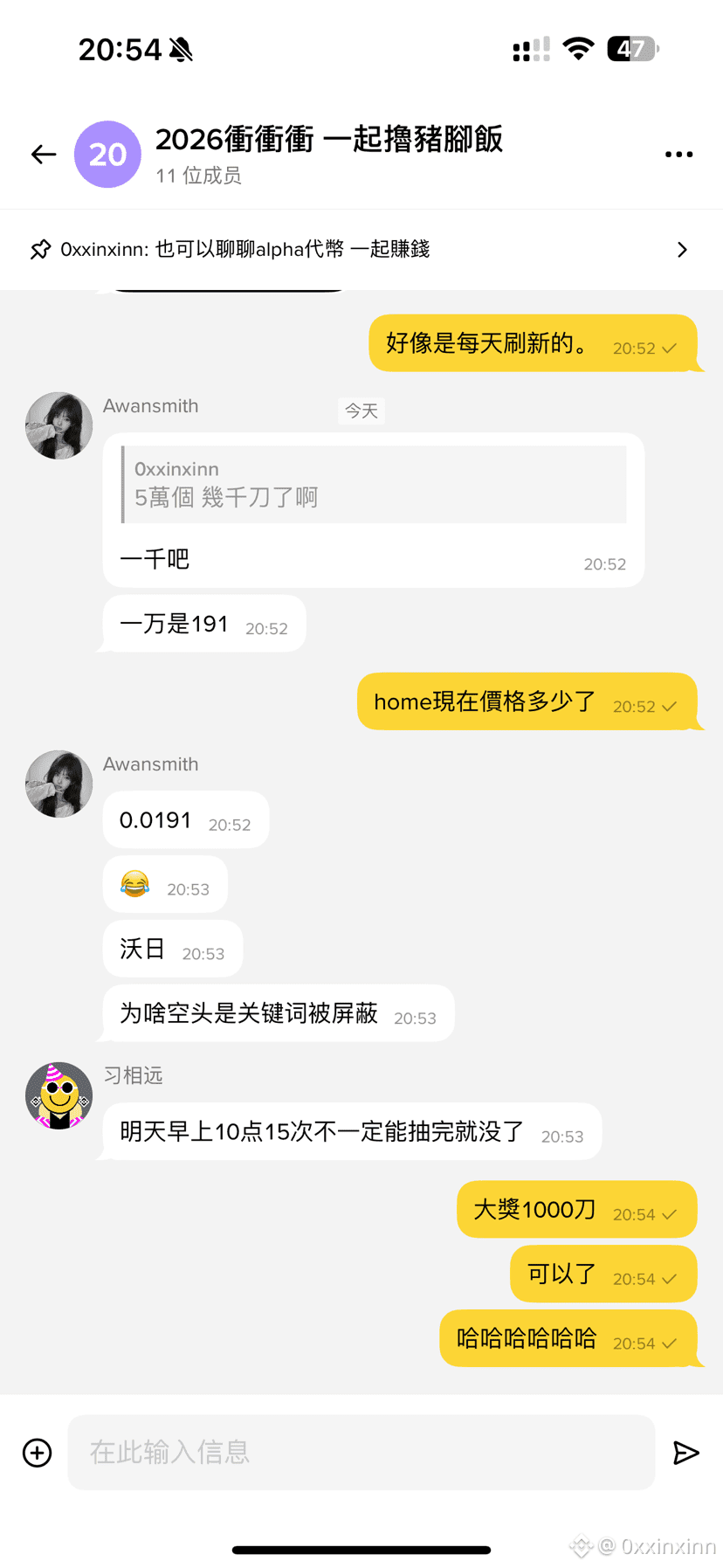
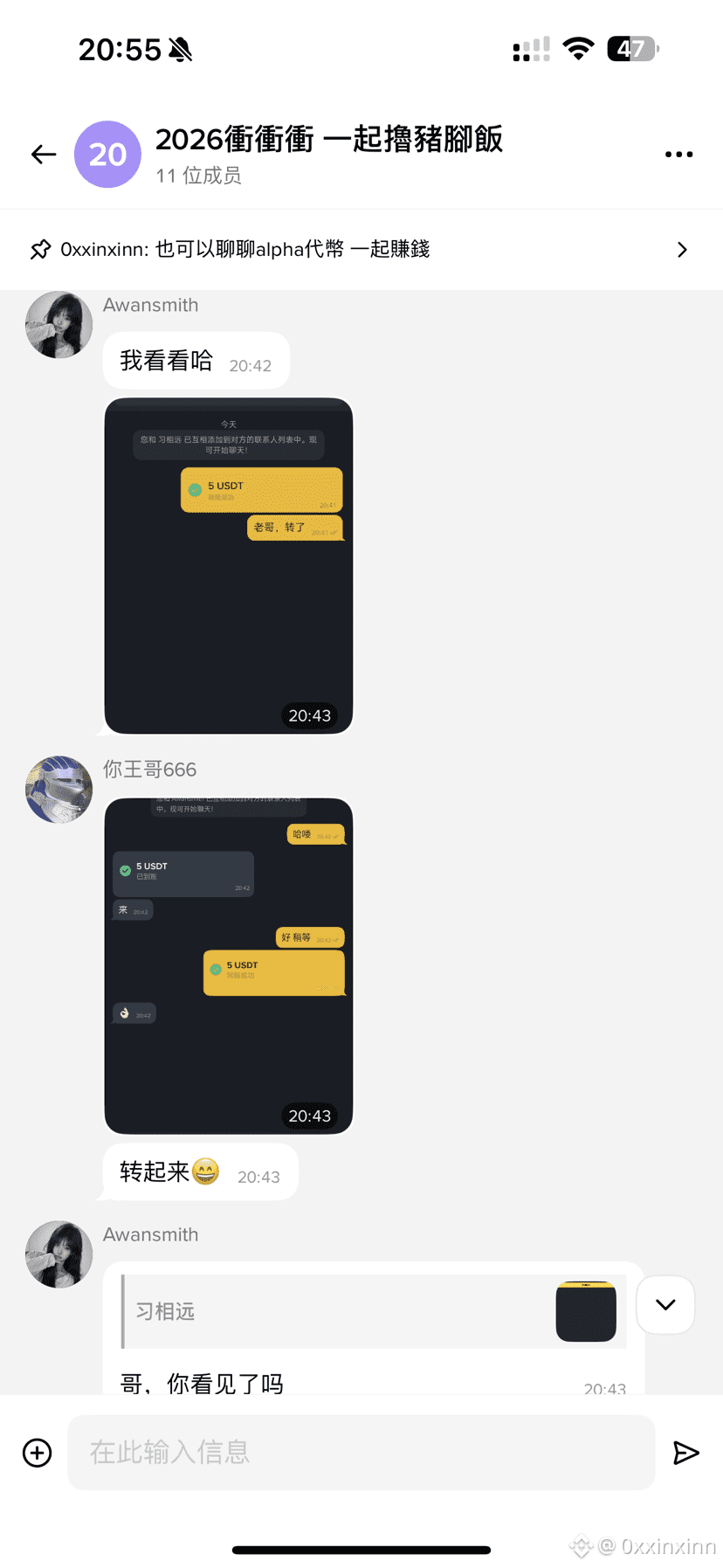
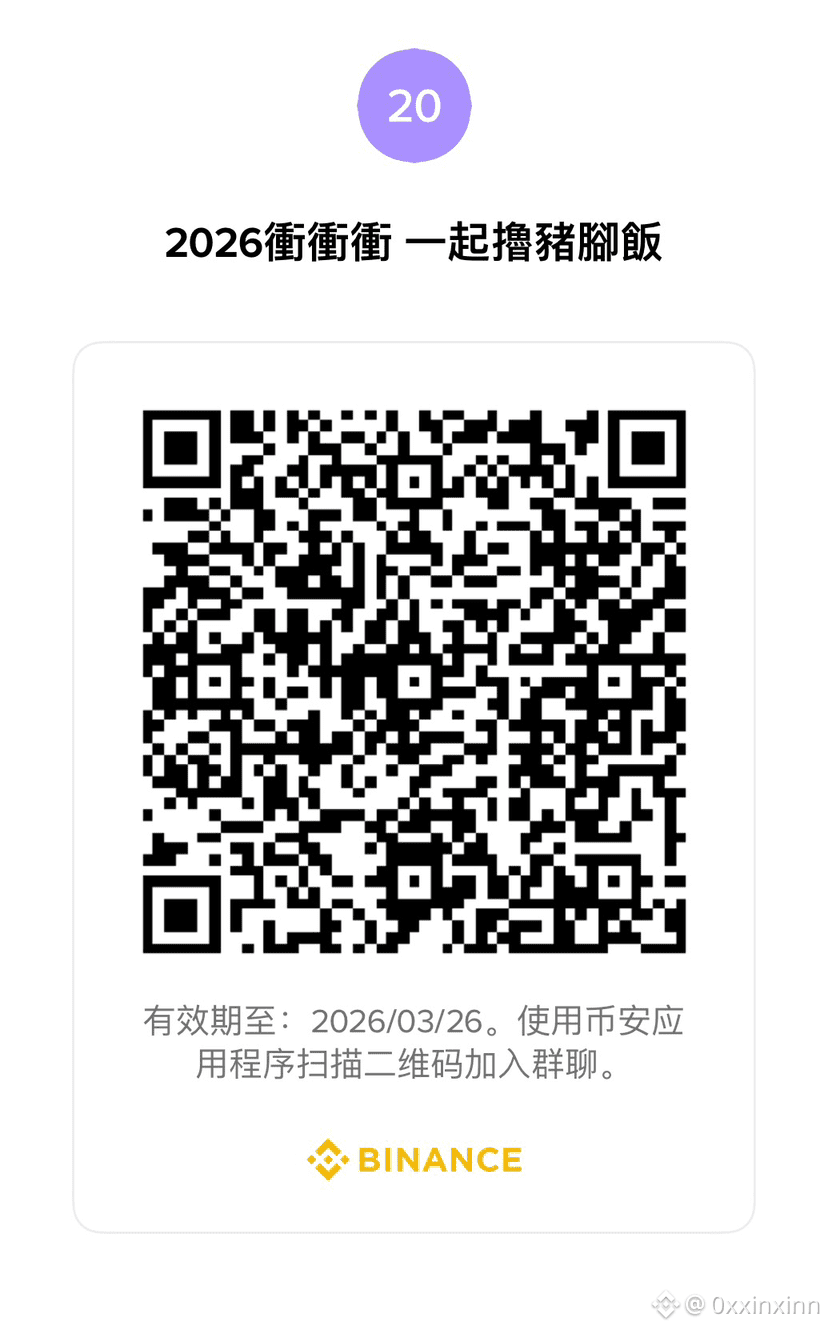
Welcome everyone to join my Binance chat room~~
We can discuss alpha tokens, chat casually, and have fun together✌️
Welcome everyone to join my Binance chat room~~
We can discuss alpha tokens, chat casually, and have fun together✌️
We can discuss alpha tokens, chat casually, and have fun together✌️
3
1
16
3.1k
·
--
Verified
$TRUMP $WIF $WLFI
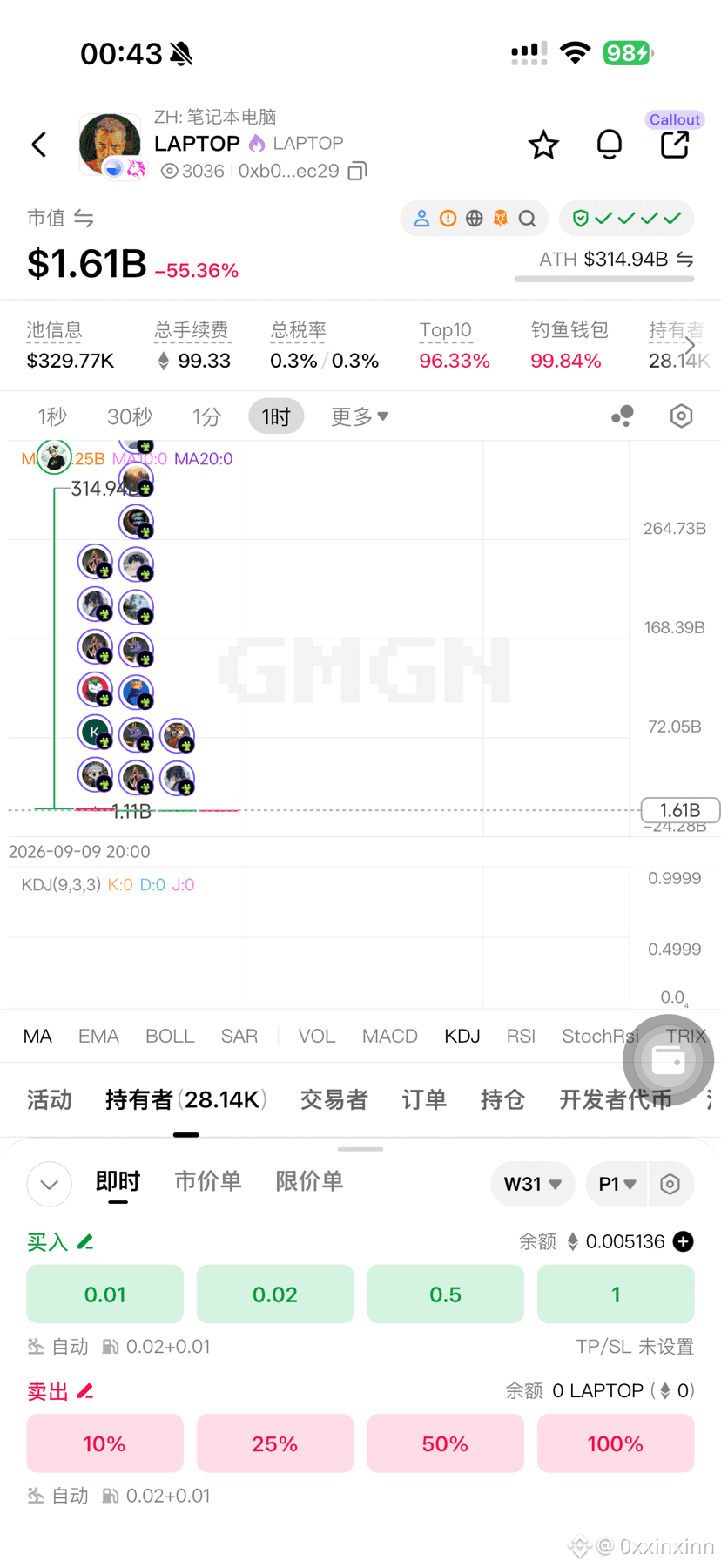
Biden’s son has issued coins; within an hour, it dropped 98%
Looks like Trump is still better
$TRUMP $WIF $WLFI
Biden’s son has issued coins; within an hour, it dropped 98%
Looks like Trump is still better
Biden’s son has issued coins; within an hour, it dropped 98%
Looks like Trump is still better
2
3
7.4k
·
--
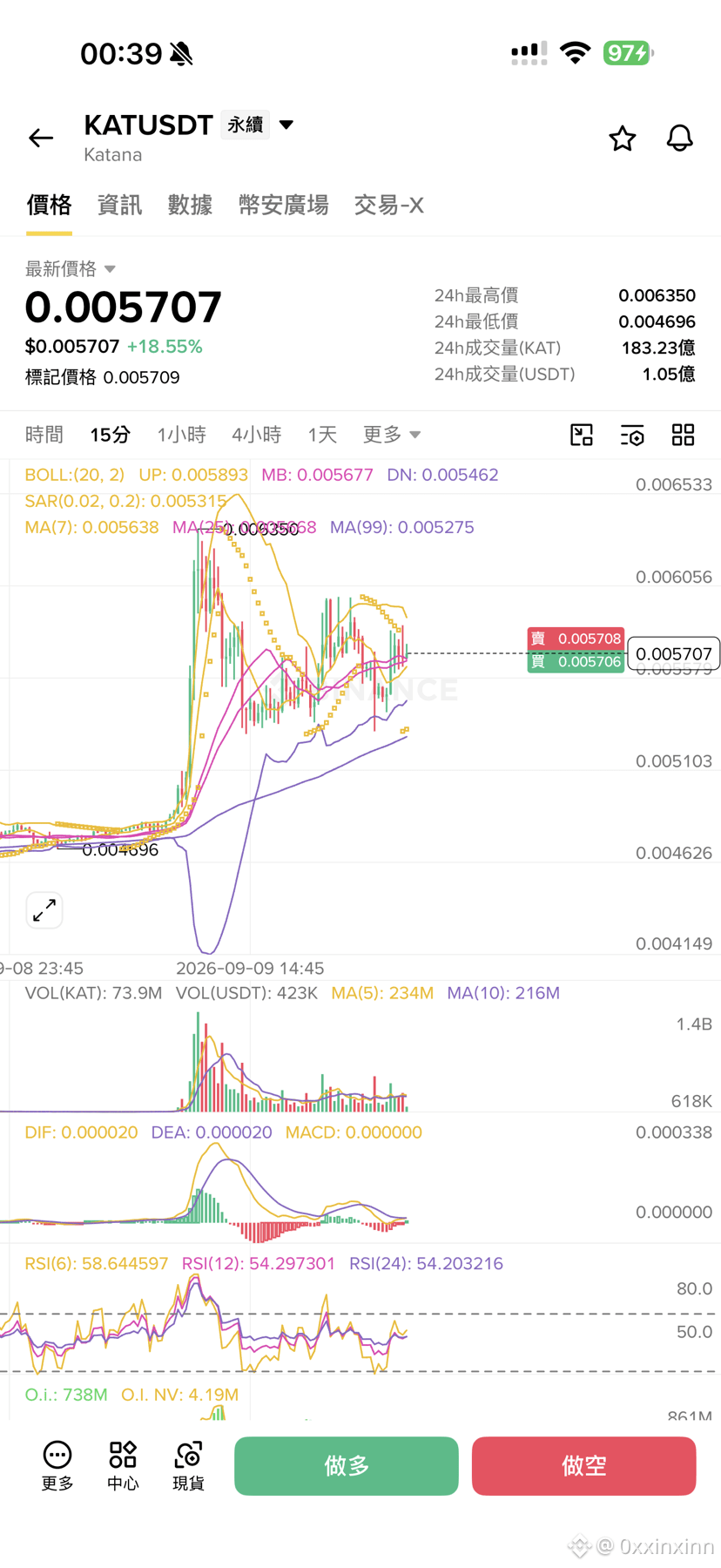
$KAT In the tenfold rise, I still have an air drop that hasn't been sold
$KAT In the tenfold rise, I still have an air drop that hasn't been sold
2.9k
·
--
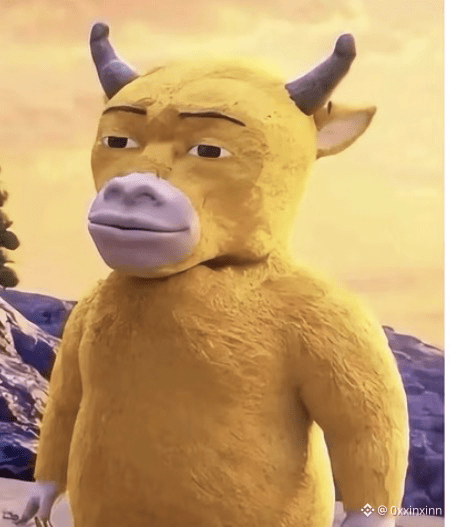
$USELESS $牛来 $4Stock You chase him, he falls, you cut him, he pulls, you chase again, he falls again, you cut again, he pulls
$USELESS $牛来 $4Stock You chase him, he falls, you cut him, he pulls, you chase again, he falls again, you cut again, he pulls
1
3
1.6k
·
--
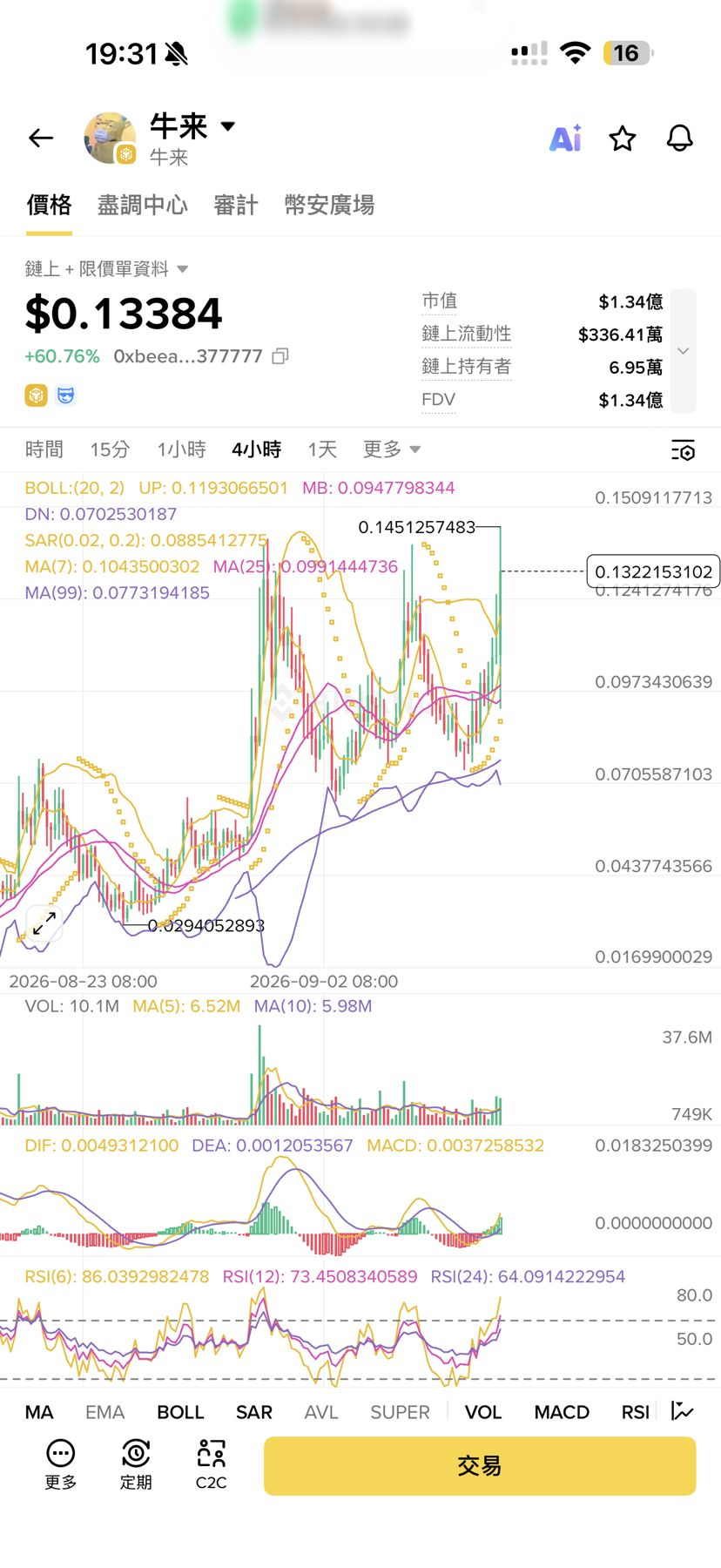
$牛来 is in stock 😂 Will the flood be released next?
$牛来 is in stock 😂 Will the flood be released next?
1
4.9k
·
--
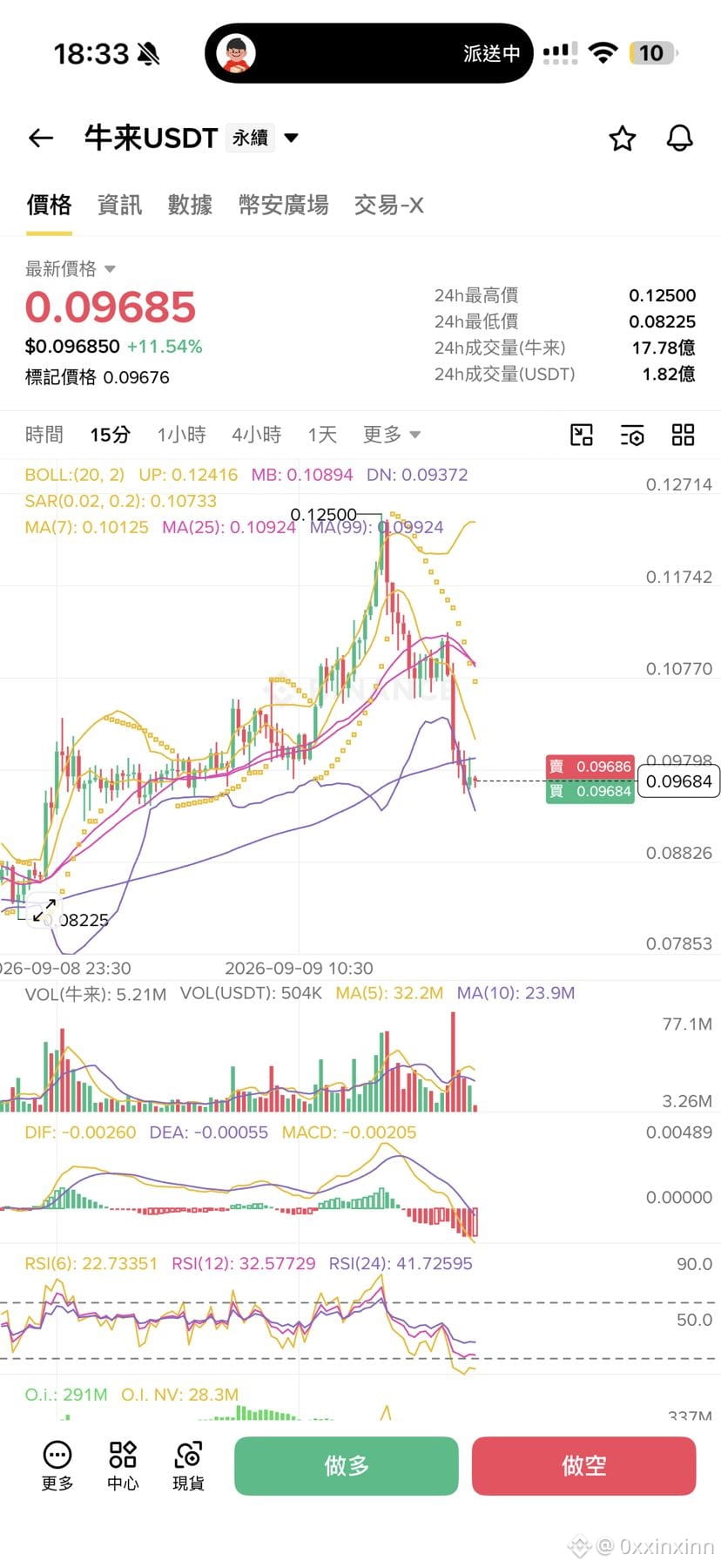
$牛来 walked through life's journey 😂
Bet on spot - price rising - no announcement - price falling - continue betting on spot - price rising - no announcement yet - price falling
$牛来 walked through life's journey 😂
Bet on spot - price rising - no announcement - price falling - continue betting on spot - price rising - no announcement yet - price falling
Bet on spot - price rising - no announcement - price falling - continue betting on spot - price rising - no announcement yet - price falling
1
1
3.2k
·
--
150
·
--
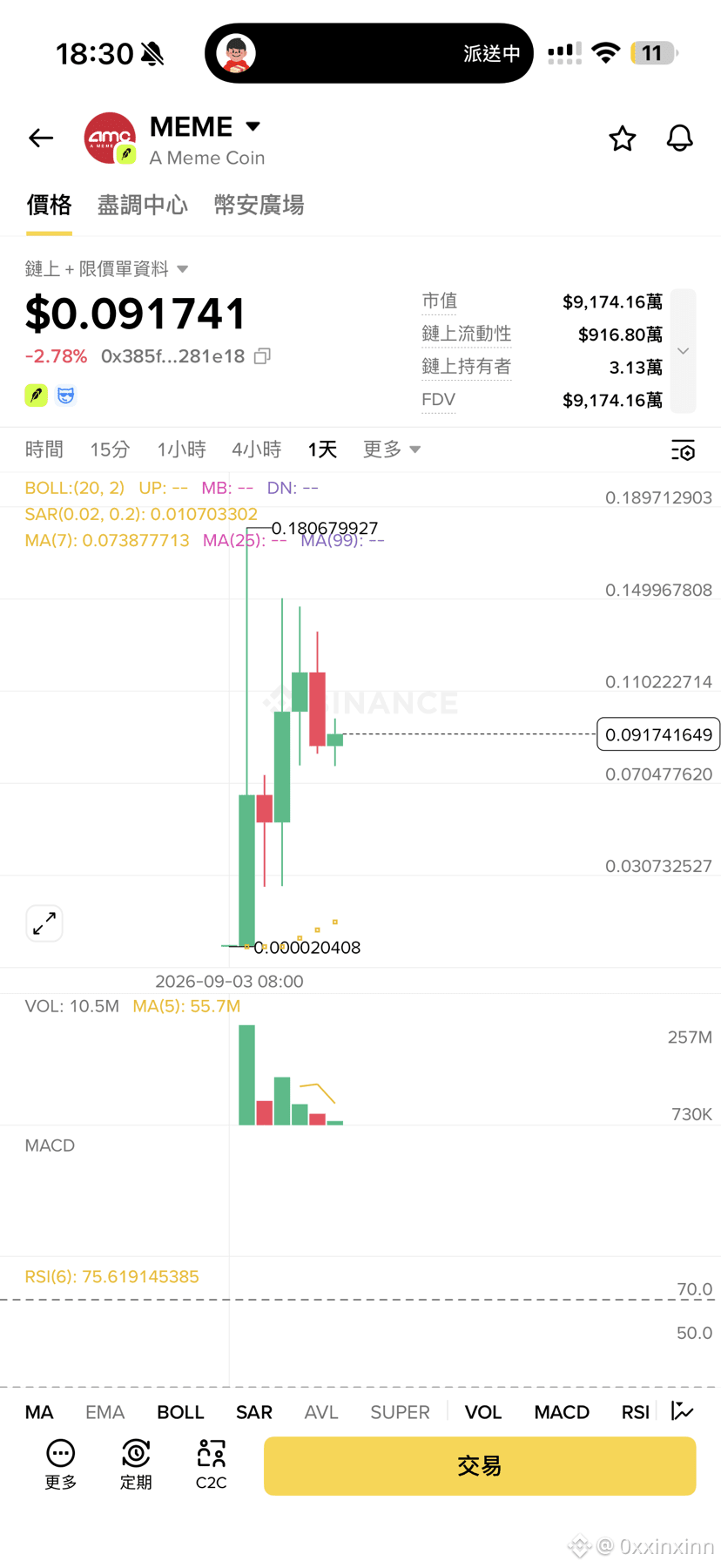
$MEME is awesome. Alpha speedrun completed quickly.
$MEME is awesome. Alpha speedrun completed quickly.
1
4.5k
·
--
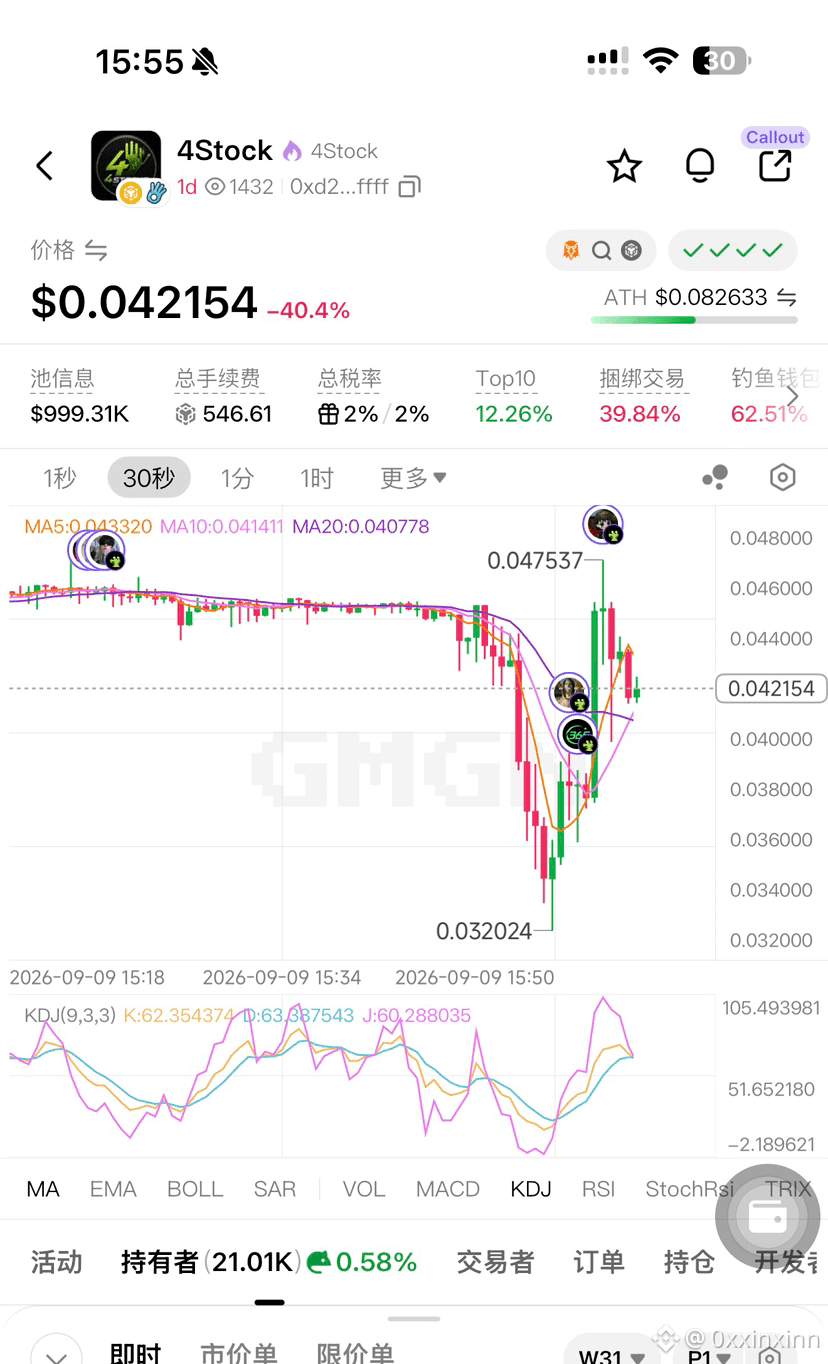
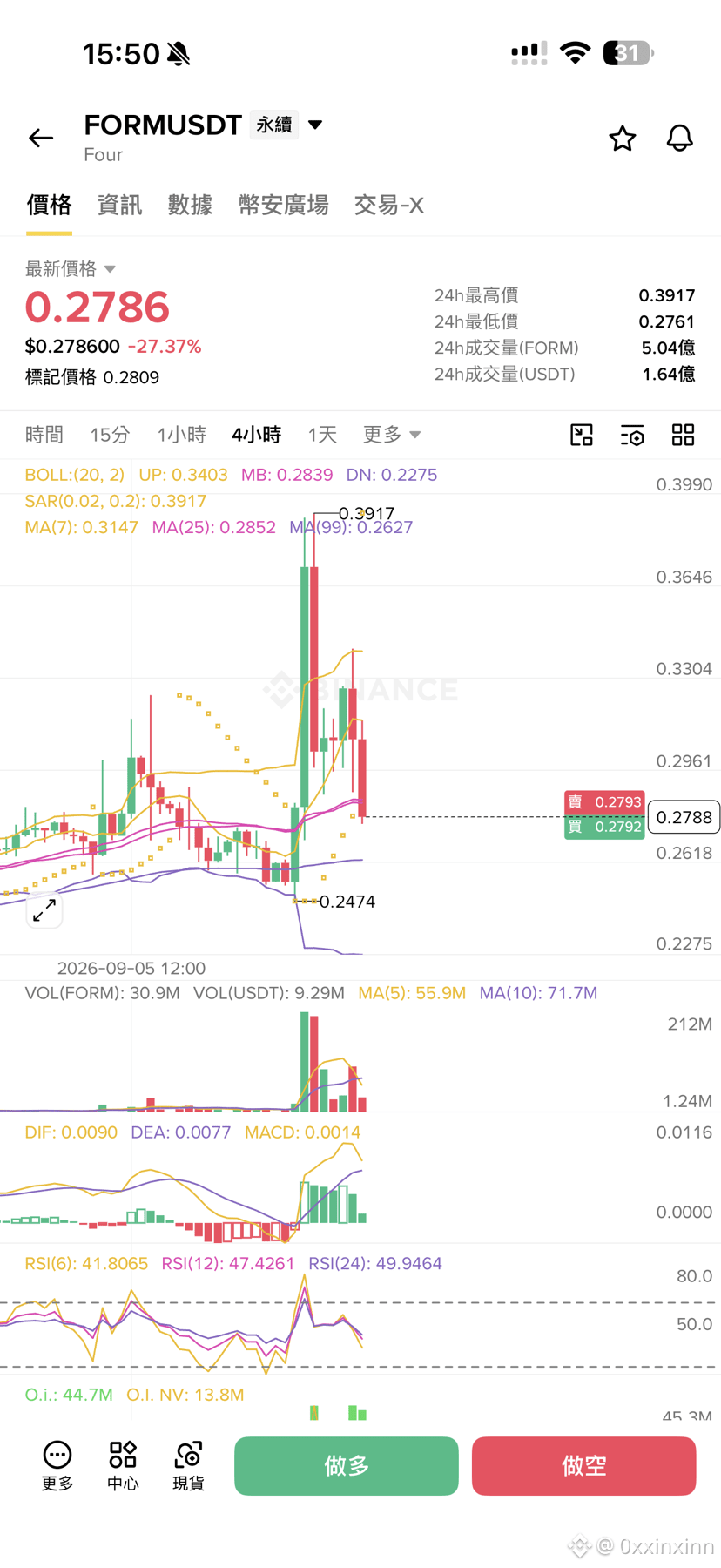
$FORM $4 $MarsCoin one sister one concern master one project's life and death roller coaster 🤣🤣🤣
$FORM $4 $MarsCoin one sister one concern master one project's life and death roller coaster 🤣🤣🤣
1
6k
·
--
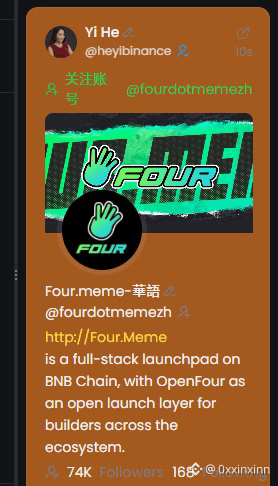
$FORM was really something—so much effort. Everyone’s paying attention again… wait, they said it was an accidental tap 😂
$FORM was really something—so much effort. Everyone’s paying attention again… wait, they said it was an accidental tap 😂
2
1
10.9k
·
--
$FORM I went—sis removed her follow
@heyibinance unfollowed: Four (@Four_FORM_)
2026-09-09 15:48:46
*x**Four_FORM_
$FORM I went—sis removed her follow
@heyibinance unfollowed: Four (@Four_FORM_)
2026-09-09 15:48:46
*x**Four_FORM_
@heyibinance unfollowed: Four (@Four_FORM_)
2026-09-09 15:48:46
*x**Four_FORM_
2.4k
·
--
30D trade $BNB 2.7K USDT
You think you’re trading in the market—but you may actually be repeating your own emotions.
$BTC $ETH $BNB @BNB_Chain @Binance_Square_Official
I built a Binance Agent OS Demo: TradeDNA.
It doesn’t guess whether BTC will go up or down, and it doesn’t auto-place orders for you.
What it does is harsher—and more useful—a different thing:
figure out what’s really happening each time you chase the price up, sell in panic, double down after losses, or stubbornly hold your position.
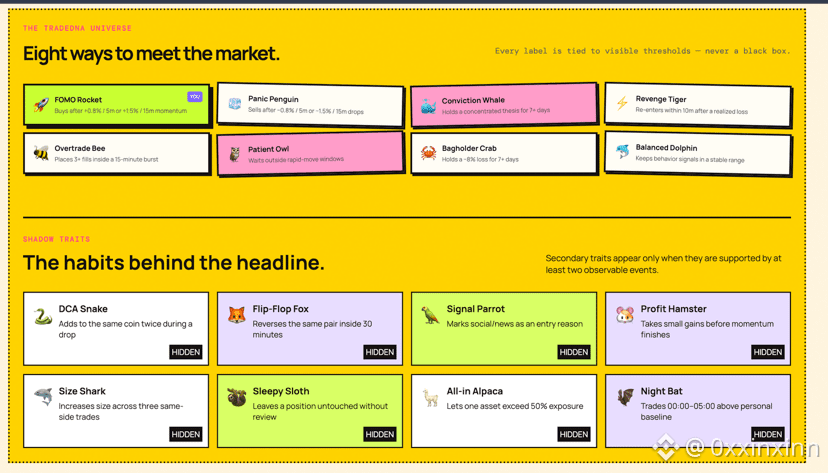
TradeDNA turns trading behavior into 8 personalities:
🚀 FOMO Rocket|price-chasing rocket
🧊 Panic Penguin|panic penguin
⚡ Revenge Tiger|revenge tiger
🦀 Bagholder Crab|stubborn crab
And there are hidden personalities too: averaging-down snake, adding-more shark, leveraged lizard, and liquidation moth.
Each label isn’t just a label—it comes with:
- 1 / 5 / 15 minutes of market context;
- behavior signal scoring;
- a snapshot of the trading outcome;
- an AI Coach Note;
- one rule to follow the next time the impulse hits.
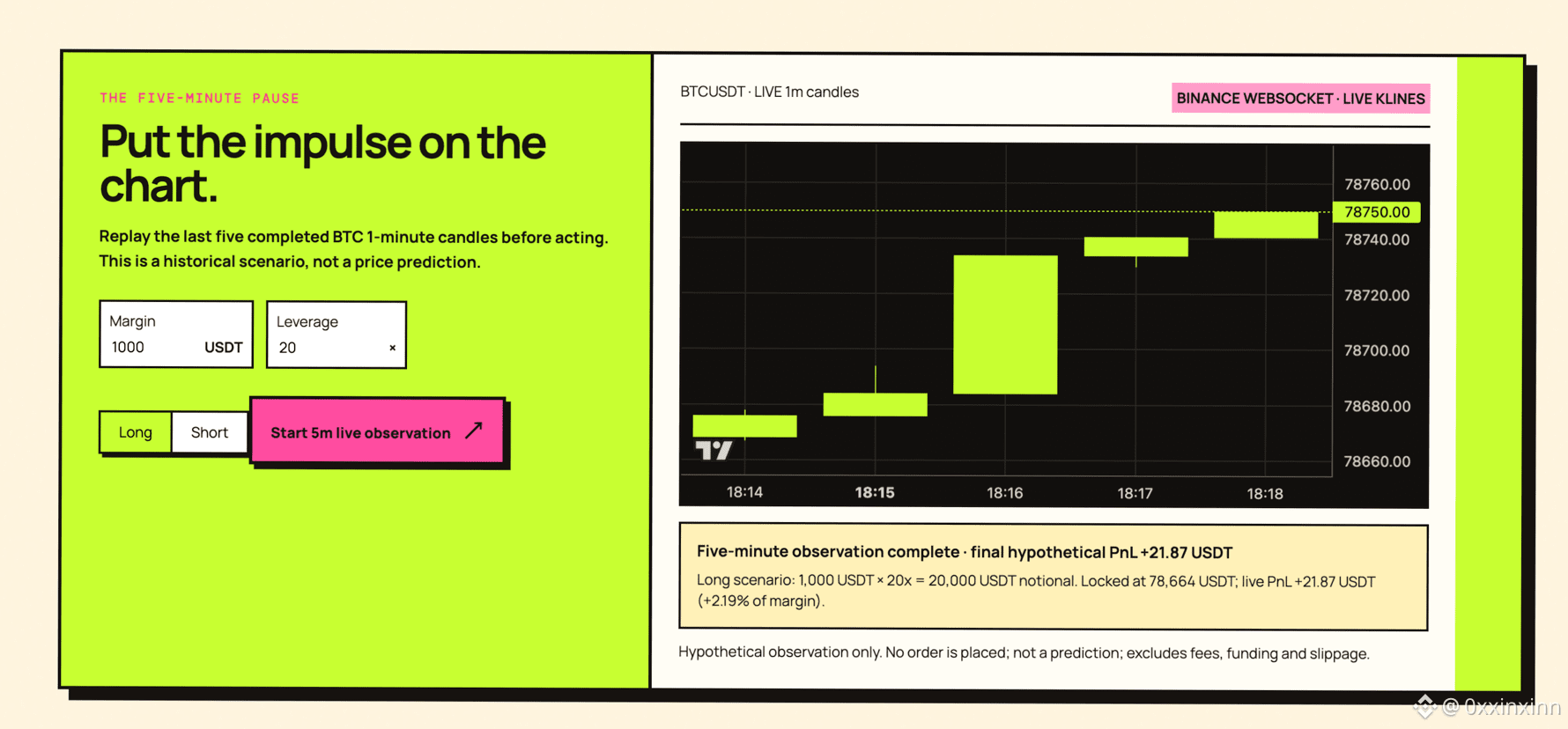
I also made a Spot / Futures dual mode, plus a “5-minute calm observer” for BTC instant K-lines:
choose Long / Short, using a hypothetical position of 1,000 USDT × 20x—then simulate the PnL under high leverage after 5 minutes.
The most interesting future feature is TradeDNA Twin|trading doppelgänger:
It will learn your risk benchmarks and your behavioral traps; after connecting to Binance MCP’s read-only account data in the future, it will help turn every “I can’t help myself” into verifiable, improvable data.
Not to let AI trade for you.
It’s to wake up the version of you from the past—right when you most want to press the button.
🌐 Demo:https://tranddna.vercel.app
💻 GitHub:https://github.com/lababaa/tradedna
You think you’re trading in the market—but you may actually be repeating your own emotions.
$BTC $ETH $BNB @BNB Chain @Binance Square Official
I built a Binance Agent OS Demo: TradeDNA.
It doesn’t guess whether BTC will go up or down, and it doesn’t auto-place orders for you.
What it does is harsher—and more useful—a different thing:
figure out what’s really happening each time you chase the price up, sell in panic, double down after losses, or stubbornly hold your position.
TradeDNA turns trading behavior into 8 personalities:
🚀 FOMO Rocket|price-chasing rocket
🧊 Panic Penguin|panic penguin
⚡ Revenge Tiger|revenge tiger
🦀 Bagholder Crab|stubborn crab
And there are hidden personalities too: averaging-down snake, adding-more shark, leveraged lizard, and liquidation moth.
Each label isn’t just a label—it comes with:
- 1 / 5 / 15 minutes of market context;
- behavior signal scoring;
- a snapshot of the trading outcome;
- an AI Coach Note;
- one rule to follow the next time the impulse hits.
I also made a Spot / Futures dual mode, plus a “5-minute calm observer” for BTC instant K-lines:
choose Long / Short, using a hypothetical position of 1,000 USDT × 20x—then simulate the PnL under high leverage after 5 minutes.
The most interesting future feature is TradeDNA Twin|trading doppelgänger:
It will learn your risk benchmarks and your behavioral traps; after connecting to Binance MCP’s read-only account data in the future, it will help turn every “I can’t help myself” into verifiable, improvable data.
Not to let AI trade for you.
It’s to wake up the version of you from the past—right when you most want to press the button.
🌐 Demo:https://tranddna.vercel.app
💻 GitHub:https://github.com/lababaa/tradedna
$BTC $ETH $BNB @BNB Chain @Binance Square Official
I built a Binance Agent OS Demo: TradeDNA.
It doesn’t guess whether BTC will go up or down, and it doesn’t auto-place orders for you.
What it does is harsher—and more useful—a different thing:
figure out what’s really happening each time you chase the price up, sell in panic, double down after losses, or stubbornly hold your position.
TradeDNA turns trading behavior into 8 personalities:
🚀 FOMO Rocket|price-chasing rocket
🧊 Panic Penguin|panic penguin
⚡ Revenge Tiger|revenge tiger
🦀 Bagholder Crab|stubborn crab
And there are hidden personalities too: averaging-down snake, adding-more shark, leveraged lizard, and liquidation moth.
Each label isn’t just a label—it comes with:
- 1 / 5 / 15 minutes of market context;
- behavior signal scoring;
- a snapshot of the trading outcome;
- an AI Coach Note;
- one rule to follow the next time the impulse hits.
I also made a Spot / Futures dual mode, plus a “5-minute calm observer” for BTC instant K-lines:
choose Long / Short, using a hypothetical position of 1,000 USDT × 20x—then simulate the PnL under high leverage after 5 minutes.
The most interesting future feature is TradeDNA Twin|trading doppelgänger:
It will learn your risk benchmarks and your behavioral traps; after connecting to Binance MCP’s read-only account data in the future, it will help turn every “I can’t help myself” into verifiable, improvable data.
Not to let AI trade for you.
It’s to wake up the version of you from the past—right when you most want to press the button.
🌐 Demo:https://tranddna.vercel.app
💻 GitHub:https://github.com/lababaa/tradedna
257
·
--
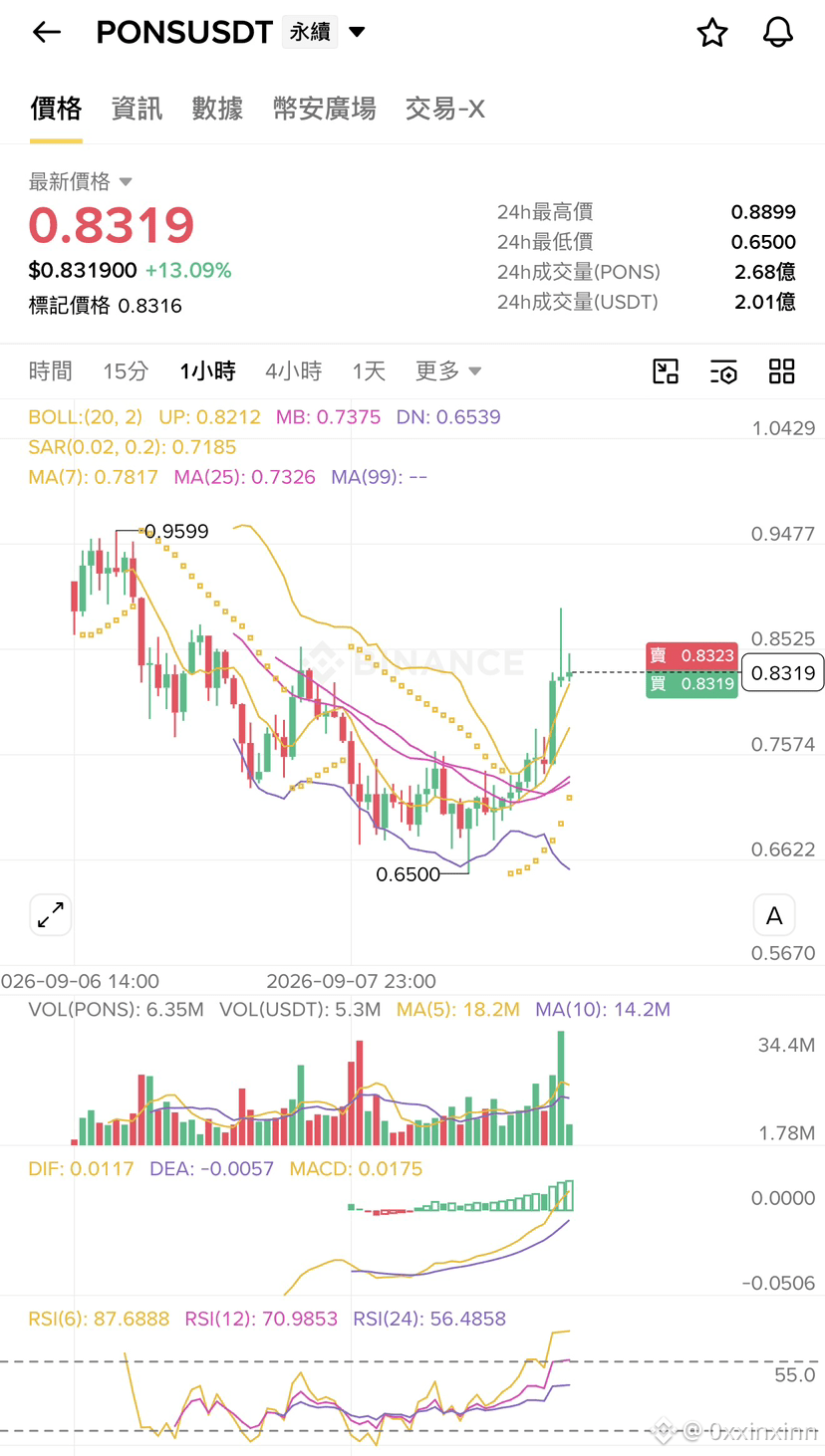
$PONS has a foreigner who has a few tens of millions of dollars more than him—looks like he’s about to go boom
#AERO单日上涨17%
$PONS has a foreigner who has a few tens of millions of dollars more than him—looks like he’s about to go boom
#AERO单日上涨17%
#AERO单日上涨17%
2.5k
·
--
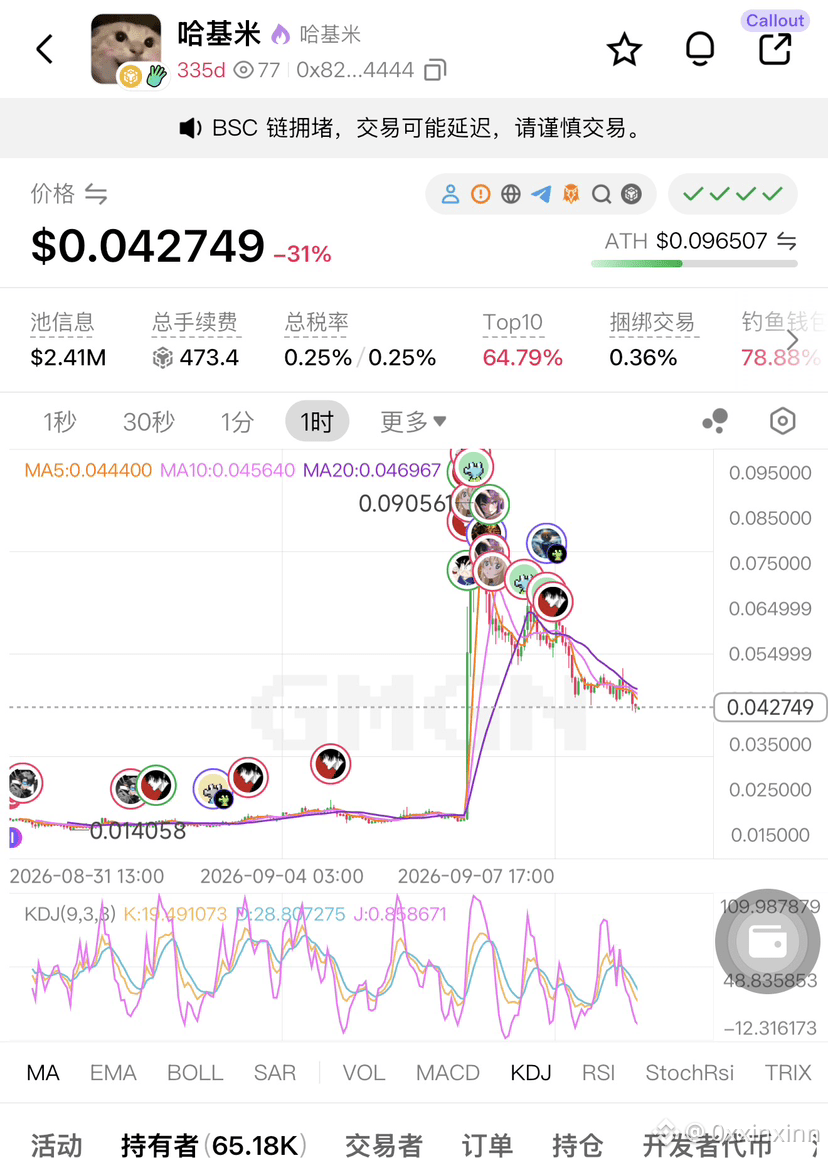
$哈基米 A group bought 10k worth of pants pockets in October last year, sold everything off and lost it all. Since then, they haven't dared to think about it.
$哈基米 A group bought 10k worth of pants pockets in October last year, sold everything off and lost it all. Since then, they haven't dared to think about it.
8
1
6
43.8k
·
--
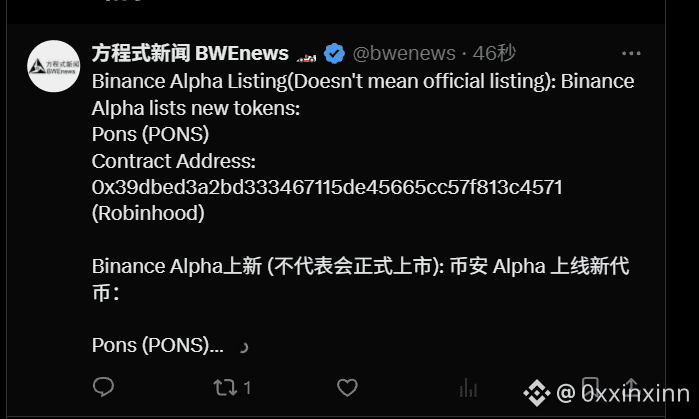
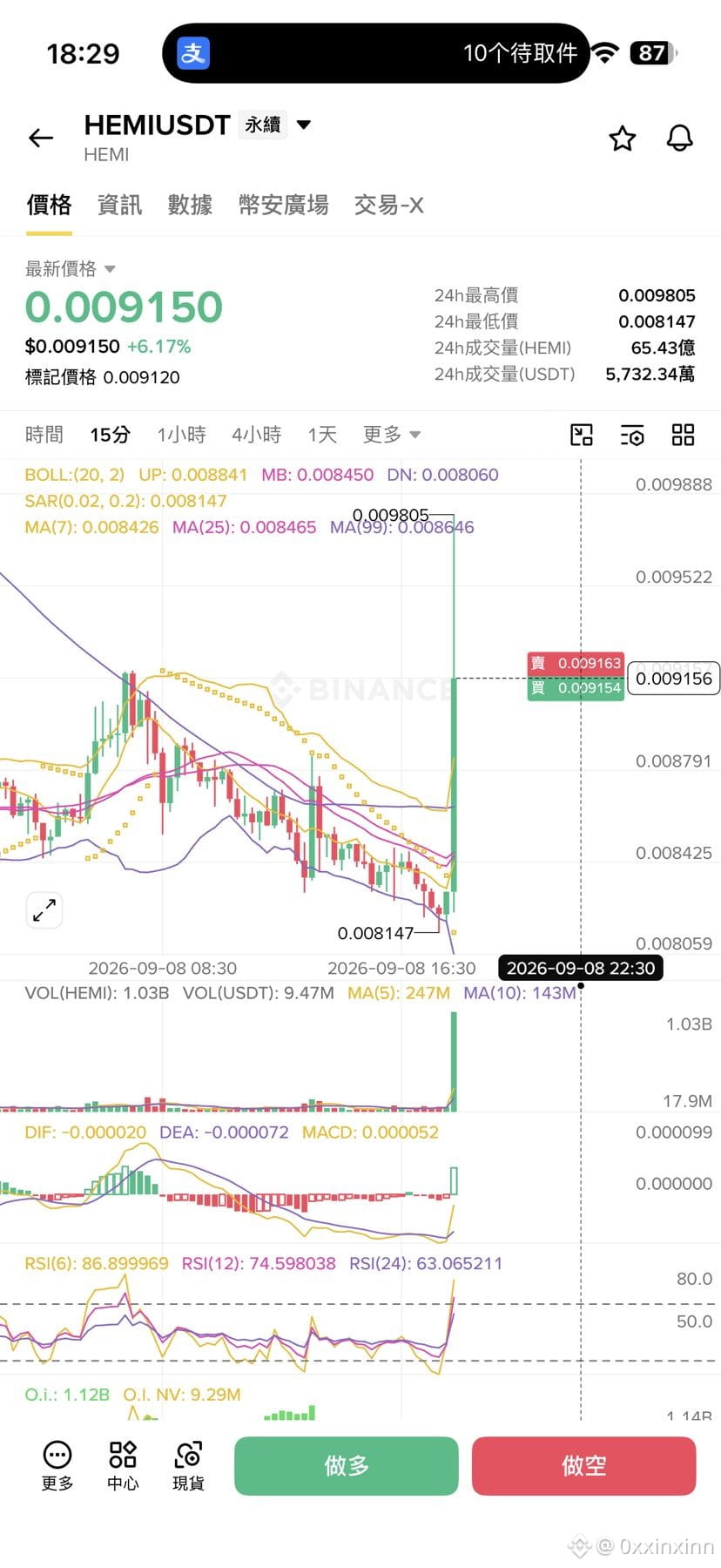
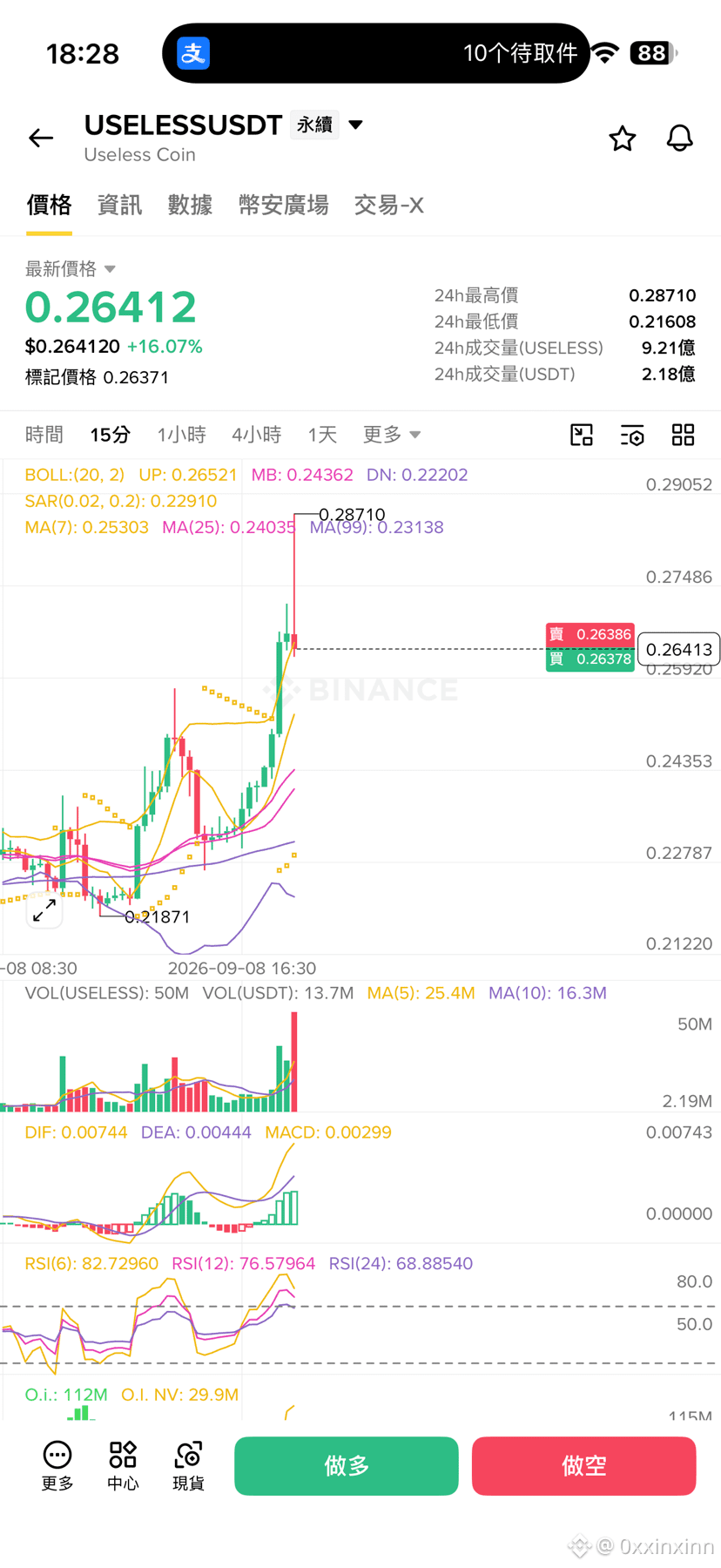
$PONS Wasn’t this already on contract? Why is it alpha again? Can the next step be available for immediate delivery?
$PONS Wasn’t this already on contract? Why is it alpha again? Can the next step be available for immediate delivery?
1
1
9.1k
·
--
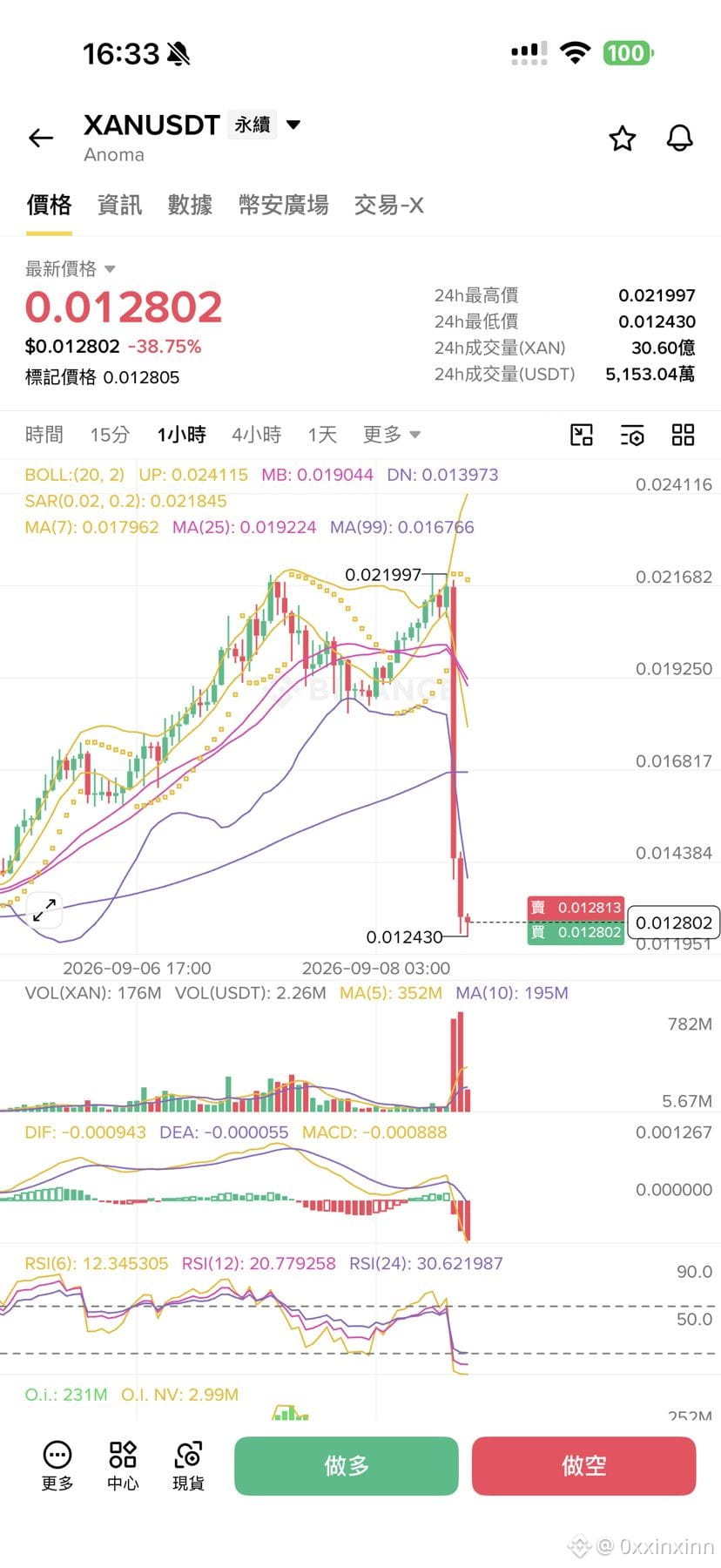
$XAN 666 cs is truly not disappointing—back to the starting point in one go
$XAN 666 cs is truly not disappointing—back to the starting point in one go
709
·
--
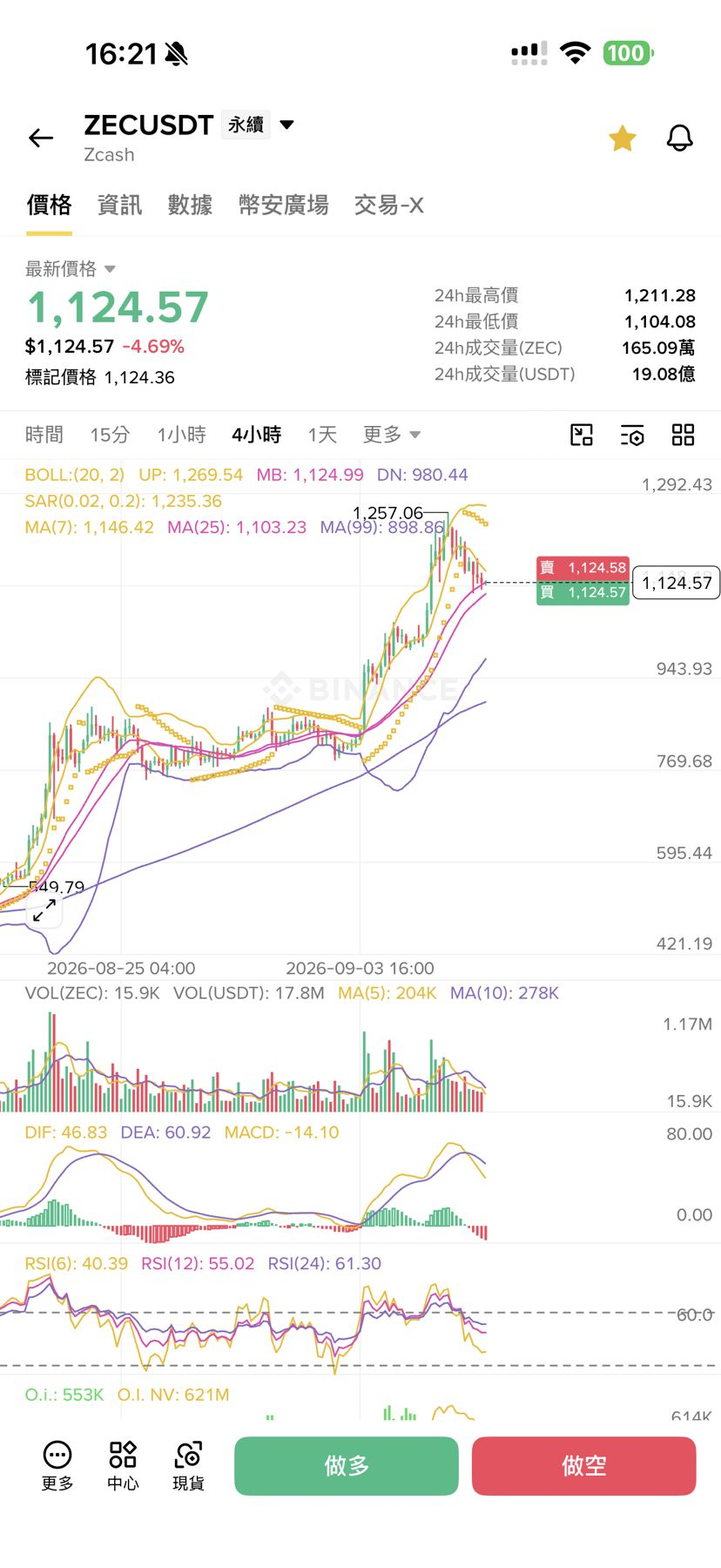
30D trade $ZEC 41.8K USDT
$ZEC zec This chain is too hard to play. Nothing happens after you go in.
The coin price is surging hard. Can we get something better, a good platform?
$ZEC zec This chain is too hard to play. Nothing happens after you go in.
The coin price is surging hard. Can we get something better, a good platform?
The coin price is surging hard. Can we get something better, a good platform?
1
1
3.4k
·
--
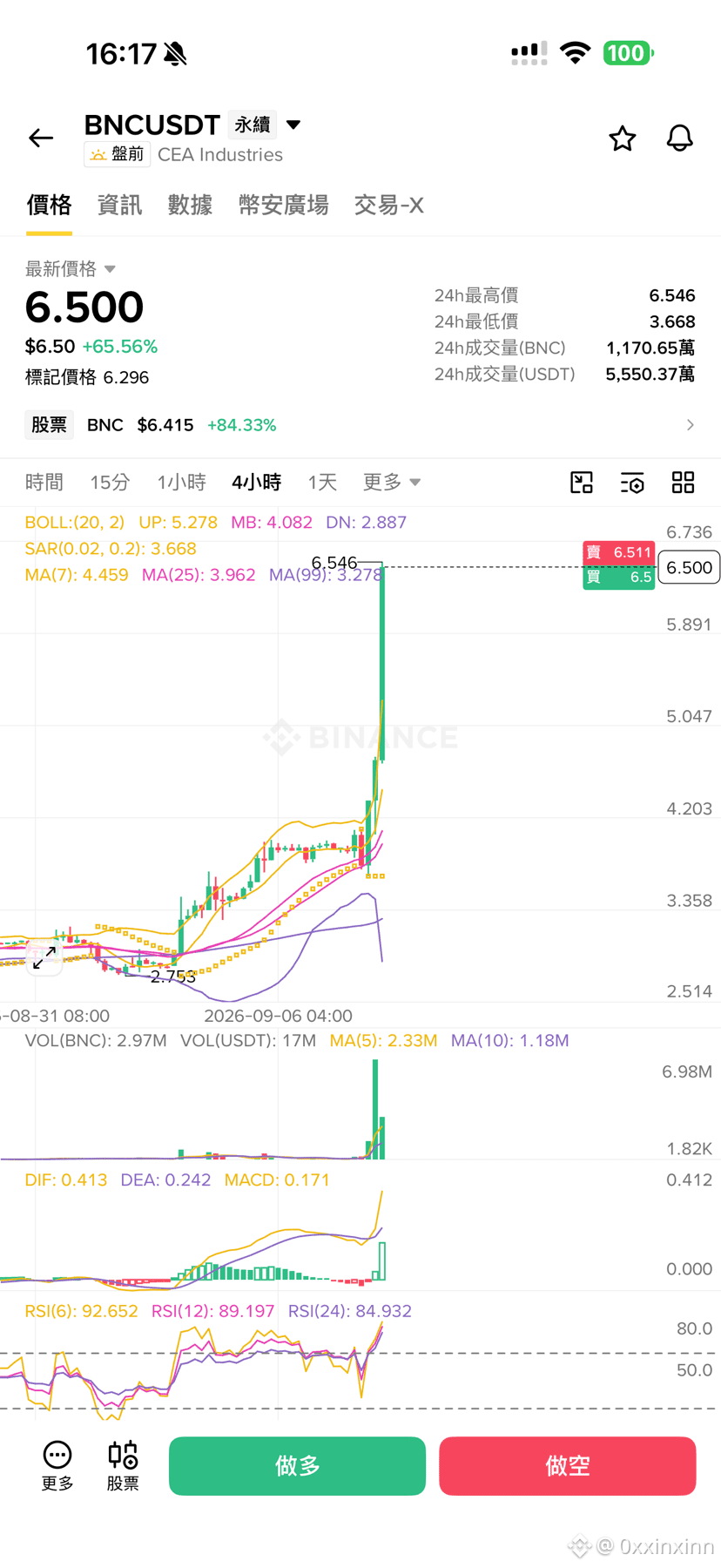
$BNC $BNB This has all been brought up—so awesome
The wealth-building effect is too strong
$BNC $BNB This has all been brought up—so awesome
The wealth-building effect is too strong
The wealth-building effect is too strong
1
6.8k
·
--
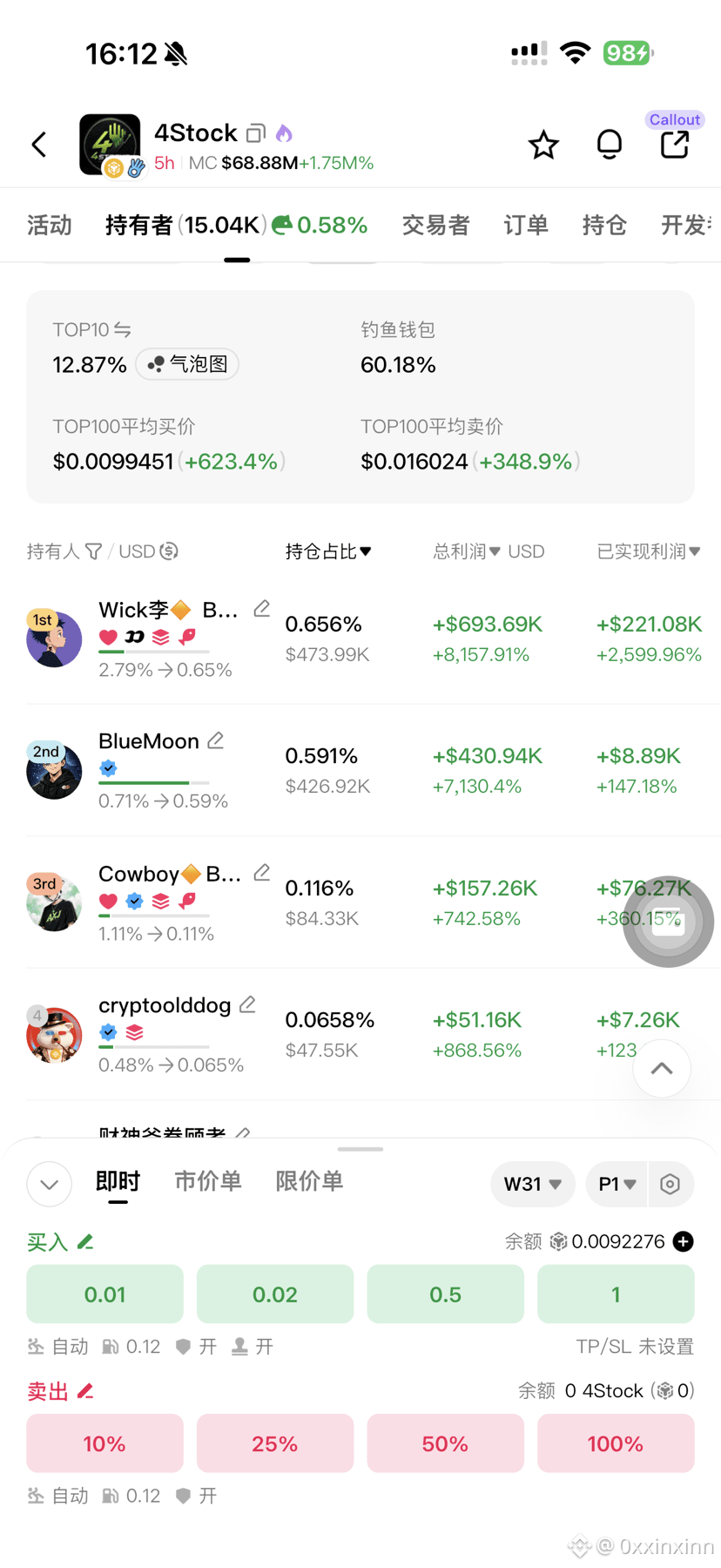
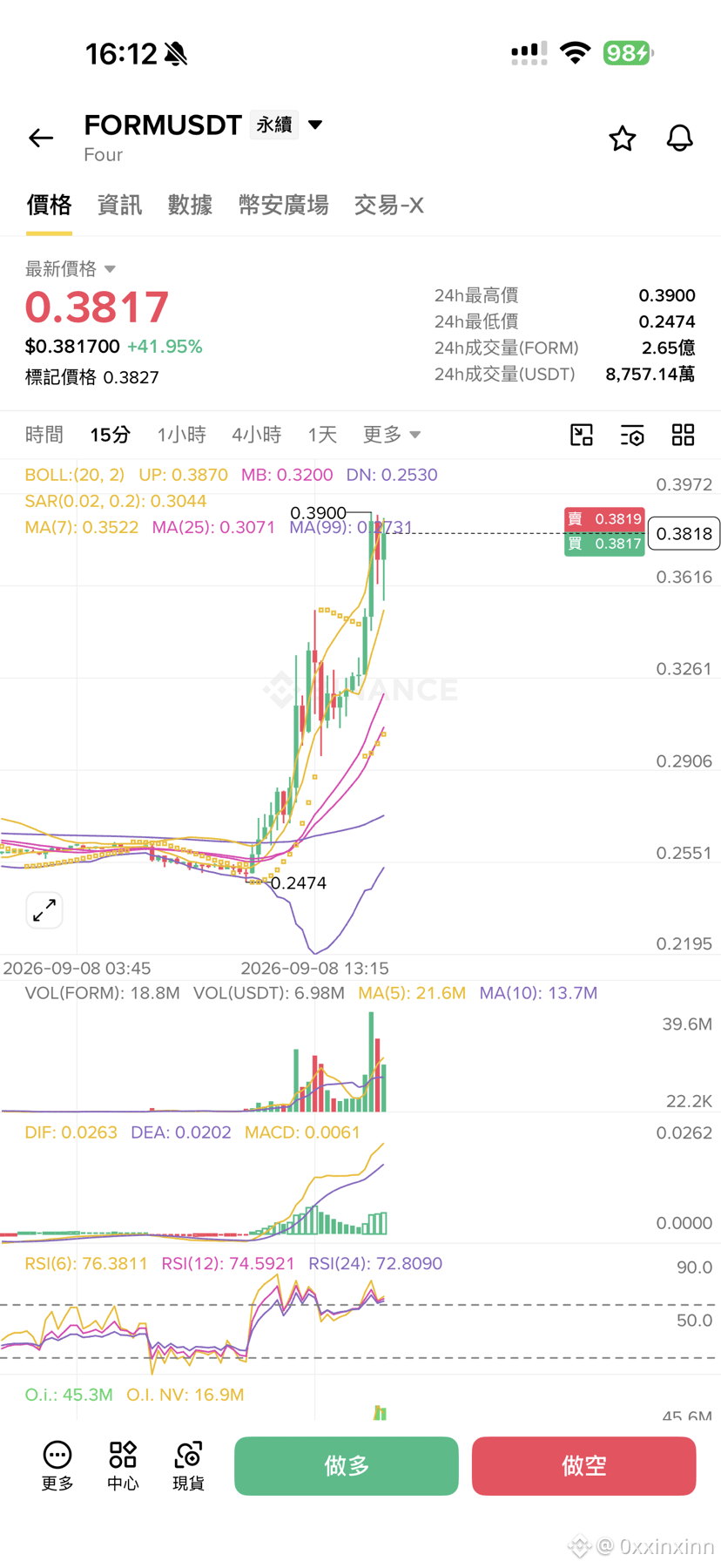
$FORM car head half a day and less than that earned several million
$FORM car head half a day and less than that earned several million
2
7k
Log in to explore more content
Join global crypto users on Binance Square
⚡️ Get latest and useful information about crypto.
💬 Trusted by the world’s largest crypto exchange.
👍 Discover real insights from verified creators.
Email / Phone number
Trending Topics
AppleDebutsFoldablePhone
0 views
9 Discussing
#AppleDebutsFoldablePhone
🍎 Apple just unfolded a new chapter. 📱🔥
Foldable phones aren’t new…
But when Apple enters the game, the entire market starts watching. 👀
This isn’t just another iPhone launch —
it’s a signal that foldables could be the next major smartphone battleground. ⚡
Now I’m curious…
Will Apple redefine foldables, or simply join the race? 🤔
$AAPL.US $ZEC $BULLA
#Apple #iPhone #Tech #Innovation
Shourov Saha-01
·1 Likes
·22 views
US10YTreasuryYieldHitsHighestSinceNov2023
2,292 views
93 Discussing
USTreasuryToBuyBackUpTo$6BLongDatedDebt
8,205 views
124 Discussing