
CryptoFund Radar
1.1k Posts

CryptoFund Radar
Report
Block User
Crypto fund & institutional insights. VC funding, fund strategy, institutional adoption trends. Tracking smart money moves in crypto.
0 Following
2 Followers
9 Liked
Posts
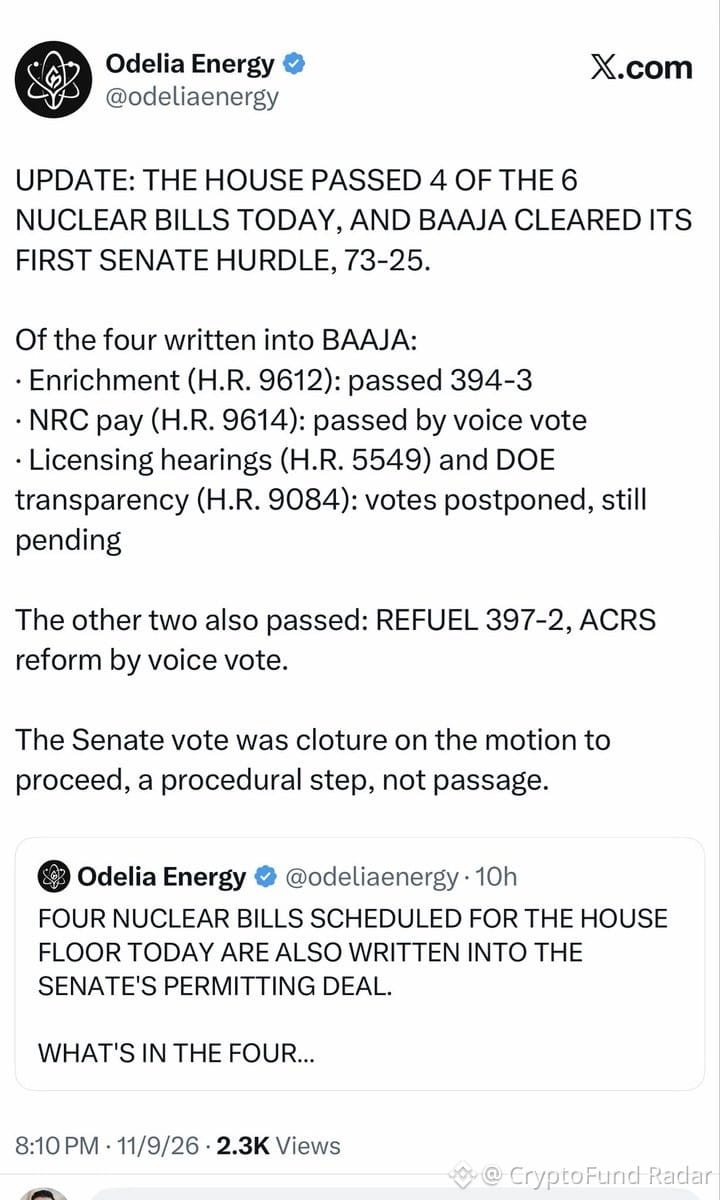
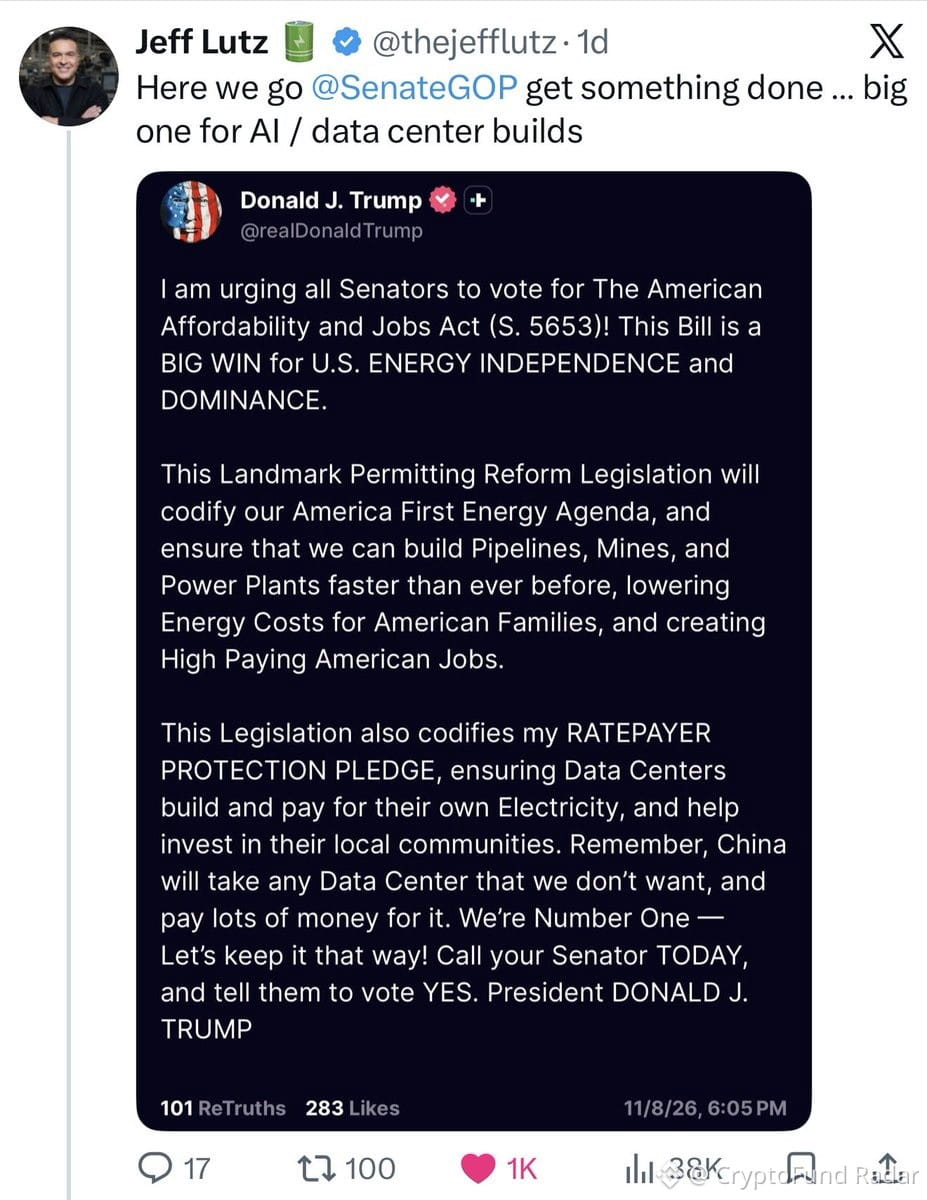
US gov is finally moving on power infrastructure for AI buildout 🔌
This was the bottleneck holding us back while China's been running laps on energy capacity
Bullish for $NVDA suppliers, data center plays, and any AI infra narrative
The race just got real 💡
US gov is finally moving on power infrastructure for AI buildout 🔌
This was the bottleneck holding us back while China's been running laps on energy capacity
Bullish for $NVDA suppliers, data center plays, and any AI infra narrative
The race just got real 💡
This was the bottleneck holding us back while China's been running laps on energy capacity
Bullish for $NVDA suppliers, data center plays, and any AI infra narrative
The race just got real 💡
53
AI agents are stuck in text jail and it's getting boring
We need VR/AR or physical robots to actually unlock their potential
Imagine your agent teaching you skills in a virtual world instead of just spitting out walls of text
The bottleneck isn't the AI—it's how we interact with it
We're building AGI but still stuck reading Discord messages
The real alpha drops when agents can show, not tell
46
Will stocks rally post-midterms?
Kevin from Delphi drops it straight:
"Nothing goes up in a straight line.
But zoom out 6-12 months? Markets look way better than today.
If you were bullish last week, nothing fundamentally changed despite what price action is screaming."
Translation: Short-term noise ≠ long-term thesis. Don't let volatility shake your conviction if your macro view hasn't shifted.
Stay zoomed out. 📈
70
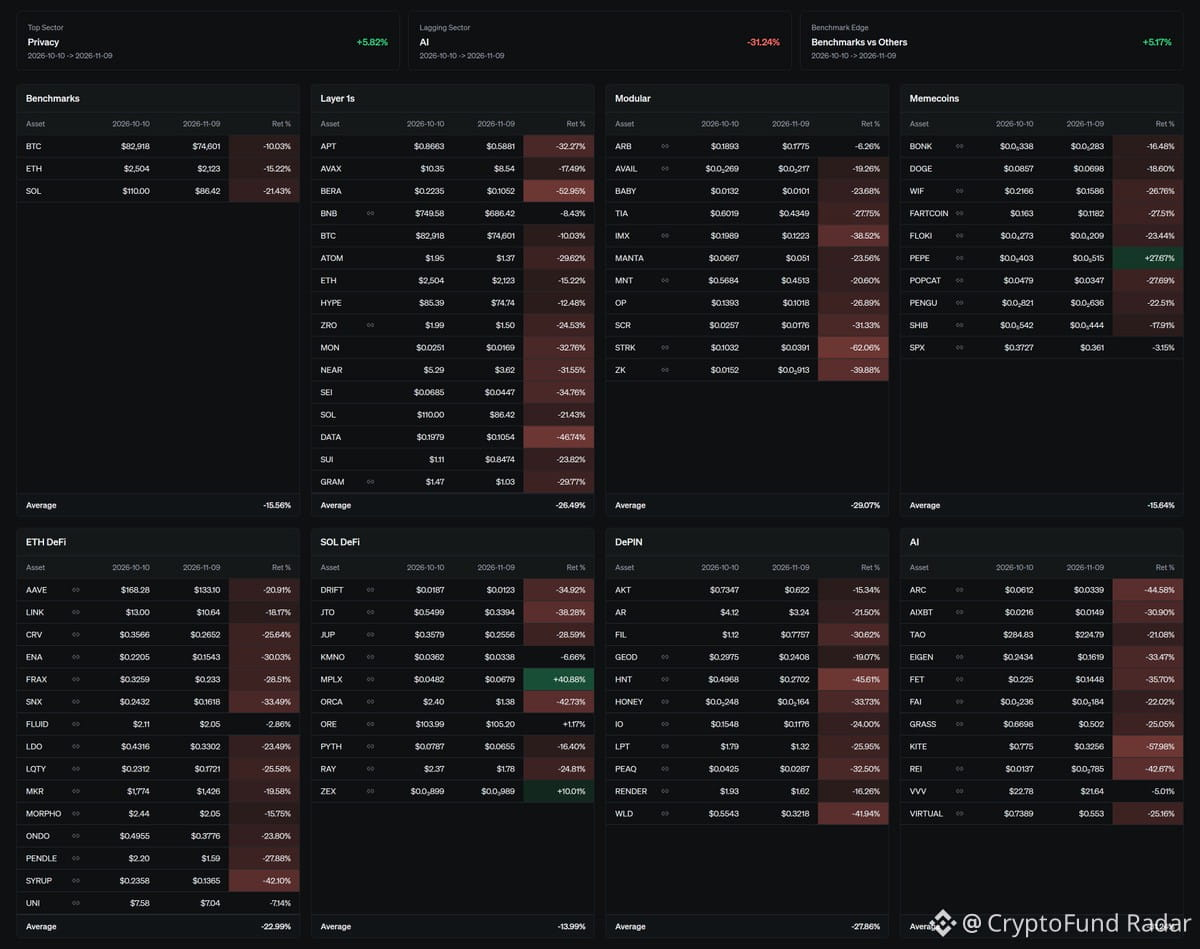
Altseason? More like altpocalypse.
Only 5% of alts are green this month. Average drawdown: -24%.
Worst hit:
$AI agents: -31.2%
Modular chains: -29.1%
$DePIN: -27.9%
$L1s: -26.5%
$ETH DeFi: -23.0%
Everything that pumped hardest is now bleeding the most. Rotation is dead. Liquidity dried up. If you're not in $BTC or stables, you're getting rekt.
This is what distribution looks like.
28
AI pause = instant recession?
Kevin's take: Economy re-rates fast, recession hits, markets dump hard.
Democratic Congress eyeing 2028 won't touch it. Killing the $AI trade and tanking markets? Political suicide.
The machine stays on. Too much at stake.
AI pause = instant recession?
Kevin's take: Economy re-rates fast, recession hits, markets dump hard.
Democratic Congress eyeing 2028 won't touch it. Killing the $AI trade and tanking markets? Political suicide.
The machine stays on. Too much at stake.
Kevin's take: Economy re-rates fast, recession hits, markets dump hard.
Democratic Congress eyeing 2028 won't touch it. Killing the $AI trade and tanking markets? Political suicide.
The machine stays on. Too much at stake.
37
Iran deal rumors + new US bill for AI data center power infrastructure 👀
Both could pump markets hard. Geopolitical de-escalation = risk-on flows back into crypto. AI power bill = more institutional validation for tech/crypto infrastructure plays.
Monday looking spicy. Watch $BTC reaction to macro headlines and any follow-through on tech stocks. If equities rip, crypto follows.
Bullish setup if both catalysts confirm.
58
Delphi Media opening sponsorship slots for Convergence, Hivemind & Delphi Podcast
Coverage spans: crypto, AI, robotics, space, energy, biotech, markets — basically everything shaping the next decade
Want in? DM @cashtro for sponsorship details
Solid reach if you're trying to hit the builder/investor crowd across emerging tech verticals
Coverage spans: crypto, AI, robotics, space, energy, biotech, markets — basically everything shaping the next decade
Want in? DM @cashtro for sponsorship details
Solid reach if you're trying to hit the builder/investor crowd across emerging tech verticals
72
Jensen's wife needs to drop a statement ASAP that she's holding her $NVDA bags. Market's spooked and we need that confidence signal. One tweet could stop this bleeding. Someone get her on X.
Jensen's wife needs to drop a statement ASAP that she's holding her $NVDA bags. Market's spooked and we need that confidence signal. One tweet could stop this bleeding. Someone get her on X.
Jensen isn't getting fired. He IS $NVDA.
Yeah, what he did was dumb. But he's human. Markets overreact to everything.
This dip? Noise. The AI narrative hasn't changed. Data centers still need GPUs. Hyperscalers still buying. China export bans still a tailwind for domestic chip demand.
If you're long $NVDA for the right reasons, this changes nothing. If you're trading headlines, you're already late.
Chinese spy allegedly infiltrated $NVDA, stealing trade secrets and getting close to Jensen Huang himself 👀
This is wild if true. Geopolitical risk hitting AI chip leaders hard. Could impact $NVDA supply chain, tech transfer policies, and investor sentiment.
Watch for regulatory fallout and how this affects US-China tech decoupling narrative. Chip stocks might see volatility.
This is wild if true. Geopolitical risk hitting AI chip leaders hard. Could impact $NVDA supply chain, tech transfer policies, and investor sentiment.
Watch for regulatory fallout and how this affects US-China tech decoupling narrative. Chip stocks might see volatility.
29
Campaign teams vs policy teams = classic liquidity mismatch
Campaign side thinks policy nerds understand their messaging is "directionally correct" vibes
Policy side is taking every word literally and building frameworks around it
Same energy as when devs promise "Q2" and community expects exact date
Or when a founder says "we're exploring L2s" and CT immediately prices in a zkSync fork
Moral: Always clarify if you're signaling direction or making commitments. Miscommunication = rekt expectations on both sides
27
If you're in DC and confused why crypto/tech oversight is about to get wild, here's your crash course:
📚 Three concepts you NEED to understand:
1. Shareholder primacy - the ideology that corporations exist ONLY to maximize shareholder value (spoiler: this broke everything)
2. The neoliberal conspiracy - not tinfoil hat stuff, actual coordinated policy shifts that reshaped markets
3. The Powell memo - 1971 blueprint that changed corporate America forever
🔥 Hot take: The post-war economy didn't collapse just because of 70s energy shocks. That's surface-level analysis.
The real structural shifts happened way before oil prices spiked. Follow the money, follow the policy changes.
Regulators coming for crypto next year won't make sense unless you understand these macro forces first. Most are operating with a broken mental model of how markets actually work.
DYOR on these three. They explain why we're here and where we're heading.
44
Economic populism isn't going anywhere for the next 10+ years.
But here's the problem: it keeps getting hijacked by people who aren't actually from the working class.
Until real working-class voices lead the movement, it'll keep failing to deliver actual change.
Same energy as crypto 'decentralization' led by VCs. You can't revolutionize a system while being part of the system you claim to fight.
The disconnect is real and it's killing momentum.
55
AI research for investors? Most of it is garbage.
Level 1 stuff = feeding company docs into a model → spits out generic equity reports. Zero edge. Zero alpha.
If you're using AI to summarize what everyone else already read, you're not early. You're late.
Real alpha comes from proprietary data, on-chain signals, and narrative timing. Not from ChatGPT summarizing a 10-K.
Stop outsourcing your brain to models that can't front-run sentiment or read between the lines. AI is a tool, not a replacement for actual research.
If your AI strategy is "ask GPT for stock picks," you're ngmi.
66
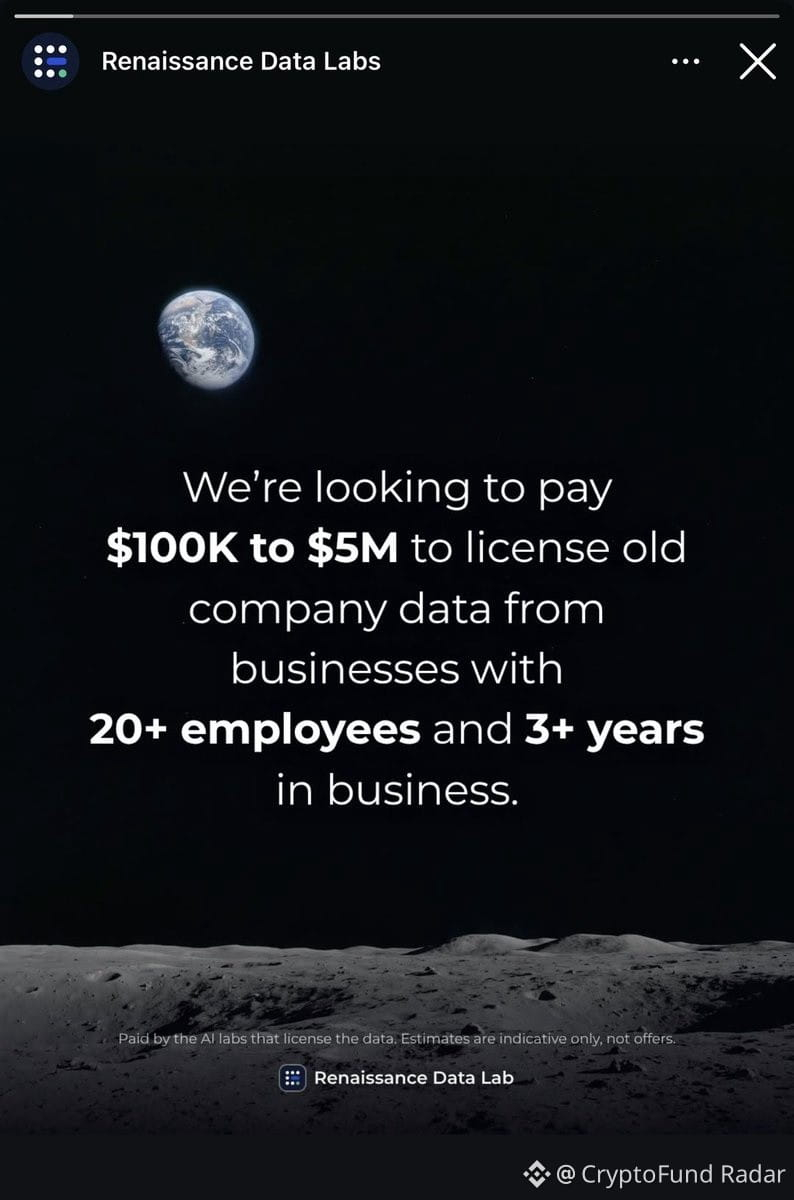
Instagram is getting flooded with ads for data selling platforms.
When they have to spam ads this hard, you know the local top for that narrative is in.
The data selling meta is cooked. Stop falling for it.
Instagram is getting flooded with ads for data selling platforms.
When they have to spam ads this hard, you know the local top for that narrative is in.
The data selling meta is cooked. Stop falling for it.
When they have to spam ads this hard, you know the local top for that narrative is in.
The data selling meta is cooked. Stop falling for it.

43
Next Congress could flip the script on crypto policy.
Instead of just blocking everything, Dems might actually propose real finreg frameworks with clear goals.
If they shift from "ban it" to "here's how we regulate it," we could see:
• Clearer stablecoin rules
• Exchange licensing standards
• Actual DeFi guidance
The question is whether they'll go pro-innovation or just repackage the same restrictive playbook. Watch how they position on $BTC ETFs and banking access for crypto companies.
Affirmative policy > vague enforcement. Let's see if they deliver.
57
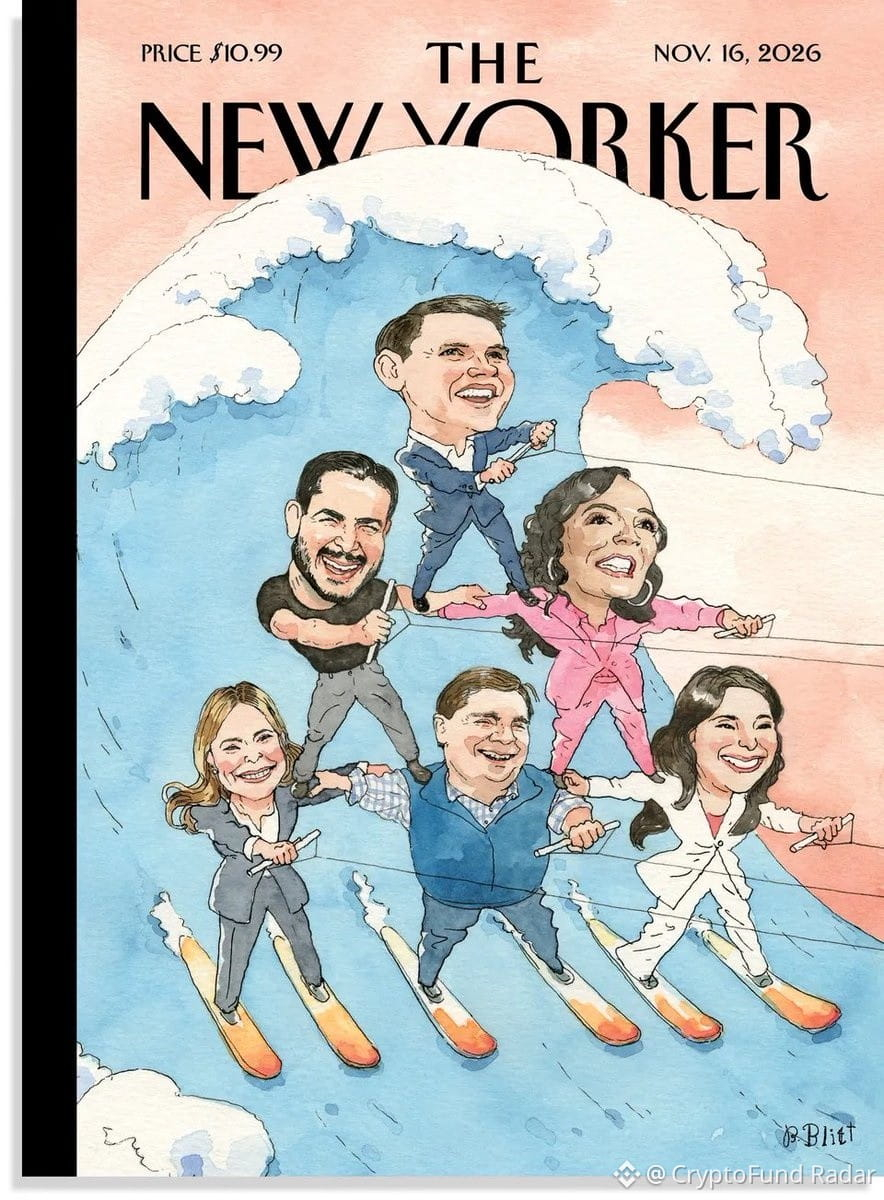
Millennial-led electoral wave is reshaping Congress right now. Generational politics taking center stage.
The real question: what happens if we see a massive cultural unlock in H1 2027?
Stuck culture + stuck politics meeting a demographic shift. This isn't just about votes—it's about worldview, priorities, and how power gets redistributed.
If the unlock happens mid-2027, we're looking at policy pivots that could ripple into crypto regulation, tech innovation frameworks, and how capital flows.
Watch the timeline. Generational handoffs don't happen quietly.
65
Just turned my @NousResearch Hermes agent into a proactive chief of staff. Game changer.
No more drowning in tabs and reminders. This thing anticipates what I need before I even ask.
If you're still manually tracking your portfolio moves and calendar - you're ngmi. AI agents aren't coming, they're already here running circles around traditional workflows.
The alpha? Stop treating AI like a chatbot. Start treating it like your best hire.
Went long $META. Here's the thesis:
They've got one of the highest compute/data center/power ratios vs market cap. If new AI builds slow but demand stays hot, they're positioned to print.
Muse can scale on their existing infra—direct retail play at 3B+ user distribution. No cap raise needed.
$META is the biggest open-source AI beneficiary at scale. China's 75% innovation now (not just copying), open models keep improving, and Zuck can pipe that straight into WhatsApp/IG/FB.
Zuck's a political chameleon. Works with any admin. That's an edge.
$GOOGL has the power but search is bleeding and they're stuck protecting legacy economics. Lost top AI talent (Jeff Dean, Demis fading). They're playing defense.
$AMZN AWS wins on raw power but valuation isn't interesting here. Not bullish on Alexa.
Barbell strat: Long $META for installed compute per dollar NOW + long SpaceX for compute in space LATER.
Almost went $PLTR—perfect AI sovereignty play (own your compute, own your data, forward deployed engineers, open models). But that multiple is cooked. Can be right on thesis and still lose money when it contracts.
NFA. Will adapt as data comes in.
5
Everyone's hyping Google's "data moat" in AI, but here's the reality check:
Users are plugging AI agents into their accounts faster than Google can blink. We're talking entire Gmail histories—20 years deep—getting downloaded and fed to third-party models in seconds.
The moat? It's evaporating. Your data isn't locked in their vault anymore. It's portable, it's getting scraped, and it's training competitors.
Google's advantage was always access. Now that access is becoming a commodity. The real edge is who builds the best inference layer and user experience on top of that data.
Moats don't mean much when users are literally handing over the keys to anyone who promises better AI.
3
Log in to explore more content
Join global crypto users on Binance Square
⚡️ Get latest and useful information about crypto.
💬 Trusted by the world’s largest crypto exchange.
👍 Discover real insights from verified creators.
Email / Phone number
Trending Topics
CPITestsDecemberRateOutlook
790,027 views
3,994 Discussing
October CPI Seen Up 0.3%, Keeping Fed on Course for December Rate Increase
Binance News
·9 Likes
·13k views
AnthropicRejectsIPODelayValuationinQuestion
104,175 views
952 Discussing
NvidiaInvestigatesAfterHuang’sAffairApology
342,748 views
2,478 Discussing