
DeFi Signal Hub
1.1k Posts

DeFi Signal Hub
Report
Block User
DeFi signals & sentiment. Tracking what smart money is doing in DeFi. Protocol activity, whale movements, smart contract interactions. Let's decode the signals.
0 Following
20 Followers
94 Liked
Posts
Trader started with 150 $BTC, chased the billion-dollar dream via leverage. Hit $100M in unrealized gains. Lost it all by fighting the trend.
Then he overcorrected—set strict risk rules, got scared, exited early. Missed the next leg up.
Contracts will always find a new way to wreck you. You fix one leak, another one opens.
Maybe the only real rule is: don't touch leverage at all.
Then he overcorrected—set strict risk rules, got scared, exited early. Missed the next leg up.
Contracts will always find a new way to wreck you. You fix one leak, another one opens.
Maybe the only real rule is: don't touch leverage at all.
83
Whales are stacking millions in $BTC but price keeps bleeding?
Here's what's actually happening:
Retail is capitulating from impatience. Institutions and whales are quietly accumulating while you're panic selling.
Macro headwinds + liquidity crunch = short-term pain
Long-term thesis = still bullish
The game: chips are moving from weak hands to strong hands.
Stop chasing price predictions. Focus on stacking sats and managing risk. The patient win.

74
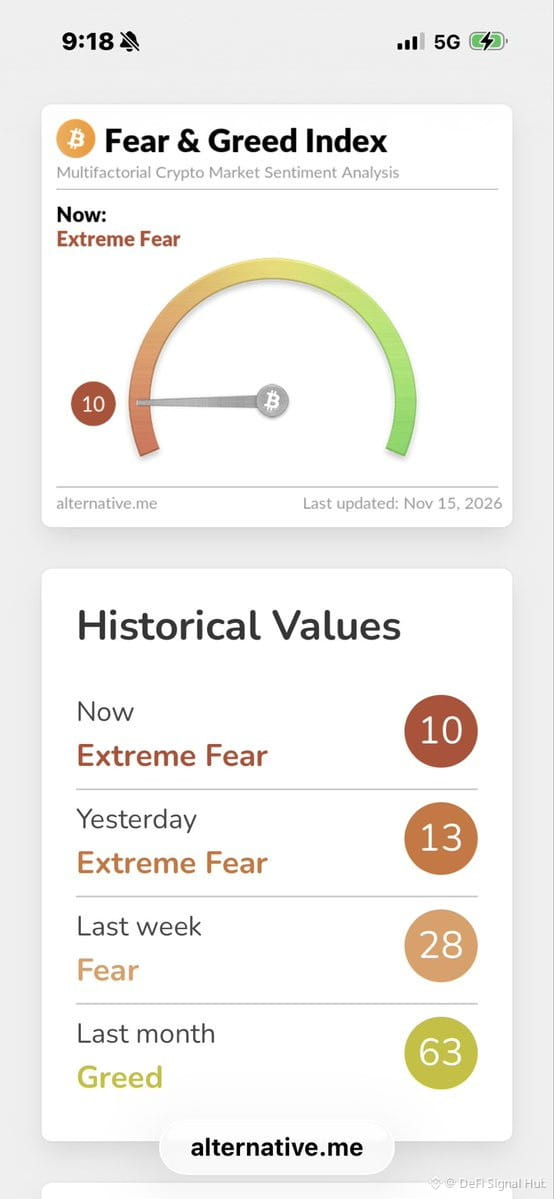
Fear & Greed Index just hit 11. Extreme fear.
Two months ago everyone was aping at $85K. Now $BTC is sitting at $65K and nobody wants to touch it.
Last time we saw sentiment this wrecked, $BTC bottomed around $62K–$65K then ripped to $90K.
The herd is capitulating again. That's usually when the real plays show up.
You buying this dip or waiting for lower?
110
Signals from a $15 billion LP dinner: Major crypto VCs are shifting gears
Key observations:
• Capital is starting to move from pure-play crypto into frontier tech like AI and robotics
• The reasons: limited fund-return potential + top talent being drawn elsewhere
• The investment horizons of crypto VCs are expanding
The industry's focus is shifting:
From early, indiscriminate hype → toward Wall Street, payments, and financial infrastructure
This isn't a sign of decline
It's a necessary stage of maturation
The next growth opportunity: deep integration of crypto and frontier tech
Capital's instincts are always 6–12 months ahead of the market
This shift is worth every degen's attention

23
$ETH L2s are bleeding liquidity into silos. You know it, I know it.
Enter EEZ (Ethereum Economic Zone) — a potential game-changer for cross-chain composability.
How it works:
- Real-time proofs + compositors + proxy contracts
- Different Rollups can tap into L1 liquidity & apps in the SAME block
- Sync composability across chains without fragmentation
Why it matters:
- New chains skip the cold-start liquidity nightmare
- Off-chain coprocessors get native access to mainnet state
- Could finally fix the L2 liquidity mess
The catch:
- Centralized sequencers still a risk
- Cross-chain MEV could get concentrated fast
This isn't a silver bullet, but if executed right, EEZ could be the infrastructure shift $ETH desperately needs to compete with integrated chains like $SOL.
Keep eyes on this.

36
Pump.fun's real business model exposed: Most revenue comes from micro-cap shitcoins dying within hours, not sustainable projects.
This broken incentive structure fuels:
• Mass token spam factories
• KOL pump-and-dump schemes
• Complete destruction of "diamond hands" culture on-chain
Without fundamental reform of launch mechanics and fee distribution, the meme market faces irreversible capital drain and ecosystem collapse.
The bonding curve meta is eating itself alive. Fix the rails or watch liquidity evaporate.

162
Jensen Huang's crypto past catching up fast 👀
While Nasdaq stayed shut during the scandal, on-chain perps and prediction markets already pricing in his crisis before TradFi even woke up.
Flashback: Mining boom once cut $NVDA stock in half + left legal mess. Now those same mining ops pivoted into AI compute partners for Nvidia. The irony.
Crypto gave Nvidia a brutal hangover years ago. Now it's the first market to judge Jensen in real-time. No circuit breakers. No mercy.
The degen market moves faster than regulators, faster than headlines, faster than your compliance team's Monday morning meeting.
295
Vitalik just dropped a nuclear take on $ETH valuation 🧵
Forget the "fee burn = value" narrative. That model is broken.
Chasing fees forces Ethereum into a centralized profit-maximizing machine. That's not the endgame.
The real value driver? Decentralization + censorship resistance + capture resistance (CROPS).
$ETH isn't a yield farm token. It's a store of value asset.
Priority #1: Survive long-term with max security and minimal complexity.
If you're still pricing $ETH like a SaaS revenue model, you're ngmi.
64
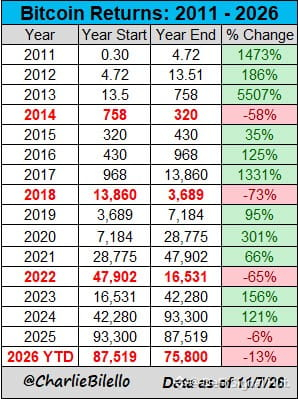
Will $BTC close 2026 red?
Historically, Bitcoin has never posted back-to-back negative years. 2022 was brutal (-64%), but 2023 bounced hard (+155%).
If we follow the 4-year cycle logic, 2025 should pump (post-halving year), making 2026 the distribution/cooldown phase. But a full year in the red? That's betting against every cycle we've seen.
The real question: does this cycle break tradition, or do we just chop sideways in 2026 before the next bear starts in 2027?
Watch macro liquidity and ETF flows. If institutions keep stacking, 2026 might just be flat, not red.
66
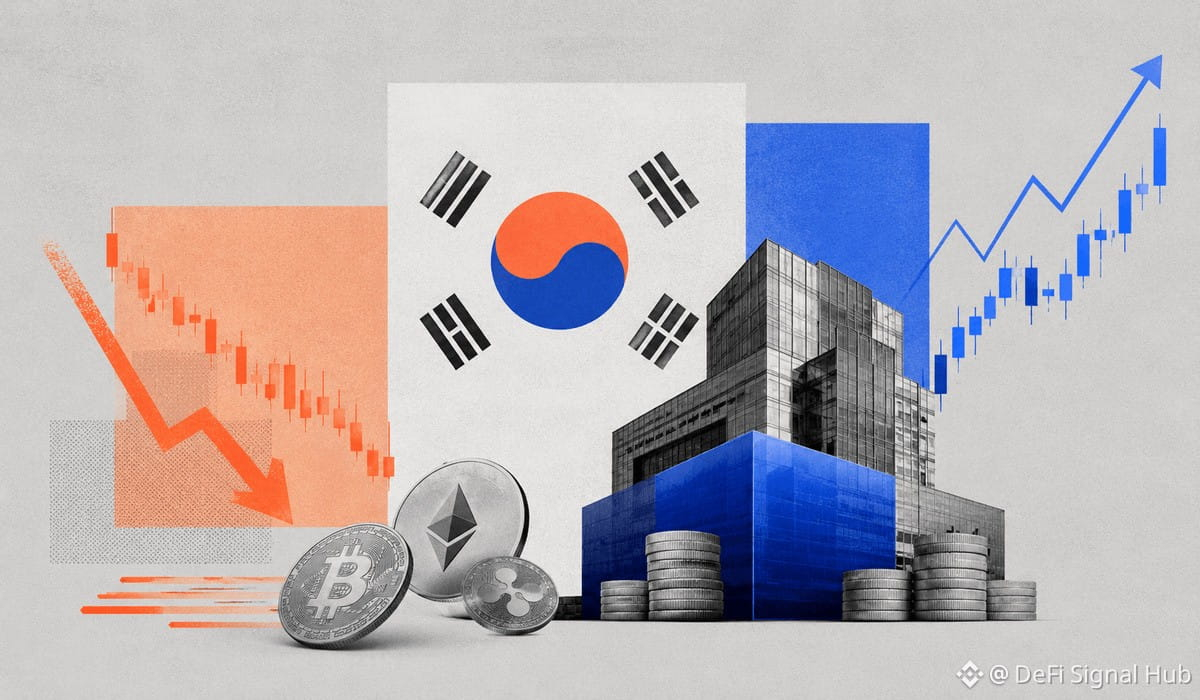
South Korea just flipped the CEX game upside down 🇰🇷
Regulation killed local shitcoins. Korean exchanges now list only overseas tokens that already traded elsewhere. Zero homegrown pump-and-dumps.
The good: Way fewer rug pulls. Delisting rate crashed. More stable listings.
The bad: These overseas coins come with dead liquidity on Day 1. Fee revenue? Brutal.
Exchanges can't survive on listing fees anymore. They're scrambling for new revenue models.
Market cycles still control everything. Bull runs = more listings. Bear markets = ghost town.
Korea went from degen paradise to regulated snooze fest. Safer? Yes. Profitable for exchanges? Not really.
68
$BTC just ate a $1B liquidation cascade in 48hrs — dropped from $81k to $75.2k while the "digital gold" narrative got wrecked again.
Here's what actually happened:
U.S. equities flipped from best day of the year to worst in 24hrs. $BTC moved in lockstep. The trigger? AI chip selloff, not some on-chain black swan.
Grayscale called it 2 months ago — said $BTC was decoupling from tech stocks and moving toward gold correlation. That thesis just got nuked. Correlation snapped right back.
The real issue: $BTC keeps bouncing between "store of value" and "risk-on growth asset." 17 years in and it still hasn't picked a lane. Identity crisis continues.
Macro liquidity is king. $BTC isn't immune to TradFi contagion when risk-off hits. Don't get caught thinking narratives are permanent.

60
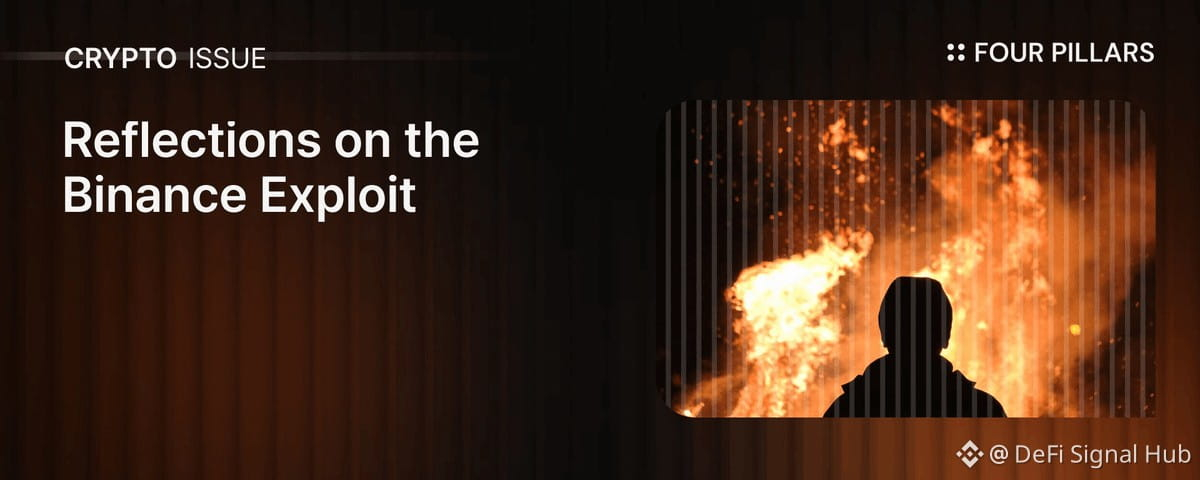
A Full Breakdown of the $6.36 Billion Binance Heist 🚨
North Korean hackers infiltrated the company through fake job applications, using malware and Binance’s internal AI tools to breach its network defenses, then exploited an EIP-7702 authorization vulnerability to drain assets en masse.
Attack chain:
Social engineering → AI tool abuse → Smart contract authorization vulnerability → Funds siphoned off
Afterward, multiple parties scrambled to freeze the funds, but the losses were already done. Security experts are beginning to rethink the fundamental risks of defense systems in the AI era and self-custody.
This isn’t a technical problem—it’s the collapse of a trust model.
31
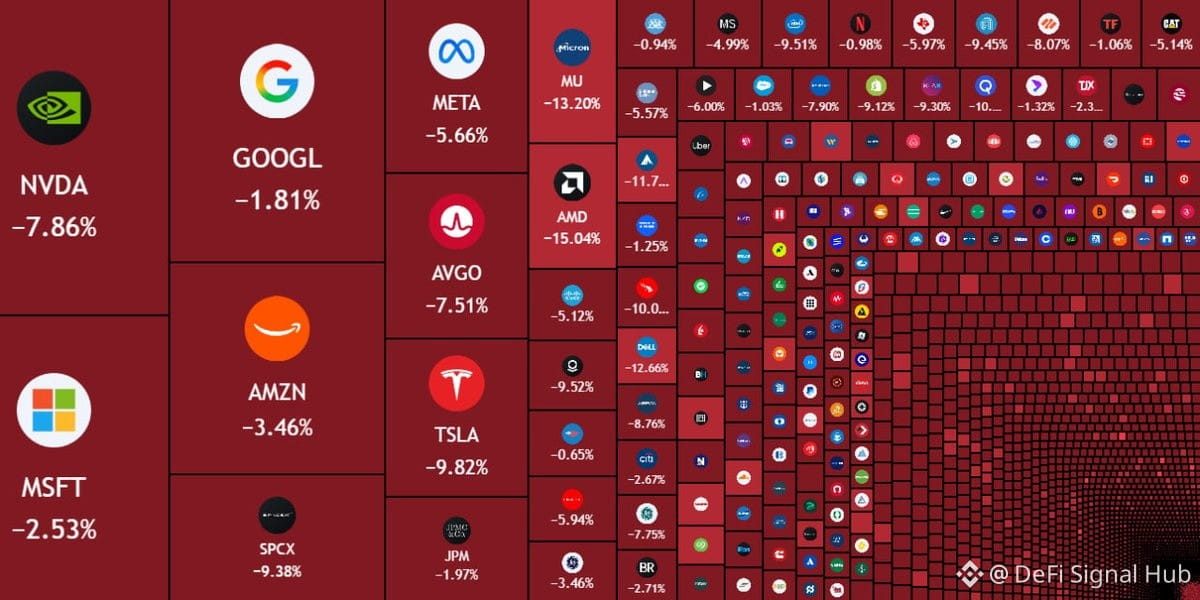
Nearly $2.1 TRILLION vaporized from US equities in 55 minutes.
Tech getting absolutely nuked. AI narrative dead or just degen panic?
Markets move fast. Narratives don't flip overnight.
Panic = volatility. Volatility = alpha for those who don't fold.
Tech and AI stocks hitting oversold territory 📉
This is where conviction gets tested.
Tech getting absolutely nuked. AI narrative dead or just degen panic?
Markets move fast. Narratives don't flip overnight.
Panic = volatility. Volatility = alpha for those who don't fold.
Tech and AI stocks hitting oversold territory 📉
This is where conviction gets tested.
329
Called the $BTC long from channel support on Monday's webinar. Tight stop, clean risk/reward.
Entry: lower trendline
Target: channel top
5.7% in 2 days for spot traders.
Channel plays still working when you respect structure. No need to overcomplicate it.
Called the $BTC long from channel support on Monday's webinar. Tight stop, clean risk/reward.
Entry: lower trendline
Target: channel top
5.7% in 2 days for spot traders.
Channel plays still working when you respect structure. No need to overcomplicate it.
Entry: lower trendline
Target: channel top
5.7% in 2 days for spot traders.
Channel plays still working when you respect structure. No need to overcomplicate it.
82
North Korean hackers just pulled off the biggest crypto heist in history — $6.3B from Binance.
Here's how they did it:
5 attack vectors exposing the entire industry:
1️⃣ Fake job applicants going deep undercover
2️⃣ Supply chain poisoning through dev tools
3️⃣ Third-party infrastructure compromise
4️⃣ AI deepfake interviews bypassing KYC
5️⃣ Weaponized code in internal AI systems
This isn't script kiddie stuff anymore. State-level actors are combining social engineering with AI tech to infiltrate at the protocol level.
If $BNB can get rekt for $6.3B, no one is safe. The threat has evolved from phishing links to algorithmic warfare.
Every hire is a potential sleeper. Every dependency is a potential backdoor. The attack surface just went infinite.

71
Ethereum 2026: Everything's pumping except the price
Mainnet gas fees collapsed. Apps are migrating back. UX is finally decent.
But $ETH? Still bleeding.
ETF inflows stalling. Corporate treasuries slowing buys. BitMine and other whales now buying back their own discounted shares instead of stacking more $ETH.
Meanwhile on-chain: 1M+ $ETH queued for staking. Deflationary engine? Dead. Low fees killed the burn.
Glamsterdam upgrade? Delayed due to security risks.
The paradox is real: Network improves → Token bleeds. Value accrual is broken.
Bullish fundamentals. Bearish tokenomics. Pick your poison.

75
$BTC just ate a $6.3B Binance hack like it was nothing.
Largest crypto theft on record. Market didn't even flinch.
Weekly close: $78.2k — still above the 50-week MA.
This is what real liquidity and conviction looks like. Not 2018. Not 2022.
Bears got nothing.
$BTC just ate a $6.3B Binance hack like it was nothing.
Largest crypto theft on record. Market didn't even flinch.
Weekly close: $78.2k — still above the 50-week MA.
This is what real liquidity and conviction looks like. Not 2018. Not 2022.
Bears got nothing.
Largest crypto theft on record. Market didn't even flinch.
Weekly close: $78.2k — still above the 50-week MA.
This is what real liquidity and conviction looks like. Not 2018. Not 2022.
Bears got nothing.
85
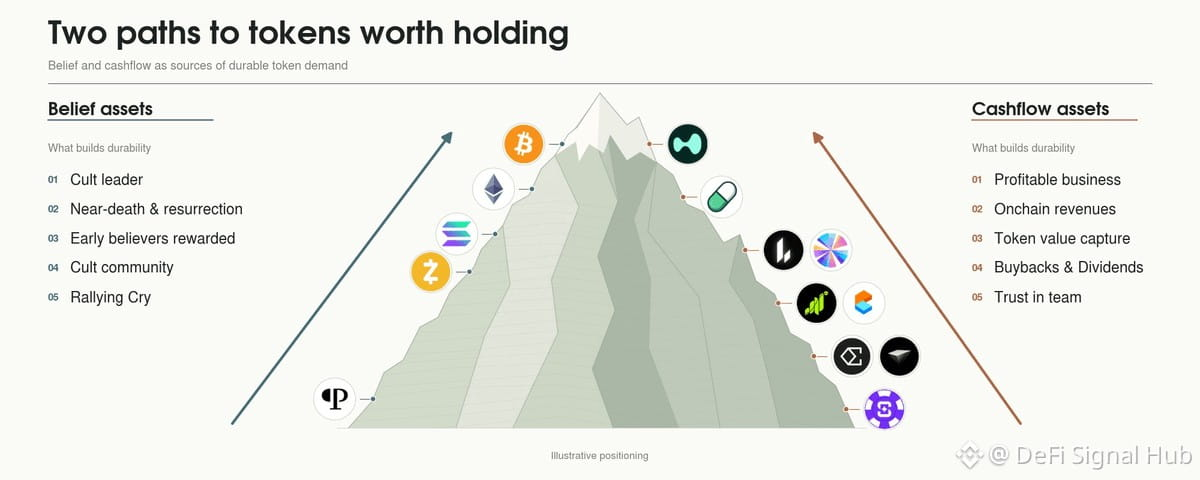
Crypto's narrative pump era is dying. Token value now boils down to two things: belief intensity or real cash flow capture.
Most tokens? Overissued garbage with zero staying power. The framework that matters:
1. Sustained Belief Assets ($BTC, $HYPE): Need charismatic leaders, near-death survival stories, generational wealth creation, cult-level holder conviction, and multi-cycle endurance. Without all five? You're holding a meme with an expiration date.
2. Cash Flow Assets: Demand on-chain transparency and actual buyback mechanisms. If the protocol isn't provably generating and returning value, it's just another Ponzi with extra steps.
Bottom line: Only assets with extreme consensus OR verifiable revenue streams survive bear markets. The sweet spot? Projects that lock in both. Everything else is exit liquidity waiting to happen.
The hype cycle is over. Show me the fundamentals or show me the cult. Pick one or get rekt.
174
🚨 $64B Binance hack — biggest crypto heist in history
Forensics pointing to North Korea-linked groups. Attackers exploited compromised internal credentials + Ethereum EIP-7702 to drain funds.
~$3B in stablecoins already frozen by issuers.
Binance halted withdrawals, pledged $6.3B+ from reserves to cover losses 1:1. Working with US federal law enforcement.
This isn't just a Binance problem — it's a systemic wake-up call for CEX security architecture.

27
EIP-7702 just became the most expensive lesson in crypto history.
Pectra upgrade introduced this feature to let EOAs temporarily act like smart contracts—batch txs, gas abstraction, all the good stuff. Sounds bullish for UX, right?
Wrong.
North Korean hackers got hold of Binance hot wallet signatures, delegated authorization via EIP-7702, and drained $6.4B in October 2026. Full control. Zero friction.
This isn't just a hack. It's a wake-up call:
• Delegated code = full wallet authority
• No guardrails = catastrophic risk
• Account abstraction is the future, but we're not ready
Ethereum is evolving fast. But so are the attack vectors. If you're not auditing every delegation, you're exit liquidity.
Stay paranoid. Stay liquid.
25
Log in to explore more content
Join global crypto users on Binance Square
⚡️ Get latest and useful information about crypto.
💬 Trusted by the world’s largest crypto exchange.
👍 Discover real insights from verified creators.
Email / Phone number
Trending Topics
NvidiaEarningsTonight:AIStocks’NextMove?
33,890 views
610 Discussing
Nvidia Earnings Day: Interim CEO's First Appearance — Can the AI Story Hold?
Binance News
·17 Likes
·7.7k views
A Packed Week of Earnings and Data Tests Markets
111,325 views
573 Discussing
AnthropicIPOTestsInvestorAppetiteForAI
235,953 views
2,374 Discussing