
0xKenta
178 Posts

0xKenta
Report
Block User
NFT & GameFi Researcher
Open Trade
Occasional Trader
5.5 Years
41 Following
148 Followers
373 Liked
Posts
Portfolio
All
Quotes
·
--
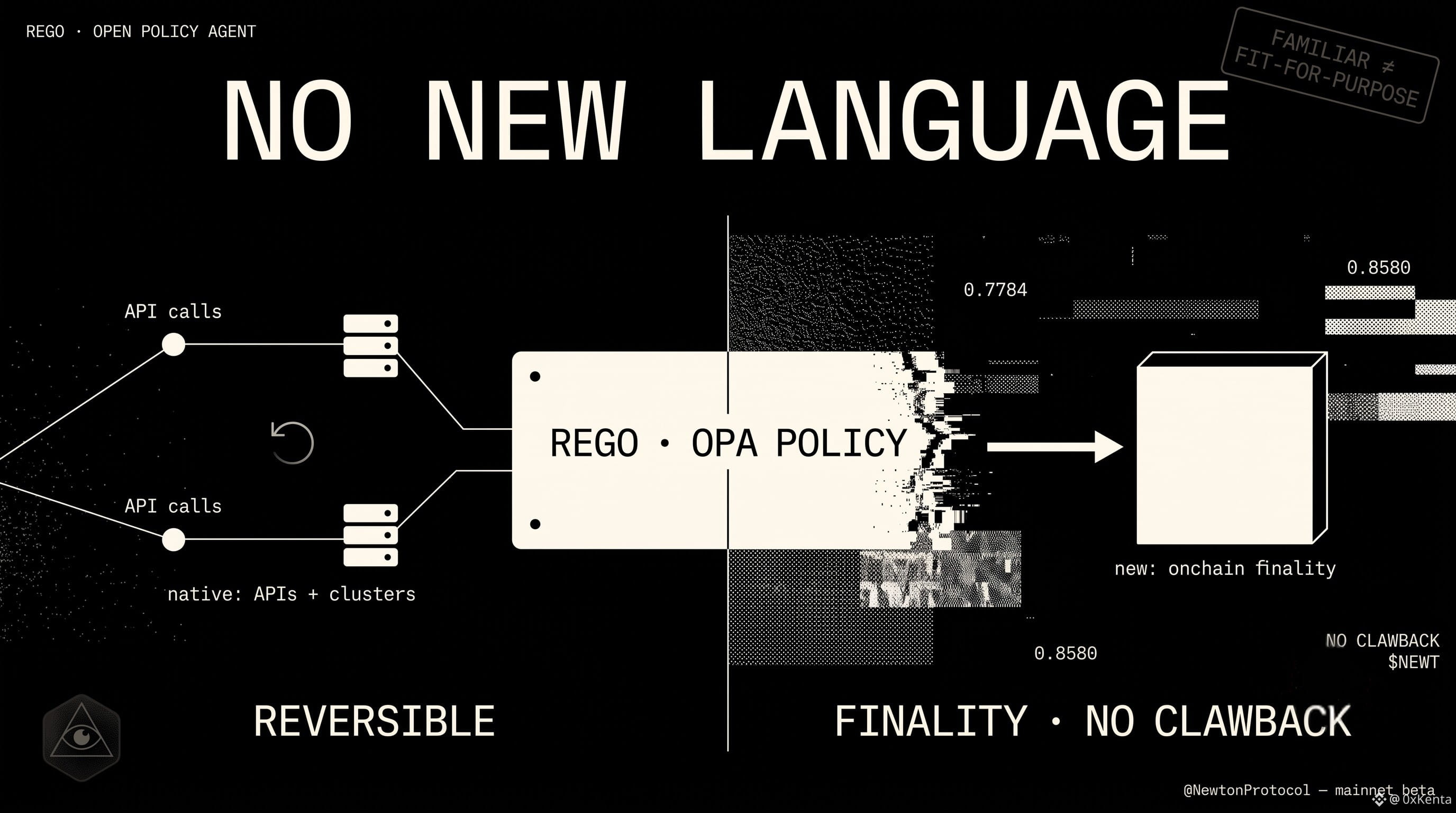
Newton needed a way for curators to write onchain policies. It didn't invent a new crypto language.
It reached for Rego, the Open Policy Agent standard that platform teams already use to guard cloud systems and APIs.
That choice says something.
@NewtonProtocol isn't courting people who want a novel DSL. It's meeting institutions where they already are, with a language their engineers have written for years.
Lower learning curve, faster to trust.
But Rego was built to gate API calls and server clusters, not money that settles with finality and can't be clawed back.
Familiar and fit-for-purpose aren't the same thing.
The pragmatism here is the part I respect about $NEWT . I'm just not sure a language designed for reversible systems carries cleanly into one where mistakes are permanent.
Newton is worth watching for how that holds up under real load.
#Newt
Newton needed a way for curators to write onchain policies. It didn't invent a new crypto language.
It reached for Rego, the Open Policy Agent standard that platform teams already use to guard cloud systems and APIs.
That choice says something.
@NewtonProtocol isn't courting people who want a novel DSL. It's meeting institutions where they already are, with a language their engineers have written for years.
Lower learning curve, faster to trust.
But Rego was built to gate API calls and server clusters, not money that settles with finality and can't be clawed back.
Familiar and fit-for-purpose aren't the same thing.
The pragmatism here is the part I respect about $NEWT . I'm just not sure a language designed for reversible systems carries cleanly into one where mistakes are permanent.
Newton is worth watching for how that holds up under real load.
#Newt
It reached for Rego, the Open Policy Agent standard that platform teams already use to guard cloud systems and APIs.
That choice says something.
@NewtonProtocol isn't courting people who want a novel DSL. It's meeting institutions where they already are, with a language their engineers have written for years.
Lower learning curve, faster to trust.
But Rego was built to gate API calls and server clusters, not money that settles with finality and can't be clawed back.
Familiar and fit-for-purpose aren't the same thing.
The pragmatism here is the part I respect about $NEWT . I'm just not sure a language designed for reversible systems carries cleanly into one where mistakes are permanent.
Newton is worth watching for how that holds up under real load.
#Newt
132
·
--
Article
The Rules a Vault Curator Can't Show YouThe rules that actually protect a vault are the ones a curator can't show you.
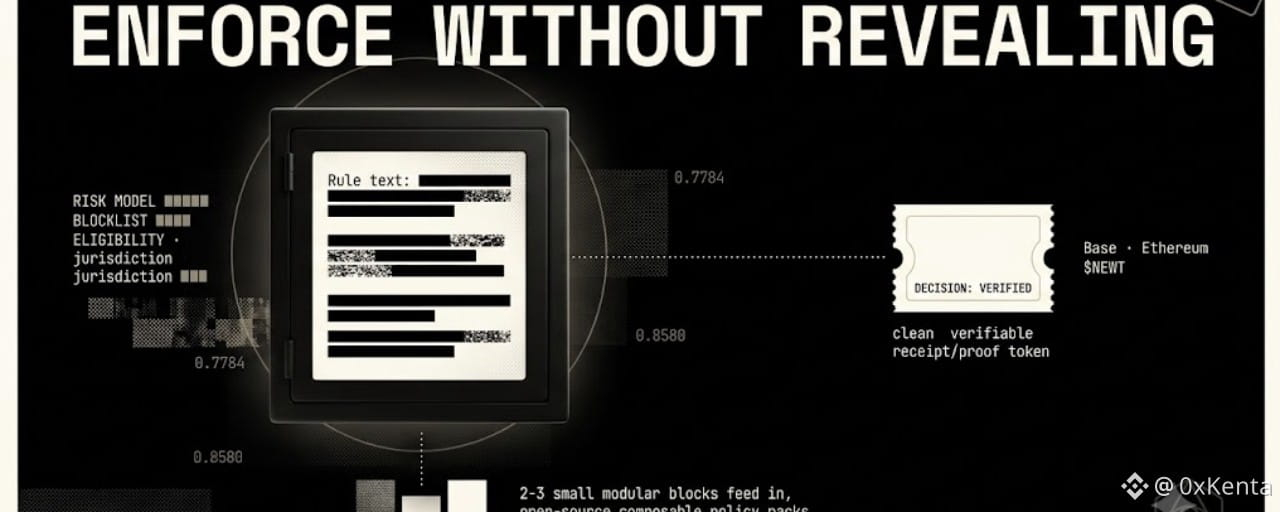
A proprietary risk model. A private blocklist of counterparties. Investor eligibility tied to specific jurisdictions.
Publish any of that to a public chain and you've leaked the thing that made it valuable.
So for years these controls lived off the chain, in documents only the firm ever saw.
That gap is what @NewtonProtocol is trying to close.
The mainnet beta, live on Base and Ethereum, lets a curator enforce a policy onchain without exposing the data behind it.
The checks run through privacy-preserving computation, and each decision leaves a verifiable record.
The policy packs are open source, so a curator composes rules from parts instead of hardcoding logic into a contract.
The timing isn't random. Curated vault TVL grew more than 350% in the past year.
The money that needs these controls is already onchain. The controls mostly weren't.
Here's what I'm not sold on yet.
Privacy-preserving computation across secure enclaves and zero-knowledge proofs is the hardest part of this whole design, and it's new.
Verifiable and private are easy words to print and hard to prove when real capital is moving fast.
Open-source policy packs only matter if curators actually assemble them. Availability isn't adoption.
$NEWT is betting they will.
The rules most worth enforcing are the ones you can least afford to publish.
So maybe the missing piece was never the technology.
Maybe it's whether a curator wants their own limits turned into something they can't quietly override.
Newton is where I'll be watching for that answer.
#Newt
The Rules a Vault Curator Can't Show You
The rules that actually protect a vault are the ones a curator can't show you.
A proprietary risk model. A private blocklist of counterparties. Investor eligibility tied to specific jurisdictions.
Publish any of that to a public chain and you've leaked the thing that made it valuable.
So for years these controls lived off the chain, in documents only the firm ever saw.
That gap is what @NewtonProtocol is trying to close.
The mainnet beta, live on Base and Ethereum, lets a curator enforce a policy onchain without exposing the data behind it.
The checks run through privacy-preserving computation, and each decision leaves a verifiable record.
The policy packs are open source, so a curator composes rules from parts instead of hardcoding logic into a contract.
The timing isn't random. Curated vault TVL grew more than 350% in the past year.
The money that needs these controls is already onchain. The controls mostly weren't.
Here's what I'm not sold on yet.
Privacy-preserving computation across secure enclaves and zero-knowledge proofs is the hardest part of this whole design, and it's new.
Verifiable and private are easy words to print and hard to prove when real capital is moving fast.
Open-source policy packs only matter if curators actually assemble them. Availability isn't adoption.
$NEWT is betting they will.
The rules most worth enforcing are the ones you can least afford to publish.
So maybe the missing piece was never the technology.
Maybe it's whether a curator wants their own limits turned into something they can't quietly override.
Newton is where I'll be watching for that answer.
#Newt
A proprietary risk model. A private blocklist of counterparties. Investor eligibility tied to specific jurisdictions.
Publish any of that to a public chain and you've leaked the thing that made it valuable.
So for years these controls lived off the chain, in documents only the firm ever saw.
That gap is what @NewtonProtocol is trying to close.
The mainnet beta, live on Base and Ethereum, lets a curator enforce a policy onchain without exposing the data behind it.
The checks run through privacy-preserving computation, and each decision leaves a verifiable record.
The policy packs are open source, so a curator composes rules from parts instead of hardcoding logic into a contract.
The timing isn't random. Curated vault TVL grew more than 350% in the past year.
The money that needs these controls is already onchain. The controls mostly weren't.
Here's what I'm not sold on yet.
Privacy-preserving computation across secure enclaves and zero-knowledge proofs is the hardest part of this whole design, and it's new.
Verifiable and private are easy words to print and hard to prove when real capital is moving fast.
Open-source policy packs only matter if curators actually assemble them. Availability isn't adoption.
$NEWT is betting they will.
The rules most worth enforcing are the ones you can least afford to publish.
So maybe the missing piece was never the technology.
Maybe it's whether a curator wants their own limits turned into something they can't quietly override.
Newton is where I'll be watching for that answer.
#Newt
112
·
--
Article
NEWT's token went live on June 24 last yearThe thing it's supposed to power went live on June 23 this year.
Almost a full year apart, one day short.
That gap is the part nobody's talking about this week.
For twelve months $NEWTtraded on a promise.
Now the promise has a product behind it, and the product is narrower and more interesting than the pitch was.
The mainnet beta enforces a rule before a transaction settles, starting with vaults.
A curator writes the rule.
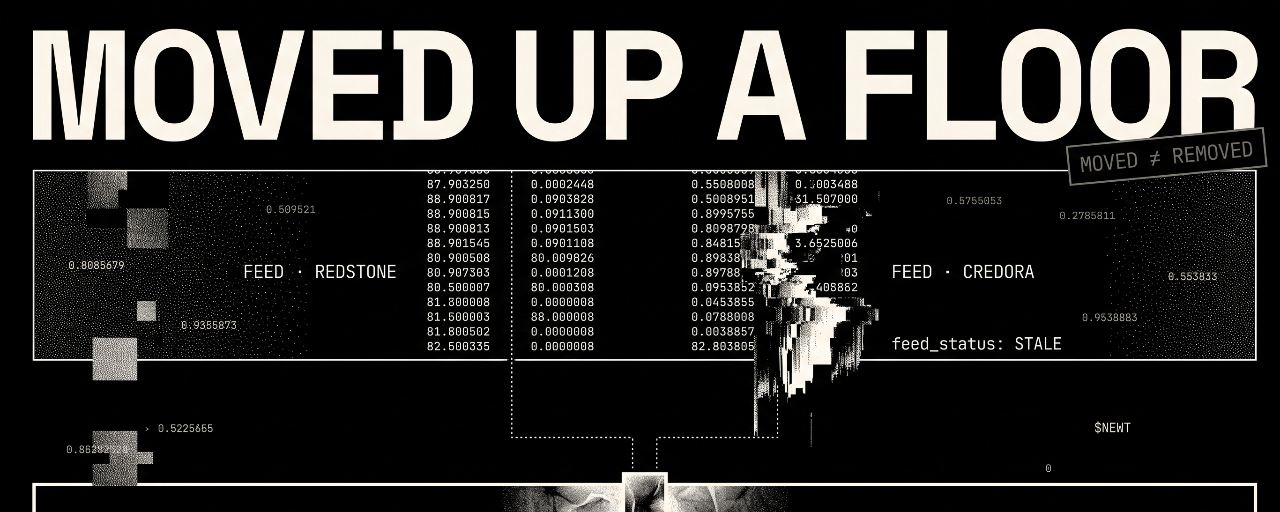
If collateral price or a risk rating crosses a line, the position gets locked or liquidated onchain, with a signed receipt anyone can check.
RedStone and Credora feed the numbers those rules read against.
@NewtonProtocol calls it the authorization layer.
I'd call it the check that used to live in a Telegram announcement, finally moved somewhere it can't be quietly skipped.
Here's the part I keep circling.
That check only works if the data it reads is right.
Newton doesn't produce that data.
It rents it from oracles.
So the layer built to catch a bad transaction now inherits whatever breaks upstream.
One bad feed doesn't just misprice a trade.
It could freeze the gate.
Curated vaults hold billions now.
That's real money sitting behind rules that mostly lived in spreadsheets until recently.
Making those rules settle onchain is worth doing.
I don't know yet whether Newton removed the trust problem or just moved it up a floor. Both can be true for a while.
Newton is worth watching for which one it turns out to be.
#Newt
NEWT's token went live on June 24 last year
The thing it's supposed to power went live on June 23 this year.
Almost a full year apart, one day short.
That gap is the part nobody's talking about this week.
For twelve months $NEWTtraded on a promise.
Now the promise has a product behind it, and the product is narrower and more interesting than the pitch was.
The mainnet beta enforces a rule before a transaction settles, starting with vaults.
A curator writes the rule.
If collateral price or a risk rating crosses a line, the position gets locked or liquidated onchain, with a signed receipt anyone can check.
RedStone and Credora feed the numbers those rules read against.
@NewtonProtocol calls it the authorization layer.
I'd call it the check that used to live in a Telegram announcement, finally moved somewhere it can't be quietly skipped.
Here's the part I keep circling.
That check only works if the data it reads is right.
Newton doesn't produce that data.
It rents it from oracles.
So the layer built to catch a bad transaction now inherits whatever breaks upstream.
One bad feed doesn't just misprice a trade.
It could freeze the gate.
Curated vaults hold billions now.
That's real money sitting behind rules that mostly lived in spreadsheets until recently.
Making those rules settle onchain is worth doing.
I don't know yet whether Newton removed the trust problem or just moved it up a floor. Both can be true for a while.
Newton is worth watching for which one it turns out to be.
#Newt
Almost a full year apart, one day short.
That gap is the part nobody's talking about this week.
For twelve months $NEWTtraded on a promise.
Now the promise has a product behind it, and the product is narrower and more interesting than the pitch was.
The mainnet beta enforces a rule before a transaction settles, starting with vaults.
A curator writes the rule.
If collateral price or a risk rating crosses a line, the position gets locked or liquidated onchain, with a signed receipt anyone can check.
RedStone and Credora feed the numbers those rules read against.
@NewtonProtocol calls it the authorization layer.
I'd call it the check that used to live in a Telegram announcement, finally moved somewhere it can't be quietly skipped.
Here's the part I keep circling.
That check only works if the data it reads is right.
Newton doesn't produce that data.
It rents it from oracles.
So the layer built to catch a bad transaction now inherits whatever breaks upstream.
One bad feed doesn't just misprice a trade.
It could freeze the gate.
Curated vaults hold billions now.
That's real money sitting behind rules that mostly lived in spreadsheets until recently.
Making those rules settle onchain is worth doing.
I don't know yet whether Newton removed the trust problem or just moved it up a floor. Both can be true for a while.
Newton is worth watching for which one it turns out to be.
#Newt
114
·
--
Most compliance tools tell you what happened after it happened.
Newton's mainnet beta flips that.
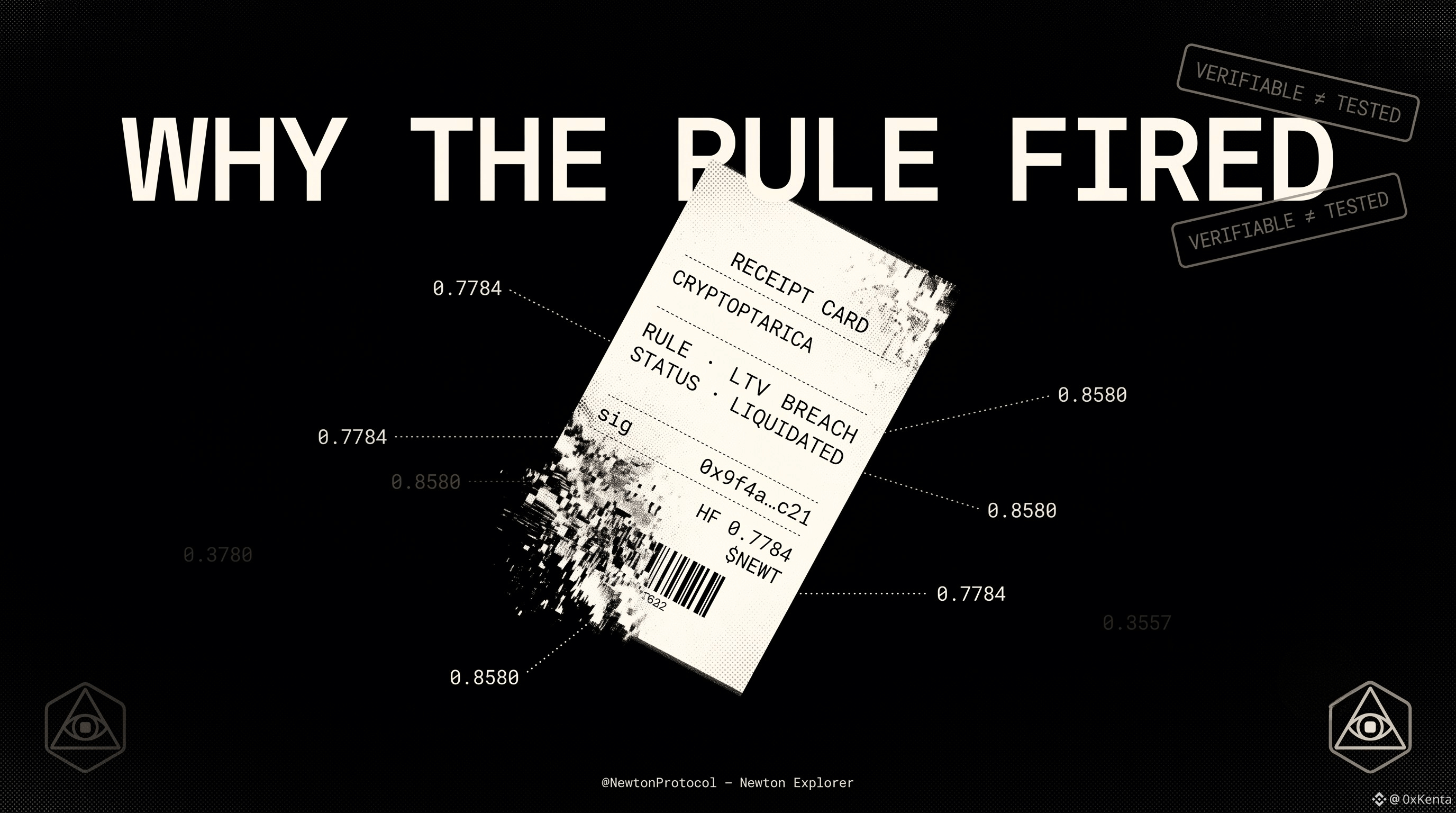
When a vault blocks or liquidates a position, it leaves a signed receipt onchain, and you can open the Newton Explorer to read exactly why the rule fired.
Not a support ticket.
Not a screenshot from the team.
A record you can verify without asking anyone.
That small change moves who has to trust whom.
A depositor stops taking the curator's word for it, which is the real point of $NEWT and the enforcement layer @NewtonProtocol is building.
I'd still hold the applause on Newt until those receipts survive a live stress event.
Verifiable is not the same as tested.
#Newt
Most compliance tools tell you what happened after it happened.
Newton's mainnet beta flips that.
When a vault blocks or liquidates a position, it leaves a signed receipt onchain, and you can open the Newton Explorer to read exactly why the rule fired.
Not a support ticket.
Not a screenshot from the team.
A record you can verify without asking anyone.
That small change moves who has to trust whom.
A depositor stops taking the curator's word for it, which is the real point of $NEWT and the enforcement layer @NewtonProtocol is building.
I'd still hold the applause on Newt until those receipts survive a live stress event.
Verifiable is not the same as tested.
#Newt
Newton's mainnet beta flips that.
When a vault blocks or liquidates a position, it leaves a signed receipt onchain, and you can open the Newton Explorer to read exactly why the rule fired.
Not a support ticket.
Not a screenshot from the team.
A record you can verify without asking anyone.
That small change moves who has to trust whom.
A depositor stops taking the curator's word for it, which is the real point of $NEWT and the enforcement layer @NewtonProtocol is building.
I'd still hold the applause on Newt until those receipts survive a live stress event.
Verifiable is not the same as tested.
#Newt
158
·
--
Nobody blames the calculator when a fund manager makes a bad investment They just accept the math was right and the strategy was wrong I keep returning to that analogy while examining @OpenGradient
The protocol provides an impeccable audit trail for AI agents executing on-chain It proves with absolute certainty that a specific model generated a specific output And in a trustless financial infrastructure that verification is strictly required
But verifying execution does not actually solve the problem of economic liability It simply proves the machine did exactly what its weights and biases dictated I often wonder what happens when a flawlessly executed model makes a catastrophic trading decision
Imagine an autonomous agent managing collateral positions during a sudden market flash crash The cryptographic proof confirms the agent triggered a massive liquidation without any external manipulation
The computation is perfectly valid but the underlying capital is still permanently destroyed
Smart contracts traditionally force users to take full responsibility for their own manual transactions
But when an AI is dynamically adjusting parameters the fiduciary lines begin to blur I am not entirely sure staking $OPG solves this particular layer of systemic risk
The network operators only guarantee the integrity of the computing environment
They certainly do not guarantee the financial wisdom of the algorithmic logic
As OPG infrastructure pushes deeper into automated capital management who actually absorbs the loss when a mathematically perfect AI decides to liquidate the wrong assets
#OPG
Nobody blames the calculator when a fund manager makes a bad investment They just accept the math was right and the strategy was wrong I keep returning to that analogy while examining @OpenGradient
The protocol provides an impeccable audit trail for AI agents executing on-chain It proves with absolute certainty that a specific model generated a specific output And in a trustless financial infrastructure that verification is strictly required
But verifying execution does not actually solve the problem of economic liability It simply proves the machine did exactly what its weights and biases dictated I often wonder what happens when a flawlessly executed model makes a catastrophic trading decision
Imagine an autonomous agent managing collateral positions during a sudden market flash crash The cryptographic proof confirms the agent triggered a massive liquidation without any external manipulation
The computation is perfectly valid but the underlying capital is still permanently destroyed
Smart contracts traditionally force users to take full responsibility for their own manual transactions
But when an AI is dynamically adjusting parameters the fiduciary lines begin to blur I am not entirely sure staking $OPG solves this particular layer of systemic risk
The network operators only guarantee the integrity of the computing environment
They certainly do not guarantee the financial wisdom of the algorithmic logic
As OPG infrastructure pushes deeper into automated capital management who actually absorbs the loss when a mathematically perfect AI decides to liquidate the wrong assets
#OPG
The protocol provides an impeccable audit trail for AI agents executing on-chain It proves with absolute certainty that a specific model generated a specific output And in a trustless financial infrastructure that verification is strictly required
But verifying execution does not actually solve the problem of economic liability It simply proves the machine did exactly what its weights and biases dictated I often wonder what happens when a flawlessly executed model makes a catastrophic trading decision
Imagine an autonomous agent managing collateral positions during a sudden market flash crash The cryptographic proof confirms the agent triggered a massive liquidation without any external manipulation
The computation is perfectly valid but the underlying capital is still permanently destroyed
Smart contracts traditionally force users to take full responsibility for their own manual transactions
But when an AI is dynamically adjusting parameters the fiduciary lines begin to blur I am not entirely sure staking $OPG solves this particular layer of systemic risk
The network operators only guarantee the integrity of the computing environment
They certainly do not guarantee the financial wisdom of the algorithmic logic
As OPG infrastructure pushes deeper into automated capital management who actually absorbs the loss when a mathematically perfect AI decides to liquidate the wrong assets
#OPG

134
·
--
Nobody checks the security cameras when the store is peaceful
People only ask to rewind the tapes after the glass is already broken
That thought kept lingering while I was looking deeper into @OpenGradient
The system is built to provide an immutable audit trail for AI computation
And mathematically speaking that makes perfect sense It prevents black box models from quietly manipulating outcomes
But human behavior rarely follows pure math
I keep thinking about the true cost of that security
Not just the computational overhead of generating proofs
But the economic liability tied to the network itself
Operators stake $OPG to guarantee the integrity of the inference
Which sounds like a perfectly aligned incentive structure
Until you start wondering what happens during extreme market stress
When a malicious output could yield returns far greater than the slashed collateral
The architecture separates execution from verification to scale
Which means the network assumes the penalty always outweighs the crime I am not entirely sure markets always respect that balance
Because hardware can eventually be compromised
Even trusted execution environments have shown vulnerabilities before If a targeted attack hits the infrastructure during a period of high volatility
I wonder who actually absorbs the final impact
The protocols blindly executing the routed orders
Or the liquidity providers caught somewhere in the middle
#OPG aims to solve a fundamental trust issue in decentralized AI
But sometimes building a better security camera just teaches people to wear better masks
I used to think cryptographic proof was the ultimate answer
Now I wonder if any consensus mechanism can truly outprice human greed
Nobody checks the security cameras when the store is peaceful
People only ask to rewind the tapes after the glass is already broken
That thought kept lingering while I was looking deeper into @OpenGradient
The system is built to provide an immutable audit trail for AI computation
And mathematically speaking that makes perfect sense It prevents black box models from quietly manipulating outcomes
But human behavior rarely follows pure math
I keep thinking about the true cost of that security
Not just the computational overhead of generating proofs
But the economic liability tied to the network itself
Operators stake $OPG to guarantee the integrity of the inference
Which sounds like a perfectly aligned incentive structure
Until you start wondering what happens during extreme market stress
When a malicious output could yield returns far greater than the slashed collateral
The architecture separates execution from verification to scale
Which means the network assumes the penalty always outweighs the crime I am not entirely sure markets always respect that balance
Because hardware can eventually be compromised
Even trusted execution environments have shown vulnerabilities before If a targeted attack hits the infrastructure during a period of high volatility
I wonder who actually absorbs the final impact
The protocols blindly executing the routed orders
Or the liquidity providers caught somewhere in the middle
#OPG aims to solve a fundamental trust issue in decentralized AI
But sometimes building a better security camera just teaches people to wear better masks
I used to think cryptographic proof was the ultimate answer
Now I wonder if any consensus mechanism can truly outprice human greed
People only ask to rewind the tapes after the glass is already broken
That thought kept lingering while I was looking deeper into @OpenGradient
The system is built to provide an immutable audit trail for AI computation
And mathematically speaking that makes perfect sense It prevents black box models from quietly manipulating outcomes
But human behavior rarely follows pure math
I keep thinking about the true cost of that security
Not just the computational overhead of generating proofs
But the economic liability tied to the network itself
Operators stake $OPG to guarantee the integrity of the inference
Which sounds like a perfectly aligned incentive structure
Until you start wondering what happens during extreme market stress
When a malicious output could yield returns far greater than the slashed collateral
The architecture separates execution from verification to scale
Which means the network assumes the penalty always outweighs the crime I am not entirely sure markets always respect that balance
Because hardware can eventually be compromised
Even trusted execution environments have shown vulnerabilities before If a targeted attack hits the infrastructure during a period of high volatility
I wonder who actually absorbs the final impact
The protocols blindly executing the routed orders
Or the liquidity providers caught somewhere in the middle
#OPG aims to solve a fundamental trust issue in decentralized AI
But sometimes building a better security camera just teaches people to wear better masks
I used to think cryptographic proof was the ultimate answer
Now I wonder if any consensus mechanism can truly outprice human greed
1
146
·
--
There's a small habit almost everyone has and nobody admits to. You type a real question into an AI, then you stop. You delete the part that gives you away. The salary figure, the diagnosis, the company name. You water it down into something safe before you hit enter.
That edit is the whole problem. The questions where these tools help most are the ones you trim until they're useless.
OpenGradient Chat, from @OpenGradient is built around that exact flinch. Your message gets encrypted on your device before it leaves the browser. It moves through an Oblivious HTTP relay that sees your IP but not your words, then lands in a hardware enclave that reads your words but never learns your IP. No single party can join the two halves. It's the consumer face of the same verifiable network behind $OPG , and you can run ChatGPT, Claude, Gemini, or Grok through that anonymous layer. Signing up hands you a thousand free credits before you commit to anything.
Here's my honest hesitation. The pitch is proof, not a policy. The enclave is attested, so the guarantee is checkable. But almost nobody will check it. For most people trust didn't vanish. It moved from a lawyer's paragraph to a cryptographer's diagram they also can't read.
Still, that's a better place for trust to sit. A policy can change on a Tuesday. Math can't.
Whether it changes how people actually type, I don't know yet. Habits don't break because the architecture improved. They break when you forget to be afraid.
Try it at chat.opengradient.ai and notice if you stop deleting things. #opg
There's a small habit almost everyone has and nobody admits to. You type a real question into an AI, then you stop. You delete the part that gives you away. The salary figure, the diagnosis, the company name. You water it down into something safe before you hit enter.
That edit is the whole problem. The questions where these tools help most are the ones you trim until they're useless.
OpenGradient Chat, from @OpenGradient is built around that exact flinch. Your message gets encrypted on your device before it leaves the browser. It moves through an Oblivious HTTP relay that sees your IP but not your words, then lands in a hardware enclave that reads your words but never learns your IP. No single party can join the two halves. It's the consumer face of the same verifiable network behind $OPG , and you can run ChatGPT, Claude, Gemini, or Grok through that anonymous layer. Signing up hands you a thousand free credits before you commit to anything.
Here's my honest hesitation. The pitch is proof, not a policy. The enclave is attested, so the guarantee is checkable. But almost nobody will check it. For most people trust didn't vanish. It moved from a lawyer's paragraph to a cryptographer's diagram they also can't read.
Still, that's a better place for trust to sit. A policy can change on a Tuesday. Math can't.
Whether it changes how people actually type, I don't know yet. Habits don't break because the architecture improved. They break when you forget to be afraid.
Try it at chat.opengradient.ai and notice if you stop deleting things. #opg
That edit is the whole problem. The questions where these tools help most are the ones you trim until they're useless.
OpenGradient Chat, from @OpenGradient is built around that exact flinch. Your message gets encrypted on your device before it leaves the browser. It moves through an Oblivious HTTP relay that sees your IP but not your words, then lands in a hardware enclave that reads your words but never learns your IP. No single party can join the two halves. It's the consumer face of the same verifiable network behind $OPG , and you can run ChatGPT, Claude, Gemini, or Grok through that anonymous layer. Signing up hands you a thousand free credits before you commit to anything.
Here's my honest hesitation. The pitch is proof, not a policy. The enclave is attested, so the guarantee is checkable. But almost nobody will check it. For most people trust didn't vanish. It moved from a lawyer's paragraph to a cryptographer's diagram they also can't read.
Still, that's a better place for trust to sit. A policy can change on a Tuesday. Math can't.
Whether it changes how people actually type, I don't know yet. Habits don't break because the architecture improved. They break when you forget to be afraid.
Try it at chat.opengradient.ai and notice if you stop deleting things. #opg

2
2
494
·
--
At the bottom of @Bedrock documentation, there's a section that isn't written for people.
It's a set of instructions for AI agents. It tells them how to query the docs programmatically, how to ask a question and get a structured answer back, without a human ever scrolling the page.
I found it by accident and sat with it longer than I expected to.
Most protocols write documentation for developers and curious users. This is documentation that assumes some of its future readers will be machines, acting for someone who never reads it at all.
That's a small detail. It might also be a signal.
The harder DeFi gets to use directly, the more people reach it through something that handles the complexity for them. A wallet that auto-routes. An agent that compares yields. Something that reads the docs so you don't have to. Bedrock writing for that reader now is either foresight or an admission that the human path is still too hard.
Probably both.
Part of me likes a protocol thinking two steps ahead. Part of me notices that "an agent will handle it" is how a lot of people slowly stop understanding what they own.
$BR sits inside a product quietly preparing for a world where you touch it less, not more.
Whether that's the real direction of Bedrock or just a tidy docs feature, I don't know yet.
But it's the first thing in a while that made me stop and think.
#Bedrock
At the bottom of @Bedrock documentation, there's a section that isn't written for people.
It's a set of instructions for AI agents. It tells them how to query the docs programmatically, how to ask a question and get a structured answer back, without a human ever scrolling the page.
I found it by accident and sat with it longer than I expected to.
Most protocols write documentation for developers and curious users. This is documentation that assumes some of its future readers will be machines, acting for someone who never reads it at all.
That's a small detail. It might also be a signal.
The harder DeFi gets to use directly, the more people reach it through something that handles the complexity for them. A wallet that auto-routes. An agent that compares yields. Something that reads the docs so you don't have to. Bedrock writing for that reader now is either foresight or an admission that the human path is still too hard.
Probably both.
Part of me likes a protocol thinking two steps ahead. Part of me notices that "an agent will handle it" is how a lot of people slowly stop understanding what they own.
$BR sits inside a product quietly preparing for a world where you touch it less, not more.
Whether that's the real direction of Bedrock or just a tidy docs feature, I don't know yet.
But it's the first thing in a while that made me stop and think.
#Bedrock
It's a set of instructions for AI agents. It tells them how to query the docs programmatically, how to ask a question and get a structured answer back, without a human ever scrolling the page.
I found it by accident and sat with it longer than I expected to.
Most protocols write documentation for developers and curious users. This is documentation that assumes some of its future readers will be machines, acting for someone who never reads it at all.
That's a small detail. It might also be a signal.
The harder DeFi gets to use directly, the more people reach it through something that handles the complexity for them. A wallet that auto-routes. An agent that compares yields. Something that reads the docs so you don't have to. Bedrock writing for that reader now is either foresight or an admission that the human path is still too hard.
Probably both.
Part of me likes a protocol thinking two steps ahead. Part of me notices that "an agent will handle it" is how a lot of people slowly stop understanding what they own.
$BR sits inside a product quietly preparing for a world where you touch it less, not more.
Whether that's the real direction of Bedrock or just a tidy docs feature, I don't know yet.
But it's the first thing in a while that made me stop and think.
#Bedrock

2
2
362
·
--
The price chart tells you what $BR is worth. The order book tells you whether that number is real for you.
Last week I did an exercise I should have done much earlier. Instead of checking the price, I checked how much I could actually sell at that price. The answer was humbling for a token with a market cap near thirty million dollars.
Daily volume on $BR runs under a million dollars most days. Liquidity sitting in pools is a small fraction of market cap. Which means the displayed price is accurate for someone moving a few hundred dollars. For someone moving fifty thousand, the real price is whatever the slippage leaves behind.
This is not a Bedrock problem. It's a small-cap reality that applies across most tokens at this stage. But holders rarely internalize it because the interface shows one clean number and lets you believe it applies to any size.
The practical effect is that market cap overstates what all holders could collectively realize. Always. Everyone's position is priced at the last trade, but only the first sellers get that price.
What would change this for @Bedrock is deeper integration into BNB Chain DeFi. More pools, more pairs, more reasons for liquidity to sit in $BR markets rather than pass through them.
Until then, my position size respects the order book, not the chart.
That distinction took me one bad exit on a different token to learn.
Cheaper to learn it by looking.
#Bedrock
The price chart tells you what $BR is worth. The order book tells you whether that number is real for you.
Last week I did an exercise I should have done much earlier. Instead of checking the price, I checked how much I could actually sell at that price. The answer was humbling for a token with a market cap near thirty million dollars.
Daily volume on $BR runs under a million dollars most days. Liquidity sitting in pools is a small fraction of market cap. Which means the displayed price is accurate for someone moving a few hundred dollars. For someone moving fifty thousand, the real price is whatever the slippage leaves behind.
This is not a Bedrock problem. It's a small-cap reality that applies across most tokens at this stage. But holders rarely internalize it because the interface shows one clean number and lets you believe it applies to any size.
The practical effect is that market cap overstates what all holders could collectively realize. Always. Everyone's position is priced at the last trade, but only the first sellers get that price.
What would change this for @Bedrock is deeper integration into BNB Chain DeFi. More pools, more pairs, more reasons for liquidity to sit in $BR markets rather than pass through them.
Until then, my position size respects the order book, not the chart.
That distinction took me one bad exit on a different token to learn.
Cheaper to learn it by looking.
#Bedrock
Last week I did an exercise I should have done much earlier. Instead of checking the price, I checked how much I could actually sell at that price. The answer was humbling for a token with a market cap near thirty million dollars.
Daily volume on $BR runs under a million dollars most days. Liquidity sitting in pools is a small fraction of market cap. Which means the displayed price is accurate for someone moving a few hundred dollars. For someone moving fifty thousand, the real price is whatever the slippage leaves behind.
This is not a Bedrock problem. It's a small-cap reality that applies across most tokens at this stage. But holders rarely internalize it because the interface shows one clean number and lets you believe it applies to any size.
The practical effect is that market cap overstates what all holders could collectively realize. Always. Everyone's position is priced at the last trade, but only the first sellers get that price.
What would change this for @Bedrock is deeper integration into BNB Chain DeFi. More pools, more pairs, more reasons for liquidity to sit in $BR markets rather than pass through them.
Until then, my position size respects the order book, not the chart.
That distinction took me one bad exit on a different token to learn.
Cheaper to learn it by looking.
#Bedrock

16
5
10.9k
·
--
Three out of every four $BR tokens don't circulate yet.
I noticed this while checking my own position. Circulating supply sits around 261 million. Total supply is 1 billion. The gap between those numbers is the part most holders never look at.
That gap has a schedule. Future airdrops release linearly over 48 months. Marketing and ecosystem allocations follow similar timelines. Team tokens stay locked for the first year, then vest quarterly. Every month, new tokens enter circulation whether demand grew or not.
None of this is hidden. It's published. But published and understood are different things.
When I bought my first tokens after TGE, I was pricing the project. The technology, the team, the narrative. It took me longer to realize I should also be pricing the calendar. A token where 26% circulates behaves differently from one where 90% does, even if nothing else about the project changes.
This isn't unique to @Bedrock .Almost every 2025-era token launch shares this structure. Low float at launch, gradual unlocks, the market slowly absorbing what the tokenomics page promised from day one.
What I can't tell you is how it plays out here. Demand might grow faster than supply unlocks. It might not.
What I can tell you is that the unlock schedule is the one part of #Bedrock that runs on pure math. No narrative changes it.
Worth reading the tokenomics page the way you'd read a contract. Because it is one.
Three out of every four $BR tokens don't circulate yet.
I noticed this while checking my own position. Circulating supply sits around 261 million. Total supply is 1 billion. The gap between those numbers is the part most holders never look at.
That gap has a schedule. Future airdrops release linearly over 48 months. Marketing and ecosystem allocations follow similar timelines. Team tokens stay locked for the first year, then vest quarterly. Every month, new tokens enter circulation whether demand grew or not.
None of this is hidden. It's published. But published and understood are different things.
When I bought my first tokens after TGE, I was pricing the project. The technology, the team, the narrative. It took me longer to realize I should also be pricing the calendar. A token where 26% circulates behaves differently from one where 90% does, even if nothing else about the project changes.
This isn't unique to @Bedrock .Almost every 2025-era token launch shares this structure. Low float at launch, gradual unlocks, the market slowly absorbing what the tokenomics page promised from day one.
What I can't tell you is how it plays out here. Demand might grow faster than supply unlocks. It might not.
What I can tell you is that the unlock schedule is the one part of #Bedrock that runs on pure math. No narrative changes it.
Worth reading the tokenomics page the way you'd read a contract. Because it is one.
I noticed this while checking my own position. Circulating supply sits around 261 million. Total supply is 1 billion. The gap between those numbers is the part most holders never look at.
That gap has a schedule. Future airdrops release linearly over 48 months. Marketing and ecosystem allocations follow similar timelines. Team tokens stay locked for the first year, then vest quarterly. Every month, new tokens enter circulation whether demand grew or not.
None of this is hidden. It's published. But published and understood are different things.
When I bought my first tokens after TGE, I was pricing the project. The technology, the team, the narrative. It took me longer to realize I should also be pricing the calendar. A token where 26% circulates behaves differently from one where 90% does, even if nothing else about the project changes.
This isn't unique to @Bedrock .Almost every 2025-era token launch shares this structure. Low float at launch, gradual unlocks, the market slowly absorbing what the tokenomics page promised from day one.
What I can't tell you is how it plays out here. Demand might grow faster than supply unlocks. It might not.
What I can tell you is that the unlock schedule is the one part of #Bedrock that runs on pure math. No narrative changes it.
Worth reading the tokenomics page the way you'd read a contract. Because it is one.

1
1
771
·
--
The worst liquidations I've seen on-chain weren't caused by bad positions.
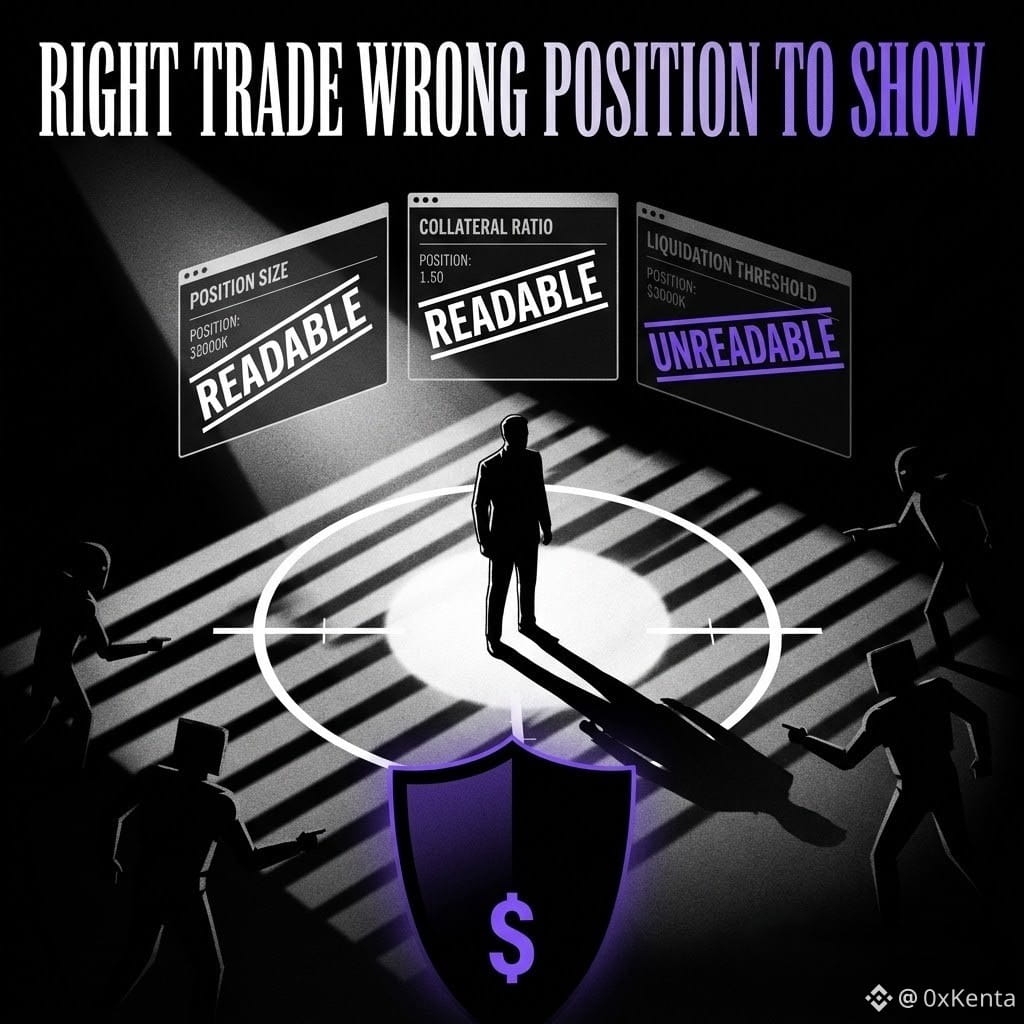
They were caused by visible positions.
In early 2024, a single large leveraged position on a DeFi lending protocol got tracked publicly before it hit the liquidation threshold. Bots identified the exact price level needed to trigger it. They pushed price there deliberately, collected the liquidation bonus, and moved on. The position holder did nothing wrong analytically. The leverage was reasonable. The collateral was solid.
But the position was readable. And readable meant targetable.
This doesn't happen the same way on CEX. Liquidation levels on centralized exchanges aren't publicly visible in real time. Aggregated data exists but individual position thresholds aren't queryable by anyone with a wallet and a script.
On-chain, they are.
That asymmetry creates a specific kind of predatory behavior that has no equivalent in traditional markets and no clean solution in most current DeFi infrastructure.
That's the angle I don't see applied clearly to @GeniusOfficial
Private execution and hidden order flow matter for spot trading. But the same visibility problem applies to anyone using on-chain leverage. If position size, collateral ratio, and liquidation threshold are all readable, the position itself becomes a target regardless of how good the underlying analysis was.
Whether Genius Terminal's architecture extends meaningfully into leveraged position privacy is something I'd want to understand better before treating it as solved.
But the problem is real and underappreciated.
Being right about the trade isn't enough if the position tells everyone exactly where to push you out.
@GeniusOfficial $GENIUS #genius
The worst liquidations I've seen on-chain weren't caused by bad positions.
They were caused by visible positions.
In early 2024, a single large leveraged position on a DeFi lending protocol got tracked publicly before it hit the liquidation threshold. Bots identified the exact price level needed to trigger it. They pushed price there deliberately, collected the liquidation bonus, and moved on. The position holder did nothing wrong analytically. The leverage was reasonable. The collateral was solid.
But the position was readable. And readable meant targetable.
This doesn't happen the same way on CEX. Liquidation levels on centralized exchanges aren't publicly visible in real time. Aggregated data exists but individual position thresholds aren't queryable by anyone with a wallet and a script.
On-chain, they are.
That asymmetry creates a specific kind of predatory behavior that has no equivalent in traditional markets and no clean solution in most current DeFi infrastructure.
That's the angle I don't see applied clearly to @GeniusOfficial
Private execution and hidden order flow matter for spot trading. But the same visibility problem applies to anyone using on-chain leverage. If position size, collateral ratio, and liquidation threshold are all readable, the position itself becomes a target regardless of how good the underlying analysis was.
Whether Genius Terminal's architecture extends meaningfully into leveraged position privacy is something I'd want to understand better before treating it as solved.
But the problem is real and underappreciated.
Being right about the trade isn't enough if the position tells everyone exactly where to push you out.
@GeniusOfficial $GENIUS #genius
They were caused by visible positions.
In early 2024, a single large leveraged position on a DeFi lending protocol got tracked publicly before it hit the liquidation threshold. Bots identified the exact price level needed to trigger it. They pushed price there deliberately, collected the liquidation bonus, and moved on. The position holder did nothing wrong analytically. The leverage was reasonable. The collateral was solid.
But the position was readable. And readable meant targetable.
This doesn't happen the same way on CEX. Liquidation levels on centralized exchanges aren't publicly visible in real time. Aggregated data exists but individual position thresholds aren't queryable by anyone with a wallet and a script.
On-chain, they are.
That asymmetry creates a specific kind of predatory behavior that has no equivalent in traditional markets and no clean solution in most current DeFi infrastructure.
That's the angle I don't see applied clearly to @GeniusOfficial
Private execution and hidden order flow matter for spot trading. But the same visibility problem applies to anyone using on-chain leverage. If position size, collateral ratio, and liquidation threshold are all readable, the position itself becomes a target regardless of how good the underlying analysis was.
Whether Genius Terminal's architecture extends meaningfully into leveraged position privacy is something I'd want to understand better before treating it as solved.
But the problem is real and underappreciated.
Being right about the trade isn't enough if the position tells everyone exactly where to push you out.
@GeniusOfficial $GENIUS #genius
111
·
--
@GeniusOfficial $GENIUS #genius
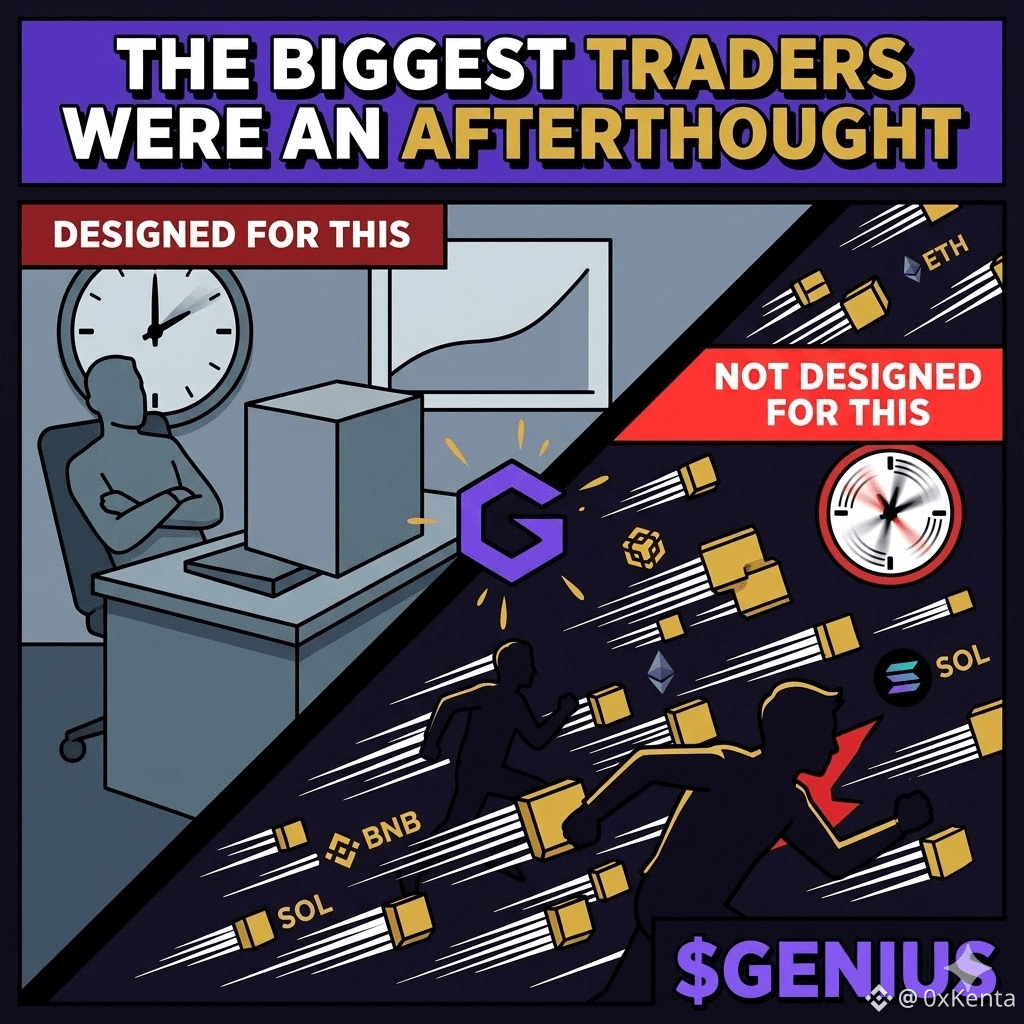
Asian retail traders behave differently. Most infrastructure isn't built for them.
I've noticed this pattern for a while. The largest volume days on most DEXs correlate with Asian trading hours. Korean, Japanese, Vietnamese, and Taiwanese retail move fast, trade frequently, and rotate between narratives quicker than Western counterparts. The average holding period is shorter. The sensitivity to execution quality is higher because margins get compressed faster when you're trading momentum rather than thesis.
Western-built trading infrastructure tends to optimize for the long thesis holder. Research tools, portfolio trackers, slow accumulation interfaces. That design assumes you have time to think.
Asian retail often doesn't operate that way.
Speed matters. Switching between opportunities across different chains matters. Slippage on smaller sizes matters more than most infrastructure teams realize because the trader doing twenty smaller trades a week feels execution drag differently than someone doing four large trades a month.
That's the gap I keep thinking about with @GeniusOfficial.
Unified execution across networks without manual bridging, fast routing, single balance that moves where opportunity is. That architecture fits high-frequency retail behavior better than most DeFi interfaces built with Western user assumptions baked in.
Whether Genius Terminal has actually optimized for Asian market hours, Asian language support, and the specific chain preferences of each market is something I genuinely don't know. Southeast Asia skews toward BNB Chain. Korea and Japan have different preferences entirely. Treating Asia as one market is its own mistake.
But the underlying execution model fits the behavior pattern better than most alternatives I've seen.
The biggest crypto retail base in the world deserves infrastructure that was actually designed with them in mind.
@GeniusOfficial $GENIUS #genius
Asian retail traders behave differently. Most infrastructure isn't built for them.
I've noticed this pattern for a while. The largest volume days on most DEXs correlate with Asian trading hours. Korean, Japanese, Vietnamese, and Taiwanese retail move fast, trade frequently, and rotate between narratives quicker than Western counterparts. The average holding period is shorter. The sensitivity to execution quality is higher because margins get compressed faster when you're trading momentum rather than thesis.
Western-built trading infrastructure tends to optimize for the long thesis holder. Research tools, portfolio trackers, slow accumulation interfaces. That design assumes you have time to think.
Asian retail often doesn't operate that way.
Speed matters. Switching between opportunities across different chains matters. Slippage on smaller sizes matters more than most infrastructure teams realize because the trader doing twenty smaller trades a week feels execution drag differently than someone doing four large trades a month.
That's the gap I keep thinking about with @GeniusOfficial.
Unified execution across networks without manual bridging, fast routing, single balance that moves where opportunity is. That architecture fits high-frequency retail behavior better than most DeFi interfaces built with Western user assumptions baked in.
Whether Genius Terminal has actually optimized for Asian market hours, Asian language support, and the specific chain preferences of each market is something I genuinely don't know. Southeast Asia skews toward BNB Chain. Korea and Japan have different preferences entirely. Treating Asia as one market is its own mistake.
But the underlying execution model fits the behavior pattern better than most alternatives I've seen.
The biggest crypto retail base in the world deserves infrastructure that was actually designed with them in mind.
Asian retail traders behave differently. Most infrastructure isn't built for them.
I've noticed this pattern for a while. The largest volume days on most DEXs correlate with Asian trading hours. Korean, Japanese, Vietnamese, and Taiwanese retail move fast, trade frequently, and rotate between narratives quicker than Western counterparts. The average holding period is shorter. The sensitivity to execution quality is higher because margins get compressed faster when you're trading momentum rather than thesis.
Western-built trading infrastructure tends to optimize for the long thesis holder. Research tools, portfolio trackers, slow accumulation interfaces. That design assumes you have time to think.
Asian retail often doesn't operate that way.
Speed matters. Switching between opportunities across different chains matters. Slippage on smaller sizes matters more than most infrastructure teams realize because the trader doing twenty smaller trades a week feels execution drag differently than someone doing four large trades a month.
That's the gap I keep thinking about with @GeniusOfficial.
Unified execution across networks without manual bridging, fast routing, single balance that moves where opportunity is. That architecture fits high-frequency retail behavior better than most DeFi interfaces built with Western user assumptions baked in.
Whether Genius Terminal has actually optimized for Asian market hours, Asian language support, and the specific chain preferences of each market is something I genuinely don't know. Southeast Asia skews toward BNB Chain. Korea and Japan have different preferences entirely. Treating Asia as one market is its own mistake.
But the underlying execution model fits the behavior pattern better than most alternatives I've seen.
The biggest crypto retail base in the world deserves infrastructure that was actually designed with them in mind.
1
181
·
--
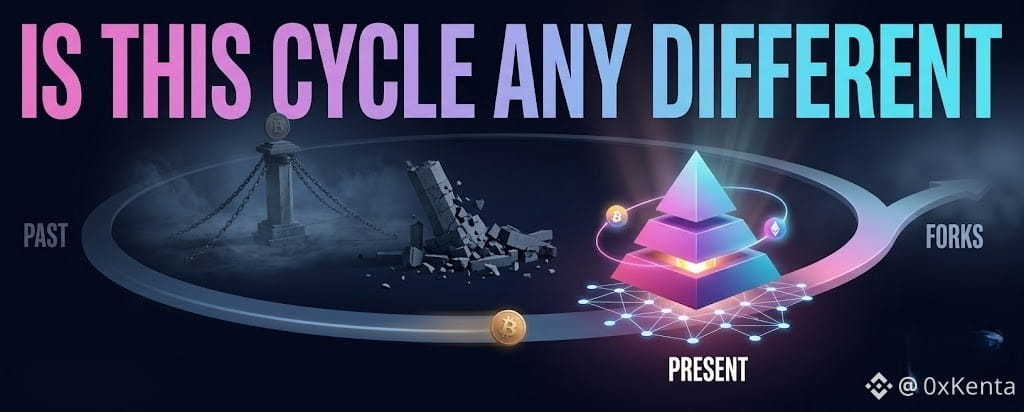
Bitcoin has been entering DeFi for about six years. Every cycle, the narrative returns.
2020 brought WBTC and renBTC. The pitch was the same as today: unlock Bitcoin's liquidity, let the largest crypto asset participate in yield generation. Billions flowed in. Then FTX collapsed in late 2022, Ren Protocol lost its Alameda funding, and the network wound down within months. Most of that Bitcoin left quietly.
WBTC survived but never escaped its centralization problem. BitGo holds the custody. For Bitcoin holders who care about self-sovereignty, that's a meaningful tradeoff most yield calculations don't include.
$BR and uniBTC represent a different architectural approach. Babylon's model allows Bitcoin to contribute to proof-of-stake security without routing through a centralized custodian. The trust assumptions are different, not eliminated.
What @Bedrock is actually testing, underneath all the yield framing, is whether this architectural difference is enough to change the adoption curve that previous attempts couldn't crack.
The honest read: the product is technically better than what existed in 2020. Whether technically better translates to mainstream Bitcoin adoption is a question #Bedrock still has to answer, the same way every Bitcoin DeFi product before it did.
The architecture improved. The adoption problem hasn't been solved yet.
Whether this cycle is different is the only question that actually matters.
Bitcoin has been entering DeFi for about six years. Every cycle, the narrative returns.
2020 brought WBTC and renBTC. The pitch was the same as today: unlock Bitcoin's liquidity, let the largest crypto asset participate in yield generation. Billions flowed in. Then FTX collapsed in late 2022, Ren Protocol lost its Alameda funding, and the network wound down within months. Most of that Bitcoin left quietly.
WBTC survived but never escaped its centralization problem. BitGo holds the custody. For Bitcoin holders who care about self-sovereignty, that's a meaningful tradeoff most yield calculations don't include.
$BR and uniBTC represent a different architectural approach. Babylon's model allows Bitcoin to contribute to proof-of-stake security without routing through a centralized custodian. The trust assumptions are different, not eliminated.
What @Bedrock is actually testing, underneath all the yield framing, is whether this architectural difference is enough to change the adoption curve that previous attempts couldn't crack.
The honest read: the product is technically better than what existed in 2020. Whether technically better translates to mainstream Bitcoin adoption is a question #Bedrock still has to answer, the same way every Bitcoin DeFi product before it did.
The architecture improved. The adoption problem hasn't been solved yet.
Whether this cycle is different is the only question that actually matters.
2020 brought WBTC and renBTC. The pitch was the same as today: unlock Bitcoin's liquidity, let the largest crypto asset participate in yield generation. Billions flowed in. Then FTX collapsed in late 2022, Ren Protocol lost its Alameda funding, and the network wound down within months. Most of that Bitcoin left quietly.
WBTC survived but never escaped its centralization problem. BitGo holds the custody. For Bitcoin holders who care about self-sovereignty, that's a meaningful tradeoff most yield calculations don't include.
$BR and uniBTC represent a different architectural approach. Babylon's model allows Bitcoin to contribute to proof-of-stake security without routing through a centralized custodian. The trust assumptions are different, not eliminated.
What @Bedrock is actually testing, underneath all the yield framing, is whether this architectural difference is enough to change the adoption curve that previous attempts couldn't crack.
The honest read: the product is technically better than what existed in 2020. Whether technically better translates to mainstream Bitcoin adoption is a question #Bedrock still has to answer, the same way every Bitcoin DeFi product before it did.
The architecture improved. The adoption problem hasn't been solved yet.
Whether this cycle is different is the only question that actually matters.
1
213
·
--
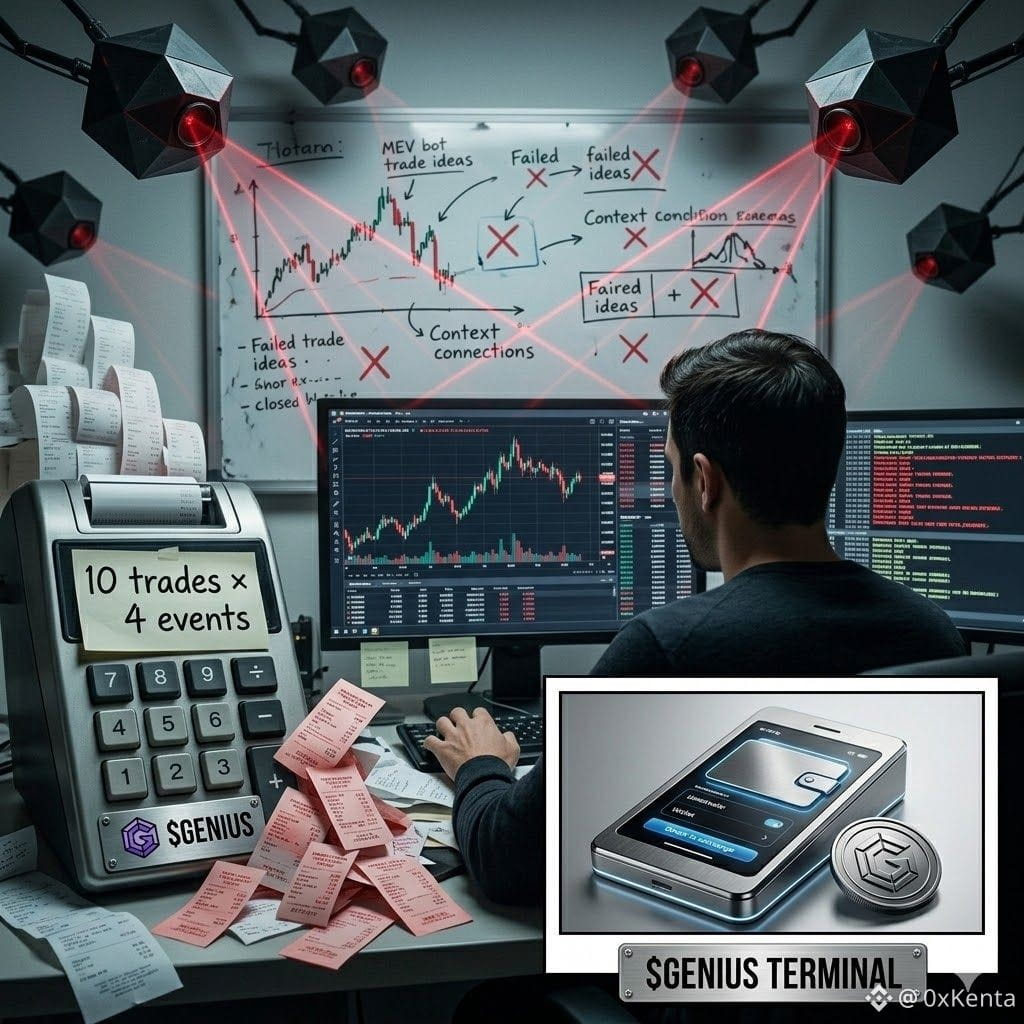
Count how many tools you used for your last trade.
Chart platform. On-chain scanner. Telegram alpha group. Wallet. Bridge. DEX interface. Maybe a portfolio tracker after.
Six tools. None of them talking to each other.
Every time you move between them you lose something. Context. Timing. The mental thread connecting why you entered to what you're actually doing. By the time execution happens the original conviction has passed through enough friction that it barely resembles the initial decision.
This is the real cost of a fragmented toolstack. Not the subscription fees. The decision quality that degrades across every interface switch.
I've made bad trades not because my analysis was wrong but because by the time I finished setting up the execution, the window had closed or my confidence had softened enough to size down. Same thesis. Worse outcome. Purely from operational drag.
That's the problem @GeniusOfficial is solving at a layer most people don't articulate clearly.
A terminal that handles scanning, execution, routing and position management from one place isn't just convenient. It preserves the cognitive state you were in when you made the decision. That state is part of the edge.
Worth noting the honest limitation here. Single terminal dependency creates a different kind of risk. If the platform has downtime or execution issues at a critical moment, there is no fallback. Concentration of tooling is its own vulnerability.
But for most active traders the current problem is the opposite.
Too many tools. Too much switching. Too much lost between the idea and the trade.
$GENIUS #genius
Count how many tools you used for your last trade.
Chart platform. On-chain scanner. Telegram alpha group. Wallet. Bridge. DEX interface. Maybe a portfolio tracker after.
Six tools. None of them talking to each other.
Every time you move between them you lose something. Context. Timing. The mental thread connecting why you entered to what you're actually doing. By the time execution happens the original conviction has passed through enough friction that it barely resembles the initial decision.
This is the real cost of a fragmented toolstack. Not the subscription fees. The decision quality that degrades across every interface switch.
I've made bad trades not because my analysis was wrong but because by the time I finished setting up the execution, the window had closed or my confidence had softened enough to size down. Same thesis. Worse outcome. Purely from operational drag.
That's the problem @GeniusOfficial is solving at a layer most people don't articulate clearly.
A terminal that handles scanning, execution, routing and position management from one place isn't just convenient. It preserves the cognitive state you were in when you made the decision. That state is part of the edge.
Worth noting the honest limitation here. Single terminal dependency creates a different kind of risk. If the platform has downtime or execution issues at a critical moment, there is no fallback. Concentration of tooling is its own vulnerability.
But for most active traders the current problem is the opposite.
Too many tools. Too much switching. Too much lost between the idea and the trade.
$GENIUS #genius
Chart platform. On-chain scanner. Telegram alpha group. Wallet. Bridge. DEX interface. Maybe a portfolio tracker after.
Six tools. None of them talking to each other.
Every time you move between them you lose something. Context. Timing. The mental thread connecting why you entered to what you're actually doing. By the time execution happens the original conviction has passed through enough friction that it barely resembles the initial decision.
This is the real cost of a fragmented toolstack. Not the subscription fees. The decision quality that degrades across every interface switch.
I've made bad trades not because my analysis was wrong but because by the time I finished setting up the execution, the window had closed or my confidence had softened enough to size down. Same thesis. Worse outcome. Purely from operational drag.
That's the problem @GeniusOfficial is solving at a layer most people don't articulate clearly.
A terminal that handles scanning, execution, routing and position management from one place isn't just convenient. It preserves the cognitive state you were in when you made the decision. That state is part of the edge.
Worth noting the honest limitation here. Single terminal dependency creates a different kind of risk. If the platform has downtime or execution issues at a critical moment, there is no fallback. Concentration of tooling is its own vulnerability.
But for most active traders the current problem is the opposite.
Too many tools. Too much switching. Too much lost between the idea and the trade.
$GENIUS #genius
1
2
833
·
--
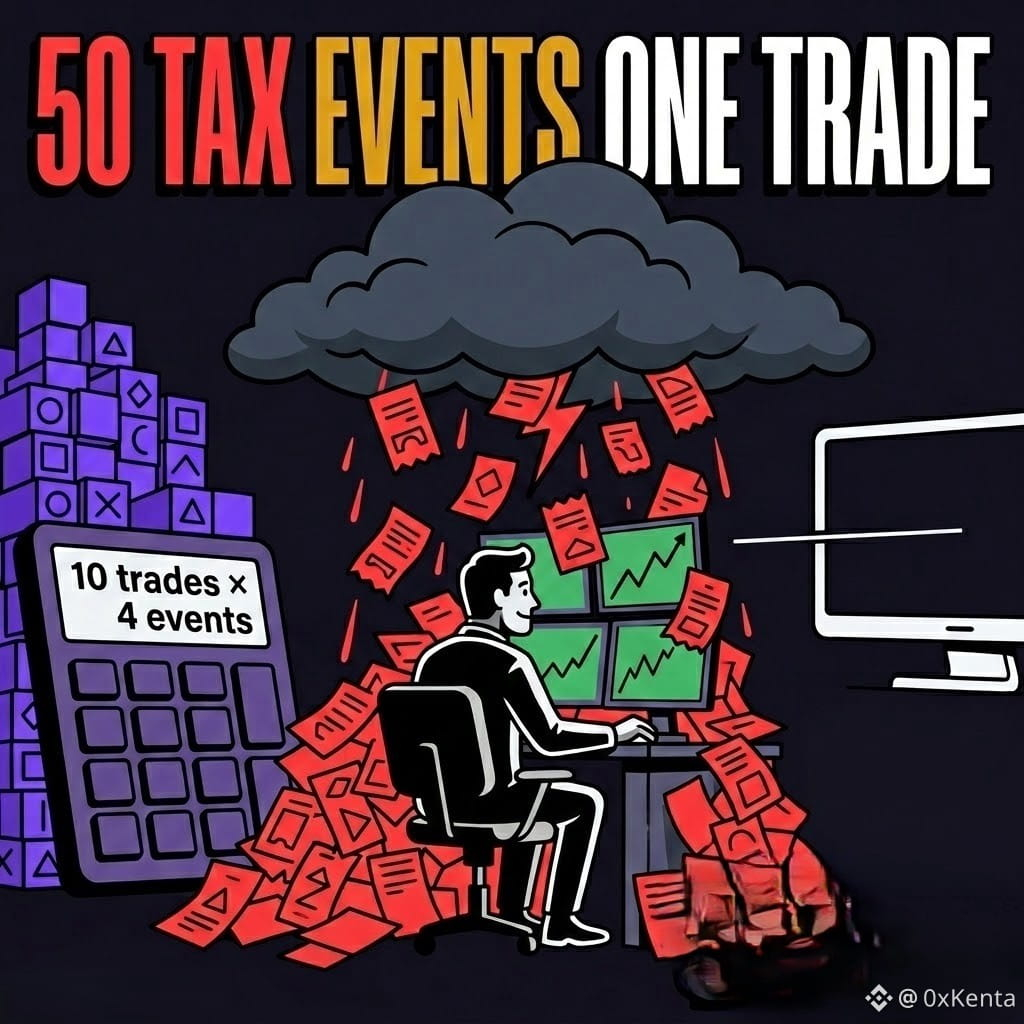
Every swap you make on-chain is a taxable event.
Most traders know this. Most traders don't think about it until they have to.
Here's the math that quietly hurts active DeFi traders.
A single cross-chain trade today might involve three to four separate on-chain actions. Bridge, approve, swap, receive. Each one potentially a taxable event depending on jurisdiction. A trader executing ten setups a month across multiple chains could generate forty or fifty tax events without realizing it.
Cost basis tracking across multiple wallets, bridging transactions, and fragmented execution is not a solved problem. Most portfolio trackers handle single-chain activity reasonably well. The moment trading spreads across networks, the record-keeping gets messy fast.
The trader who executes cleanly still has a problem on the back end.
That's the layer I don't see discussed around @GeniusOfficial
Single balance, unified execution, signatureless routing. All of that creates a cleaner activity trail from one terminal versus scattered transactions across five different interfaces. Whether that translates into meaningfully simpler tax reporting is a question worth asking the team directly.
I don't have a confirmed answer. But the architecture suggests it could.
The traders most exposed to this problem are the ones performing best.
More trades, more networks, more complexity. The cost isn't just accounting time. It's decisions made without fully understanding the tax consequence of each execution.
That hidden cost compounds the same way good execution does.
Just in the wrong direction.
@GeniusOfficial $GENIUS #genius
{spot}(GENIUSUSDT)
Every swap you make on-chain is a taxable event.
Most traders know this. Most traders don't think about it until they have to.
Here's the math that quietly hurts active DeFi traders.
A single cross-chain trade today might involve three to four separate on-chain actions. Bridge, approve, swap, receive. Each one potentially a taxable event depending on jurisdiction. A trader executing ten setups a month across multiple chains could generate forty or fifty tax events without realizing it.
Cost basis tracking across multiple wallets, bridging transactions, and fragmented execution is not a solved problem. Most portfolio trackers handle single-chain activity reasonably well. The moment trading spreads across networks, the record-keeping gets messy fast.
The trader who executes cleanly still has a problem on the back end.
That's the layer I don't see discussed around @GeniusOfficial
Single balance, unified execution, signatureless routing. All of that creates a cleaner activity trail from one terminal versus scattered transactions across five different interfaces. Whether that translates into meaningfully simpler tax reporting is a question worth asking the team directly.
I don't have a confirmed answer. But the architecture suggests it could.
The traders most exposed to this problem are the ones performing best.
More trades, more networks, more complexity. The cost isn't just accounting time. It's decisions made without fully understanding the tax consequence of each execution.
That hidden cost compounds the same way good execution does.
Just in the wrong direction.
@GeniusOfficial $GENIUS #genius
Most traders know this. Most traders don't think about it until they have to.
Here's the math that quietly hurts active DeFi traders.
A single cross-chain trade today might involve three to four separate on-chain actions. Bridge, approve, swap, receive. Each one potentially a taxable event depending on jurisdiction. A trader executing ten setups a month across multiple chains could generate forty or fifty tax events without realizing it.
Cost basis tracking across multiple wallets, bridging transactions, and fragmented execution is not a solved problem. Most portfolio trackers handle single-chain activity reasonably well. The moment trading spreads across networks, the record-keeping gets messy fast.
The trader who executes cleanly still has a problem on the back end.
That's the layer I don't see discussed around @GeniusOfficial
Single balance, unified execution, signatureless routing. All of that creates a cleaner activity trail from one terminal versus scattered transactions across five different interfaces. Whether that translates into meaningfully simpler tax reporting is a question worth asking the team directly.
I don't have a confirmed answer. But the architecture suggests it could.
The traders most exposed to this problem are the ones performing best.
More trades, more networks, more complexity. The cost isn't just accounting time. It's decisions made without fully understanding the tax consequence of each execution.
That hidden cost compounds the same way good execution does.
Just in the wrong direction.
@GeniusOfficial $GENIUS #genius
1
880
·
--
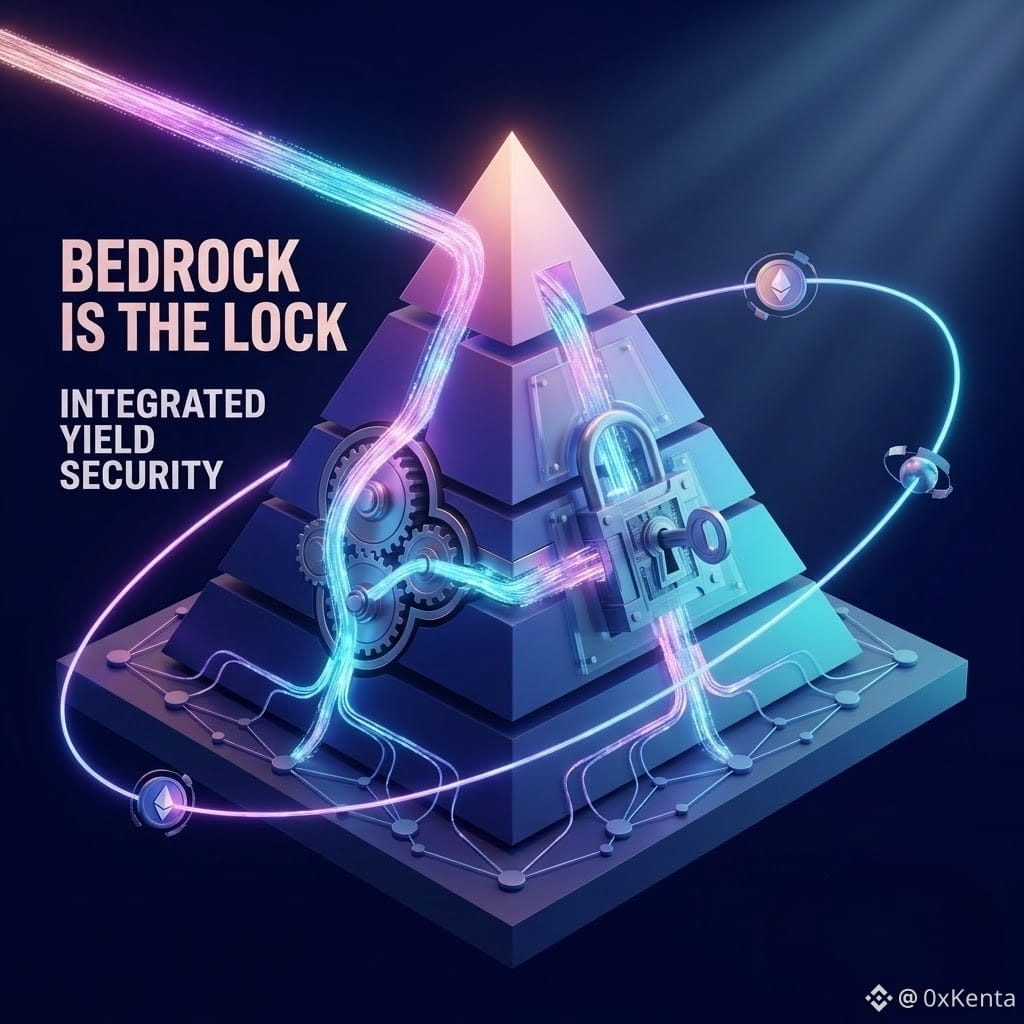
BRclaw gave me a cleaner risk breakdown than I could have produced manually. Exposure across each yield layer, suggested ranges, a few flags I hadn't noticed.
I still went back to my own notes afterward.
Not because the analysis was wrong. Most of it looked right. But I couldn't verify the parts that mattered most, the slashing probability estimates, how each AVS risk weighting was calculated. The model was confident in a way I couldn't interrogate.
DeFi has always punished people who outsource their thinking. The expensive mistakes aren't usually the ones where you did the math wrong. They're the ones where you assumed someone else had done it for you.
BRclaw is genuinely useful for orientation. It surfaces information faster than I can find it manually, and for someone new to liquid restaking it probably prevents a few obvious errors.
But useful-for-orientation and useful-for-decisions are different things. I notice I want them to be the same thing because that would be more convenient.
I'll keep using it. I'll also keep running my own version of the same checks separately.
When the two disagree, that's the moment that actually tells me something.
@Bedrock $BR #Bedrock
BRclaw gave me a cleaner risk breakdown than I could have produced manually. Exposure across each yield layer, suggested ranges, a few flags I hadn't noticed.
I still went back to my own notes afterward.
Not because the analysis was wrong. Most of it looked right. But I couldn't verify the parts that mattered most, the slashing probability estimates, how each AVS risk weighting was calculated. The model was confident in a way I couldn't interrogate.
DeFi has always punished people who outsource their thinking. The expensive mistakes aren't usually the ones where you did the math wrong. They're the ones where you assumed someone else had done it for you.
BRclaw is genuinely useful for orientation. It surfaces information faster than I can find it manually, and for someone new to liquid restaking it probably prevents a few obvious errors.
But useful-for-orientation and useful-for-decisions are different things. I notice I want them to be the same thing because that would be more convenient.
I'll keep using it. I'll also keep running my own version of the same checks separately.
When the two disagree, that's the moment that actually tells me something.
@Bedrock $BR #Bedrock
I still went back to my own notes afterward.
Not because the analysis was wrong. Most of it looked right. But I couldn't verify the parts that mattered most, the slashing probability estimates, how each AVS risk weighting was calculated. The model was confident in a way I couldn't interrogate.
DeFi has always punished people who outsource their thinking. The expensive mistakes aren't usually the ones where you did the math wrong. They're the ones where you assumed someone else had done it for you.
BRclaw is genuinely useful for orientation. It surfaces information faster than I can find it manually, and for someone new to liquid restaking it probably prevents a few obvious errors.
But useful-for-orientation and useful-for-decisions are different things. I notice I want them to be the same thing because that would be more convenient.
I'll keep using it. I'll also keep running my own version of the same checks separately.
When the two disagree, that's the moment that actually tells me something.
@Bedrock $BR #Bedrock
1
1
1.2k
·
--
Bullish
Verified
My thoughts on $SOL and the NFT space right now 👇
The uptrend on Solana has broken. Not calling it a full bear market yet but trying to catch the exact bottom is a losing game.
Anywhere below $65 looks like a reasonable zone to start building a position slowly if you're playing long-term.
Fundamentals are still solid. The network is growing, ecosystem is expanding, and partnerships with Visa, Mastercard and Shopify show that serious money is still paying attention.
On the NFT side $SOL vs $ETH is no longer just a market cycle story. It's a battle for liquidity and attention. Right now Ethereum has the edge: stronger project launches, more trust from teams and investors. But this space is cyclical. In 2022 the story looked completely different. Leadership shifts, it's not a question of if, but when.
Staying patient and watching closely.
Not financial advice. Just my personal view.
$SOL #Solana
{spot}(SOLUSDT)
My thoughts on $SOL and the NFT space right now 👇
The uptrend on Solana has broken. Not calling it a full bear market yet but trying to catch the exact bottom is a losing game.
Anywhere below $65 looks like a reasonable zone to start building a position slowly if you're playing long-term.
Fundamentals are still solid. The network is growing, ecosystem is expanding, and partnerships with Visa, Mastercard and Shopify show that serious money is still paying attention.
On the NFT side $SOL vs $ETH is no longer just a market cycle story. It's a battle for liquidity and attention. Right now Ethereum has the edge: stronger project launches, more trust from teams and investors. But this space is cyclical. In 2022 the story looked completely different. Leadership shifts, it's not a question of if, but when.
Staying patient and watching closely.
Not financial advice. Just my personal view.
$SOL #Solana
The uptrend on Solana has broken. Not calling it a full bear market yet but trying to catch the exact bottom is a losing game.
Anywhere below $65 looks like a reasonable zone to start building a position slowly if you're playing long-term.
Fundamentals are still solid. The network is growing, ecosystem is expanding, and partnerships with Visa, Mastercard and Shopify show that serious money is still paying attention.
On the NFT side $SOL vs $ETH is no longer just a market cycle story. It's a battle for liquidity and attention. Right now Ethereum has the edge: stronger project launches, more trust from teams and investors. But this space is cyclical. In 2022 the story looked completely different. Leadership shifts, it's not a question of if, but when.
Staying patient and watching closely.
Not financial advice. Just my personal view.
$SOL #Solana

1
1
820
·
--
Bullish
Nobody asked you if your financial history could be public.
It just is.
Every wallet address is a permanent, searchable, fully transparent record of every decision you've made on-chain. Who you traded with. What you held. When you sold. How much you made or lost. All of it indexed, queryable, available to anyone with an internet connection and basic blockchain knowledge.
In traditional finance, that level of disclosure would require a court order.
On-chain, it's the default.
Most people in crypto accept this without thinking about it. Transparency gets framed as a feature trustless verification, public auditability, no hidden manipulation. Those are real benefits.
But there's a cost that rarely gets discussed.
When your wallet is your identity, your behavior becomes a product. Analytics firms sell on-chain profiles. Competitors track your positions. Copy-traders follow your entries in real time. What you intended as a private financial decision becomes market intelligence for everyone watching.
That's the problem @GeniusOfficial is working on at a different layer than most.
Ghost orders and wallet abstraction aren't just execution tools. They're the first serious attempt to separate wallet identity from trading behavior on-chain. Your address exists. Your trades execute. But the connection between the two stops being readable from the outside.
Whether the implementation fully delivers on that still worth verifying independently.
Financial privacy isn't about hiding wrongdoing.
It's about the same expectation you have when you use a bank, a broker, or a credit card.
That your decisions are yours.
@GeniusOfficial $GENIUS #genius
{spot}(GENIUSUSDT)
Nobody asked you if your financial history could be public.
It just is.
Every wallet address is a permanent, searchable, fully transparent record of every decision you've made on-chain. Who you traded with. What you held. When you sold. How much you made or lost. All of it indexed, queryable, available to anyone with an internet connection and basic blockchain knowledge.
In traditional finance, that level of disclosure would require a court order.
On-chain, it's the default.
Most people in crypto accept this without thinking about it. Transparency gets framed as a feature trustless verification, public auditability, no hidden manipulation. Those are real benefits.
But there's a cost that rarely gets discussed.
When your wallet is your identity, your behavior becomes a product. Analytics firms sell on-chain profiles. Competitors track your positions. Copy-traders follow your entries in real time. What you intended as a private financial decision becomes market intelligence for everyone watching.
That's the problem @GeniusOfficial is working on at a different layer than most.
Ghost orders and wallet abstraction aren't just execution tools. They're the first serious attempt to separate wallet identity from trading behavior on-chain. Your address exists. Your trades execute. But the connection between the two stops being readable from the outside.
Whether the implementation fully delivers on that still worth verifying independently.
Financial privacy isn't about hiding wrongdoing.
It's about the same expectation you have when you use a bank, a broker, or a credit card.
That your decisions are yours.
@GeniusOfficial $GENIUS #genius
It just is.
Every wallet address is a permanent, searchable, fully transparent record of every decision you've made on-chain. Who you traded with. What you held. When you sold. How much you made or lost. All of it indexed, queryable, available to anyone with an internet connection and basic blockchain knowledge.
In traditional finance, that level of disclosure would require a court order.
On-chain, it's the default.
Most people in crypto accept this without thinking about it. Transparency gets framed as a feature trustless verification, public auditability, no hidden manipulation. Those are real benefits.
But there's a cost that rarely gets discussed.
When your wallet is your identity, your behavior becomes a product. Analytics firms sell on-chain profiles. Competitors track your positions. Copy-traders follow your entries in real time. What you intended as a private financial decision becomes market intelligence for everyone watching.
That's the problem @GeniusOfficial is working on at a different layer than most.
Ghost orders and wallet abstraction aren't just execution tools. They're the first serious attempt to separate wallet identity from trading behavior on-chain. Your address exists. Your trades execute. But the connection between the two stops being readable from the outside.
Whether the implementation fully delivers on that still worth verifying independently.
Financial privacy isn't about hiding wrongdoing.
It's about the same expectation you have when you use a bank, a broker, or a credit card.
That your decisions are yours.
@GeniusOfficial $GENIUS #genius
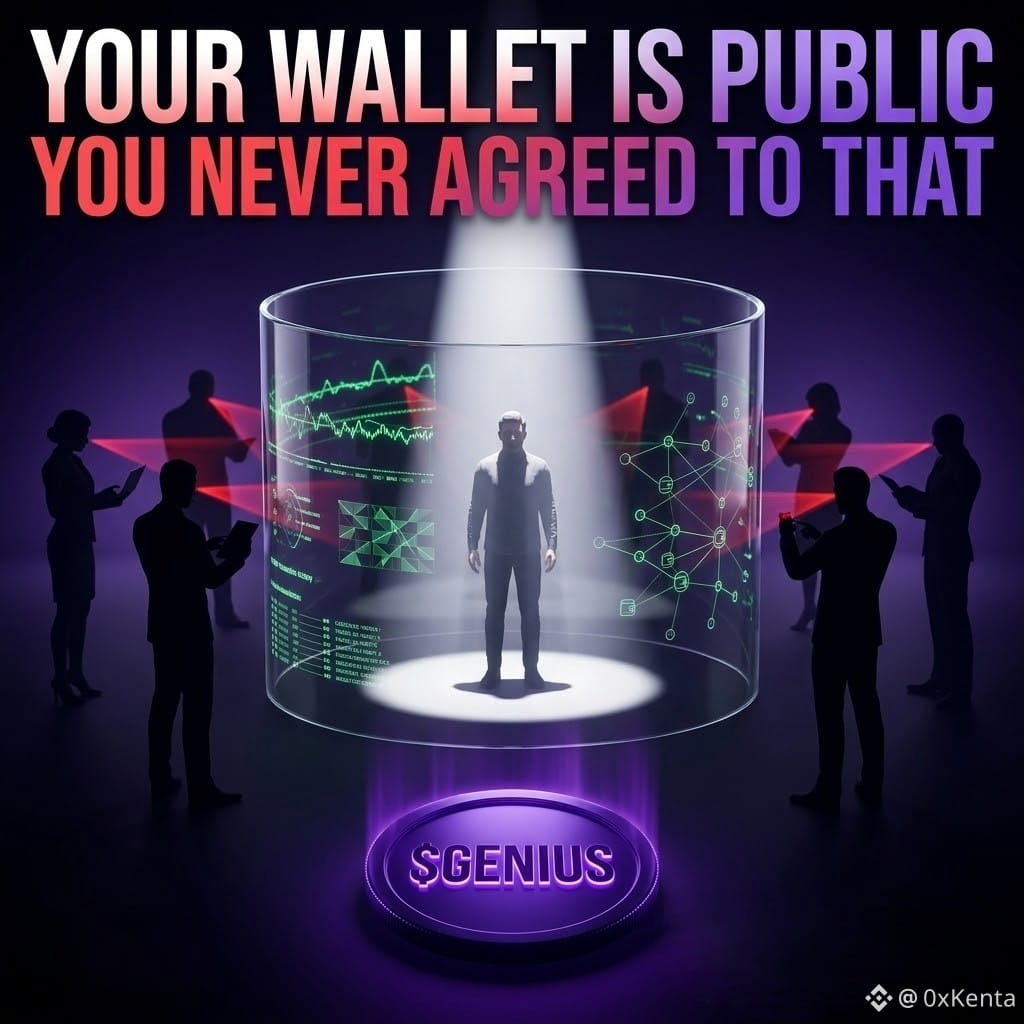
3
3
1.8k
·
--
Bullish
$XLM open long NOW
wanna try with short sl
stop loss - 0.21856$
$XLM open long NOW
wanna try with short sl
stop loss - 0.21856$
wanna try with short sl
stop loss - 0.21856$
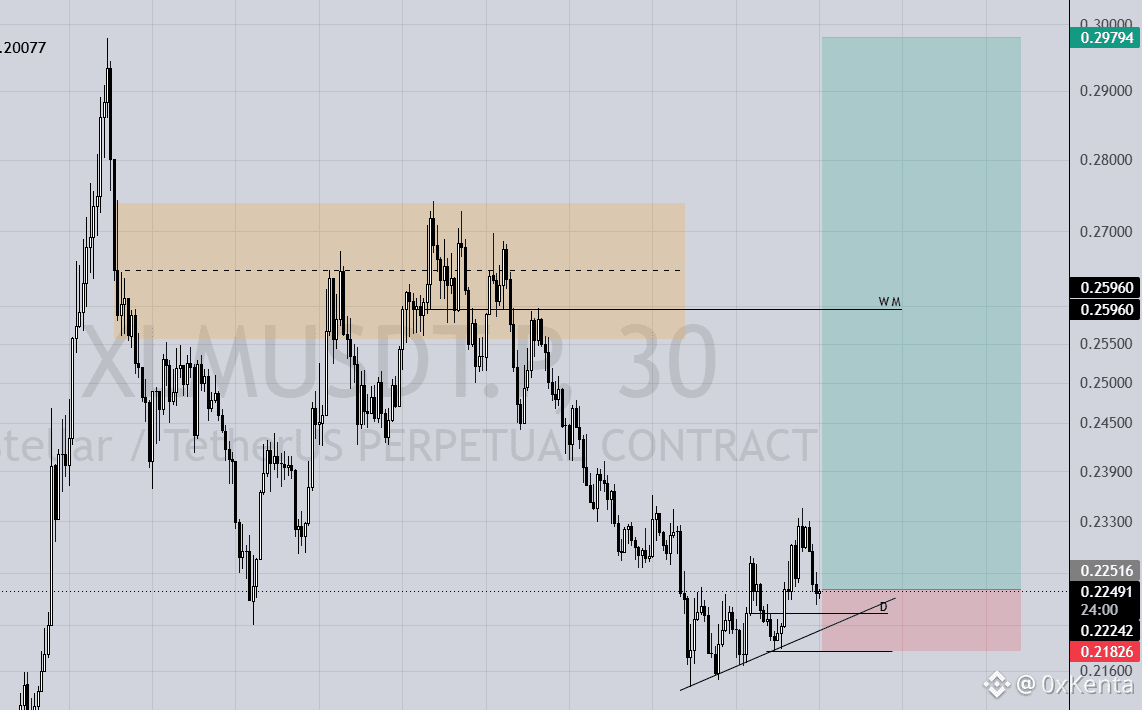
542
·
--
The best entries I've ever seen happen before most people know the asset exists.
Not insider information. Just access.
In traditional markets, pre-IPO allocation is reserved for institutions, funds, connected individuals. Retail waits for the listing. By the time price is public, the early edge is already gone, distributed to whoever had access to the private round.
DeFi was supposed to fix that.
It mostly didn't.
Most tokens still follow the same pattern. Private sale, seed round, TGE, then public trading.
Retail enters at or after listing.
The information asymmetry changed but the access asymmetry didn't.
That's the part that caught my attention with @GeniusOfficial
Pre-launch token trading executing on an asset before it officially lists anywhere is a different category of access.
Not prediction. Not speculation on narrative.
Actual execution on price before the broader market has a venue to do the same.
The mechanism matters here. Pre-launch trading requires the terminal to assume counterparty risk or source liquidity from somewhere before official markets form.
That's non-trivial. If the liquidity source is thin or the pricing mechanism is opaque, early access becomes early exposure to bad fills.
That's the question I'd want answered before sizing into any pre-launch position through any terminal.
But the category itself is real.
Access has always been the edge in markets. The question is who gets it and when.
@GeniusOfficial $GENIUS #genius
{future}(GENIUSUSDT)
The best entries I've ever seen happen before most people know the asset exists.
Not insider information. Just access.
In traditional markets, pre-IPO allocation is reserved for institutions, funds, connected individuals. Retail waits for the listing. By the time price is public, the early edge is already gone, distributed to whoever had access to the private round.
DeFi was supposed to fix that.
It mostly didn't.
Most tokens still follow the same pattern. Private sale, seed round, TGE, then public trading.
Retail enters at or after listing.
The information asymmetry changed but the access asymmetry didn't.
That's the part that caught my attention with @GeniusOfficial
Pre-launch token trading executing on an asset before it officially lists anywhere is a different category of access.
Not prediction. Not speculation on narrative.
Actual execution on price before the broader market has a venue to do the same.
The mechanism matters here. Pre-launch trading requires the terminal to assume counterparty risk or source liquidity from somewhere before official markets form.
That's non-trivial. If the liquidity source is thin or the pricing mechanism is opaque, early access becomes early exposure to bad fills.
That's the question I'd want answered before sizing into any pre-launch position through any terminal.
But the category itself is real.
Access has always been the edge in markets. The question is who gets it and when.
@GeniusOfficial $GENIUS #genius
Not insider information. Just access.
In traditional markets, pre-IPO allocation is reserved for institutions, funds, connected individuals. Retail waits for the listing. By the time price is public, the early edge is already gone, distributed to whoever had access to the private round.
DeFi was supposed to fix that.
It mostly didn't.
Most tokens still follow the same pattern. Private sale, seed round, TGE, then public trading.
Retail enters at or after listing.
The information asymmetry changed but the access asymmetry didn't.
That's the part that caught my attention with @GeniusOfficial
Pre-launch token trading executing on an asset before it officially lists anywhere is a different category of access.
Not prediction. Not speculation on narrative.
Actual execution on price before the broader market has a venue to do the same.
The mechanism matters here. Pre-launch trading requires the terminal to assume counterparty risk or source liquidity from somewhere before official markets form.
That's non-trivial. If the liquidity source is thin or the pricing mechanism is opaque, early access becomes early exposure to bad fills.
That's the question I'd want answered before sizing into any pre-launch position through any terminal.
But the category itself is real.
Access has always been the edge in markets. The question is who gets it and when.
@GeniusOfficial $GENIUS #genius
1
1
574
Log in to explore more content
Join global crypto users on Binance Square
⚡️ Get latest and useful information about crypto.
💬 Trusted by the world’s largest crypto exchange.
👍 Discover real insights from verified creators.
Email / Phone number
Trending Topics
USAugustPPIRisesLessThanExpected
15,377 views
402 Discussing
🚨 US AUG PPI: Rises LESS Than Expected! Bullish for Crypto? 🚀
PPI +0.4% MoM as expected, but CORE PPI only +0.2% vs +0.3% expected - cooling!
What it means:
• Wholesale inflation softer than feared
• Fed rate hike chance now 62% - but dovish signals coming
• Core PCE revisions expected downward - bullish
• BTC usually pumps on softer PPI
Fed meeting Sep 15-16 - Market now expects pause, not hike?
Is this the green light for Q4 rally?
#Bitcoin #PPI #Fed #CryptoNews #BTC#usaugustppiriseslessthanexpected
True News
·1 Likes
·1.2k views
SECApprovesNasdaqTexasCommodityTrustRule
11,666 views
363 Discussing
ECBRaisesRatesSecondTimeTo2.5%
8,097 views
260 Discussing