


Carefully! Lots of text.
NFTs are unique digital collectibles on the blockchain. They can be used in games as characters, consumables, and other means of exchange.
Gaming with NFTs has become a popular way to make money in the Game-fi (blockchain gaming) industry: you can sell your in-game NFTs to other collectors and players and even earn tokens in Play-to-Earn models.
When transacting game NFTs, always be sure to transfer them to a compatible wallet, and beware of scams when sending NFTs to a user or marketplace. Please read the rules of your NFT game carefully and be aware of any possible risks.
NFT games are most often created on Ethereum or Binance Smart Chain (BSC). Games like CryptoBlades and Axie Infinity pit players against each other using collectible characters, while Sorare involves collecting collectible cards.
Binance offers NFT Mystery Boxes that allow holders to own NFTs of varying rarities. Some boxes are part of collections developed in partnership with NFT games.
Introduction
The popularity of CryptoKitties at one time gave impetus to the development of new NFT games and the Play-to-Earn model, which allows you to earn money on game progress. Today, the Game-Fi industry combines finance with gaming and opens up different ways for players to earn money. Now users' income depends not only on the opportunity to win, find or create a rare collectible item worth thousands of dollars. Instead, players can experiment with several game models in different themes that are not limited to collectible animals.
What is NFT?
A non-fungible token (NFT) is a digital cryptographic token on the blockchain that represents a unique item. An NFT has many uses: it can be a digital asset in a game, a collectible piece of crypto art, or even a real-world object like real estate. Non-fungible tokens solved the long-standing problem of creating a decentralized digital system for collecting and owning items in a world where everything can be copied.
NFTs are not fungible: each token is unique and cannot be identically replaced with another. For example, you can exchange 1 BTC (bitcoin) for another absolutely equivalent BTC, but there are no such identical NFTs. Even if an NFT art piece is released in multiple versions, the metadata of each non-fungible token will be different, like a numbered series of fingerprints.
How do NFT games work?
NFT games are different from simply storing crypto collectibles in a wallet. They use non-fungible tokens in their rules, mechanics and interactions between users. For example, your unique character or avatar could be an NFT, as could digital items you find while playing. You can trade or sell your tokens to other players for profit, as well as earn tokens in the modern Play-to-Earn model (more on this below).
How are NFTs being introduced into the gaming environment? To allow NFTs to be swapped, created, and used in-game, developers create smart contracts with rules for using such tokens. Smart contracts are self-executing pieces of code stored on the blockchain.
For example, in CryptoKitties, a small number of core contracts structure the game. The most famous of them, geneScience, defines the random mechanics of generating new cats. Initially, the game's developers kept its code secret, so interested players even created tools to analyze the likelihood of certain traits appearing in cats. This helped users increase their chances of obtaining a rare and more valuable breed.
What are NFT games with a Play-to-Earn model?
NFT games with a Play-to-Earn model allow you to earn income for the time spent in the game. The longer a user plays, the more tokens and sometimes NFTs they can earn, with the tokens earned often being used to craft in-game items.
Earnings from game progress are considered more stable compared to profits from random NFTs. The Play-to-Earn model is especially popular in low-income countries as it allows users to earn or increase earnings.
One of the most famous Play-to-Earn games is Axie Infinity. To start the game, users need to purchase three Axie creatures or receive a free scholarship from another player. After recruiting your first team of creatures, you can complete missions and challenges to earn Smooth Love Potion (SLP), an ERC-20 token that can be traded on exchanges.
SLPs are used in the game's economy to breed new Axies. Axie Infinity has become especially popular in the Philippines, where many users make a living from it. Thanks to Axie Infinity, many people earn between $200 and $1,000 per month, and some even more, depending on the market price and time spent in the game.
What are in-game NFTs?
In-game NFTs are another way to generate income in NFT games. Instead of a fungible ERC-20 token (like SLP in Axie Infinity or SKILLS in CryptoBlade), you get non-fungible tokens in the form of collectibles. This mechanism is a traditional way to make money from NFT games, and the value of collectibles can depend on their appearance, rarity or usefulness.
CryptoKitties is an example of a game that revolves around collecting in-game NFTs. It is important to understand that earnings in this model depend on the luck of the players. For greater balance, new NFT games offer a combination of Play-to-Earn model and in-game NFTs.
How can you make money in NFT games?
The amount of possible earnings in NFT games depends on the mechanics of the specific game and market demand. Users earn cryptocurrency, or NFTs, in games that can be purchased by other players. To generate income, you need to sell goods on the market, exchanges or auctions, and the value of certain tokens depends on their rarity or use in the game. It is these two factors that allow games to be used for speculative purposes.
Can I lose money in NFT games?
There is a possibility of losing money in NFT games: the exact amount depends on the type of game, its mechanics and the value of the specific NFTs. However, losing money doesn't necessarily mean you're cheating: Because NFTs are speculative and their value depends on other people's bids, your losses are also affected by market demand. In any case, invest in cryptocurrency and NFT games only as much as you are willing to lose.
Can I lose my NFTs?
Given the value of some non-fungible tokens, many holders are concerned about their safety during games or transactions on the blockchain. Regardless of whether you purchased your NFTs or earned them in-game, you need to ensure they're safe because if you're not careful, NFTs can actually be lost. To minimize these chances, follow the tips below.
There are several ways to lose an NFT:
Transferring NFTs from your wallet to a wallet that does not support the required token standard.
Sending an NFT to a scammer.
Giving access to your wallet to a malicious smart contract that takes your NFT.
Loss of a token in accordance with the rules of the game.
The first three situations can be avoided if you understand the structure of NFTs, blockchain technology and fraudulent schemes. Rules for using NFTs safely are just as important as rules for using PayPal and online banking, so to avoid losing your NFTs, follow these rules:
Make sure you don't send NFTs to scammers. For tips on identifying potential scammers, see “5 Common Types of Cryptocurrency Scams and How to Avoid Them.”
Find out what types of tokens and blockchains your wallet or platform supports. ERC-721 and ERC-1155 are the most common NFT token protocols for Ethereum, while BEP-721 and BEP-1155 are the most common for Binance Smart Chain (BSC). Always check that the address is correct and never assume that they are compatible.
Interact only with smart contracts from projects you can trust. When you allow a smart contract to interact with your wallet, a malicious contract can delete your funds.
Read the rules of the game carefully. Some rules allow players to trade among themselves or use NFT consumables, such as items or potions. Read the terms and conditions before playing to avoid any unpleasant surprises.
Popular NFT games
There are many different NFT games, most of which exist on either the BSC network or Ethereum. Some offer more traditional gaming experiences, while others mainly specialize in NFT collecting.
Axie Infinity
As we said, Axie Infinity is reminiscent of the Pokemon franchise: players can collect creatures and use them in battles. Axie Infinity is on the Ethereum blockchain and allows users to earn income from the sale of Smooth Love Potions (SLP), Axie creatures and Axie Infinity Shards (AXS), however, SLP and AXS can be traded on the Binance platform.

Sister
Sorare is a fantasy football game where users can exchange collectible images of real-life football players. To play Sorare, you need to assemble a team of five players, using either free starter cards or paid tokenized cards. Players can level up by earning points for winning games, scoring goals, and other achievements.
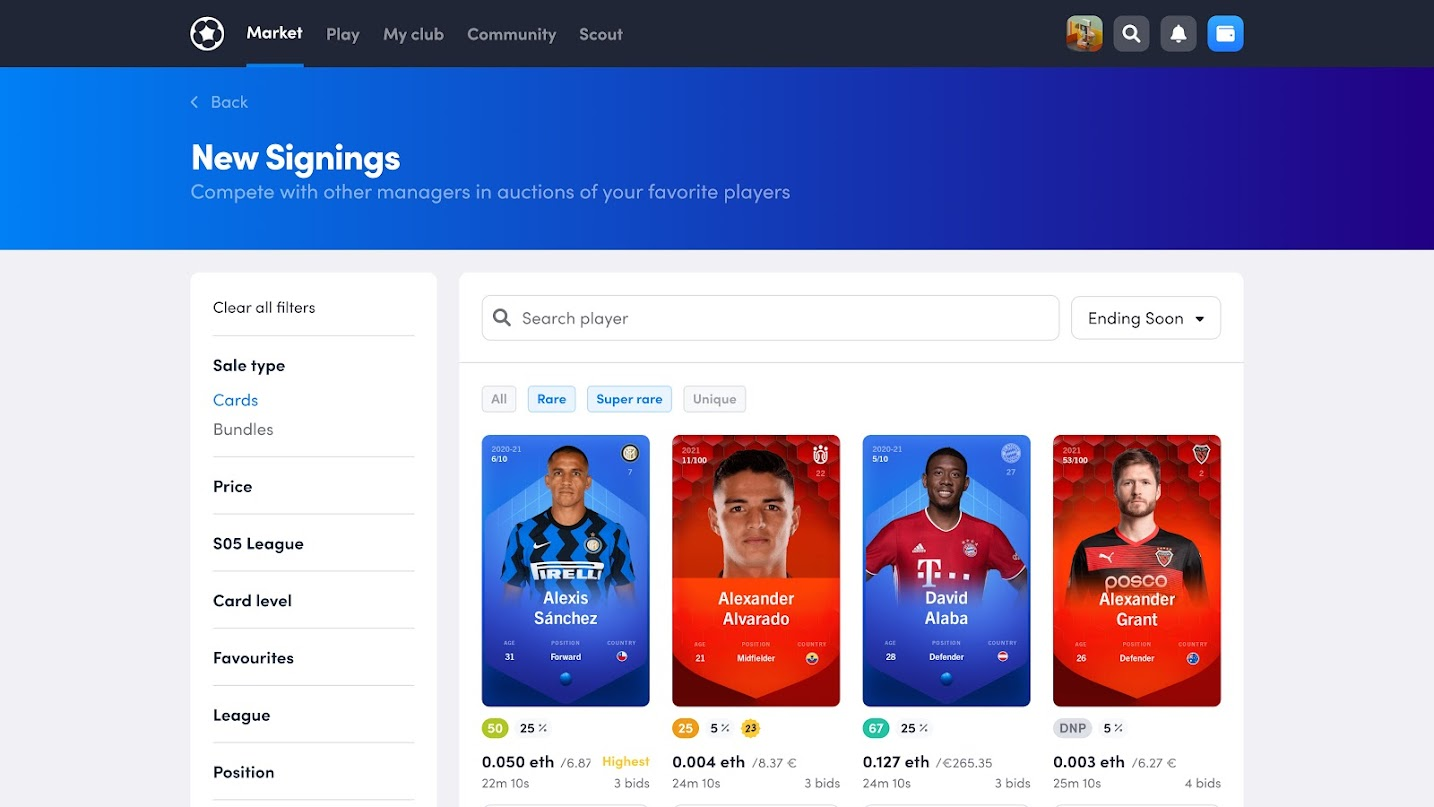
Gods Unchained
Gods Unchained is an Ethereum-based NFT card game similar to Magic The Gathering and Hearthstone. In it, players build decks with different abilities and characteristics to fight other users. Defeating your opponent can earn you in-game items that can be used or sold, while winning ranked games can earn you Flux to create powerful NFT cards. They can be sold or invested in new cards to speed up progress.

Binance NFT Collections
NFT marketplace Binance offers mystery boxes and NFT collections in partnership with digital artists and NFT games. Each mystery box contains a random non-fungible token of varying rarity from a specific collection. Holders of mystery boxes can open them, find out the contents, or sell them without opening them.
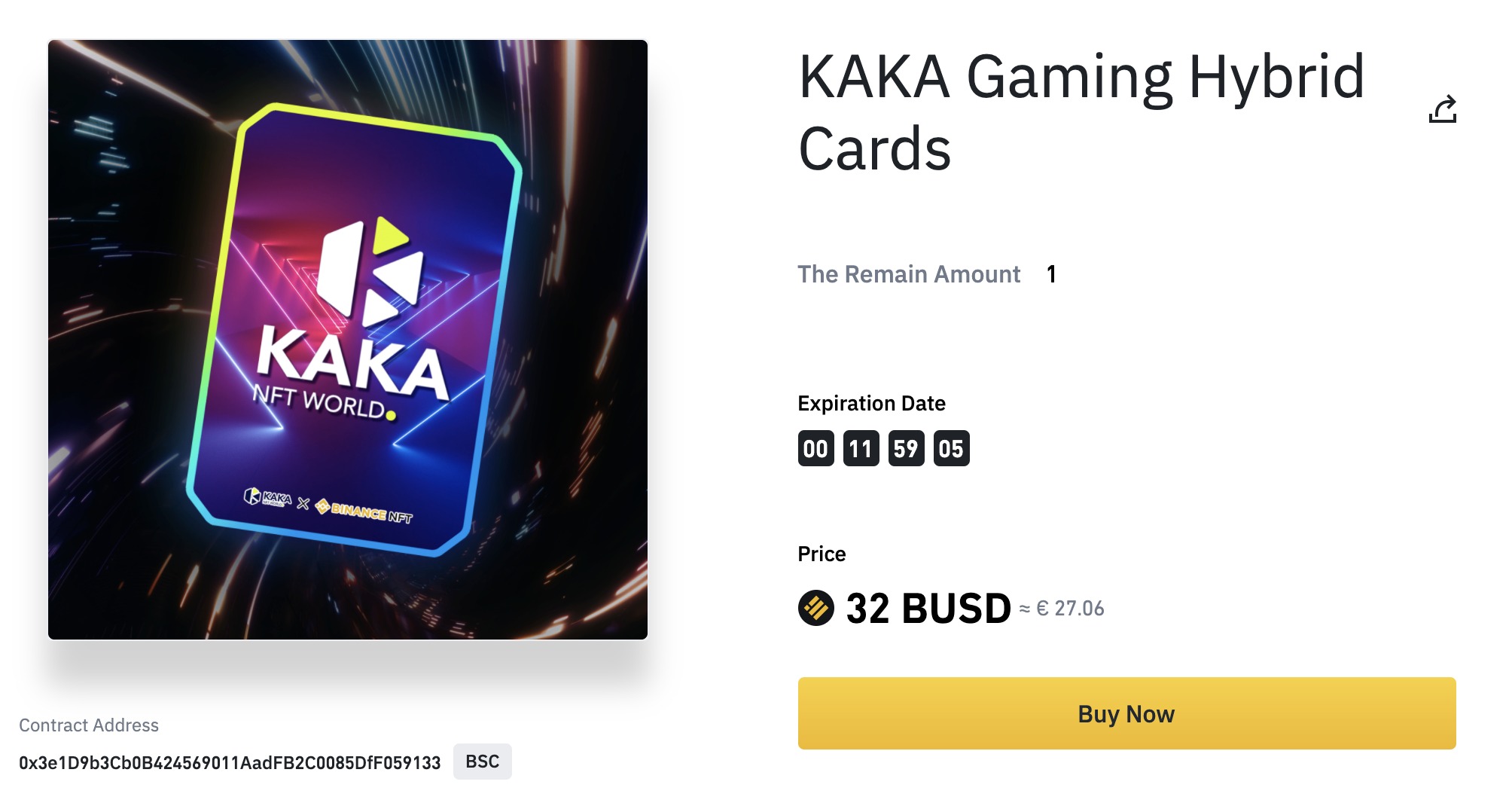
NFT collections contain several NFTs and mystery boxes dedicated to a specific theme or project. At the moment, some of the most popular collections contained Game-fi themed mystery boxes. Let's look at two of them:
1. MOBOX collection. MOBOX is a BSC gaming platform that combines profitable DeFi farming and non-fungible tokens. The Binance collection contained MOMO NFT mystery boxes that had random hashing power on the MOBOX platform. The more hashing power an NFT has, the more valuable MOMO will be in MOBOX games.
2. My Neighbor Alice collection. My Neighbor Alice is a game in which users build their own virtual world. Although mystery boxes have so far only contained cosmetic NFT items, users still value them and trade them on the secondary market.
Summary
NFT games use digital collectibles and create rules for players to interact with each other's NFTs. At the same time, different users may have different interests: for some, the gaming benefits of NFTs are important, others are more interested in their collectible value. And while many NFT games are card games, not all collectors play with their decks. The Game-fi industry has created a new gaming economy of NFTs and changed the way people make money with them: making a profit is no longer just about luck and collecting, but also about gameplay.