

Author: Loopy Lu, OdailyNews
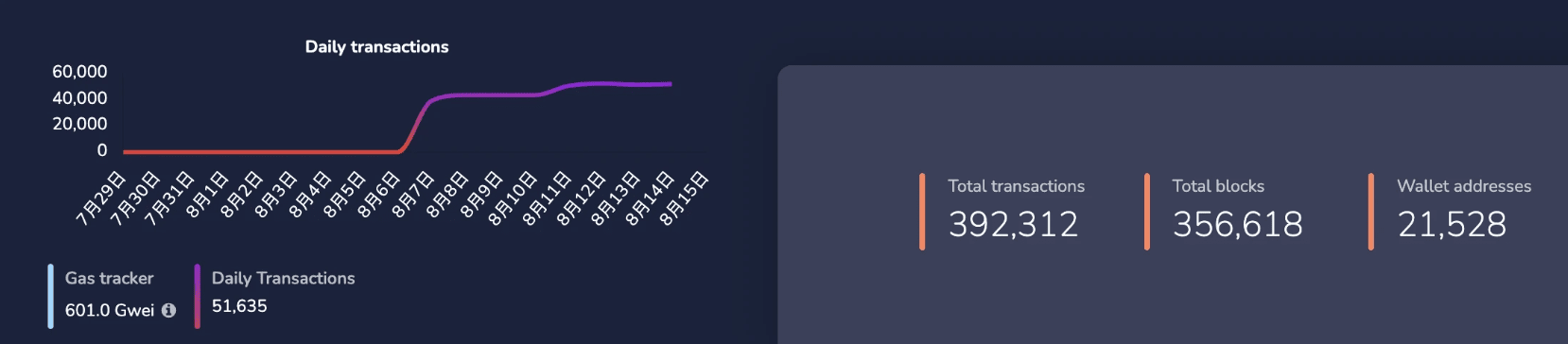
Recently, DeBank announced the plan for DeBank Chain, and another well-known player joined the altchain craze. Official information shows that DeBank Chain will be built as a social-focused chain that will add an asset layer to social behaviors to revolutionize social interactions. DeBank Chain is now open for testnet, and the mainnet will be available before 2024. Testnet chain browser data shows that the number of wallet addresses on the chain exceeds 19,000.
The opening of the test network also allows the wool party to see the potential to get rich. However, in recent years, various "wool-losing" incidents have occurred frequently. Can DeBank's chain launch plan still make wool party earn money?
DeBank Chain: Low-cost social chain
To understand DeBank Chain, we need to start with DeBank. DeBank is a long-established DeFi management panel where users can track their portfolios and use the integrated trading function to make investments.
In December 2021, DeBank completed US$25 million in equity financing with a valuation of US$200 million, led by Sequoia China, with participation from Dragonfly, Hash Global, Youbi, Coinbase Venture, Crypto.com, Circle, and Ledger.
In January 2022, Debank launched the Web3 social platform and Web 3 ID function, through which users can follow the trading dynamics of whales, NFT market trends, track Mirror article updates and real-time on-chain activities of Web3 friends.
In October 2022, DeBank launched the Web3 native communication application DeBank Hi.
As an old and well-known project, most investors (and media friends who often query on-chain data) are familiar with DeBank, so I will not go into details here.
DeBank Chain is a new chain named after the DeBank brand. Similar to many L2s that have emerged recently, the network is also developed based on OP Stack. DeBank said that this chain has three advantages: minimizing gas costs; providing a local experience similar to account abstraction; and ensuring the security of L1 assets.
Specifically, DeBank Chain has made significant progress in optimizing the consensus mechanism, and the gas cost of a single transaction can be reduced by 100 to 400 times. The official also stated that in terms of bringing a "next generation" level of user experience, the chain provides an account abstraction system similar to the chain level and integrates it locally. This allows users to enjoy an experience close to Web2, while at the same time maintaining 100% compatibility with the EVM standard.
In the new account system, transactions support the use of exclusive L2 private keys for signing, reducing the use of L1 private keys in usage scenarios and enhancing the security of users' L1 assets. This also provides a basis for users to perform more frequent operations. Officials believe that this feature "fully adapts" to the high-frequency nature of social interactions on our platform.
How to participate in "hair pulling"?
At present, I have not found the RPC URL of DeBank Chain, so it cannot be added manually from MetaMask. But the test network has been integrated into the Rabby Wallet, and a test coin faucet is built in. If users want to experience it, use this wallet first. The participation process is not complicated:
Download and install Rabby Wallet, import or create a wallet.
Find and click "More" on the main interface.
3. Click “Request DeBank testnet gas tokens”.
4. To obtain testnet gas coins, you must meet the prerequisite - hold the "Rabby Badge". Users must first claim this badge.
5. Follow the wallet instructions, go to DeBank first, and then mint a badge called "Rabby Valued User".
6. Once you have the badge, you will be eligible to obtain gas tokens.
Airdrop rules leaked? Maybe it’s just a misunderstanding
It should be made clear that DeBank has not yet officially announced a detailed airdrop plan, let alone any airdrop specifications.
But two weeks ago, DeBank’s github released a snapshot standard for “valuable Web3 users” and explained in the document that currently witch addresses, “wool parties”, and low-net-worth robot addresses are everywhere on the chain. This makes the snapshot behavior lack accurate, comprehensive, and public high-quality on-chain user data sets. DeBank selected a group of “valuable users” according to their standards and took snapshots of such addresses.
The criteria include: net assets > $1,000; “Web3 ID” has been minted; TVF > 0 at the address in DeBank.
It needs to be clarified again that there is no necessary correlation between this standard and the possible airdrop of DeBank Chain. At present, many users have used this standard as a standard for making money and "brushing" accounts in batches, and the future results are difficult to predict.
Looking back at recent airdrop events, we can’t help but find an interesting phenomenon - it has become increasingly difficult to get rich through airdrops, and there is even a risk of being robbed.
In the early years, after some large airdrops brought about the wealth-making effect, more and more users have begun to complete as many interactive operations as possible by brushing data rather than real use. And project teams are often happy to take advantage of this FOMO emotion and continue to launch more on-chain interactive "tasks" to lure users to complete more interactive operations and increase popularity for the cold start of new products.
Recently, after several well-known projects announced their airdrop shares, they all attracted the anger of the community due to the small number of airdrop tokens or the high airdrop requirements.
As DeBank is about to launch its blockchain, a new round of airdrop “interaction” will begin. Odaily Planet Daily will also follow up and report on the release of future airdrop details and results.