
follow us
#halving , the block reward halving event, is not unique to Bitcoin; We review the halving of other cryptocurrencies to learn how they affected their value and mining activity.
***
With the Bitcoin halving just around the corner, many ecosystem enthusiasts are eagerly awaiting the event that will reduce the block reward by half. Perhaps the most anticipated event for the Bitcoin community in 2020, it is scheduled for May 13.
This will be the third halving that the #Bitcoin network will experience and is highly anticipated in the community as it could represent a very important aspect to consolidate the future of the cryptocurrency. Especially because many estimate that it will cause an increase in the price of the currency, as was evident following the first and second halving.
However, Bitcoin is not the only cryptocurrency in the ecosystem that has experienced a halving. This year, two other cryptocurrencies already supported it. An important event for any digital asset that has been created under that protocol, as it highlights the reduction in total supply and its imminent finitude.
Within the framework of the expectations surrounding the Bitcoin reduction event, below we review some of the halvings previously experienced by other well-known cryptocurrencies.
Litecoin (LTC)
The popular cryptocurrency Litecoin (LTC), which was originally born as an alternative to Bitcoin, has already experienced two halving events in the past. The second occurred on August 5 last year, an event that reduced block rewards from 25 to 12.5 LTC.
For Litecoin, the halving is an automated process that occurs every 4 years, after 840,000 blocks have been mined. As stated in the currency's software, miners receive a certain amount of litecoins each time they generate a new block (which happens approximately every 2.5 minutes).
When Litecoin launched in 2011, it began by giving a block reward of LTC 50 to its miners. But after the first halving, which occurred when the first 840 thousand blocks had already been mined, this reward was reduced to LTC 25. Which means that, as more coins are created and more blocks are mined, the mining activity is becoming less profitable, especially if the value of the currency does not increase over time.
Previous Halving
The first Litecoin halving event occurred on August 25, 2015. A month before the event, the value of Litecoin had seen an increase and reached its peak for that year, at USD $7. However, by the time of the halving the currency lost almost 50% of its value, a decrease that would later be 75% with the value of Litecoin hovering around USD $2.8.
With the rise of the crypto market in 2017, the cryptocurrency reached its all-time high of USD $318 in December of that year. But in 2018, when the crypto market experiences a crash, the value of the currency suffers a significant decline.
After this, Litecoin experienced its best price in June 2019, reaching close to USD $140. The trend in the months prior to the halving was increasing, however, after the event, the cryptocurrency has maintained a downward trend. This year, in mid-February, the currency once again experienced a slight increase in its value, around USD $76.
Its price is currently around USD $LTC , and the LTC 12.5 block reward is equivalent to approximately USD $500.
What did it mean for Litecoin?
Many analysts enter into debate when it comes to establishing what the consequences will be in terms of price for a cryptocurrency after a halving event. Although some analysts predict a price increase derived from the event; Others consider that the market has already incorporated the reduction and, therefore, its importance is that it will provide greater stability to the market.
As you can see, in the case of Litecoin, the block reward halving has not led to an immediate price increase. In fact, the value of the currency has decreased by more than 50% compared to the value it maintained shortly before its last halving last year.
On the other hand, another significant consequence that has resulted from the Litecoin halving is the reduction in the difficulty rate, a measure that establishes how difficult it will be to mine the next block. In a similar trend to what the coin's price experienced, Litecoin's highest point of difficulty occurred shortly before the halving. However, after the event, the rate has dropped from 15.93 million to 5.4 million.
In simple terms, this reduction in the difficulty rate of 66% in the last eight months reveals a decrease in interest in Litecoin mining, a consequence that does not come as a surprise.
Currently, 77% of the total litecoins have already been mined, leaving 19 million coins left. It remains to be seen whether this effective reduction in supply will cause an increase in the price of the asset in the years to come. Litecoin awaits its next halving in three years, on August 6, 2023.
Bitcoin Cash (BCH)
Bitcoin Cash, the version of Bitcoin that was released in 2017, recently experienced its first halving event. Just like other coins, this automatic process by $BCH 's software halves the block reward amount for miners.
Originally, Bitcoin Cash emerged as a result of a series of important changes implemented in the Bitcoin network that occurred in 2017. As at that time the main cryptocurrency had already experienced its first halving, the rewards per block were at 12.5 BTC. Therefore, since its inception, Bitcoin Cash has managed that same reward margin for each block generated.
Like Bitcoin, the amount of BCH is finite and said network is programmed to create 21 million coins. Currently, 87.5% of the total Bitcoin Cash reserve has already been mined, leaving only about 2.6 million coins to be created.
Halving 2020
On April 8, Bitcoin Cash experienced its first halving, an event that generated expectations among users and enthusiasts in the community. For Bitcoin Cash, the halving event resulted in profits going from 12.5 BCH to 6.25 for every block generated every 10 minutes.
Originally, when Bitcoin Cash emerged, it was trading above $400, a price that increased sharply during the crypto market's peak in December 2017. Since then, the overall trend in the coin's value has been bearish.
Prior to the halving – on February 12 – BCH recorded its best price of the year, standing close to USD $450. However, due to the crisis associated with the coronavirus and the decline in markets, the currency has fallen. After the reward reduction event, the price of BCH has fallen about 16%, currently standing at USD $230.
As far as the difficulty rate is concerned, the recent halving has also caused a reduction in difficulty and hash levels. In February, the network's hash levels experienced their highest point since 2018, also reflecting a spike in difficulty. However, during the first 24 hours after the event, hash levels hit their lowest level historically, below 1 EH/s.
Currently, the BCH 6.25 block reward is equivalent to approximately $1,485, and hash levels have recovered from their lowest point.
Too soon to know the effects
What was seen in relation to the price of the digital currency confirms the hypothesis presented by some analysts, who assured that prior to the Halving the digital currency would experience a slight rebound in its value, which would fall once these changes were made to the network. A phenomenon that, as we saw, is similar to what Litecoin experienced before and after the reduction event.
Likewise, it could be observed that the halving of the Bitcoin Cash network also had its effects felt on the mining community. However, it is still too early to be able to project what the medium or long-term effects that the halving will have on the price of Bitcoin Cash and mining activity will be.
The next Bitcoin Cash halving is scheduled for April 2024, after the next 210,000 blocks have been mined.
Bitcoin SV (BSV)
Bitcoin SV (BSV), the version of Bitcoin that aims to rescue Satoshi Nakamoto's original vision, emerges from the hard fork of Bitcoin Cash (BCH) on November 15, 2018. BSV is backed by the nChain team and Craig Wright, a character known for claiming to be the creator of Bitcoin.
Recently, Bitcoin SV also experienced its first block reward halving event. Starting with block number 630,000, the Bitcoin SV network implemented a cut in the margin of new BSV destined for the mining community, so the commissions went from BSV 12.5 to 6.25.
Similar to what was seen in the case of Bitcoin Cash, the Bitcoin SV halving event also had immediate repercussions on mining activities and, in turn, made its impact felt on the price of the digital currency in the main markets.
Halving 2020
On a general level, since the appearance of BSV in 2018, the trend in the value of the cryptocurrency has been bullish. In February 2020, the currency registered its best historical price (close to USD $370). This all-time high occurred just weeks before the 50% block reward reduction event.
On April 10, the Halving of the Bitcoin SV network took place, an event that caused an immediate response in the price of the currency. In fact, the timing of the creation of block number 630,000 – marking the reward reduction from BSV 12.5 to 6.5 – coincided with a drop of around 15% in the value of the coin.
In regards to the network's difficulty rate and hash levels, the halving also appears to have had effects on the network's mining activity.
According to data from Blockchair, after the event, the Bitcoin SV network experienced a significant drop in difficulty levels, a phenomenon that shows the loss of processing power in the currency's Blockchain, as well as a momentary exodus of miners.
Waiting for COVID-19 to pass
Although the immediate reaction of mining activity confirms the hypothesis of a decrease in miners' interest after the halving, it is still too early to project what the effect of this event will be in the medium and long term on the mining community and on the BSV price.
However, it is worth noting that different analysts have pointed out that a significant decrease in the hash rates of Bitcoin Cash and Bitcoin SV also means a decrease in the security of both networks, a factor that would make them more susceptible to attacks.
Returning to BSV, due to the fact that we are faced with a currency with such little commercial history, it is risky to make hypotheses about its fate in the coming months. Not to mention that it is an asset whose launch and operation are also plagued with a lot of controversy.
It should also be noted that the crypto market - as well as all markets and the rest of the global economy - is currently going through a situation of unprecedented uncertainty due to the effects of the COVID-19 coronavirus pandemic crisis.
Currently, the price of BSV is listed around USD $194, with a block reward valued at approximately USD $1,261.
Zcash will have its first halving in 2020
Zcash (ZEC), the open-source decentralized cryptocurrency that specializes in privacy, will also undergo its first halving event this year. $ZEC , which began operations in 2015, expects to experience its first drawdown event in October of this year.
For Zcash, this event will trigger a major change to its Founder Reward mechanism. This mechanism works as a financing method where about 10% of the mining reward is distributed equally among all parties involved in the Electric Coin Company (the team that supports the project and its development).
However, this mechanism only lasts the first 4 years: until the halving. Unlike the other cryptocurrencies mentioned above, for Zcash miners the reward halving event is not entirely negative, as it means that the miners who maintain the network will finally be able to receive 100% of the reward for their work. .
However, the Zcash protocol has had some financing problems that have put the Founders Reward mechanism into discussion. Amid an uncertain market, the Zcash community has been voting for the funding mechanism to remain in place even after the halving. The measure has been controversial and it is still unknown if it will be applied for 2020.
For its part, to date, this protocol has maintained continued interest from miners, resulting in a constant increase in hashrate on the Zcash network.
The most anticipated Halving: Bitcoin 2024
This year, Bitcoin will experience its fourth 50% block reward reduction, which has been labeled by many as the most anticipated in the crypto community. After the first halving, in 2012, the second, in 2016, and the third, in 2020, this 2024 Bitcoin will experience a cut that will decrease the issuance of new bitcoins every 10 minutes to a total of 3.15 BTC.
Following the increases in the price recorded by the currency after the previous events, many in the ecosystem maintain great expectations about the halving and its impact on the future of the currency. Other analysts, however, are a little more pessimistic about the fate of mining once the profit margin for those dedicated to this activity has been reduced.
While halvings have not seemed to mean such a positive change for the value of other currencies, Bitcoin has always proven to be an exception in the market. It remains to be seen what changes the event will bring for the world's leading cryptocurrency, and whether, as many estimate, it will promote greater stability to the crypto market.
If you want to know second by second how long until the halving, you can see the #Binance counter in the services section.
Links of interest
Everything you need to know about Bitcoin Halving
Search volume for 'Bitcoin Halving' on Google Trends is higher than the last event in 2020
Manufacturers lower prices of Bitcoin mining equipment due to proximity of halving and recent drop in prices
Article by @anfelia_investmentv
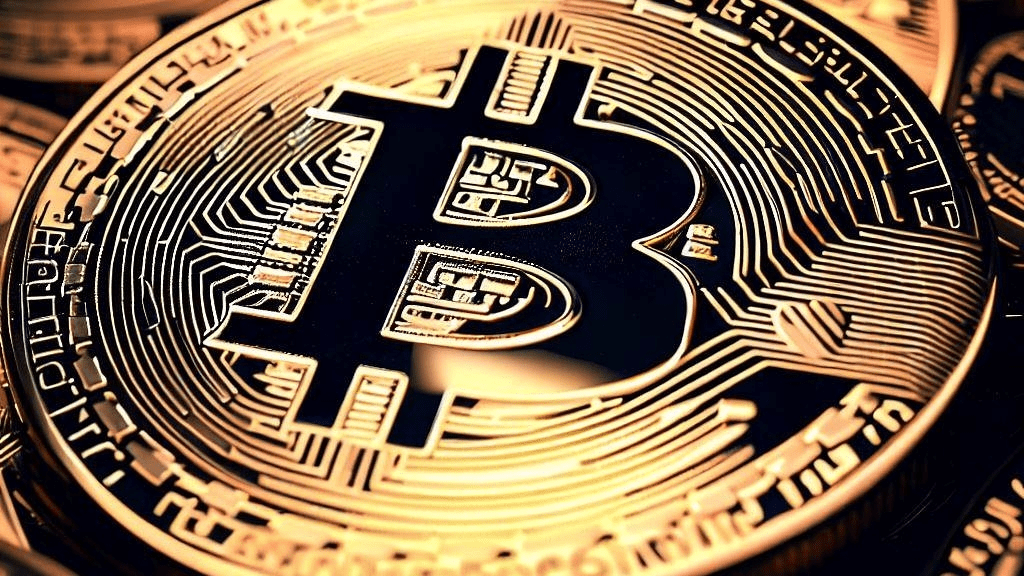
Main image created with AI (DALL-E)
WARNING: This is an informational article. Anfelia_Investmentv is a media, it does not promote, endorse or recommend any particular investment. It is worth noting that investments in cryptoassets are not regulated in some countries. They may not be suitable for retail investors as the entire amount invested could be lost. Check the laws of your country before investing.