


Today we continue to share two projects. One is the public chain Vanar, which has also increased 10 times this year. The other is the oracle TRB, which is also very popular and has increased more than 20 times this year. Although they have increased so many times, their current market capitalizations are relatively low. Vanar is only 300 million US dollars, and TRB is only 270 million, which is a long way from their top projects.
1. Habits
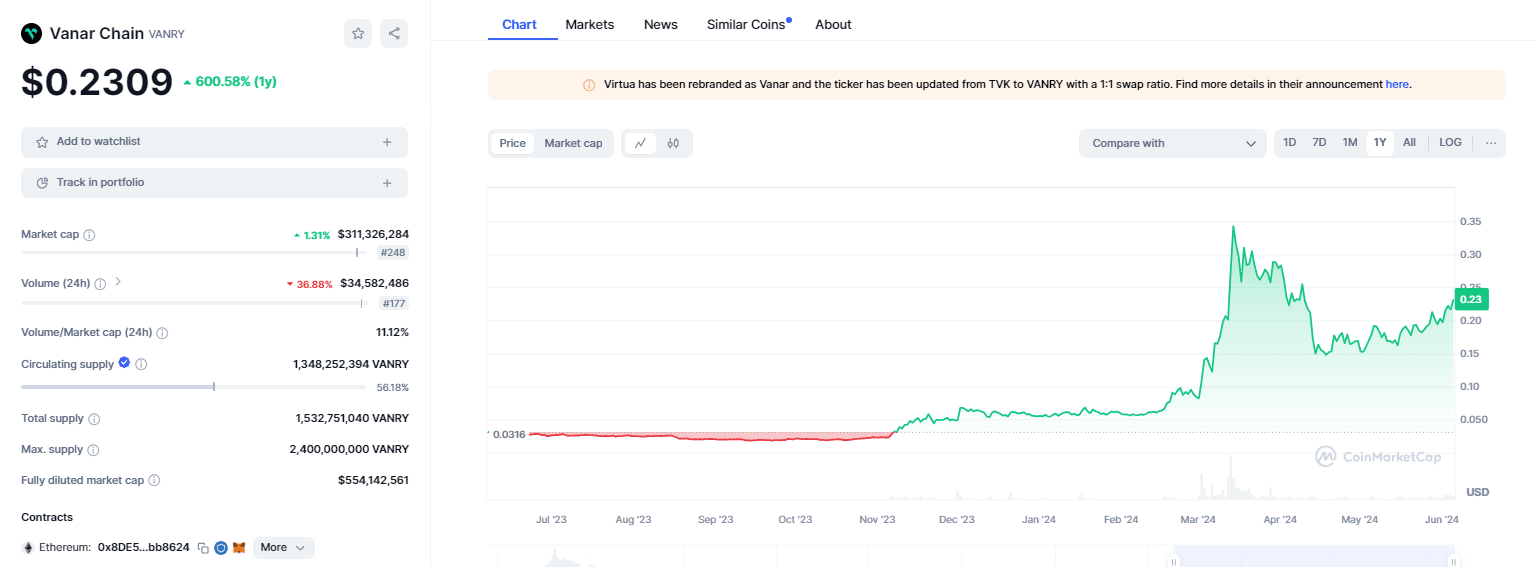
This project was launched in 2020, and it has been around for many years. Last year, the lowest exchange rate was 0.019, and it reached 0.35 in March this year, which is about 15 times the previous value. The current market value is 310 million US dollars, and the overall FDV is only 600 million US dollars, ranking 240+.
Introducing Vanar
Vanar is an L1 built on Ethereum. Previously, Virtua (TVK) tokens were swapped and rebranded to Vanar (VANRY), with 1 TVK = 1 VANRY. Vanar is a groundbreaking blockchain that provides a carbon-neutral, high-speed and low-cost L1 chain designed for entertainment and mainstream.
Before the transformation, Vanar's predecessor was Terra Virtua, which was officially launched in 2018. It was originally a VR (virtual reality) and AR (augmented reality) content platform based on paid subscriptions and supported cryptocurrency payments. It was founded by co-founders Gary Bracey and Jawad Ashraf. The former has over 35 years of experience in participating in the production and development of video games.
In 2020, after Terra Virtua received US$2.5 million in financing from NGC Ventures, LD Capital, YBB Foundation and Hashed, it began to transform into the NFT field and become a digital collectibles platform. In the following months, it cooperated to launch NFTs of well-known movies such as "The Godfather", "Top Gun", "Pacific Rim" and "Godzilla vs. Kong", and invited former Disney executives to join the team.
Currently, Vanar has fully positioned itself in cutting-edge technology fields such as entertainment, games, AI, AR/VR, and supports a range of products and solutions targeting multi-billion dollar markets.
Features of Vanar
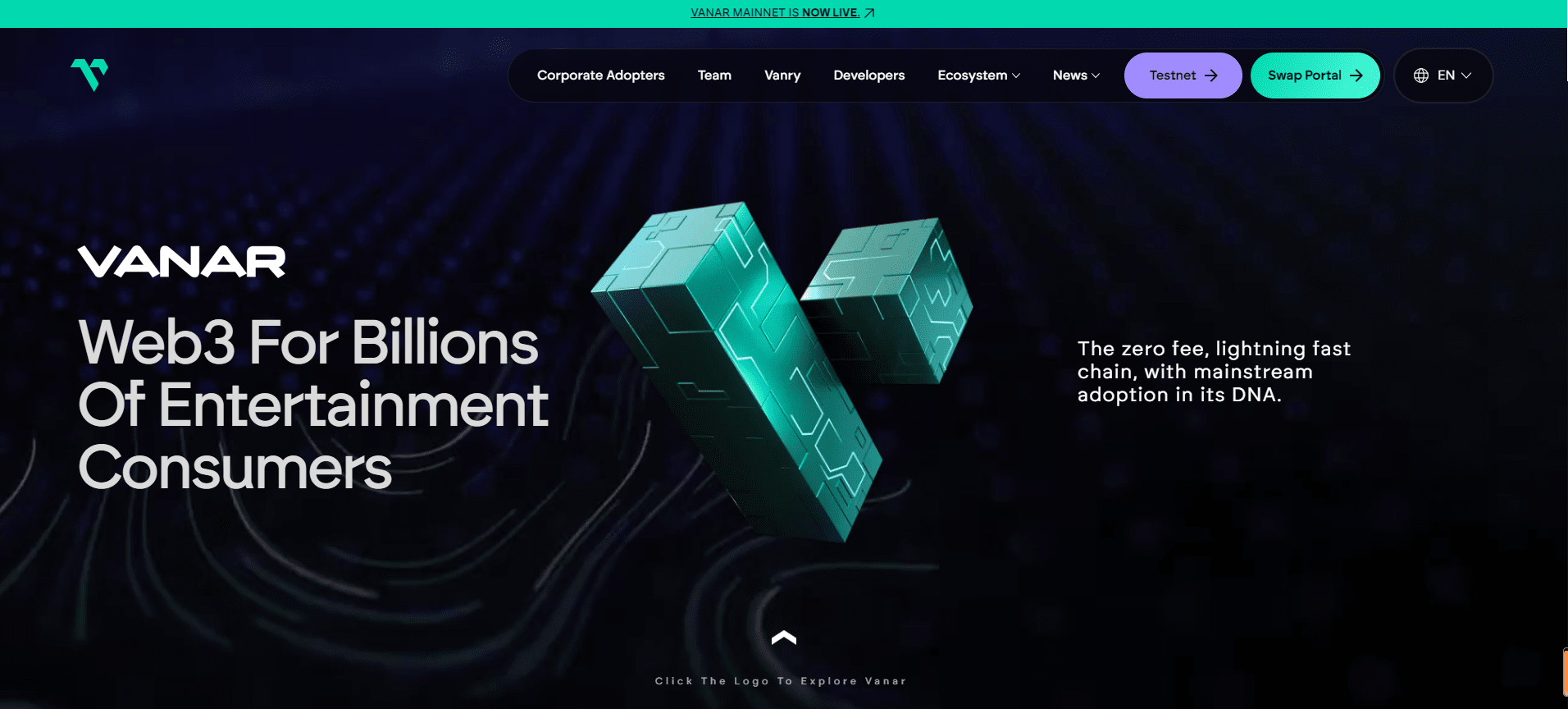
Ultra-Speed Trading: Achieve significantly enhanced transaction speeds.
Extremely low cost: Reduce transaction fees to only $0.0005.
App Ecosystem: A collection of apps that provide a one-stop shop for mainstream brands.
Scalability: Allows transactions to scale to meet the larger customer base required by mainstream markets.
Environmentally friendly: A completely green blockchain.
Consensus Mechanism - Proof of Reputation (PoR) + Proof of Authority (PoA)
Vanar uses a hybrid consensus mechanism that relies primarily on Proof of Authority (PoA) and is supplemented by Proof of Reputation (PoR) to enhance network security. Initially, the Vanar Foundation will be responsible for running all validation nodes. Through the PoR mechanism, the Vanar Foundation will introduce external participants to join the ecosystem as validators.
The Proof of Reputation system is a means of introducing new members into the Vanar ecosystem. Businesses that wish to become validators can participate based on their reputation in Web2 and Web3. The Vanar Foundation will evaluate these reputations to ensure that validating nodes are run by known and trusted entities.
By implementing the PoR mechanism, Vanar promotes a reliable and sustainable ecosystem. Validators will represent stakeholders with a reliable reputation, thereby enhancing the overall resilience and credibility of the Vanar blockchain. This thoughtful integration of the consensus mechanism not only strengthens the security of the network, but also lays the foundation for long-term sustainability and community-driven governance.
ecosystem
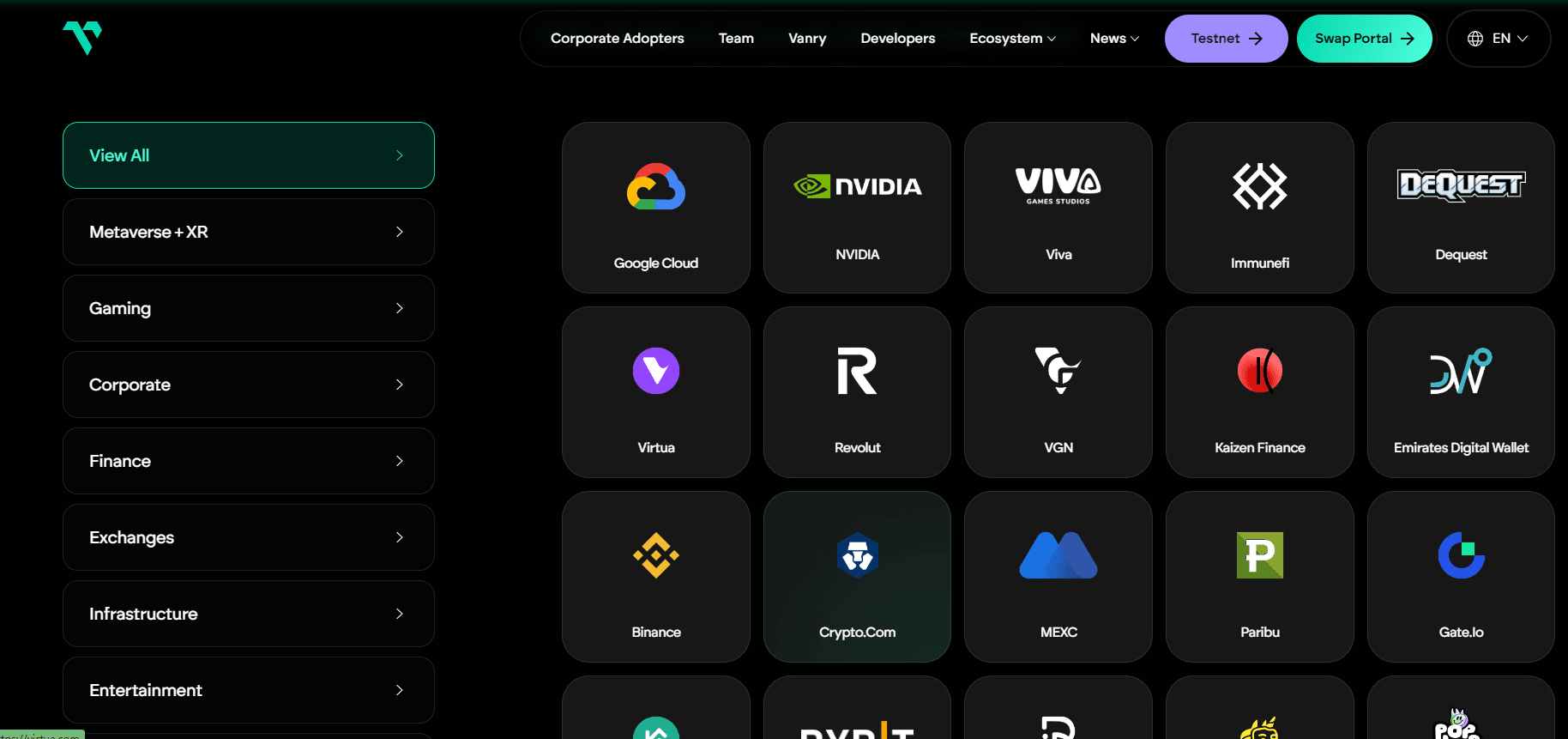
The current ecosystem should be the biggest highlight of this project. The previous marketing promotions also relied on these partners. For example, in the ecosystem, we saw Google, Binance, Nvidia, and also included the Metaverse, XR, games, finance, infrastructure and other sectors.
Token Economy
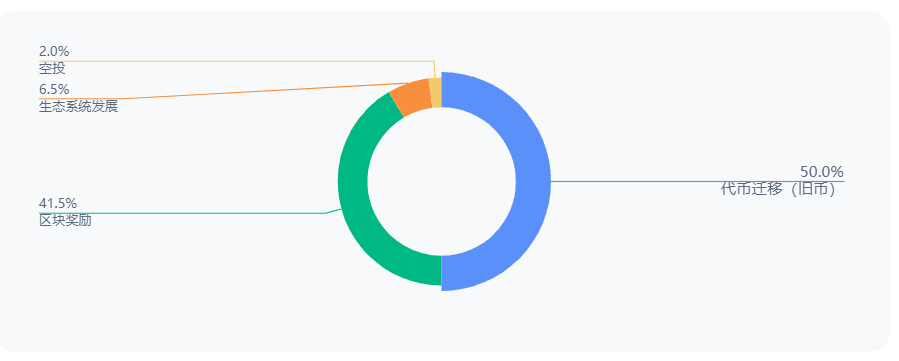
The token will be launched in 2020, with a total of 2,400,000,000 tokens. Currently, 1,532,751,040 are in circulation, with a circulation rate of 62.5%. The current exchange rate is US$0.23, and the peak price was US$1.2 (in 21 years). Because the previous tokens were exchanged from TVK, the token distribution depends on the previous projects.
2.Trb
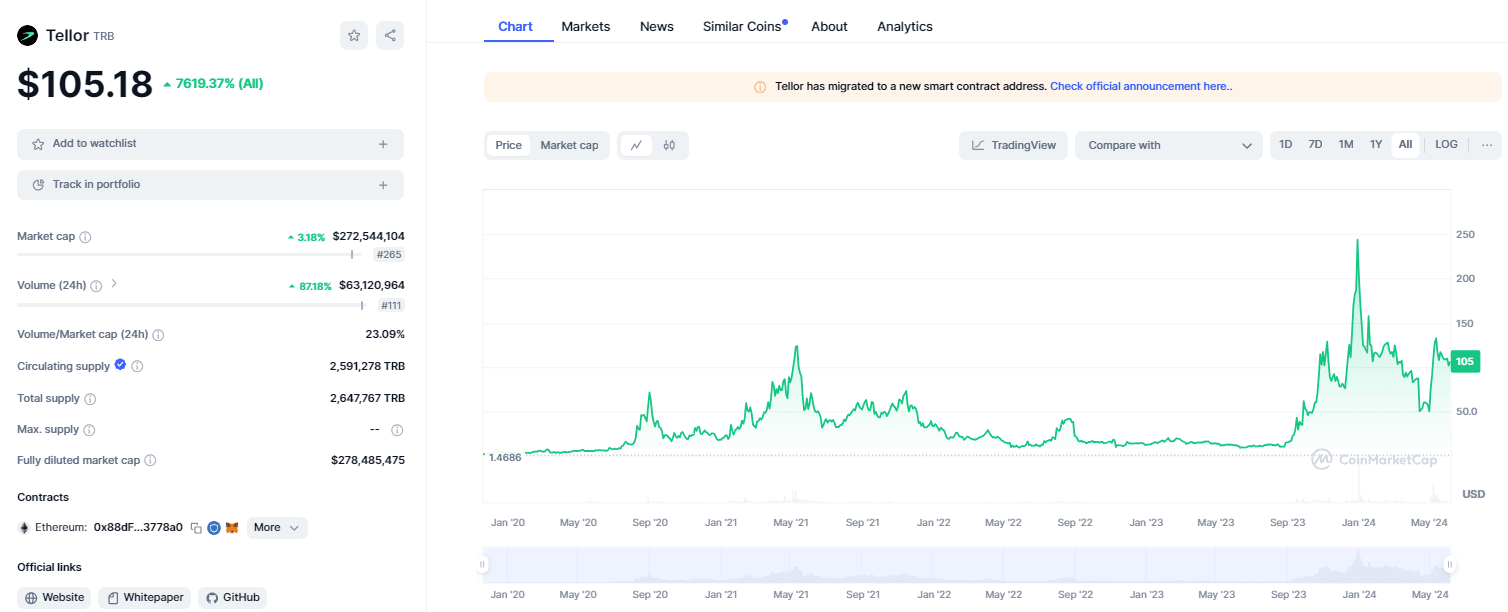
The second project is a very eye-catching one, because it has increased 20 times at its highest point. The lowest point in 2023 was about 10 US dollars, and the highest point was 250 US dollars. It currently supports many mainstream networks, such as Ethereum, filecoin, abr, op, etc. The current market value is 270 million US dollars, the overall FDV is about 300 million, and it ranks 260+.
Introduction
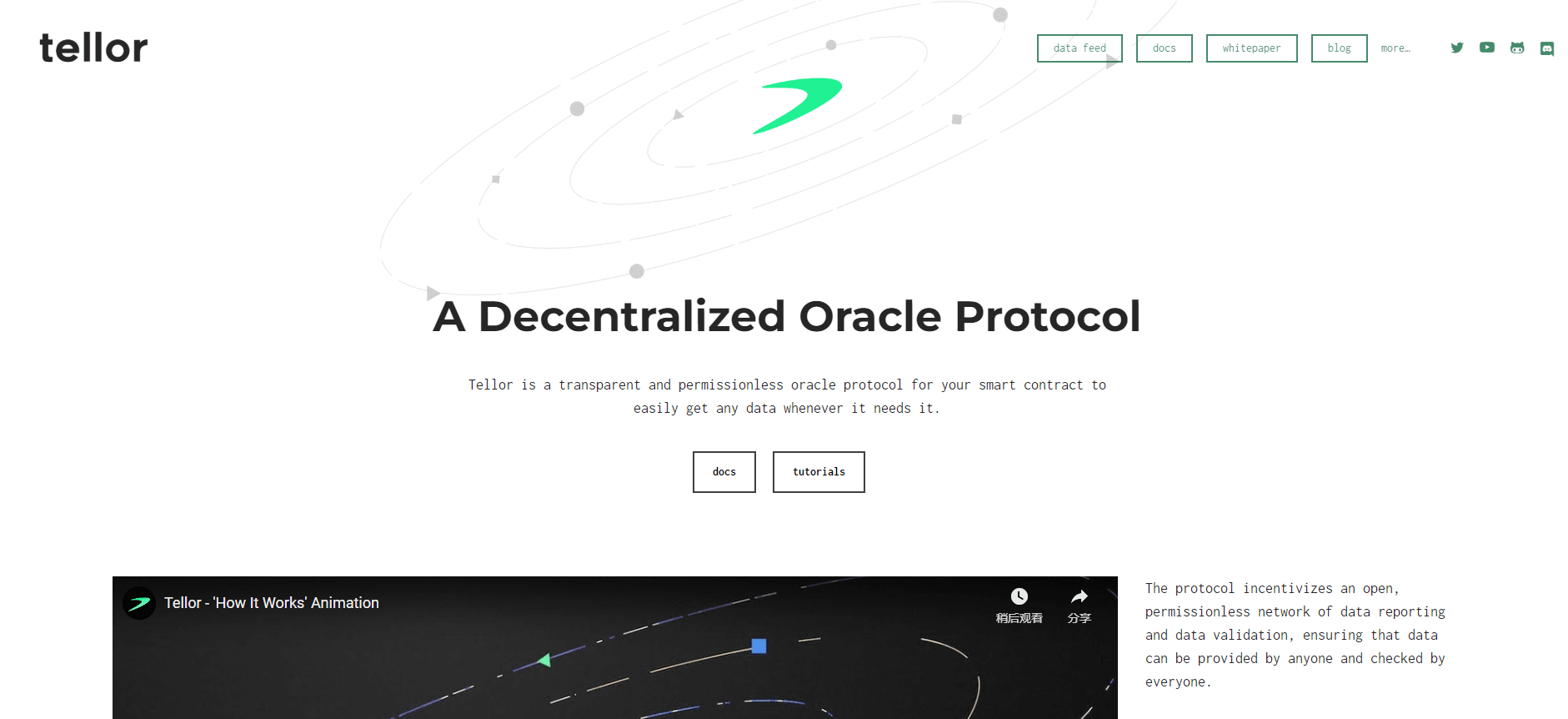
The Tellor oracle system is a fully decentralized community focused on securely placing data on-chain.
Tellor uses a different construction model from Chainlink. From the beginning, Tellor adopted a decentralized approach to build its oracle, which combines the advantages of PoW mining and PoS staking. This hybrid mechanism brings it certain security guarantees and flexible incentive mechanisms.
Project Solutions
Tellors uses a staking mining model to incentivize miners to first deposit 1,000 Tellor Tributes (TRB tokens) into the protocol to conduct PoW mining. With Ethereum blocks, each block will be ultimately competed for by 5 miners through PoW and submit the requested quote data. The median of the first 5 data is considered by the protocol to be a valid quote, and the protocol adopts this quote. If a Tellor token holder votes to question, the questioned miner will be "frozen" for 1 week. If the data is successfully questioned, the questioner will receive the miner's staked tokens, otherwise the miner will receive the questioner's staked tokens.
Project implementation mechanism
The operation process of Tellor network:
1. The data requester (usually a DeFi project) looks for price data for its smart contract, initiates a request to the Tellor network, pays a certain amount of TRB as a fee, and decides which request to provide data for next based on the fee.
2. Miners start mining, and 5 miners are selected after PoW computing power competition.
3. The five miners who win the computing power competition provide price data to the data requester. The system selects the middle value of the five data and provides it to the data requester. The five miners receive the same amount of TRB rewards and share the cost of the data request equally.
4. Any TRB holder can dispute the data within 144 queries (1 day) after staking TRB.
5. The coin holder initiates a vote on the dispute, and the miner being questioned will be "frozen" for 1 week. If the data is successfully questioned, the questioner will get the miner's staked tokens, otherwise the miner will get the tokens of the disputer.
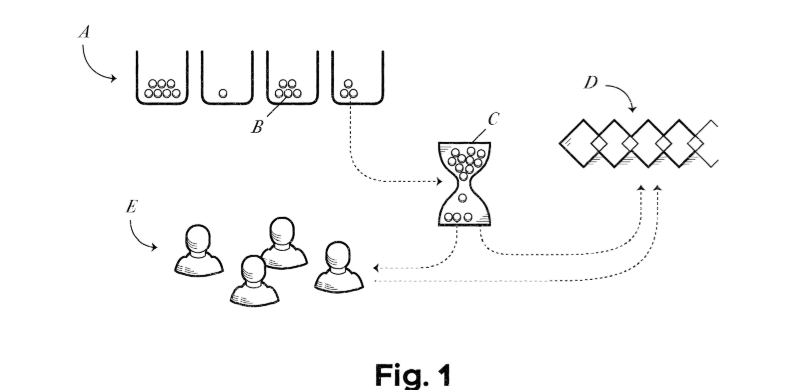
Tellor achieves the security of on-chain quotations through three processes: "staking participation + POW competitive quotation + dispute voting", and all three links require the participation of the token TRB. The higher the value of TRB, the higher the cost of attack, the higher the security of the protocol, and the more accurate the data. The project mainly focuses on serving the defi protocol, but the disadvantage is that it takes 10 minutes of competitive quotation to complete the retrieval of data, and it is impossible to provide data in real time. The team has destroyed the administrator's private key to realize community voting governance. According to the latest interview disclosure, the original development team wallet has about 90,000 TRB tokens, accounting for 5.7% of the current total circulation.
Token Economy
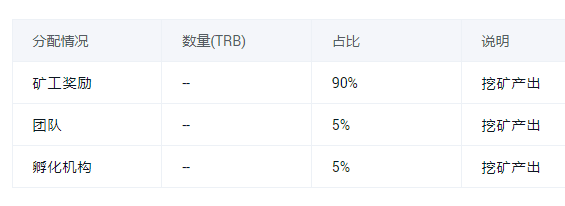
The project was launched in 2019, with a total of 2,647,767 tokens, 2,591,278 currently in circulation, and a current exchange rate of US$104. From the distribution of tokens, we can see that the project is very decentralized, all tokens were given as rewards, and the team only retained 5%.
Finally, let me summarize these two projects. The first project is a public chain. After so many years, it is still just a test network, and it is modified on Ethereum. There is not much innovation, so I asked the project team what they are doing. The marketing was very strong, with various big companies, Google and Nvidia. Then the public chains ranked very low in this wave of narratives basically have less opportunities, because the top public chain track has basically been formed.
The second project is the TRB oracle track. The oracle track performed generally in this bull market, but TRB is still quite powerful because it has whales making markets for it, and this market maker is very powerful. Currently, TRB has also joined BN, so it can be considered as BN’s market maker. BNB’s market maker is also very powerful, so we are still very optimistic about TRB, and TRB’s current value capture ability is quite strong. The capabilities of the entire product are tied to the price of TRB. The current market value is also very low. Compared with Chainlink’s market value of 10 billion US dollars, there is still 50 times room for growth. It is an imaginative project.
Let’s talk about the strategy for tokens in the planet. At present, the first one, Vanar, is not very recommended. The second one, TRB, is very strong at the moment. It is currently around 100, so you can consider buying it. The stop loss is 90, and the maximum upward space is 3 billion, which means there is at least 10 times of room.