

Table of contents
1 Introduction
2. Key points
3. Background and Challenges
4. Why choose Euler v2?
5. Overview
6、Euler v2
6.1 Ethereum Vault Connector (EVC)
6.2. Euler Vault Kit - EVK
7. Industry Outlook
8. A promising future
9. Summary
10. References
11. Disclaimer
introduce
The DeFi lending market is at a critical juncture. Historically dominated by giants such as Aave and Compound, the landscape is now beginning to shift to a more flexible, adaptable, and user-centric model. This evolution is characterized by the adoption of permissionless money markets built on an immutable base layer and risk management through segregated pools managed on top by specialized institutions, as opposed to the traditional unified and one-size-fits-all approach.
Euler has been building and innovating in the DeFi space since 2020, and has shown that it can be considered a prominent player and innovate on existing competitors like Aave and Compound and the original monolithic design. The initial deployment of Euler v1 showed that there is still a lot of room for improvement in taking decentralized lending to new heights. After an unexpected setback and a loophole of approximately $200 million, Euler will launch its v2 version in the second quarter of 2024. This upcoming version, drawing on insights from Euler v1, emphasizes a flexible modular structure in various elements, including governance and oracle systems.
This approach allows for unprecedented customization, including linking vaults to explore new opportunities based on emerging strategies for Liquidity Recollateralization Tokens (LRT) and underlying trading. It introduces a modular architecture that includes the Euler Vault Kit (EVK) for creating customizable lending markets and the Ethereum Vault Connector (EVC) for enhancing interactions between ERC-4626 Vaults and other smart contracts. This structure sets a new standard for DeFi lending, promising to build a platform that allows developers to innovate freely and safely while empowering users by accommodating their different risk preferences.
Key Takeaways
The DeFi lending market is evolving towards a more user-centric model, moving away from the one-size-fits-all approach of giants like Aave and Compound in favor of a wider range of assets and user preferences.
Euler v2 is scheduled to be launched in the second quarter, introducing a modular design, including the Euler Vault Kit (EVK) for customizing the lending library and the Ethereum Vault Connector (EVC) for connecting the library with smart contracts, aiming to improve adaptability and flexibility.
Euler v2 will include three main library classes: Core Vaults for regulated lending products, Edge Vaults for permissionless lending markets, and Escrow Vaults for collateral management, each offering unique benefits and uses.
The EVC introduced by Euler aims to unify liquidity and allow the protocol to accept deposits from other libraries in the network as collateral, enhancing interoperability and simplifying liquidity management in DeFi.
Euler Vault Kit facilitates the creation of a credit library with lending capabilities, integrating functions such as batch operations, simulation, gas-free transactions, and flash loans to improve transaction efficiency.
The development of Euler draws on lessons learned from Euler v1 and aims to address inefficiencies in existing currency markets and provide the flexibility to support synthetic asset creation, real assets, nested libraries, permissionless reward streams, and more.
Background and Challenges
Aave and Compound’s monopoly on the DeFi lending market is loosening, a change driven by industry demand for features that cater to a wider range of assets and user preferences. The cornerstones of their success (centralized liquidity and intuitive user experience), while impressive, mask underlying complexity and trust assumptions that may not align with the future direction of DeFi. Reliance on DAOs for risk management, while historically successful, introduces the potential for inefficiencies and misaligned incentives between risk advisors and token holders.
This shift from centralized to distributed risk management and permissionless market innovation has prompted a re-examination of the guiding principles of DeFi. The challenge includes not only innovating technologies and frameworks to support a wider range of assets and preferences, but also maintaining security, stability, and usability in DeFi.
In the evolving context of modularity, EVC is similar to Ajna and Morpho Blue in that it provides a permissionless and immutable base layer for third parties to build on top of. Unlike Morpho’s minimalist approach, Euler emphasizes its technologically advanced features, including sophisticated risk management tools as a core brand proposition.
Why choose Euler v2
Euler v2 was designed to address the current dichotomy in the DeFi lending ecosystem, which is currently divided into two camps: monolithic protocols that offer capital efficiency at the expense of governance risk, and isolated markets that offer selectivity but compromise on capital efficiency. This split highlights the urgent need for a lending platform that can accommodate different user preferences while minimizing the risks inherent in DeFi lending.
The customizable lending vaults introduced by Euler v2 directly address the challenges of adaptability and risk diversification. By giving users the ability to customize lending vaults to their specific needs, Euler v2 bridges the gap between the need for customization and the security and efficiency required in DeFi lending.
The platform’s reliance on the Ethereum Vault Connector (EVC) is crucial, facilitating seamless integration of various collateral types. This integration not only promotes composability and interconnectivity between different vaults, but also highlights Euler v2’s commitment to creating a more inclusive, resilient, and diverse DeFi lending environment.
Overview
In a recent blog post, Euler proposed a framework to show that DeFi lending risk assessment is conducted through three different models: Global Paternalism, The Invisible Hand, and Local Paternalism. These models represent a spectrum from centralized to decentralized risk management approaches, each with unique implications for flexibility, capital efficiency, and user autonomy.
Global Paternalism relies on DAO governance for centralized risk regulation, as seen in platforms such as Euler v1, Compound v2, and Aave v3. This model provides structured risk management at the expense of user autonomy and flexibility. The Invisible Hand, examples of which include Kashi, Silo, Morpho Blue, and Compound v3, promotes user-defined risk preferences through isolated pools, enhancing selectivity but potentially reducing capital efficiency. Local Paternalism, as shown by Yearn, Idle, and Metamorpho, is a hybrid that leverages aggregators for dynamic asset allocation, balancing flexibility with efficiency.
1、Global Paternalism
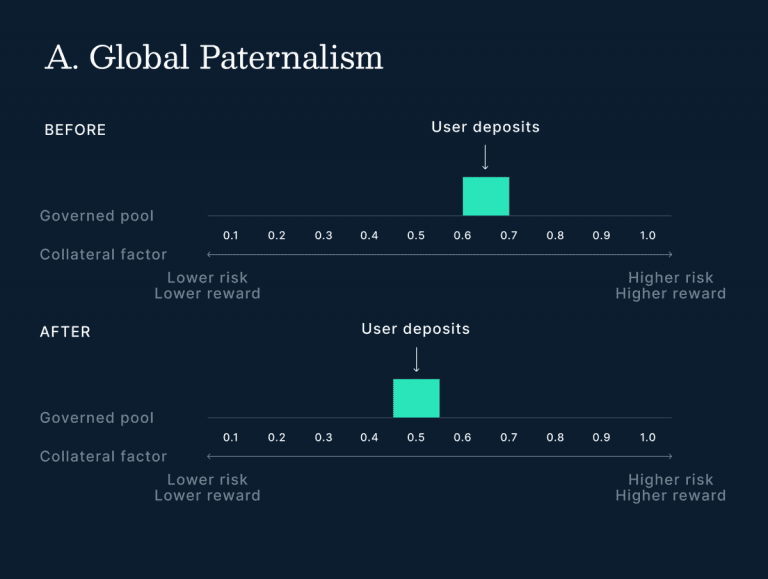
Euler v1, Compound v2, Aave v3
2、The Invisible Hand
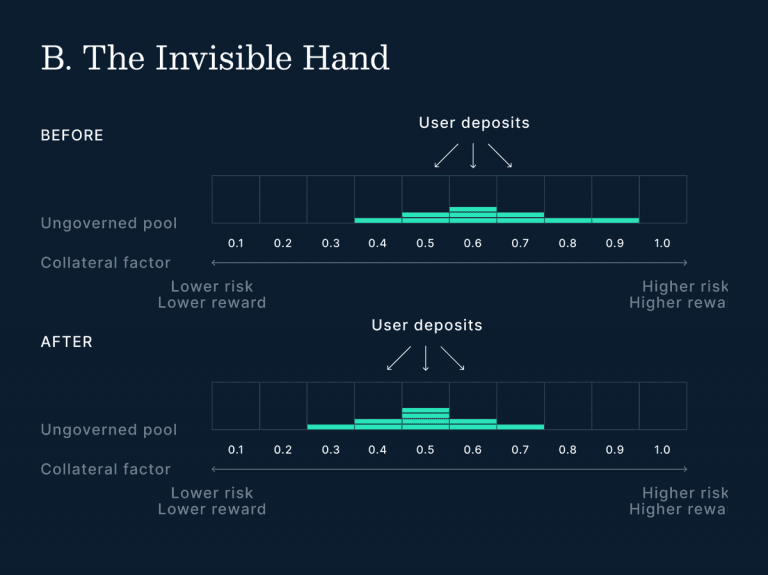
Kashi, Silo, Morpho Blue, Compound v3
3、Local Paternalism
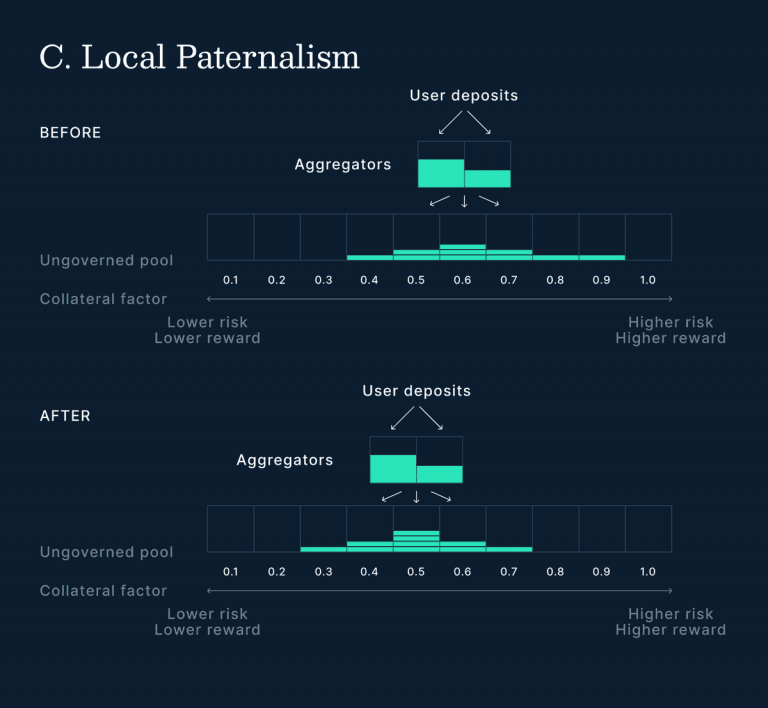
Yearn, Idle, Metamorpho
The ideal approach will enable users to seamlessly switch between different models to suit their risk appetite. This adaptability marks the evolution of the industry, meeting the needs of different users and marking a big step towards maturity. Euler v2 catalyzes this vision by providing customizable lending vaults, thereby combining the advantages of the three models to power an optimized DeFi lending experience.
Euler v2
Euler v2 is a modular lending platform that features two main components: the Euler Vault Kit (EVK) for creating custom lending vaults, and the Ethereum Vault Connector (EVC) that enables vaults to be used with each other as collateral. This modular approach not only facilitates the development of a variety of lending products within the Euler ecosystem, but also aims to solve the liquidity fragmentation problem prevalent in existing DeFi lending protocols by connecting various types of vaults.
The platform is architected to enhance the lending and borrowing experience, with the goal of providing a better experience for both borrowers and lenders. This is achieved by providing diversified risk/reward opportunities, new collateral options, reduced borrowing costs, and advanced risk management tools.
Euler v2 will soon launch with three different categories of vaults (Core Vault, Edge Vault, and Custody Vault), each designed to meet the needs and preferences of different users, thus enriching choices and flexibility.
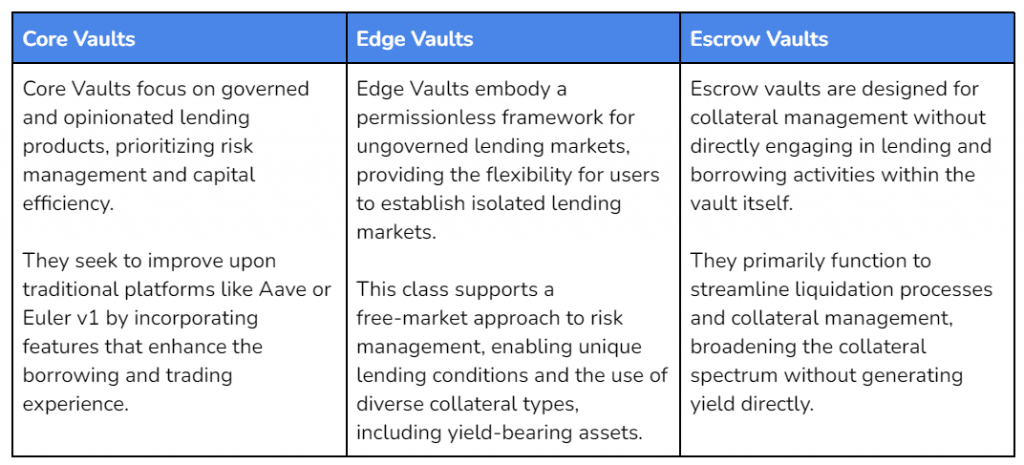
Source: Revelo Intel
In addition to these three vault categories, the Euler Vault Kit (EVK) underpins the flexibility of the platform, providing developers and advanced users with a flexible framework to develop custom lending vaults that fit their specific needs and risk preferences. It is also worth mentioning that all of this is achieved by taking an agnostic approach to key components such as oracles, interest rate models, governance, and upgradeability.
For example, someone could create custom vaults that either replicate the Edge class with additional governance features and a unique liquidation strategy, or are similar to the Core class but with alternative interest rate models and governance structures, including options for real-world assets (RWAs) with different regulatory requirements.
Ethereum Vault Connector – EVC
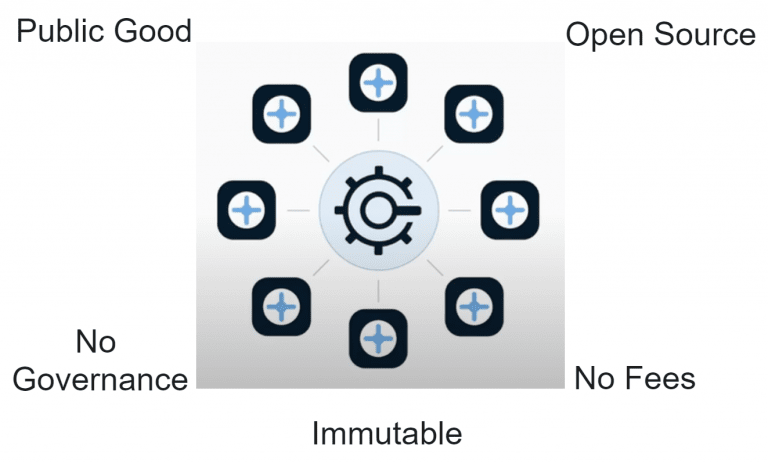
Ethereum Vault Connector - EVC represents the first building block of Euler v2. As a permissionless, unbiased DeFi primitive, it paves the way for advanced borrowing and lending dynamics. This is achieved through immutable code and without fees or governance, embodying true public benefit.
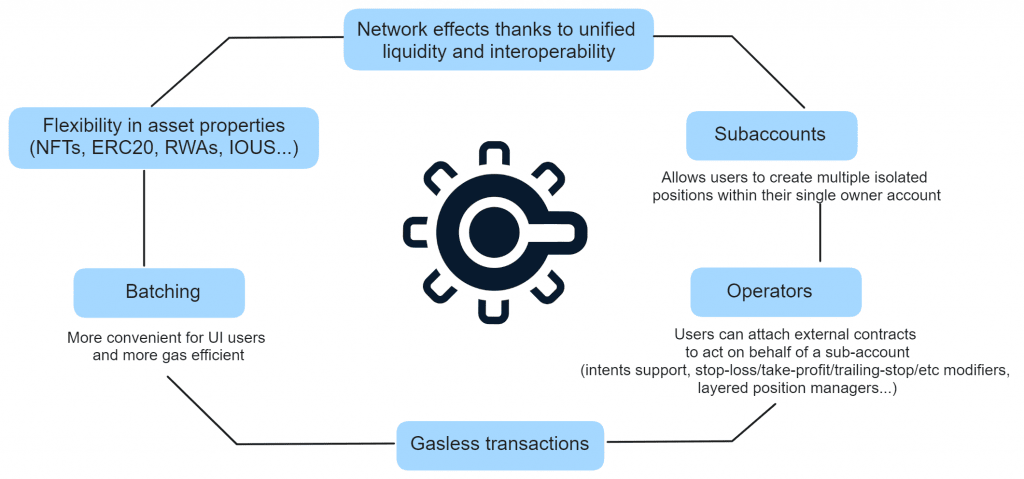
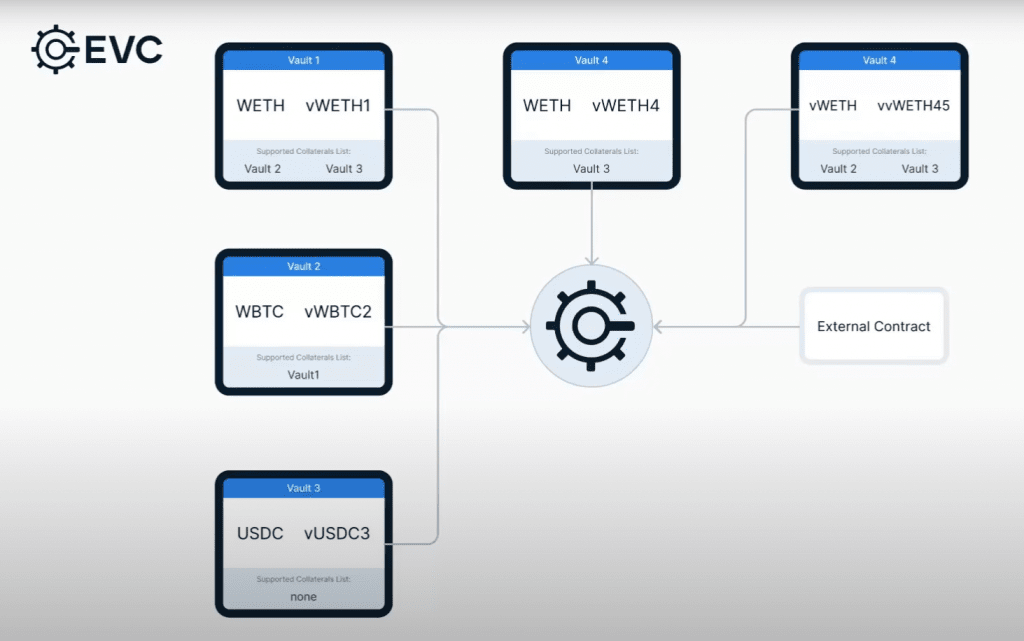
By providing more granular control and flexibility over collateral and borrowing, EVC facilitates more complex interactions between users and vaults. Protocols built on it will be able to mitigate complexity and benefit from the network effects of other vaults. EVC mediates between vaults, making it possible to identify deposits on other vaults as collateral (without having to move collateral from one protocol to another to refinance or get a better rate).
Source: Revelo Intel
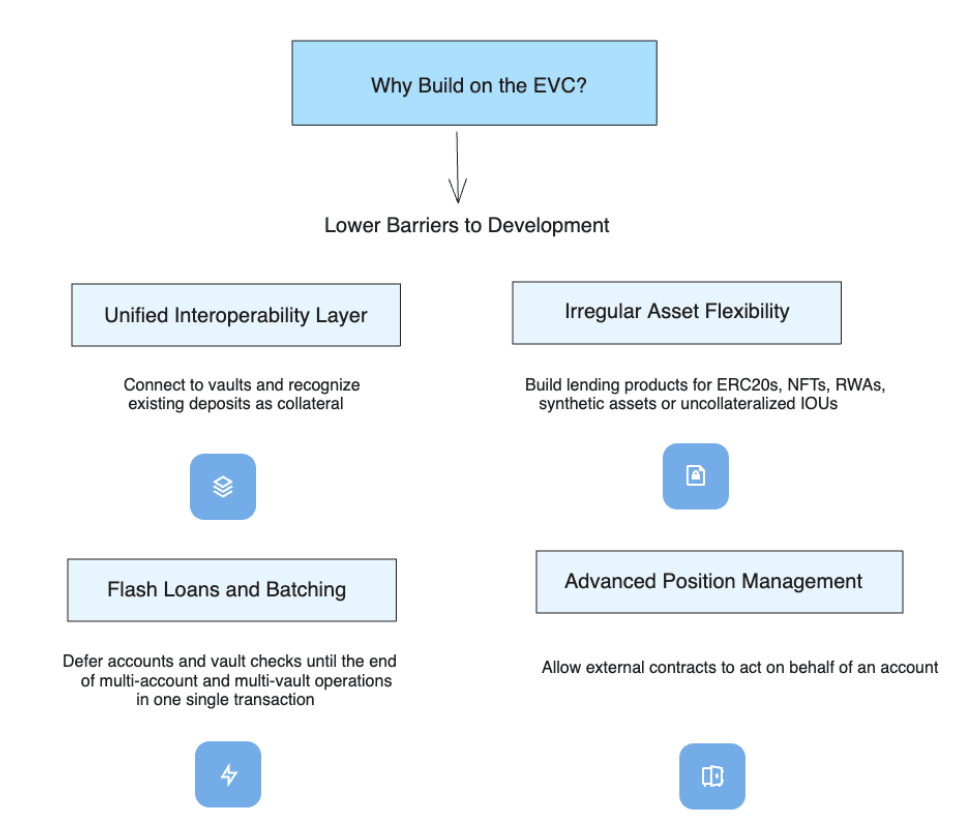
EVC provides developers with a flexible and versatile code base, so that they don’t have to start from scratch to innovate on DeFi vault strategies. Developers can use a wide range of collateral types (from ERC-20s, NFTs, and real-world assets to synthetic tokens and uncollateralized debt certificates) to create diverse DeFi solutions such as stablecoins, margin trading applications, and yield aggregators.
Source: Revelo Intel
EVC is intentionally modular and unbiased by design, allowing for extensive customization. Developers are free to implement specialized risk management strategies, create lending products with or without oracles, and design loans with different collateral levels and custom liquidation mechanisms. This opens the door to endless application scenarios, from simple lending protocols to complex structured products.
Once you launch a new vault, you can immediately start using existing vaults as collateral without any coordination. This is the main purpose of EVC: connecting vaults and mediating between them.
Source: Encode Club
A key feature of EVC is its ability to serve as a unified liquidity layer. By allowing vaults to accept collateral from other vaults in the network, EVC facilitates the creation and expansion of lending products. This interoperability greatly reduces operational friction for users, who do not need to transfer their collateral between different financial service protocols.
Source: Revelo Intel
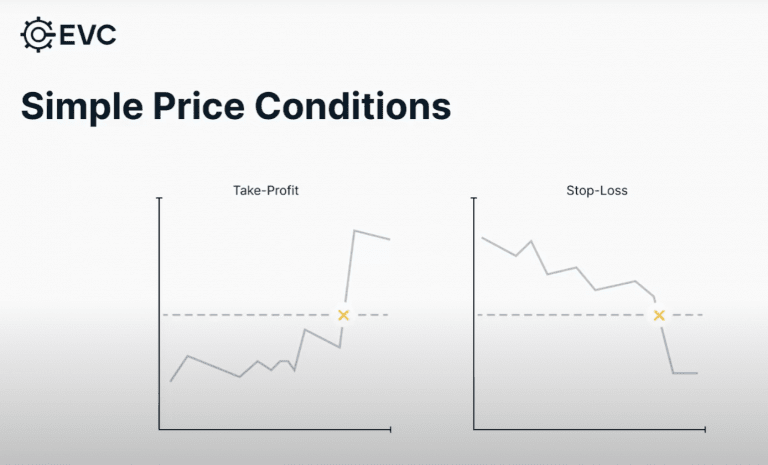
In addition, EVC enhances DeFi operations by allowing external contracts to act on behalf of accounts. This feature supports conditional orders, automated position management, and customized liquidation processes. The introduction of virtual addresses or "sub-accounts" further enables users to effectively manage diverse positions and strategies, providing a sophisticated risk segmentation mechanism.
Source: Encode Club
EVC also incorporates features such as multi-call batching to execute multiple transactions in a single call, flash loans, and transaction simulation to predict outcomes without risk. These capabilities, along with intent-based EIP-1271 signatures to support gas-free transactions, enhance the user experience by facilitating more accessible and efficient DeFi interactions.
By serving as an interoperability layer connecting various vaults and yield-generating assets, EVC lays a solid foundation for lending/borrowing protocols, encouraging external protocols to focus on innovation.
Another small but extremely important improvement is ERC20Collateral, an extension of the ERC20 token that allows users to use tokens in their wallets as collateral in the EVC ecosystem. Now, you can borrow without depositing your assets in a vault or lending contract, and you can still maintain ownership of the assets in your wallet. This way, users don't have to give up governance rights, trigger tax events, or take on the risks of the underlying contracts.
Euler Vault Kit – EVK
Euler Vault Kit – EVK enables the creation of credit vaults, which are an improvement over typical ERC-4626 vaults by adding lending functionality. Unlike standard ERC-4626 vaults that earn yield by actively investing deposited funds, credit vaults represent passive lending pools. Since these vaults are deployed on top of Euler’s EVC, borrowing from these vaults is allowed as long as there is enough collateral in other credit vaults.
The integration of EVC is critical, enabling tracking of collateral between vaults, facilitating liquidations when necessary, and streamlining operations through features such as batching, simulation, gas-free transactions, and flash loans. This integration eliminates the need for specialized adapters, making refinancing and interactions more efficient.
Authentication is managed by EVC, ensuring that only legitimate users can initiate actions, while authorization of transactions, such as redemptions, is managed by the vault, verifying the user's claim amount. In addition, the vault creation process is simplified through factory contracts, providing a choice between upgradeable or immutable vaults. After creation, the governance of the vault is initially set by the creator, who can subsequently configure the vault or transfer governance rights (if necessary).
EVK follows the ERC-4626 standard while adding lending capabilities. Since the ERC-4626 Treasury is a superset of ERC-20, they are also tokens themselves, called Treasury Shares or ETokens, which represent a proportional claim to the Treasury assets and can be redeemed for more underlying assets over time as interest accumulates.
The Treasury manages a single token type, ETokens, which represent a claim on the Treasury's assets. These ETokens accumulate interest over time, based on a model that compounds every second, ensuring that interest continues to accrue regardless of the frequency of interaction.
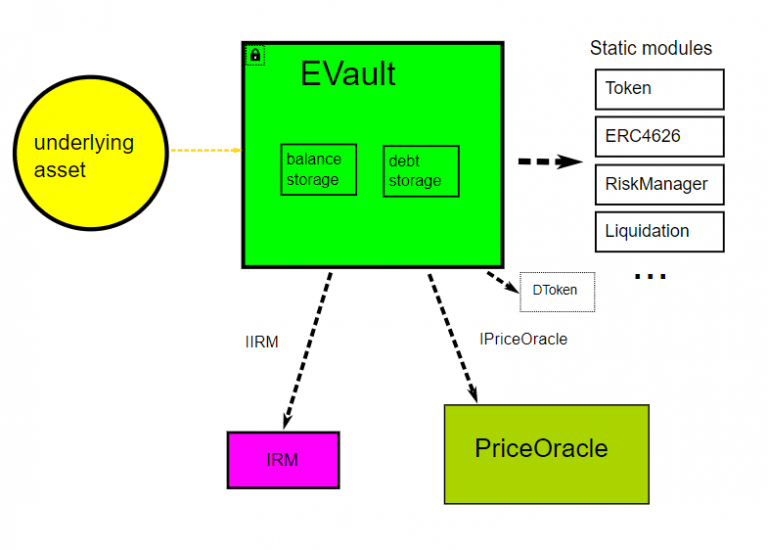
Key components include:
EVault: Central interface for vault interactions, responsible for monitoring deposits, borrowing, position health, and clearing operations.
PriceOracle: Ensuring real-time valuation of collateral and liabilities is critical to maintaining the integrity and solvency of the vault.
IRMs (Interest Rate Models): Adjust interest rates to incentivize or disincentivize borrowing, depending on current economic conditions and the vault’s objectives.
ProtocolConfig: A global contract that specifies protocol-wide settings such as fee allocation and protocol governance.
Source: Euler Docs
Before a new vault can be established, an existing PriceOracle and IRM contract must be created or selected. These components are integrated into EVault to ensure that the vault operates within established economic and operational parameters.
In addition, the vault is equipped with mechanisms to ensure the safety of both borrowers and lenders. This includes setting maximum loan-to-value ratios (LTV) for different collateral types and monitoring the health of the account and the vault itself.
EVK relies on external price oracles to accurately assess collateral and liabilities in real time. These oracles provide unilateral and bilateral price quotes, enabling the system to adjust LTV and effectively manage liquidation activities.
The system also includes a reverse Dutch auction mechanism for liquidation, where the LTV of the collateral assets is gradually reduced to ensure fair value recovery. This process minimizes losses to borrowers while ensuring that lenders are fully protected.
In terms of fee capture and revenue sharing, a module called FeeFlow gives Euler DAO greater control over the platform's fee generation. It uses a reverse Dutch auction mechanism to systematically distribute accumulated fees, enhancing the DAO's financial flexibility. Fees can also be converted into various assets.
In addition to enhancing transaction efficiency by supporting gas-free transactions, multi-modal batch operations, and lightning liquidity, EVK also enables a feature called "nested vaults" that allows users to deploy interest-bearing assets as collateral between vaults.
Industry Outlook
Compared to unsecured loans in traditional finance, the on-chain lending industry's reliance on over-collateralization highlights the importance of collateral due to the lack of traditional enforcement mechanisms. Since ETHLend in 2017, the evolution from peer-to-peer to peer-to-pool models like Compound has marked a major shift, simplifying the lending process through asset aggregation and dynamic interest rates.
Despite these advances, the current DeFi ecosystem is characterized by isolated protocols, resulting in fragmented liquidity, cumbersome developer integration, and poor user experience. This fragmentation highlights the need for a unified framework to facilitate efficient interaction between lending protocols to address inefficient capital allocation, high transaction costs, and limited innovation.
Euler v2's modular lending framework aims to break the status quo by combining the capital efficiency of a single protocol with the flexibility and risk management provided by isolated pools. By integrating ERC-4626 vaults and Ethereum vault connectors (EVC), it supports a variety of assets including NFTs and real-world assets, striving to find a balance between flexibility, capital efficiency, and risk management.
The introduction of EVC simplifies the interaction between vaults and contracts by serving as a central facility for DeFi lending. This reduction in complexity allows developers to focus on innovation and create financial products that go beyond traditional money markets. EVC's framework encourages interoperability, smooth liquidity, and a unified DeFi ecosystem, positioning Euler as a versatile platform with features such as subaccounts, fee flows, and simulation, which surpasses competitors.
Additionally, Euler’s strategy includes multiple market opportunities: leveraging DAOs for market creation and fee capture, providing infrastructure as a public utility for third-party curators and risk managers, providing a base layer for protocol development, and enabling permissionless markets.
What to Expect
Euler v2's modular framework has the potential to redefine the opportunity set for DeFi applications and use cases, providing rich features such as synthetic asset creation, nested vaults, permissionless reward flows, and enhanced liquidation processes. This versatility paves the way for a variety of financial products, ranging from yield aggregators to stablecoins or collateralized debt positions (CDPs) to mint synthetic assets.
One of the most powerful features for leveraging the platform’s capital efficiency is the concept of nested vaults. This allows vault shares to be tokenized, which can then be lent or borrowed. For example, lenders in the core vault can lend their vault shares to borrowers seeking exotic collateral assets, earning additional yield. This mechanism facilitates exposure to a diverse range of collateral types and loan configurations without increasing the overall risk of the platform.
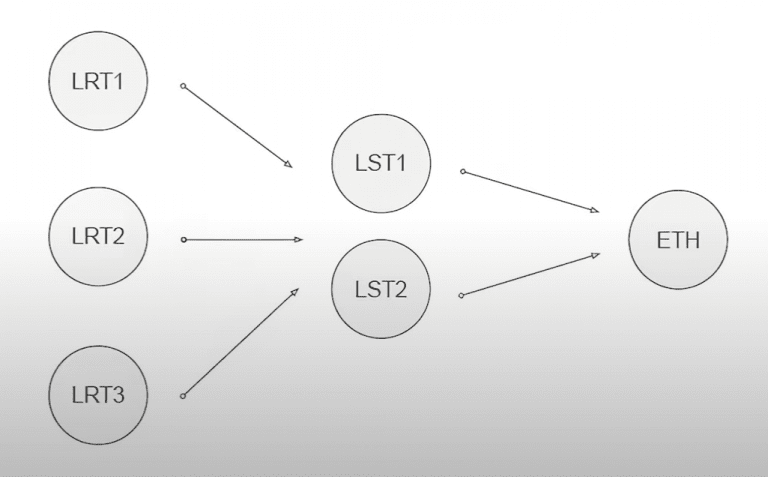
Additionally, the strategic use of Liquidity Staking Tokens (LSTs) and Liquidity Re-staking Tokens (LRTs) for leverage and yield strategies highlights Euler v2’s unique ability to incorporate evolving DeFi trends such as re-staking.
Currently, a widely adopted strategy in DeFi involves using Liquidity Re-Staking Tokens (LSTs) as collateral to borrow $ETH, which can then be re-staked or exchanged for more LSTs, enabling users to recursively leverage their positions. As the DeFi ecosystem grows, we expect to see an increase in the use of Liquidity Re-Staking Tokens (LRTs) as collateral. This shift is driven by the growing abundance of LSTs (which are currently not loaned out) and the desire to further leverage these assets.
Euler v2 is at the forefront of this trend, providing a platform where users can use LRTs as collateral to borrow LSTs and $ETH, facilitating a new layer of financial strategies. This leveraged trading flow from high-yield assets to base assets such as $ETH is enabled by the linking of LRT, LST, and $ETH vaults. Within this framework, $ETH lenders become significant beneficiaries due to the leveraged flow from high-yield assets to the base $ETH vault. This cascading leverage effect highlights the efficiency and capital efficiency of the Euler v2 system, enabling $ETH depositors to take advantage of the demand for leveraged strategies across different asset types.
Another notable feature is "FeeFlow", which allows for setting up reward flows that can be paid out in specific assets. This is a module that enables projects to flow rewards to users in a permissionless manner, removing the need for users to stake their share of the treasury in a separate contract to earn rewards. This also allows for more dynamic and efficient user engagement by enabling providers to earn rewards while lending.
Altogether, this could enable a range of practical applications, potentially including:
Leverage is added by cascading LRT/LST/ETH vaults, allowing users to create Edge vaults for Liquidity Staking Tokens (LST) and Liquidity Re-staking Tokens (LRT). Users can then borrow $ETH to finance these assets, enabling a reinvestment cycle to amplify returns. This approach highlights the high demand for $ETH Edge vaults, which benefits borrowers to gain leverage and lenders to earn higher interest rates.
Source: Encode Club
By accepting liquidity provider (LP) tokens as collateral to provide leveraged liquidity in the Edge Treasury. Euler v2 enables users to borrow additional assets to enhance their positions in automated market makers (AMMs). This feature enhances liquidity provision strategies, allowing users to increase their exposure and potential returns in AMMs.
By adapting strategies to hedge against impermanent loss or by allowing lending of WETH/USDC LP tokens to establish short positions. This provides liquidity providers with additional income opportunities and sophisticated risk management tools.
By creating custom vault pairs for stablecoins, arbitrage trading strategies are facilitated to take advantage of APY differences between stablecoins. This strategy enables users to take advantage of stablecoin volatility and participate in interest rate arbitrage, profiting from yield differences.
Strengthening long positions on long-tail assets through nested Edge vaults, which allow borrowing stablecoins against less liquid, long-tail assets. This provides users with a way to leverage these assets, enhancing their yield potential, while providing opportunities for core market depositors who selectively interact with riskier collateral types.
By supporting real assets (RWAs) as collateral and enabling users to borrow these assets for margin trading strategies, it supports margin trading of real assets. This application not only expands the asset base within DeFi, but also promotes greater market participation and diversity.
Overall, this composability places Euler at the forefront of a new paradigm in DeFi lending, solving key inefficiencies that have hindered the growth and maturity of decentralized credit.
in conclusion
By empowering users and developers, Euler v2 aims to revolutionize lending and borrowing by combining the flexibility of isolated lending markets with the capital efficiency of monolithic protocols.
Euler’s modular architecture not only promises improved liquidity and efficiency; it also ensures strong security and risk management.
The platform’s integration with the Ethereum Treasury Connector (EVC) paves the way for new yield opportunities and facilitates the development of new financial products, including those involving real-world assets, NFTs, and oracle-free lending.
references
Euler v1 breakdown by Revelo Intel
Euler v2 Litepaper
EVC – Github
EVC Playground – GitHub
Euler Vault Kit Whitepaper
ERC4626 – Tokenized Vaults
ERC20Collateral.sol
Make Euler Great Again
Paternalism Versus the Invisible Hand in Risk Management
Show
We have never had any commercial relationship with Euler, and this report has not been sponsored or commissioned in any form.
Members of our team, including those directly involved in the analysis above, may have positions in the tokens discussed.
This content is for educational purposes only and does not constitute financial or investment advice. You should do your own research and only invest money you can afford to lose. We are a research platform, not an investment or financial advisor.
Source of this article: Revelointel