


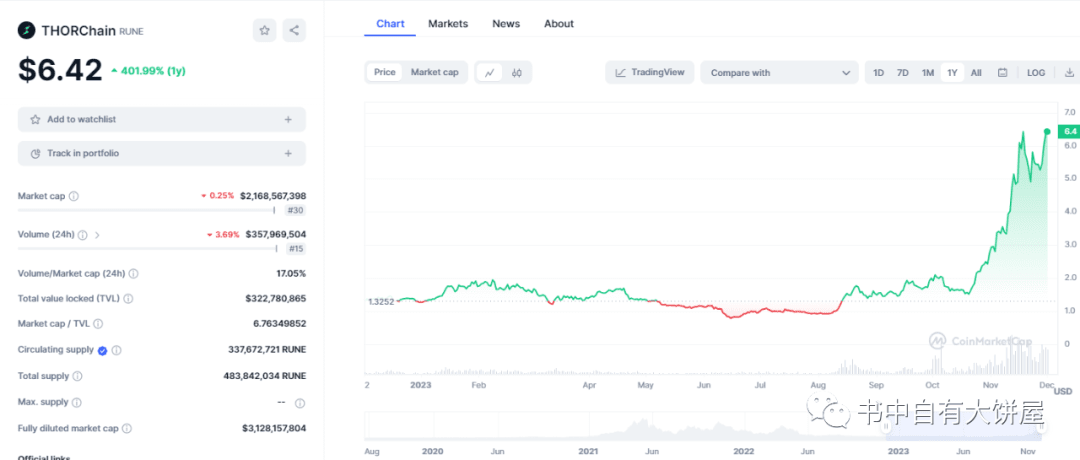
Today we are going to talk about a cross-chain project, because it was mentioned when we talked about flip before. Some friends corrected it, and then found that a good project was missed. It is also among the top 100 in market value, called Thorchain, and it is also a cross-chain. The recent trend of swap is also good, rising from 1 to 6.4. The current market value is 2.1 billion US dollars, ranking 30+.
Introduction
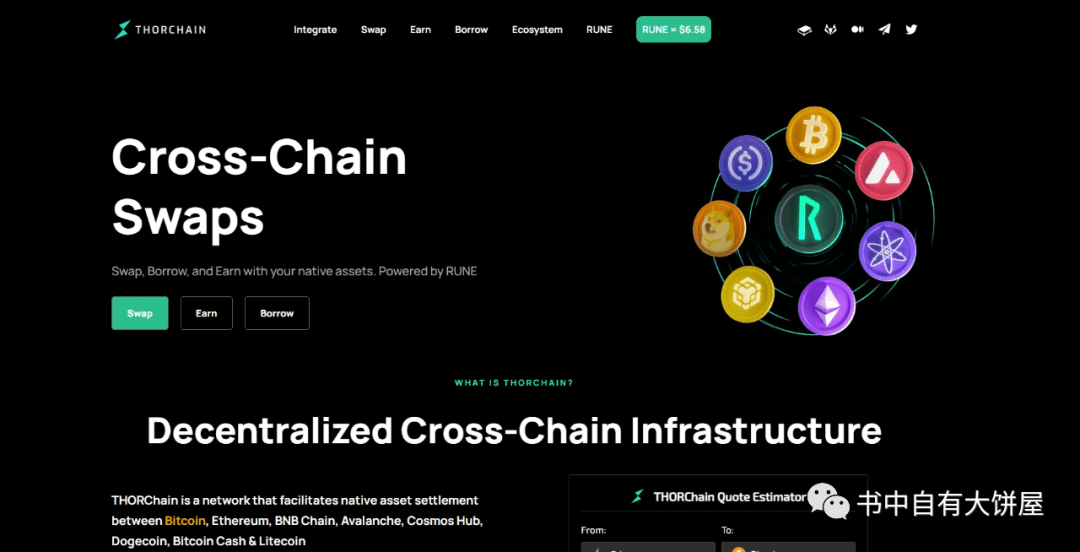
THORChain is a decentralized trading platform that supports cross-chain transactions of assets in the liquidity pool on the Binance Chain, Ethereum, Bitcoin, and AVAX blockchains. Users can mortgage assets in the liquidity pool to earn transaction fees and RUNE token rewards. RUNE is a native asset in the THORChain network. The protocol’s native token RUNE plays three key roles: 1) protecting network security; 2) acting as a universal pricing currency for every transaction in the system, maximizing the liquidity of all assets on the exchange; 3) collecting fees.
By creating addresses on different blockchains (nodes control these addresses), THORChain nodes use one-way state anchoring to connect various blockchains. THORChain nodes use advanced multi-party computation (MPC) technology, such as distributed key generation (DKG) and threshold signature scheme (TSS), to ensure that no one THORChain node can control the user's assets.
Founded in 2018, THORChain is an independent Layer 1 ecosystem that provides users with direct transactions of native currencies. Customers can conduct decentralized transactions on native currencies without going through the regular KYC process of CEX.
THORChain's multi-chain ecological currency transactions adopt the traditional cross-chain bridge and DEX liquidity pool methods. In summary, THORChain conducts cross-chain transactions by arranging its own wallets on different chains (such as Ethereum, BTC), and at the same time enhances liquidity for different tokens through liquidity pools.
1. Vaults
To understand THORChain's trading system, you first need to understand how THORChain's wallets (Vaults) on different chains operate.
THORChain has two different forms of Vaults, Inbound Vaults and Outbound Vault. Inbound Vault is responsible for receiving assets sent by users to THORChain, while Outbound Vault is responsible for sending assets to users.
For example: For example, if Xiao Ming wants to exchange BTC for ETH, he must first send BTC to THORChain's Inbound Vault on the BTC chain. After THORChain verifies it, THORChain's Outbound Vault on Ethereum will send Xiao Ming ETH to Xiao Ming's Ethereum. In the wallet.
The settings and consensus of the two Vaults are also different. There will only be one main Inbound Vault on any chain, but there can be multiple Outbound Vaults. Inbound Vault's consensus is more rigorous and slower, while Outbound Vault's consensus is faster.
2. Consensus
The underlying construction language of THORChain adopts Cosmos' SDK developer software and adopts Cosmos' Tindermint consensus protocol. The Tindermint consensus protocol is a PoS consensus protocol based on BFT and has a fault tolerance rate of 33.3% (1/3), which is consistent with the fault tolerance rate of Cosmos. However, THORChain has not yet been connected to Cosmos IBC and is a separate chain.
3. Vaults Cont.
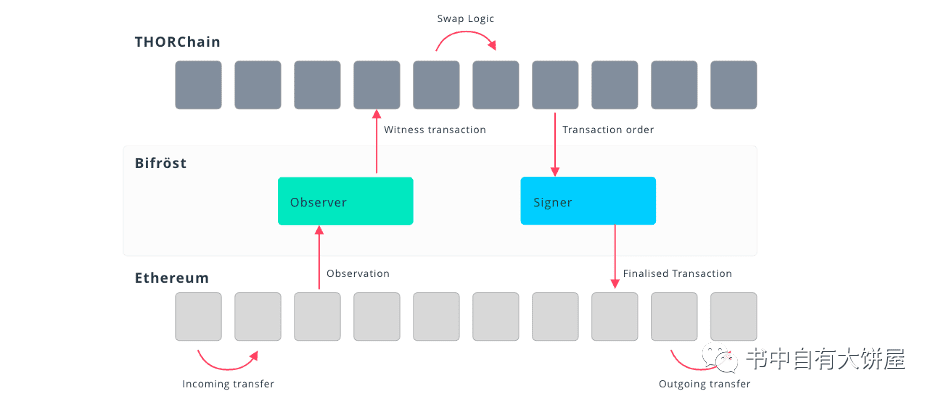
Each asset entered into the Inbound Vault needs to be verified by the consensus of all validators. The validator determines the address to which the user will send the asset. At the same time, it is necessary to verify whether the asset has entered the THORChain vault. However, Outbound Vault does not require all verifiers to participate in verification, only a small number of verifiers are required to verify.
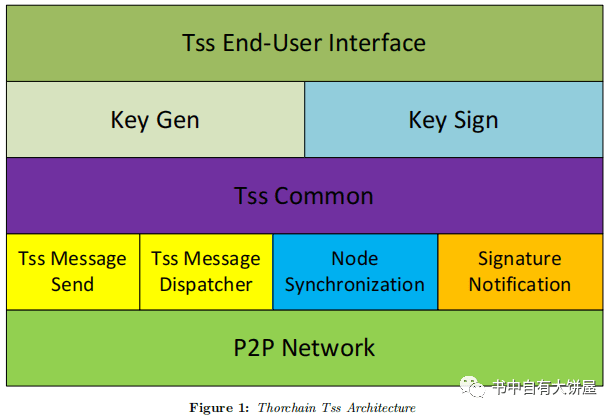
The verification process of THORChain is based on most of the principles of Tindermint, and verification of a transaction is completed through signature. THORChain adopts the signature method of Threshold Signature Scheme (TSS). TSS can be used in any ecosystem. Each transaction requires the signatures of 2/3 of the participating validators to complete verification.
4.TSS signature
Thorchain's TSS technology is a threshold signature mechanism protocol that is combined with one-way state anchoring and state machines to form Thorchain's decentralized cross-chain exchange mechanism. One-way state anchoring connects the main chain and Thorchain, but it does not lock the assets, but only anchors the state of the chain. Each connected chain has a "Bifröst" module that handles the details of connecting to that chain, such as chain configuration and transaction details. After the node completes synchronization, it will monitor the vault address on each chain. If it sees related incoming transactions at the monitored Vault address, it will be converted into a witness transaction on Thorchain. Regardless of the transaction type, the witness transaction parameters are essentially the same for each chain. Once a vast majority of nodes agree to a particular transaction, it transitions from the waiting state to the final state.
5.THOR node
In order to control the liquidity pool's wallet, THORNodes must run a node for each blockchain they support as well as an additional THORChain node.
In order to execute a transaction between ETH and BTC, THORNode will observe the Ethereum network to lock the funds, and then release the funds to the Bitcoin wallet once the Ethereum lock is complete.
Once completed, THORNodes sign outgoing transactions using the Threshold Signature Scheme (TSS), which works with cryptography rather than smart contract logic. This allows THORNode to interact with chains such as Bitcoin (which does not support smart contracts). In principle, TSS acts like a multi-signature wallet, requiring a majority of THORNodes to sign transactions.
Similar to staking, THORNode must deposit RUNE bonds to become an active validator. The number of bonds depends on the total amount of RUNE in the liquidity pool. The total amount of RUNE bonds for all THORNodes needs to be twice the amount of all RUNE held in the liquidity pool. Remember, the amount in the pool matches RUNE at a 1:1 ratio. In summary, every $1 of assets is backed by $3 of RUNE.
This feature creates protection against Sybil attacks, in which an attacker attempts to take over a large portion of the network to gain access to pool assets. The amount of RUNE bonds and pools helps prevent this attack because RUNE will depreciate accordingly when such an attack occurs, making the attack unprofitable.
6. Liquidity pool
The second operational core of THORChain is the liquidity pool. There are usually two assets in a liquidity pool - THORChain original ecological token (RUNE) and non-RUNE assets. Liquidity pools are initiated and operated by validators. Whenever a validator wants to launch a new pool, it must pledge RUNE that is approximately twice the value of non-RUNE assets in the liquidity pool to the ecological Vault. This will ensure that the validator will not steal the property in the pool privately. If the validator is found to have stolen, the mortgage RUNE of 1.5x the amount stolen will be deducted.
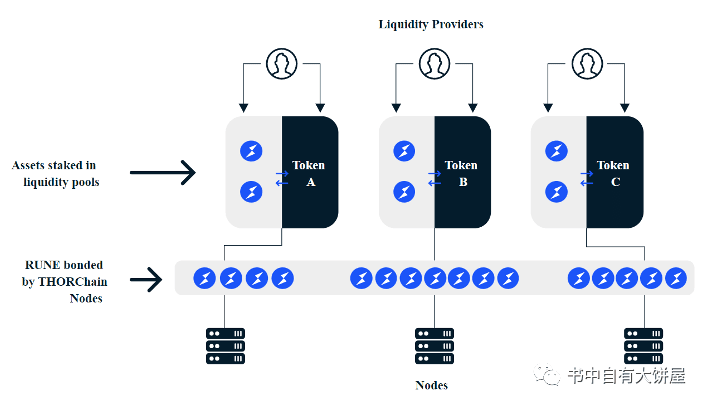
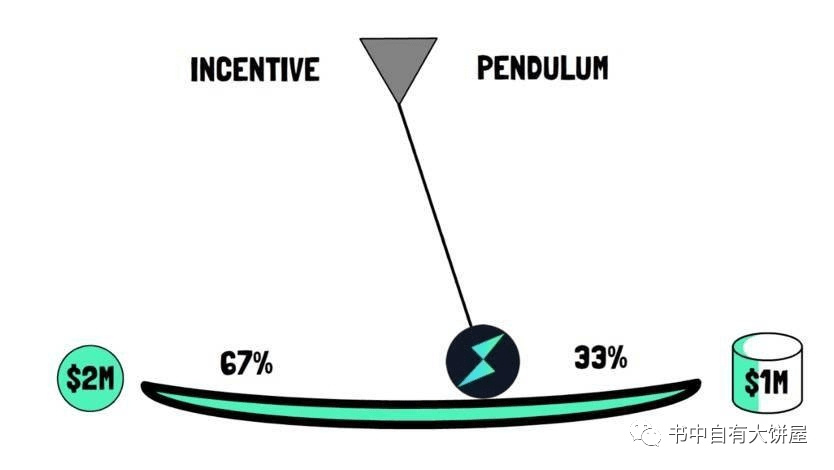
At the same time, another key core point of THORChain is that THORChain does not use Oracle to maintain the currency value within its ecosystem. THORChain adopts a free market approach to control the prices of different currencies. Because all non-RUNE currencies are bound to RUNE, THORChain ensures value stability by controlling the binding ratio of RUNE and non-RUNE currencies.
RUNE in the THORChain ecosystem is mainly distributed in two places – the RUNE pledged by the verifier in the Vault and the RUNE in the liquidity pool. THORChain needs to ensure that the pledged RUNE in the Vault accounts for 67% of the total RUNE, and the RUNE in the liquidity pool accounts for 33% of the total. In this way, THORChain can ensure that the value of RUNE held in the ecosystem will be three times the underlying assets. THORChain achieves distribution balance by adjusting the rewards of the liquidity pool and the rewards of staking.
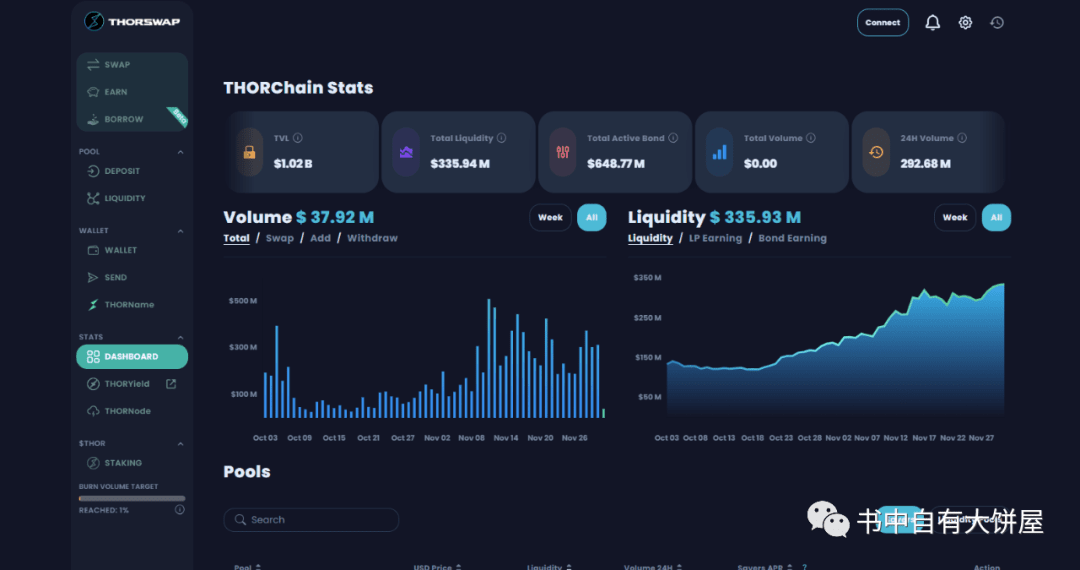
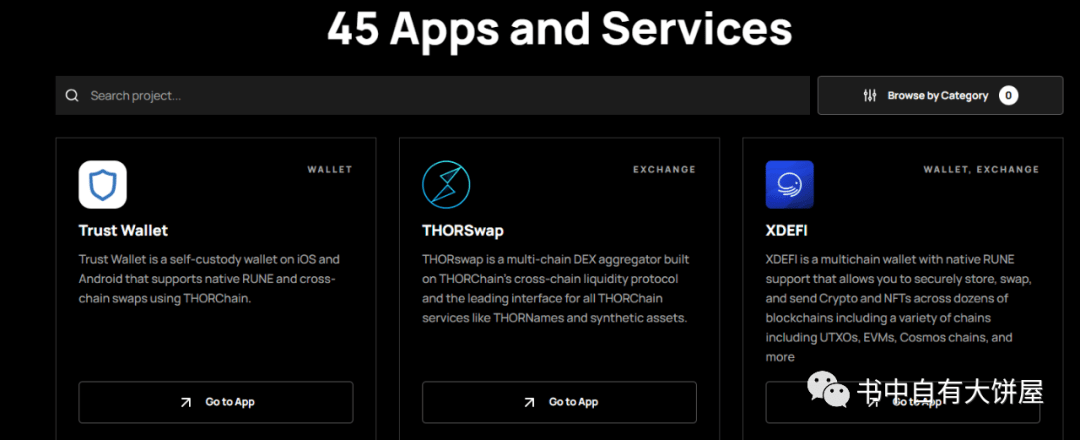
Then take a look at the data. There are currently 1 billion US dollars of TVL on the chain. This volume is very high at the public chain level, let alone a cross-chain exchange. At present, it has not only launched Cross-chain swap has also launched a series of services such as lending, staking, and wallets, which can be said to have built a series of ecosystems. There are currently 45 APPs on the chain, so they are also developing very well.
Token economy
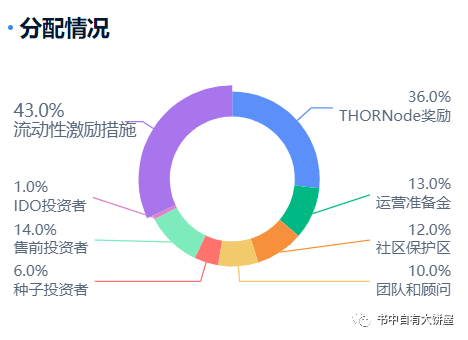
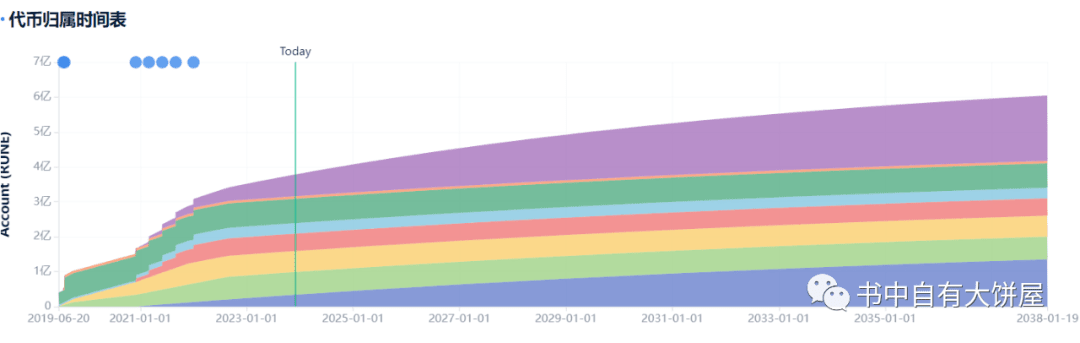
The current total number of tokens is 483,841,238, 337,675,127 have been circulated, and the circulation rate is 70%. The current currency price is 6.4 US dollars, with the highest peak at $21.2717 (2021-05-19). From this point of view, it has risen a lot, and it can It can be seen that its potential is still very strong. In terms of token distribution, the team’s 10% + community protection 12% + operation 13% = 35% of the tokens are in its hands. The proportion is not very high. In addition, its unlocking is It’s very long. It won’t be fully unlocked until 2038, and it also has a 15-year unlocking period. Therefore, the team is also built for the long term, and it is not a short-term cut and run.
Finally, we have to summarize this project. At present, this project should be the leader in cross-chain swap. Last time we mentioned that an innovator is chainflip. Let’s review its cross-chain characteristics. Its virtual transactions are off-chain. , and then there is only one vault. This feature is fast settlement and low gas. However, the transaction on your chain is a security issue, so there must be advantages and disadvantages. Of course, runes can also be stolen, but from the technical solution, Overall, it's pretty much the same, but rune has been running for a long time. It's been five years since 2018, and a certain moat has been built. Now it's not only cross-chain swap but also other businesses, and the growth rate is also very fast. TVL has been increasing, so the important thing about a technology is not only innovation, but also application and implementation. And I have also said that there is still a demand for cross-chain swap, so the fundamentals of this project are still good, but the team is not real-name. Of course, the title is not very big, and the project's GitHub is always updated, so the program I'm talking about today is to prove to Flip once again that Flip's valuation may be higher under revaluation.