

“Bored Ape” Bored Ape Yacht Club is undoubtedly the brightest new star in the current crypto world, but most people may have never heard of the creator of this head-turning NFT project—a 27-year-old Asian American. Artist Seneca.
Of course, for Seneca, she never thought that this set of works would promote a technological revolution.
Nowadays, the "Bored Ape" Bored Ape Yacht Club can definitely be regarded as one of the largest NFT projects in the world. Since it first appeared in May last year, it has quickly detonated the entire Internet, and the price has also skyrocketed, once reaching millions of dollars. .
However, Seneca, the creator of the work, had no idea that her work had become so popular until late last year when she searched the name on Google.
It’s no exaggeration to say that the Bored Ape Yacht Club has generated over $1 billion in revenue and brought mainstream people into the crypto space.
Yet Seneca, who was at the heart of the project and played an integral role in turning the idea into reality, receives no credit.
Seeing NFT enthusiasts carrying their works in every corner of the Internet is a bittersweet feeling. Imagine walking into a museum and stumbling upon your own artwork hanging on a wall decorated with velvet ropes.
Likewise, when Seneca logged onto Twitter (@allseeingseneca), her eyes widened in surprise when she saw that NBA superstar Steve Curry was using her portrait as his avatar.
“It really took me a while to process all of this,” Seneca said, sitting cross-legged on the floor of her Manhattan apartment’s living room, in front of a small gray sofa with a bunch of pastels scattered around underneath. “The world is changing so fast, and I’m still the same person.” Behind the sofa is a small, cluttered workspace—what Seneca calls her studio.
Seneca was born in the United States, but her parents are both Chinese. She grew up in Shanghai and went to the United States to study at the Rhode Island School of Design. After graduating in 2016, Seneca moved to New York as a freelance illustrator, and this corner of the apartment became her office.
Her specialty is designing vibrant, fantasy characters for advertising and marketing campaigns, such as 2D animations. (While her past work was more abstract, she had to find a "realistic" way to monetize her creative passion.)

At that time, a creative agent named Nicole Muniz accidentally discovered Seneca's college portfolio and admired her skills. Nicole Muniz said: "I particularly like Seneca's works, even the fine lines and brushstrokes."
So she began introducing Seneca to companies in industries as diverse as healthcare, insurance, green energy, and finance. Last year, Nicole Muniz called Seneca with a proposal: Her childhood friend was starting something called Bored Ape Yacht Club, and she was joining the project as a consultant, but the team also needed some graphic designers to create the graphics.
In fact, all of these things happened in the early stages of the development of the NFT industry, and no one expected that NFT would suddenly become popular across the entire Internet.
Nicole Muniz immediately thought of Seneca simply because of her "chameleon" ability. She believes that Seneca is one of the few artists who can paint differently depending on the subject and project.
Today, Nicole Muniz is the co-CEO of Web 3 company Yuga Labs, the company behind the Bored Ape Yacht Club.
Gargamel, another co-founder of the company, was also shocked by the "expressiveness" of the characters created by Seneca. He said: "This is very, very rare. I can feel that a complete emotion is conveyed. For the ape art design, we saw the emotion we wanted: a sense of existential boredom."
Nicole Muniz agreed and said: "Seneca is very good at expression and brings the characters to life."
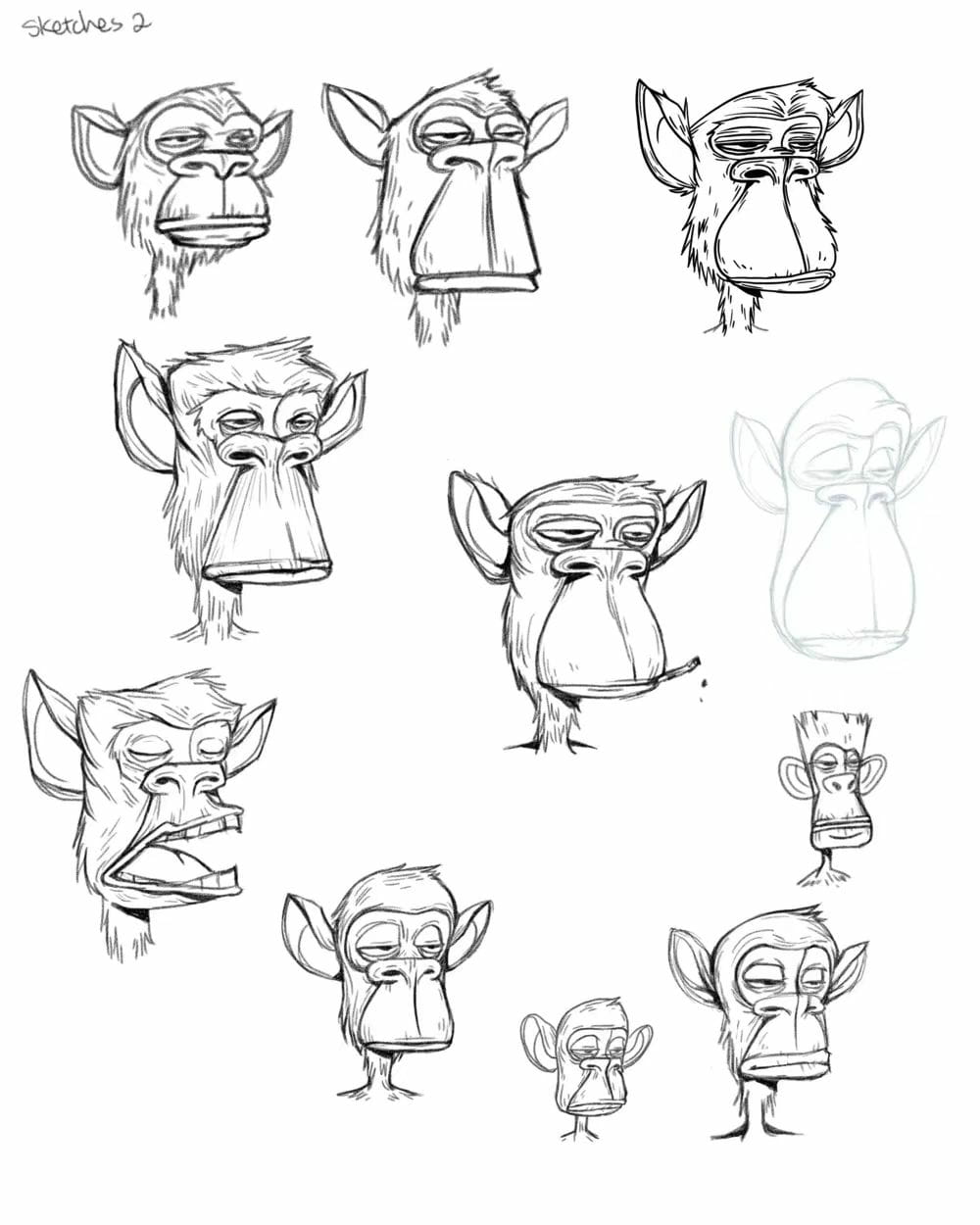 Courtesy of Seneca
But what’s interesting is that Seneca was not familiar with the NFT industry at the time, but during the cooperation process, Yuga Labs gave her a lot of space. They told Seneca at the time: We want a "punk ape". What kind of image do you think that will be? What style do you like? What design do you think will look good?
Seneca imagined herself as a neighbor of an ape in a scruffy city where primates roamed freely as citizens, and she saw "a kind of ape who was bored with life but had all the money and time in the world, hanging out in a metal bar." She also imagined how she would interact with the creature, and that's what inspired the project.
In fact, Seneca’s simian creation is closely tied to her own aesthetic: She calls herself a metal rocker who plays a Gibson SG — and plays it really well — and listens to bands like Megadeth, Behemoth and Bullet for My Valentine. But she’s also a fan of cheesy ’90s anime, which she loves for its grit and draws inspiration from.
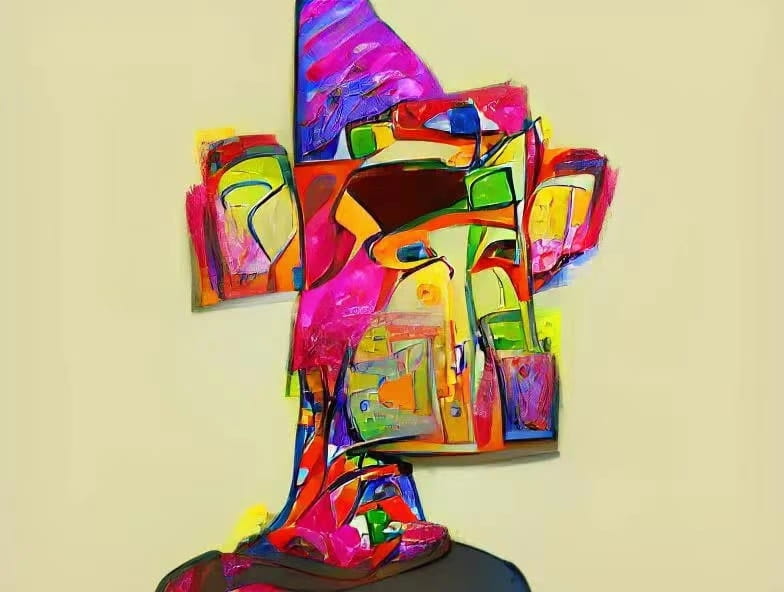
However, it should be made clear that Seneca is not the only illustrator for the project, adding: "I am just the lead artist behind this NFT series." In fact, the body part of the Bored Ape is a complete copy of her painting, and some other main features, such as the grinning mouth, protruding eyes and beanie are also designed by her, while other production artists - such as Thomas Dagley, Migwashere and an anonymous couple - processed some other features and environments of the "Bored Ape".
“Not many people know that I created Bored Ape, which is terrible for an artist,” Seneca said.
However, thanks to the rapid spread of the Internet, Seneca began to gain word-of-mouth effect, and she hopes this will help her find more partners. At the same time, Seneca has been focusing on creating her personal works.
Last December, Seneca launched her first NFT series under her own name, called Iconoclast, which was launched at Art Basel in Miami. The four works she created were minted on Ethereum and hosted on the Internet Computer blockchain.
(Note: Hosting NFTs on the Internet Computer blockchain ensures that NFT artworks will always exist on the public blockchain without the risk of being deleted or experiencing cloud outages.)
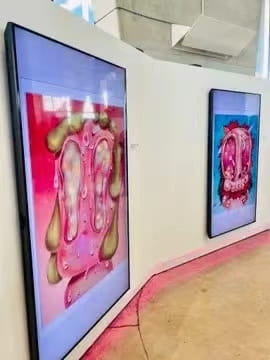
Ultimately, the works generated 23.7 ETH worth of value, or about $84,000 at the time of writing. Seneca said the money was enough to pay her bills and that she now has enough time to work on her next collection, which she hopes to release in February.
What’s more, Seneca has an enchanting personal style that has persisted and evolved over the years. “There’s a sense of inspiration that comes with the art that Seneca creates,” said illustrator Ken Wong, who did the art for Seneca’s favorite video game, Alice: Madness Returns.
Seneca met Ken Wong in Shanghai, after he gave a talk about his career at her high school, and Seneca sought him out. According to Seneca, Ken Wong was her absolute gateway into the world of illustration.
Ken Wong added: “If you really want to label Seneca’s work, you could probably call it pop surrealism, but that’s probably not the most comprehensive label… because she’s still exploring. Seneca is constantly finding her own path, constantly evolving herself by trying different art styles, and I can totally understand that.”
While you might detect a technical shift in Seneca’s approach in “Bored Ape,” her images often contain a soft, childlike wonder that contrasts with a harsh existential darkness.
Ken Wong goes on to explain: “It’s a combination of being very personal and very pop, and the shapes that Seneca uses – these organic, flowing shapes that are very dreamy, with surreal color schemes – I think they speak to how she sees things that are very deep within her. But, at the same time, the works are really about speaking through the lens of pop culture, as if they’re Seneca’s self-expression, trying to justify herself in the context of her own work.”
This sentiment is captured literally in a work titled “Delirium” (pictured below) in the 2021 Art Basel series, in which plants, animals, and limbs emerge from the gaping eye sockets of a girl’s unnaturally oval head. “That’s how I feel, you know, everything’s crazy, and that’s okay, that’s how my mind works,” Seneca said.
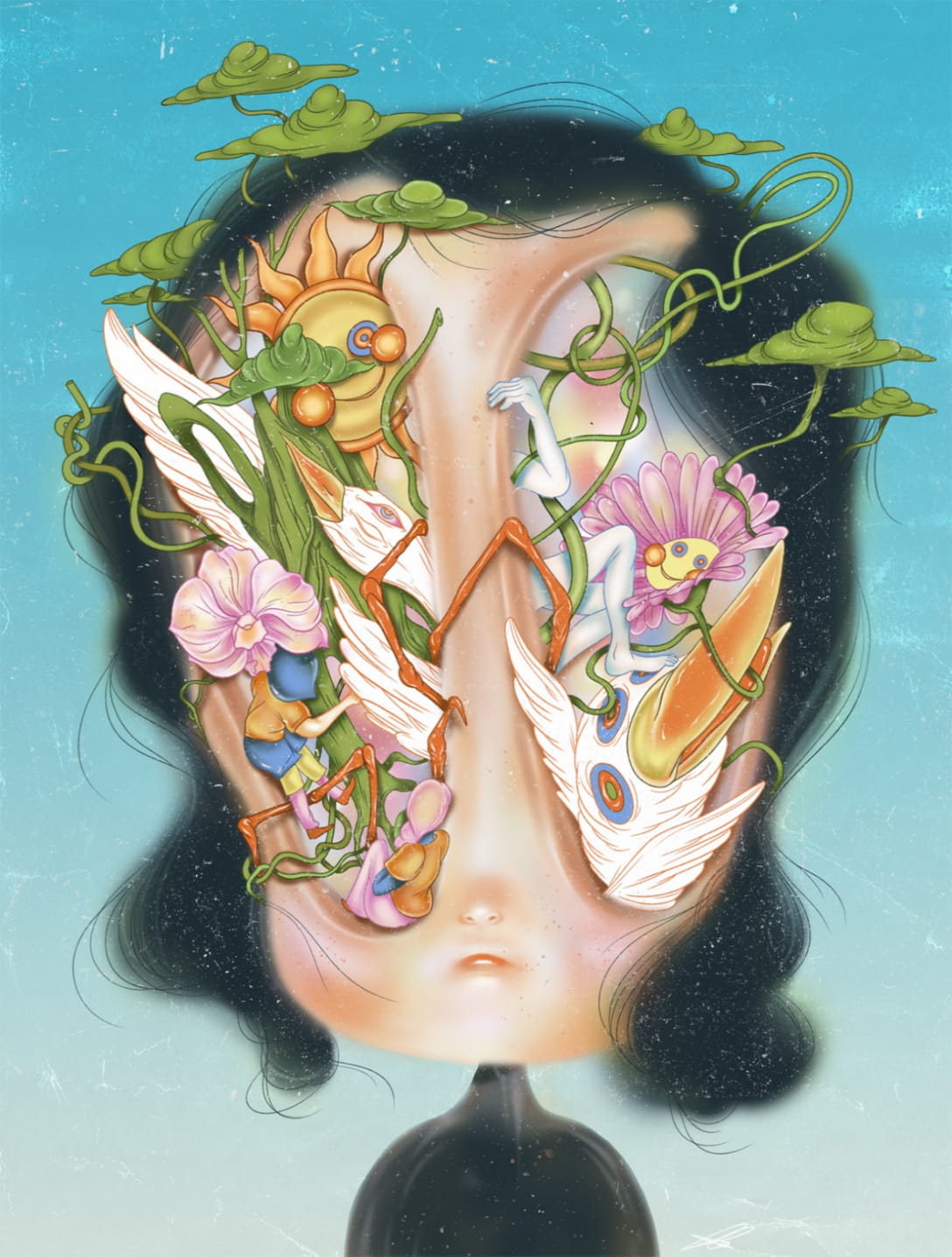 Seneca’s work Delirium was shown at Art Basel in 2021, courtesy of Seneca.
In another work, titled “Can I Be M0ther,” Seneca shows the same girl. This time, however, her bug-like eyes appear soft and angular, as they shed thick, gooey tears and it’s unclear whether veins, wires, or threads are slithering out of them. These “fluids” fall and entangle the girl’s outstretched hand, which is holding a toy ape that appears to be malfunctioning.
“As a commercial artist, I see myself as a proxy,” Seneca explains. “Art is an extension of your emotions, and it’s very personal, and you have to distance yourself from the work in a way to feel that way. That piece was very much me saying, can I take my work back? Can I reclaim my identity as an artist?”
Seneca believes that her condition may be caused by "lucid nightmares" that have plagued her since she can remember. Seneca said that she has memories of it when she was three years old, but she had a nightmare at that time - "I was sitting in a stroller." Seneca recalled: "It made me feel small and vulnerable."
Seneca doesn’t go into detail about the dreams, but we can already sense that these bizarre themes permeate her work, which she said was inspired by cosmic horror. “I was more interested in my imagination than in reality,” Seneca said of her early years.

Seneca confessed that he remained silent most of the time and for much of his childhood, sometimes experiencing "completely lucid hallucinations."
Every night before going to bed, Seneca would remember all the deep fears she was experiencing, thinking that if she could face them, they would not appear in her nightmares - but this mentality often backfired and kept her awake. "I didn't want to go to sleep because I was afraid I would jump into that world of fear."
Only recently has Seneca begun to embrace the "crazy part" of it all - turning her inner "dark art of surrealism and nonsense" into something beautiful. In her opinion, this is very therapeutic.
"That's why I chose to do this," Seneca explained. At the same time, she also admitted that she didn't want to share these things with many people because she was afraid that people would think she was "crazy."
However, Seneca was lucky.
What she feels is “madness,” or “certain forms of madness,” is very welcome in the Web 3 space. Frankly, without the “urge to deviate from the norm,” cryptocurrencies wouldn’t exist.
Seneca said she hopes the NFT industry will continue to thrive in the coming years, and that her experience with the Bored Ape Yacht Club has given her "a rich lesson in life," so she hopes other aspiring creators can learn more about NFTs, smart contracts, royalties, and more.
Seneca said frankly: "Be firm in your beliefs and work very hard, be patient with yourself and be kind to yourself. In the crypto community and the NFT field, things will develop very quickly. You need to pay attention, but don't care. Focus on the track you are best at, and you will eventually do well."
Of course, the so-called "good" is actually relative.
Although we don't know how much Seneca actually gained, at least for herself, the ratio of effort to reward was "not ideal." However, Seneca insisted that she was very grateful for the experience and entered a completely unimaginable realm.
Since entering the market, she has been convinced by the concept of NFT, because NFT can verify and preserve art, provide royalties to creators, and make the art world more inclusive and less dependent on traditional galleries.
Seneca believes that his second NFT series, Iconoclast, is actually an extension of the foundation of surrealism, but the works are bolder than before.
In fact, whenever Seneca discusses her ongoing work, she is careful to emphasize mental health and the power of strong women (even though her new work may contain some "criticism" sentiments).
Seneca concluded: “I am very optimistic about the NFT space and I feel I can fully master it.”
ICONOCLAST V2 Hosted by the DFINITY Foundation and Toniq Labs, ICONOCLAST celebrates outliers, dissidents, and provocateurs who push the boundaries of art, culture, and technology.
In the modern understanding of the word, an iconoclast is someone who challenges the status quo in a spirit of intellectual and artistic inquiry in the search for truth.
Historically, however, the term iconoclast has had a more primal, visceral definition: someone who believed in the importance of physically destroying religious and political iconography as a catalyst for change. It may seem extreme, but distilled to its most essential essence, the message is simple: to welcome the new, you must eliminate the old.
A wiped clean slate, a transformation, a rebirth. A fiery phoenix rises from the burning ashes of the altar of an ancient god.
To those artistic renegades who live, breathe and fight for the truth, who understand that death precedes reincarnation, and this is their moment.

Source: Deepchain
Layout: Catherine
IC content you care about
Technology Progress | Project Information | Global Activities
 Collect and follow IC Binance Channel
Answer your questions at any time