


Today we are going to talk about a new project, which has not been launched yet, and has not even launched a test network yet. It is relatively new, and it has just received a huge amount of financing, 225 million US dollars. You should know that many cryptocurrency projects do not have such a high amount of overall market value, and projects that can get such a high amount of financing must not be simple, and must be large-scale projects, which means that there is a possibility of airdrops. Let's take a look at this project!
background
On the evening of April 9th, Beijing time, Monad Labs announced the completion of a $225 million financing, led by Paradigm, with participation from Electric Capital and Greenoaks. As early as February 2023, Monad announced its first round of $19 million in financing, led by Dragonfly Capital, with participation from Placeholder Capital, Lemniscap, Shima Capital, Finality Capital, Naval Ravikant, Cobie, Hasu and others. The project focuses on the concept of "Parallel EVM". Monad hopes to introduce an execution layer expansion solution of "parallel processing" to greatly improve network execution efficiency while being 100% compatible with all bytecodes of EVM. The founder of the project is Keone Hon, head of research at market-making giant Jump Trading, who announced his resignation and the founding of Monad in April 2022.
Introduction
Monad is a high-performance Ethereum-compatible L1. Monad essentially pushes the effective boundary between decentralization and scalability.
Monad introduces optimizations in four main areas that allow it to achieve a throughput of 10,000 transactions per second:
①MonadBFT: MonadBFT is a pipelined two-stage BFT algorithm with optimistic response, with linear communication overhead in normal cases and quadratic communication overhead in timeout cases. Like most BFT algorithms, communication is divided into stages; in each stage, the leader sends a signed message to the voter, and the voter sends a signed response to the next leader. The pipeline allows the legal certificate (QC) or timeout certificate (TC) of block k to be attached to the block's proposal.
② Delayed execution: One of the novelties of Monad blockchain is the separation of execution and consensus.
In short, consensus is the process by which Monad nodes agree on the official ordering of transactions, and execution is the process of actually executing those transactions and updating the state.
In Monad consensus, nodes agree on an official ordering of transactions, but neither leaders nor validating nodes are required to have executed those transactions in advance.
That is, the leader proposes an ordering but does not yet know the resulting state root, and validating nodes vote on the validity of blocks but do not know (for example) whether all transactions in a block will be executed without rollback.
③Parallel execution: Monad uses optimistic execution. This means that Monad starts executing transactions before earlier transactions in the block are completed.
④MonadDb: MonadDb takes full advantage of asynchronous I/O supported by the latest kernels (io_uring on Linux). This avoids the need to generate a large number of kernel threads to handle pending I/O requests in an attempt to perform work asynchronously.
Monad’s improvements address existing bottlenecks while retaining seamless compatibility for application developers (full EVM bytecode compatibility) and users (Ethereum RPC API compatibility).
What's familiar about Monads?
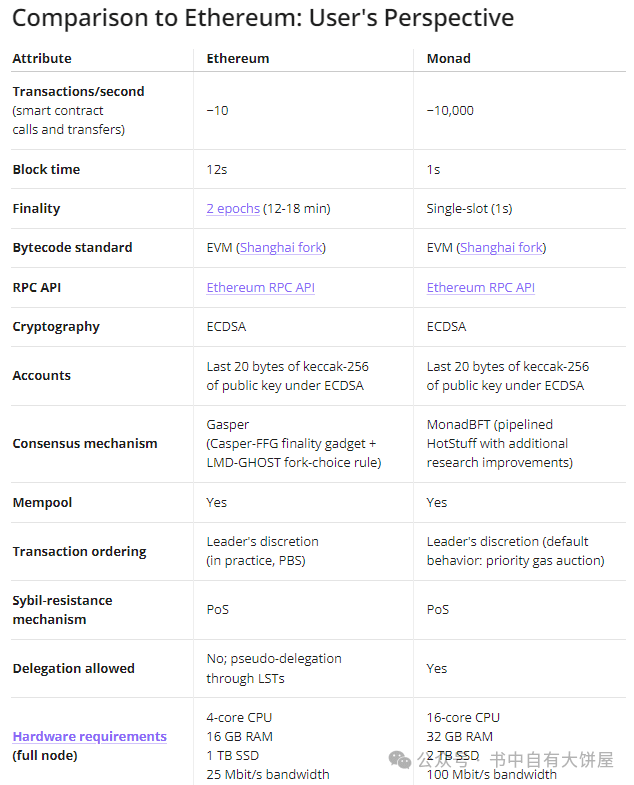
From a user perspective, Monad behaves very similarly to Ethereum. You can use the same wallets (such as MetaMask) or block explorers (such as Etherscan) to sign or view transactions. The same applications built for Ethereum can be ported to Monad without code changes, so it is expected that you will be able to use many of your favorite Ethereum applications on Monad. The address space in Monad is the same as Ethereum, so you can reuse existing keys.
Like Ethereum, Monad has linear blocks and linear ordering of transactions within blocks.
Like Ethereum, Monad is a proof-of-stake network maintained by a decentralized group of validators. Anyone can run a node to independently verify transaction execution, and significant care has been taken to keep hardware requirements to a minimum.
How are Monads different?
Monad makes this outstanding performance possible by introducing parallel execution and superscalar pipelining to the Ethereum Virtual Machine.
Parallel execution is the practice of taking advantage of multiple cores and threads to perform work in parallel, while still delivering results in the original order. Although transactions are executed in parallel "behind the scenes", from the user and developer's perspective they are executed serially; the result of a series of transactions is always the same as if the transactions were executed one after the other.
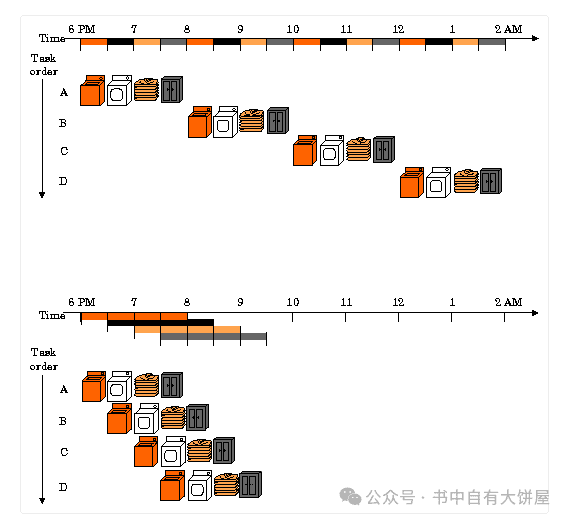
Superscalar pipelining is the practice of creating stages of work and executing them in parallel. A simple diagram can tell the story:
A familiar assembly line example of doing laundry. Top: conventional strategy; bottom: assembly line strategy.
When washing four loads of clothes, the conventional strategy is to wash, dry, fold, and store the first load before putting it in the dryer. The assembly line's strategy is to start washing the second load as the first load is in the dryer. By utilizing multiple resources simultaneously, the assembly line gets the job done more efficiently.
Comparison with Ethereum
Faster TPS 10000, shorter block time 1 second, faster confirmation cycle 1 second (single slot).
data
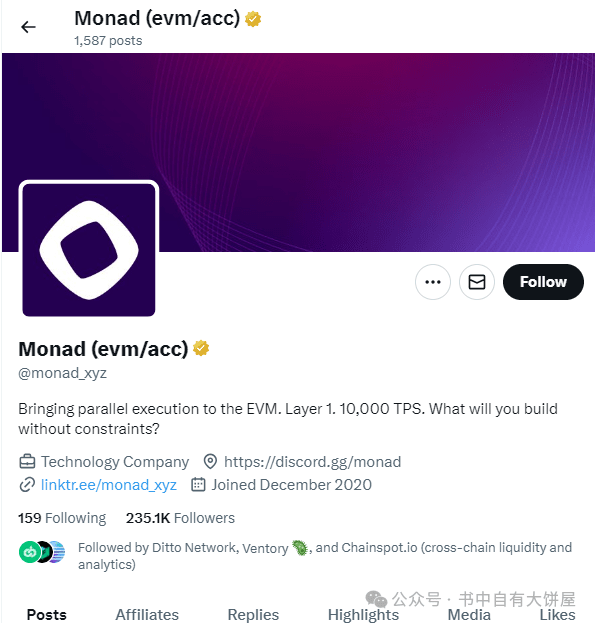
Currently there are 240,000 followers on Twitter and 200,000 followers on Discord.
Interactive airdrop
There is no clear explanation for the project at the moment, because the project has not even been put on the test network. It has just been put on Devnet, a network that developers can use. It is still in a very early stage, so we can only wait.
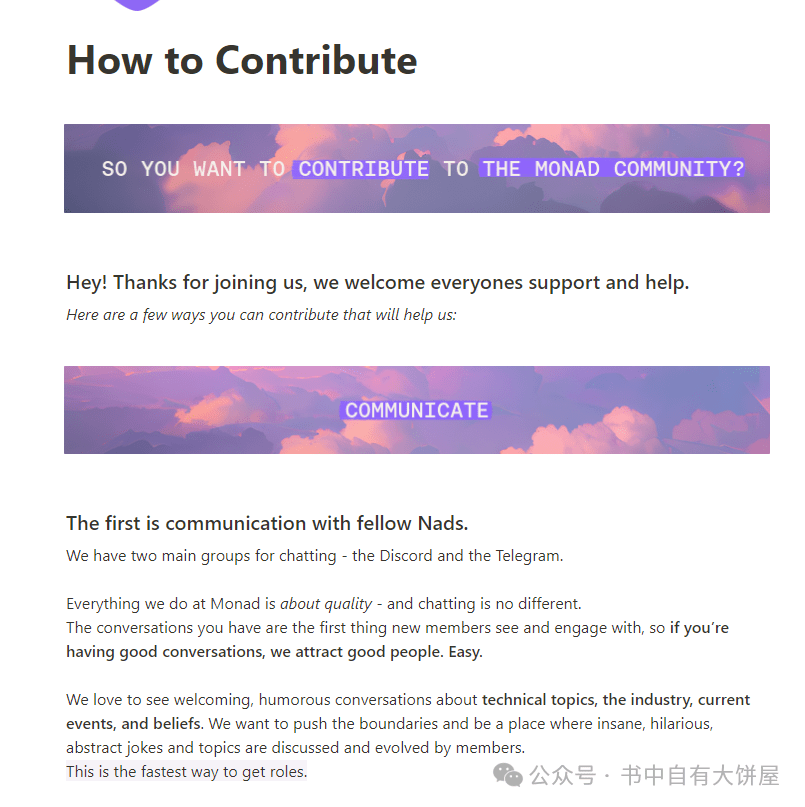
The only thing we can do now is to be active in the community. There are many identities in Discord, so we can only actively speak up and establish our identities.
There are also contributions in DIscord:
Finally, don’t be fooled. Don’t believe someone who has a private placement quota, unless that person is your parent. The project can raise so much money because, first, it is not short of money, and second, all the major institutions have already done it, so it’s not your turn. So don’t think it’s a pie in the sky. Just be active in the community, and then keep an eye on it later. Do the tasks when the test network is online.