

I believe that DFINITY is an unavoidable topic for countless investors who entered the cryptocurrency field in 2021. This "king-level project" that raised nearly 200 million US dollars has maintained a downward trend in its native Token ICP since its high opening in 2021. Investors who entered the market at tens of dollars or even $100 in two years have no hope of getting their money back.
The bull market ended at the end of 21, and with the market in shambles and investors leaving the market, we gradually no longer heard anyone talking about DFINITY, or even saw any updates on new projects on the network.
In the following year and a half, too many outstanding new projects have taken turns to seize the spotlight on the market stage. Optimism and Arbitrum have successively issued coins. New public chains in Move language such as Aptos and Sui have made their debut with the support of huge financing. DFINITY has been gradually forgotten by the market.
Now that 23 years have passed quietly, when we read the official blog of DFINITY, we found that the project has not been interrupted like some "run away" projects. Monthly reports, quarterly reports, BTC network integration, Ordinals topic articles, etc. Research reports following the development of current affairs tell us that this former king has not stopped the progress of research and development.
What kind of network is ICP? What is the current development and what kind of performance does it have? Is there any misunderstanding or unknown situation in the rumors of "project parties selling off at high prices"? Can DFINITY, which was backed by a number of Asian capital investments in its early stages, return to the public eye in the Hong Kong narrative?
In response to these questions, BlockBeats interviewed Dominic Williams, founder of DFINITY.
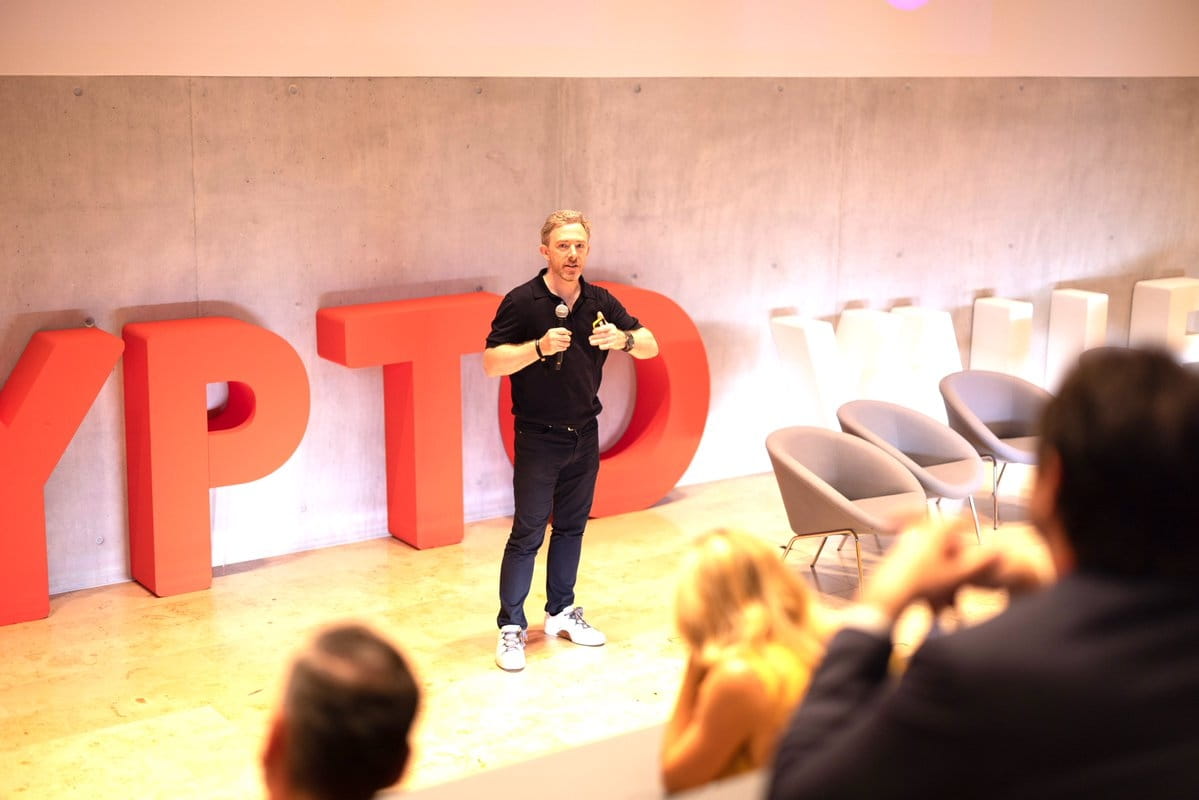
BlockBeats: First of all, please briefly introduce yourself to readers. Why did you enter the encryption industry and found DFINITY?
Dominic Williams: Well, I've been working on distributed systems and cryptography for a long time, and in 2010 I launched a massively multiplayer online game that had scaled to millions User, I was building a distributed system for this game.
Going back further, I worked on early online file sharing during the dot-com bubble, where I created a system called "Crypto++", so I guess I've been working in this space for a long time indeed.
I moved full-time into crypto in late 2013 and tried to build something called GameCoin, which was intended to be the cryptocurrency of the gaming industry, allowing you to transfer value between different games and create a pan-gaming economy. That’s when I realized that for virtual goods, there was a real need for a cryptographic network that could handle hundreds of thousands of transactions per second.
So I started working on it, and I worked on it all year long in 2014. I was probably the first person in the crypto field to work on reusing the Byzantine fault consensus algorithm for blockchain settings, and I was also the first to propose Mathematics can create unlimited cryptocurrencies. This is my original starting point, but I was a member of the early Ethereum community. At that time, someone in the community proposed the concept of a "World Computer", which made me think about it. Fascinated by it.
We have seen at that time that blockchain is not only used for cryptocurrency, but can also run code and host calculations on the blockchain and smart contracts. So when I hear the term "world computer," my interpretation of the term is that eventually, every online service and enterprise system will run entirely on a blockchain, in a world created by many blockchains When running on a computer, there will be a day when a "blockchain singularity" arrives.
But obviously there was a lot of technical work required to achieve this, so I started taking on the challenge in 2015.
ICP, or Internet Computer, is a blockchain, but it is built from the ground up and does not share technology with any other blockchain. Even the cryptography that powers the blockchain is developed by some of the best cryptography in the world. Developed by a large team of experts. So you have to reorient your thinking when you try to understand Internet Computer, a blockchain designed to replace all traditional IT.
BlockBeats: When ICP was first launched, it attracted a lot of attention because of its ridiculously high market value, but then it almost disappeared from public view. In your opinion, why did this happen? What progress has DFINITY made in the past two years?
Dominic Williams: I think first of all, for people who are confused by the lack of information coverage of Internet Computer, it's important to understand why this is happening. At the root of it all, there are a lot of mysterious, powerful people who They are afraid that Internet Computer will reduce the value of their Token holdings because our technology is very advanced.
I mean, this is obviously a revolutionary technology, and anyone who has looked into the DFINITY Foundation will find that it is the largest research and development team in the encryption field, we have the most famous team of cryptographers in the world, technology field One of the best teams.
There are a lot of people who are very worried that the emergence of Internet Computer will somehow reduce the value of their token holdings, assets like Solana and Avalanche, which creates a lot of problems.
So when ICP launched, the token price was heavily manipulated by Sam Bankman-Fried on FTX, yes, using something called ICP-PERP (ICP Perpetual Contract). We later found out that SBF had increased the price of ICP fivefold in order to crash it.
It looks like he did this to defend his large holdings of Solana, so unfortunately this guy stole billions from FTX customers and then took those billions and invested them into the Solana ecosystem, And later in projects such as Near and Aptos.
BlockBeats Note: A previous article pointed out that within a few hours of the release of ICP, under price manipulation, its market value continued to rise along with the currency price, once exceeding 230 billion US dollars. Once the price manipulation ceased, ICP's price began to fall back toward its natural market level, with market capitalization figures declining by a cumulative $200 billion over the next six weeks. The rapidly falling price has greatly damaged the reputation of the Internet Computer ecosystem and caused the project to be attacked by multiple parties. Some even claimed that the price drop was caused by sell-offs by project insiders. These attacks reinforced the decline in ICP prices, causing the ICP price to plummet. lower than it should be.
Particularly on Solana, where he holds a double-digit percentage of the total supply, and of course, Jump Trading, which has a large portion, who are very afraid that Internet Computer will destroy SOL's expected returns. As for Sam, he knows that if this happens, his journey to prison will be accelerated because he has already stolen billions of dollars and invested them into the Solana ecosystem to drive the value of SOL up.
And he knows that if this plan is disrupted and the price of SOL does not increase as originally planned, he will not be able to repay the funds he secretly embezzled from FTX customers, so for him, this is definitely a desperate move.
But actually, when you dig deeper, you find that Sam worked with people like Barry Silbert (DCG CEO). They have an almost unbelievable degree of control over crypto media, so unbelievable that they even invested in a crypto industry research organization.
Of course, on top of that, all the American VCs and New York hedge funds invested with SBF, who they considered a miracle, a financial genius.
So they took out billions of dollars to invest with SBF, and the irony is that these investors should have been so excited about the DFINITY thing because they were making incredible gains from Internet Computer, which multiplied their investment 50 times , 100 times, and achieved amazing benefits.
But the problem was, they had invested so much money in investments with SBF that were largely underwater, so there was a large group of people who didn't want Internet Computer's publicity to get publicity, and they did whatever they could to Exclude them from encrypted media. Crypto media is largely controlled by these investors who are, you know, worried that Internet Computer will disrupt their plans.
That's the reason, I mean, DFINITY actually does do a lot of PR, but you don't see any coverage in the media. Journalists at outlets like Coindesk, who were very happy to write about Internet Computer, gave us feedback and said, sorry, we can no longer write about Internet Computer.
So, I think that's a big problem, you know, for people who are in the cryptocurrency industry and interested in this space, it's going to be hard to understand the depth of corruption in that ecosystem.
This is absolutely incredible, we are working on it, and we hope that the person behind these problems we are facing will eventually leave the crypto industry in some way. SBF is obviously leaving and things will change, but as of now, if you're wondering why you've never heard of Internet Computer in the crypto media, this is why.
It's not because we're not trying, or we're not talking to crypto journalists, it's because behind the scenes, the owners of these mainstream media outlets are often worried that their portfolios will be devalued by the rise of the Internet Computer, and we just hope that eventually, things will become more reasonable.
We've been the largest cryptographic R&D operation for many years, a business with some of the best brains in technology and cryptography, and we have one of the most prominent and visionary teams of cryptographers in the world. In fact, we are one of the few blockchain projects that actually employs a large number of cryptographers, much larger than Google's cryptography team.
People with a unique perspective should do their own research, look into Internet computer technology, go to internetcomputer.org and read about it, look at the team at dfinity.org and ask yourself, like, what kind of ecosystem do we have today? We are fighting the good fight, we are continuing to improve Internet computer technology, more and more people are participating in building it, and today's Internet computers are processing the equivalent of 250,000 Ethereum transactions per second, which is incredible.
BlockBeats: Some voices from the community are that one's personal computer equipment should not be shared with others in a decentralized manner. What do you think of this view?
Dominic Williams: They should think of it this way. The Internet Computer is an infinitely scalable blockchain that plays the role of an encrypted cloud. Users use the Internet Computer to build online services such as social networks and enterprise systems. The World Computer will not replace the personal computer, people will just build online services on it and that's why people use it today.
Currently, Internet computers can process the equivalent of 250,000 Ethereum transactions per second, and we predict that a year from now, it will be able to process the equivalent of billions of Ethereum transactions per second.
This is the World Computer. You can think of it as an encrypted cloud, an alternative to traditional centralized cloud computing platforms, a public blockchain network, and you can use a new type of smart contracts called "containers" , build a network application that is 100% on the blockchain, and the contract is built to run 100% on the blockchain.
BlockBeats: We know that ICP has previously integrated with the Bitcoin network. Can you explain to readers why ICP should also be integrated with Ethereum?
Dominic Williams: Yes, we have integrated with Bitcoin before integrating with Ethereum. Internet computers are powered by a technology called chain-key cryptography, which allows Internet computers to sign transactions with other blockchains without private keys. This is an amazing advancement that smart contracts on Internet computers can call API that leads to the creation of Bitcoin transactions.
This is already possible today. If you create a smart contract for an Internet computer, you can hold Bitcoins directly on the Bitcoin blockchain without relying on a cross-chain bridge provided by a third party. Internet computer nodes To talk directly to Bitcoin nodes, no bridge required, we have created a token called ckBTC with it.
You can hold native Bitcoin directly with the help of a container smart contract, which allows you to send Bitcoin in less than a second, and the transaction fees are very, very cheap. The next stage on the Internet Computer roadmap is integration with Ethereum, where Internet Computer smart contracts will be able to directly call Ethereum smart contracts and vice versa.
So in a sense, Bitcoin, Ethereum and the Internet computer network will become one network, one world computer, and that's our vision.
BlockBeats: The Ordinals protocol on the Bitcoin network has been very popular recently. Now that ICP has integrated Bitcoin, why haven’t Bitcoin NFTs, BRC-20, etc. happened on ICP?
Dominic Williams: Well, yeah, I think there's all kinds of mania in cryptocurrencies, right? Bitcoin Ordinals are another craze where people are buying NFTs and things like that hoping they will go up in value, and maybe they do, which I think is cool, right? Being able to actually store an NFT image on a Bitcoin block, although it's very small, I'd say around 14KB or so.
But as far as I know, someone has already done this that allows users to use Bitcoin Ordinal on an internet computer, his name is Bob Bodily from Tonic Labs.

BlockBeats: In addition to Bitcoin Ordinals, new public chains in the Move language such as Aptos and Sui have also received favor from capital. In your eyes, which one is better than ICP?
Dominic Williams: You can't compare them to what Internet computers can do, and ICP has a large R&D team with some of the brightest technical minds who have been working in the blockchain industry for many years.
Quick question, show me a social network running on Sui or Aptos? That’s completely impossible. Today’s Internet computers process the equivalent of 250,000 Ethereum transactions per second, and we predict that within the next year, it will process the equivalent of 1 billion Ethereum transactions per second. These emerging blockchains simply cannot account for this level of throughput, and it’s not just a matter of transaction throughput.
Internet computer smart contracts have persistent memory pages, and you can have thousands of persistent memory pages in a smart contract. Internet computer smart contracts can deploy the front end of web applications, they can interact with HTTP, and you can even provide web services securely without using Amazon Web Services.
You can create a social network on the Internet computer blockchain, such as OpenChat, and you can control it with a decentralized community organization DAO - we call it the Service Nervous System SNS. Moreover, this SNS will update the software and has no backdoor for developers. It is completely autonomous and end-to-end, and it is truly decentralized.
There's a lot of hype around Sui and Aptos, thanks to a lot of VCs, big VCs are investing in this, it's not about what the technology is and what it can achieve, it's really just about creating traffic on social media .
If you really look at what these technologies do, they're just another proof-of-stake blockchain running primarily on Amazon Web Services, they don't do anything new. They didn't advance the game, but it allowed investors to raise hundreds of millions of dollars for it, which they hoped would allow them to develop something like an Internet computer.
Even if they had billions of dollars, it would still take them years of hard work to catch up to where we are now, and development of Internet computer projects never slows down.
There's no doubt that VCs and the founders of Aptos and Sui will make tons of money from this, but technically you can't even put them in the same category. Just because they say they're fast and scalable doesn't mean it's comparable in any way (to ICP). Solana claims to be the most efficient blockchain, but Internet computers are 23,000 times more efficient than Solana.
People hear Solana is a high-speed scalable network, the same goes for Internet Computer, and the hype sounds like the same term, but you know what, it's not really comparable.
In the case of Solana, the projects that people talk about being built on Solana, they're not built on Solana, they're built on Amazon Web Services, and the things that are built on Amazon Web Services retain NFTs on Solana, which is different from being built on Solana. There's no comparison to actually building a social network on Solana.
But on Internet computers, this is what actually happens, no other encrypted network is advanced enough to support this model, and they are still years away from achieving it. But they're marketed as if they're actually things that drive real development, and people think they're investing in the next big thing in technology, but they're not really, they're just making the investors and founders of these projects rich.
Unfortunately, this is the reality of the blockchain industry today, it is very, very difficult to get real technical information, and a lot of what you see online is untrue. It’s hard to imagine that media reporting, research, etc. in the crypto industry could be so controlled. SBF stole billions of dollars from FTX clients and invested them in over 500 crypto companies, which gave him immense power.
He's also investing money in investigative news outlets like Vox, the Intercept, and Politico to make sure no one investigates him and that SBF isn't alone and there are other players like him who haven't been fully exposed.

BlockBeats: Indeed, today’s crypto projects are generally overvalued.
Dominic Williams: Individual investors are buying in droves in the secondary market, but prices will eventually drop and people will realize this is not the next big thing. Retail investors are losing money in this game, and a group of rich people and people behind the scenes are It's sad that investors, as well as insiders, are getting very rich.
They have created this crazy zero sum casino where everyone just wants to invest in the next big wave but most of the crypto community are just meat in the sausage machine and don’t realize it themselves and they are controlled and denied access to information about Real information on where the real innovation is happening in cryptocurrencies.
BlockBeats: What do you think is the way out of this "market fragmentation dilemma"?
Dominic Williams: Well, I think the Internet Computer is one of the ways out, and I think people are going to see massive breakthroughs and success from projects that are built on the Internet Computer and take advantage of its multi-chain capabilities.
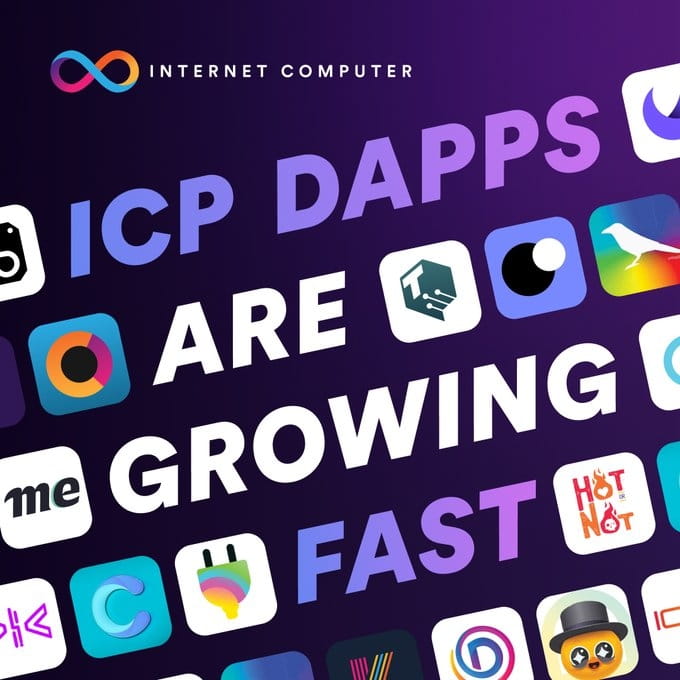
For example, there is a project that is a blockchain TikTok on the Internet computer called Hot or Not, and my prediction is that it will definitely have over a million users within a year, and it may also take less time.
On an Internet computer, video streaming can be done, large amounts of data can be stored and processed on the chain, social networks built using smart contracts can be created on the blockchain, and Tokens can be saved in your social media accounts and used for bounties , just like you can now send some Satoshis to others using OpenChat messages, this is the revolution, this is the future.
BlockBeats: How long do you think it will take for this paradigm shift to occur?
Dominic Williams: It's already happening, the internet computer is advancing, we now have transactions equivalent to 250,000 Ethereum per second, people are building incredible things, there are social networks built on the internet computer , multi-chain is already in operation.
I expect we'll see, for example, Bitcoin's chain keys being used in cities, Ethereum integration happening, and Internet computers developing rapidly. Soon, Web3 AI will be available on computers on the Internet, which can use Ethereum smart contracts to launch AI models and send alerts to them from Ethereum smart contracts.
At the end of the day, we invest in technology, and I think eventually the market will return to sanity and technology will win out.

BlockBeats: Going back to DFINITY’s development path, where will DFINITY’s future development focus be?
Dominic Williams: One of the things we are doing now at DFINITY is to really focus on Asia, especially mainland China. Ethereum and Internet computers are closely related. The early investors who funded Ethereum also funded Internet computers. The investment funds mainly come from Chinese investment. people.
String Lab incubated the Internet computer project DFINITY, and later established the Swiss Foundation. The backers of venture capital are all Chinese companies. My co-founder Tom Ding is from Shanghai and is Chinese, so when we see Hong Kong gradually opening up encryption We are very excited when it comes to currency markets.
Did you know that Wanxiang and Distributed are supporters of Internet computers, and Dr. Xiao Feng helped us contact the Hashkey Group.
So we're very happy that the Chinese community is accumulating and benefiting from these larger investment funds, and we've seen incredible teams from China like AstroX, who are a multi-chain wallet that uses Internet computer technology that you can use in any zone Cryptocurrencies are stored on the blockchain using a technology called chain key encryption.
Another example of an excellent Chinese team is ICDex.io, which looks like a CeFi trading platform, but it is entirely a smart contract deployed on Internet computers, using decentralized blockchain technology to gain credit and even user experience Also written into smart contracts, ICDex.io will soon be able to trade all cryptocurrencies listed on Ethereum through chain-key cryptography.
Another project called EMC comes from Singapore and Nanjing, and they are creating a trading market for artificial intelligence computing resources on Internet computers. There's a lot going on in Asia, that's why we focus so much on Asia, we never forget that all the original funding that made Internet computers possible came from Asia.
There is also DMail, which has 300,000 users. There is also a team project in Singapore called Relation Labs. There are many similar Asian teams. Hot or Not is an Indian team.
We all love our jobs, and like me being an entrepreneur who has worked 16 hours a day for decades, I admire the energy, determination and tenacity of the Asian team. So we're looking at, you know, we're turning to Europe, but we're also looking specifically at Asia.
I think Hong Kong is very important because it will allow mainland China teams to move their executives there and find ways to make their services running on internet computers compliant, ultimately with the support of China, which is supporting Hong Kong's move to Web3 And watching its progress, I think it's very important for the future of cryptocurrencies.
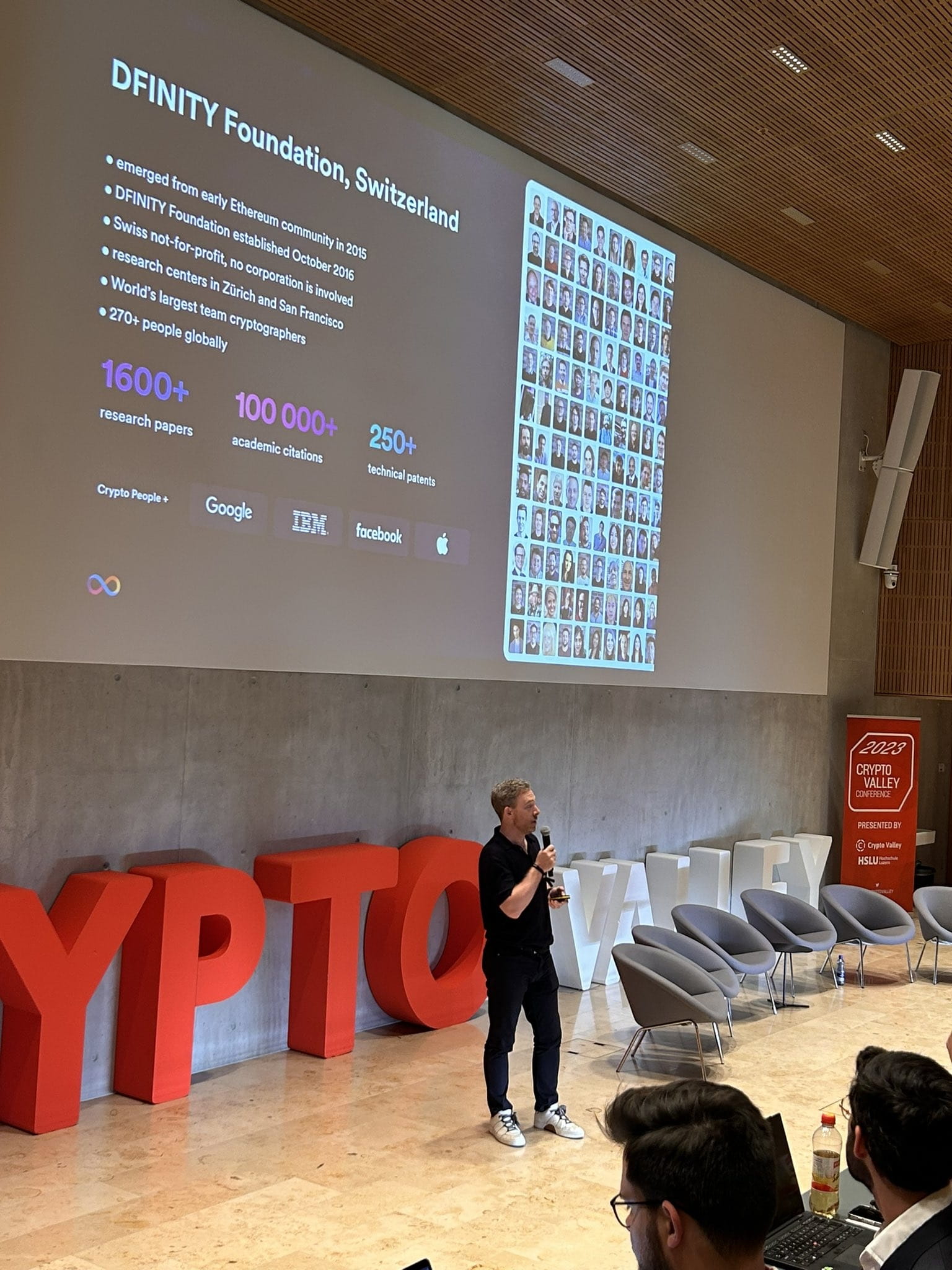
BlockBeats: Speaking of Hong Kong, what do you think of Hong Kong’s new policies on virtual assets? Does DFINITY have plans for this?
Dominic Williams: I think Hong Kong is very important because China has given the green light to the Hong Kong government to embrace Web3 more loosely, and it's like trying to be in a kind of sandbox to see how it evolves.
There's a lot of problems in America today, there's a lot of problems in Silicon Valley, and a lot of people are invested in some really crappy ecosystems that have a lot of market capitalization, but they're really not doing anything interesting technically.
Web3 is a huge opportunity for Asia and Europe, but I think Asia in particular can create its own tech economy, comparable to the one that existed almost exclusively in Silicon Valley in the past. TikTok is a great example of how Asian teams can compete at the highest level, and we think a lot of the future of Web3 is in Asia.
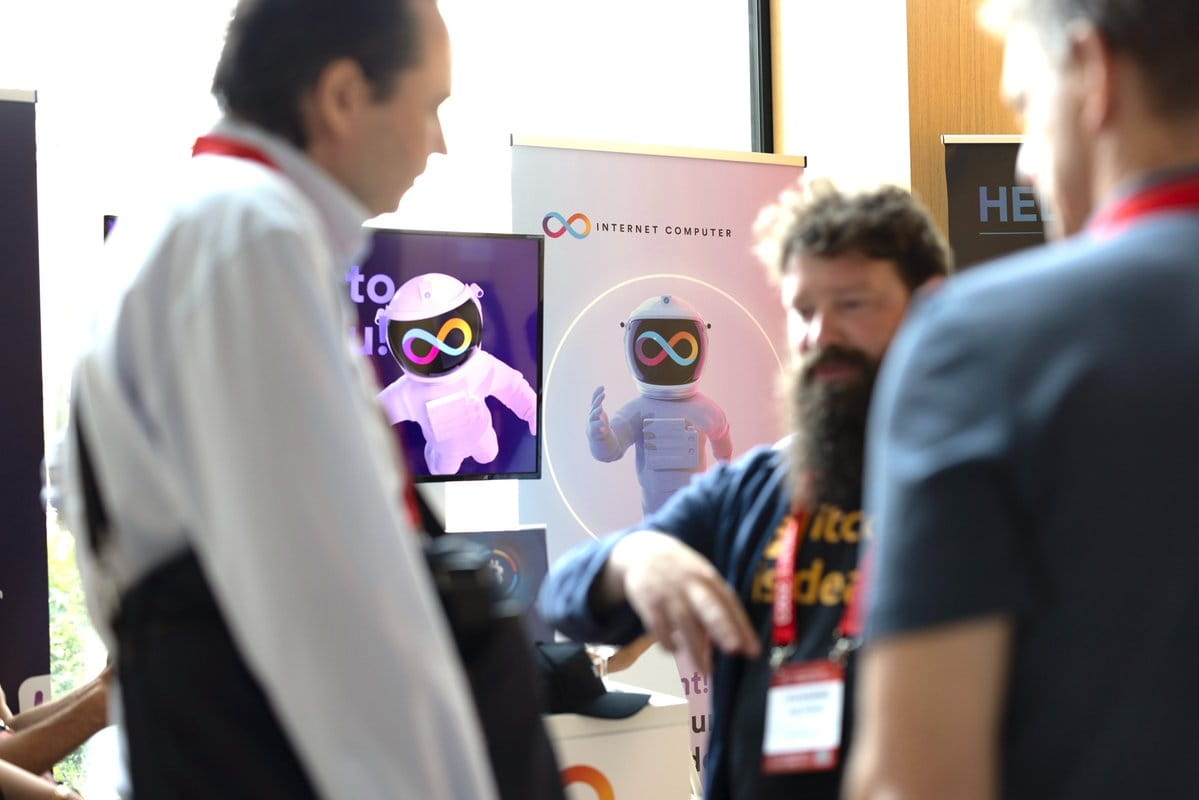
BlockBeats: After integrating Ethereum, what will be the next “big update” of DFINITY? What role will it play in the use cases of ICP Token?
Dominic Williams: Obviously, behind the scenes, we have many, many updates that make Internet computers easier to develop, more efficient, faster, and scale more seamlessly, but those users won't see it visually.
At that point, Internet computer smart contracts will be able to call Ethereum smart contracts and vice versa, which will happen in the coming months, just after the integration of Bitcoin and Internet computer networks is completed. Further down the line I think the most important thing is blockchain artificial intelligence, yes, artificial intelligence running on the blockchain, we think this is very important.
Artificial intelligence is now at the core of our Internet Computer plans, and we hope to have an AI computing unit up and running on the Internet Computer by the end of this year. Eventually, we will have Web3 native AI.
Interestingly, we have seen a lot of Chinese teams integrating ChatGPT, so I think you know why it is important for Web3 and artificial intelligence to come together, which is why we want artificial intelligence to run efficiently on Internet computers in its most powerful form .
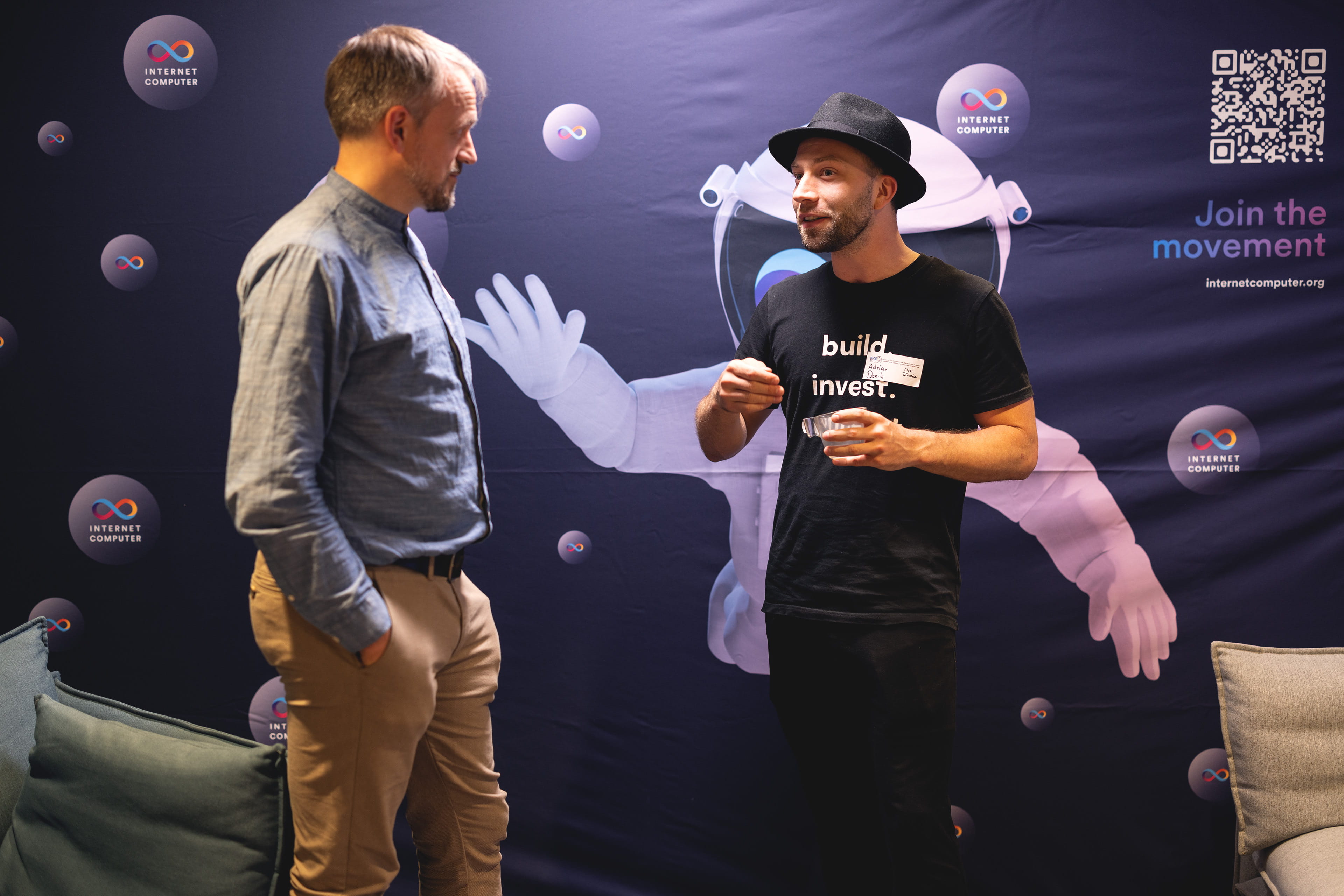
BlockBeats: Why are you so optimistic about the combination of AI and Web3? Can you provide readers with some specific use cases that have emerged on ICP?
Dominic Williams: So I think the first thing to realize is that AI is a very broad field and it can be used for a lot of different things and AI models can actually be very effective and sensitive.
For example, today's phones allow you to delete content from photos you take. If you have a Google Pixel phone, you can take a photo and you don't want someone to be in the photo. You can use the eraser to remove them from the photo. Erase that, and the AI will fill in the gaps, and the person will look like they were never in the photo, and that's an example of how universal AI is going to be, it's going to be everywhere.
A team we work with has created an AI image compression service. They can compress images several times smaller than Google's technology, and you can stream and broadcast audio at a very low cost because you use Bandwidth is very low.
In terms of Internet computers, we think there will be a market for artificial intelligence models that people will be able to develop quickly, and with artificial intelligence computing units, there will be hundreds of different artificial intelligence models to choose from, and if you want, you will be able to Uploading your data and having it analyzed by artificial intelligence is one of the big things that will happen to computers on the Internet.
Therefore, we believe that Internet computers will become the core of the artificial intelligence revolution, enabling people to combine artificial intelligence models and data in an open environment, ensuring the confidentiality of data and the artificial intelligence models will not be leaked.

BlockBeats: This does sound more exciting than Token Economics.
Dominic Williams: That's the difference between the Internet Computer and other blockchains, one is tokenizing things and creating a speculative tool, and the other is creating a platform where you can create anything with smart contracts.
With some groundbreaking Web3 services built on the blockchain, you can have a social network, you can create news feeds for individual users, you can stream video and audio, you can fully automate it under the control of a DAO, you can Do whatever you like, this is the future of Web3.
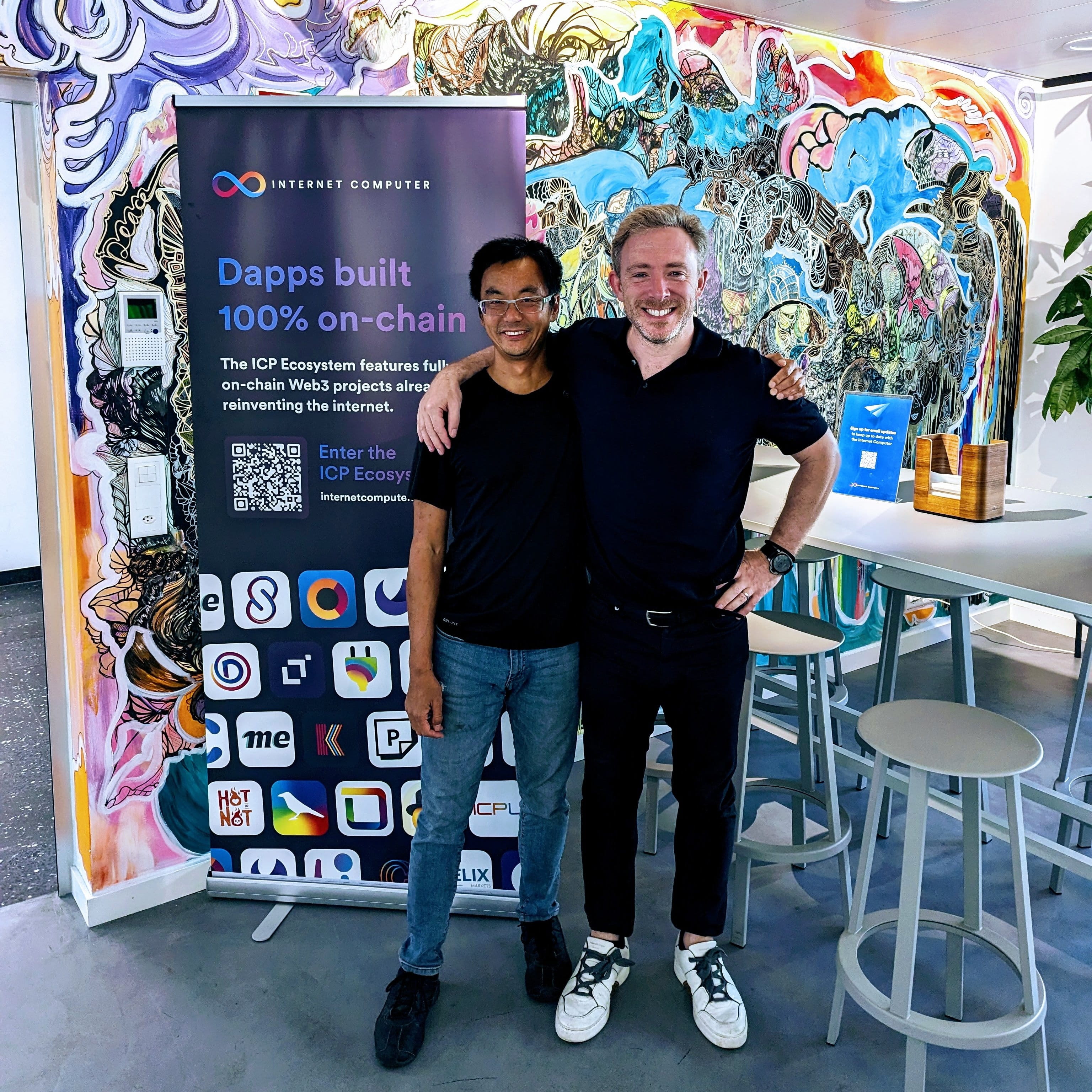
BlockBeats: Finally, is there anything else you would like to say to our readers?
Dominic Williams: We believe in the singularity theory of blockchain, that every online service, every enterprise system will eventually be built on the blockchain, so Internet computers are much more powerful than people have seen before.
You can build anything on an Internet computer. Just look at the TikTok-like "Hot or Not" created by an Indian team on an Internet computer. You can post videos, and if the video you post becomes a hot spot, you will get tokens. The reward of coins, this is an incredible thing, this is really Web3, this is so exciting, even content moderation is done through artificial intelligence algorithms, which can only be done on an Internet computer.
I think this is an exciting direction for Asian developers who are looking for the next new species - developing Web3 services on Internet computers that can grow to millions or more using tokenization and end-to-end decentralization. Billions of users even use DAO to control Internet services.
Having DAOs push software updates to smart contracts, something that is only possible on computers on the Internet, is today’s game-changing technology.
One way to think about it is that the Internet Computer provides an open encrypted cloud and you can build anything on the Internet Computer. It is completely different from anything else available today, is very powerful, and any web developer who wants to get into Web3 should start with Starting with the right technology, they should build disruptive new applications on Internet computers that will define the next generation of the Internet.

IC content you care about
Technology Progress | Project Information | Global Events

Collect and follow IC Binance Channel
Stay up to date with the latest information