

Original source: Sammi
1. Young people who don’t want to be involved in work play the lottery
It’s graduation season again. According to the official report in April, China’s youth unemployment rate reached 20.4%, and the employment situation is extremely grim. At the same time, the undergraduate rate among Meituan riders is close to 30%, making food delivery a knowledge-intensive industry.
The pain caused by the changing times is inevitable. For most young people in this era, hard work will be rewarded, which seems to have become a fantasy. It has become an increasingly common phenomenon to make money in the post-epidemic era. Hundreds of millions of migrant workers have supported the huge rise in lottery prices.
According to the Ministry of Finance, from January to April this year, the total lottery sales in China totaled 175.15 billion yuan, a five-year high, up 49.3% year-on-year, with young lottery players accounting for a large proportion of the total. Lottery is attracting young people in more diverse ways, with lottery shops gradually appearing in supermarkets, subways, and even as pop-up stores. It is unprecedentedly popular.
Emotional value is the first productive force of future business. For this generation of young people, lottery is no longer just a speculative gamble, but a new form of spiritual consumption. What they buy is the hope for life and the consolation of a small happiness. Buying lottery tickets has become a spiritual cigar for young people, and also a "painkiller" for people in the pain period of development.
However, the lottery industry has opaque information and low return on winnings, which is essentially a negative-sum game. So is there a high-odds, decentralized lottery market in Web3? The answer is — LTC-20 protocol.
2. LTC-20: The next Web3 traffic portal LTC-20
On-chain lottery, a safe haven in a bear market
There is a typical lipstick effect in economics, which is an economic phenomenon that lipsticks are hot-selling due to economic depression, also known as the preference trend for low-priced products. The pain brought by the changing times is inevitable. When the conventional path of entering a prestigious school, entering a prestigious company, and working hard can no longer meet a person's survival needs, speculative behavior will become common and crazy at this time, and LTC-20 may have the opportunity to become the best safe haven.
The LTC-20 protocol is equivalent to the on-chain lottery economy: it has the characteristics of low threshold (minimum 1USDT), speculation, spiritual consumption, etc., and has the opportunity to earn hundreds or thousands of times the return on investment. Unlike the "negative-sum game" of lottery data opacity and centralized control, LTC-20 is completely decentralized and has a fair token issuance mechanism. As a blank market with a current market value of almost 0, it belongs to the "positive-sum game" with limited downside and unlimited upside potential.
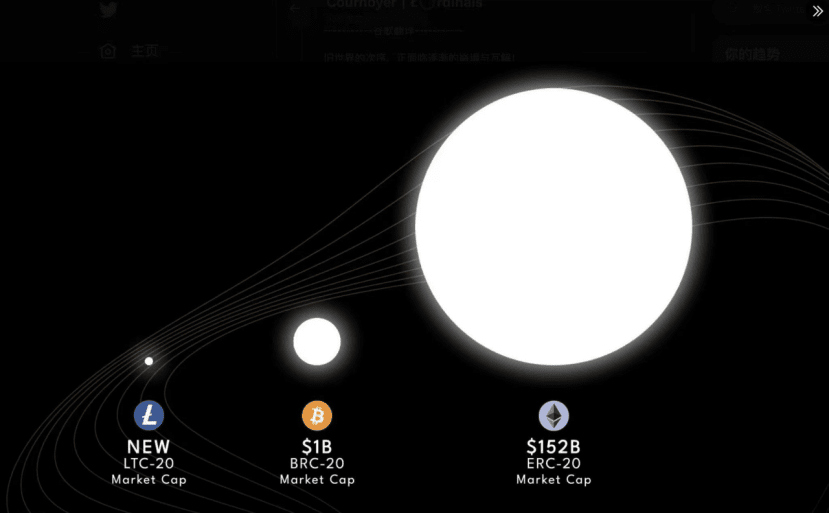
For an analysis of the odds of participating in LTC-20, you can read another article by the author: "Can the Litecoin LRC-20 Protocol Replicate the Success of BRC-20?"
New way to play social games with inscriptions - social fission
There are currently two serious problems in the inscription market
1. The general liquidity is not sufficient.
2. Scientists monopolize the chips. Although the token issuance method of the 20 protocol is fair and everyone can participate, most of them lack liquidity, lack trading counterparties, and have large price fluctuations. In addition, the 20 protocol implements a first-come, first-served mechanism. The casting cost of the inscription token is low, which can easily become a feast for scientists, and most of the chips are controlled by a few people.
Unilit.io, the first LTC-20 trading market, has innovated on the basis of Unisat, the Brc-20 trading market, and introduced the Blur liquidity incentive mechanism + community voting for listing model.
The platform launched a consensus inscription token voted by the community, and obtained the Unilit platform currency through transaction mining, which concentrated the liquidity of the market and avoided the situation where the LTC-20 protocol was monopolized by scientists.
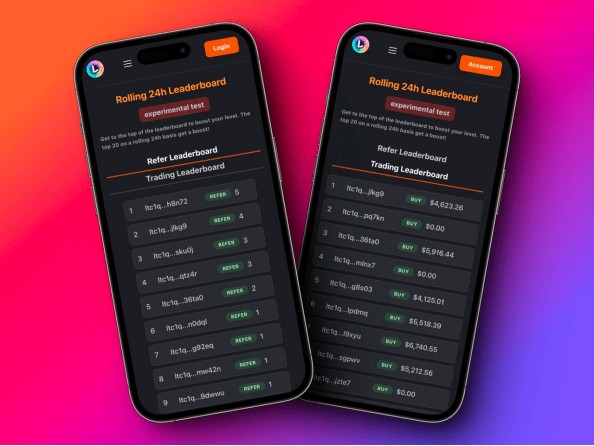
As a result, the LTC-20 community has also sprouted community activities such as "Give someone an inscription, and your hands will be fragrant", "Make a friend with 1 US dollar", and "Inscriptions are forever, and one will be passed down forever".
This form of listing coins by exchanging inscriptions and canvassing for votes is indeed a true understanding of the current fan economy. If brc-20 is an equal rights movement against capital and fair launch, then ltc-20 has created a new model of "cultivation tokens" on this basis, which is more in line with the social and speculative consumption needs of young people today.
Inscription social networking + liquidity mining have become the dual engines of LTC-20 and are also a supplement to the 20 protocol investment scenario. Its greater imagination space comes from the user self-growth + liquidity self-growth system brought by giving inscriptions.
He who wins the diaosi wins the world
The saying "He who wins the losers wins the world" has always been regarded as the bible in the Internet industry. Zhong Shanshan's Nongfu Spring, Pinduoduo's Huang Zheng, Zhang Yiming's Douyin, and Ma Huateng's games are all making money from the losers. Similarly, in the field of encryption, many people have heard of BTC a few years ago, but the first coin that most newcomers really bought when they entered the circle was low-priced meme coins such as doge and shib.
The explosion of Brc20 protocol in May created a new wealth myth for the cryptocurrency circle. However, the shortcomings of BTC such as slow block speed and high gas fee (several U to hundreds of U) also discouraged many people. Litecoin solved the impossible triangle of decentralization + low gas fee (less than 0.1 U per transaction) + fast speed, making the inscription market more popular. Capital always has a keen sense of smell and is profit-seeking by nature. Capital will flow to where retail investors are.
If the brc20 protocol is the Taobao Tmall of the Internet era, then the LTC-20 protocol is the latecomer Pinduoduo, which has the largest user base.
LTC-20’s right timing, right location, and right people
Time - timing trend
1. In the economic downturn cycle, due to the lipstick effect, LTC-20 is more likely to become a bear market safe haven.
2. Litecoin will be halved in August, focusing market attention and attracting natural traffic support.
3. SEC supervision is a disguised benefit to POW coin.
4. Web2 lottery is very popular. LTC-20 has the same low investment as lottery. Lottery is a negative-sum game, while LTC-20 is a positive-sum game.
Geographical advantage - resource advantage
1. The wealth effect created by BRC20 has educated the market on users, while LTC-20 has become a speculative depression due to its faster speed and lower Gas.
2. Bitcoin Gold, Litecoin Silver, and 12-year-old POW coins have strong community consensus.
Harmony among people - project ecology
Trading platforms often play a decisive role in the development of an ecosystem. This is different from other xRC protocols that simply copy Unisat and start to hype concepts and make money purely through a demo or tweet.
Unilit innovates by standing on the shoulders of successful people. It borrows Blur's trading incentive mechanism + community voting to list coins to solve the current problems of insufficient liquidity in the inscription market and the monopoly of tokens by scientists. Unilit's business model is Unisat + Blur + Binance.
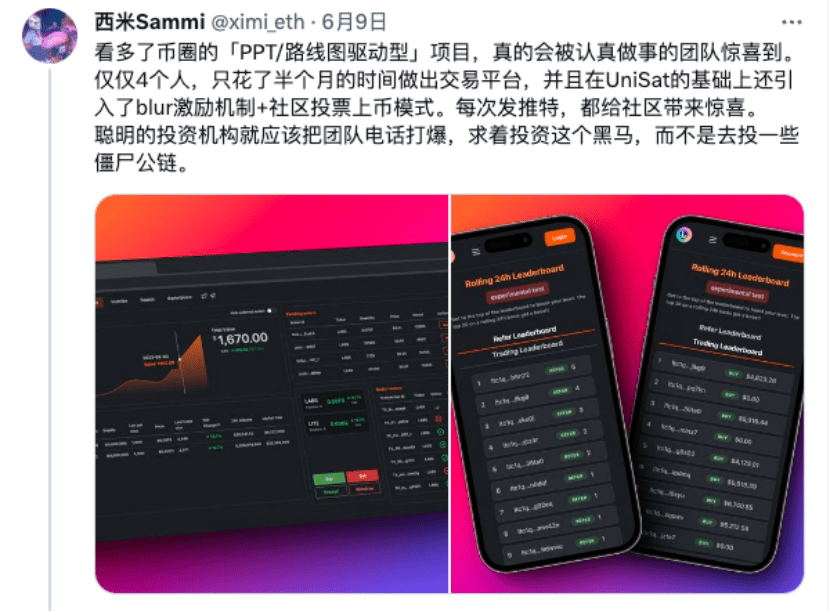
From Binance, OKX, Unisat, to the upcoming dark horse Unilit trading platform, the Chinese are basically dominating the world. Web3 is the stage of the application layer, creating a Web3 casino with a disruptive effect and capturing a large number of users is the advantage of the Chinese.
Looking at the entire LTC-20, from the trading platform, Litecoin official, index website, plug-in wallet, NFT project to the community, they are all as harmonious as an ecological puzzle, working together and seeking common development.
3. LTC-20 Mainstream Ecosystem
1. Trading Platform - Unilit
Website: https://unilit.io/referral/6VWQUf
Unilit is the first LTC-20 trading market, and it is expected to be officially open for trading on June 14. Users can trade inscriptions and view the inscription balance in the external wallet with one click, including LTC-20 tokens, NFT small pictures, and SNS domain names. The platform has built-in trading K-line, introduced trading mining mechanism + community voting for listing, providing more sufficient liquidity and smooth trading experience.
2. Mainstream inscriptions
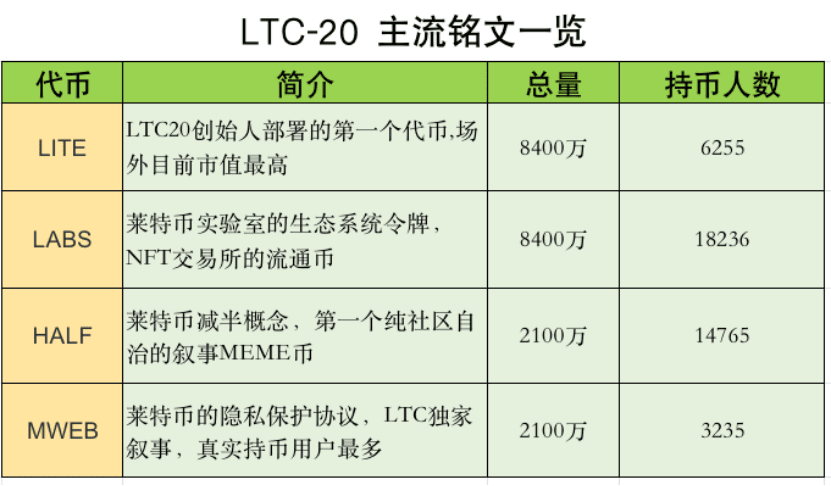
3、NFT
LilFox

Website: https://lilfox.crd.co/
LilFox is the first original NFT in the LTC-20 ecosystem, with a total of 10,000 pieces and a mint price of 0.01LTC (currently still in the mint stage). The game Dapp will be launched later and the minting of game platform coins will be started. Community NFT holders have priority minting rights.
Litecoin moonbirds
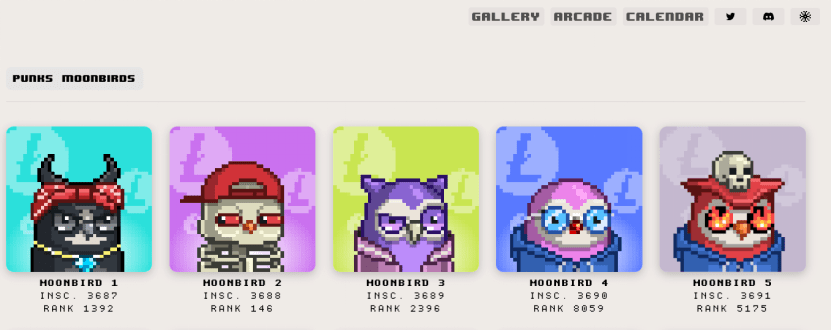
Litecoin Moonbirds is issued by Luke, the founder of LTC-20 protocol. It is the first ido project in the community. The mint price is 20USDT. Each NFT can get a labs inscription airdrop. Litecoin Moonbird is the earliest known 10k series of Ordinals. The founder has also promised to buy back NFT in the community.
summary
Every generation has its own Ponzi scheme. Social security, houses, and funds are essentially the Ponzi schemes of the previous generation. Today's young people buy lottery tickets, meme coins, blind box toys, and inscribed NFTs to create a new wealth narrative for their generation.
Innovation often comes from niche groups and marginal scenarios. When testing 0-1 in the niche, it accumulates extremely high potential energy, and when testing 1-N in the mass, it has a user self-growth system.
The replacement of the old with the new is happening all the time in all walks of life, and the direction of the tide has changed several times. Some people ride the waves, swim calmly in the tide, and become industry benchmarks.
This article is from a contribution and does not represent the views of BlockBeats