


TL;DR
When withdrawing or depositing cryptocurrency to your Binance account, pay special attention to the network you choose. It's easy to confuse Binance Smart Chain (BEP-20) with Ethereum (ERC-20) and send your tokens to the wrong blockchain.
If the crypto wallet you deposited into supports BEP-20 and ERC-20 tokens, you can send your cryptocurrency back to Binance in a few simple steps.
If your wallet only supports ERC-20 or BEP-20, you will need to import your wallet's private key into a new wallet that supports both blockchains.
The problem of depositing to the wrong blockchain in your Binance account, to another cryptocurrency exchange or to a custodial wallet is more difficult to solve. In this case, you can contact your wallet's support team to see if they can help.
Introduction
If you have withdrawn funds from Binance, you may have noticed that there are different transfer networks available for some coins. Even experienced holders sometimes struggle with choosing the right blockchain for their transactions. Which one will you choose when withdrawing cryptocurrency to another wallet?
In short, you should choose the same network used by the target wallet. Technically, it will depend on which token standard you use, such as ERC-20, BEP-20, or BEP-2.
If you've sent your cryptocurrency to the wrong blockchain, it's important to find out what type of wallet you sent it to. If you can access your private key or seed phrase, you have a non-custodial wallet. If you can't do that, you have a custodial wallet. Armed with this information, you can try our three possible solutions.
I sent funds to the wrong network. What shall I do?
First of all, don't panic. If you sent ERC-20 tokens (such as ETH) using Binance Smart Chain (BSC) or sent BEP-20 tokens via the Ethereum network, you can get them back. There are three different situations, each of which has its own solution:
1. You have sent tokens to a wallet that supports BSC and Ethereum.
You can send tokens back to the correct network on Binance.
2. You sent tokens to a wallet that only supports BSC or Ethereum.
You will need access to your private key to import it into a wallet that supports both options.
3. You have sent tokens to a custodial wallet or cryptocurrency exchange.
Contact your wallet provider or exchange customer support for assistance. It may not be possible to return your funds.
Before working on a solution, it's worth understanding what happened to avoid the same problem in the future.
What is the difference between BEP-20 and ERC-20?
ERC-20 and BEP-20 are token standards that describe specific rules and technical guidelines for tokens. They manage how transactions, deposits and withdrawals take place. Both ERC-20 and BEP-20 standardize the interaction of the token with various wallets, projects and smart contracts.
The two standards have a lot in common in how they work, but ERC-20 is exclusive to Ethereum and BEP-20 is exclusive to Binance Smart Chain. Simply put, these are token standards, each belonging to different blockchains.
If your cryptocurrency is on the wrong network, it may not be usable for its intended purpose. For example, Ethereum sent to BSC cannot be used in Ethereum DApps and smart contracts.
What happens if I send a BEP-20/ERC-20 token to the wrong blockchain?
If you send an ERC-20 token to BSC or a BEP-20 token to Ethereum, the token will go to the same wallet address on the chosen network. Your BSC and Ethereum wallet addresses are identical and accessible with the same private key.
For example, sending ETH to BSC will end up as a BEP-20 token tied to the Ether in your BSC wallet address. You can use BscScan.com to verify your transaction ID or Etherscan.io when you have sent BEP-20 tokens to the Ethereum network.
Here is an example (from BscScan) of a user withdrawing their ERC-20 ETH and selecting the BSC (BEP-20) transfer network in their Binance wallet. These tokens now appear as Binance-Peg Ethereum under the same wallet address on BSC.

Fortunately, your cryptocurrency is not gone. All you need to do now is send it back to the blockchain you want. Check out our solutions below that fit your situation.
Recovery from a wallet that supports BSC and Ethereum
You should have no problem finding your tokens in a wallet that supports both blockchains. Check the list of tokens for each network to add them if you don't see your cryptocurrency yet.
MetaMask, for example, has an [Add Token] button that allows you to view all available coins.

If you don't see a coin listed, you'll need to enter its token contract into your wallet. You can see this process in step 5 of Recovering from a wallet that only supports BSC or Ethereum.
If you want to return your token to the original blockchain, there are two options: Binance Bridge or manually.
Binance Bridge
Binance Bridge is a simple tool to convert your assets between blockchains. You just need to connect MetaMask or Binance Chain Wallet and choose what you want to transfer. Don't forget you will need BNB to pay BSC gas fee or ETH to pay Ethereum gas fee.
Check out the Binance Bridge Overview article to learn more about the process.

Manual conversion
To manually convert your tokens, you need to send your cryptocurrency back to Binance. The deposit network in your Binance spot wallet must match the blockchain your token is currently on. Once the tokens have arrived, you can safely send them back to an external wallet.
In this example, we convert Binance-Peg ETH (BEP-20) back to ERC-20 ETH. Make sure the wallet you are sending cryptocurrency from has BNB to pay the gas fee.
1. On the Binance cryptocurrency withdrawal page, select ETH and the BEP-20 (BSC) deposit network. If you deposit to the wrong network, Binance will not be able to refund your funds.

2. Once your ETH is back in your Binance account, convert it to ERC20 by withdrawing the tokens to an Ethereum-enabled wallet and selecting Ethereum (ETH) ERC20 as the transfer network.

Your funds will now be securely transferred to the trusted blockchain of your external wallet.
Recovering from a wallet that only supports BSC or Ethereum
To recover your tokens in this situation, you will need to import your wallet's private key into a new wallet that supports both blockchains. Depending on the wallet you import, you can also use your seed phrase instead of your private key.
Import private key
When you import a wallet's private key into another wallet, you get access to the funds associated with that private key, even when using the other wallet.
In other words, importing a private wallet key will not send funds to your importing wallet. It just makes the external wallet available through another app. Note that custodial wallets generally don't have this option because they don't provide you with a private key.
The most commonly used import wallets include Metamask, Trust Wallet, Math Wallet, SafePal and TokenPocket.
This example will use the MetaMask Google Chrome extension. We will return ETH that were accidentally sent to BSC.
Get your money back
1. Login to your MetaMask wallet or create a new one if you don't already have one. MetaMask is also available as an app for iOS and Android.
2. If you create a new account, you will be given the option to import a seed phrase from an old wallet.

3. If you already have an account, just click on the MetaMask extension, then go to your account profile in the upper right corner.

4. Click [Import Account] and enter the private key of your wallet with the missing cryptocurrency. Click [Import] to finish. You can also upload a JSON file if you have one.
5. You will then need to manually add the BSC network to your MetaMask account. Click on the MetaMask extension, then select a network from the drop-down menu. Click [Configure RPC] at the bottom of the list.


6. You will need to add details to allow MetaMask to access the Binance Smart Chain. This information includes the Remote Procedure Call (RPC) URL. This URL allows MetaMask to request information from the BSC blockchain and make transaction requests.
Enter the following information in the appropriate fields and click [Save] below.
Network Name: BSC Mainnet
New RPC URL: https://bsc-dataseed1.binance.org/
ChainID: 56
Symbol: BNB
Block Explorer: https://bscscan.com/

7. Now add the valid token contract to your MetaMask wallet. This step will allow your chosen BEP-20 wallet to scan the lost token. You can find a list of tokens and their contracts on BscScan. For ERC-20 ETH sent to BSC, click Binance-Peg Ethereum Token (ETH) to find its token contract.
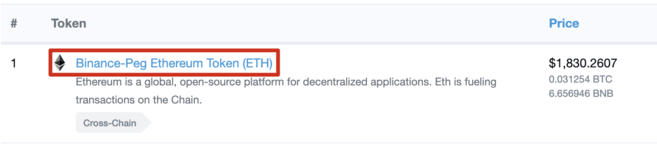
8. Copy the token contract to prepare for the next step and pay attention to the Decimals field.

9. Select [BSC Mainnet] from the network drop-down list, click [Add Token], and then click [Custom Token].


10. Enter the token contract address, the token symbol, and the number of decimal places. In our example, ETH is:
Token contract address: 0x2170ed0880ac9a755fd29b2688956bd959f933f8
Token symbol: ETH
Signs after the comma: 18
Click [Add Tokens] to confirm.
11. You should now see the lost ETH tokens in your wallet balance. You have the option to send them back to the BEP20 wallet address of your Binance account. You can also use Binance Bridge with MetaMask to convert your tokens to ERC-20 if you want.
See Recovering from a BSC and Ethereum-enabled wallet for more information on using Binance Bridge for your tokens.
➟ Want to start trading cryptocurrency? Buy BNB on Binance!
Recovery from a custodial wallet or exchange
If you try to withdraw your funds to a custodial wallet without BEP-20 support, for example to another cryptocurrency exchange, you will need to contact the owner of the custodial wallet.
Some custodial wallet providers can give you access to your private keys or help for a fee. You can then import the private key into a BSC-backed wallet. Unfortunately, most of them, including exchanges, will not be able to provide you with your key.
If you deposit tokens to your Binance account with the wrong blockchain selected, Binance will not be able to help you receive your cryptocurrency.
Final thoughts
Choosing the right transfer network is one of the most difficult parts of withdrawing your cryptocurrency from Binance. But once you get the hang of it, you won't be sending your BTC or ETH to the wrong network. In most cases, when using a standard wallet, your funds are SAFU and can be retrieved with little effort.