



Bitcoin could start to fall in the third quarter of 2023 after U.S. lawmakers may reach a deal to raise the debt ceiling.
There will be a $1 trillion liquidity gap in the future
Raising the debt ceiling means the U.S. Treasury can issue new bonds to raise cash to meet its earlier obligations.
As a result, cash reserves in the Treasury's general account could rise from $95 billion in May to $550 billion in June, and to $600 billion in the three months after that, according to the Treasury's most recent estimates.
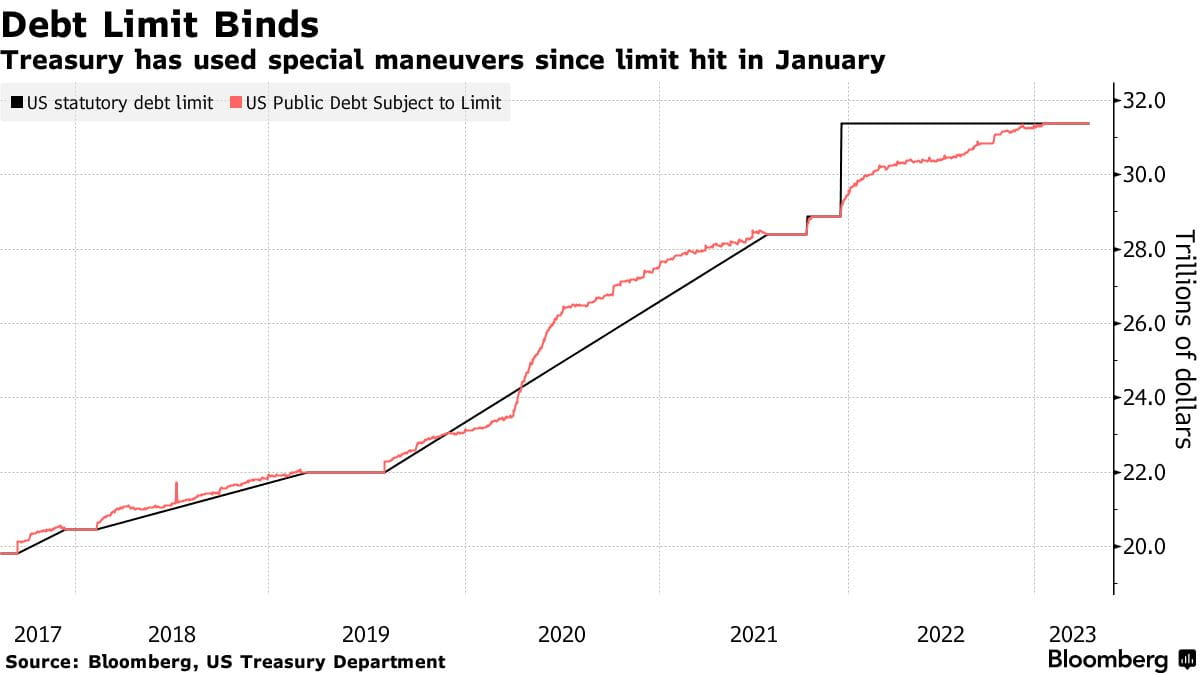
Ari Bergmann, founder of risk management firm Penso Advisors, estimates that the U.S. Treasury will have more than $1 trillion in assets by the end of the third quarter of 2023.
“My bigger concern is that when the debt ceiling gets resolved — and I think it will — there will be a very, very severe and sudden loss of liquidity,” Bergmann said, adding:
“It’s not something that’s immediately obvious, but it’s something that’s very real. We’ve seen before that this decline in liquidity does have a negative impact on risk markets like equities and credit.”
In other words, cash available to buy riskier assets like stocks, Bitcoin, and cryptocurrencies will likely experience downward price pressure at some point after the debt ceiling is raised.
Bloomberg added:
The supply surge, estimated to exceed $1 trillion by the end of the third quarter, will quickly drain liquidity from the banking sector, raising short-term funding rates and tightening the screws on the U.S. economy just as it tees off on the brink of recession. Bank of America estimates that would have the same economic impact as a 25 basis point rate hike.
Will Bitcoin Price Remain Range-bound?
Independent market analyst Income Sharks said such macroeconomic hurdles could prevent Bitcoin from reclaiming its yearly highs above $30,000 in the coming months.
“We’re likely in the 20k to 30k range, and we may even have an alt season,” the analyst noted, adding:
"New money isn't coming in; it's just rotating [...] Unless we get a new narrative or the stock finds a way to rebound, the 2024 U.S. election looks more likely to be the next big catalyst."
BTC price chart technicals meanwhile show BTC/USD consolidating below its 50-day exponential moving average (50-day EMA; red wave) near $27,650.
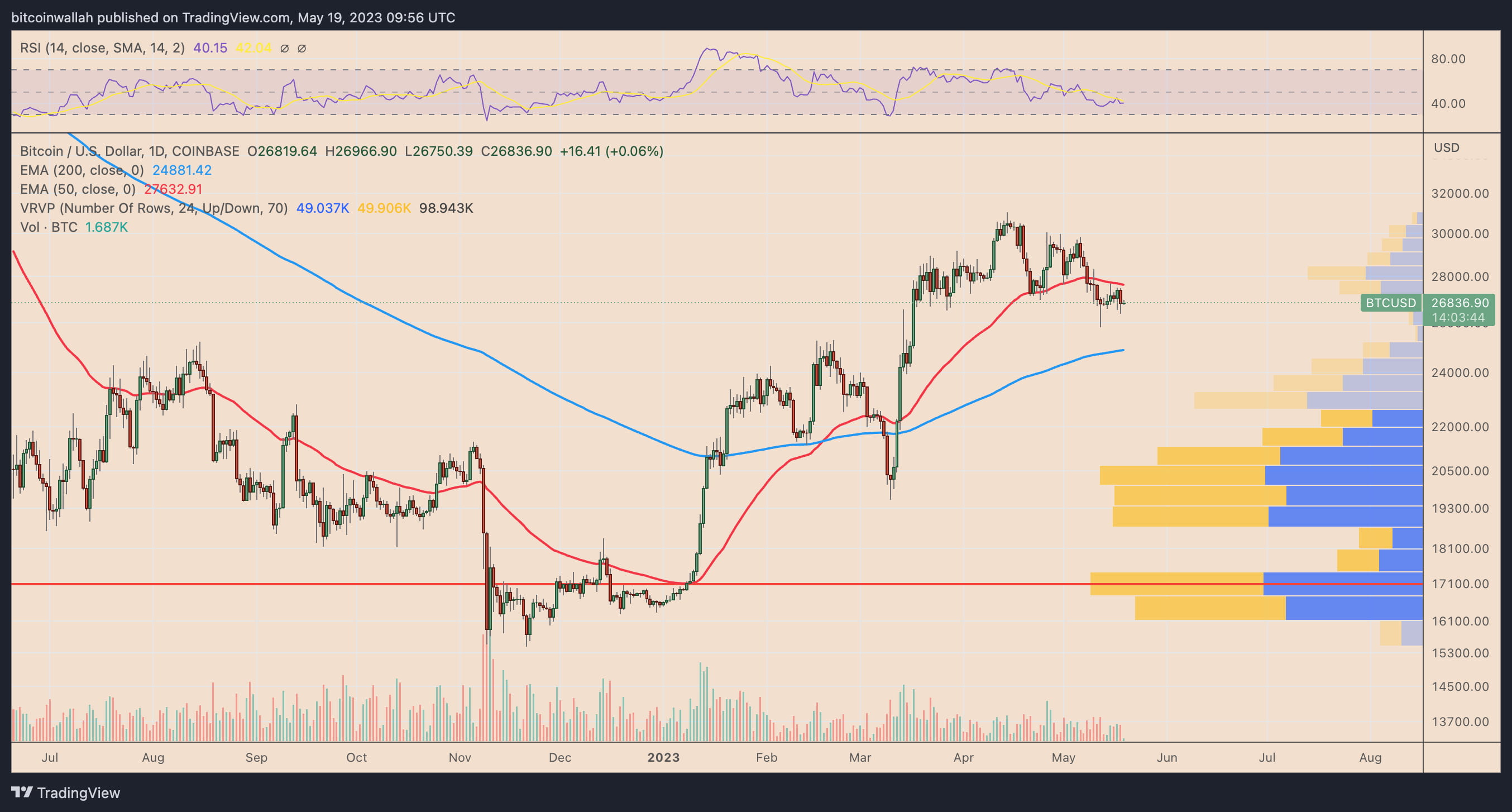
Failure to decisively break through this important resistance area will increase the chances of a pullback.
Traders should then watch for a possible correction toward the 200-day moving average near $25,000 – the next major support area, especially if the Federal Reserve hikes rates by 25 basis points in June.