

the introduction
Leveraged tokens give you leveraged exposure to the price of a cryptocurrency without the risk of liquidation. This way, you can enjoy the enhanced gains that a leveraged product can provide you without worrying about managing a leveraged trade. This means you don't have to manage collateral and maintain borrowing trading requirements, and of course there is no liquidation risk.
Derivatives trading platform FTX provided the initial design for leveraged tokens, and these tokens have been the subject of much debate, especially because they do not perform as well as you would expect in the long run. The leveraged Binance tokens suggest an alternative design.
If you want to learn how leveraged FTX tokens work, you can check out the Beginner's Guide to Leveraged FTX Tokens.
What are leveraged Binance tokens?
Leveraged Binance Tokens are tradable assets on the Binance Spot Market. Each leveraged Binance token represents a basket of open trades in the perpetual futures market. Hence, leveraged Binance tokens are essentially leveraged futures trades in the form of tokens.
The first leveraged Binance tokens available are BTCUP and BTCDOWN. The BTCUP token aims to make leveraged gains when the price of Bitcoin rises, while the BTCDOWN token aims to make leveraged gains when the price of Bitcoin falls. These leveraged gains reach between 1.5x and 3x, and in the next chapter we will discuss why this happens and how tokens target this leverage.
Currently, leveraged Binance tokens are listed and tradeable directly on Binance, and you will not be able to withdraw them to your own wallet. Please note that leveraged Binance tokens are not issued on-chain.
How do leveraged Binance tokens work?
One of the main differences between leveraged Binance tokens and other types of leveraged tokens is that leveraged Binance tokens do not attempt to maintain fixed leverage, but rather target a range of variable leverage. In the case of the BTCUP and BTCDOWN tokens, this range is between 1.5x and 3x, which represents a permanent leverage target for the tokens. The idea here is to maximize potential gains when the price rises, and minimize the risk of liquidation when the price falls.
This target leverage is not fixed, and is not announced to everyone. Why? The main goal is to prevent insider trading. If these tokens rebalance at pre-determined intervals, there may be ways for other traders to profit from this well-known event. Since the target leverage is not fixed, tokens are not forced to rebalance unless market conditions make it necessary. Hence, hiding target leverage mitigates the risks of these strategies because traders cannot anticipate rebalancing events.
Leveraged tokens are traded on the Binance Spot Market and can also be redeemed for the value they represent, but in this case a redemption fee must be paid. However, in most cases it will be better to terminate your position in the spot market rather than doing so through the redemption process. Terminating a trade through a redemption is usually more expensive than exiting the spot market unless an unforeseen event occurs. This is why it is always recommended to terminate a leveraged Binance token deal on the spot market.
On the leveraged tokens page you will see the term “Net Asset Value” (NAV), which refers to the value of your leveraged tokens in USDT. When you redeem your tokens, the USDT you will receive will be determined by your NAV.
Why use leveraged Binance tokens?
One of the main sources of confusion regarding leveraged tokens is a concept called volatility drag, which, simply put, means the detrimental effect of volatility on your investment over time. The higher the volatility and the larger the time frame, the greater the impact of the volatility pull on the performance of the leveraged tokens.
Leveraged symbols generally work according to your expectations in the case of a strong trend and when market momentum is high, but this does not apply in the case of a sideways market trend. Binance created variable leverage as a solution to this problem, as leveraged Binance tokens only rebalance during times of high volatility, and do not have to rebalance periodically otherwise. While this does not eliminate the problem completely, it significantly reduces the long-term effects of volatility withdrawal on the performance of leveraged Binance tokens.
What are the fees for using leveraged Binance tokens?
When trading leveraged Binance tokens, you should keep in mind the fees you will pay.
First, you have to pay a trading fee, and since leveraged Binance tokens are traded on the spot market like other currencies like Bitcoin, ETH or BNB, the same trading fees apply. You can review your current fee category here.
You will also pay an administrative fee. Keep in mind that these tokens represent open trades in the futures market, and you are essentially purchasing a tokenized version of these trades when you buy leveraged tokens. Therefore, to keep these trades open, you must pay a management fee of 0.01% per day, which equates to an annual rate of 3.5%.
In addition to this, there are two ways to close your trade if you have leveraged Binance tokens. The first way is to sell tokens on the spot market, this is a very simple method. There is also the option to redeem it for the value it represents; When you redeem your leveraged Binance tokens through this process, you will have the value of your tokens paid in USDT. In this case, a redemption fee of 0.1% of the value of your tokens must be paid.
It is worth noting that in normal market conditions it would be better to close your deal in the spot trading market. This recovery mechanism is intended to provide an additional way to close your trades in unusual market conditions.
Another thing you should keep in mind is financing. As you know now, leveraged Binance tokens represent open futures trades, which means that funding fees apply to these trades, but you don't have to worry about them, because they are not paid between leveraged token holders, but between traders in the futures market. However, you should keep it in mind, because the funding fees paid to the futures account are reflected in the value of the Binance tokens leveraged.
Do you want to start trading digital currencies? Buy Bitcoin on Binance!
How to buy and redeem leveraged Binance tokens?
Leveraged Binance tokens are listed on the Binance Spot Market like other coins and tokens, but you'll find them in a different place: under the ETF tab in the Advanced Trading interface. This is to avoid confusion and help you distinguish these tokens from other types of tradable assets.
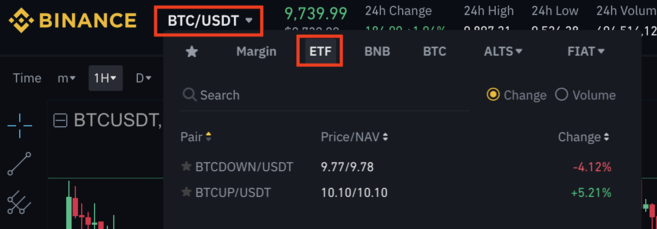
You can also find the leveraged tokens page in the top bar of the Binance homepage. The following steps explain how to buy leveraged Binance tokens.
Log in to Binance.
Hover over “Derivatives” in the top bar and select Leveraged Symbols.
Select the leveraged Binance token pair you want to trade.
This will take you to the leveraged Binance tokens page.
Click “Buy” and you will be taken to the advanced trading interface.
Before you get started, read our Risk Disclaimer. If you are over 18 years of age and agree to the statement, check the box and click “Confirm” to continue.
At this point, you will be able to trade leveraged Binance tokens similar to the way you trade other currencies and tokens.
For example, this is the page for the BTCUP token. If you already have leveraged Binance tokens and would like to redeem them, you can do so on this page (click the “Redeem” button). You can also review your recovery history from here.
Concluding thoughts
Leveraged Binance Tokens give you leveraged exposure to the price of a cryptocurrency without the hassle of managing a leveraged trade.
Thanks to the variable target leverage, the performance of leveraged Binance tokens is more consistent over the long term. While owning leveraged Binance tokens does not equal owning a leveraged trade, leveraged Binance tokens can be used to increase your trading toolkit and improve your trading strategy.