

Summary
Choosing a digital currency wallet depends on your needs. Security, preservation, and dealing with smart contracts are the main points that should be studied. You may also want to use your wallet across different devices.
For browser extension wallets, MetaMask, MathWallet, and Binance Chain Wallet are good options. And if you prefer a mobile experience, MetaMask, MathWallet, Trust Wallet, and SafePal are now available on iOS and Android devices, which are decentralized wallets that store your private key on your device. SafePal also offers a hardware wallet for offline storage, for anyone looking for the highest standards of security. Unlike the hardware wallet versions, all the wallets mentioned here are free.
the introduction
BNB Smart Chain (BSC) is relatively new, so not all wallets currently support BEP-20 tokens. When you find a wallet that supports the BSC Smart Series, you will find a few types and options to choose from. It is important to consider options for preservation, security, and ease of use, as each person has different priorities. The five wallets mentioned below are slightly different, so you can try them out and choose the one you like best.

What type of cryptocurrency wallet should I use?
Before you choose a particular wallet, think about your needs; There are different types of wallets. Most BSC wallets are non-custodial, which means you control your private key. BSC wallets are also usually online wallets, allowing you to quickly connect to decentralized applications or start storing. Each type has its advantages and disadvantages.
1. Custodial – Your private key is in the possession of the wallet provider. This happens when you place your digital assets in a trading platform's wallet. When you don't have your private key, you don't have full control of your wallet. Most likely, you won't be able to connect to decentralized applications either. For example, if you only want to practice spot trading of BSC tokens and other digital assets, a custodial wallet is a reasonable choice. But you have to be careful. While it is safe to place your funds on Binance, you should not trust any random custodial wallet or trading platform with your funds.
2. Non-custodial - Your private keys are in your possession. This is the safest option for most traders and investors, as long as you take good care of your keys and seed phrases. The wallets we'll cover later are all non-custodial options that will allow you to connect to decentralized applications.
3. Online Wallets – These wallets are connected to the Internet and are usually non-custodial (unless you are using a centralized trading platform), which is convenient for making transactions but comes with security risks. Your private key is kept online along with your public key, and can usually be accessed with a user-set password. Like any password-protected service, it can be hacked or phished. To avoid these risks, two-factor authentication (2FA) methods can also be used.
4. Offline wallets – Your private key is stored offline on specialized hardware. This is the most secure option for holding your BSC tokens, but it is probably the least practical way if you want to conduct transactions and connect to decentralized applications.
You can easily use a variety of the above types to combine their features. However, for everyday transactions and DeFi applications, choosing a non-custodial wallet connected to the Internet is more appropriate. Let's take a look at some of the most popular options.
MetaMask
MetaMask is a wallet with a browser extension and mobile app that supports the BSC Chain and other blockchains including Ethereum, Polygon, and Binance Chain. The MetaMask wallet was developed by prominent blockchain company ConsenSys in 2016. For many years, the wallet was only available via a browser extension, so this extension remains the most popular product of this wallet.
MetaMask's browser extension will allow you to make transactions, handle smart contracts, and connect to decentralized applications.

The MetaMask wallet enables you to connect to different blockchain networks (and you can add custom mainnets). The wallet also allows you to sign transactions, manage your public and private keys, and offers a swap service that provides you with the best prices from several decentralized exchanges (DEX). It is a popular choice among BCS users, due to its simplicity and ease of use.
Binance Chain Wallet
Binance Chain Wallet is an official browser extension from Binance. The wallet currently supports Binance Chain, BSC, and Ethereum. But compared to the other wallets we cover here, the Binance Chain wallet is the simplest. If you mainly hold your cryptocurrencies on Binance but use decentralized applications from time to time, Wallet Direct may be useful to you.

By connecting your Binance account to a BSC Chain wallet, you can transfer your digital assets such as BNB or ETH between the account and the wallet without manually entering addresses. If you are interested in the topic, check out the article on how to use the BSC Chain Wallet.
Trust wallet
Trust Wallet is an open source mobile app available on iOS and Android. It is also the official decentralized wallet of Binance and supports the major blockchains Ethereum, BSC, Binance Chain, and others. You will also have full access to your private keys via seed phrases. The app has some built-in add-ons, including purchasing cryptocurrencies with a credit or debit card, a non-fungible token (NFT) wallet, and the Android version also has a decentralized app browser.
The Trust Wallet has a service and governance token, the TWT token. By holding that token, you can participate in making decisions, such as adding support for new blockchains and merging new tokens. You can also get discounts on the decentralized trading platform and buy cryptocurrencies with TWT tokens.

And if you decide to try out the Trust Wallet, use our Trust Wallet Connection to BNB Smart Chain (BSC) guide to help you get started.
MathWallet
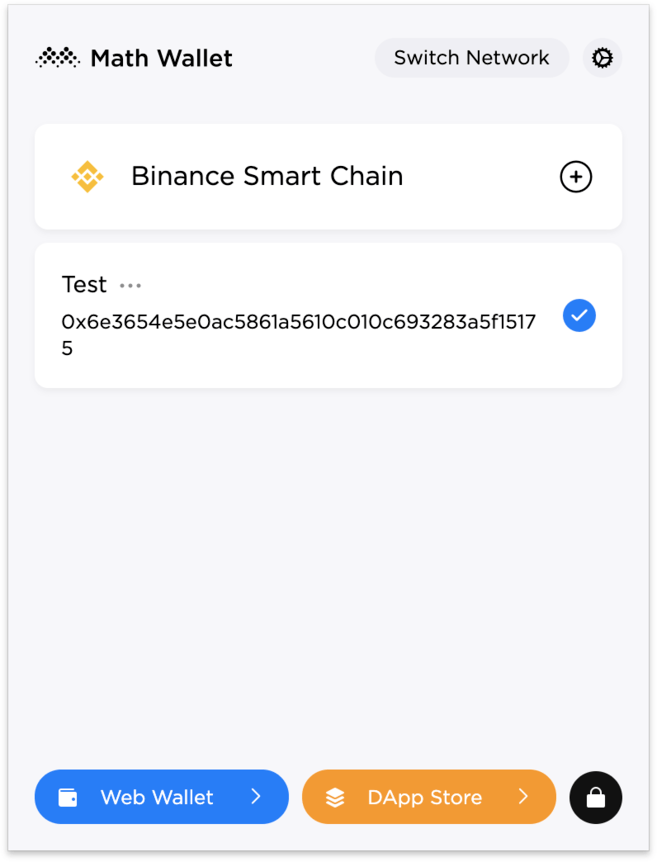
MathWallet offers a cryptocurrency wallet browser extension, web wallet, and app for iOS and Android mobile devices. MathWallet supports about 40 different blockchains, and was one of the first wallets to support the BSC chain. The wallet was founded by MATH Global Foundation in 2017, and the foundation raised $12 million in a Series B funding round led by Binance Labs.
And if you want to use the same wallet across multiple devices, MathWallet offers you great flexibility. It makes it easy to navigate between your mobile device, browser extension, and web wallet, based on your needs.
SafePal
SafePal is a hardware wallet provider and also has a decentralized mobile wallet app. The wallet functions similar to a Trust wallet with a decentralized finance (DeFi) section connected to already popular DeFi platforms and decentralized applications, as well as a browser. If you want to access decentralized applications without switching apps on your device, SafePal is a good option for iOS and Android as well. This project also has the service token SFP used for discounts and rewards.
SafePal S1 hardware wallet
The SafePal S1 hardware wallet is a more affordable option compared to the Trezor or Ledger Nano. If you want to store BSC tokens offline, this wallet offers a higher level of security than any online wallet as long as you keep your device in a safe place. But in order to use decentralized applications, you will have to transfer your tokens to an online SafePal wallet.
Concluding thoughts
Using a stable and reliable wallet should be a priority for all cryptocurrency owners. The five wallets mentioned here are trusted by the blockchain community and used by millions of Binance Smart Chain users around the world. The choices available are much less when it comes to the Binance Smart Chain, but the main points that determine your choices are the same: connectivity to decentralized applications, custody, ease of use, and reliability. This all depends on the type of user as well.
If you are an active trader, a non-custodial online wallet is the fastest way to trade and enjoy security. As for decentralized finance investors, they will find great benefit in browser extension wallets, for greater control over connecting to decentralized applications across desktop devices. If you only plan to hold digital currencies for a long time, a simple mobile experience may be best for you.
The BCS wallets we have recommended for you are all free except for the hardware wallet option. You can choose based on the level of security you need, and ensure that your wallet works reliably. Most importantly, keep your private keys, if you have them, in a safe place.