


This article briefly:
Quantum computing has the potential to revolutionize the field of AI, even replacing AI chatbots with superior quantum powered systems.
The high computing power of quantum computers enables faster and more efficient processing, and is expected to make significant progress in the field of artificial intelligence.
Despite its potential, quantum computing faces challenges, including technical and infrastructure barriers and the need to protect innovation through patents.
Artificial intelligence (AI) has become commonplace, but quantum computing is poised to revolutionize the landscape. The potential for quantum computers to process vast amounts of data at unprecedented speeds could render existing AI chatbots like ChatGPT obsolete.
The complexity of quantum computing is intertwined with our understanding of the development of artificial intelligence. This journey reveals the convergence of two transformative technologies, uncovering challenges, opening up opportunities, and highlighting the important role of protecting innovation through patent law.
The current AI landscape and the rise of chatbots
Artificial intelligence has advanced by leaps and bounds in recent years, with the development of sophisticated AI chatbots such as OpenAI’s ChatGPT.
These AI systems have been trained on massive datasets, and their language generation capabilities have been used to create everything from entertaining chatbots to advanced business solutions. These AI models, including the latest GPT-4, are able to generate human-like text that can engage, entertain, and even educate users.
AI chatbots like ChatGPT have found a variety of applications, from providing customer service to acting as personal assistants. They are also increasingly being used to generate content, a trend that entrepreneurs and businesses have capitalized on.
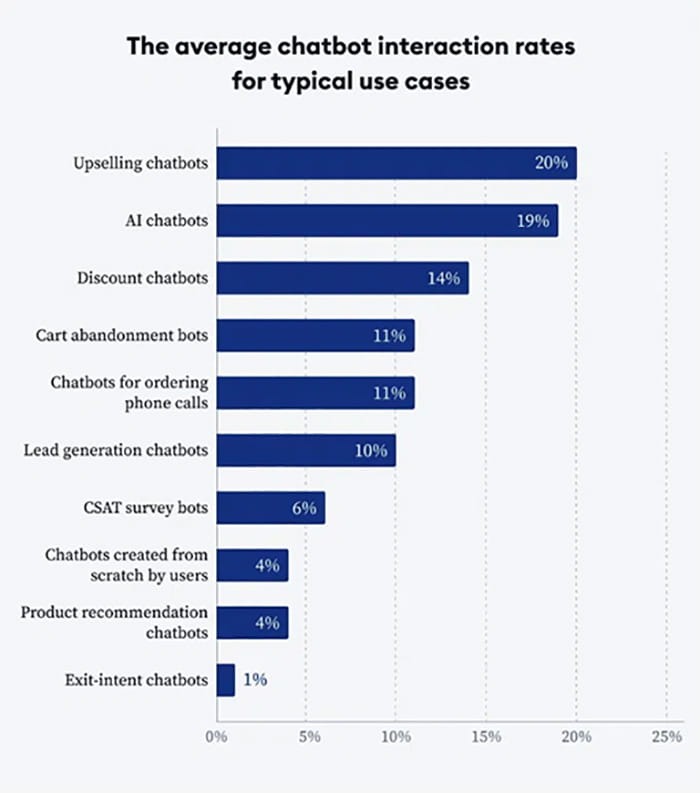
As these AI chatbots continue to improve, they have the potential to surpass humans in common sense and simple reasoning, leading some to question their potential impact on industry, jobs, and even society.
Limitations and risks of current AI chatbots
As sophisticated and versatile as AI chatbots are, they have inherent limitations. Their responses are based on patterns they’ve learned from the data they’ve been trained on, not real understanding or awareness.
This means they can be “tricked” into providing incorrect or misleading information and be unable to distinguish between true and false statements. In addition, they may inadvertently spread false or misinformation present in their training data, leading to potential misunderstandings or miscommunication.
Prominent figures such as theoretical physicist Michio Kaku and AI pioneer Geoffrey Hinton have expressed concerns about the potential dangers and ethical implications of these AI systems.
Kaku likens chatbots to plagiarizing teenagers, suggesting they can produce information without real understanding or verification.
Kaku said, “While all these software programs have good aspects, the downside is that you can fudge because it can’t tell what’s real or fake. They’re just instructed to piece together existing paragraphs, splice them together, polish it and spit it out. But is it correct? It doesn’t care, and it doesn’t know.”
Meanwhile, Dr Hinton, often called the “godfather of AI”, warned of the “existential risks” of AI and highlighted the potential for misuse by corrupt leaders or malicious actors.
Hinton affirms, “It’s hard to see how to prevent bad guys from using it to do bad things.”
The advent of quantum computing
Quantum computing is a revolutionary technology that harnesses the principles of quantum physics and has the potential to revolutionize the landscape of artificial intelligence and computing in general.
Quantum computers use quantum bits, or "qubits," which can represent multiple states at the same time thanks to a phenomenon called superposition. This allows quantum computers to process vast amounts of information in parallel, potentially far more than conventional binary computers.
Additionally, qubits can become entangled, a unique quantum property that allows them to influence each other instantaneously regardless of the distance between them, further improving computing efficiency.
Quantum interference is another quantum phenomenon that can steer a quantum system toward an optimal solution by manipulating the magnitude of probabilities. Together, these capabilities could help quantum computers solve complex problems that are currently intractable for classical computers.
The impact of quantum computing on AI and chatbots
Introducing quantum computing into the field of artificial intelligence could have a transformative impact.
The enormous computing power of quantum computers could speed up the training of machine learning models and improve the efficiency of natural language processing algorithms. They could also act as powerful fact-checkers, potentially alleviating some of the problems associated with AI chatbots like ChatGPT.
With their exponential computing speeds, quantum computers can sift through vast amounts of data. The goal is to verify the accuracy of information, something AI chatbots cannot currently do.
Kaku suggests quantum computers could act as “checks” for AI software, which could remove “junk” or false information from articles or chatbot responses.
However, the combination of quantum computing and artificial intelligence also has potential risks, the most notable of which is the threat to data security.
In theory, quantum computers could be able to crack current encryption methods, which could jeopardize the security of encrypted data, communications and transactions across industries.
Protecting innovation in quantum computing
As the potential of quantum computing looms, it is vital to protect this transformative technology. Patents play an important role in this regard. They help protect inventors’ intellectual property and promote innovation by providing exclusive rights for a certain period of time.
While the United States and China lead in quantum computing patents, “other countries are trying to do similar things to become leaders,” concluded Konstantinos Karagiannis, director of quantum computing at Protiviti.
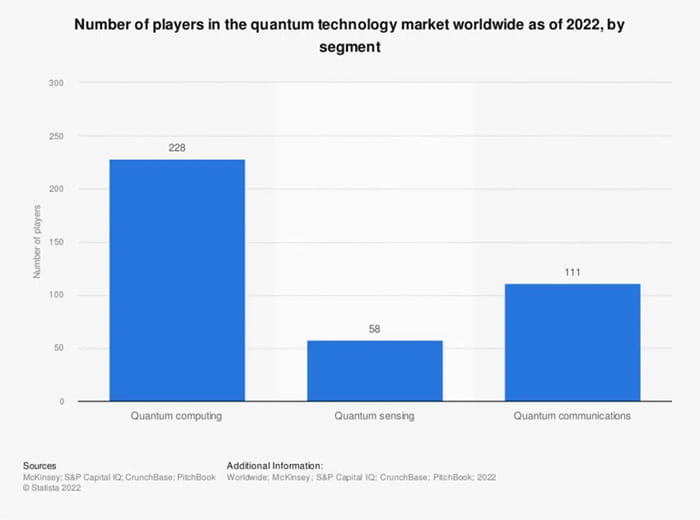
For example, Toshiba of Japan has developed a quantum key distribution (QKD) system that can potentially defend against the threat posed by quantum computers to current encryption systems.
Quantum computing technologies like QKD systems are an important field. However, they are not without challenges. Interoperability issues, high costs, and the need for specialized skills to operate and maintain these systems are among the barriers to their widespread adoption.
“Quantum computers are very large, they’re expensive, they require a lot of people to maintain them, they’re not something you have in your basement,” Karagiannis said. “So the real problem with accessing them often becomes the digital divide, where people who don’t have access to the internet won’t be able to access these machines. A country that’s not technologically advanced, they’re not going to have supercomputing centers.”
Quantum computing: the future of artificial intelligence
The advent of quantum computing could accelerate the demise of current AI chatbots like ChatGPT. The raw computing power of quantum computers could enable a new generation of AI systems that are superior in processing speed, efficiency, and the ability to verify information.
These next-generation AI systems have the potential to replace current chatbots, thereby providing levels of performance and accuracy far beyond what is possible with existing technology. They can handle more complex tasks, better understand context, and provide more accurate and reliable responses.
It’s important to remember that such advances will take time, given the early stages of quantum computing technology. However, Kaku insisted, “Given the rate of progress, we expect things to get better soon.”
The Path Forward: Quantum Computing and Artificial Intelligence
Despite the promise of quantum computing, there are clearly still many challenges to overcome, including technological and infrastructure barriers as well as ethical and societal factors.
As quantum computing and artificial intelligence continue to develop, it will be critical to foster a dialogue that encompasses all of these aspects. Scientists, policymakers, and ethicists must engage with the broader public.
The combination of quantum computing and artificial intelligence promises to bring about significant changes that could transform various sectors and impact everyday life.
While it’s still early days, this trajectory suggests that in the future quantum-powered AI systems could surpass and replace today’s AI chatbots, marking a new era in AI.