


The recent outbreak of traditional DEFI, especially on the evening of February 23, Uniswap developer and head of foundation governance Erin Koen posted a tweet on Twitter, "The most important week in the history of Uniswap protocol governance?", attached Regarding the proposal to upgrade the Uniswap protocol governance system, the Uniswap Foundation also issued a document stating that the Snapshot voting for the "Activate Uniswap Protocol Governance" proposal will be released on March 1, 2024, and the on-chain voting will be released on March 8, 2024. The proposal recommends upgrading the protocol. The proposed changes include: 1. Upgrading Uniswap protocol governance to achieve permission-free and programmatic collection of protocol fees; 2. Proportionally allocate any protocol fees to UNI token holders who have pledged and delegated their voting rights 3. Allow governance to continue to control core parameters: which pools require payment, and the size of the fee. Then UNI started to skyrocket that day, with the highest increase reaching 70%, from about 7 US dollars to 12 US dollars.
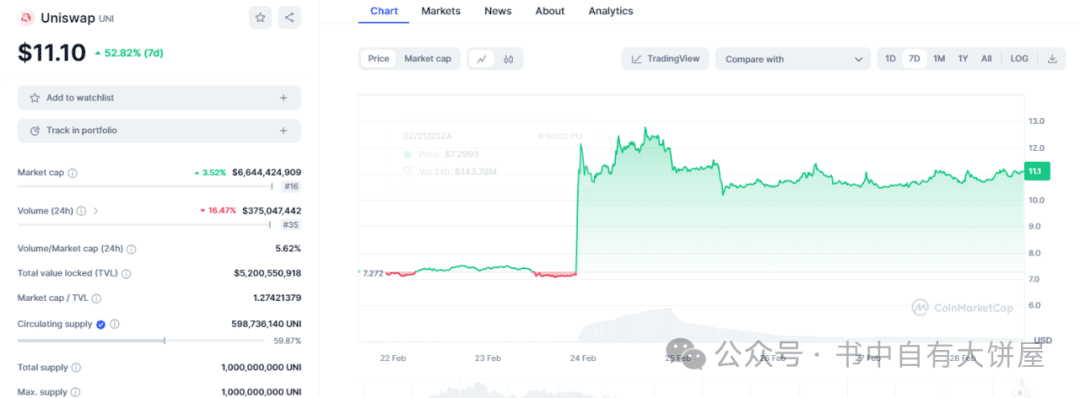
UNI is also a project that I often talk about. It is also mentioned in my 20x project summary, and in our community Q&A, I often mention that the tracks that will definitely rise in the bull market must be DEFI and chain games. This has been proven. Therefore, the rise of DEFI, the old brand of uni, has also led to the rise of other projects.
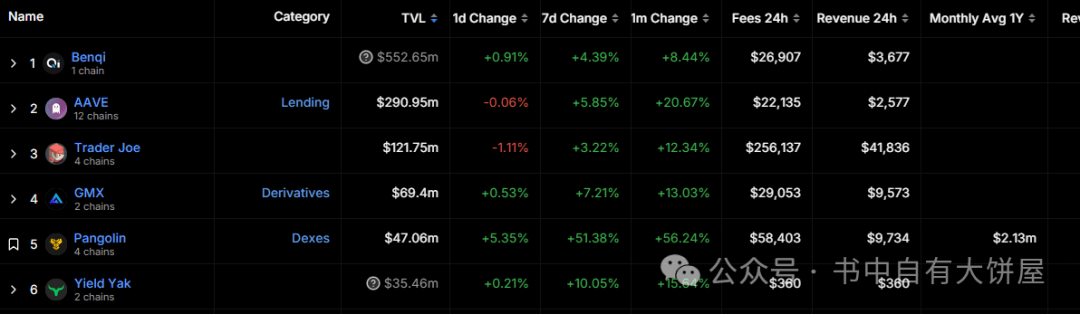
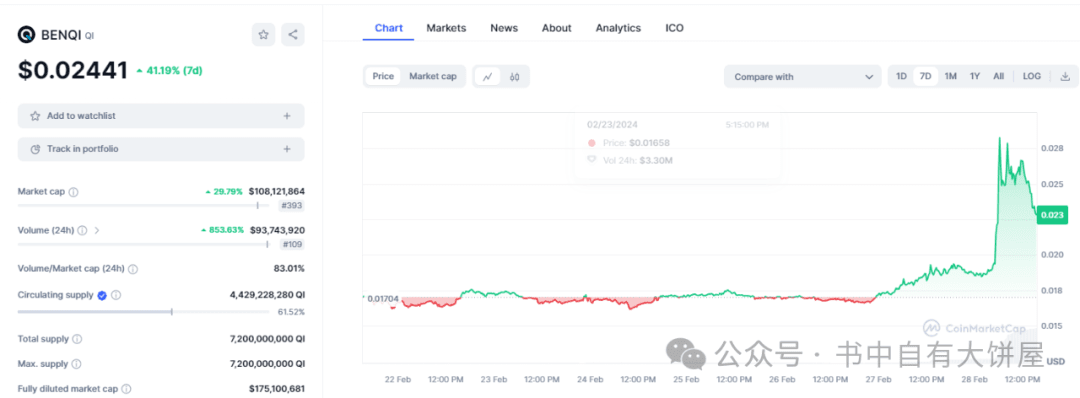
Today we will take a look at Benqi, the largest DEFI application on the AVAX chain. It has almost doubled recently. The current market value has reached 100 million US dollars, so compared with the market value of uni, it is still relatively small. So, does it have multiple times? potential.
Introduction
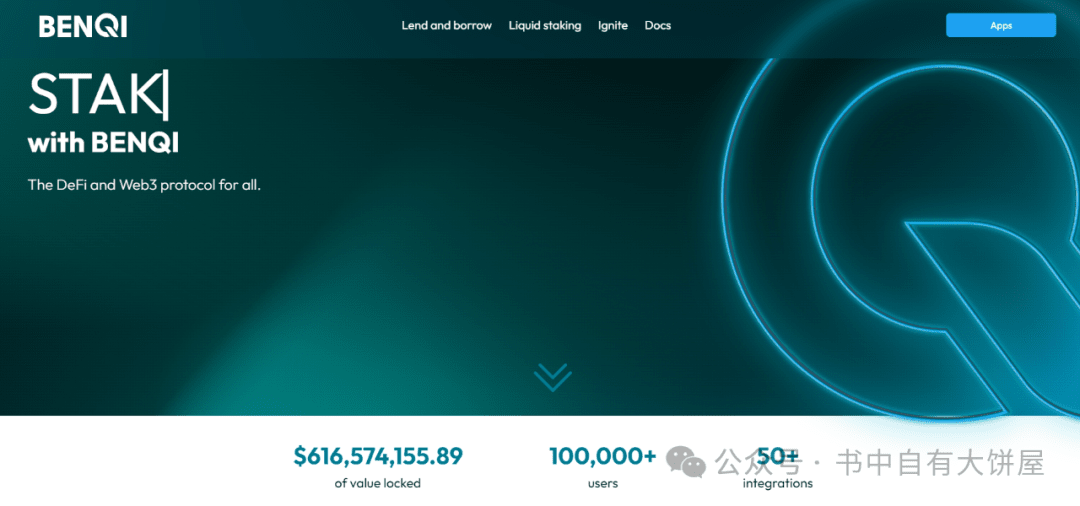
BENQI is a decentralized non-custodial liquidity market protocol on Avalanche. It scales DeFi with a suite of yield-generating products. It includes BENQI Markets (BENQI Market), BENQI Liquid Staking (BENQI Liquid Staking) and Ignite.
BENQI Markets allows users to easily lend, borrow, and earn interest using digital assets. Depositors who provide liquidity to the protocol can earn yields, while borrowers can borrow on an over-collateralized basis. It is permissionless, allowing DeFi users to:
- Instantly provide and withdraw liquidity to the shared liquidity market
- Borrow instantly from liquid markets using provided assets as collateral
- Real-time and transparent view of interest rates based on asset market supply and demand, operating around the clock
BENQI consists of the following main components:
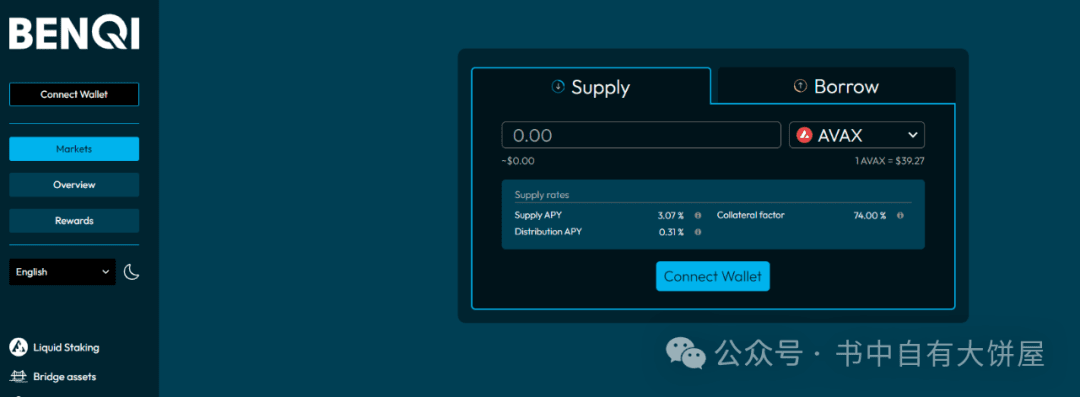
1 Lending Market: Enables users to borrow and earn interest on their digital assets. Depositors who provide liquidity to the protocol can earn passive income, while borrowers can borrow by over-collateralizing the backing assets on the protocol.
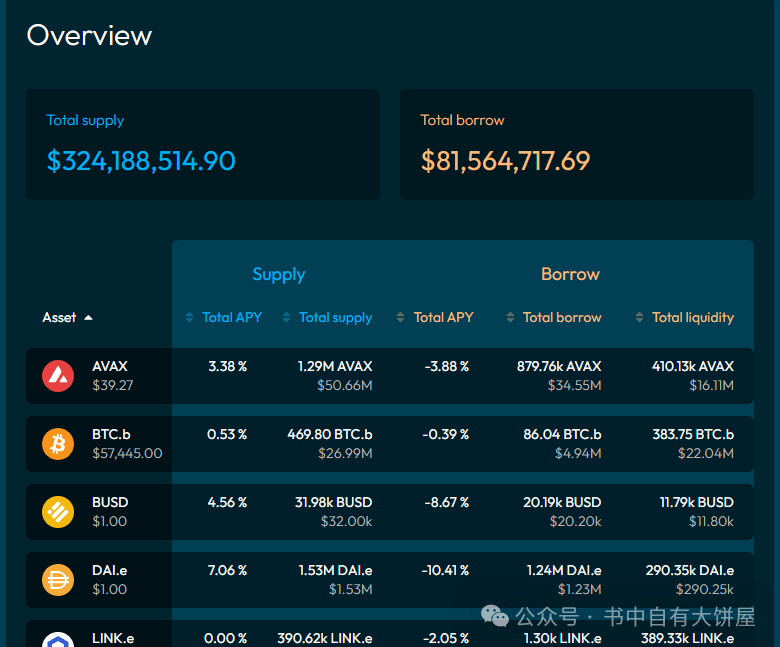
The total supply amount on the data panel is US$300 million, and the loan amount is US$80 million. The supply fee is 3%, while the borrowing fee is 5.7%. According to the current borrowing situation, the borrowing rate is a bit bad, less than 25%.
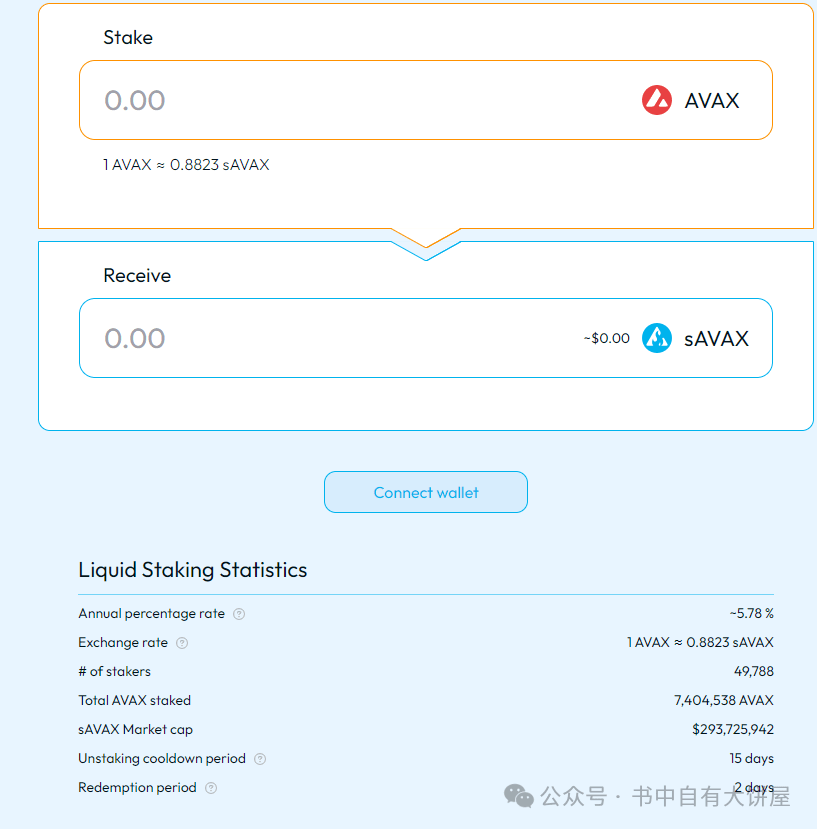
2. Liquid Staking: Users will be able to stake their AVAX tokens on the EVM-compatible Avalanche C chain. The protocol also tokenizes pledged assets, which makes them composable and gives users more opportunities to unlock capital for use in the DeFi space.
BENQI Liquid Staking is an Avalanche liquid staking solution that tokenizes staked AVAX. By tokenizing AVAX, users can use, exchange or use it as collateral in decentralized finance applications.
It is a capital efficient staking product that allows Avalanche users to:
- Free transfer of capital staked in validators (staking AVAX) to maintain the security of the Avalanche network
- Provide additional utility to their yield-generating assets by trading them in decentralized finance or using them as collateral
- Easily stake their AVAX on the Avalanche Contract Chain (C-Chain) without cumbersome cross-chain transfers or server hosting
Currently, this product only supports AVAX token pledge, and the pledge rate is around 5.78%.
3.Ignite is a protocol designed to launch Avalanche validators and subnets for everyone from institutions to individual developers and Web3.
It is permission-free, allowing builders and users to:
- Start an Avalanche validator with minimal capital
- Launch the next big Web3 idea via subnets at an affordable cost
- Storage of funds
- Funds are managed by smart contracts.
Ignite introduces a paradigm shift to the Avalanche subnet, making it easier and cheaper than ever to launch Avalanche validators and subnets.
Built from the ground up to be permissionless and flexible, Ignite provides an alternative way to launch Avalanche validators. Unlike traditional verification, which often requires significant financial resources, Ignite removes financial barriers that can prevent aspiring developers and builders from accessing cutting-edge Web3 technology.
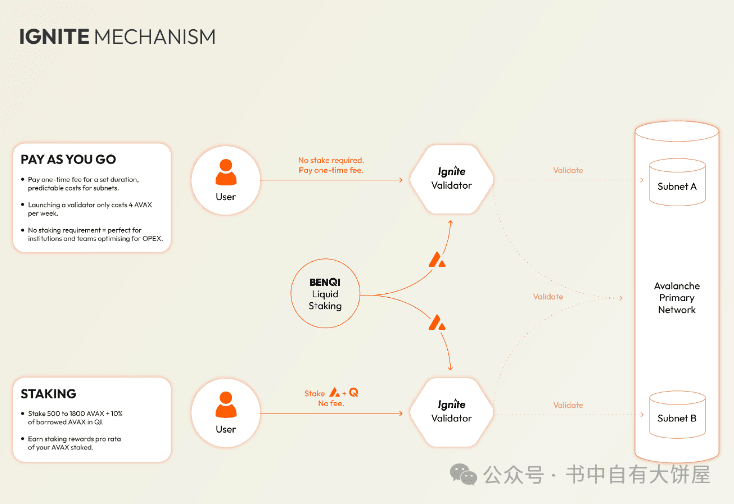
Ignite has two verification options – Pay Per Use (PAYG) and Staking.
Pay as you go (PAYG)
Minimum stake: 0 AVAX
Minimum fee: 4 AVAX per week
The PAYG Validation Service is a rental model service that greatly reduces the amount of capital required to launch an Avalanche validator.
Pay just once (in USDC, AVAX, or QI), enter your NodeID, set your staking duration, and Ignite will provide all the AVAX you need to launch a validator.
The fee schedule for each validator is as follows:
If you pay with QI, there will be a 5% discount.
pledge
Staking formula: 500 AVAX to 1800 AVAX + 10% of AVAX lent with QI
Minimum stake: 500 AVAX + 150 AVAX equivalent QI
Fee: $0
The pledge verification service requires a certain proportion of AVAX and QI collateral, and there are no fees attached to its use.
The minimum staking amount required to launch is 500 AVAX + 150 AVAX equivalent QI. You will receive proportional staking rewards for AVAX staking.
At the end of the staking period, users can claim their AVAX+QI stake and network rewards (including delegation fees).
Token economy
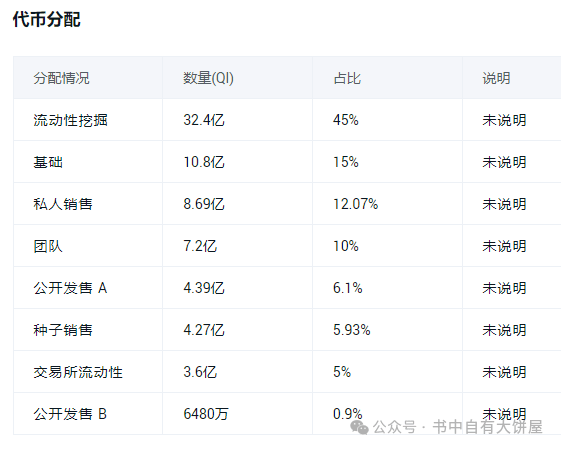
The token was launched in 2021. The total number of tokens is 7,200,000,000. Currently, 4,429,228,280 are in circulation. The circulation rate is 61%. The current token price is 0.024 US dollars and the highest currency price is $0.3776 (2021-11-21). You can see it on the token distribution. The team has 10%, the foundation has 15%, liquidity mining has 45%, and the rest are some public and private sales, so the team’s currency holding ratio is not high.
data analysis
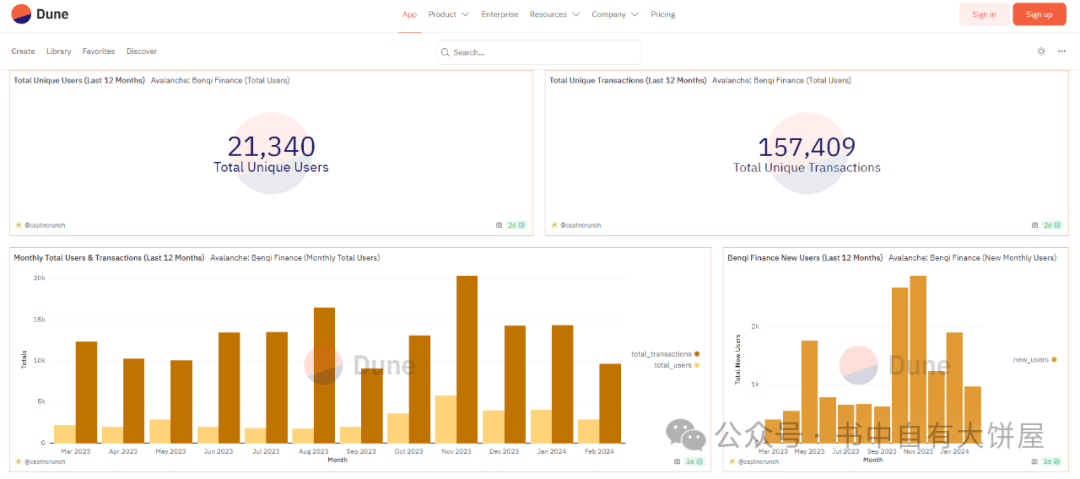
At present, we can see from Dune that the total number of users is 20,000, which is not many. The average number of users per month last year was around 4,000, and the number of new users every month was more than 1,000.
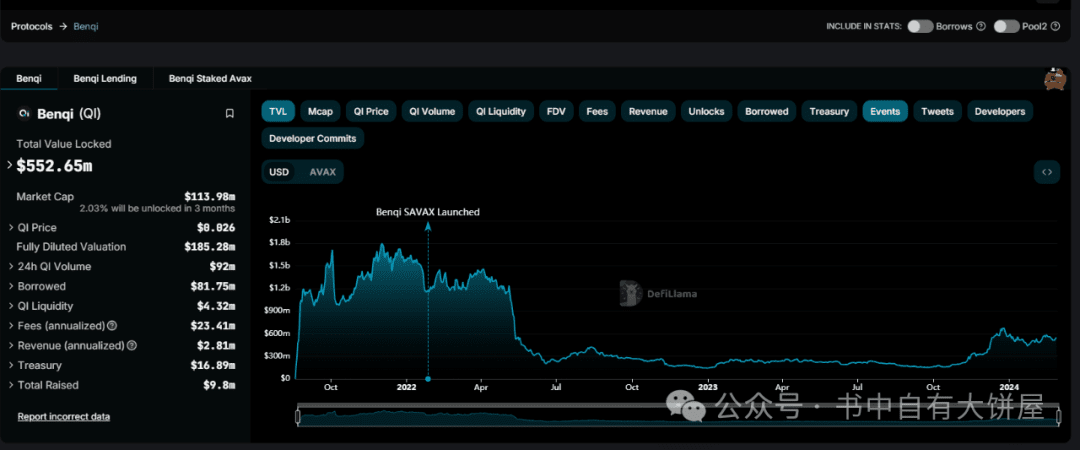
Looking at the number of TVL, the current total is US$500 million, and the recent increase is not obvious.
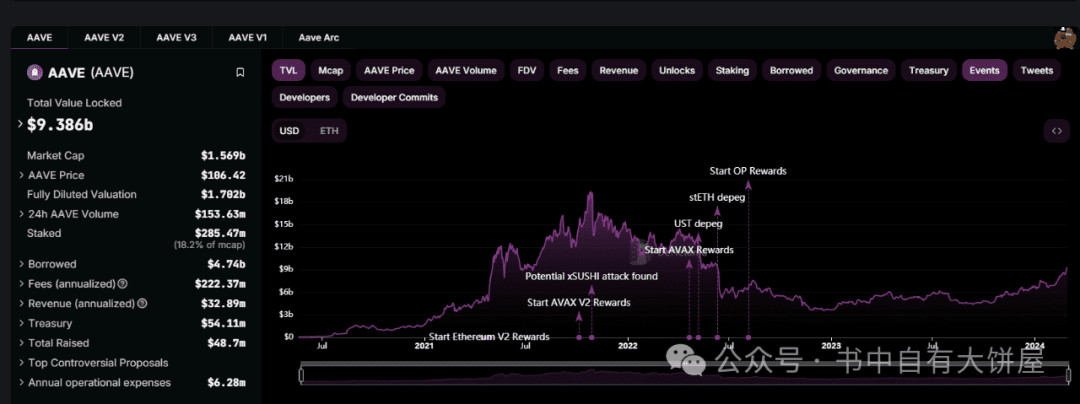
Compare AAVE data:
The current total TVL of AAVE is 9.3 billion U.S. dollars, and the recent trend is pretty good, with an upward trend, so the currency price is also rising. The current market value is 1.5 billion U.S. dollars, so the market value TVL ratio is almost 1:6. If according to this ratio, QI's market capitalization ratio is only 1:5, which is slightly worse.
Finally, let’s summarize the project. This project can also be regarded as the leading DEFI lending project on the avax chain. For example, AAVE on the AVAX chain is of higher magnitude, and it can be considered a member of the orthodox AVAX ecosystem. AVAX is also a high-speed public chain, and it was also in the avax ecosystem before. There are incentives, so it can grow. At present, TVL still has room for at least 3-4 times from the highest point of the last bull market. However, considering that there will definitely be more funds in this wave, and its current market value is still relatively high. It's low and it's the leader, so there's a certain amount of room for speculation, because the basics of the project are not bad. #内容挖矿 #QI