


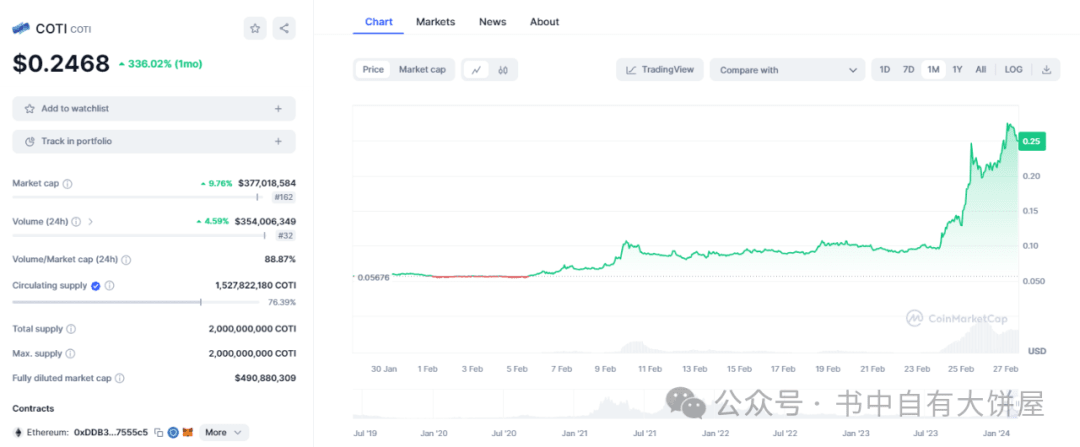
Today we continue to add one of the top 200 projects, which we have just entered, which is COTI, which is also engaged in payment. It has increased five times this month. You can see that the current market value is only 370 million US dollars, which is still not high. , at least there is still a huge gap for payments such as XPR, and 76% has been unlocked. There is no large number of unlocked coin flips. Let’s see if it has huge potential.
Introduction
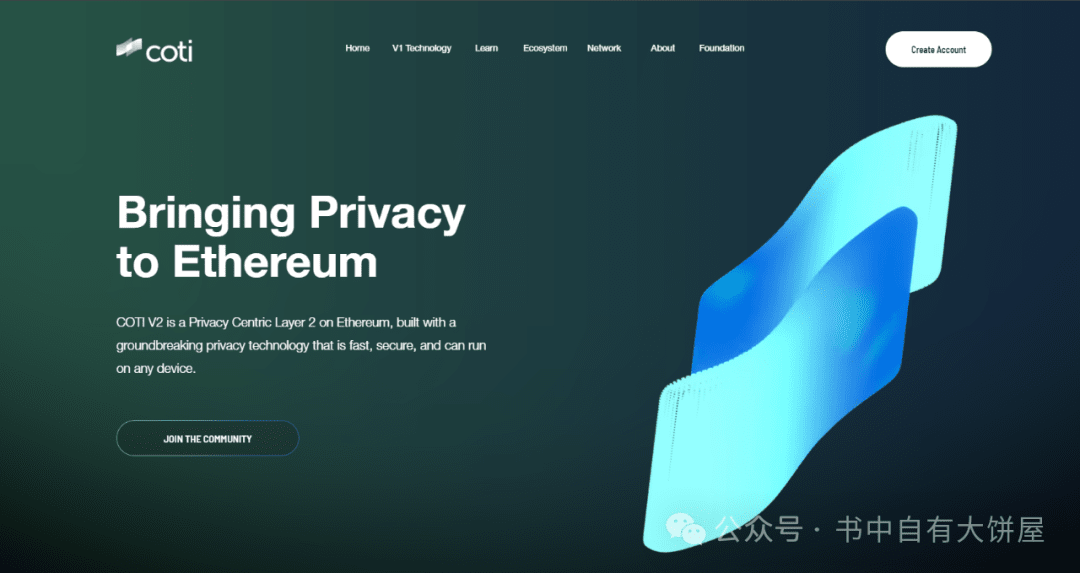
COTI is the abbreviation of "Currency Of The Internet" and was born out of the need for a more efficient, scalable and cost-effective payment system. It is a next-generation payments network that uses proprietary technologies such as Trustchain, layered protocol architecture, and native digital currencies to create what they call "Internet Money."
COTI was founded in 2017 by a team of experienced entrepreneurs and technology experts to provide consumers and merchants with a secure, fast and cost-effective payment network.
background
Trustchain is a proprietary consensus mechanism (specifically, a multi-DAG protocol) that uses nodes to quickly verify transactions while ensuring their accuracy and security. COTI also uses artificial intelligence technology to monitor networks to detect fraudulent or malicious activity.
Traditional payment systems are often slow, costly and lack transparency, making them unable to meet the needs of businesses and individuals in today's fast-paced digital world. Therefore, the team behind COTI wanted to create an application that transcends the barriers of the traditional financial system.
COTI (Coin of the Internet), a next-generation cryptocurrency that achieves high throughput and low fees while being easy to manage and providing users with the decentralized structure they expect from a payment platform, such as dispute resolution. COTI achieves high transaction throughput by employing a directed acyclic graph (DAG) of transactions called a Cluster, rather than a blockchain. Typically, DAG-based cryptocurrencies are designed to handle large volumes of low-value transactions, perhaps between machines, such as between IoT devices. Since COTI is designed to support daily transactions between merchants and consumers, new algorithms are introduced to drive the formation of clusters and the approval of transactions. The basis of the new approach is the Trust Score, which is assigned based on the historical behavior of a user account and manages the approval of transactions for that account in the network and the amount of any fees that may be incurred.
Project advantages
1. Distributed ledger is based on DAG
Rather than using a blockchain-based database, COTI’s distributed ledger is based on directed acyclic graphs (DAGs), which they call clusters. In a DAG-based network, each transaction must verify two previous transactions before it can be confirmed. Therefore, the transaction confirmation rate increases with the number of network users. COTI found DAG to be an ideal solution to achieve rapid improvement in transaction efficiency because it can connect transactions simultaneously and asynchronously.
Because in blockchain-based networks, larger scale usually has a negative impact on network availability, while in DAG-based networks it is usually the opposite: larger network usage usually leads to increased network scalability. In other words, there is a positive correlation between the number of network users and the speed of transaction confirmation.
Due to the positive correlation between network usage and network scalability, the DAG data structure is a perfect fit for the COTI network's base layer protocols and will enable it to operate without compromising COTI's commitment to scalability, immediacy, and low (or zero) fees. Achieve complete decentralization under the premise of commitment. Building on the foundation laid by the initiatives mentioned above, COTI is introducing an innovative DAG-based distributed ledger technology as its base layer protocol, which uses trust scores as the key for new, unconfirmed transactions to select previous transactions for verification. mechanism. Additionally, COTI’s DAG-based distributed ledger technology, known as Cluster, enables faster consensus when confirming transactions using COTI’s Trustchain algorithm. Eventually, Cluster will be able to verify and confirm up to hundreds of thousands of transactions per second (TPS).
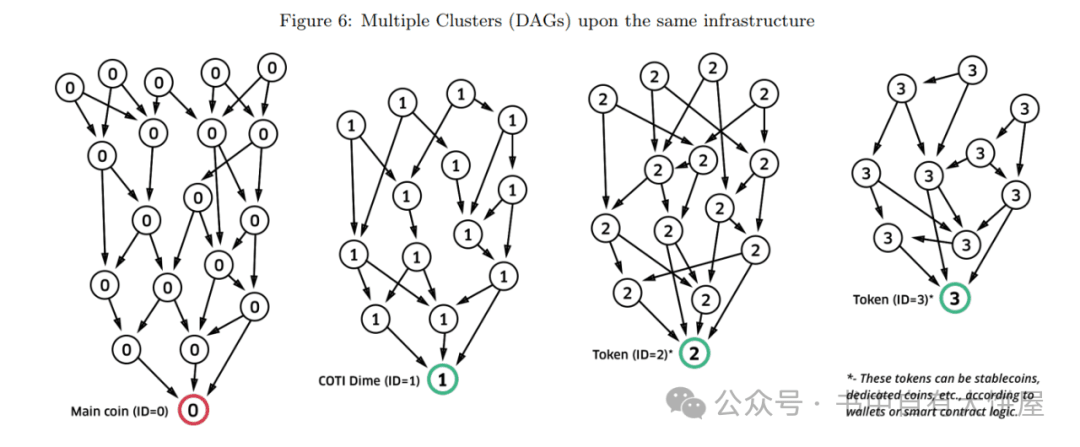
MultiDAG: COTI is not limited to one DAG instance. The same node infrastructure allows the creation of multiple DAGs that can be used for various purposes and initiators. This could be a voucher token, a stablecoin, a token dedicated to a global company, or a scalability token used to accelerate settlement on other blockchains.
2. Trust scoring mechanism
Determining trust scores: Participants' trust scores were initially determined from a general questionnaire and document verification. Over time, the trust score will be automatically updated based on (1) the user's enthusiasm (the value of transactions over a period of time), (2) the number of disputes in which participants participate (3) the number of resolved disputes, and (4) the number of disputes resolved, and other transaction parties The rating assigned to the participant. A trust score is a relative value plotted on a scale of 0 to 100, where 100 is the highest possible score. They provide a measure of how participants rank relative to each other in the COTI network, which can be measured by their contribution to network effectiveness over time.
In order to incentivize users to obtain trust scores and build a trustworthy environment, COTI designed scores related to transaction fees: high scores are related to low fees, while low scores are related to relatively high fees; as well as rolling reserve requirements for merchants.
Confirmation process: As mentioned before, to be added to the cluster, each transaction (represented by a user's trust score) must verify two previous transactions that are within its trust score. Since transactions are attached to clusters, they collectively form trust chains or sets of transactions characterized by similar trust score thresholds. The trust chain consensus algorithm ensures that trusting users (i.e., users with higher trust scores) receive optimized transaction confirmation incentives because their trust chain reaches the required cumulative trust score threshold faster. In short: the confirmation time of a transaction is related to the user’s trust score.
Using the DAG structure and the chain of trust consensus algorithm, the cluster can achieve a transaction confirmation rate of 10,000TPS compared to blockchain systems that can handle an average of 20TPS. To keep things in perspective, Visa processes around 2,000 TPS on average, while its peak daily rate is around 4,000 TPS.
Proof of Trust (PoT): COTI uses a unique combination of the Trustchain algorithm and Proof of Work (PoW).
3. Adjustment system
If a dispute arises within the network, the mediator is only responsible. Mediation does not approve transactions but resolves disputes. After the moderator verifies the information, they vote using the moderator client. Along with their votes, moderators deposit COTI coins. The number of votes is then calculated, and based on the majority, the system compensates the winning party and returns that party's balance to its legal state. Moderators whose votes align with the majority will be compensated by the COTI network for their efforts. Mediators who choose to act in bad faith will not be subject to any sanctions, but they will lose their deposited tokens.
To ensure fully distributed management, COTI is taking the following steps: (1) Prevent collusion: COTI has designed an algorithm to route mediators that are least likely to collude with each other; if a mediator is found to have any form of collusion , they will be severely punished. (2) Recruitment and training of mediators. Persons wishing to register as a mediator must meet certain requirements before being transferred to the platform. COTI will also make available online training programs to help candidates acquire the necessary knowledge to effectively facilitate the dispute resolution process.
4. Merchant rolling reserve
Rolling reserves are a risk management strategy used to protect payment service providers and their banks from potential losses due to chargebacks, and are commonly used in traditional payment systems. Rolling reserve requirements are calculated based on a merchant's turnover and trust score. Rolling reserve requirements are expected to be lower than existing payment networks. Each merchant transaction incurs a rolling reserve fee in COTI's local currency, which is set aside for a number of days. After the rolling hold period ends, funds will be returned to the merchant's account. As mentioned earlier, rolling reserves are used when a merchant loses an intermediary. Merchants who do not meet the rolling reserve requirements will not be able to sell goods and services within the COTI network.
5. Currency exchange of tokens
In order to provide easy-to-use payment solutions, COTI is developing currency exchanges that provide network participants with continuous access to liquid markets on a range of digital and fiat currency pairs. This means that end users can transfer their holdings from one currency to another without having to withdraw their holdings from their COTI wallet. Additionally, it will allow network participants to pay and receive funds directly in the currency they desire, regardless of their counterparty’s preferred currency.
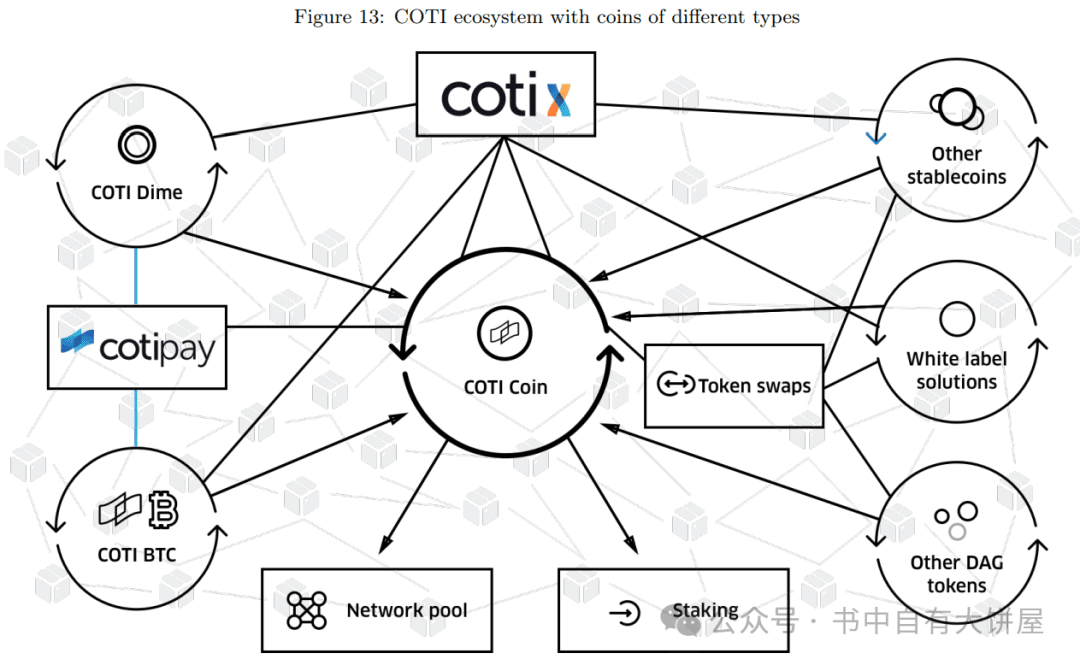
6. Developed a set of business tools and services for merchants
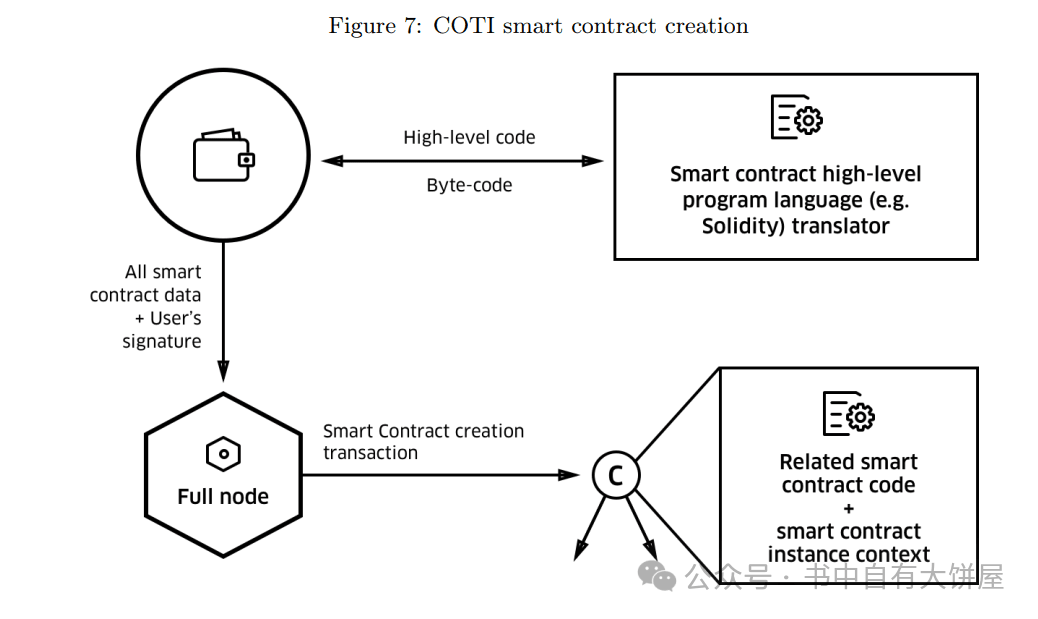
Processing Tools: COTI is developing processing tools to enable merchants to start accepting payments from COTI wallet holders. Merchants will be able to choose whether they wish to connect to COTI’s payment rail via API, or by embedding an IFrame (Inline Frame) into their website. COTI-powered merchants will have access to a dashboard that provides detailed data and reporting capabilities on their COTI network transactions. From this dashboard, merchants will select which COTI-supported currencies they wish to accept and their preferred settlement currency. Additionally, the dashboard will provide wallet-like functionality to merchants, allowing them to pay COTI wallet holders and other COTI-powered merchants, as well as use COTI’s currency exchange facilities. Merchants can also run their own Full Node through customized wallets to simplify customers’ transaction experience.
Hedging Services: COTI recognizes that one of the barriers preventing merchants from accepting digital currencies is the price fluctuations that can be experienced between the time payment is received and the time it is resolved. COTI will remove this barrier by creating an internal derivatives market, enabling network participants to enter forward contracts and buy and sell put/call options denominated in COTI coins. The Black-Scholes option model will be used for the put option price, while the option premium (the proceeds received) will be based on the option strike price (for a put option, the price at which the stock can be sold), the option term (the life of the option), and the price fluctuations of COTI. During the initial phase, these options will be limited to a 30-day period and will only pay out in COTI coins.
ecology
There are currently several products in the ecosystem (shown on the official website), including COTI’s Treasury (fund pool), PAY vip wallet (wallet), merchant payment, Djed stable currency, ADA payment, and CVI Finance (DEFI).
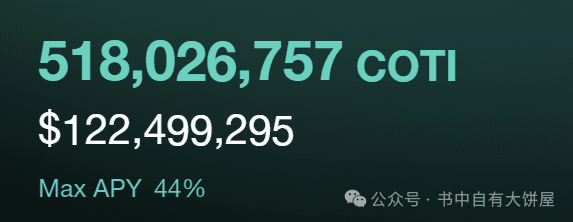
1. COTI’s Treasury (fund pool) is a pledge pool. Currently, 500 million COTIs are mortgaged, which is almost 120 million US dollars in funds. The APY shown on the official website is 44%.
2.PAY vip wallet (wallet) wallet application to store your COTI tokens.
3.Bussiness pay merchant payment: COTI Pay is an example of a payment application launched based on the COTI network, which can be integrated into any business interface as part of the checkout process. COTI Pay is a better choice for merchants who do not want to create their own payment network, but at the same time want to enjoy e-commerce and POS payment services.
The performance of this application can reach hundreds of thousands of TPS, but it is not controlled by any third party, so no giant can charge high service fees based on its monopoly position. This app can significantly reduce payment costs (especially cross-border payment costs), provide instant settlement, low rolling reserve requirements and buyer and seller protection.
4.CVI Finance (DEFI): CVI is a decentralized platform similar to the VIX index of cryptocurrencies. Through the CVI Index, users are able to assess current and future volatility expectations and then trade based on their perceived sentiment using CVI’s permissionless platform.
The other two are not to mention a stable currency and the other is ADA pay.
Token economy
The project tokens were actually launched in 2019. The total number of tokens is 2,000,000,000. Currently, 1,527,822,180 are in circulation, with a circulation rate of 76.3%. The current currency price is 0.24, and the highest price was $0.68 (2021-10-31).
Ecology/reserve: 45%
Token sale: 30% (private sale portion accounts for 50%, with a 6-24 month lock-up period.)
Team: 15% (locked for 6 months, then released proportionally every quarter.)
Consultants and service providers: 10% (6-24 month lock-up period.)
Finally, let me summarize this project. The project is also a project for payment. You must know that our blockchain was born for payment at the beginning, such as BTC, but efficiency was sacrificed for decentralization, which led to it not being very useful. Then At present, the leader in payment is still XRP, with a current market value of 30 billion US dollars. Although I said in the previous program that XPR 30 billion is definitely not worth it, it has not fallen. It has always been a top 10 project and is very stable. So, Today's COTI also deals with payments, although the sectors may be different. For example, XRP focuses on cross-border payments, while COTI focuses on merchant payments. I think COTI's model is more universal, but compared with centralized payments, such as Alipay and WeChat should be incomparable in terms of speed and rates, so it may be more difficult to promote the project. But now the bull market has started, Bitcoin has reached 5.70,000, a new high point, and the last high point is still there. So although the project is currently 5 times, compared with the market value of XRP, it is still very low, and it has great potential. of. #内容挖矿 #coti