


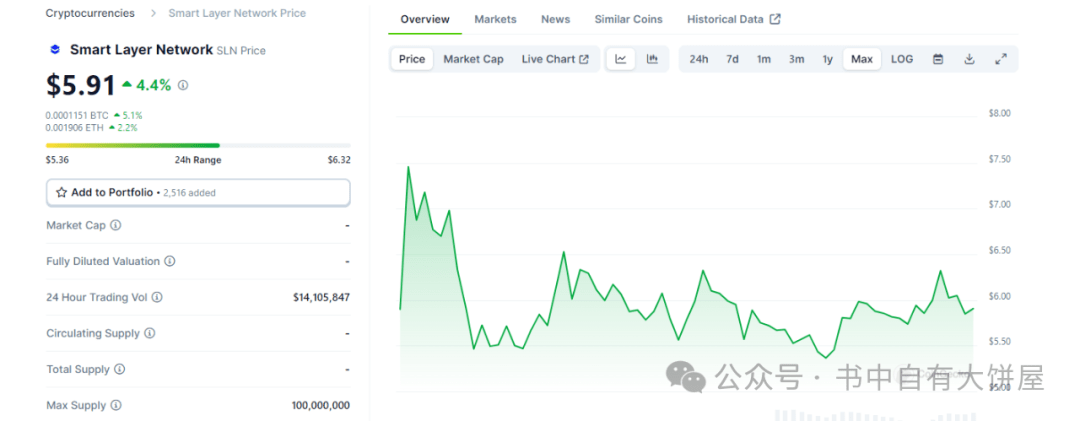
Today we will continue to talk about an old project that has just been launched, called the smart layer network. It is currently online on exchanges such as OK, gate, kucoin, and uni. The current coin price is about 6 US dollars, and the total FDV is about 600 million US dollars. Let’s take a look at what this smart layer is today?
Introduction
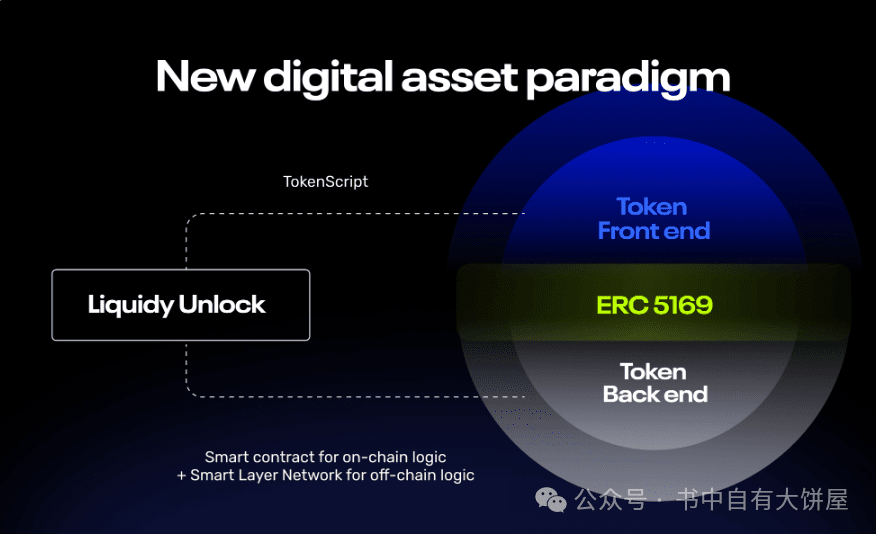
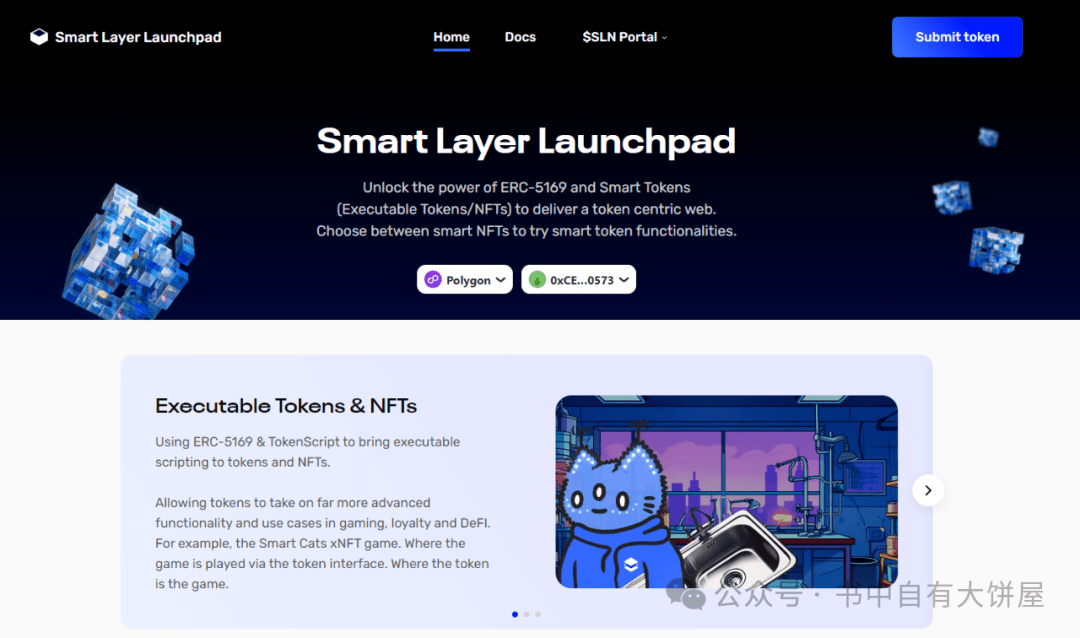
Smart Layer can be seen as a service layer that connects the blockchain world and traditional network services (middleware) and provides support and incentives, making it easy to tokenize network services or integrate smart tokens, thereby providing a better user experience and improving business efficiency. For token issuers, Smart Layer provides support for creating and managing programmable smart tokens. Smart Token Labs has launched Smart Layer, a programmable blockchain-based service network, which introduces smart tokens into games and loyalty through ERC-5169 and Tokenscript.
The Smart Layer Network is a decentralized service network that runs in parallel with all EVM chains.
From a website’s perspective, Smart Layer is similar to a RESTful API provider, allowing smart tokens to interact with websites, IoT, smart contracts, etc.
Background of the project
In July 2021, the Smart Token Labs team successfully raised $6 million in initial funding from investors including Mark Cuban, Crypto, Framework Ventures, and Mechanism Capital.
In September 2022, the project received another US$6 million in financing, led by Liang Xinjun, a well-known investor in the Chinese-speaking world, and participated by investors such as HashGlobal, Bodl and Fenbushi Capital.
At the beginning of the year, Smart Layer published an article reviewing its development history, pointing out that Smart Layer has completed support for the EVM public chain and can manage token logic that is not stored on the chain. In addition, the project has launched the highly anticipated Smart Cat xNFT game, which has aroused the strong interest of many players. At the same time, the team also proposed the ERC-5169 standard, which injected new vitality into the interoperability and functionality of tokens.
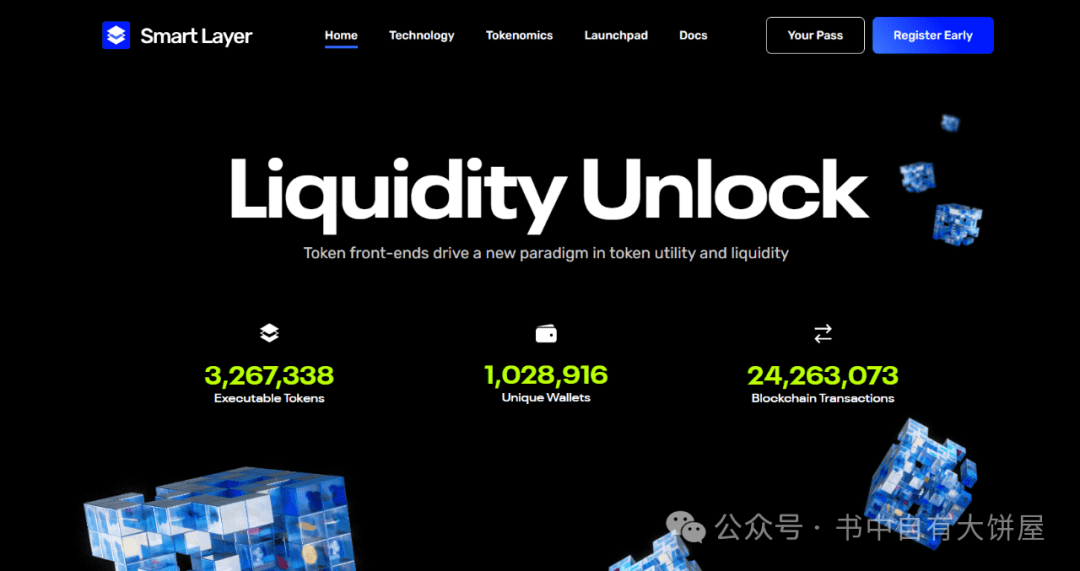
It is worth mentioning that Smart Layer has worked closely with InsomniaLabs to jointly launch the Loyalty+ program. The program aims to strengthen the loyalty connection between brands and users through public chain technology. At present, the project has established cooperative relations with more than 50 partners, including Polygon, Layerzero, Alchemy and other institutions, fully proving its wide application potential in the industry.
On the operational side, Smart Layer has partnered with world top 10 cricket superstar Glenn Maxwell to launch a global fan engagement program using Smart Layer’s proof-based executable NFTs.
As a middleware, Smart Layer is of great significance. It not only simplifies the complexity of the transition from traditional Web2 business to Web3 from a service perspective, but also provides a set of flexible tools for development teams, allowing them to develop and deploy decentralized applications more easily.
At the same time, through Smart Layer, the gap between public chains and Web3 is effectively bridged, providing users with a more secure, transparent and centralized user experience. It solves the limitations of the existing public chain technology environment and ensures the opening of broader application possibilities.
Smart Tokens
A Smart Token is a programmable blockchain-based entity that encapsulates business logic, enabling it to perform complex interactions with various systems and other tokens in a self-contained, interoperable format.
Tokenization
Tokenization transforms goods, services, and digital rights into programmable tokens, enabling seamless integration, frictionless markets, and user empowerment in a digital environment.
Why do we need an intelligent layer?
Next Generation Networks have endless integration possibilities. The Intelligence Layer is a key component of the Next Generation Networks — the integration bus of the Next Generation Networks.
Smart Layer
The Smart Layer is a programmable blockchain-based service network that facilitates the execution of token logic and enables complex interactions with various systems and tokens in a decentralized, scalable and secure manner.
Next Generation Network
The intelligence layer plays a vital role in the future of the Internet.
Distributed Service Network
A distributed service network, as shown in TheGraph, consists of nodes that provide web services. The intelligence layer extends this concept by integrating execution components (similar to AWS Lambda), establishing read/write connections to blockchains and token issuance systems, and incentivizing service level agreements through tokens.
working principle
The Smart Layer network operates through three main components:
Blockchain: This layer provides smart contracts, enforces token transaction rules and keeps snapshots of token operation commitments for later verification.
Anchor nodes: Well-known organizations elected by the DAO run these nodes to maintain the stability, security, and service level objectives of the network. They write the commitment to token operations into the blockchain in the form of a series of snapshots.
Service Nodes: This larger network of nodes distributes service work via a distributed hash table and provides a Token API to enable integration.
Service nodes are incentivized with smart layer tokens, paid by users or websites that require token integration/token functionality. Payments are attached to API calls as incremental commitments, which service nodes can pay out when the session is closed. A smart contract handles the payment, reliably destroying a portion of the smart layer tokens. The correct operation of this system is ensured by a small stake, monitored by anchor nodes.
Anchor nodes are semi-trusted nodes with high availability requirements. They regularly check whether service nodes meet the service level targets defined in the contract. They also record key token operations and generate summaries of commitments. These commitments are generated by gossip between anchor nodes, and every time interval, an anchor node writes a commitment through a predefined random role. Anchor nodes also enforce the rules of distributed hash tables to ensure redundancy and performance, redistributing different smart token instances to different nodes.
The token issuer's website participates in the network by providing token data and token scripts. These scripts specify how service nodes provide token APIs and how anchor nodes check the availability of service nodes.
These three components work together to create a dynamic, secure, and efficient network. Smart Layer tokens act as the power of the network, driving its operations and incentivizing nodes to contribute resources. Both types of nodes are rewarded with Smart Layer tokens for their participation in the network - the more resources they contribute, the richer the rewards. This incentive mechanism ensures the continued growth and sustainability of the network.
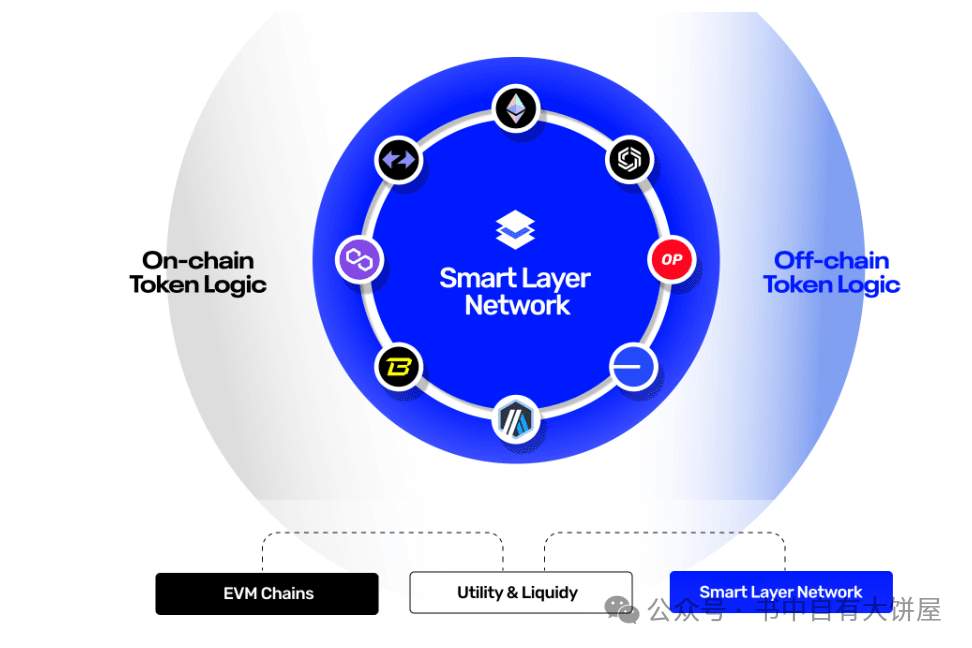
Anchoring nodes in the smart layer
Anchor nodes play a key role in the Smart Layer network, acting as guardians of stability, security, and service level targets. Operated by known organizations elected by a Decentralized Autonomous Organization (DAO), these nodes are semi-trusted entities that provide a range of essential services.
One of the main responsibilities of anchor nodes is to maintain the distributed hash table (DHT). This dynamic database records which service node is processing which token instance, ensuring the efficient operation of the network. Anchor nodes update and synchronize the DHT in the network and provide lookup services for the table.
Anchor nodes also monitor the performance of service nodes, ensuring that they adhere to their service level agreements (SLAs). They manage the reward and penalty system, ensuring that nodes are appropriately compensated or penalized based on performance. This accountability mechanism helps maintain a high level of service standards within the network.
In addition, anchor nodes record key token operations and generate summaries of commitments. These commitments are created from gossip between anchor nodes, and at each time interval, an anchor node writes the commitment through a predefined randomized role. This mechanism ensures the integrity and traceability of token operations.
Additionally, anchor nodes are responsible for load balancing in the network. They assign Smart Token instances to service nodes based on their SLAs. For example, nodes with high bandwidth and storage capabilities might be assigned movie access Smart Tokens. This ensures optimal utilization of network resources, improving the overall performance and user experience of the Smart Layer network.
Anchor nodes have high availability requirements, meaning they need to be online all the time. They also enforce the rules of the DHT to ensure redundancy and performance, redistributing different Smart Token instances to different nodes as needed.
In summary, anchor nodes are the cornerstone of the Smart Layer network. Their role in maintaining the DHT, monitoring service nodes, recording token operations, and managing resource allocation is critical to the efficient and reliable operation of the network.
Service nodes in the smart layer
Service nodes form the backbone of the smart layer network, providing the basic services required to enable the network to operate effectively and efficiently. They are a large network of nodes that distribute service work and provide TokenAPI to enable integration.
One of the main responsibilities of a service node is to process and execute integrations. They manage token transfers and ensure secure and private execution of web functions. This includes everything from processing token data requests to executing complex operations defined by token scripts.
Service Nodes are incentivized to provide these services by receiving SmartLayerTokens as payment. This payment can come from users or websites that require token integration. Payment is attached to the API call as an incremental commitment that the Service Node can redeem when the session is closed. The smart contract handles the redemption, reliably destroying a portion of the SmartLayerTokens. A small stake ensures the correct operation of this system, monitored by the anchor node.
Service nodes are also responsible for meeting service level objectives (SLOs) defined in their service level agreements (SLAs). These SLOs can include availability, performance, bandwidth, and latency requirements. Nodes that consistently meet or exceed their SLOs will receive higher rewards, promoting a culture of excellence and reliability within the network.
Additionally, Service Nodes play a vital role in the redundancy and resilience of the network. Using algorithms such as the Fountain code, multiple nodes can hold the same token instance in case of node failure or unavailability.
In summary, Service Nodes are the workhorses of the Smart Layer network. Their role in handling integrations, managing token transfers, meeting service level objectives, and providing redundancy is critical to the efficient and reliable operation of the network.
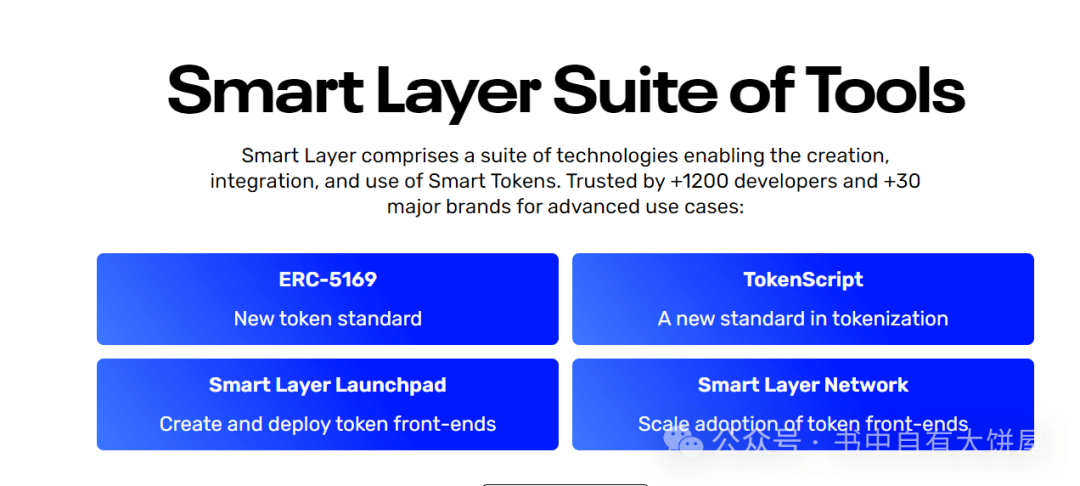
Key Output 1: Features of ERC-5169
ERC-5169 is an executable metadata standard for decentralized applications that allows dapps to load external metadata, such as TokenScript, through a unique URI. This provides dapps with the flexibility to dynamically load functions without modifying smart contracts.
For Web3 games, the ERC-5169 standard has the following benefits:
1.Support multiple assets built into the game
Games need to support many different types of assets, such as characters, equipment, props, etc. These assets can be represented by NFTs. Through ERC-5169, game contracts can dynamically load NFT metadata, such as images, attributes, etc., from external URIs without hard-coding these data in the contract.
2. Dynamically adjust game mechanics
During the operation of the game, the mechanism may need to be adjusted, such as changing character skills, equipment attributes, etc. ERC-5169 enables these parameters to be updated through an external URI without modifying the smart contract.
3. Reduce deployment costs
ERC-5169 allows game contracts to be streamlined, only needing to process core logic, and other data and functions are referenced through URIs. This reduces the gas cost of contract deployment. According to statistics, using the ERC-5169 standard to deploy a simple game NFT can reduce gas costs by more than 50% compared to implementing functions directly in the contract.
4. Improve interactivity
The URI can point to a TokenScript script, which enables assets to have rich interactive behaviors. For example, pets can breed new pets, and equipment can be synthesized into more advanced equipment. This greatly improves the playability of the game.
Therefore, ERC-5169 provides great flexibility for Web3 games, allowing games to continuously enrich their content and mechanisms over time without having to redeploy new contracts. This is very important for the sustainable development of Web3 games.
Key Output 2: TokenScript
TokenScript is a programming interface designed for tokenization proposed by Smart Token Labs in 2019. This interface not only helps users access all functions of tokens, but also allows the creation of more advanced, complex and flexible "user token" interactions.
Simply put, TokenScript is a JavaScript code layer with XML tags that describes the properties, logic, operations, and user interface elements related to the token. The TokenScript file is issued and signed by the corresponding token issuer and can be imported by any service or device that has integrated the TokenScript engine. And the token issuer can add any information and rules to the token without being restricted by smart contracts. The main focus of Tokenscript is to allow tokens to run seamlessly between different platforms and wallets while integrating all token information to facilitate user management and understanding of assets. Currently, the AlphaWallet wallet already supports all tokens implemented with the TokenScript standard.
We can imagine TokenScript as a computer program for processing music files, where the music files are like tokens and are immutable, but the playback software can be switched flexibly. The program can also be automatically updated and supports recording, cutting audio and organizing it into your favorite song library. TokenScript can also ensure that the interaction between tokens and software is not arbitrary, but is built by the token issuer.
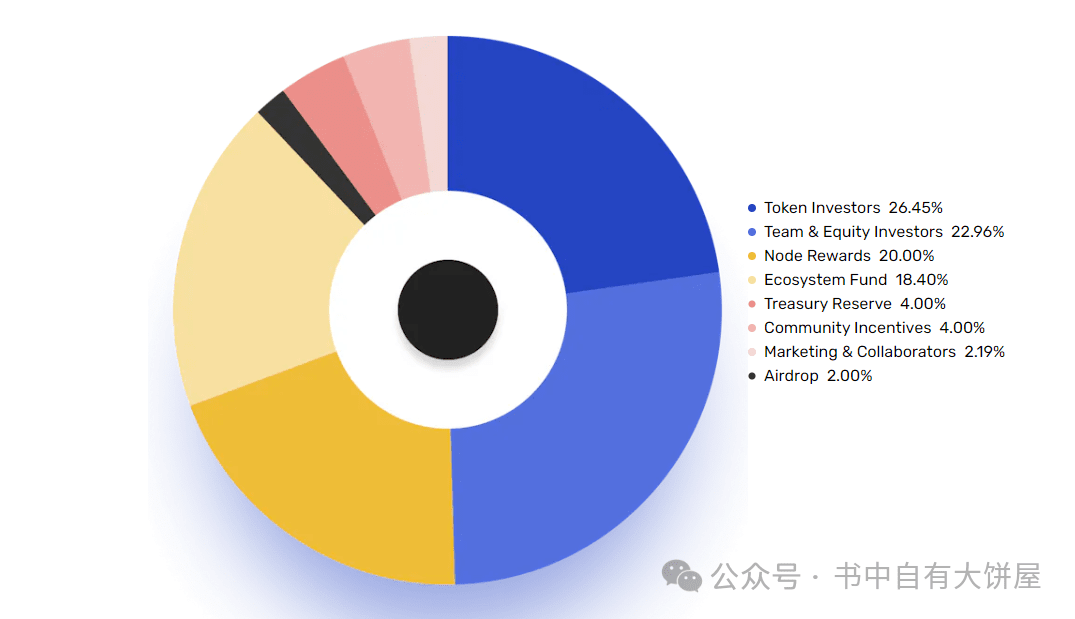
Token Economy
The total number of tokens is 100,000,000. It is not clear how many have been released. The opening price was 0.6 US dollars, and it has now increased 10 times to about 6 US dollars. From the distribution of tokens, we can see that investors hold 26.45%, the team holds 22.96%, node rewards hold 20%, and the ecological fund holds 18.4%. The other items are very small proportions, so the team’s coin holding ratio is not very high.
There is no ecosystem at present. There is only one demo, Smart Cats xNFT game. Even though it is an NFT, it is also a game and is still in the testnet stage. There are almost no other applications.
Finally, let me summarize this project. It seems that the smart layer concept is well packaged, but in fact, there is no great innovation. It is just the dynamic data update of ERC-5169, which is more convenient. But its investment institutions are still quite powerful, including alchemy, ens, Ethereum Foundation, layerzero, and Tencent, which are all very powerful institutions. This project has been going on for a long time. It started in 2017 and has been 7-8 years now. It is still quite bad that there is no ecosystem. However, for a new tool (middleware), the current market value is really not high. Of course, it also has to be considered in terms of its release, so the current circulating market value is definitely less than 600 million, which is still good in terms of cost performance. #内容挖矿 #SLN