

The agricultural and food supply chain when integrating blockchain is worth more than 280 million USD by 2022, expected to increase to more than 7 billion USD by 2031. Compound annual growth rate (CAGR) is expected to be 43.76%.
Blockchain has been recognized for its potential applications in finance and other industries linked to data, but what happens when innovation intersects with the world's oldest sector, agriculture?
Blockchain has a lot going for the food and agriculture industries, especially when combined with other new technologies like artificial intelligence (AI), satellites and the Internet of Things (IoT).
Let's learn about the future potential of the agricultural sector when integrating blockchain.
What benefits do agricultural businesses get?
Thanks to its unique architecture and decentralized nature, blockchain helps ensure the highest level of transparency and clarity, which are essential elements in the agricultural sector. The decentralized network allows farmers, manufacturers, retailers and exporters to monitor and solve supply chain challenges. Additionally, the information recorded on the blockchain can be used for analytical purposes to optimize the supply chain.
Applying blockchain in agriculture will help effectively comply with authorities' regulations by providing accurate, continuously updated data sources and preventing fake information. Stakeholders also make more accurate decisions and practice appropriate corporate governance. Decentralized networks also simplify the process of distributing data between parties.
In addition, blockchain also facilitates new developments in the agricultural sector such as helping to verify management rights and land ownership, improving food safety quality and tightening traceability of agricultural products. input materials such as seeds and fertilizers.
What benefits do farmers get?
Technology giants soon realized the potential of blockchain in agriculture. For example, IBM is providing businesses with a private blockchain platform, IBM Food Trust, which provides many features including proof of traceability, the ability to track processes, and monitor fraud issues. and documents, among many other features.
Agricultural companies can also take advantage of blockchain solutions based on the public network, ensuring greater decentralization and security. Take Dimitra, an AgTech company that helps reduce manual labor by combining blockchain, AI, IoT, drones, and satellites.
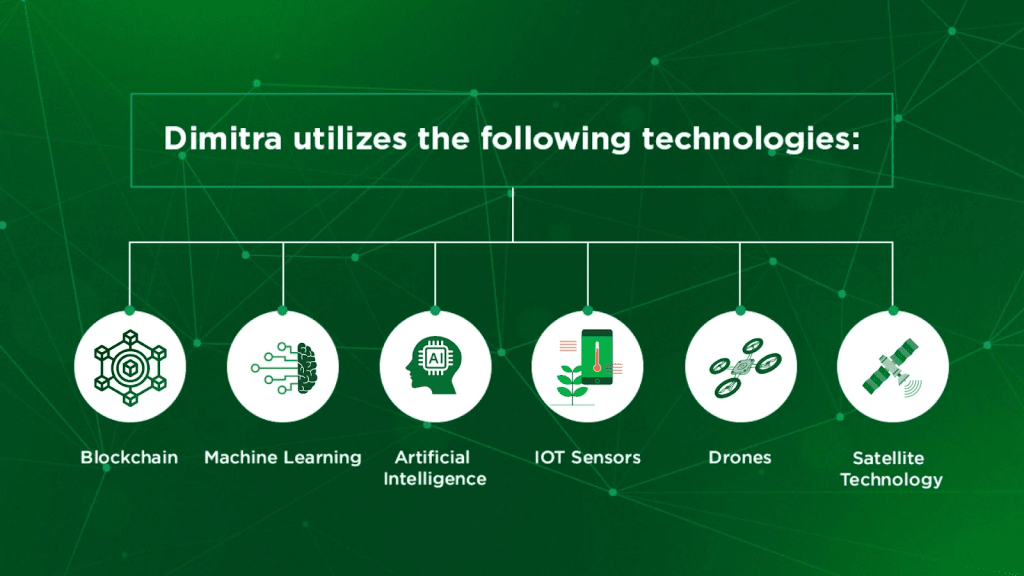 Source: Dimitra
Dimitra CEO Jon Trask believes that integrating blockchain and other modern technologies into the agricultural process is natural and necessary. Every farmer regardless of their economic situation, should take advantage of simple and useful technologies.
Dimitra offers 4 main AgTech applications:
Connected Farmer – this platform helps small-scale farmers record their activities, create and receive comprehensive reports that provide guidance to help them make smart choices. This platform uses blockchain and several other advanced technologies to provide valuable data to farmers. The enhanced version of the platform includes features such as sensor, satellite and weather management modules, an online agricultural market, as well as tracking of import and export documents.
Livestock Guru – platform that uses DNA data to monitor animal origins. Identifying individuals carrying potential recessive genes helps improve the breeding process in the herd, thereby creating animals with superior quality than previous generations.
Connected Coffee – solution that supports farmers, traders and other stakeholders in the coffee growing and distribution process worldwide, by tracking the flow of coffee from cultivation to location distribution, this application helps manage the supply chain effectively.
Deforestation platform – Since December 2022 the European Union has placed a ban on the import of products linked to deforestation, such as palm oil, livestock, soybeans and wood. Dimitra will provide input certificates of origin, use satellite imagery and machine learning to assess farmer compliance, and create and store certificates on the blockchain.
The Dimitra ecosystem is driven by an Ethereum-based utility token called DMTR, which is for the Connected Farmer app helping farmers globally increase connectivity and make smart decisions.
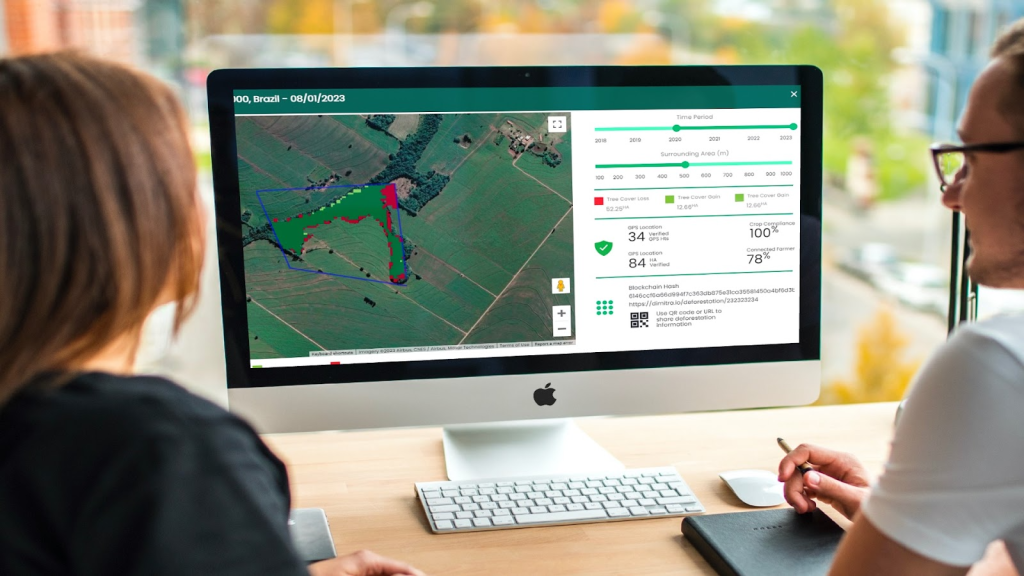 Source: Dimitra
To spread the message and effectiveness of blockchain technology, Dimitra is working with Governments, NGOs and agencies globally. The company has been certified by the Indian Chamber of Commerce, Industry and Agriculture - OBC to deploy the Connected Farmer application to 1.3 million farms in India to assess and correct the condition and quality of farmland. work.
Dimitra also cooperates with the Brazilian Association of Fruit Producers and Exporters, the country with the third largest fruit production in the world. Members of this Association represent more than 85% of all Brazilian fruit exports.
Dimitra also demonstrated that integrating blockchain with other technological innovations such as AI, satellites and IoT can revolutionize the agriculture industry in the future.
According to InsightAce Analytics, the agricultural and food industry supply chain when integrating blockchain is worth more than 280 million USD by 2022, expected to increase to more than 7 billion USD by 2031. Expected compound annual growth rate (CAGR) 43.76%.
Synthetic PCBs