

In brief
Cryptocurrency is a digital currency based on blockchain technology, allowing for peer-to-peer (P2P) transactions.
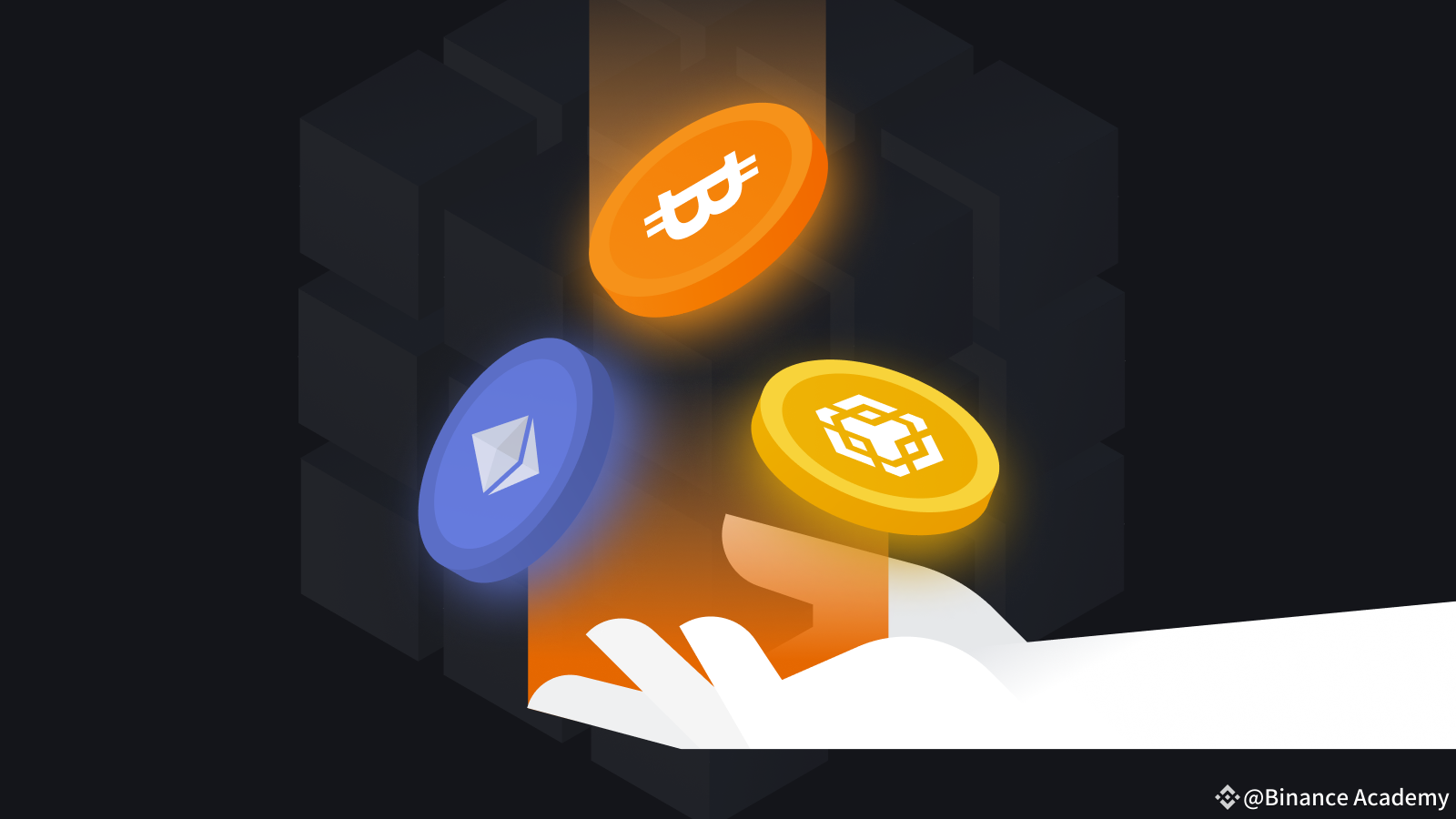
Bitcoin, ether, BNB and USDT are good examples of the top cryptocurrencies by market capitalization.
Cryptocurrencies are accessed through cryptocurrency wallets or exchanges. People often say they are “stored” in a wallet, but they are actually stored on a blockchain.
Cryptocurrencies have specific characteristics, including decentralization, transparency, and immutability.
What is cryptocurrency?
Cryptocurrency is a decentralized digital currency that uses cryptography for security. It can operate independently of intermediaries such as banks and payment processors.
This decentralized nature facilitates direct peer-to-peer (P2P) transactions between individuals. Instead of going through physical wallets and bank accounts, people access their cryptocurrency through separate cryptocurrency wallets or cryptocurrency exchanges.
You may have heard that cryptocurrencies are “stored” in wallets. However, cryptocurrencies don't actually exist in wallets or cryptocurrency exchanges — in fact, they always exist on the blockchain. With a cryptocurrency exchange, the exchange holds the private keys that allow users to access those funds.
The first and most famous cryptocurrency is Bitcoin, created in 2009 by an individual or group of people named Satoshi Nakamoto. Since then, thousands of cryptocurrencies have emerged, each with its own characteristics and purposes.
Like traditional fiat currencies, cryptocurrencies can be used as a medium of exchange. However, the use cases of cryptocurrencies have expanded significantly over the years to include smart contracts, decentralized finance (DeFi), value stores, governance, and decentralized tokens. fungible (NFT).
How does cryptocurrency work?
We've mentioned that cryptocurrencies use cryptography for security purposes, but what does that really mean? Simply put, cryptocurrencies use advanced mathematical algorithms to secure transactions and protect data from unauthorized access or manipulation. These algorithms serve two main functions: maintaining the privacy of user identities and verifying the authenticity of transactions.
Blockchain transactions are public and addresses (public keys) are pseudonymous, although not completely anonymous. In other words, while transactions are visible on the blockchain, the users behind them are not easily identifiable. Cryptocurrencies achieve this through the use of cryptographic techniques such as cryptographic hash functions and digital signatures.
Cryptocurrencies achieve autonomy through a distributed computer network called blockchain, which is essentially a distributed ledger technology that stores transaction data on many specialized computers on the network.
Each of these computers — also known as nodes — maintains a copy of the ledger, and the consensus algorithm protects the blockchain by ensuring fake or inconsistent copies are rejected. This distributed architecture increases the security of the network because there is no single point of failure, such as a bank vault, for malicious actors to exploit.
Cryptocurrencies allow individuals to transfer money directly to each other. In a typical cryptocurrency transaction, the sender initiates the transfer by creating a digital signature with their private key. The transaction is then sent to the network, where nodes validate it by verifying the digital signature and ensuring the sender has enough funds.
Once verified, this transaction will be added to a new block, which will then be added to the existing blockchain. Although this may seem complicated, miners take these steps so users don't have to worry about them.
What makes cryptocurrency unique?
Cryptocurrencies have impacted various ecosystems, from finance to technology, by introducing innovative features that differentiate them from traditional protocols and currencies. Some unique aspects of cryptocurrencies include:
1. Decentralization
The decentralized architecture of cryptocurrencies eliminates the need for a central authority. This allows for greater autonomy, as well as less vulnerability to manipulation or control by a single entity.
2. Transparency and immutability
Blockchain technology records all transactions on a transparent and tamper-proof ledger. Therefore, when a transaction is added to the blockchain, anyone can view it but it cannot be changed or deleted.
3. Programming ability
Cryptocurrencies, such as ETH, are programmable, allowing developers to deploy smart contracts to create decentralized applications (DApps) and other innovative solutions on blockchains. Additionally, because permissionless blockchains are open source, anyone can start deploying code on the blockchain and create their own DApps.
4. No borders
Cryptocurrencies are easily transferred and exchanged globally, allowing people to use them for international transactions and money transfers.
5. Money supply is predetermined
Many cryptocurrencies have a limited coin supply, meaning the teams behind them will only create a finite amount of coins. This deflationary aspect of cryptocurrencies could have a positive impact over time, as scarcity drives demand.
In contrast, fiat currencies often cause inflation because central banks can print more money. However, with limited supply, cryptocurrency inflation can be better controlled because the total amount is predetermined.
Cryptocurrencies
Among the countless cryptocurrencies, four prime examples include Bitcoin (BTC) and popular altcoins such as ether (ETH), Binance Coin (BNB), and Tether (USDT).
Bitcoin (BTC)
BTC is the most popular cryptocurrency. It uses a consensus mechanism called proof-of-work (PoW), in which miners compete to validate transactions and keep the network running. Additionally, the limited supply of 21 million coins makes BTC relatively scarce and helps maintain its value over time.
Ether (ETH)
ETH is the second most popular cryptocurrency, launched by Vitalik Buterin and his team in 2015. In addition to value transfer, ETH allows programming through smart contracts.
Like BTC, ETH initially used a PoW consensus mechanism but has switched to a more environmentally friendly and energy-efficient proof-of-stake (PoS) model. This change allowed users to validate transactions and secure the network by staking their ETH rather than through nodes using computing power.
BNB
Formerly known as Binance Coin, BNB (short for Build and Build) was introduced by cryptocurrency exchange Binance in 2017 as an ERC-20 token on the Ethereum blockchain. In 2019, it switched to its own blockchain - BNB Chain, in the form of the BEP-2 token.
Subsequently, Binance Smart Chain (BSC; now named BNB Smart Chain) was created and today the BNB cryptocurrency exists on both BNB Chain as BEP-2 tokens and BSC as BEP-20 tokens. It is also important to note that BNB Chain consists of two chains: the EVM-compatible BSC, as well as the BNB Beacon Chain (formerly known as Binance Chain) - the chain used for governance, staking and voting.
BNB Chain provides an environment for creating smart contracts and DApps, and has lower transaction fees and faster processing times than many other blockchains.
BNB has many different use cases, some of which include paying transaction fees on BNB Chain and trading fees on Binance, participating in token sales, and staking to validate the network on BNB Chain. Binance also uses a periodic token burn mechanism, which limits the overall supply of BNB.
Tether (USDT)
USDT is a USD-pegged stablecoin developed by Tether Limited Inc. launched in 2014. Stablecoins are cryptocurrencies designed to maintain a consistent value relative to a reserve asset, such as fiat currency. In the case of USDT, each of these tokens is backed by an equivalent amount of assets held in the company's reserves. Therefore, USDT offers benefits as a cryptocurrency while minimizing price fluctuations.
What is cryptocurrency market capitalization?
The term “cryptocurrency market capitalization” is a translation of “cryptocurrency market capitalization,” which is a metric used to determine the relative size and value of cryptocurrencies. You can calculate it simply by multiplying the current price of a coin by the total number of coins in circulation. However, you don't even have to do that because many cryptocurrency platforms already do the calculations for you.
Cryptocurrency market capitalization is often used to rank cryptocurrencies. A higher market capitalization typically indicates a more stable and widely accepted cryptocurrency. Conversely, a lower market capitalization often signals a more speculative or volatile asset.
However, please note that this is just one of many factors to consider when evaluating the potential of cryptocurrencies. Several other factors, such as technology, team, token, and use cases, should also be considered when researching cryptocurrencies.
How to invest safely in cryptocurrency
Like other financial assets, investing in cryptocurrency can be risky and may result in financial loss. Here are five essential tips for buying and selling cryptocurrency more safely:
1. DYOR
The acronym DYOR stands for “do your own research”. It's important to understand the basics of blockchain technology — such as different cryptocurrencies and market dynamics — before investing in any cryptocurrency.
Books, blogs, podcasts, and online courses are all good ways to start learning. You should also learn about the projects, teams, and technology behind different cryptocurrencies to make an informed decision.
2. Start small and diversify
The cryptocurrency market can be volatile and unpredictable, especially when it comes to less popular coins. Therefore, it is wise to start with small investments that will not affect your pocket. This approach allows one to gain experience and develop a better understanding of market trends without risking significant financial loss.
Diversification can also be helpful when investing in cryptocurrency. Instead of focusing on a single cryptocurrency, investing in different cryptocurrencies can minimize your overall risk and increase the long-term growth opportunities of your holdings.
3. Stay engaged
Since the cryptocurrency landscape is always changing, we should keep up to date with news, technological advancements, and regulatory updates so we can make timely decisions. Joining a cryptocurrency community is a great way to do this.
4. Choose a reputable cryptocurrency exchange
Your first priority in terms of security measures should be to choose a well-known and safe cryptocurrency exchange for your cryptocurrency investments. You can find the right cryptocurrency exchange by researching different options and comparing fees, customer support, interface, and available cryptocurrencies.
5. Practice risk management
Before investing in any cryptocurrency, it is essential to practice some risk management techniques. For example, investors should only invest what they can afford to lose. Additionally, placing stop-loss orders to limit potential losses and taking profits at predetermined levels to ensure profits can make a big difference.
summary
The cryptocurrency ecosystem represents a revolutionary approach to finance and technology. However, the future of cryptocurrency depends on who you ask.
Some believe that bitcoin will replace gold and disrupt the current financial system, while others believe that cryptocurrencies will always be secondary and a niche market. There are also those who believe that Ethereum will become a decentralized computer that will serve as the backbone of a new Internet.
Although there are many possibilities, it is still too early to determine what will happen even in the next year. However, we cannot deny the impact of cryptocurrency on various industries and it is likely to grow further in the coming years.
Read more:
What is NFT?
What is Metaverse?
What is Blockchain technology? The ultimate guide to cryptocurrency
Disclaimer and Risk Warning: This content is presented to you on an "as is" basis for general information and educational purposes only, without representation or warranty of any kind . It should not be construed as financial, legal or other professional advice, nor is it intended as a recommendation to purchase any specific product or service. You should seek your own advice from appropriate professional advisers. In cases where articles are contributed by third-party contributors, please note that the views expressed belong to the third-party contributor and do not necessarily reflect the views of Binance Academy. Please read our full disclaimer here for more details. Digital asset prices may fluctuate. The value of your investment may go down as well as up and you may not get back the amount you invested. You are solely responsible for your investment decisions and Binance Academy is not liable for any losses you may incur. This material should not be construed as financial, legal or other professional advice. For more information, see our Terms of Use and Risk Warning.