

Chain-Key Bitcoin (ckBTC) now runs on the Internet Computer. As Bitcoin's "twin", ckBTC can realize fast, low-fee, cryptographically secure, and fully on-chain Bitcoin transactions on the Internet Computer, bringing true decentralization to the DeFi and blockchain space.
2022 has been a tough year for DeFi and cross-chain bridges, with the world witnessing more than $2.7 billion in hacks and exploits, including nine that resulted in losses of more than $100 million on top blockchains such as Ethereum, Solana, and Binance Smart Chain.
Solana, for example, lost around $4.5 million worth of tokens to hackers in three days, while Nomad Bridge lost $200 million — and the list goes on.
Cross-chain bridges are a gold mine for hackers because they typically have a centralized storage point for user funds, and as a new technology in its early stages of development, chain bridges lack a strong security model, which makes them highly vulnerable to attack.
The bottom line is that until the industry moves away from centralized intermediaries, hacks of this nature and volume will continue to hamper DeFi’s growth.
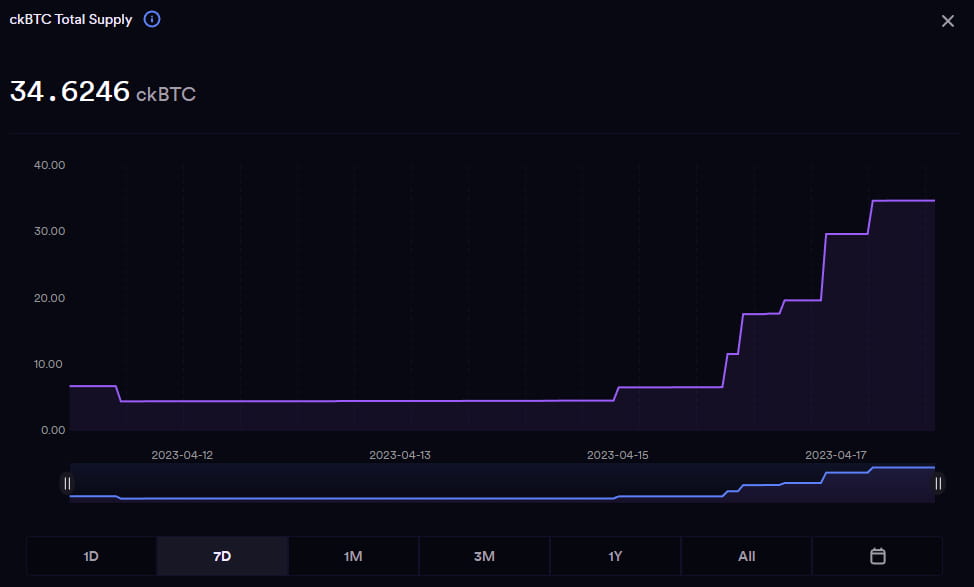
This week, the Internet Computer (ICP) completed the issuance of Chain-Key Bitcoin (ckBTC), opening up the issuance of ckBTC to anyone.
ckBTC is a Bitcoin “twin” on ICP, a cryptographically more secure alternative to existing cross-chain solutions such as bridging and wrapped Bitcoin, all of which have previously gone through centralized custodians and have been exploited by malicious actors.
A bridge too far
As the blockchain space develops and expands, a major obstacle remains the lack of seamless interoperability between different blockchains. Simply put - blockchains cannot communicate or share data with each other in a secure, decentralized manner, which prevents people from transferring large amounts of crypto assets between different blockchains.
Each chain has its own rules, tokens, protocols, and smart contracts that are incompatible with other blockchain networks, making it difficult for people to enjoy the full benefits that blockchain technology has to offer.
Today, when end users rely on technology that communicates between two different layer 1 blockchains, there must always be additional trust assumptions.
This introduces additional risks because this additional trust often involves centralized entities, individuals, and other trusted intermediaries that act as custodians of crypto assets.
While these existing cross-chain solutions can provide lower costs and higher efficiency in connecting chains, it may be a chain bridge where third-party intermediaries cannot be trusted.
For example, native integration between the two blockchains means that end users only need to trust the Bitcoin network and the Internet Computer blockchain.
No middleman
In order for DeFi to be truly decentralized and secure, layer 1 blockchains must communicate directly with each other at the protocol level and allow transactions to be initiated from one chain and executed on another without going through a centralized entity.
The Internet Computer is one of the first blockchains to achieve this, and with the launch of native integration with the Bitcoin network in November 2022 and the release of ckBTC, the Internet Computer blockchain interacts seamlessly with the Bitcoin network as if they were one blockchain — no bridges, custodians, or intermediaries required.
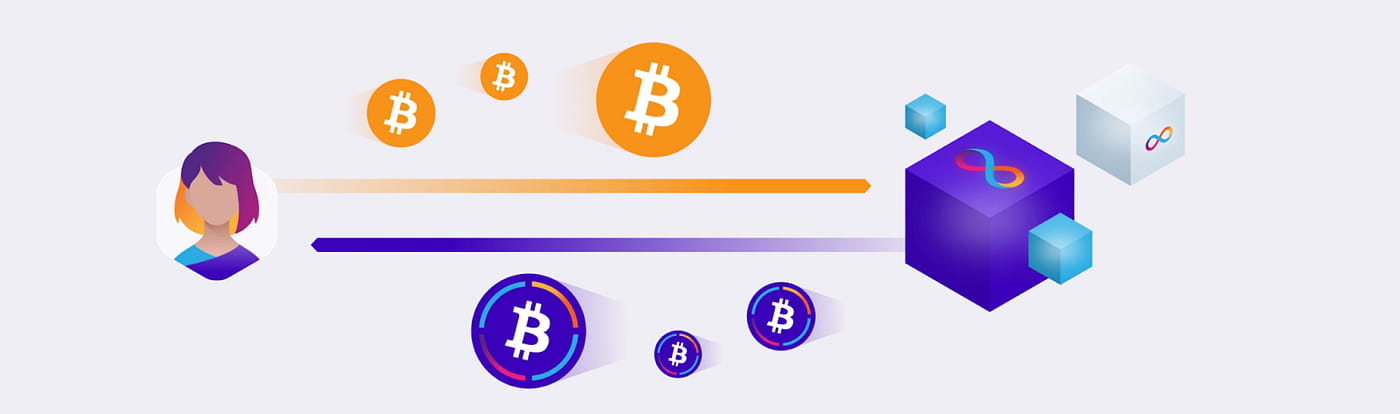
To this end, the Internet Computer leverages existing cryptographic protocols such as Threshold ECDSA and paves the way for advances in this area with protocols such as non-interactive distributed key generation and key re-sharing.
The set of cryptographic protocols that allow Internet computers to sign native transactions on other blockchains is called Chain Key Signatures, and years of extensive research and engineering have led to secure cross-chain communication on ICP.
Cutting out the middleman allows smart contracts on an ICP to have their own Bitcoin address that can receive, hold, and send native Bitcoins mined by Bitcoin nodes and stored on the Bitcoin ledger.
In fact, the entire Bitcoin state is stored in a single smart contract with tens of GB of state!
Bitcoin Twins
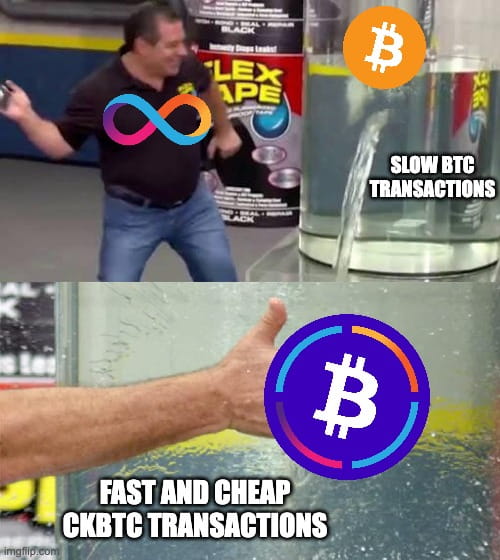
While Bitcoin integration on the Internet Computer is very strong in terms of security and interoperability, each Local Bitcoin transaction faces long transaction times of approximately one hour, with transaction fees reaching as high as $60 at its peak.
Chain-Key Bitcoin, or ckBTC, is an Internet Computer native token that represents real Bitcoin and is built on protocol-level integration with the Bitcoin network.
The beauty of ckBTC is that it is cryptographically secured 1:1 by real Bitcoin and is issued and redeemed via container smart contracts, which can be verified by anyone at any time.
Every step of the way to convert BTC to ckBTC and back is decentralized, meaning there are no centralized custodians, no chain bridges, and no traditional cloud providers that can serve as attack vectors.
Securing ckBTC 1:1 with BTC is crucial as it eliminates the risk of decoupling.
Recent events, in which the FTX exchange acted as a custodian and Sollet acted as a bridge for wrapping and unwrapping BTC and ETH on Solana, demonstrate that bridges and intermediaries are highly vulnerable to hacks or other forms of compromise.
At the time of writing, the price of SOBTC is less than 1/30, a fraction of the price of BTC. In other words, when FTX, the SOBTC custodian that holds the real BTC, becomes insolvent, users will no longer be able to redeem their SOBTC for BTC at a 1:1 ratio.
In 2021, DeFi’s TVL grew from $15 billion to $165 billion, but fell to $39 billion by the end of 2022 due to $2.7 billion in fund losses from hacks and exploits.
Since ckBTC is truly decentralized, it has the potential to reverse the negative DeFi trends we’ve seen in 2022 caused by massive hacks and rug pulls.
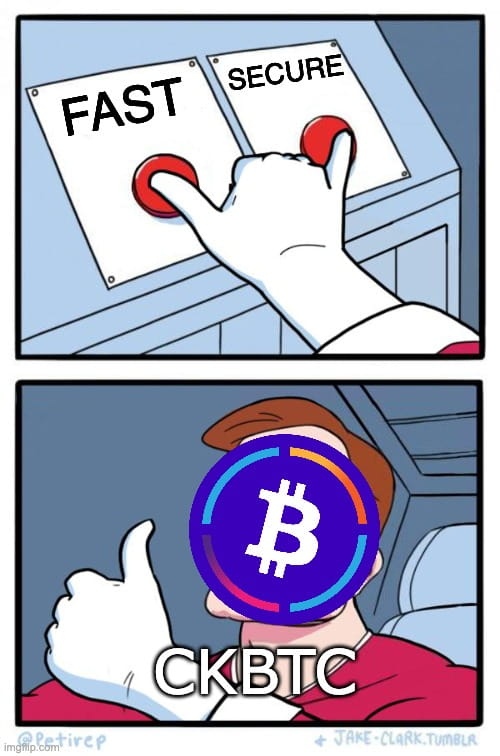
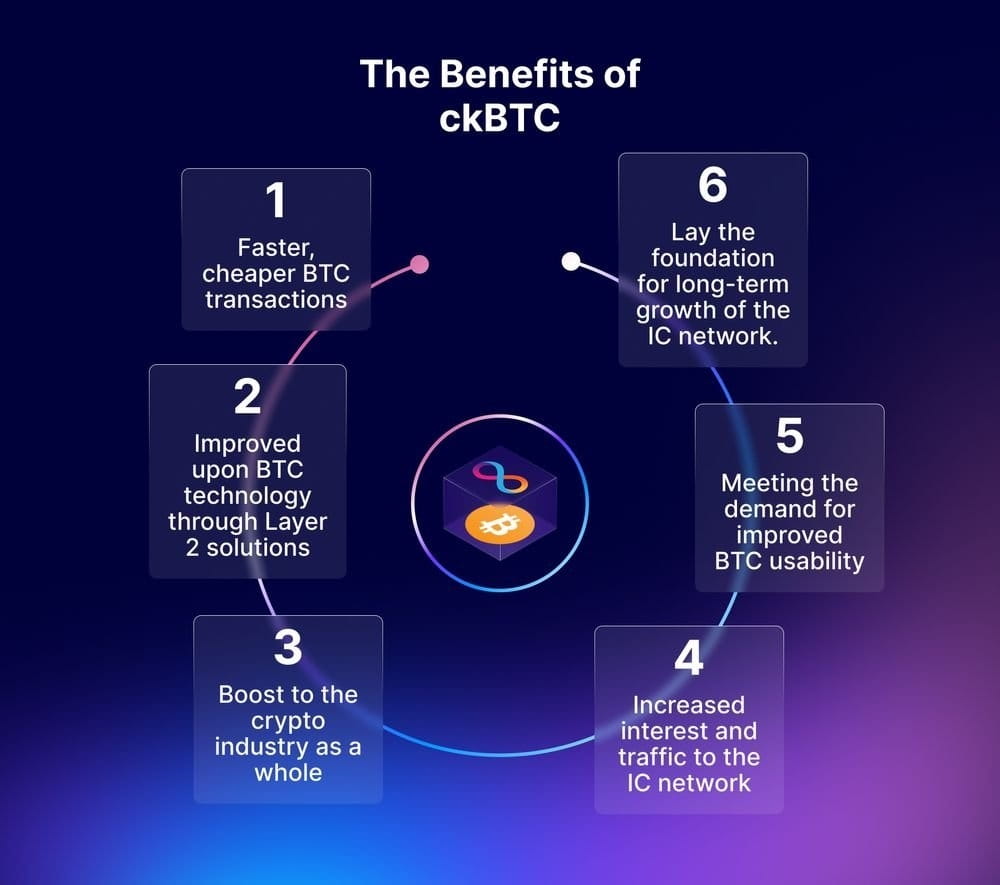
Chain-Key Bitcoin extends Layer-2 functionality to Bitcoin, benefiting from Internet Computer properties such as speed, scalability, and low transaction fees.
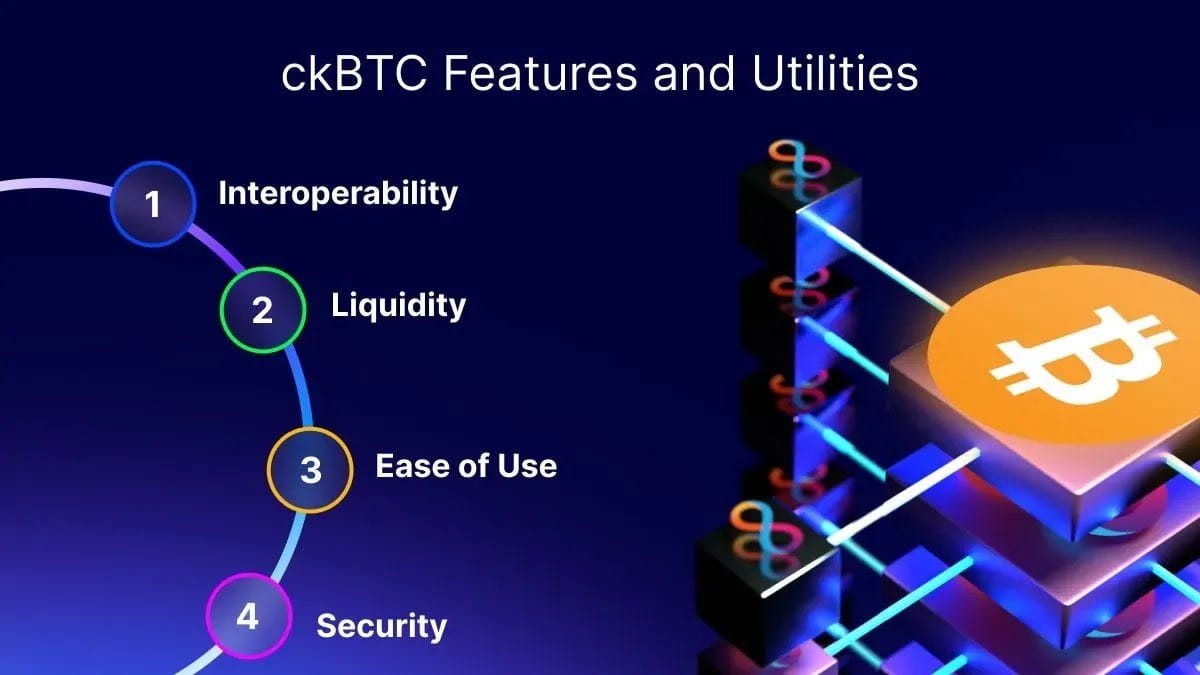
More specifically, ckBTC acts as a local ledger that facilitates fast transactions with low fees (10 satoshis) and settles transactions on the Bitcoin network only when necessary.
ckBTC, with its ICRC-1 token standard (and soon ICRC-2 compatibility), is also easily integrated into dapps running on the Internet Computer, which could lead to wider adoption and increase Bitcoin’s liquidity.
Blockchain interoperability: the key to mass adoption
The Bitcoin integration and introduction of ckBTC on the Internet Computer is a major breakthrough in blockchain interoperability, combined with innovations such as chain key signing and network integration, ICP nodes transmit transactions directly to nodes on the Bitcoin network, while key material is securely generated, distributed and regularly re-shared between ICP nodes for maximum security.
Furthermore, the keys that control BTC are never reconstructed, instead transactions are signed using a new threshold ECDSA protocol where nodes use their share of the key to construct part of the signature, and the full signature can be reconstructed by sufficiently combining many signature parts.
This allows ICP to sign Bitcoin transactions without storing the original key in one place, and it can tolerate up to n/3 malicious nodes. ICP nodes also pull blocks directly from the Bitcoin network to maintain Bitcoin's current UTXO set.
Due to this native integration, container smart contracts can query the balance of each Bitcoin address, and essentially, any container can submit Bitcoin transactions to the Bitcoin network through an ICP node due to direct protocol-level integration.
When Satoshi Nakamoto minted the world’s first cryptocurrency in 2009, the idea was to create a decentralized payment platform that would revolutionize the way we buy and sell everything.
Interconnecting blockchains like the Internet Computer and the Bitcoin network through native cross-chain technology brings us closer to Satoshi Nakamoto’s vision.
It has the potential to enable new cross-chain functionality and unlock a host of 100% on-chain services, such as multi-token transactions or multi-token wallet systems, which will greatly simplify the crypto user experience.
Imagine a decentralized exchange offering BTC trading pairs, a decentralized fundraiser accepting Bitcoin, or a Web3 SocialFi service that allows sending Satoshis via chat messages, now available on the Internet Computer.
Find ckBTC "in the wild"!
Many ICP dapps already support ckBTC, follow them on Twitter.

learn more
Native Bitcoin on ICP
Chain-Key Technology
Native Bitcoin and ckBTC Developer Documentation
Learn more about the Internet Computer and follow The Internet Computer’s stories on Twitter.
IC content you care about
Technology Progress | Project Information | Global Activities

Collect and follow IC Binance Channel
Get the latest news