


Community Release - Author: Dimitris Tsapis
Summary
Market sentiment refers to investors' opinions, feelings and attitudes towards an asset. These feelings do not consistently reflect the fundamentals of an asset or project, but can significantly impact price.
Market sentiment analysis is a method of research that attempts to predict price movements based on relevant information. By tracking the overall attitude of market participants towards market dynamics, it is possible to understand the public's enthusiasm or fear for a particular cryptocurrency.
Introduction
Like other assets, the price of cryptocurrencies is directly related to market supply and demand. There are many factors that trigger changes in market forces, including public opinion, news, and social media.
Many traders actively analyze market sentiment and predict the short- to medium-term potential of cryptocurrency assets. In addition to technical and fundamental analysis, studying cryptocurrency market sentiment is also an important addition to a trader's skills.
What is market momentum?
Market sentiment is the collective attitude of traders and investors towards a financial asset or market. This concept exists in all financial markets, including cryptocurrencies. Market sentiment can indeed affect market cycles.
However, optimistic market sentiment is not necessarily a sign of a positive market environment. Sometimes, extremely optimistic market sentiment (about to soar to the sky!) can precede a market correction or even a market decline.
By analyzing market sentiment, in addition to gaining insight into market demand, traders can also predict potential profitable trends. Market sentiment usually does not take into account the fundamentals of a project, but the two are occasionally correlated.
Let's take Dogecoin as an example. The surge in demand for Dogecoin during the bull market was mostly due to social media hype (stimulating optimistic market sentiment). Many traders and investors were infected by the high market sentiment and followed the trend to buy Dogecoin, ignoring the token economics or goals of the project. Even a tweet from a figure like Elon Musk is enough to trigger optimistic or depressed market sentiment.

Why is market sentiment analysis important?
Market sentiment analysis is an important component of many trading strategies. Just like technical or fundamental analysis, traders should consider all the available information before making any move.
For example, market sentiment analysis can help determine whether the fear of missing out (FOMO) is truly legitimate or simply a herd mentality. In summary, by combining market sentiment research with technical and fundamental analysis, you can:
Gain insight into short- to medium-term price action.
Effectively control your emotional state.
Find potential profit opportunities.
How to conduct market sentiment analysis
Understanding market sentiment requires aggregating the views, thoughts, and opinions of market participants. Again, although market sentiment analysis can provide practical information, it must not be used as the only reference. The information collected must be combined with existing professional knowledge and experience to draw practical conclusions.
To grasp some basic concepts, it is recommended to research relevant social media pages and platforms to understand the attitude of the community and investors towards a specific project. You can also join the official forum, Discord server or Telegram group to communicate directly with the project team and community members. But be careful! Many criminals are also lurking in these groups. Don’t trust others and do your own research before taking a risk.
Social media is just the first step, and there are many other ways to get a comprehensive understanding of market sentiment. In addition to following social media platforms (especially Twitter, where many cryptocurrency fans gather), you can also consider the following:
1. Use data collection software tools to track social hot spots.
2. Follow the latest industry developments in real time through media portals and blogs. Binance Blog, Binance News, Bitcoin Magazine, CoinDesk, and CoinTelegraph are all good choices.
3. Set up notifications or track whales’ large-scale transactions. Some cryptocurrency investors regularly track these activities, which sometimes do affect market sentiment. Telegram and Twitter both have free whale notification bots.
4. Check out market sentiment indicators and price signals on CoinMarketCap. These indices analyze different information sources and give a brief overview of current market sentiment.
5. Use Google Trends to measure the popularity of a cryptocurrency. For example: when the search volume for "how to sell cryptocurrency" is high, it indicates that the market sentiment is relatively low.

market sentiment indicator
Market sentiment indicators can help investors understand the bullish/bearish sentiment of a market or asset. Indicators usually reflect these sentiments in a chart or on some scale. These tools can assist in sentiment analysis, but they cannot be used as the sole basis. The best solution is to use a combination of multiple indicators to conduct a more balanced and comprehensive analysis of the market.
Most market sentiment indicators focus on Bitcoin (BTC), but Ethereum (ETH) sentiment index is also worth paying attention to. Bitcoin's Crypto Fear and Greed Index is probably the most famous cryptocurrency market sentiment indicator. The index analyzes five major information sources: volatility, market volume, social media, dominance, and trends, and measures the degree of fear and greed in the Bitcoin market on a scale of 0 to 100.
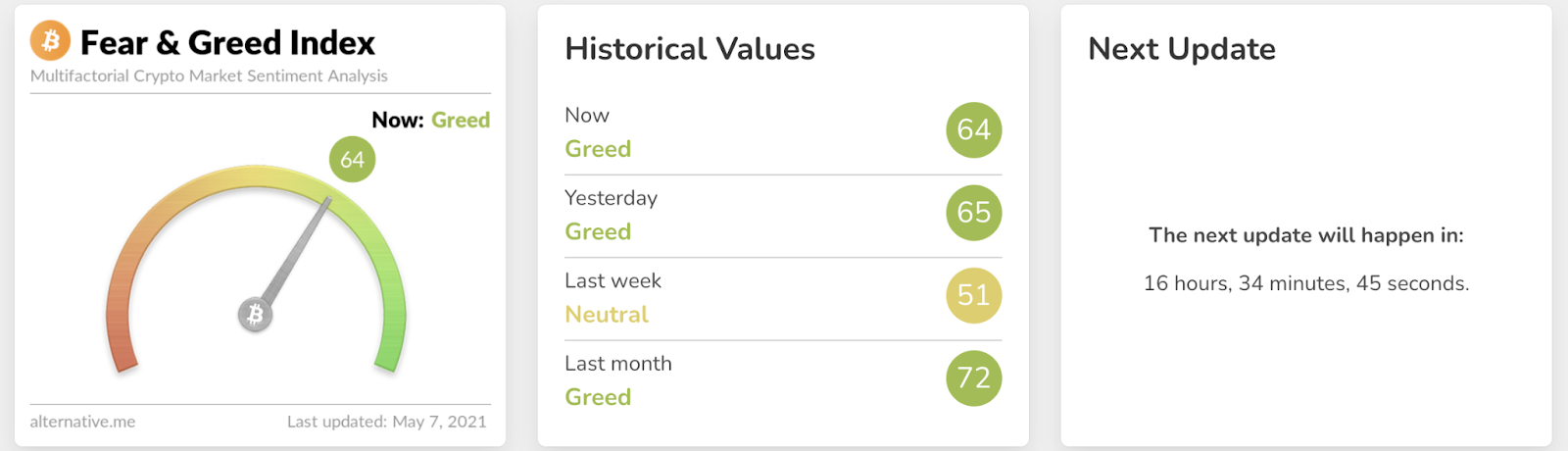
Augmento's Bullish and Bearish Index is another sentiment indicator that focuses on social media. It uses artificial intelligence (AI) software to analyze 93 sentiments and topics from conversations on Twitter, Reddit, and Bitcointalk. The creators also backtested their indicator methodology using valid data from the current year. A scale of "0" represents extreme bearishness, while "1" represents extreme bullishness.

Learn from others and be wise
Analyzing social media platforms, on-chain indicators, and other cryptocurrency indicators can provide insights into market sentiment for a currency or project. With a deep understanding of current market attitudes, you are more likely to make sound trading or investment decisions.
To maximize the effectiveness of sentiment analysis, it is often combined with the following analytical techniques:
Technical Analysis – Optimize forecasts of short-term price action.
Fundamental Analysis – Determining the plausibility of disputed information or assessing the long-term potential of a token.
Summarize
Many traders use market sentiment analysis in the investment markets, and this method is particularly applicable to the cryptocurrency market. The reason is that the blockchain industry and cryptocurrency market are still in a small-scale stage, and public perceptions and emotions can more easily trigger price fluctuations.
By using the methods above, you can begin to understand market sentiment and make smarter investment choices if you wish. To reiterate, to conduct market sentiment analysis, consider the following information:
Track social media channels and sentiment related to your project.
Follow the latest news and developments in the industry in real time.
Actively use various indicators to gain insights into public interest in a specific coin.
Market sentiment analysis tends to produce more reliable results with practice and experience, but it may not be useful in some cases. Please do your due diligence before trading or investing, after all, there are certain risks in any decision.