


Summary
NFTs are very unique digital collectibles on the blockchain. This feature makes them ideal for representing characters, consumables, and other tradable items in games.
Today, NFT games have developed into a popular way to earn income in the Game-Fi world. In-game NFTs can be sold to other collectors and players, and players can even earn tokens through the "earn while playing" model.
If you want to transfer a game NFT, you must transfer it to a compatible wallet. In addition, if you transfer NFTs to NFT marketplaces or other users, be careful to prevent common scams. Finally, carefully read the rules of the NFT game you play to understand whether there is a possibility of loss.
NFT games are mainly active on Ethereum and Binance Smart Chain (BSC). Games such as CryptoBlades and Axie Infinity use collectible characters for battles, and games such as Sorare use collectible cards.
Binance also offers NFT blind boxes, where holders have the opportunity to open NFTs of varying scarcity. These blind boxes include collectibles launched in partnership with NFT games.
Introduction
Since the popularity of CryptoKitties, NFT games have gradually developed a "earn while playing" model, attracting many players. As we all know, Game-Fi combines the two major fields of finance and games, allowing players to earn income while playing games. Its profit methods are no longer limited to winning, finding or raising rare collectibles worth thousands of dollars. At present, in addition to animal collectibles, players can also try various game models with different themes.
What are NFTs?
Non-fungible tokens (NFTs) are digital cryptographic tokens in the blockchain that represent unique items. NFTs have many use cases. They can be digital assets in games, collectible cryptographic artworks, or even real objects like real estate. In a world full of "piracy and plagiarism", creating decentralized digital collectibles and clarifying ownership has always been an unresolved problem. With the advent of NFTs, the problem is solved.
NFTs are non-fungible. This property determines that each token is unique and can never be exchanged for another identical token. You can exchange one BTC (Bitcoin) for another BTC in any way. In the case of NFTs, even if there are multiple versions of an NFT artwork series, the different versions are not interchangeable. All NFTs have different metadata, just like prints sorted by series number.
How do NFT games work?
NFT games are not the same as cryptocurrency collectibles sitting in your wallet. NFTs are used in the rules, mechanics, and player interactions of NFT games. For example, a game can display a player's unique character or avatar as an NFT. Digital items found during gameplay may also be NFTs. You can exchange or trade NFTs with other players to make money. The more novel "earn while playing" model also allows users to make money through NFT games, which we will discuss in detail later.
So, how can NFT be applied to the gaming environment at a technical level? In order to exchange, create and apply NFTs in games, developers create smart contracts to build rules for the use of NFTs. Smart contracts are self-executing code snippets that are stored in the blockchain.
For example, CryptoKitties uses a small number of master contracts to build the game. The most famous of these is the "geneScience" contract, which determines the random mechanism for generating new cats. At first, the game developers kept their code strictly confidential. Interested players even developed tools to analyze the probability of cats having certain characteristics. Based on this information, players can increase the probability of breeding rare cats and create higher profits for themselves.
What is a “play and earn” NFT game?
"Play and Earn" NFT games give users the opportunity to earn income through gaming. Players are generally rewarded with tokens and occasionally NFTs. The longer you play, the higher the earnings. The tokens earned are usually part of the game production process.
Compared with NFTs, tokens are generally more stable. Players can earn tokens steadily through games, while obtaining NFTs depends on luck. Users in low-income countries particularly like the "earn while playing" model, hoping to boost or replace fixed income or social security through games.
Axie Infinity is a great example of a "play and earn" game. At the beginning of the game, players need to invest in three Axies or get free scholarships from other players. By forming a team of rookies and completing various tasks and challenges, you can get "Smooth Love Potion" (SLP) - an ERC-20 token that can be traded on the exchange platform.
The breeders use SLP to breed new Axies and gain financial benefits from it. Axie Infinity is popular in the Philippines, and many players rely on the "earn while playing" model to earn a living. Their game income ranges from US$200 to US$1,000, and some people earn even more depending on the market price and the time invested.
What are in-game NFTs?
In-game NFTs are another way to earn revenue through NFT games. Unlike homogenous ERC-20 tokens like SLP in Axie Infinity or SKILLS in CryptoBlades, players can earn NFTs that represent collectibles. This game mechanic is a traditional way to generate revenue for NFT games. The value of an item will vary based on its appearance, scarcity, or utility in the game.
CryptoKitties is a game that simply collects NFTs in the game, and the gameplay is simple. Without the factor of chance, it is impossible to attract players to continue playing the game and obtain stable income. Therefore, most emerging NFT games adopt a gameplay that combines "earning while playing" and NFTs in the game.
How to make money through NFT games?
The amount of money you can make playing NFT games depends on the mechanics of a particular game and the market demand. The money you earn comes from other users who value the NFTs or cryptocurrencies earned in the game. Players need to sell items on a marketplace, exchange, or auction house to exchange for cash. For NFT games, the value comes from the collectibility of the NFT or token or its utility within the game. These two factors can also induce speculation.
Will I lose money by playing NFT games?
It is possible for NFT gamers to lose money. The exact amount of loss depends on the type of game, the game mechanics, and the value of the NFTs in play. Loss does not necessarily mean being cheated. NFTs are speculative, their value depends on people's investment, and losses are also affected by market factors. As with regular cryptocurrency investments, please be rational and invest within your means.
Will I lose my NFTs?
Players are generally concerned about losing their high-value NFTs while playing games or interacting with the blockchain. Whether you buy or acquire NFTs in-game, you need to keep them safe. In short, it is possible to lose your NFTs if you are not careful. However, if you follow the best practices we describe below, you can minimize the risk of losing your NFTs.
There are several reasons for losing NFTs:
1. Try to transfer NFTs from your personal wallet to a wallet that does not support the corresponding token standard.
2. Encountering scams or fraud and sending your NFT to criminals.
3. Accidentally granting wallet access rights to a malicious smart contract, causing the NFT to disappear.
4. The rules of the game lead to the loss of NFT.
A deeper understanding of NFTs, blockchain technology, and common scams can effectively avoid the first three scenarios. Don’t try PayPal or online banking if you don’t understand how to use it - the same goes for NFTs. To protect NFTs, you should:
1. Before transferring NFTs to other wallets, you must confirm that it is not a scam. Please read our guide "Five Common Cryptocurrency Scams and How to Prevent Them" to learn about the most common scams.
2. Understand the types of tokens and blockchains supported by the wallet or platform you are using. ERC-721 and ERC-1155 are the most commonly used NFT token protocols for Ethereum, while BEP-721 and BEP-1155 are the most commonly used protocols for Binance Smart Chain (BSC). Always send it to the correct address and don't blindly assume that they are compatible with each other.
3. Only interact with smart contracts of reputable and trustworthy projects. If you allow smart contracts to interact with your personal wallet, be careful not to let bad contracts take away your funds.
4. Carefully check the rules of the game you are playing. Some NFT games allow players to trade with other users or use NFT consumables (for example, items or potions). Please familiarize yourself with the gameplay to avoid any unexpected "losses".
Popular NFT Games
There are many types of NFT games, most of which are active on Binance Smart Chain (BSC) and Ethereum. Some games offer more traditional video game experiences, while others are mainly centered on the collectibility of NFTs.
《Axie Infinity》
As mentioned above, Axie Infinity uses a mechanic similar to Pokemon. Players can collect various creatures and fight each other. Axie Infinity is hosted on the Ethereum blockchain. Users can earn potential income by trading Smooth Love Potion (SLP), Axies, and Axie Infinity Shards (AXS). Both SLP and AXS can be traded on Binance.

《Sister》
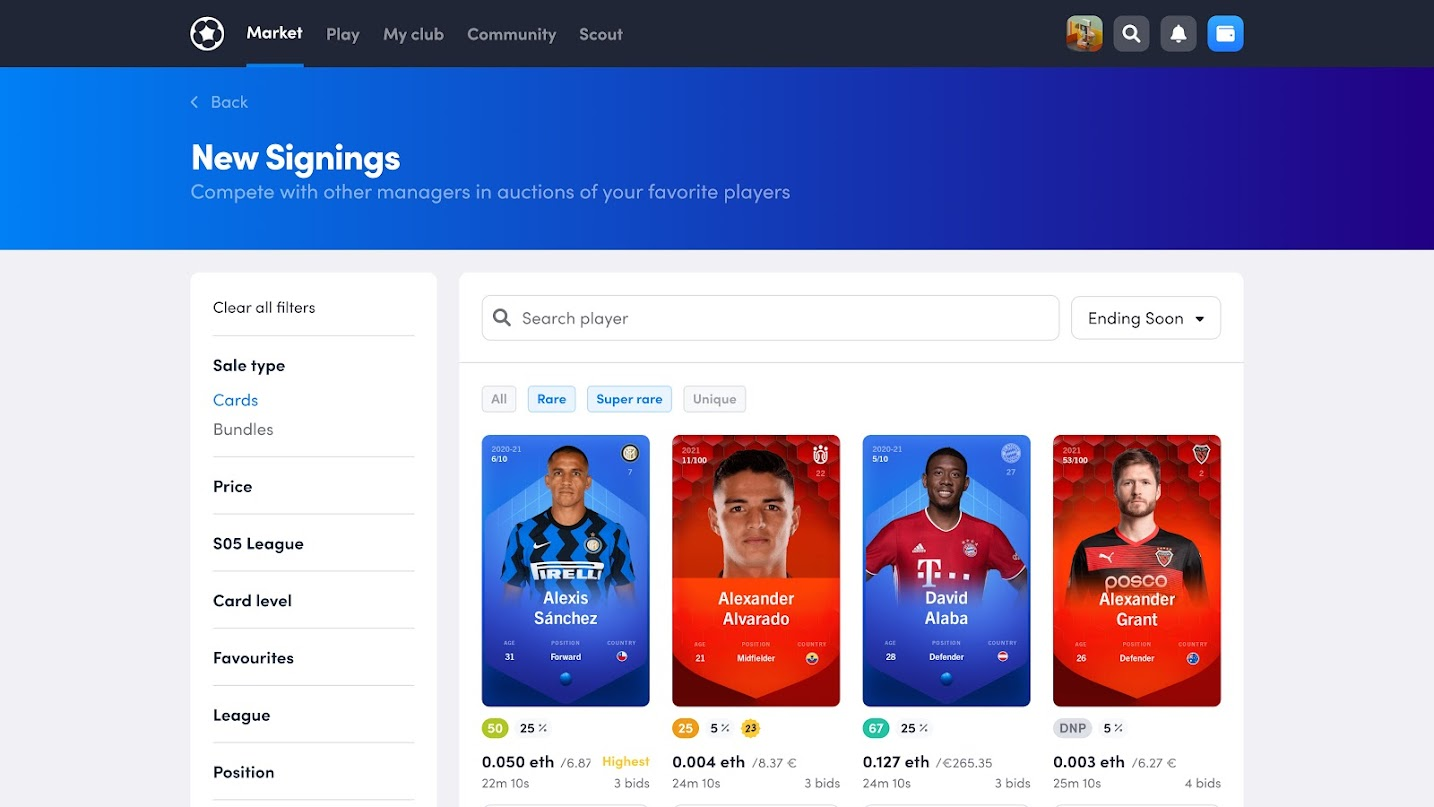
Sorare is a fantasy football game where players collect and trade real-life players. Build a five-man team of stars using free cards for beginners or by purchasing tokenized cards. Players earn points and level up by winning games, scoring goals, or completing other events.
Gods Unchained
Gods Unchained is a tradable NFT card game in Ethereum that plays similarly to Magic: The Gathering or Hearthstone. Players need to build decks with different powers and advantages to compete against other players. The winner can use or sell the in-game items. If you win in the ranking matches, you can earn Flux to make powerful NFT cards. Then, you can sell the cards or reinvest in new cards to make a profit and continue to participate in the game.

Binance NFT Collectibles
Binance NFT Marketplace and its partners have launched NFT blind boxes and collectibles to provide NFT gaming experiences. We actively collaborate with all parties, from digital artists to NFT games. All blind boxes on sale contain a random NFT collectible with a certain scarcity. You can open the blind box to reveal the mystery of the NFT, or you can sell it directly without opening it.
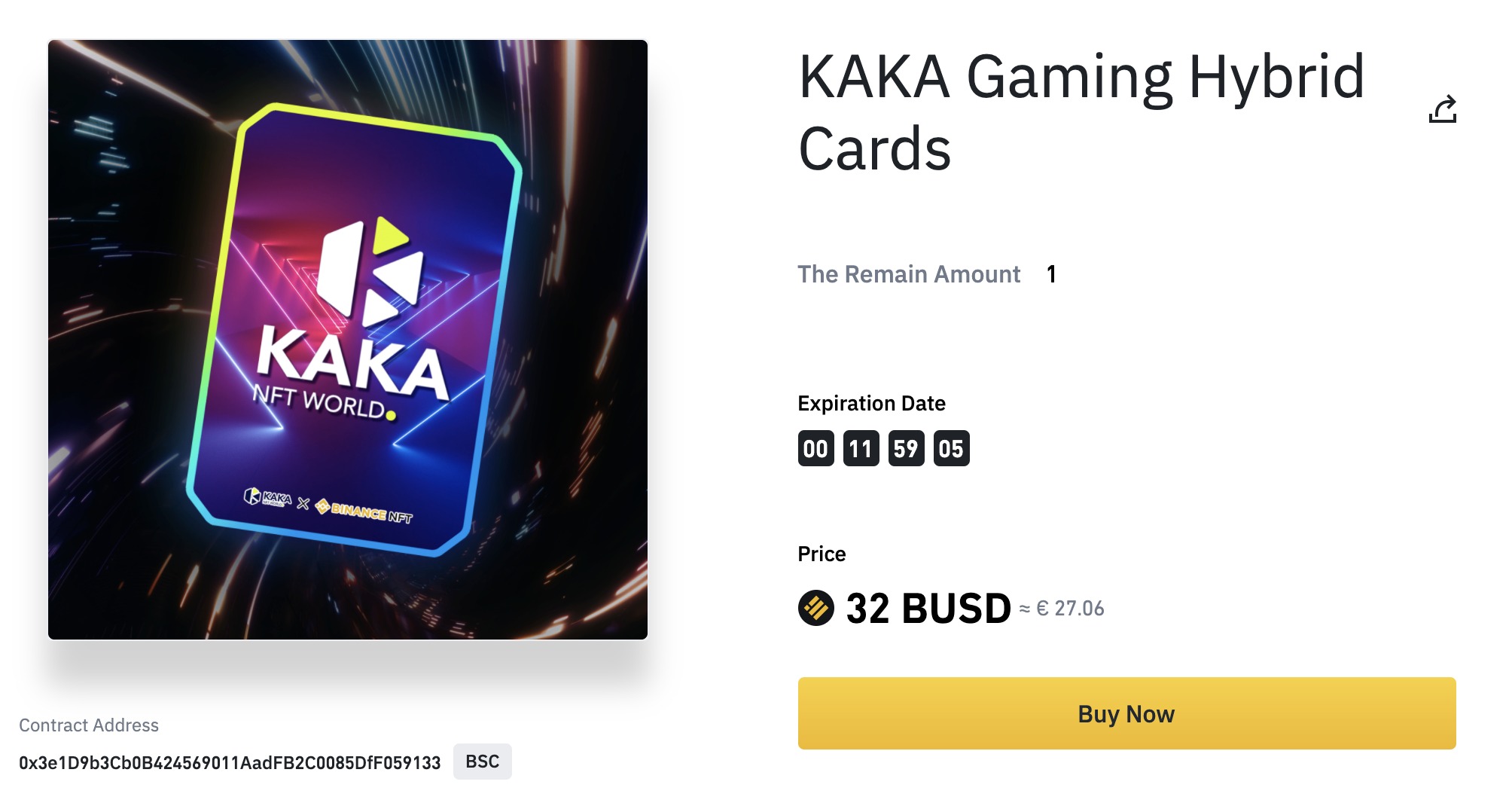
NFT collections are centered around a certain theme or project, and offer a variety of NFTs and blind boxes. So far, the most popular one is the Game-Fi blind box collection. Let’s take a part of it as an example:
1. MOBOX collectibles. MOBOX is a gaming platform in BSC that perfectly integrates DeFi liquidity mining with NFT. This set of NFT blind boxes consists of MOMO NFTs, which have random hash power on the MOBOX platform. The greater the hash power of the NFT, the higher the collection value of MOMO in MOBOX's game.
2. My Neighbor Alice collectibles. My Neighbor Alice is a virtual world-building game featuring NFT decorations. Although the game assets in this set of blind box collectibles are just decorations, they are still popular among users and have gained value in the secondary market.
Summarize
NFT games use digital collectibles to set rules for NFT interactions between players. Some people value NFTs for their collectible value, while others want them to be practical. Although many NFT games are played similarly to trading card games, not every card collector is willing to play games. Today, Game-Fi has created a new NFT game economic model that changes the way to make money through NFTs. In addition to hoping for good luck and desperately collecting, you can also create income by playing games.