


Written by: Penta Lab
Project Description
Gains Network is a decentralized synthetic asset leverage trading protocol created on Ethereum. Its flagship product is gTrade, which uses synthetic asset trading to support high-leverage trading including cryptocurrencies, foreign exchange, stocks, stock indices and commodities. Contract renewal trading platform. The platform supports 150x leverage on cryptocurrencies and stocks, and up to 1000x leverage on Forex. gTrade is special because its structure allows it to offer a large amount of leverage on a wide range of assets. It does this by using a synthetic asset system, which means users can trade any asset that is compatible with gTrade oracles. The project binds users to its ecosystem through the $GNS token, which allows users to earn APY by staking $GNS, which not only enhances community participation but also increases the utility of the token. When initially launched on Ethereum, Gains Network was not an immediate hit with the market, but business gradually grew after migrating to the Polygon chain, and the market really exploded after integrating the Arbitrum chain.
Track analysis
Although CeFi still occupies an absolute share of the current US$200 billion trading volume of derivatives, the DeFi derivatives track is also developing rapidly by proposing solutions in aspects such as decentralization, capital efficiency, liquidity, and user experience. According to statistics from Tokeninsight, the top five derivatives exchanges accounted for 96% in 2023, with Binance accounting for 53.4%, OKX accounting for 17.9%, Bybit accounting for 13.3%, and Bitget accounting for 8.9% , KuCoin accounts for 2.4%.
However, on the other hand, after three years of development, the DeFi derivatives track has now expanded its TVL to US$2 billion, with a three-year growth rate of 132%, and the year-on-year growth rate as of January 30, 2024 has also remained at 40 % above. TVL chain’s proportion is dominated by Artibtrum (45%) and Ethereum (23%), with Solana (16%) ranking third.
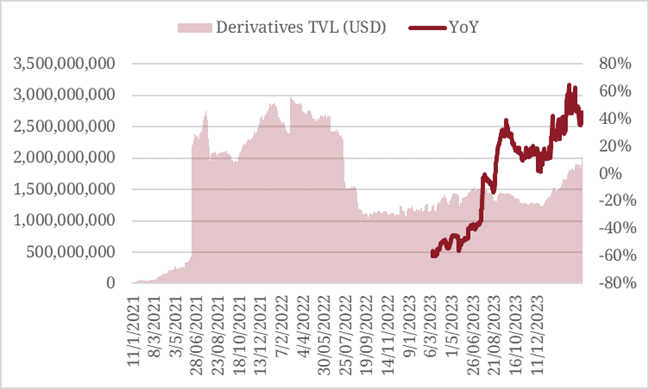
Chart 1: Derivatives track TVL and year-on-year growth rate, data source: DefiLlama, Penta Lab
DeFi, especially perpetual contracts, options, synthetic asset platforms, and staking projects are very popular.
A perpetual contract is a futures contract that has no expiry date. Without an expiration date, there is no physical settlement of the commodity, so the only purpose of a perpetual futures contract is to speculate on the price of the asset. Through perpetual contracts, investors can participate in the price fluctuations of the cryptocurrency market and earn profits by going long (bullish) or short (bearish). In addition, perpetual contracts also provide the function of leveraged trading, allowing investors to control more assets with less funds. The concept of perpetual futures contracts was first proposed in 1992 as a potential means of derivatives markets for illiquid assets. However, the idea failed to gain traction in financial markets due to the lack of demand for such instruments as liquidity remained in traditional futures markets. With the emergence of cryptocurrencies, financial innovators have discovered that this model can be applied to cryptocurrencies through financing models. Compared to the traditional futures market that developed before the concept of perpetual futures was developed, the cryptocurrency market does not have a deep and highly liquid conventional futures market. As perpetual contracts have found a place among cryptocurrency speculators, liquidity has been rapid. I was attracted to perpetual contracts. Following the launch of the Bitcoin futures market based on traditional contracts in 2014, the first perpetual futures exchange to offer exposure to the BTC/USD currency pair began trading in 2015. Since then, the cryptocurrency futures market has experienced significant expansion, driven primarily by perpetual futures.
We believe it will not be easy for DEX to take share from CEX, giving it a score of 62 percentile.
product revenue
Breakdown of fee income
According to Token Terminal data, Gains Network’s 30-day fee amount ranks 3/50 in the derivatives circuit, belonging to the first tier. From January 2022 to January 31, 2024, the total transaction volume processed by the decentralized leverage trading platform gTrade in the past 2 years was approximately US$54.9 billion, and the fee income was approximately US$34 million. The fee income increased smoothly with the transaction volume. . Daily trading volume and fee income fluctuate greatly. Among them, on February 17, 2023, Binance announced that it would list GNS in the Innovation Zone and open spot trading pairs GNS/BTC and GNS/USDT. The news attracted more users to the gTrade platform to participate in transactions, pledges, etc., forming a The peak and continuation of daily transaction volume and fee amount were reached.
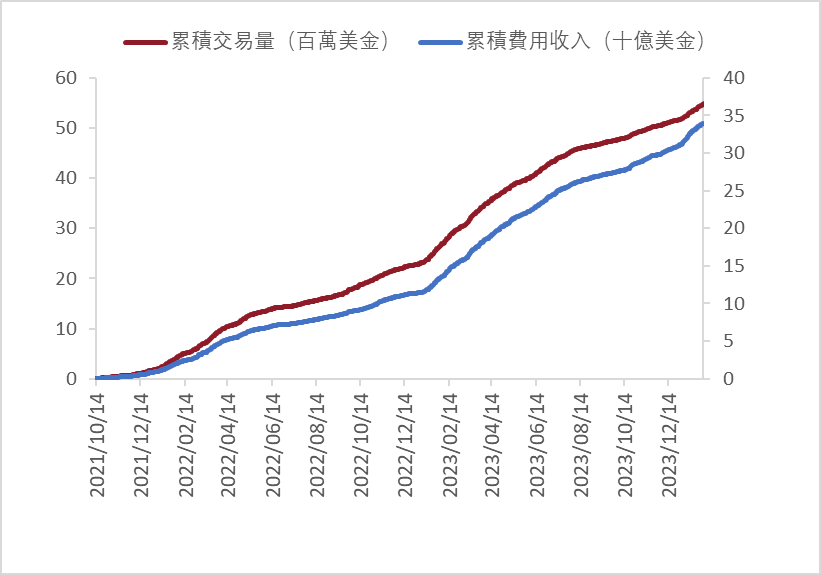
Chart 2: Cumulative transaction fees increase synergistically with transaction volume, source: Token Terminal, Penta Lab
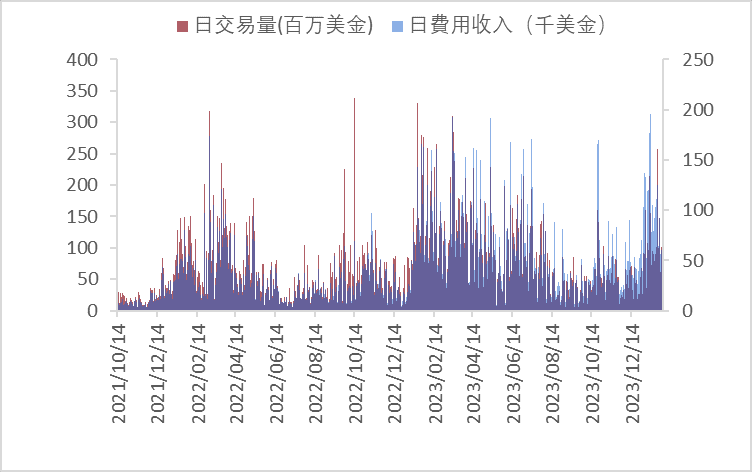
Chart 3: Listing on Binance in February 2023 caused an increase in trading volume, source: Token Terminal, Penta Lab
Opening and Closing Fees
The opening and closing fees are industry practices and are the handling fees charged by the platform. gTrade's fee base is also the same as the industry standard. Position opening and closing fees are calculated based on the total position value at the time of opening (leverage multiple x collateral). Different types of assets charge different rates, with foreign exchange having the lowest rates and commodities and cryptocurrencies having the highest rates.
The opening fee will directly deduct the amount of collateral and affect the size of the position. For example, a trader mortgages 250 DAI and goes long ETH/USD with 10x leverage. The opening fee will be calculated on the basis of 2,500 DAI. Assuming a fee of 2 DAI, 248 DAI is the total collateral value for a newly opened position, giving a total leveraged position size of 2,480 DAI.
Fixed Spread
gTrade will add Fixed Spread to the oracle quotation as the opening price (when dynamic spreads are not considered). The fixed spread is the compensation required by the platform for bearing liquidity risks and is an industry practice. For BTC, ETH, foreign exchange assets and U.S. stocks with high market capitalization and high liquidity, fixed spreads will be relatively low.
Dynamic Spread/Price Impact
The dynamic spread is added to the fixed spread as the final opening price. The purpose is to eliminate the risk of current price manipulation by oracles and allow long-tail assets with low liquidity to be listed for trading. This is also the advantage of GNS’s wide range of optional trading pairs, which GMX does not have. The formula for calculating dynamic spreads is as follows:

The opening price is not only related to the current price of the currency pair, but also depends on the open interest volume of the currency pair. The larger the transaction amount and the higher the open interest in the same direction, the more unfavorable the trader's final opening price will be. This will help prevent giant whales from smashing the market and manipulating the market prices of small-market currencies. It can also balance long and short positions and control unilateral transaction risks.
Rollover Fee
Unlike position opening and closing fees, rollover fees are charged based on the collateral position and are continuously charged during the user's position holding process. The holding time is calculated based on the number of blocks created. For example, 5.5 hours is equivalent to the creation of 1,000 new blocks. Assuming a per-block fee of 0.00001%, the annualized fee is approximately 157%. The rollover fee will be deducted directly from the total value of the transaction in the form of a loss. Calculated as follows:

The setting of the rollover fee is related to the volatility of the asset pair. The greater the volatility, the higher the fee and the greater the transaction loss. This will prompt positions in highly volatile assets to be closed as quickly as possible, maintaining reliable risk management for the protocol.
Borrowing Fee
After updating to V6.3.2, gTrade replaced the Funding Fee used by most platforms with borrowing fees. Borrowing fees: The party with more open positions among longs and shorts will be the borrower of the vault (Vaults) to pay borrowing fees, and the asset pair with more net open positions will have a higher borrowing rate, based on the total position of the transaction. Collect and the other party does not need to pay any fees. This helps balance long and short positions and control unilateral transaction risks. At the same time, it gives traders the opportunity (when they are the party with few open positions) to use high leverage to open larger positions without paying financing fees, improving the efficiency of capital utilization.
All borrowing fees will be included in the DAI treasury, increasing the liquidity of the treasury, forming an over-collateralization layer, and improving the capital security of liquidity providers.
User roles and growth
Currently, in addition to the most basic trader role, users of the gTrade platform can also participate in the construction of the platform through four other roles and gain benefits:
1. Trader: Earn investment income by going long and short on asset pairs;
2. Treasury Liquidity Provider (LP): Obtain DAI rewards by providing liquidity to the DAI Treasury
3. Token holders: Obtain DAI rewards by staking GNS in their hands;
4. Liquidity provider: Earn GNS rewards by providing liquidity to the GNS/DAI pool;
5. Referrals: Participate in the referral program and receive GNS rewards.
Rewards for referrers and liquidity providers are paid in minted GNS tokens, while an equal amount of DAI will go into the vault to support staking.
According to Token Terminal data, as of January 31, in the derivatives track, Gains Nertwork had 6121 monthly active users, ranking 4/30, at the forefront. Recently, Gains Network participated in the Arbitrum STIP program and provided 3.825 million and 675,000 ARB tokens to traders and liquidity providers of GNS and gDAI respectively from December 29, 2023 to March 29, 2024, attracting There are a large number of users, and the number of active users has tripled in one month.
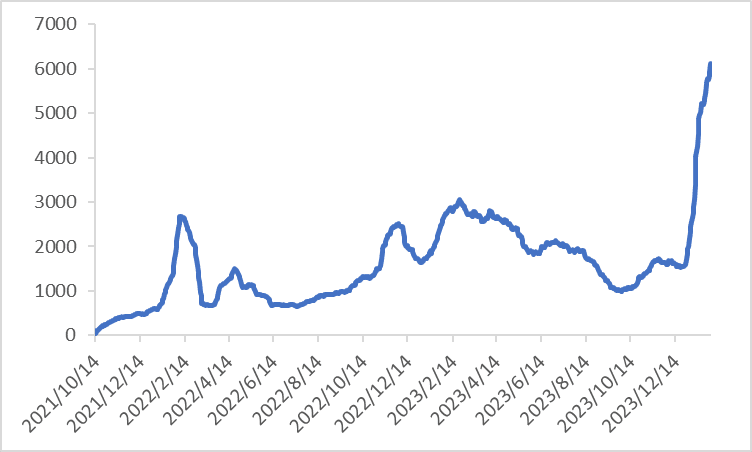
Chart 4: Number of monthly active users tripled in 1 month, source: Token Terminal, Penta Lab
Product UI/UX
As the main product of Gains Network, the leverage trading platform gTrade is the main page for users. For two years, Gains Network has been listening to user feedback and improving the user interface. Navigation is provided through a pop-up window when the user initially enters the interface. The menu in the upper left corner of the page provides buttons for the main functional areas such as trading, investment portfolio, financial management, statistics, etc. The information structure is clear, making it easier for users to find what they need. information and functionality. The most frequently used trading interface is divided into three major areas. The left side is the order area, which provides multiple options such as long and short, market and limit orders, leverage multiples, etc., and the center is the price chart. Unlike most trading platforms, since gTrade does not use an order book (Order Book) to match buy and sell orders, the column on the right shows all asset trading pairs provided by the platform, rather than the current buy and sell orders.
Product iteration, innovation and market adaptability
Gains Network has never stopped repeatedly calculating the trading platform and expanding trading pairs since its launch. By constantly adjusting the trading model, filling loopholes, adopting new oracle mechanisms, and constantly adjusting product positioning, expanding from cryptocurrencies to stocks, foreign exchange, and commodities, the current main form of Gains Network has been stabilized. Gains Network uses a single liquidity pool and DAI treasury to execute transactions on all asset pairs. It has extremely high liquidity efficiency and can provide the widest range of trading pairs and leverage options, including cryptocurrencies, foreign exchange, stocks, and commodities. A total of 187 trading pairs are included, which reflects the strong ability of repeated calculations and adaptability.
In October 2021, the team changed the name from gains.farm to Gains Network to rebrand the derivatives exchange.
The version was updated to V6 on January 27, 2022, and small iterative calculation optimizations were continued. After the LUNA thunderstorm, GNS was no longer used as collateral, but was changed to DAI.
On May 3, 2022, Gains Network launched three blue-chip stocks AAPL, FB and GOOGL on the Polygon mainnet, and 20 other stocks were listed 6 days after the successful test. For the first time, it is possible to trade stock prices on-chain using leverage (trading synthetics using the median aggregate price of selected stocks).
In September 2023, Gains Network listed 18 new FX pairs. In addition to this, Gains Network submitted an application for $7 million in ARB tokens and a grant matching offer of $100,000 in GNS as part of Arbitrum’s short-term incentive program.
On October 1, 2023, gTrade v6.4.1 went live, and this update involves several changes, including the depreciation of GNS NFTs (in exchange for GNS tokens) and the reallocation of revenue from the development fund to $GNS stakers, making GNS stakers Revenue increased by about 70%, and GNS's total expenses rose from 30% to 60%.
On January 27, 2024, Gains Network announced the launch of a new version of gTrade V7, introducing gETH, gUSDC and adding a multi-collateral deposit function. Multi-collateral means that traders can choose from a range of cryptocurrencies as collateral for their positions. Currently You can choose USDC, ETH or DAI, and the new version V7 will also introduce liquidity yield tokens gUSDC and gETH.
Above, we gave the product a score in the 90th percentile for revenue.
Token economy
GNS token
Overview of total token supply
The initial token of Gains Network is GFARM2 allocated on Ethereum. The Development Fund and Governance Fund each account for 5% of the token allocation (10% in total), and will be bridged to the Polygon chain. After listing, it was split into GNS tokens at a ratio of 1:1000. GNS is currently distributed on the Polygon chain and the Arbitrum chain, with an initial supply of 38.5 million and a maximum supply of 100 million. The maximum supply is only used as a fail-safe mechanism and cannot theoretically be reached. According to Dune data, as of January 31, the total supply of GNS was 33,942,395, which is lower than the initial supply and is in a deflationary state, with the number of tokens minted being lower than the number burned.
Minting and destruction of GNS
GNS is an application token, and its casting and destruction are inseparable from the gToken vaults (Vaults), which can maintain the dynamic balance of the vault mortgage rate. The treasury is the counterparty to all transactions on the platform, receiving assets pledged by liquidity providers, transaction fees incurred, losses incurred by traders, and paying income to profitable traders. gToken represents the ownership share of the underlying mortgage assets in the vault. Currently, Gains Network has introduced three types of collateral: DAI, WETH and USDC, forming three gTokens and treasury: gDAI, gETH and gUSDC. The portion of the vault that exceeds the pledged assets (corresponding to 100% mortgage) constitutes the over-collateralization layer (Over-collateralization Layer), which serves as a buffer between traders and lenders, and the opposite is under-collateralization (Under-collateralization).
If the vault is overcollateralized, a portion of the trader's losses (represented by collateral, such as DAI, which is income for the vault) will be transferred to a pool for over-the-counter (OTC) trading, and users can trade at the 1-hour weighted average price ( Time weighted price) sell GNS in exchange for assets, and the sold GNS will be destroyed. The advantage of OTC trading is that there is no price slippage and it does not affect the GNS price on the exchange. When the price of GNS falls rapidly and TWAP is higher than the market price on the exchange, holders will tend to sell GNS in the OTC market in exchange for DAI and buy back GNS with DAI at the market price, forming a price balance mechanism to a certain extent. If the vault falls below collateral, GNS are minted and sold via OTC in exchange for assets, which are used to replenish the vault. No more than 0.05% of the total supply can be minted per 24 hours of GNS, which would result in an annual inflation rate of up to 18.25% without burning.
It can be seen that the actual supply of GNS changes dynamically. When the gTrade trading platform has sufficient fee income and traders' total losses are greater than profits, the vault is in an over-collateralized state, GNS will be sold and destroyed in the OTC market, and the decline in supply will increase the currency price, achieving a certain sense of holding the token. Someone's income distribution. It can be found that Treasury is the short-term counterparty to all trades on gTrade, while GNS is the long-term counterparty through this mechanism.
Gains Network is improving and developing the governance framework of the platform. GNS has now become the governance token of the platform. One GNS token is equal to one vote. After the proposal reaches consensus and is improved in the Discord forum, it can be transferred to the Snapshot platform and voted on by holders.
GNS NFTs
Before V6.4.1, NFT bots (NFT Bots) were responsible for executing all stop-profit, stop-loss and limit orders on gTtrade. Only NFT holders could operate NFT robots and receive platform fee allocations and GNS rewards. Gains Network distributes NFT points to liquidity providers that provide at least 1% of total liquidity, which are used to mint NFTs. Different levels of NFT (divided into brass, silver, gold, platinum and diamond levels) require different points, and accordingly, the levels of benefits available to holders are also different. After NFT holders pledge it, they can receive a fixed spread discount of up to 25% and an increase in GNS staking income of up to 10%.
Due to the version upgrade, the functions of NFT robots are now assumed by the chainlink oracle network, and NFT has been abandoned in V6.4.1. Holders can exchange NFTs for GNS tokens, and the amounts exchanged for different levels of NFTs are different. There are two options for redemption: one is to obtain $GNS linearly within 6 months starting from the date of redemption (staking throughout the minting period); the other is to obtain $GNS immediately, but must pay a 25% penalty (the penalty will be For governance funds, for strategic use or destruction at the discretion of the community).
Income distribution and token value capture
Taking DAI as an example, the fees collected by the platform are allocated to the Governance Fund, DAI Staking, GNS stakers, recommenders, and the oracle network that executes limit orders in a decentralized manner.
From the perspective of allocation of specific expenses:
1. All loan fees will go into the DAI treasury;
2. 18.75% of the opening and closing fees for limit orders is allocated to the governance fund, 62.5% is allocated to GNS stakers, and 18.75% is allocated to DAI stakers;
3. 18.75% of the opening and closing fees for market orders is allocated to the governance fund, 57.5% is allocated to GNS stakers, 18.75% is allocated to DAI stakers, and 5% is allocated to the oracle network;
4. Rollover fees, fixed spreads and dynamic spreads are charged by directly or indirectly (opening price) affecting the trader's P&L, and enter the DAI treasury in the form of the trader's P&L.
From the perspective of user roles:
1. Rewards for staking GNS tokens are paid with the transaction’s collateral (DAI, WETH and USDC). According to Gains Network official information, since about 70% of the transactions on the platform are market orders, on average, 61% of the transaction fees of all orders will be allocated to GNS staking;
2. 18.75% of transaction fees for all orders will be allocated to DAI stakers;
3. 18.75% of transaction fees on all orders will be allocated to the governance fund;
4. The referrer reward (Refferal Reward) is extracted from the "Governance Fund" fee. According to the official statement of Gains Network, it accounts for approximately 22.5% to 30% of the position opening fee. The specific proportion depends on the position opening brought by the ambassador to the platform. quantity.
Above, we give Tokenomics a 96th percentile score.
data verification
According to DefiLlama data, as of January 28, 2024, Gains Network has been deployed on the Arbitrum and Polygon chains, accounting for 88% and 12% of TVL respectively.
As of January 30, 2024, Gains Network’s circulating market capitalization/TVL (Market Cap/TVl) was 3.62, which is relatively low compared to the historical average of 4.84 in the past 24 months.
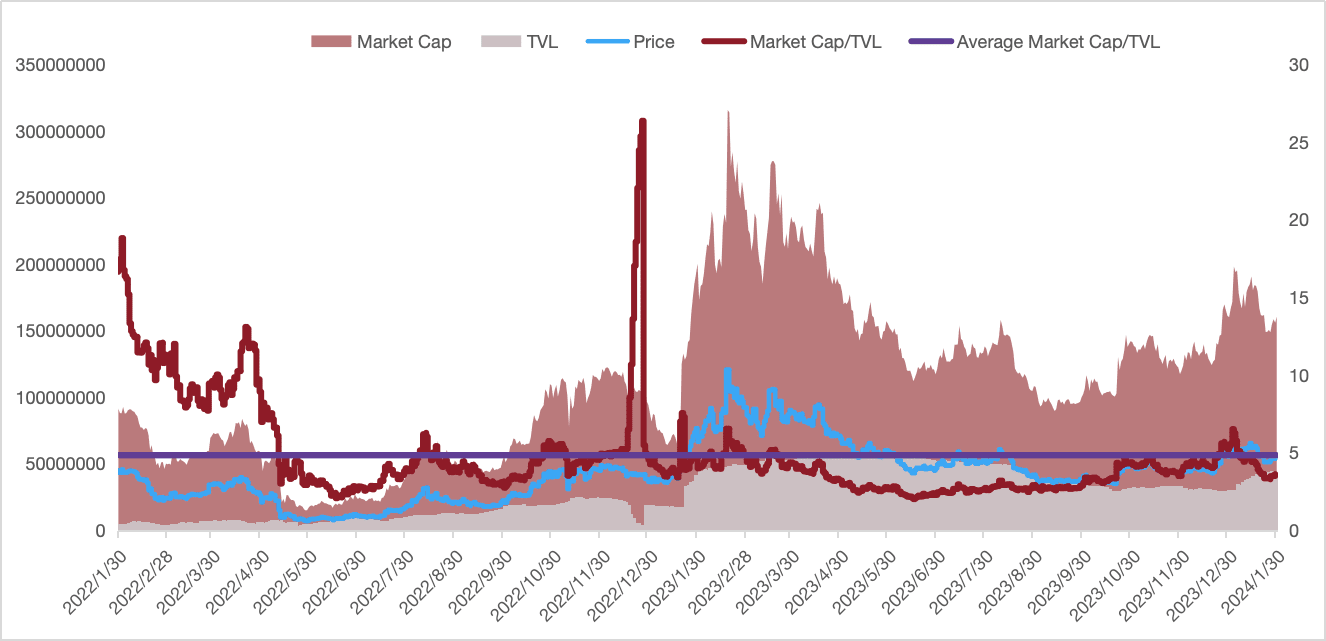
Chart 5: Gains Network circulation market capitalization/TVL is at a historical low, data source: DefiLlama, Penta Lab
Above, we give data validation an 83rd percentile score.
code evaluation
Code update frequency
According to Gains Network, there are 2 Github project homepages, namely Gains Network and GainsNetwork(Org).
Among them, the Gains Network homepage project is the smart contract part of Gains Network, which is divided into three product entities, namely GNS-Token, gTrade and GNS-ethereum. According to the code submission record, GNS-Token has had no code adjustments since its launch. There were only two code submissions at the beginning of the project in 2022. There are three versions of gTrade, namely v5, v6 and v6.1. The recently released gTrade v7 has no code submission record as of the deadline. GNS-ethereum is GNS Network’s smart contract on Ethereum, with no code adjustments since its release in 2023. GainsNetwork(Org) contains other parts of the Gains Network project, including ntf-bot, component library sdk, etc.
Based on Gains Network's two project homepages, Gains Network has made a total of 2,721 code submissions in the past year. However, the smart contract protocol code update schedule and detailed update records are relatively opaque, and the update workload is relatively unobvious.

Chart 6: Gains Network’s code submission record in the past year, data source: Github
Code and roadmap match
Gains Network’s roadmap includes both short-term and long-term aspects. The long-term vision includes new products such as casinos and metaverses. We have not yet seen any relevant plans for the project code. In the short-term vision, Gains Network’s desired goal of building a decentralized leverage trading platform is gradually approaching the goal, nft, through multiple repeated operations of gTrade. -bot enhances the automation of transactions and is expected to expand horizontally to add more application scenarios.
Technological Innovation: Free Oracle DON
gTrade’s own oracle DON is a customized decentralized oracle network based on Chainlink that is used to provide implemented aggregated prices for gTrade’s leveraged trading.
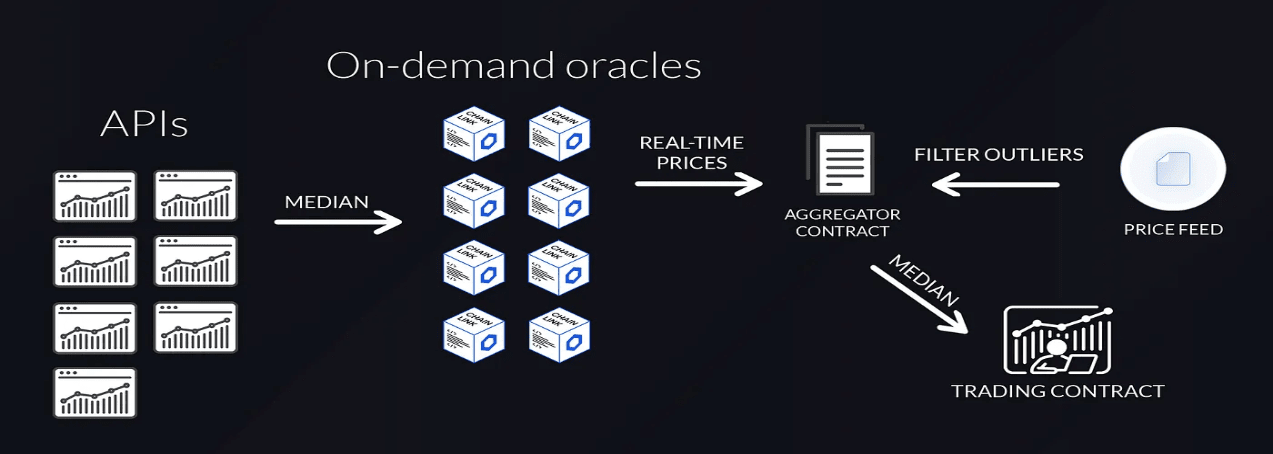
Chart 7: gTrade’s oracle DON operating mechanism, data source: Gains Network official website
The working principle of DON is that when gTrade's trading contract needs to execute an order, it will request the current asset's spot price from the aggregation contract. At this time, the aggregation contract will request the current price from gTrade's eight on-demand Chainlink nodes, and each Each Chainlink node will obtain the median price from the APIs of seven exchanges.
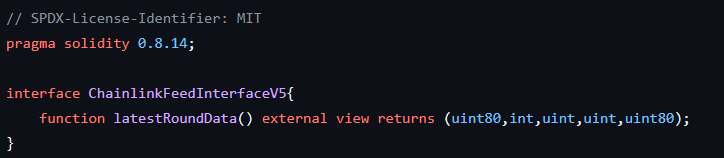
Figure 8: Interface with Chainlink oracle network, source: Github
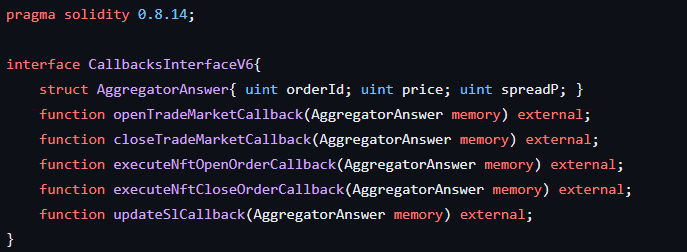
Figure 9: Callback function, source: Github
After sending the results to the aggregation contract, the aggregation contract compares it with the corresponding Chainlink price oracle, filters out normal values that exceed 1.5%, and once at least three answers are received, the aggregation contract takes the median again and adds The final result is sent to the trading contract to execute the order.
The advantage of DON is that it can update prices in real time according to user needs instead of updating once per second to save gas fees, and it can use the Chainlink price oracle as an anchor to ensure price accuracy and security. DON can support the multi-trading business needs of the gTrade platform, including cryptocurrencies, stocks, and foreign exchange.
Above, we gave Code Evaluation a score of 77th percentile.
Valuation
Although GNS's TVL volume is less than 7% of GMX, its market value to TVL ratio is already three times that of GMX, implying the market's recognition of its lending efficiency, growth potential, and safety. In the six-month dimension, we believe that with the inclusion of gETH and eUSDC and the expansion of new functions, TVL has the opportunity to exceed the US$100 million mark. Based on the historical average market value/TVL ratio in the past two years of 4.84, the estimated six-month market value is 484 million. Dollar.
Main risks
Fund pool management risks, run risks, and attack risks.