


The Network Nervous System (NNS) is a permissionless on-chain DAO that allows the Internet computer blockchain to be managed in an open, decentralized and secure manner. NNS has complete control over all aspects of the network, allowing it to efficiently Upgrade and expand.
ICP utility token holders from around the world can stake their tokens in NNS’s neurons to participate in network governance and vote on whether to adopt or reject network proposals, while earning voting rewards for participating.
Anyone who stakes a neuron within NNS can also submit proposals to suggest changes, giving the ICP community the power to guide the evolution of the blockchain and optimize it for developers, entrepreneurs, and users.
This article is part of the Quarterly Review of NNS and ICP Token Economics from January 2022 to March 2023, reviewing metrics regarding inflation and NNS staking.

inflation
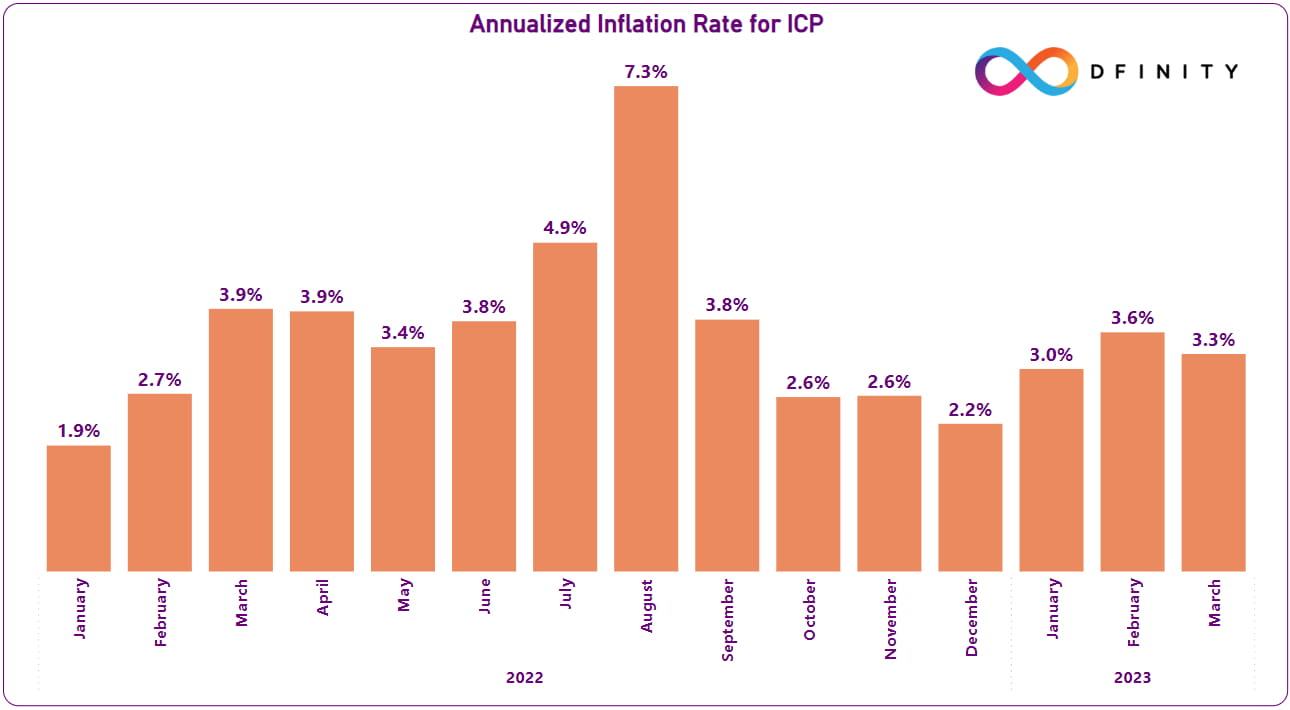
ICP token inflation is caused by the minting of ICP to reward node providers and NNS governance participants. From January 2023 to March 2023, the annualized inflation rate of ICP was 3.3%, which is much lower than the governance reward The target inflation rate is 8% annually.
Many NNS participants have been accumulating their rewards into “maturity” (i.e., accruing rewards in neurons by voting on proposals) rather than converting them into ICP tokens, which is discussed in detail below.
The inflation rate for ICP can vary from month to month, driven primarily by whether NNS participants convert maturities to ICP, and the chart below shows the annualized inflation rate for each month of 2022 and 2023.
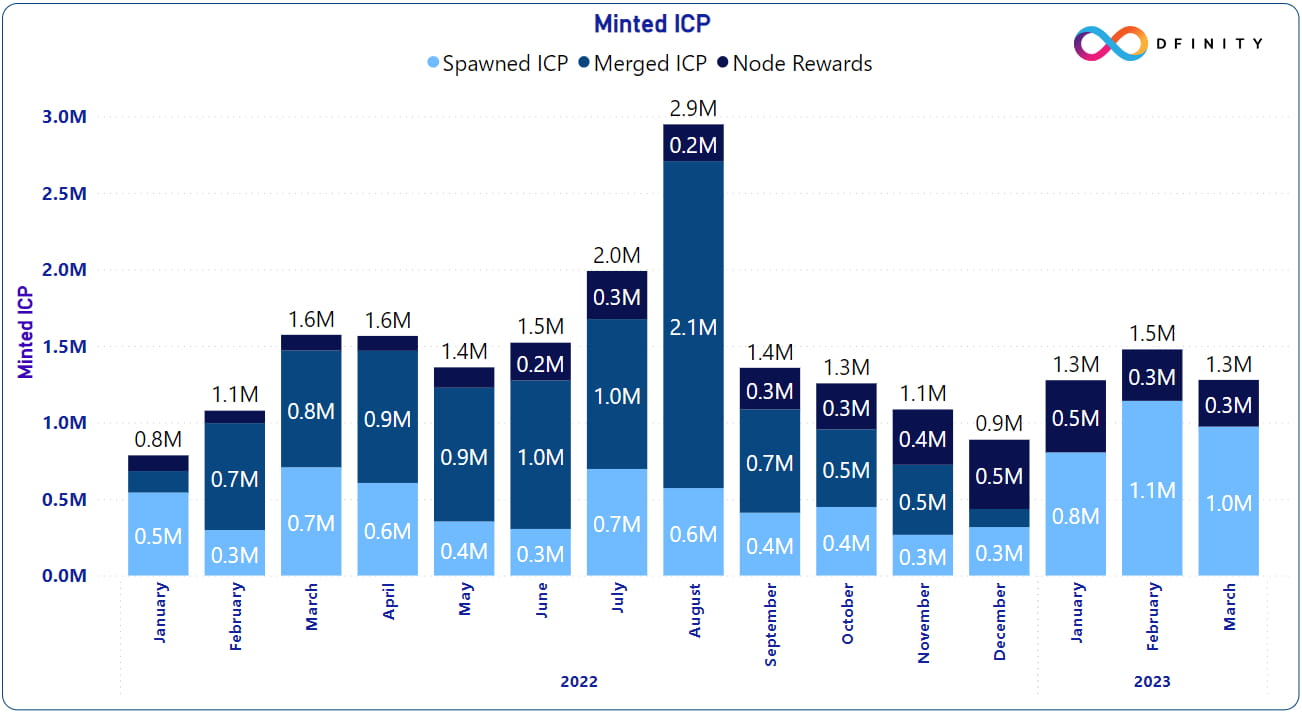
NNS participants can choose to shift their rewards from maturity by generating new neurons (allowing owners to receive ICP within 7 days) or merging ICP back into their existing neurons (leaving ICP locked in the neuron) Convert to ICP.
The image below shows the breakdown of generated neurons, merged ICP, and node rewards (note: a heuristic is used to determine whether a minting event is generated or merged mature), with full implementation of proposal 48623 in December resulting in merged maturity no longer It is the choice of NNS participants.
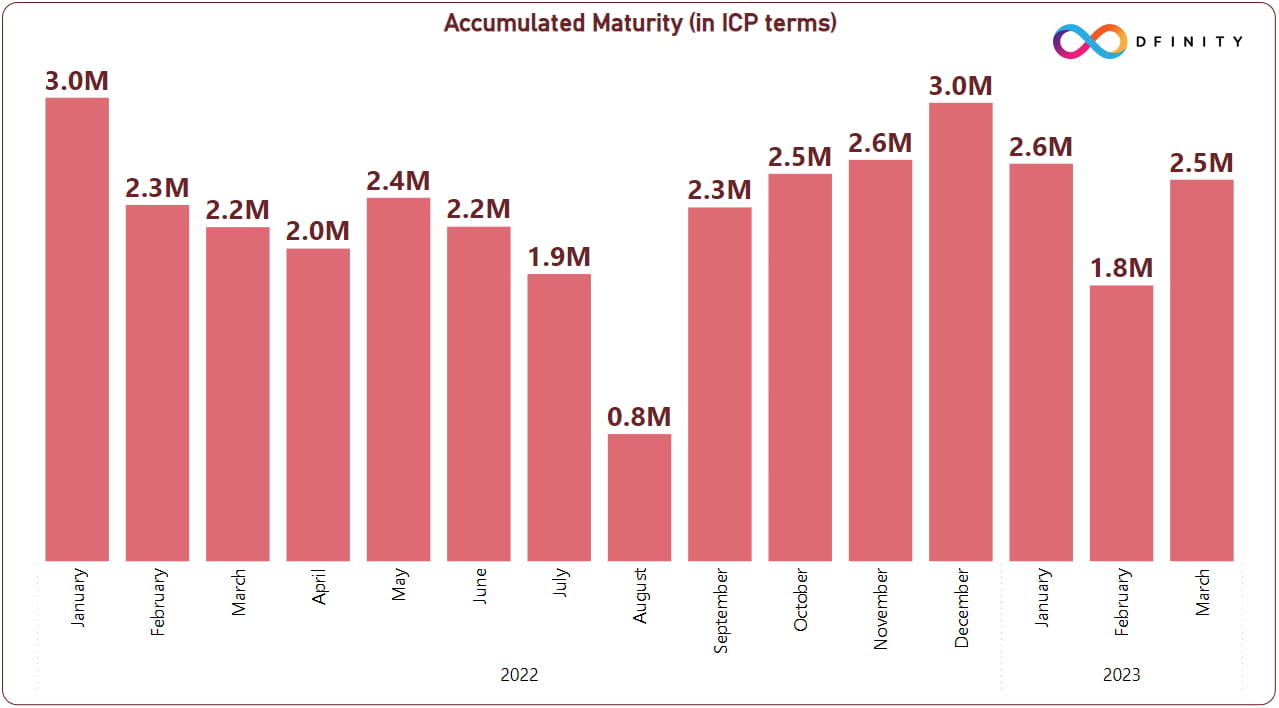
As mentioned above, Neuron holders receive governance rewards in the form of maturity and can choose to convert that maturity into ICP.
Accumulated maturity can therefore be thought of as delayed inflation, and so far Neuron holders have largely decided to leave their rewards until expiry, with a total maturity of 58.2 million ICP accumulated since creation, Below are the accumulations to maturity over the last twelve months.
NNS pledge
NNS participants can stake their tokens for a minimum period of time, known as the dissolve delay, and the longer the delay, the more voting rights and voting rewards received.
NNS participants can also choose to keep their neurons locked, thus keeping the lysis delay fixed, or start lysing neurons, thereby counting down the lysis delay.
The chart below shows the current staking behavior on NNS, showing the number of tokens staked due to the dissolve delay and whether the tokens are being dissolved (pink) or remaining locked (purple).
Last quarter, the total amount burned decreased by 7.6 million ICP and the locked amount increased by 1.1 million ICP. There is a clear trend that new stakeholders are more willing to lock their tokens, as shown in the figure below, the majority of tokens dissolved Will happen within the next twelve months.
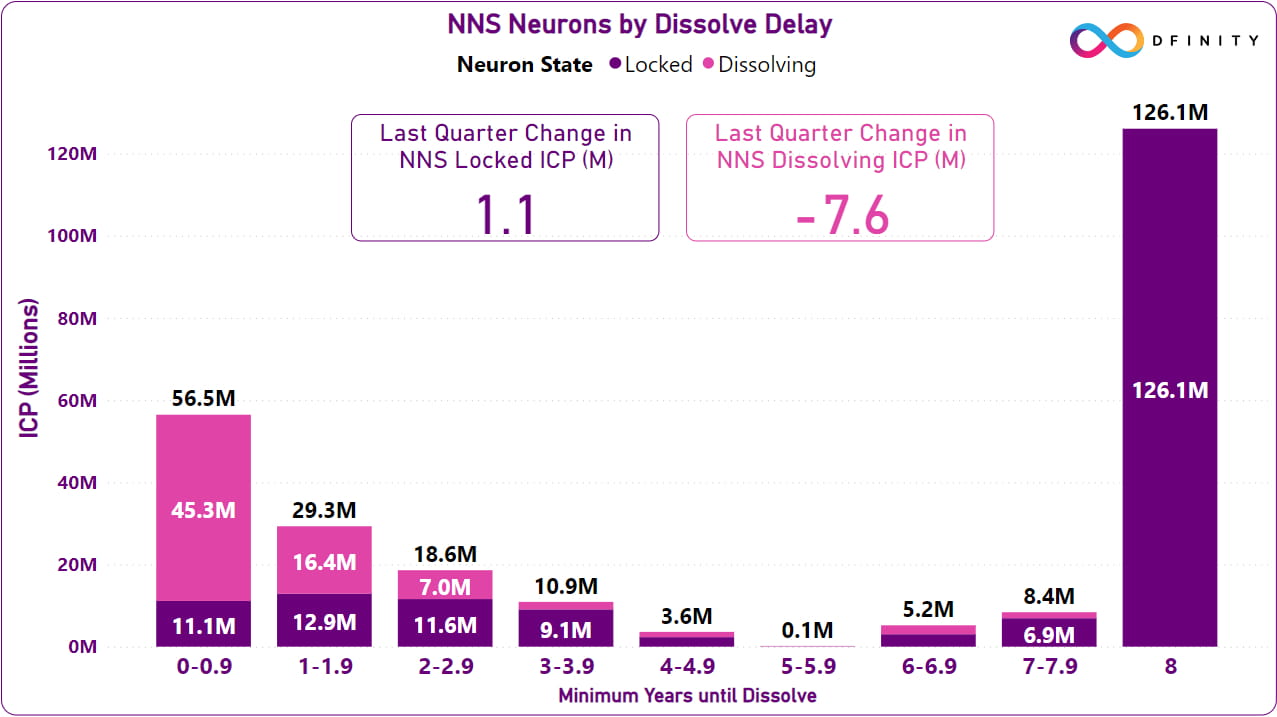
The chart above shows the status of NNS on April 1, 2023, reflecting the number of ICP tokens locked and dissolved by the length of the dissolve delay, with 12,610,000 ICP (25.3% of the total supply) locked for at least 8 years.
You can track these metrics on the Internet Computer Dashboard:
dashboard.internetcomputer.org/neurons
Learn more about Internet Computer: internetcomputer.org and follow Internet Computer stories on Twitter: @dfinity.
IC content you care about
Technology Progress | Project Information | Global Events
Collect and follow IC Binance Channel
Stay up to date with the latest information