
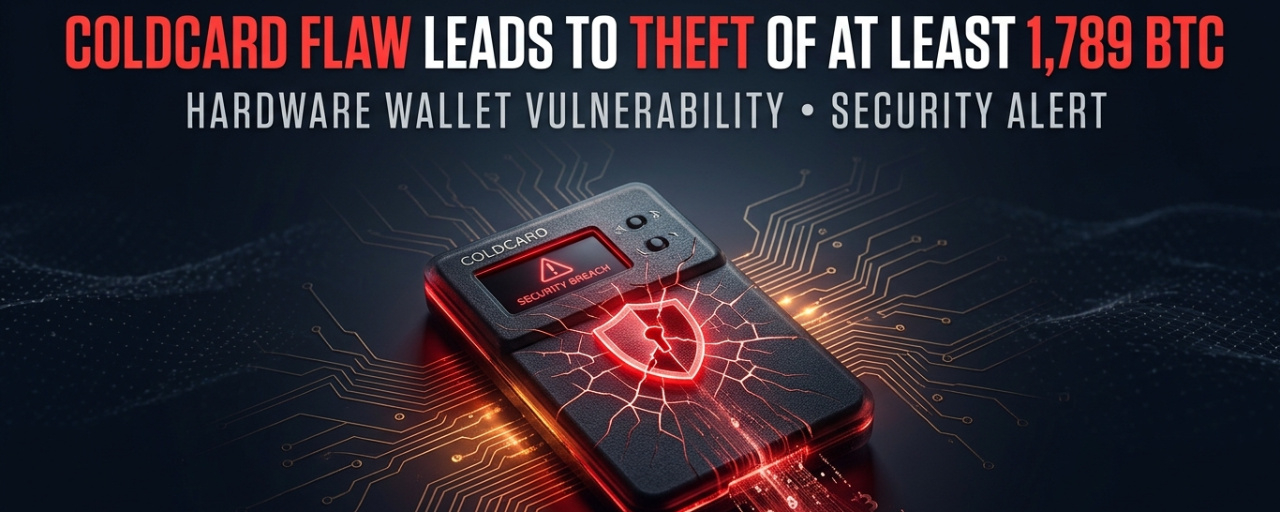

In one of the most serious security incidents in the history of Bitcoin, Coinkite, the company behind the Coldcard wallet, revealed details of a software bug that persisted for more than five years and contributed to the theft of at least 1,789 BTC.
💰 Estimated value at the time of the theft: $114.7 million.
🔍 What exactly happened?
The issue wasn’t that devices were stolen or users were directly hacked.
It was in the process of generating wallet keys!
Due to a software bug in some Coldcard versions, the devices used a software-based random number generator that was weaker than the secure randomness system they were supposed to use.
The result?
Some recovery phrases (Seed Phrases) were less secure than expected, allowing attackers to reconstruct private keys and access victims’ balances without needing to possess their devices.
What’s even more concerning:
The vulnerability remained for more than five years.
It had passed through at least 15 independent security reviews.
The company fixed the bug on July 31, 2026, and added further safeguards during August.
Updating the software alone does not protect old wallets created using affected recovery phrases.
⚠️ What should affected users do?
The company recommends creating a new, secure recovery phrase on an updated device, then transferring the funds to a new wallet.
Updating the software while continuing to use the old recovery phrase isn’t enough.
🧠 The most important lesson for investors:
Cold storage reduces the risks of relying on exchanges, but that doesn’t mean security risks have disappeared.
Bitcoin security starts when the private key is generated, not just with how it is stored.
💬 Do you still think a hardware wallet is the safest option for storing Bitcoin, or will this incident change your view of self-custody?
#Bitcoin #BTC #Coldcard #CryptoSecurity #CyberSecurity #SelfCustody #CryptoNews #SmartCryptoRadar