What happened to the crypto king of old? —
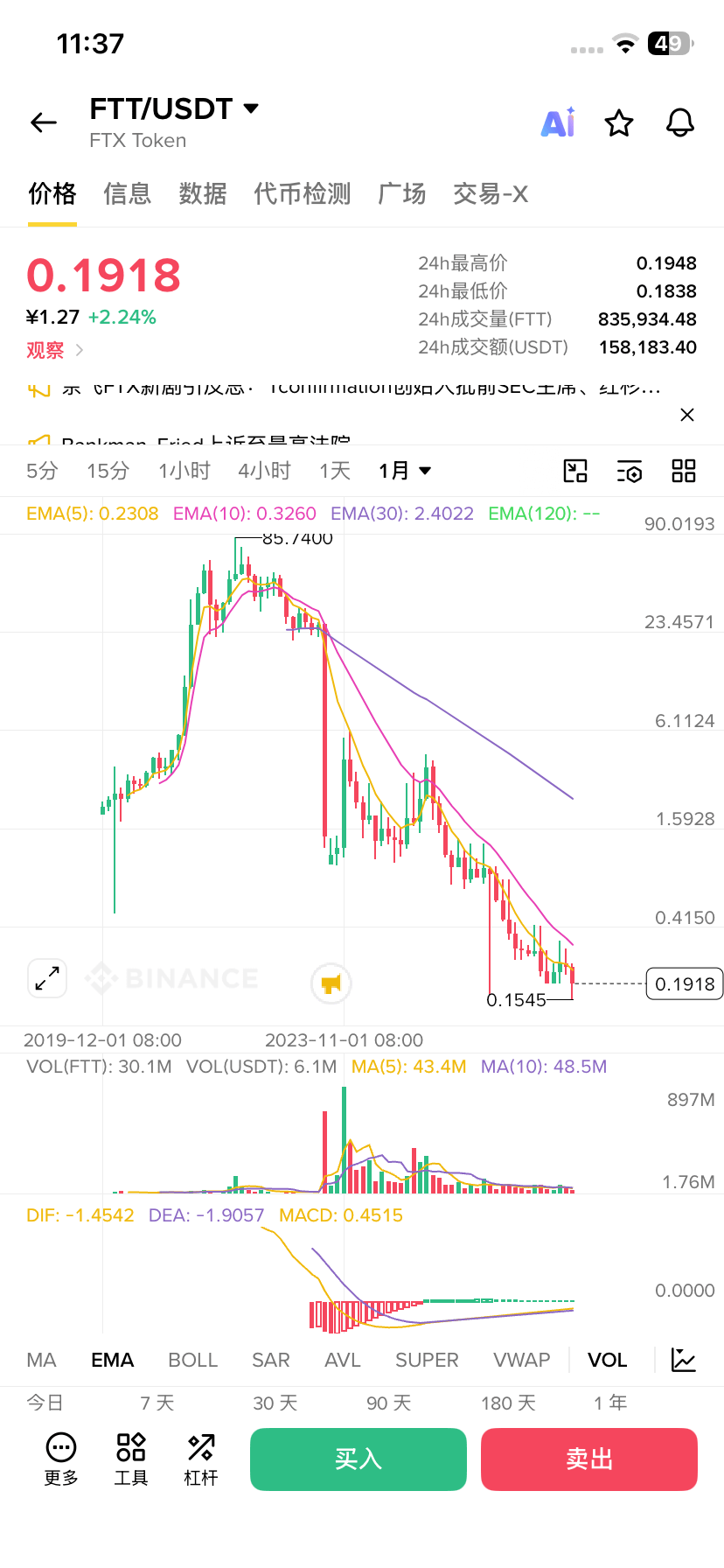
The $$FTT 320 billion exchange empire: why did it collapse overnight?
FTX was once one of the world's most closely watched cryptocurrency exchanges, reaching a peak valuation of $32 billion.
Its founder, SBF, was hailed as a crypto wunderkind and frequently appeared at industry summits and in media headlines.
FTT was the exchange empire's core platform token.
Back then, holding FTT offered discounts on trading fees and access to benefits across the platform's ecosystem. The market even viewed it as a vehicle for capturing FTX's growth in value.
But no one expected that a crisis in November 2022 would change everything.
It began when the market started questioning Alameda Research's use of large amounts of FTT as collateral on its balance sheet.
Then users rushed to withdraw their funds, triggering a liquidity crisis at FTX that ultimately led to its bankruptcy filing.
More seriously, subsequent investigations and trials revealed issues such as the misuse of customer funds. SBF was ultimately sentenced to 25 years in prison.
And so, an exchange empire once valued at $32 billion fell.
FTT also lost its most important source of value: the exchange business and platform benefits.
Interestingly, even in 2026, the FTX story is not quite over.
In July, the FTX Recovery Trust launched its fifth distribution to creditors, worth approximately $900 million.
In November, there was a new legal development in a roughly $1.76 billion clawback lawsuit involving the FTX bankruptcy estate, with Binance and CZ also drawn into the related legal proceedings.
But it's important to distinguish between the two:
Recovering FTX's bankruptcy assets and distributing them to creditors does not mean that the FTT token will regain its value.
To date, no new FTT product roadmap or plan to restore its former platform benefits has been confirmed.
What remains of this once-prominent exchange token is mostly a chapter in crypto history.
Do you think FTT could regain any real-world utility, or has it become one of crypto's most textbook cautionary tales?