$BTC $NVDAB $SPCXB
THE FLYWHEEL EFFECT: HOW INTERLINK SOLVES THE "CHICKEN AND EGG" PROBLEM
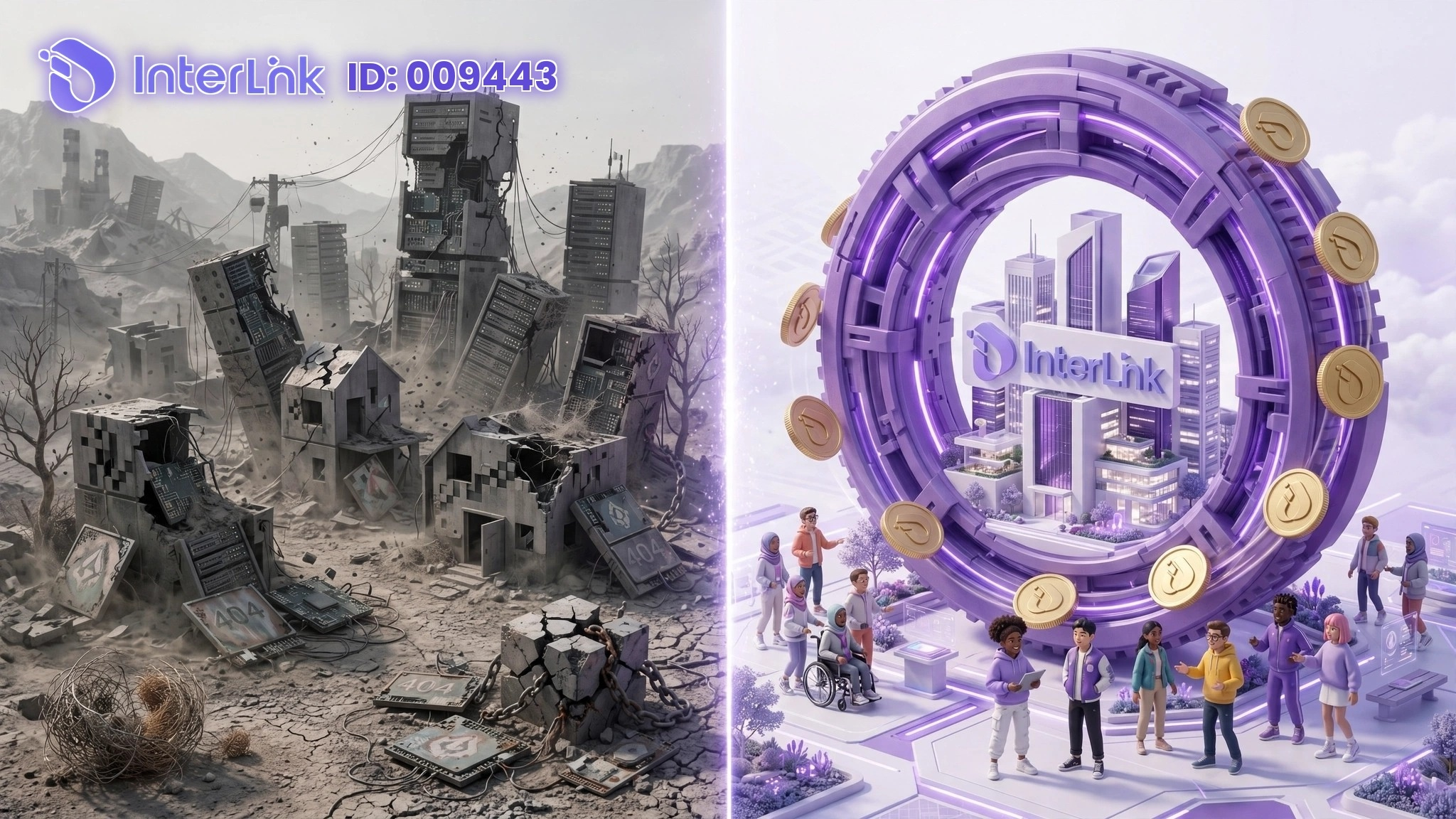
🌀 Crypto is littered with "Ghost Towns." Look at the recent struggles of decentralized social networks (DeSo) like Farcaster. They have millions of dollars in funding and great tech, but user retention is dropping. Why? Because tech alone doesn't create value. You need a self-sustaining economic loop.
In crypto, we often see projects die because they can't solve the "Chicken and Egg" problem. Developers won't build apps without users, and users won't come without apps. Today, let's analyze how InterLink's Network Effect solves this.
The InterLink economy doesn't rely on inflationary token printing. It relies on a self-reinforcing economic cycle (a Flywheel) between Human Nodes and Enterprise Nodes.
Here is the deep dive into the flywheel:
🏢 Phase 1: Enterprise Integration
Real businesses join as Enterprise Nodes. Why? Because InterLink offers them access to 11+ million verified users and a seamless blockchain infrastructure (RWA, IBTE, Payments).
🧑💻 Phase 2: User Activity
Human Nodes use the products and services provided by these enterprises (trading on ITLX, buying RWA, using dApps). This activity generates actual transaction fees.
💰 Phase 3: Real Yield Distribution
These real ecosystem fees flow directly into the $ITLG Staking Vault and are distributed as rewards to active stakers. It's not inflation; it's real revenue sharing.
🔄 Phase 4: The Acceleration
High Real Yield attracts more users to stake ITLG. A massive user base attracts even more enterprises. The wheel spins faster, and the network value compounds.
This is how you build a sustainable Web3 economy. It's not just a technical network; it's an economic ecosystem. Are you bullish on this flywheel? 👇
Disclaimer: This content is for informational purposes only and does not constitute financial advice. Always do your own research (NFA/DYOR).
#InterLink #ITLG #ITL #MoneroFalls13%OnDelistings #EvolveAtBinanceBlockchainWeek