Last week, I went to Fuckup Night and talked with a few guests about my English-speaking practice app, JAM. I thought I was sharing a story about a failure.
But they said, “That actually sounds pretty successful.”
Fair enough. We’d had 4,000 users in total, and a few hundred paying users. The numbers looked pretty good—and they also made it take longer for me to see the problem.
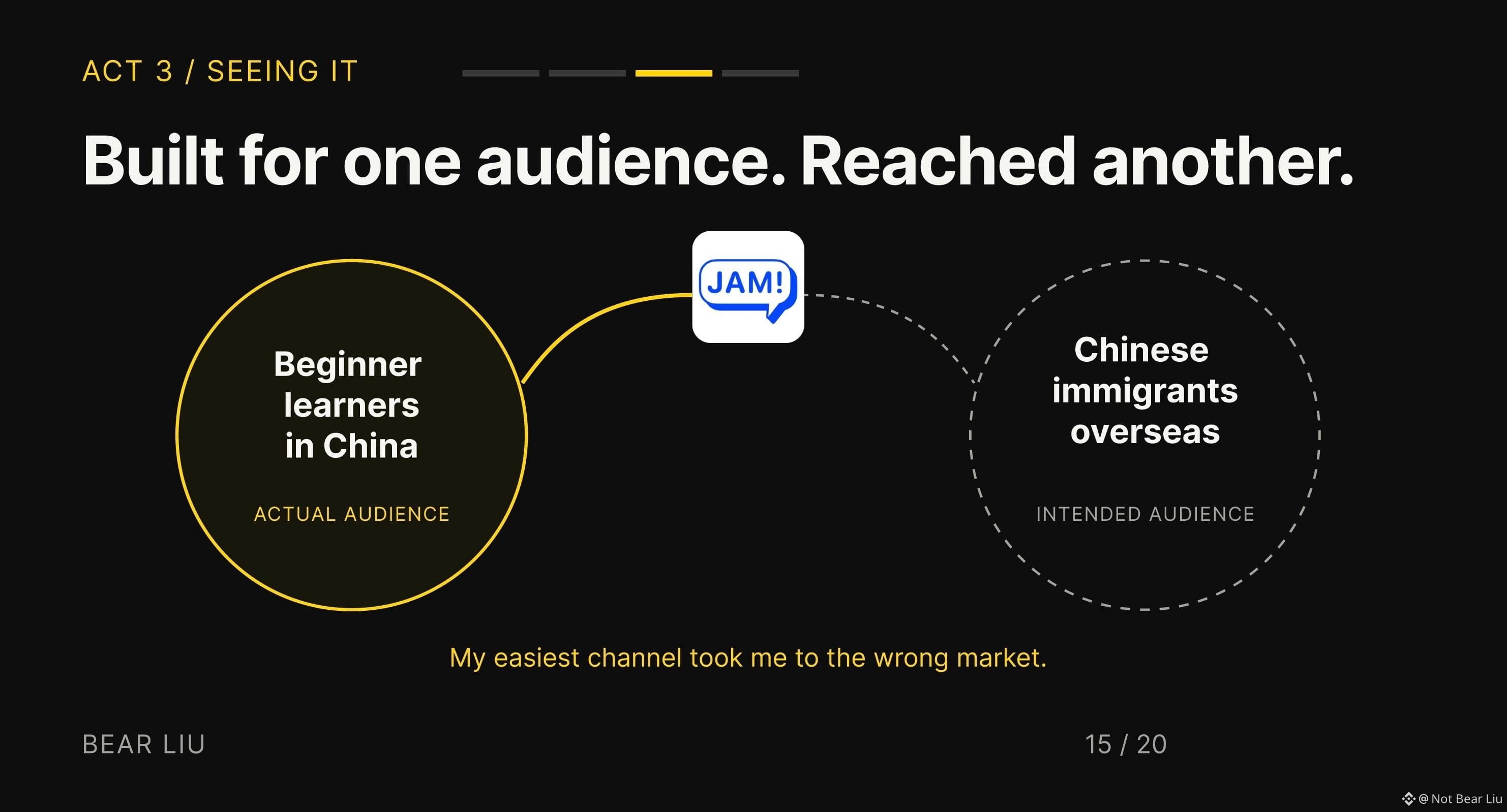
I built JAM to help immigrants abroad communicate better in English. But when I promoted it, I used the Chinese-language X account I was most familiar with, reaching lots of English learners in China, many of them beginners. JAM asks users to speak for a minute before getting feedback. For them, even speaking for a full minute was already hard.
It seems obvious now, right? It took me three months to realize it.
Promoting something through the influence I already had was easy and comfortable. I now think JAM may still have potential; it’s just that those promising numbers kept me in my comfort zone a little longer.