14 Asian economies have finally sat down at the same table to discuss crypto regulation
But don’t read this as good news just yet
The table has only just been set; not a single dish has been served
On November 26, China, Japan, South Korea and the 11 ASEAN countries met in Kyoto for two days
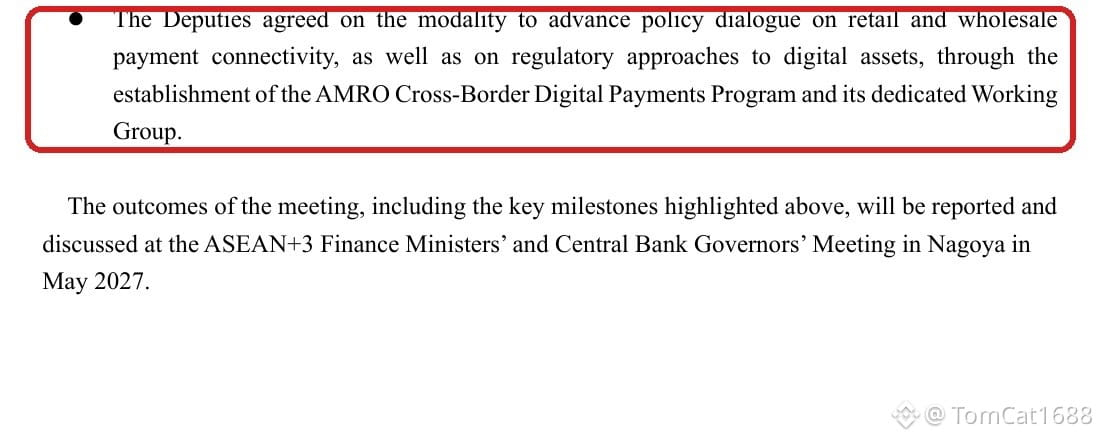
Deputy finance ministers and central bank officials made one decision
To launch a cross-border digital payment project and set up a dedicated working group
From now on, cross-border payments and how to regulate digital assets will be discussed at this table
What will they discuss?
Two things
First, how to connect each country’s payment systems, for both retail and wholesale payments
Second, how to align their approaches to digital asset regulation
The topic was raised in Samarkand in May, when the focus was on stablecoins
In Kyoto, the scope was widened to cover all digital assets
But three things are still missing
The members of the working group haven’t been announced
There’s no timeline for when it will produce anything
And there’s no word on whether the rules will be unified
The results will have to wait until May 2027, when ministers meet in Nagoya to discuss them again
Individual countries have already gotten underway
Japan is studying tokenized government bonds
South Korea plans to roll out tokenized securities and a won stablecoin starting in 2027
Last month, Malaysia and Thailand joined Singapore’s BLOOM initiative to test cross-border payments using stablecoins and tokenized deposits
So the real significance of this news isn’t today
It’s six months from now
Whether separate efforts can be pieced together into a coherent picture depends on what the working group comes up with next
BTC is now at $61,700, up a little over 1% in the 24 hours after the news broke
The price has barely moved, suggesting the market is waiting to see what happens next
#中日韩东盟将设加密监管工作组 #BTC