

Many ordinary people are stuck in a “dead-end paycheck cycle”: they work hard every day, scrimp and save, yet their savings grow slowly.
We tend to think that booms and windfalls are reserved for investors and tech moguls. Ordinary people have no money or connections, so they have no opportunities.
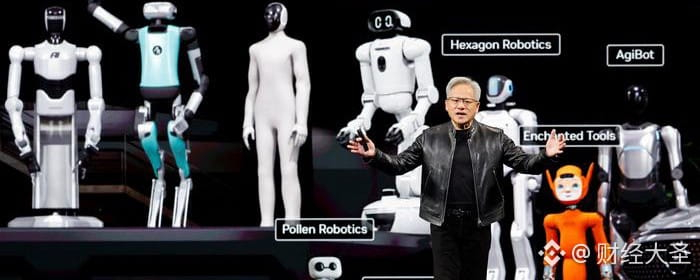
But after watching Jensen Huang's 2026 GTC keynote, I think it's time to take another look at the opportunities AI is creating.
Over the next five years, AI could completely transform how many industries make money. What’s truly worth paying attention to isn’t just building models or making chips, but the huge demand for services emerging across the AI industry value chain.
I’ve put together five areas worth exploring for ordinary people.
1. AI computing infrastructure: providing supporting services across the industry
AI depends on computing power, which in turn relies on electricity, data centers, operations and maintenance, and various support services.
You don’t have to understand chips or algorithms to get started; you can enter through related services.
For example, you could broker computing-power rentals, supply data center consumables, organize operations and maintenance documentation, connect with clients, or provide after-sales support.
You don’t have to develop technology yourself. Demand for supporting services across the industry can also lead to long-term orders.
2. AI agents: helping businesses create digital employees
In the future, every small shop and company—even individual entrepreneurs—may need their own AI agent.
For example, an AI agent could handle customer service and marketing for a restaurant, customer management for a beauty salon, or financial organization and business consulting for a company.
Ordinary people can learn the relevant tools and help businesses build AI agents, offering customization, setup, and ongoing maintenance.
This is a low-overhead way to start a business. There’s no need to stock inventory or invest a lot of money; the key is solving customers’ real problems.
3. The token economy: turning AI services into recurring income
AI services may become increasingly widespread, and tokens may become an important unit for usage and billing.
The token economy could give rise to many business models.
For example, you could create AI templates, prompts, and automation tools for specific industries and offer them through subscriptions. You could also teach people how to use AI or create tutorials on building AI agents, helping ordinary people master AI tools.
The core idea is to create something once and sell it many times, turning your knowledge and services into products.
4. Physical AI: robots entering everyday services
Besides self-driving cars, it’s also worth paying attention to robots used for elder care, serving food in restaurants, household cleaning, and warehouse sorting.
In the future, robots won’t just showcase technology; they’ll need to become part of everyday life and real business settings.
You don’t have to develop hardware yourself. You can get involved in robot sales, operations, after-sales support, training, rentals, and helping deploy them in real-world settings.
Technology companies build the products; ordinary people can provide services around them.
5. Practical AI skills: the ability ordinary people should invest in most
I actually think this is the most important point.
In the future, knowing how to use AI may gradually become a basic skill, just like knowing how to use a computer or the internet once did.
You can use AI to work more efficiently in your main job, expand your output in a side business, or combine it with your professional skills to create content, offer knowledge-based services, and build a personal brand.
Not everyone needs to start a business, but everyone should learn to use AI to amplify their abilities.
⸻
Three common pitfalls for ordinary people getting into AI:
1. Don’t spend a fortune right away. Don’t invest blindly in computing equipment, stockpile hardware, or take on heavy assets. Start with lightweight services, operations, brokerage, and content.
2. Don’t stop at playing with the tools. Using AI to write articles or create images is just the beginning. What really makes money is solving real problems and building long-term services and repeat business.
3. Don’t treat AI as a shortcut to getting rich quick. Every hot trend comes with a bubble, so don’t blindly follow the crowd and speculate. What’s truly worth building up is your skills, customer base, reputation, and ability to deliver consistently.
Finally, here’s what I think:
The opportunities AI brings won’t necessarily belong to the wealthiest people or the most tech-savvy.
Often, the real opportunity lies in who can spot demand sooner and turn new technology into services that ordinary people are willing to pay for.
Over the next five years, instead of worrying about whether AI will replace you, ask yourself: Can I use AI to take my abilities and income to the next level?