Whatever happened to the crypto world’s former king?
$APE : The golden age of Bored Ape
If you experienced the 2021 bull market, you probably won’t have forgotten Bored Ape Yacht Club (BAYC).
Back then, a single monkey avatar could sell for tens or even hundreds of ETH.
Celebrities, stars, and investment firms rushed in, and owning a monkey avatar became a status symbol.
Yuga Labs, the team behind Bored Ape, quickly became one of the most influential companies in the NFT space.
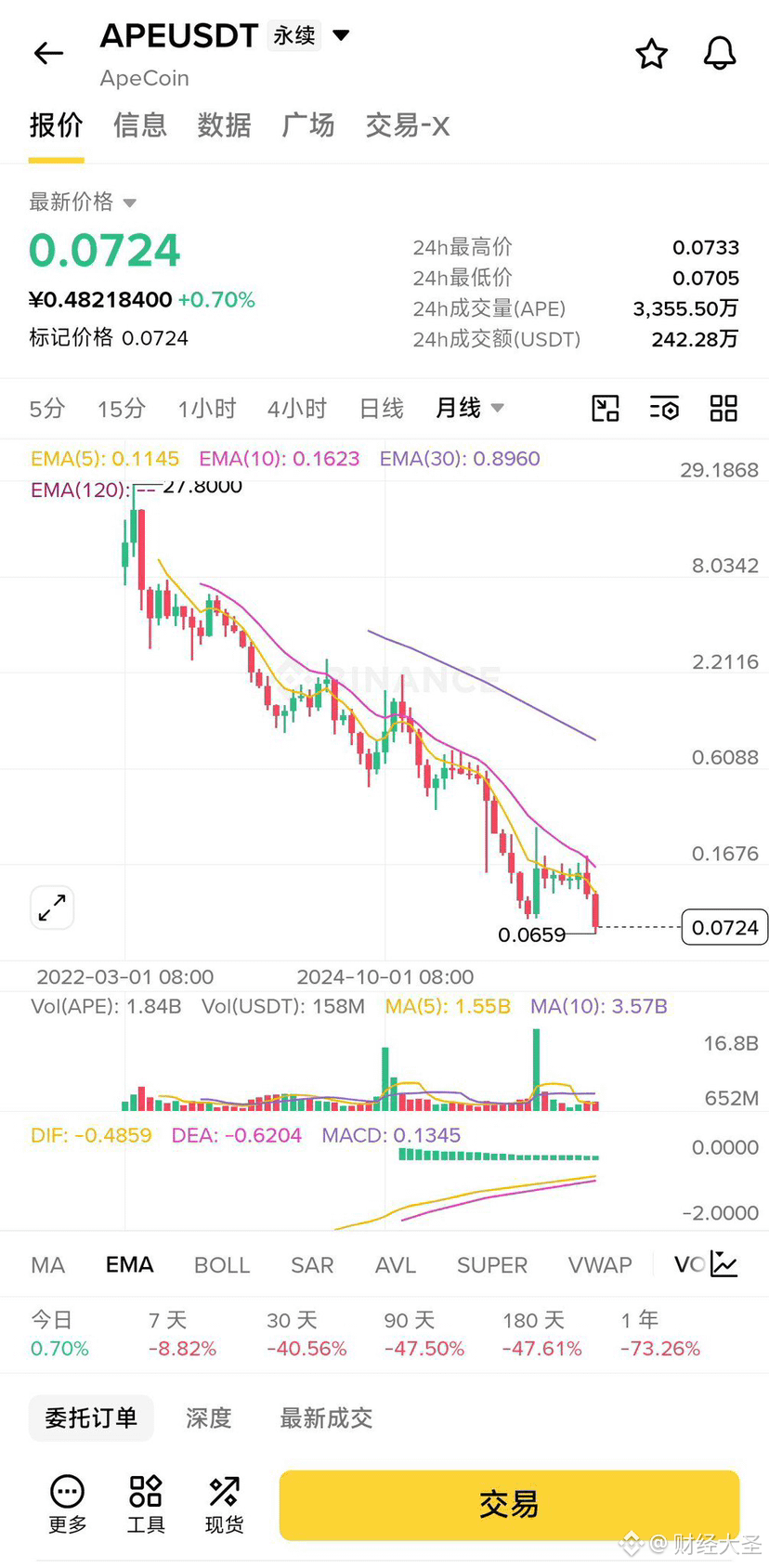
But what truly took the ecosystem from NFTs into the token market was the launch of ApeCoin, or APE, in 2022.
At the time, APE was snapped up as soon as it launched, and its price peaked above $26.
Yuga Labs later launched the metaverse project Otherside and even held a public sale of virtual land called Otherdeed.
Just how frenzied was the land sale back then?
So many users tried to buy at once that Ethereum gas fees shot up dramatically.
At the time, the market believed Bored Ape was more than just a few NFT pictures—it was building an entire Web3 culture and metaverse empire.
But the problem was that the NFT hype didn’t last.
As the market cooled, enthusiasm for trading avatars waned, the potential of virtual land came under scrutiny, and APE’s price fell sharply from its highs.
There was another change that’s easy to overlook:
In 2025, governance and operational control of ApeCoin DAO were transferred to ApeCo, a company closely connected to Yuga Labs, changing APE’s original community governance model.
By 2026, APE was still officially positioned as the gas token for ApeChain, while continuing to support Otherside and other parts of the ecosystem.
But today, APE is no longer just a token riding on the hype around Bored Ape NFTs, as it was back then.
I think the most important thing to remember about Bored Ape is this:
It proved that NFTs could have enormous cultural impact, but cultural impact doesn’t necessarily translate into lasting token value.
How many of the people who spent hundreds of thousands of dollars on a monkey avatar back then still have one today?
Do you think NFTs have a chance of returning to the heights of 2021?