

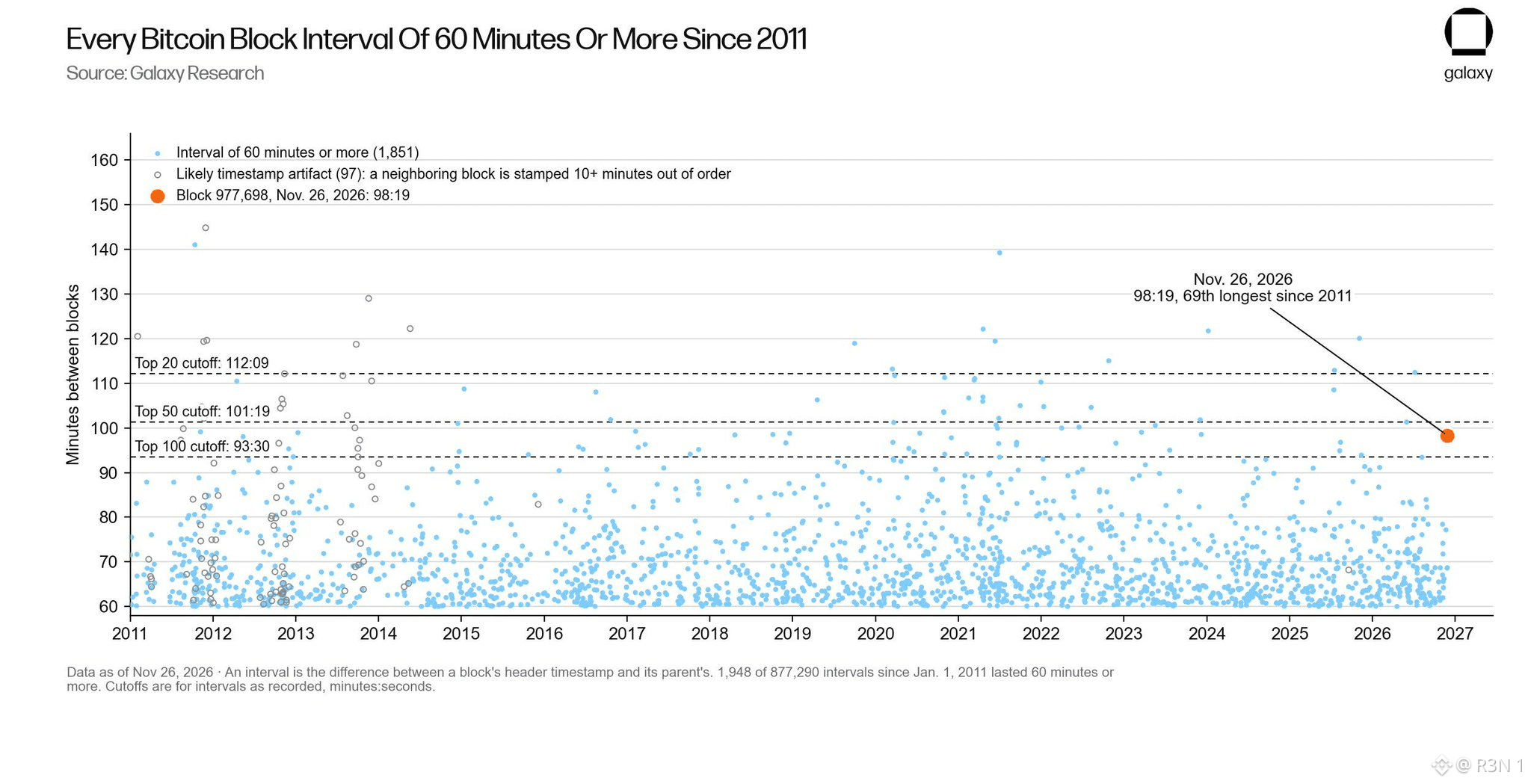
According to Galaxy Research's Alex Thorn, no new blocks were produced between blocks 977,697 and 977,698, creating a 98-minute and 19-second gap, the longest since July and the 69th longest block interval recorded since 2011. At first glance, a delay like this can look concerning. Bitcoin is designed to produce a new block roughly every 10 minutes, and transactions waiting for confirmation remained stuck in the mempool for over an hour and a half. But this wasn't a network failure. The gap appears to be the result of normal mining probability rather than an attack, outage, or technical issue. Bitcoin's block production follows a statistical process where long delays occasionally occur even when the network is functioning normally. The last longer delay occurred on 6 July 2026, when miners took more than 112 minutes to find the next block. Events like this are a reminder that Bitcoin's 10-minute block time is an average, not a guarantee. Sometimes blocks arrive seconds apart. Other times, the network experiences unusually long droughts before the next valid block is found. For holders, nothing changed. Funds remained secure and the blockchain continued operating as intended. The main impact was felt by users waiting for confirmations. In a market obsessed with price, moments like these highlight something different. Bitcoin doesn't move on a schedule. It moves on probability. And sometimes, even the world's largest blockchain has to wait. #BTC Price Analysis# $BTC #Altcoin Season# #BNBChain#
Join global crypto users on Binance Square
⚡️ Get latest and useful information about crypto.
💬 Trusted by the world’s largest crypto exchange.
👍 Discover real insights from verified creators.
Email / Phone number