Today's news is absolutely explosive 🔥
Everyone:
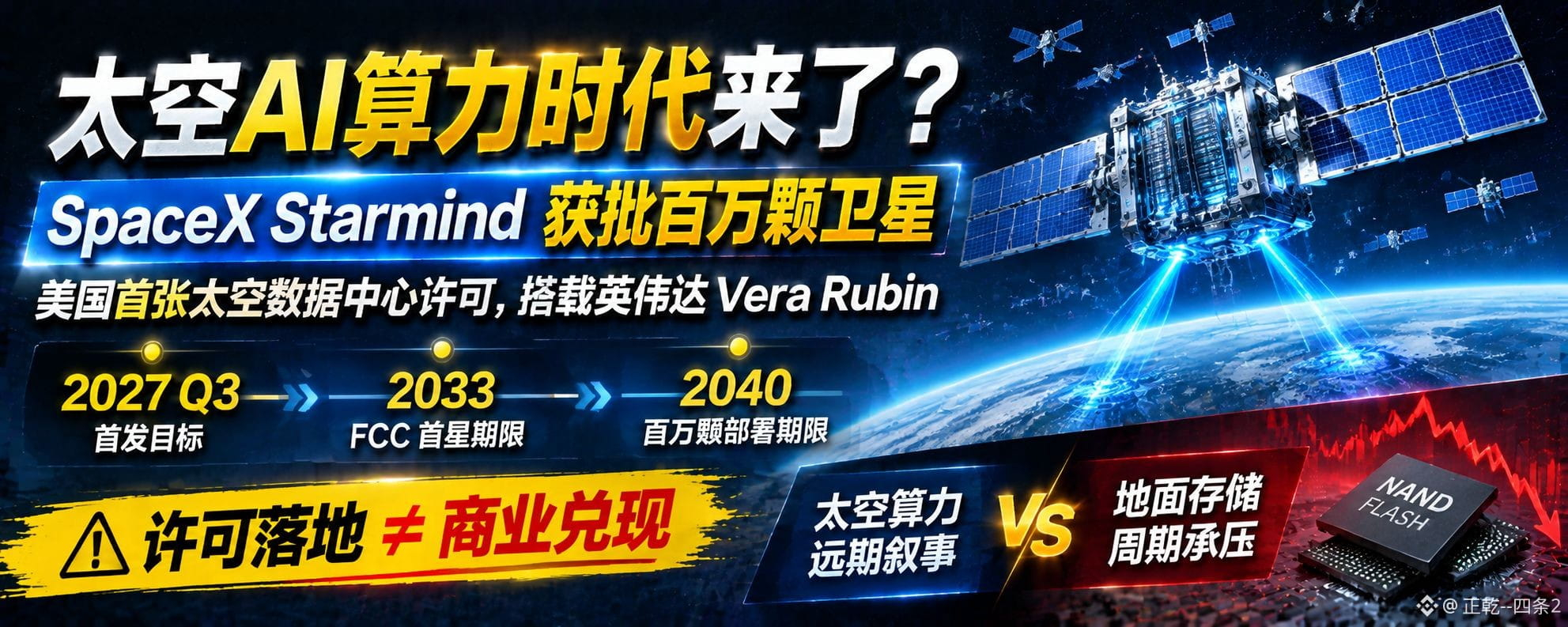
On November 25, the FCC approved SpaceX's Starmind! The first U.S. license for a space-based AI data center, with a cap of 1 million computing satellites equipped with NVIDIA Vera Rubin chips. Each satellite would deliver 120 kW, for a theoretical total of 120 GW of computing power at full capacity. While ground-based data centers are still constrained by power, cooling, and land, Musk is already targeting space-based solar-powered computing.
⚠️But be sure to pay attention to the timeline—don't get swept up in the grand vision: The FCC's compliance deadlines require the first satellite by 2033 at the latest, 100,000 satellites by 2035, and the full 1 million only by 2040. SpaceX's own targets are a first batch of launches in Q3 2027 and scaling up in 2028. The two timelines differ by a full six years. On the day of the news, SPCX fell more than 9% at one point during trading, recovering to just +1.3% by the close. It remains below its IPO price of 135. The upside is a long-term story; near-term profits simply can't be realized.
Meanwhile, on the same day, TrendForce lowered its outlook: NAND flash is expected to enter a downturn in 2027, putting pressure on memory demand. On one side is the vast potential of space-based computing; on the other, the terrestrial memory industry is already tapping the brakes.
And there's macro risk overhead: The probability of a rate hike on 12.8-9 is 95.8%, and Jensen Huang is also due to face three consecutive congressional hearings from 12.1-3. Market risk appetite is likely to shrink, and this kind of long-term narrative can easily be pushed to the back burner by investors.
The million-dollar question: Are you planning to wait until the first satellite actually reaches orbit before making a move, or are you betting now on expectations for 2027? Is this the next computing revolution, or just another trillion-dollar pipe dream?
欢迎加入正乾研习社
#AI算力 #Space #Starmind #太空算力