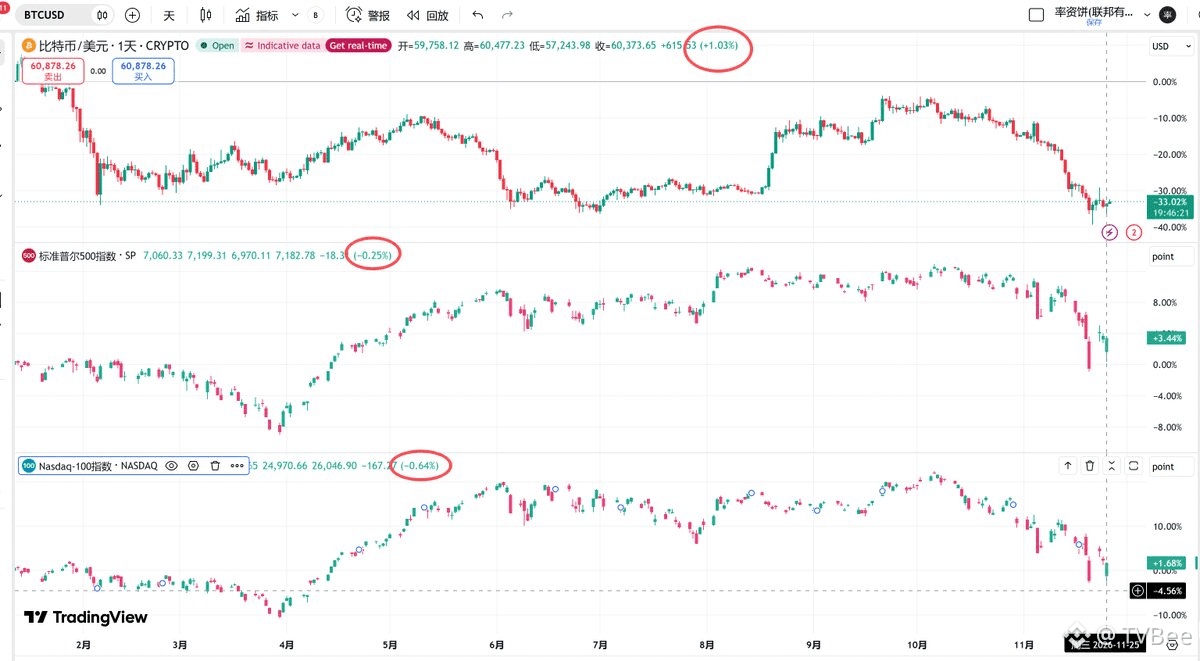

Even the bears will eventually face this day: the first push comes with full force, the second wanes, and the third is exhausted.
On January 20, the first push came with full force, sending BTC down to around 55,000.
Yesterday, the Nasdaq 100 didn’t break its previous low, and the S&P 500 fell even less. BTC, meanwhile, had a noticeably longer lower wick and closed up 1.03%. The second test had less force.
There are still December data and the FOMC ahead, but the third attempt may run out of steam.
Many people think US stocks have risen too quickly. But looking at P/E ratios, you’ll see that earnings—not share prices—have risen quickly; the rise in share prices is backed by earnings. Of course, bearish sentiment toward US stocks remains, and uncertainty is higher. Next, we’ll need to wait for Q4 earnings reports and see whether AI profits keep growing, stagnate, or shrink.
So BTC may now be entering a choppy consolidation and shakeout phase. BTC may follow US stocks in direction, but not necessarily by the same magnitude. During the transition from a bear market to a bull market, it’s possible that BTC falls less when stocks fall and rises more when they rise.
BTC has been through a bear market lasting more than a year. It’s still too early to declare the bear market over, but we may not necessarily see new lows in the near term.