$BTC: Turnover and Relative Volume Answer Different Questions
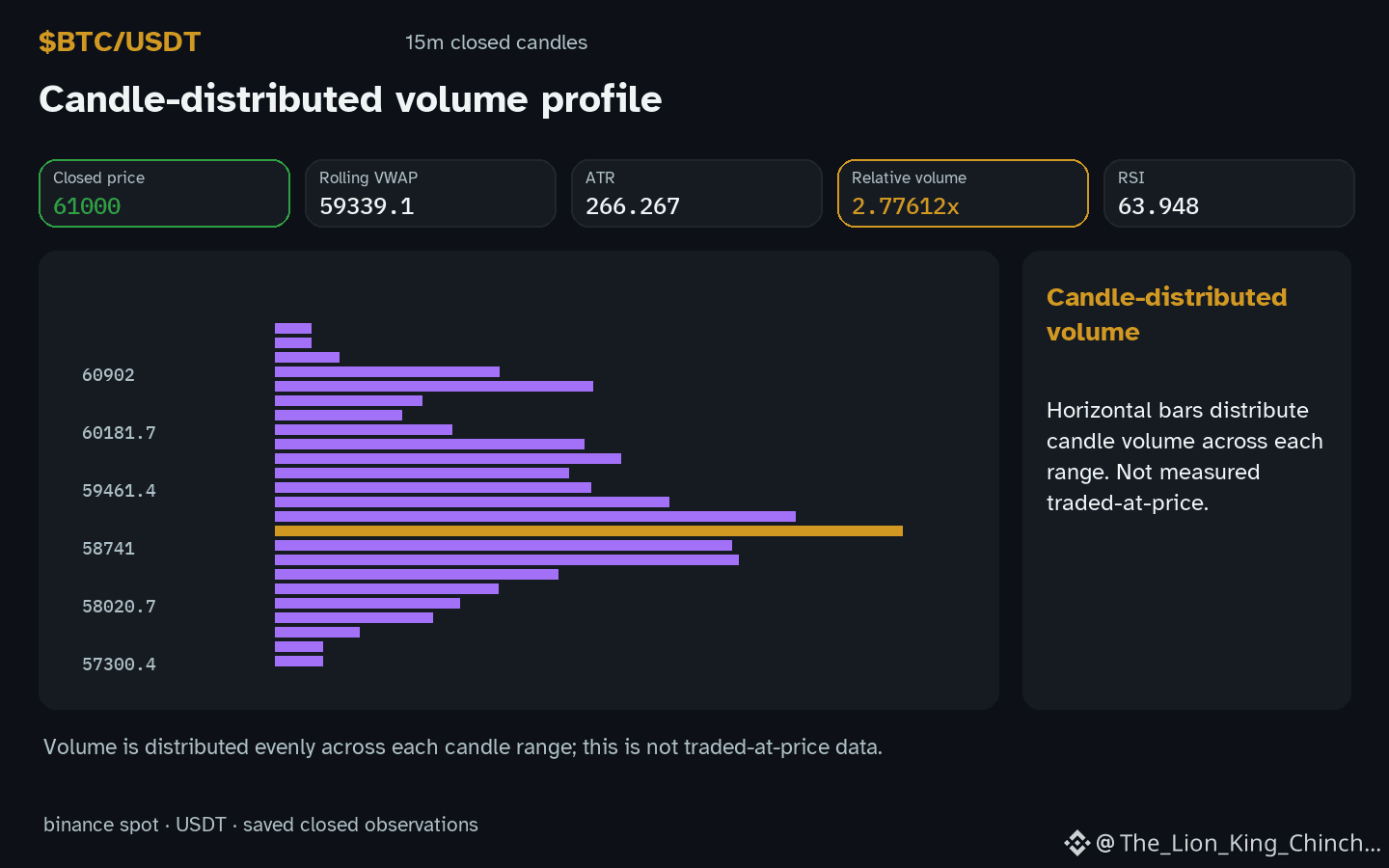
Does $BTC volume expansion imply deep liquidity? The current view shows price inside the recorded range with hourly direction up. Volume sits at 2.78x baseline. This mix triggers a mechanism question. Macro liquidity is the standing pool of available capital. It moves slowly. Micro participation bursts are short spikes in active trading. They happen fast. One does not cause the other in this view.
A common assumption links high relative volume to new money entering. The data shows relative volume is a ratio. It compares current size to prior candles. It does not measure USDT turnover. A burst can come from existing holders swapping positions. The total pool remains static. This is a valid alternative reading.
Consider a counterexample. Price moves upward with elevated relative volume. Yet the quote volume remains flat against historical norms. The burst reflects quick internal rotation. No external liquidity joined the session. The price change was driven by speed, not size. This weakens the idea that the move signals broad accumulation.
What evidence would change this reading? A clean close above resistance where relative volume matches quote volume growth would support a liquidity shift. A retest that holds without new volume spikes suggests the burst was transient. You can check if future candles show sustained participation. If volume returns to baseline quickly, the burst was isolated. Think of it as checking if a raindrop wet the ground or just splashed on the leaf.
Risk note: Candles and volume alone cannot confirm motives. Causation is not proven. Treat this as a thought experiment. Do not infer hidden order flow. The observation describes only the saved moment. Future data may contradict it. Use discretion.
Probabilistic market research, not a recommendation or guaranteed return.
#BTC #MarketAnalysis #CryptoLearning