
Big news slipped by amid a market that’s in the red. Yet this could change how new tokens are launched in Asia.
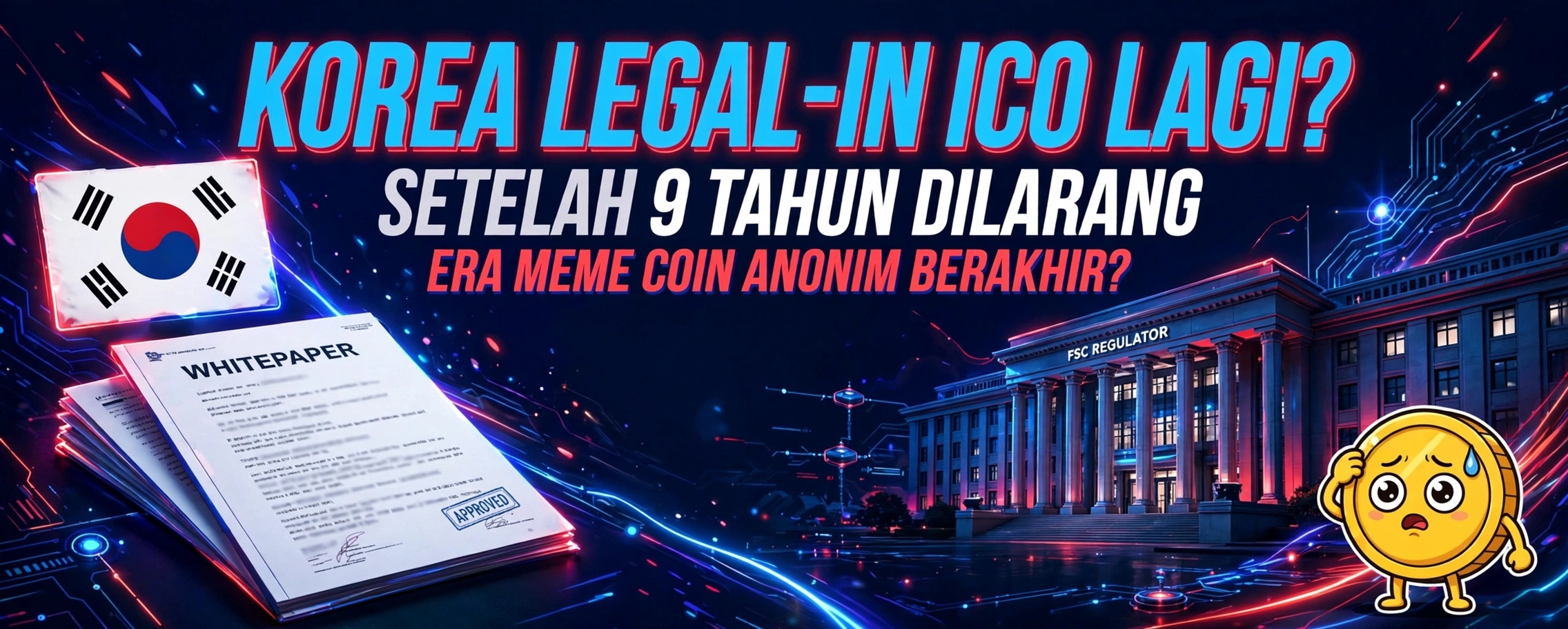
On November 24, 2026, South Korea’s Financial Services Commission (FSC) officially proposed a new bill called the Act on Digital Asset Industry Innovation and User Protection. The biggest headline: South Korea plans to lift the ICO ban that has been in effect since September 2017.
South Korea has banned ICOs within its borders for 9 years. Why is it reopening them now? And what does this have to do with us and our love of talking about meme coins?
Why Did Korea Ban ICOs in 2017?
In 2017, ICOs were all the rage. But many turned out to be scams. Projects raised money, then the teams disappeared. Korea’s regulators took the easiest route at the time: a complete ban.
As a result, Korean projects that wanted to launch tokens had to go overseas, set up companies in Singapore or elsewhere, and then list on Korean exchanges. Money and jobs went abroad with them.
Now, in this new bill, the FSC has made its goal clear: bring that activity back into the country, so there will be jobs and oversight.
But with one major condition: no more wild ICOs.
What Do the Rules Say? IPO-Style, Not Wild ICOs
This doesn’t mean Korea wants to return to the 2017 ICO era of throwing up a website and selling tokens. The rules are actually more like an IPO.
Here are the 4 key points:
1. An Official Whitepaper Must Be Submitted to the Regulator
Before selling tokens, the issuer must submit a digital asset whitepaper to the FSC. It must clearly explain what the project is, how many tokens will be issued, what the proceeds will be used for, who is on the team, and what the risks are.
The FSC can reject it and request revisions if information is missing. Once approved, the whitepaper must be published. Only after a waiting period—for example, 7 days—can they start selling. ef5b
2. Serious Legal Accountability
This is the biggest difference. If the whitepaper contains lies or conceals important information, the issuer and its executives may face civil damages, fines, or even criminal penalties.
This uses a strict liability standard. That means whoever signs the document is responsible. They can no longer hide behind anonymous accounts. 30ce
3. Exchanges Also Have Obligations
Exchanges that want to list tokens must also file reports. They must report any material events, such as changes to the token supply, a hack, or a system issue.
So getting listed can no longer be as simple as paying a listing fee and then washing your hands of it.
4. Still a Draft, Not Yet Law
It’s very important to emphasize this. It’s still a draft proposal. It still needs approval from the National Assembly (Korea’s parliament) before it can become law. So there are no legal ICOs underway today.
So What Does This Have to Do with Meme Coins?
This is the most interesting part for us.
Meme coins succeed because of 3 things: speed, anonymity, and no rules. Anyone can create a token in 5 minutes, with no whitepaper, no team, and no accountability.
This Korean model is the complete opposite.
If this model becomes the standard in Asia, there will be 2 separate worlds:
World 1: Regulated Tokens (Legal ICOs)
There are clearly identified names, a whitepaper, and legal accountability. This is a good fit for serious RWA, DeFi, infrastructure, and gaming projects. Institutional investors will feel more comfortable investing here.
World 2: Wild Meme Coins
They’ll still exist, but will become increasingly marginalized on regulated exchanges. Korean exchanges will eventually be required to have complete documentation for every token they list. Anonymous meme coins with no one accountable for them will struggle to enter this official channel.
So, is this bad news for meme coins? It won’t kill them outright, but it will narrow their path.
Meme coins will continue to thrive on DEXs and permissionless chains. But the bar will be much higher for getting onto the Korean retail market through regulated exchanges.
On the other hand, this could also be good news for meme coins that want to get serious. Imagine a Korean meme coin that dares to put forward a clearly identified team, a whitepaper, and legal accountability. That would set it apart from the thousands of other anonymous meme coins.
Why Is This Important News Getting So Little Attention?
Because the timing coincides with a market in Extreme Fear. People are focused on BTC at $60,000 and the Fear & Greed Index at 9.
But news like this is usually the foundation for the next cycle. Clear regulations are what give big money the confidence to come in. In 2017, we had wild ICOs that ended in scams. In 2026, Korea wants to try a regulated version.
If this bill passes, Korea could set an example for other Asian countries. And Korea is not a small market. It’s one of the most active and speculative crypto retail markets in the world.
Conclusion
Korea isn’t reopening the floodgates to wild ICOs. It’s trying to create a more mature version of ICOs: you can sell tokens, but you have to be transparent and be prepared to face legal action if you lie.
For meme coin fans, this is a sign that the era of “creating an anonymous token with no accountability and then listing it on a major CEX” is going to get harder.
Going forward, the ones that survive may not be the ones with the funniest memes, but the ones with the clearest accountability.
There’s just one thing we need to watch now: Will Korea’s National Assembly approve this bill? If so, it could be a turning point in how new tokens are launched in Asia.
Disclaimer: This article is for educational and news purposes only and is not an invitation to buy or sell crypto assets. This bill is still a proposal and has not been passed. Always DYOR and understand the risks before making a decision.