
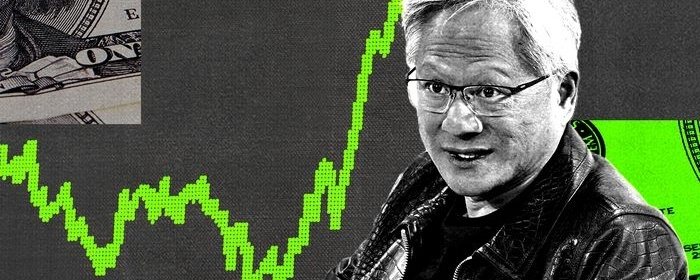

billions of dollars in hours!
Can a single news story make one investor a fortune and wipe out another trader’s profits? NVIDIA’s latest story has the answer.
📉 1. The beginning: a market shock
On November 12, 2026, Jensen Huang, NVIDIA’s CEO, resigned amid controversy and investigations that raised questions about his leadership and the company’s future.
It wasn’t merely a management shake-up; investors began asking: Could NVIDIA continue to thrive without the man whose name had become synonymous with its success in the AI revolution?
📊 2. The market punishes uncertainty
Investors began reassessing the risks, and the stock came under heavy selling pressure.
And an important factor became clear: the market doesn’t evaluate only earnings and numbers; it also evaluates confidence in management and the future.
🚀 3. The surprise: Jensen Huang returns!
On November 23, the company announced that Jensen Huang would return as CEO.
The market’s reaction was dramatic:
- NVIDIA shares rose more than 31% in a single trading session.
- The company added hundreds of billions to its market value.
- Confidence in the AI sector returned in force.
- Shares of other companies tied to the chip industry and data centers also rose.
But the surprises didn’t end there; on November 25, the stock fell about 8%, showing that a sharp rally doesn’t mean the risks have disappeared.
💡 4. Where does the real investment opportunity lie?
Imagine two investors:
The first bought after a wave of fear, based on research into the company, its value, and its risks.
The second bought after a 31% rise, afraid of missing out.
The first has a plan and room to manage risk, while the second may have bought into market excitement at elevated levels.
The difference between them isn’t the stock, but the timing of the decision and the way they think.
🧠 5. Takeaway: five rules to remember
1. Don’t buy just because positive news is making the rounds.
2. Don’t sell out of panic before understanding why the price is falling.
3. News drives volatility, but a company’s fundamentals determine its long-term value.
4. After sharp gains, watch for profit-taking and the possibility of a correction.
5. Make a plan for entering and exiting before buying a stock, not after the price moves against you.
🔥 The biggest lesson:
The market rewards those who prepare before an event happens, not those who chase it after it makes headlines.
Don’t try to be the first to buy; try to understand what you’re buying better than anyone else.
Question for discussion: If you owned NVIDIA shares before Jensen Huang’s return, would you have sold after the 31% gain to lock in profits, or held on for the long term?