


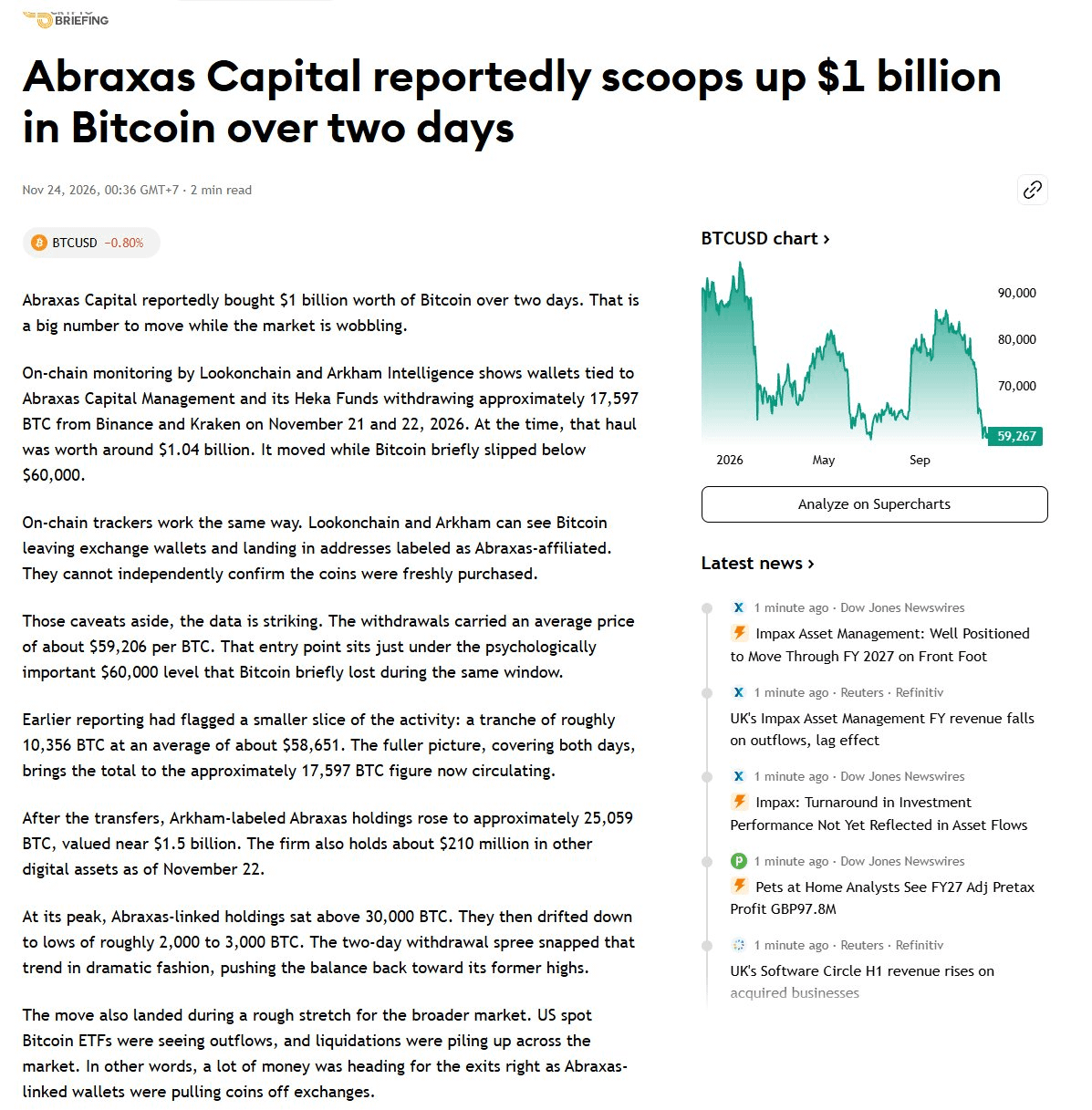
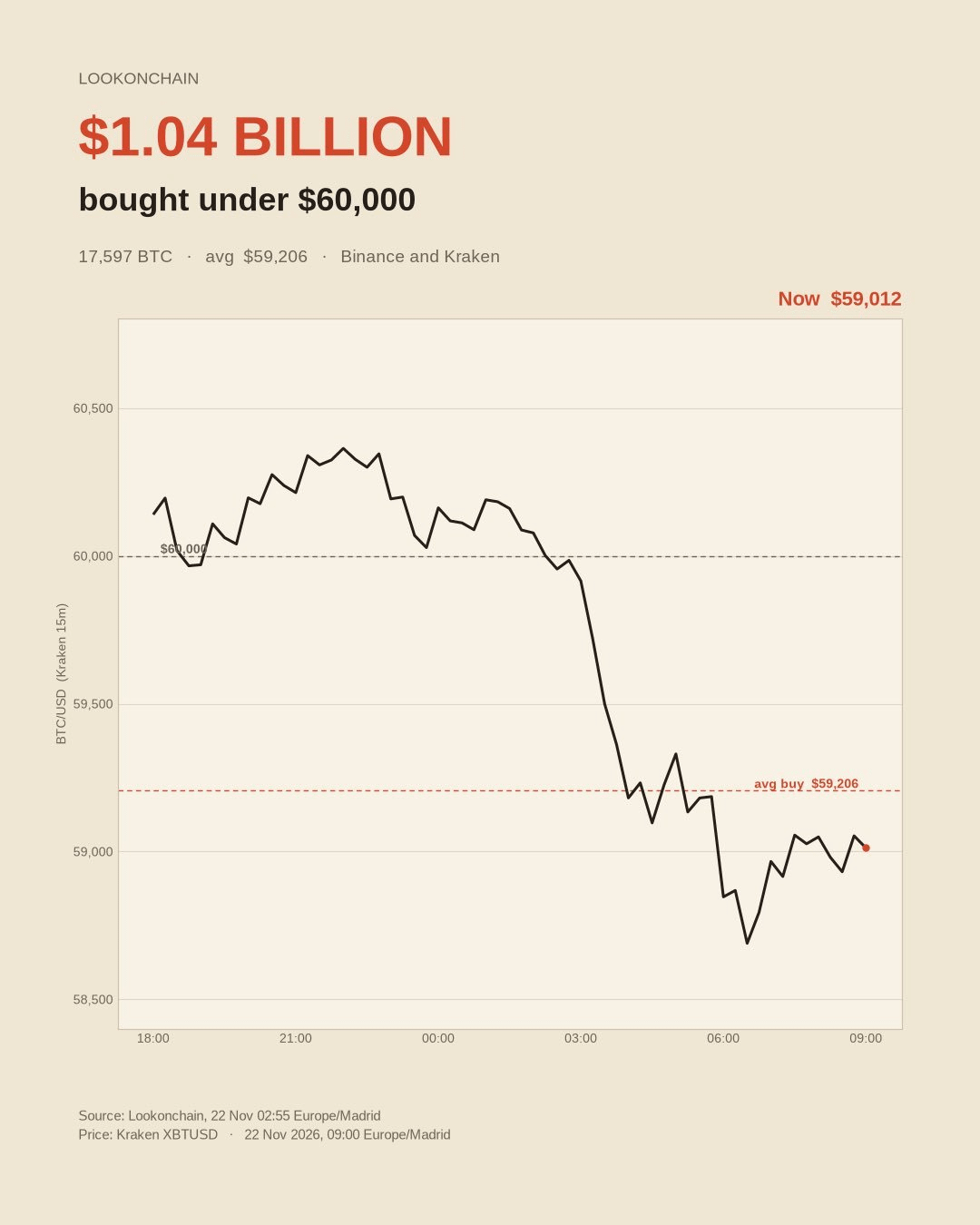
Over November 21–22, 2026, as $BTC fell below $60,000, wallets labeled as Abraxas Capital withdrew about 17,597 BTC (~$1.04 billion) from Binance and Kraken, at an average price of about $59,206.
1. Who is Abraxas Capital?
- Abraxas Capital Management is a London-based digital asset investment fund that manages about $4 billion and has capital ties to Tether.
- The fund’s main strategy is market-neutral: earning returns from price spreads, funding rates, and interest rates across markets, rather than betting on price direction.
=> A typical example is Hyperliquid
. The fund holds spot assets elsewhere and opens perp shorts to hedge, while also collecting funding. According to Lookonchain, Abraxas’s two hedging accounts have recorded more than $500 million in cumulative profits on the platform.
- Return since inception: +267.98%.
- Annualized return: +17.71%.
- 2021: +36.54%.
- 2022: +11.06%.
- 2023: +16.51%.
- 2024: +16.64%.
- 2025: +11.56%.
=> Notably, even in 2022, when the crypto market experienced the collapses of LUNA, Three Arrows Capital, and FTX, the fund still posted a positive return.
=> Abraxas also has deep financial ties to Tether. According to previously published information, Tether once invested about $800 million in Elysium, at one point accounting for around 75% of the fund’s AUM. This could give Abraxas a significant advantage in funding, liquidity, and trading costs.
2. Notable moves in November
* November 16: Lighter temporarily halted withdrawals after a trader account’s API key was exposed, resulting in about $10–17 million being withdrawn. On-chain analysts said the account was linked to Abraxas, though the fund has not confirmed this.
* After the incident: Abraxas closed almost all of its short positions on Hyperliquid, leaving only about $11.6 million.
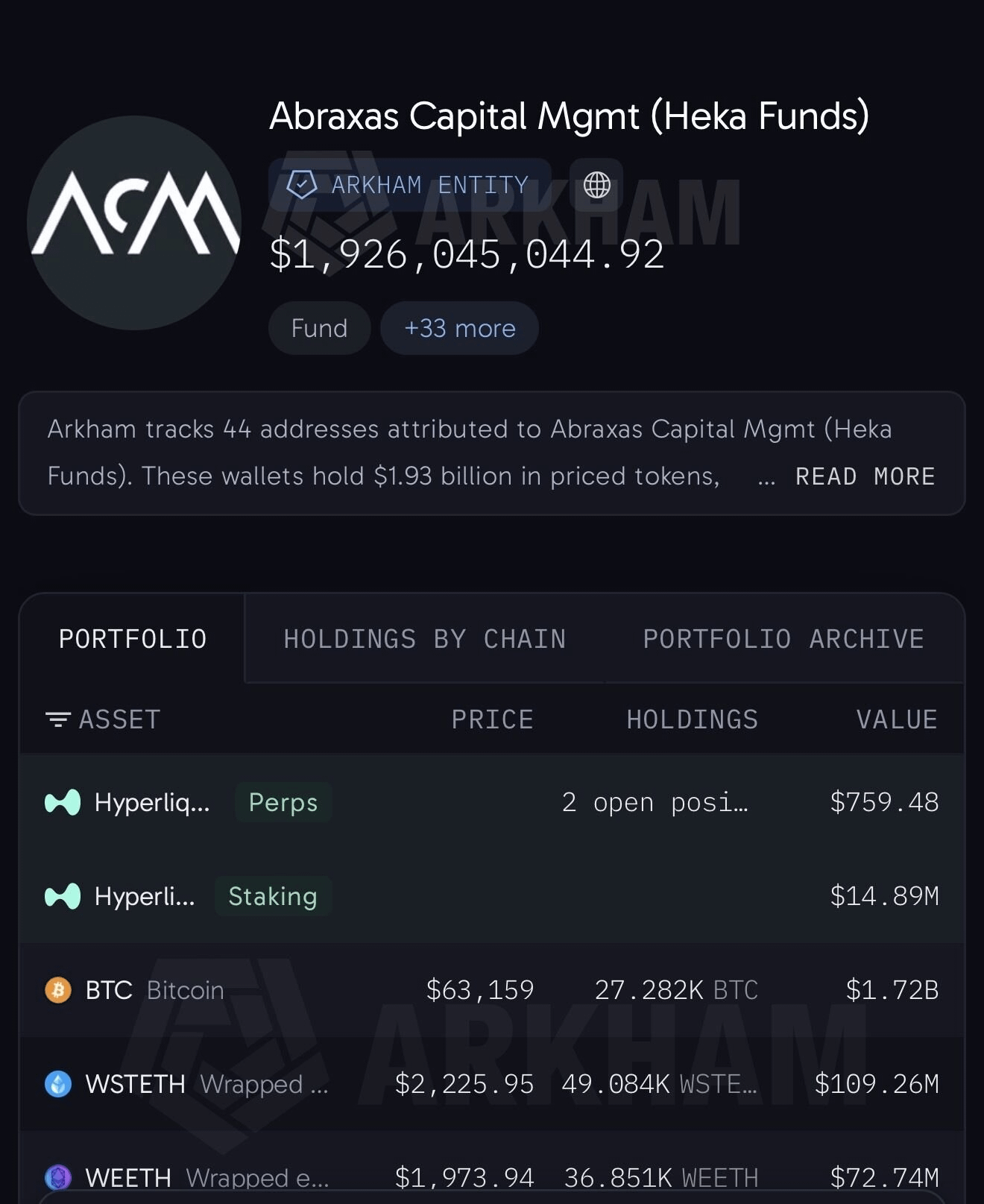
* November 21–22: withdrew 17,597 BTC from exchanges, bringing the BTC balance in tracked wallets to about 25,059 BTC.
3. Does withdrawing BTC from exchanges mean buying the dip?
- Not necessarily. On-chain data only shows that BTC left exchanges; it does not reveal why. For a market-neutral fund, this could mean a new purchase, a custody transfer, a change in collateral, or closing one leg of a hedged position.
- If the fund previously held spot BTC and shorted on Hyperliquid, closing the short would mean the spot holdings were no longer hedged. At that point, the BTC would truly become a directional bet on the price.
- Abraxas also regularly transfers BTC between private wallets and exchanges, so a large withdrawal alone is not enough to conclude that the fund intends to hold long term.
4. Assessment
- In my view, what stands out is not just the $1 billion figure, but the timing: a large arbitrage fund moved BTC to private wallets just as the market panicked and prices fell to their lowest levels in about two years.
- However, this should not be treated as a bottom signal based on a single entity. The Lighter incident also shows that the biggest risks for market-neutral funds often come from operations and counterparties, not price direction.
- I’ll be watching to see whether the BTC balances in Abraxas’s wallets remain unchanged, and whether the fund reopens short positions elsewhere to hedge. If it holds the BTC without a hedge, that would be a real signal that the fund is betting on the price.